

Reviews
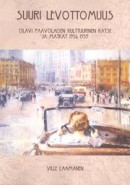
Ville Laamanen: Suuri levottomuus. Olavi Paavolaisen kultturinen katse ja matkat 1936-39 [A great restlessness. Olavi Paavolainen’s cultural gaze and travels 1936-1939].
2 April 2015 | Mini reviews, Reviews
 Ville Laamanen
Suuri levottomuus. Olavi Paavolaisen kultturinen katse ja matkat 1936-39 [A great restlessness. Olavi Paavolainen’s cultural gaze and travels 1936-1939].
Turku: K&H, 2014. 346p., ill.
ISBN 978-951-29-5632-6
€32, paperback
The writer Olavi Paavolainen (1903-1964) was an important cultural critic in Finland in the years between the two World Wars. The historian Ville Laamanen’s doctoral thesis Suuri levottomuus explores how Paavolainen interpreted the encounter between the modern and totalitarianism. Laamanen examines Paavolainen’s journeys to National Socialist Germany and South America, where he was able to gain distance from Eurocentricity. Paavolainen published three books on the basis of these journeys, and these form the central sources for Laamanen’s research. The outbreak of the Winter War in Finland in 1939 prevented the publication of a fourth volume. This work would have focused on the Soviet Union, which at that point was little-known. The most important offerings of Laamanen’s book are the research results based on material from Russian archives which has hitherto remained unexamined. Paavolainen was not a communist, but was accorded VIP status in the Soviet Union and was able to gain a diverse view of the country. Laamanen also places Paavolainen in the broader cultural context of the 1930s. The book is at the same time a rigorous academic study and a well-written, gripping portrait of a still interesting Finnish intellectual during an important period.
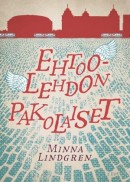
Minna Lindgren: Ehtoolehdon pakolaiset [The refugees of Twilight Grove]
26 March 2015 | Mini reviews, Reviews
 Ehtoolehdon pakolaiset
[The refugees of Twilight Grove]
Helsinki: Teos, 2014. 334 pp.
ISBN 978-951-851-584-8
€29.90, paperback
This is the second volume of a novel trilogy by the writer and music editor Minna Lindgren (born 1963). The protagonists in Kuolema Ehtoolehdossa (‘Death in Twilight Grove’, 2013) were ladies in their nineties in an assisted living facility in Helsinki – administered by a foundation entitled (ironically enough), ‘Care and Love of the Elderly‘. Lindgren’s ‘adventure satire’ continues to focus on the lack of common sense, respect and empathy (as well as presence or interest of relatives) in the – often patronising – care of the elderly. The story revolves round the evacuation of the inhabitants from the facility to temporary housing as a tragicomically huge renovation project sets off, not without some seriously fishy business. This volume might be described as a slightly more sombre in its themes than the previous one, as illnesses and death occur – however, the point is that dying, not an unexpected turn in a person’s life after the age of 90, should be regarded as something natural. As what Lindgren writes about is by no means a phenomenon foreign to contemporary western societies, it is not surprising that so far the translation rights of the trilogy into eight languages have been sold.
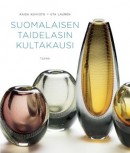
Kaisa Koivisto & Uta Laurén: Suomalaisen taidelasin kultakausi [The golden era of the Finnish glass]
19 March 2015 | Mini reviews, Reviews
 Suomalaisen taidelasin kultakausi
[The golden era of the Finnish glass]
Helsinki: Tammi, 2014. 326 pp., ill.
ISBN 978-951-31-7320-3
€49.90, hardback
The authors of this book specialise in Finnish glass and its history, working at the Finnish Glass Museum. The 1950s and the early 1960s formed the golden age of Finnish glass: young artists such as Timo Sarpaneva, Tapio Wirkkala, Gunnel Nyman, Nanny Still and Kaj Franck all began gaining fame as the number of prizes won at the 1950s Milan triennales made way for their international success. Finnish glass factories worked closely with artists, as serial production had to provide the commercial success. In the 1970s, however, the glass industry began to diminish due to heavy competition in the form of imported glassware. Unique objects of glass are still made and glass artists trained in Finland, but of six major factories only Iittala (est. 1881) is still working; for example, the 220-year old Nuutajärvi Glass Factory closed its doors in 2013. The majority of the excellent photographs in this comprehensive, beautiful book are from the Finnish Glass Museum or the Finnish Design Museum. The book includes short biographies of 27 Finnish glass artists and histories of glassworks as well as a glossary of glass-making terms.
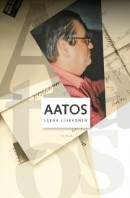
Leena Liukkonen: Aatos
12 March 2015 | Mini reviews, Reviews
 Aatos
Aatos
Helsinki: Siltala, 2014. 155 pp.
ISBN 978-952-234-225-6
€28.50, hardback
Aatos Erkko (1932–2012) was a prominent newspaper publisher and principal owner of the Sanoma group; the company’s largest and most prestigious paper is Helsingin Sanomat. Reticent by nature and possessed of a difficult personality, Erkko nonetheless tried to act in accordance with his ideals. Rarely seen in the public eye, during his lifetime he was considered one of Finland’s most influential forces behind the scenes. Even though he was not keen on taking over the reins of the paper from his father Eljas (son of the original founder) whose wish it was, Aatos Erkko took the role seriously, developing Helsingin Sanomat into the Nordic region’s largest newspaper. Journalist and writer Leena Liukkonen’s small-scale, warm-hearted portrait is based mostly on Erkko’s later years, making use of discussions and correspondence, as well as interviews recorded by a Swedish colleague. Known as Finland’s richest man, Erkko talks frankly about his difficult relationship with his parents, and the disappointments of his life. The book leaves the impression of a friendship portrayed in terms that are open and honest.
Translated by David McDuff
Petri Pietiläinen: Koirien Suomi. Kansanperinnettä ja historiaa [Dogs in Finland. Folk tradition and history]
12 March 2015 | Mini reviews, Reviews
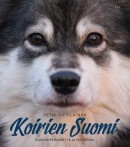 Koirien Suomi. Kansanperinnettä ja historiaa
[Dogs in Finland. Folk tradition and history]
Helsinki: Finnish Literature Society, 2014. 239 pp., ill.
ISBN 978-952-222-540-5
€32, hardback
Non-fiction writer Petri Pietilä is the author of the award-winning book Koirien maailmanhistoria (‘Dogs in world history’), which deals with the general cultural history of the dog. In the first half of this lively and fascinating new book he discusses the dog in Finnish folk tradition, while in the second half he gives an account of the history of the dog in Finland to the present day. Dogs have been domesticated in the North European region for thousands of years. In folk poetry, such as the national epic, the Kalevala, the dog is first and foremost a house guard and a partner in hunting. In Finnish folk tradition, the dog is viewed more leniently than in other countries, and stories about hellhounds are rare. Yet the attitude towards dogs in Finnish proverbs is not an exclusively positive one. Pietilä also says that the dog’s change of status has been linked to its becoming a helper and beloved pet, and today there are more than half a million of them in Finland. In addition, they are increasingly being used in various work and service roles. The book also presents the six Finnish dog breeds, and includes a dog name day calendar.
Translated by David McDuff
Maria Turtschaninoff: Maresi. Krönikor från röda klostret [Maresi. Chronicles of the red convent]
6 March 2015 | Mini reviews, Reviews
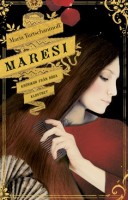 Maresi. Krönikor från röda klostret
[Maresi. Chronicles of the red convent]
Helsinki: Schildts & Söderströms, 2014. 213 pp.
ISBN 978-951-52-3471-1
€18.90, hardback
Maresi. Punaisen luostarin kronikoita
Suom. [Translated from Swedish into Finnish by]: Marja Kyrö
Helsinki: Tammi, 2014. 213 pp.
ISBN 978-951-31-8000-3
€25.90, hardback
Maria Turtschaninoff (born 1971) has quickly established a place as a leading author of Finland-Swedish young adults’ literature. Her fantasy novel Maresi is set in an old convent run entirely by women. The narrator Maresi is a conscientious girl loved by the congregation of sisters; she is gradually learning of her own special talents and what is expected from her. The peace of the convent is threatened with the arrival of the mute, uncommunicative Jai. Her experience of trauma gradually come to light and the girls work up their collective courage, together with the other women, to challenge the despotism of men. Turtschaninoff is a visual storyteller; her descriptions of nature, convent life, and animal care are indelible. The setting is vividly drawn and the sheltered environment feels well depicted. The novel unflinchingly takes on women’s experiences of physical and psychological violence, and its points of identification transcend all cultural boundaries. This provocative, feminist novel won the 2014 Finlandia Junior prize.
Translated by Lola Rogers
Marjatta Levanto & Julia Vuori: Leonardo. Oikealta vasemmalle [Leonardo. From right to left]
6 March 2015 | Mini reviews, Reviews
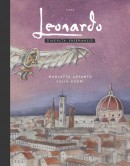 Leonardo. Oikealta vasemmalle
[Leonardo. From right to left]
Teksti [Text by]: Marjatta Levanto
Kuvitus [Ill. by]: Julia Vuori
Design: Dog Design
Helsinki: Teos, 2014. 113 pp., ill.
ISBN 978-951851-467-4
€34.90, hardback
This handsome non-fiction book is a lavishly illustrated biography of the 15th-century Italian artist genius Leonardo da Vinci. The title refers to the fact that he employed ‘mirror’ writing in his diaries and notebooks. Art historian Marjatta Levanto has published several works on art for children and young people, and many of them have been illustrated by Julia Vuori. Leonardo introduces to the reader the world of the Italian renaissance, the artist’s astonishing and unique inventions – such as various human flying devices – his philosophical writings, his anatomical studies and his magnificent paintings and drawings. Julia Vuori’s amusing little vignettes and larger, colourful illustrations comment on the narrative and mingle with the text and the reproductions of Leonardo’s artwork. Some pictures are printed on transparent pages. This beautiful book is a treasure trove to a reader of any age.
Timo Parvela: Paten aikakirjat [Pate’s chronicles]
26 February 2015 | Mini reviews, Reviews
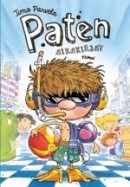 Paten aikakirjat
[Pate’s chronicles]
Kuvitus [Ill. by]: Pasi Pitkänen
Helsinki: Tammi, 2014. 96 pp., ill.
ISBN 978-951-31-7800-0
€25.90, hardback
Timo Parvela has achieved acclaim and won readers both in Finland and abroad – in Germany in particular. His Maukka ja Väykkä (Purdy and Barker) series of children’s novels will also soon be published in Great Britain. The Ella series for beginning readers now includes no less than 17 books, and now Pate, one of Ella’s supporting characters, has got his own series. The international counterpart of Paten aikakirjat – abundantly illustrated by Pasi Pitkänen – might be someone like Jeff Kinney, illustrator for Diaries of a Wimpy Kid. After living aborad for many years, Pate’s Uncle Pentti makes a bustling entrance into Pate’s life. Timo Parvela delights as usual with his trademark contrasts between children and slightly weird adults. In between comic mishaps are tons of easy-to-read dialogue, comics and lists of silly things.
Translated by Lola Rogers
Iiro Küttner & Ville Tietäväinen: Puiden tarinoita: Puuseppä [Tales by trees: the carpenter]
26 February 2015 | Mini reviews, Reviews
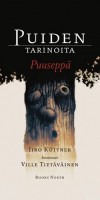 Puiden tarinoita: Puuseppä
[Tales by trees: The carpenter]
Kuvitus [Ill. by] Ville Tietäväinen
Helsinki: Books North, 2014. 30 pp., ill.
ISBN 978-952-67980-5-9
€28.90, hardback
The picture book surprise of the year is Puuseppä, the first book in the Tales by trees trilogy, launched with fanfare by Books North, a new small press, and extremely polished in appearance. The story pays homage to the classic tales of Zacharias Topelius and H.C. Andersen. The carpenter of the story is under the special protection of the emperor, and has the time and money to make anything he wants. His chosen project is stupendous – to isolate himself for 30 years and build an enormous tree, using various types of wood and complicated construction techniques. He forgets his family and finally wears himself out in the process. The story closes with a sly moral reflective of Finnish contemporary society, about forced labour, the pressures of working life, and the value of work. Comics artist Ville Tietäväinen’s illustrations are tactile – the picture of tree rings makes you want to touch it and feel the rough texture of the cut wood. Books North is an offshoot of Agency North Oy, which specialises in promoting Finnish drama and film abroad.
Translated by Lola Rogers
Hiroko Motai & Marika Maijala: Miljoner biljoner julgubbar [A million trillion Santas]
19 February 2015 | Mini reviews, Reviews
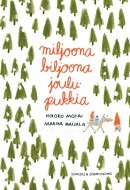 Miljoner biljoner julgubbar
[A million trillion Santas]
Translated from English into Swedish by Mirjam Ilvas
Kuvitus [Ill. by]: Marika Maijala
Helsinki: Schildts & Södersröms, 2014. 40 pp., ill.
ISBN 978-951-52-3422-3
€19.90, hardback
Miljoona biljoona joulupukkia
Suom. [Translated from English into Finnish by] Hannele Mikaela Taivassalo
Kuvitus [Ill. by]: Marika Maijala
Helsinki: Schildts & Södersröms, 2014. 40 pp., ill.
ISBN 978-951-52-3473-5
€18.90, hardback
Christmas-themed children’s books have a long tradition in Finland. Many new Christmas books appear every year to quench both children’s and adults’ Christmas fever. Japanese Tove Jansson fan Hiroko Motai (born 1972) approached Jansson’s Finnish publisher with her anarchic Santa Claus story with the hope that they would be interested in her idea. Motai’s story explains the miracle that happens every Christmas Eve: there are multiple Santas these days, because there’s no possible way that Santa could make it to the home of every child in the world in just one night. Versatile illustrator Marika Maijala has updated her image register by tightening up her earlier style. The rough chalk drawings brought to this reader’s mind drawings from her own school days. The sparse, naïve style is a excellent proof that a retro style can inspire an illustrator to create her own unique expressions.
Translated by Lola Rogers
Marja-Leena Mikkola: Helmenkantaja [The pearl bearer]
19 February 2015 | Mini reviews, Reviews
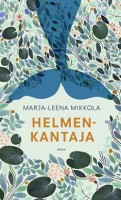 Helmenkantaja
[The pearl bearer]
Helsinki: Otava, 2014.125 pp.
ISBN 978-951-1-28182-5
€23.90, hardback
Marja-Leena Mikkola (born 193x) has had a long career as a poet and translator. She has also written books for children and young adults, and Helmenkantaja shows her thorough familiarity with Anglo-Saxon fantasy fiction. Charles Kingsley’s Water Babies as well as H.C. Andersen’s little mermaid seem to glimmer in the background of this story. True to Mikkola’s ethos, the novel has a dose of ecocriticism in its theme of protection of a threatened pearl oyster. Reetta is fed up with looking out for her younger siblings at the family’s summer cabin; it feels as if the summer is slipping away. This everyday tale gradually breaks off into an exciting adventure in an underwater kingdom. The water boy, heir to the queen of the water, has to be rescued from the clutches of the water wizard. This difficult task requires a daredevil like Reetta, who, in additon to many other important qualities, has the gift of storytelling.
Translated by Lola Rogers
Hare-raising
13 February 2015 | Reviews
In this job, it’s a heart-lifting moment when you spot a new Finnish novel diplayed in prime position on a London bookshop table – and we’ve seen Tuomas Kyrö’s The Beggar & The Hare in not just one bookshop, but many. Popular among booksellers, then – and we’re guessing, readers – the book nevertheless seems in general to have remained beneath the radar of the critics and can therefore be termed a real word-of-mouth success. Kyrö (born 1974), a writer and cartoonist, is the author of the wildly popular Mielensäpahoittaja (‘Taking umbridge’) novels, about an 80-year-old curmudgeon who grumbles about practically everything. His new book – a story about a man and his rabbit, a satire of contemporary Finland – seems to found a warm welcome in Britain. Stephen Chan dissects its charm
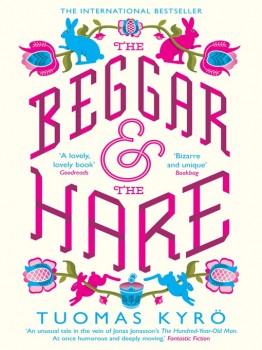 Tuomas Kyrö: The Beggar & The Hare
(translated by David McDuff. London: Short Books, 2011)
Kerjäläinen ja jänis (Helsinki: Siltala, 2011)
For someone who is not Finnish, but who has had a love affair with the country – not its beauties but its idiosyncratic masochisms; its melancholia and its perpetual silences; its concocted mythologies and histories; its one great composer, Sibelius, and its one great architect, Aalto; and the fact that Sibelius’s Finlandia, written for a country of snow and frozen lakes, should become the national anthem of the doomed state of Biafra, with thousands of doomed soldiers marching to its strains under the African sun – this book and its idiots and idiocies seemed to sum up everything about a country that can be profoundly moving, and profoundly stupid.
It’s an idiot book; its closest cousin is Voltaire’s Candide (1759). But, whereas Candide was both a comedic satire and a critique of the German philosopher and mathematician Gottfried Wilhelm Leibniz (1646-1716), The Beggar & The Hare is merely an insider’s self-satire. Someone who has not spent time in Finland would have no idea how to imagine the events of this book. Candide, too, deployed a foil for its eponymous hero, and that was Pangloss, the philosopher Leibniz himself in thin disguise. Together they traverse alien geographies and cultures, each given dimension by the other. More…
Suvi-Tuuli Junttila: Minne matka, lapanen? [Where are you going, little mitten?]
11 February 2015 | Mini reviews, Reviews
 Minne matka, lapanen?
[Where are you going, little mitten?]
Kuvitus [Ill. by]: Suvi-Tuuli Junttila
Helsinki: Schildts & Söderströms, 2014. 57 pp., ill
ISBN 978-951-52-3420-9
€19.90, hardback
Lilla vanten
[Little mitten]
Kuvitus [Ill. by]: Suvi-Tuuli Junttila
Ruotsinnos [Translated into Swedish]: by Jonna Brander
Helsingfors: Schildts & Söderströms, 2014. 57 pp., ill.
ISBN 978-951-52-3460-5
€19.90, hardback
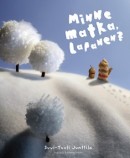
Suvi-Tuuli Junttila’s book combines assemblages and miniatures with winning originality. The exciting journey of the mitten, acorn and bottlecap from autumn to a new spring will inspire creative play and allows young readers to see everyday wonders from a new point of view. Illustration has always been more important than writing for designer and graphic artist Junttila (born 1979) – it is the pictures’ job to create their own story for the viewer. She always places her illustrations in the starring role and gives the text the task of suggestion. Junttila’s previous picture book, Missä, tässä, jossakin (‘Where, here, somewhere’, 2011) won first prize in the Mikkeli illustration triennial.
Translated by Lola Rogers
Réka Király: Yksi vielä [One more]
11 February 2015 | Mini reviews, Reviews
 Yksi vielä
[One more]
Kuvitus [Ill. by]: Réka Király
Helsinki: Etana Editions 2014. 32 pp., ill.
ISBN 978-952-7105-01-6
€17.90, hardback
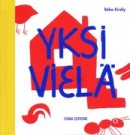
Réka Király, born in Hungary in 1977, has previously collaborated with fellow illustrator Marika Maijala. Her bright, harmonious fields of primary-colours are well suited to a story influenced by simple folk narratives that tells of animals coming one by one to stay in an uninhabited small cabin. As expected, the cabin creaks and cracks and finally breaks into a million pieces that fly into the air. Kiréaly’s simplified animal characters are very sympathetic. Yksi vielä is a good example of a picture book that develops a child’s sense of image and shape through clever visual inventiveness.
Translated by Lola Rogers
Maija & Anssi Hurme: Lepakkopoika [Batboy]
5 February 2015 | Mini reviews, Reviews
 Lepakkopoika
[Batboy]
Kuvitus [Ill. by]: Maija Hurme
Helsinki: Schildts & Söderströms, 2014. 27 pp., ill.
ISBN 978-951-52-3361-5
€22.90, hardback
Fladdermuspojken
Kuvitus [Ill. by]: Maija Hurme
Helsinki: Schildts & Söderströms, 2014.
ISBN 978-951-52-3326-4
€28.90, hardback
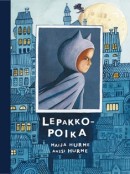
Bat boy is a compact picture book with sparse text and abundant pictures that are well-balanced – there is never too much or too little of either. A six-year-old named Ilmari changes into a bat boy who stalks people in the dim of evening. The book describes the feelings of a boy approaching school age with sensitivity – the story deals with defiance of adult authority, rules and restrictions. Ilmari can also be thought of as a special child who experiences the world differently than other kids his age. The day care he attends is presented in both text and pictures as a prison and the adult day care workers as guards. Maija Hurme’s watercolour illustrations have an anarchic energy. The comic strip narrative supports Ilmari’s feelings of aggression. His fantasies are presented as blue-toned photographs with white borders, but the colours of the home and park settings glow with a message of safety, caring and trust.