

Archive for 2011
Matti Suurpää: Parnasso 1951–2011 [Parnasso, 1951–2011]
21 April 2011 | Mini reviews, Reviews
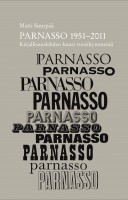 Parnasso 1951–2011. Kirjallisuuslehden kuusi vuosikymmentä.
[Parnasso, 1951–2011. Six decades of a literary journal]
Helsinki: Otava, 2011. 559 p., ill.
ISBN 978-951-1-23368-8
€ 45.90, hardback
The 60-year history of Parnasso, Finland’s longest-running literary journal, is a chronicle of the assimilation of ‘the modern’ into Finnish literature. Matti Suurpää – a long-time contributor, and former head of the SKS publishing house – singles out the 1958–1965 period under the editorship of Kai Laitinen (professor of literature, Editor-in-Chief of Books from Finland from 1976 to 1990) as the era with the broadest editorial scope. Finnish modernist literature, developed during the 1950s, had by then staked out its territory, and the journal consolidated its power to promote it. Laitinen published an excellent themed issue on Finland-Swedish literature to rehabilitate and reintegrate writing by Swedish-speaking authors into the field of Finnish literature. Subsequent editors considered it important to include translations of foreign literature in Parnasso. As the archives of the journal have been lost, Suurpää carried out a close reading of the annual volumes. The result is an eminently clear and readable work in which a wealth of extracts of writing and discussions illuminate the story of the modernisation of Finnish literature.
Translated by Ruth Urbom
John Lagerbohm & al.: Me puolustimme elämää. Naiskohtaloita sotakuvien takaa [We were defending life. The fates of women behind pictures of war]
21 April 2011 | Mini reviews, Reviews
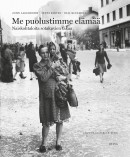 John Lagerbohm & Jenni Kirves & Olli Kleemola
Me puolustimme elämää. Naiskohtaloita sotakuvien takaa
[We were defending life. The fates of women behind pictures of war]
Esipuhe [Foreword]: Elisabeth Rehn
Helsinki: Otava, 2010. 176 p., ill.
ISBN 978-951-1-24660-2
€ 41, hardback
The women’s narratives of the Winter War (1939–40) and the Continuation War (1941–44) in this book are complemented by memoirs and academic writing, as well as journalistic extracts, personal recollections and interviews. It focuses on the status of women in wartime, showing that, in addition to the members of the Lotta Svärd auxiliary organisation, women carried a great deal of responsibility in a variety of roles, taking up traditionally male-dominated work in ports and mines. During the war years, the duty to work applied to all citizens aged 15 and up for whom various tasks could be assigned. One of the difficult jobs for ‘Lottas’ on the front line was placing the bodies of fallen soldiers into coffins and sending them home for burial. To maintain morale, it was important to the women to derive joy even from little things, and that humour comes through in this book as well. There is a wide range of photographic material, some of which comes from private collections.
Remains healthy
13 April 2011 | Non-fiction
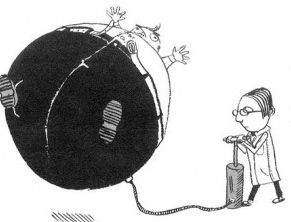
Case note: patient has coronary artery disease for which he was given a balloon. Illustration: Elina Warsta
In these samples from a collection of patient reports, Molemmista päistä tähystetty: päättömiä potilaskertomuksia (‘Examined at both ends: brainless patient reports’, Otava, 2011), human disorders appear bizarre, puzzling or just plain funny in case notes as dictation or transcription occasionally proves erratic
The patient was given instructions for his bowels.
Recommend milder aerobics, ie swimming on an exercise bicycle.
Patient is a healthy 70-year-old girl.
And a mental health evaluation is recommended for the designer of this form. More…
Funny stuff favoured
13 April 2011 | In the news
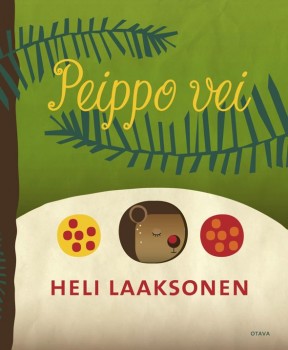 In March the Bookseller’s Association of Finland’s list of the best-selling Finnish fiction was topped – for a change – by a collection of poems. Like all her collections, Heli Laaksonen’s Peippo vei (‘The chaffinch took it’, Otava) is written in a local dialect spoken in south-western Finland.
Perttti Jarla’s latest comics book, Fingerpori 4 (‘Fingerborg 4’, Arktinen Banaani) was number two – and, demonstrating the Finns’ love of cartoons and comics, another of his titles, Fingerpori book, Fingerpori – Kamppailuni (‘Fingerborg – My fight’) occupied fourth place, following Sofi Oksanen’s Puhdistus (Purge), published in 2008 and still number three on the list. More…
What do YOU think?
8 April 2011 | This 'n' that

Illustration: Joonas Väänänen
Dear Reader:
we would love to know what you think about Books from Finland and what it means to you.
You can of course always send us suggestions and comments – interactivity is one of the great bonuses of being online – but we’d like to ask you some specific questions so that we can build up a picture of who reads our website, as well as your likes and dislikes.
We’ll start now, posting a question each month – see the sidebar on our main page. Please participate!
The Editors
Markku Kuisma: Sodasta syntynyt [Born of war]
8 April 2011 | Mini reviews, Reviews
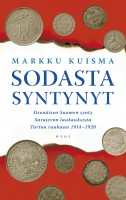 Sodasta syntynyt. Itsenäisen Suomen synty Sarajevon laukauksista Tarton rauhaan 1914–1920
[Born of war. The birth of independent Finland, from the shots fired in Sarajevo to the Treaty of Tartu, 1914–1920]
Helsinki: WSOY, 2010. 273 p.
ISBN 978-951-0-36340-9
€ 35, hardback
Professor Markku Kuisma investigates the route to Finland’s independence in the years from the outbreak of the First World War to the Treaty of Tartu in 1920. He disproves some commonly held beliefs about that era, which he maintains were adopted for reasons of political expediency – such as the idea that Finnish independence was the result of focused struggles by patriots. Kuisma claims that Finland in 1917–1918 was adrift, and the actions of the industrial barons around the time of the First World War had a greater impact on Finland’s status in the world than did the unfocused policies of the Finnish Senate. That was when the corporate structures that would shape Finland’s long-term future arose and trade agreements were set up. Bankers and business leaders were in the Senate as well, and the Finnish representatives who negotiated the Treaty of Tartu were chosen from the top ranks of Finnish commerce.
Translated by Ruth Urbom
Matti Klinge: Suomalainen ja eurooppalainen menneisyys [The Finnish and European past]
8 April 2011 | Mini reviews, Reviews
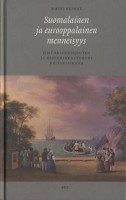 Suomalainen ja eurooppalainen menneisyys. Historiankirjoitus ja historiankulttuuri keisariaikana
[The Finnish and European past. Historiography and history culture in the Imperial era]
Helsinki: Suomalaisen Kirjallisuuden Seura, 2010. 360 p., ill.
ISBN 978-952-222-208-4
€ 34, hardback
The term ‘Imperial era’ in Finnish history refers to Finland’s period as a Grand Duchy of Russia, 1809–1917. This work is a study of the shaping of Finland’s national culture of history. ‘History culture’ refers to the ways in which ideas about the past are generated, utilised and modified. The brief essays in this book look at the way the past, the events and people involved in historiography are treated in academic research – including those who did not hold high-level academic posts and were therefore absent from previous works. Matti Klinge, an emeritus professor of history, maintains that Finnish historiography has been characterised by an emphasis on nationalism and national development and has focused chiefly on historical writing about Finland. Historians have often been viewed as following in their predecessors’ footsteps, without demonstrating influences acquired from contemporary foreign research. The author emphasises the multilingual intellectual world of the Imperial era; at that time in Finland, people were able to read more foreign languages than nowadays.
Translated by Ruth Urbom
New members of the board
8 April 2011 | In the news
Two new members joined Books from Finland‘s Editorial Board in March: Mervi Kantokorpi and Pia Ingström replaced Nina Paavolainen and Tiia Strandén (who both joined the ranks of FILI – the Finnish Literature Exchange in February).
Mervi Kantokorpi is a freelance literary critic and scholar who specialises in Finnish fiction, both prose and poetry. Pia Ingström works as a literary editor at the Swedish-language Hufvudstadsbladet newspaper; her autobiographical book, Inte utan min mamma (‘Not without my mother’, Finnish translation: Äitiä ikävä, Schildts), was published last year.
National treasures
7 April 2011 | This 'n' that
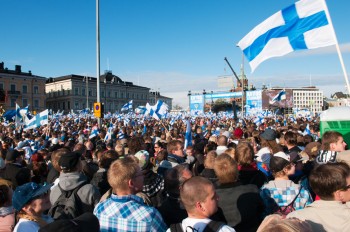
The name of the game: ice hockey. Photo: Jaakko Oksa
In Japan, artists or craftsmen of the highest quality may be honoured with the title ‘Living National Treasure’. In Finland, it seems only ice hockey players are eligible for that title, if you ask the man on the street, as ice hockey seems to be Finland’s ‘national’ sport.
(For example another ice team sport, synchronised skating, doesn’t compete in the same national treasure series, despite the fact that the Finnish team won the gold – again – in the World Championships in April. [Finland has won gold six times, Sweden five.] No national flag-waving resulted. But of course they are just women, who don’t win sports wars against other nations.)
On Sunday, 15 May, a dream came true at last, as Finland won the gold medal at the Ice Hockey World Tournament. And what’s more, it was Sweden – neighbour and old colonial overlord – they beat (6–1).
As the victorious team, escorted by a Hornet fighter from the Finnish air force, returned from Bratislava to Helsinki on Monday night, some 100,000 people crowded the capital’s Market Square to celebrate. The team and a selection of pop musicians climbed up on a stage to start the party – and President Tarja Halonen also popped in, from her presidential palace by the Square, to congratulate.
When’s the last time when 100,000 Finns gathered anywhere? Perhaps in 1995, when Finland first won the same title? See the series of photographs on the Internet pages of the Swedish paper Aftonbladet, particularly a shot of Helsinki harbour taken with a fish-eye lens.
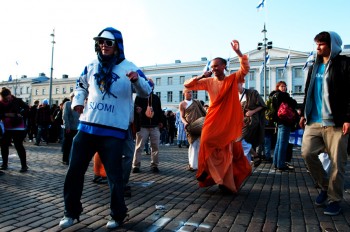
All together now! Photo: Jaakko Oksa
Sweden has been a much more successful hockey country than Finland, but it’s clearly tough to be a good loser. As the rivalry – in sports in particular – between Sweden and Finland is traditionally a larger-than-life issue, the Swedish newspapers and their readers displayed a highly amusing spectrum of opinions. ‘Kul att dom får fira något. Dom bor ju trots allt i Finland’ (‘Great that they have something to celebrate. After all, they live in Finland’), said one reader sourly.
And celebrate they did. One of the coaches stumbled and fell on his face on the red carpet on landing in Helsinki, and before you could say oops, he ended up on the YouTube accompanied by extracts from the final match television coverage by the celebrity sports commentator Antero Mertaranta.
Sportsmen and -women are supposed to be positive role models for young people, but as some of the team members clearly seemed to enjoy something stronger than sports drinks on the Market Square, they have been reproached for this behaviour by many people – spoilsports?
The coach of the Finnish national team, Jukka Jalonen, said in an interview that he could not condemn the use of alcohol in celebrating a ‘rare achievement’ like this, as ‘children and young people surely understand that adults may sometimes get drunk. Many of them have seen their parents sloshed.’
Well, if we assume it’s OK to be drunk in front of your children, it is no wonder that younger and younger children start drinking – which, however, is not considered OK, not by anyone. Can someone explain this?
In the mirror
5 April 2011 | Reviews
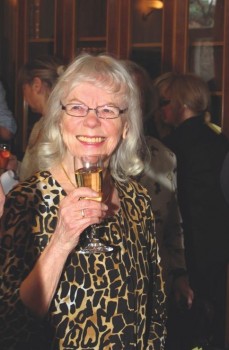
Aila Meriluoto. Photo: Tiina Pyrylä/WSOY
One of the more attractive aspects of Finnish literature is the juxtaposition of poetry-writing generations. 2011 sees the debut of both the 82-year-old Martta Rossi and new poets born in the 1980s.
Compared to them, the 87-year-old Aila Meriluoto is an old hand: Tämä täyteys, tämä paino (‘This fullness, this weight’, WSOY, 2011) is her 14th volume of poetry.
Since her first collection, which appeared 65 years ago, the grande dame has published more than 20 works: poetry, prose, diaries, books for children and young people, biographies and translations, among them poetry by Harry Martinson and Rainer Maria Rilke. More…
Suddenly here, fully present
5 April 2011 | Fiction, poetry
The women in mirrors who recur in the work of Aila Meriluoto (born 1924) are poetic figures who have featured in her poetry since her first collection, published in 1946. In these new poems, from Tämä täyteys, tämä paino (‘This fullness, this weight’), she also describes women who are ‘alive to the brim’ or ‘extreme ballerinas’. Introduction by Mervi Kantokorpi
We live in strange times
my skull full of echoes.
The rose has throbbed
the heart flowered.
In the mirror a girl on her head,
from the wall steps an old woman,
all of them familiar,
none remembered.
Suddenly here.
Fully present.
Eighty-five years.
Hands wrinkled, shaky legs.
And alive to the brim.
And over. Dripping.
Surging. More…
Self-made life
2 April 2011 | This 'n' that
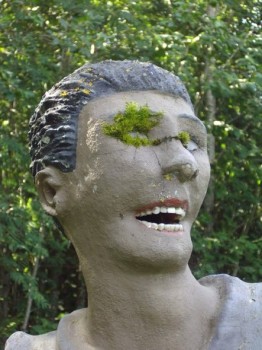
Art & nature: one of Veijo Rönkkönen's sculptures. Photo: Soila Lehtonen
You may perhaps remember an article entitled Self-made man, published on these pages in 2009: the sculptor Veijo Rönkkönen lived on a small, isolated farm in Parikkala, eastern Finland, where he spent his spare time building a garden of five hundred figures of concrete.
He lived in a cottage in the middle of his garden. Rönkkönen died a year ago, at the age of 66, and the future of his park, open and free to all, was unsolved for a while, as the Parikkala authorities were not willing to foot the bill for the upkeep the place – despite the fact that more than 25,000 people visit the park each year.
Now, the problem of the upkeep of the statue park, a ‘total work of art’, has been solved, as a businessman has bought the garden from Rönkkönen’s estate. and a number of institutions and individuals, among them friends of art and voluntary workers, have pledged keep the park open to visitors.
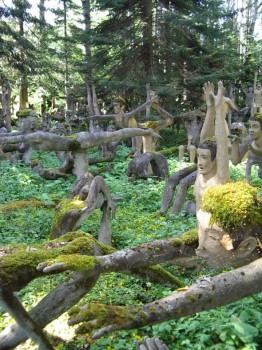
Yoga bare: Veijo Rönkkönen himself practised yoga. Photo: Soila Lehtonen
Photographer and writer Veli Granö introduced the life and works of this self-made artist in his book Veijo Rönkkösen todellinen elämä / The real life of Veijo Rönkkönen (Maahenki, 2007). Contemporary folk art goes by the acronym ITE, from the words itse tehty elämä, ‘self-made life’. The English-language term is ‘outsider art’.
The future of Rönkkönen’s cottage is undecided: it may become a park-keeper’s residence, or be used as an artist’s residence. Around it, the extraordinary legacy of this self-made artist – hundreds of statues, human and animal figures – will keep growing lichen and moss, ageing naturally.
Elina Vuola: Jumalainen nainen. Neitsyt Mariaa etsimässä [The divine woman. In search of the Virgin Mary]
1 April 2011 | Mini reviews, Reviews
 Jumalainen nainen. Neitsyt Mariaa etsimässä
[The divine woman. In search of the Virgin Mary]
Helsinki: Otava, 2010. 220 p., ill.
ISBN 978-951-1-22364-1
€ 34, hardback
This book is about the Virgin Mary and in particular her role in women’s religious experience. Theologian Elina Vuola considers that the doctrines concerning the Virgin Mary have quite a lot in common, as the principal dogmas were formulated in the early centuries of Christianity. As a partial explanation of the difference between the Mary of the Church and the Mary of popular faith, the author adduces the fact that with few exceptions women in Finland did not begin to receive theological training until the second half of the twentieth century. The central question in the book is whether or not Mary is the crowned queen of a patriarchal religious faith that is hostile to women, a harmful role model. Vuola avows herself to be a representative of the trend in women’s religious studies that takes a more positive and multifaceted view of Mary. In the section devoted to the Mary of Karelian folk religion it becomes evident that in Finland and its surrounding regions there are interpretations that are surprisingly similar to those found in Latin America.
Translated by David McDuff
Henrik Meinander: Kekkografia. Historiaesseitä [Kekkography. History essays]
1 April 2011 | Mini reviews, Reviews
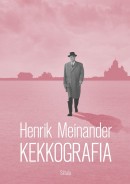 Kekkografia. Historiaesseitä
[Kekkography. History essays]
Suomentanut [Translated into Finnish from the original Swedish texts by] Matti Kinnunen
Helsinki: Siltala, 2010. 229 p.
ISBN 978-952-234-040-5
€ 34, hardback
Professor Henrik Meinander examines the forces that have shaped Finnish history and the controversial issues that have marked its development; Finnish history and culture were formed by chain reactions in European power politics. Finland did not emerge as a nation until the 19th century, as a by-product of the Napoleonic wars, and the independence of 1917 was not the result of an autonomous process of national development but rather a consequence of events elsewhere, especially in Russia. The history of independent Finland is roughly equal in length to that of the Soviet Union; in the early 1990s the Soviet Union collapsed, and Finland joined the European Union. The author does not take a position on the desirability of this development, and points out that the increasing integration and globalisation Finland’s era of independence may appear to be only a transitory phase. President Urho Kekkonen (1900–1986), who influenced Finnish politics for half a century and whose name gives the work its title, figures in approximately half of the texts.
Translated by David McDuff
Heavy stuff
1 April 2011 | In the news
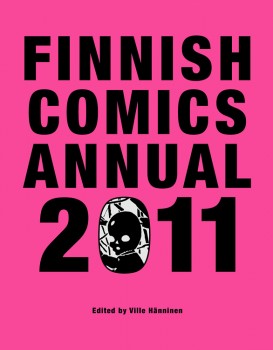 Finnish Comics Annual, by HuudaHuuda, is the first in a series of books introducing Finnish comics and graphic novels in English: edited by Ville Hänninen, the book features 20 Finnish comics artists. This massive work (two kilos) is published in cooperation with the Finnish Comics Association.
Finnish serial picture art celebrates its 100th birthday this year. One of a number of exhibitions related to this anniversary takes place at the National Library of Finland, entitled ‘Reverly, rambuctiousness, rough stuff’ (until 15 October). It presents pioneers of Finnish comics, rare comics albums and originals from early comics publications. Professori Itikaisen tutkimusretki (‘Professor Itikainen’s expedition’) by Ilmari Vainio was published in 1911 and is regarded as the first Finnish comic.