

Archive for 2011
Juhani Koivisto: Suurten tunteiden talo. Kohtauksia Kansallisoopperan vuosisadalta [The house of great emotions. Scenes from a century of the Finnish National Opera]
30 June 2011 | Mini reviews, Reviews
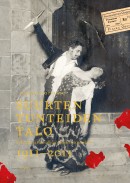 Suurten tunteiden talo. Kohtauksia Kansallisoopperan vuosisadalta
[The house of great emotions. Scenes from a century of the Finnish National Opera]
Helsinki: WSOY, 2011. 229 p., ill.
ISBN 978-951-0-37667-6
€ 45, paperback
2011 marks the one-hundredth anniversary of the founding of the Finnish National Opera. This richly illustrated and entertaining book describes events that have been absent from previous ‘official’ historical accounts. Readers will encounter over a hundred opera denizens who have made audiences – and, according to many anecdotes, each other – laugh and cry. The initial stages of the opera and ballet were modest in scope when viewed from outside, but the trailblazers involved were tremendous talents and personalities. The brighest star was the singer Aino Ackté, who enjoyed an international reputation. Gossip about intrigues and artistic differences at the opera house over the decades is confirmed in candid interviews with performers. The content of the book is based on archival sources, letters, memoirs, interviews and stories told inside the opera house. Juhani Koivisto, the Opera’s chief dramaturge, clearly has an excellent inside knowledge of his subject. Translated by Ruth Urbom
Oink oink
23 June 2011 | This 'n' that
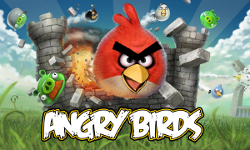 Naturally, here at Books from Finland, we’re keen to use the internet for serious (or not so serious) reading, but at the other end of the scale Finns are garnering considerable success in the world of smartphone games.
We don’t like to blow our collective trumpets, but it’s a little-known fact that the phone game Angry Birds, with birds and pigs in the starring roles, is actually Finnish, developed in 2009 by a company called Rovio. As the Helsinki freesheet Metro (31 May) notes, Angry Birds has been downloaded more than 200 million times on different devices since its launch in December 2009.
What is the secret of Angry Birds’ success? ‘I like it because it doesn’t really have any rules and you never know exactly what’s going to happen next,’ says our young reviewer Sophia, 9; her sister, Tia, 5, says ‘I like it because you get to shoot in it.’ To judge by the amount of time they spend playing Angry Birds, they like it a lot.
And how did Angry Birds come about? ‘At the beginning of 2009 our design group went through a number of different options,’ Rovio’s communications director Ville Heijari tells Metro. ‘One of them was angry-looking birds, and everyone fell in love with them right away.’ And what does Heijari himself like best about the game? ‘Definitely the fact that when you make a mistake, the pig laughs at you. That really makes you want to try again.’
In the pipeline is an Angry Birds movie, plus further development of the game itself. ‘So far the world has only seen an glimpse of the birds’ world,’ says Heijari.
By the way…
23 June 2011 | This 'n' that
To get Books from Finland delivered to you by e-mail, just click here and follow the instructions.
Face, book
23 June 2011 | Letter from the Editors
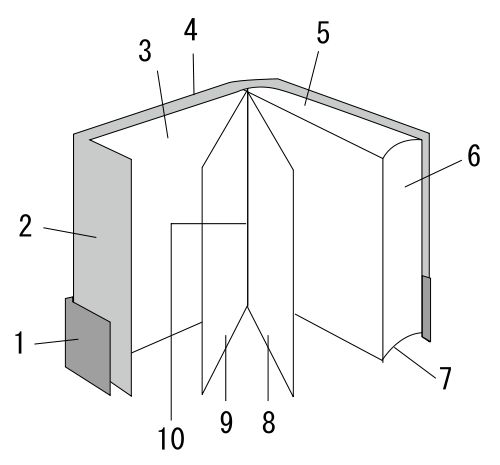
What are books made of? Picture: Wikipedia
‘The worst of all is if the writer forgets writing and starts turning out books.’
This thought is from the poet Vilja-Tuulia Huotarinen’s introductory talk at the Lahti International Writers’ Reunion (LIWRE), which took place at Messilä Manor between 19 and 22 June. ‘There’s too much talk of the stunting of the book’s lifespan and the economic life of the publishers,’ she continues. A writer ‘must not forget that he or she is responsible to the work of art, nobody else, not even the readers.’
Today, book publishers are responsible to capital and productivity, and a work of literature resembles a product with an invisible best-before marker. Is its life a couple of months, like ice cream? Books delivered to the shop in September are already old-hat in February, and are best put on sale. More…
Coming up…
23 June 2011 | This 'n' that
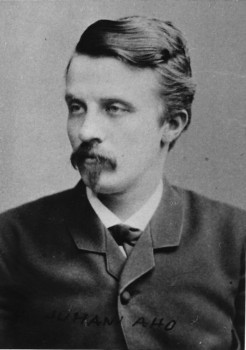
Juhani Aho. Photo: SKS/Literary archives
After having read Juhani Aho’s sensual novella Yksin (‘Alone’, 1890), set in Paris, composer Jean Sibelius threatened to challenge its author to a duel.
The yearned-for loved one in the novella resembled Sibelius’s fiancée Aino Järnefelt, for whom author and journalist Aho had nursed an unrequited passion. (No duel ensued after all.)
This year marks the 150th year since Aho’s birth. An early modernist, Aho (1861–1921) was a versatile writer whose narrative skills have made him a classic. We shall feature extracts from Yksin – in Herbert Lomas’s translation, first published in Books from Finland in 2006 – along with a reappraisal of Aho’s work in the early years of the 20th century by Professor Jyrki Nummi.
The politics of difference
17 June 2011 | Non-fiction, Tales of a journalist
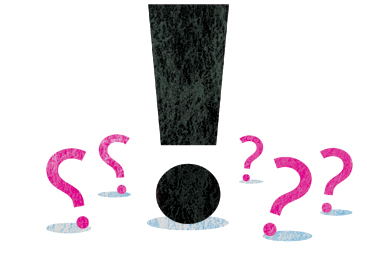
Right or wrong, my country? Illustration: Joonas Väänänen
Right or wrong, my country? Illustration: Joonas Väänänen
Big electoral turnouts are generally considered a good thing. But, writes columnist Jyrki Lehtola, in Finland the fact that the vote went up in the last Finnish general election caused a revelation. Educated urbanites and the media (perhaps near enough the same thing), are shocked by how 20 per cent of their fellow Finns think – and the ramifications caused tremors all across Europe
Listen up. Diversity is a resource. Except of course if it’s the sort of diversity that is a resource for the wrong people.
That sort of diversity isn’t the least bit nice. In Finland in the spring, we ran into the sort of diversity that even got the rest of Europe to start worrying. Out in the thickets and forests, diverse people had been springing up in secret, people of whose existence we urbanites were entirely unaware.
And they threatened to bring Europe down. Europe. Which was a bit much. More…
Kristiina Kalleinen: Kansallisen tieteen ja taiteen puolesta. Kalevalaseura 1911–2011 [On behalf of national science and art. The Kalevala Society 1911–2011]
10 June 2011 | Mini reviews, Reviews
 Kansallisen tieteen ja taiteen puolesta. Kalevalaseura 1911–2011
[On behalf of national science and art. The Kalevala Society 1911–2011]
Helsinki: Finnish Literature Society, 2011. 314 p., ill.
ISBN 978-952-223-256-5
€ 37, hardback
In 1911, the Finnish national epic Kalevala (1835, 1849), compiled by Elias Lönnrot and based on Finnish folk poetry, inspired the artist Akseli Gallen-Kallela, the sculptor Alpo Sailo, Professor E.N. Setälä and the folklorist Väinö Salminen to found the Kalevala Society (established in 1919), aimed at uniting Finland’s national science and art into a harmonious whole. As Russia tightened its grip on the Grand Duchy during the latter part of the nineteenth century, it awakened a desire to demonstrate the vitality of the Finnish language and national spirit. This book maps out the effect of the changing social and political situation on the Society’s activities. In the 1920s and 1930s the Kalevala Society remained largely outside the political and linguistic conflicts of the time. This was a period of extreme Finnish nationalism, but in the Society there was little inclination towards ‘Greater Finland’ thinking or anti-Russian or anti-Swedish sentiment. During Finland’s wars with the Soviet Union some members nonetheless had hopes of a Greater Finland, as many of the regions where the Kalevala poems originated lay on the Soviet side of the border. In recent years the Society has participated with other organisations in projects devoted to the regeneration of Russian Karelian villages and the protection of the last traditional Finnish landscapes.
Translated by David McDuff
Språk och politisk mobilisering. Finlandssvenskar i publikdemokrati [Language and political mobilisation. Finland-Swedes in public democracy]
10 June 2011 | Mini reviews, Reviews
 Språk och politisk mobilisering. Finlandssvenskar i publikdemokrati
[Language and political mobilisation. Finland-Swedes in public democracy]
Red. [in Swedish; ed. by] Kimmo Grönlund
Helsingfors: Svenska litteratursällskapet i Finland (The Society of Swedish Literature in Finland), 2011. 236 p.
ISBN 978-951-583-224-5
€ 29, paperback
Under the Finnish Constitution, Finnish and Swedish are the country’s national languages. The status of Swedish is currently the subject of debate: on the one hand there is concern about the adequacy of Swedish-language services, while on the other there is a strong opposition among the Finnish-speaking majority to the mandatory study of Swedish. This book discusses, for example, the basis on which Finland’s 5.5 per cent Swedish-speaking minority elects its party and its candidates in national elections, and the importance of the Swedish language in this choice. Research suggests that Svenska Folkpartiet, the Swedish People’s Party, would gain increased backing if it were to emphasise the language question and seeking support for Swedish-speaking districts, rather than by targeting Finnish-speakers and bilingual citizens with an interest in minority issues. The book also contains a summary of the results of the Svensk politik i Finland (Politics in Swedish-speaking Finland) research project; Kimmo Grönlund – also director of research at Åbo Akademi – was head of the project.
Translated by David McDuff
The books that sold in May
10 June 2011 | In the news
 In May the Bookseller’s Association of Finland’s list of the best-selling Finnish fiction was still topped – as it was in March – by a collection of poems: Heli Laaksonen’s Peippo vei (‘The chaffinch took it’, Otava) is written in a local dialect spoken in south-western Finland. See our introduction to Laaksonen’s new poems.
Pirjo Rissanen’s novel Äitienpäivä (‘Mother’s day’, Gummerus) was number two and Seppo Jokinen’s crime story, Ajomies (‘The driver’, Pulitzer/Crime Time) number three.
Tuomas Kyrö’s short prose about a grumpy old man resisting all sorts of contemporary fads, Mielensäpahoittaja (‘Taking offence’, WSOY), was number four.
Sofi Oksanen’s hugely successful novel about women and Estonian history, Puhdistus (WSOY, 2008) – English version: Purge –, still occupies number five on the list.
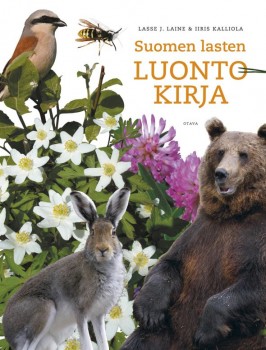
The most popular books for children and young people in May was the Finnish translation of a classic, Saint-Exupéry’s Le Petit Prince. A nature book for children, Suomen lasten luontokirja by Lasse J. Laine and Iiris Kalliola, was number two, and the cartoon kids Tatu and Patu occupied the third place (both published by Otava): Tatun ja Patun Suomi (‘Tatu and Patu’s Finland’), written and illustrated by Aino Havukainen and Sami Toivonen.
The translated fiction list was – as in March – topped by Maalattujen luolien maa (The Land of Painted Caves), by Jean M. Untinen-Auel, an American writer with Finnish roots. The novel is set in the late Paleolithic era.
On the non-fiction list there were books, in particular, on cooking, gardening, birds – and diets.
Truths to tell
1 June 2011 | Authors, Interviews

Johanna Holmström. Photo: Irmeli Jung
‘In my writing I try to give as many angles as possible, and my agenda is to show that there’s not just one truth, that there are always several ways of seeing what one perceives at first sight. So I often have more than one main narrator. I constantly aim to question accepted truths. My stories always begin with indignation about something I feel I must write about. Fiction is a way of distancing oneself. After all, books are literary, invented things. When you work on the subject of a literary text it becomes less personal.’
This is how Johanna Holmström (born 1981) describes her approach to writing. Since her first collection of short stories published in 2003 she has produced a book every two years: three short story collections and one novel. Her books have been variously described as imaginative, committed and uncomfortable. Her short story ‘Stormen’ (‘The storm’) is a precisely observed account of a day when everything changes for its young protagonist.
The storm
From the collection of short stories Tvåsamhet (‘Two alone’, Söderströms, 2005). Introduction by Tiia Strandén
A storm blows up during the night. As he lies in bed, not yet asleep, just lingering on the brink of falling, in that soft yet sensitive state where sounds seem to grow and get bigger, he can hear the clattering, hissing sound of the wind coming up out there and sweeping up everything not fastened down, capable of being put in motion. It scrapes against the roof and window, loosens leaves and pine needles which scud across the ground, and it whistles and whines round the chimney and the windows, and it even beats against the shed door, which Dad must have forgotten to shut properly before he came in. Before he stamped the mud off his boots in the front hall. Before he had a chance to pull the front door shut firmly as well, because Joakim can hear how he brings the storm into the hall with him, and it sweeps through the kitchen faster than he ever could have imagined. Joakim shuts his eyes tighter, even though he is no longer really awake, and he hears the powerful gust flap past Dad, who is still standing with his hand on the door handle, and then Mum starts shouting because the wind is slamming into the furniture and making dishes crash to the floor and making pots and pans do the same. When Dad starts shouting as well, Joakim lets go of the last little bit of wakefulness and lets himself sink down into the cradle of dreams to be carried along until the morning. It is the sun that wakes him, or maybe the sound of the telephone, because he wakes up just as it rings, but in any case it has stopped blowing, and the branches of the big lilac bush outside the window are completely still. More…
Kirjallinen kulttuuri keskiajan Suomessa [Literary culture in medieval Finland]
1 June 2011 | Mini reviews, Reviews
 Kirjallinen kulttuuri keskiajan Suomessa
[Literary culture in medieval Finland]
Toim. [Ed. by] Tuomas Heikkilä
Helsinki: Finnish Literature Society, 2010. 480 p., ill.
ISBN 978-952-212-223-7
€ 36, hardback
The literary material from Finland’s medieval period is both more extensive and more interesting than previously thought. A team of scholars has gone through almost all of the material that survives, from the eleventh to the sixteenth century: missals, merchants’ correspondence, vernacular writings and state papers. Literary culture arrived in Finland with Christianity. During the Middle Ages the language of theologians and scholars on Finnish territory was Latin, the principal language of trade was Low German, and affairs of state were conducted in Swedish. This book examines how, when and where the texts were written and what their distribution says about Finnish literary tastes of earliest times. The scholars have done detective work, tracing and connecting parchment missals which ended up as the bindings of bailiffs’ ledgers. The book takes as its main source the National Library’s Fragmenta Membranea, one of the world’s largest collections of medieval parchment fragments. It is planned to digitise the collection and make the fragments freely accessible to both scholars and the general public.
Translated by David McDuff
Heikki Hiilamo: Uusi hyvinvointivaltio [The new welfare state]
1 June 2011 | Mini reviews, Reviews
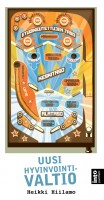 Uusi hyvinvointivaltio
[The new welfare state]
Helsinki: Like Publishing, 2011. 131 p.
ISBN 978-952-01-0615-7
€ 17, paperback
There is concern in Finland about the decline of the Nordic welfare state and the return of a class society. Problems exist with regard to issues such as the country’s aging population, changes in the structure of the labour market, the increase in income disparity, and lifestyle issues. The impoverishment caused by the recession of the 1990s did not decrease in the early 2000s, as could be seen in things like the rise of bread lines, much debated by Finns. The author – an expert on the welfare state and a poverty researcher – examines the values of the good society and its institutions. He discusses welfare as the politics of social possibilities: ‘The current system does not sufficiently allow the individual to come up with his own initiatives for positive change – instead, it fetters those initiatives.’ Hiilamo’s campaining book reflects on how the welfare state could be developed twenty years after the recession crisis, and how the middle class might be brought to realise that the growth in income disparity also affects their own welfare.
Translated by David McDuff
Jarkko Laine Prize 2011
1 June 2011 | In the news

Juha Kulmala. Photo: Lotta Djupsund
The Jarkko Laine Literary Prize (see our news from 6 May), worth €10,000, was awarded to Juha Kulmala (born 1962) on 19 May for his collection of poems entitled Emme ole dodo (‘We are not dodo’, Savukeidas, 2009).
The prize is awarded to a ‘challenging new literary work’ published during the previous two years. Shortlisted were also two novels, Kristina Carlson’s Herra Darwinin puutarhuri (‘Mr Darwin’s gardener’, Otava, 2009) and Erik Wahlström’s Flugtämjaren (‘Fly tamer’, Finnish translation Kärpäsenkesyttäjä, Schildts, 2010).
Jarkko Laine (1947–2006) was a poet, writer, playwright, translator, long-time editor of the literary journal Parnasso and chair of the Finnish Writers’s Union.
Head in a cloud
27 May 2011 | Articles, Non-fiction
Thinking, reading, writing, buying… Teemu Manninen explores the new freedoms, literal and poetic, offered by cloud computing, where what you can do is no longer limited by what you happen to have on your computer

High in the sky: cumulus clouds. Photo: Michael Jastremski, Wikimedia
I’m sitting in a rocking chair on the porch of a cottage by a lake. My fingers tap and slide on the surface of a black glass panel, a kind of instrument used in the composing of literature. Each tap equals a letter, a series of taps equals a word, a symphony of taps becomes a paragraph, a paragraph an essay.
The glass panel remembers these letters and words and the writings they become, and knows them by their names, but it could also record anything I see or hear. I could even talk to it and it would understand my commands, as if some nether spirit were captured inside, a magic genie slaved to do my bidding. More…