

Archive for March, 2009

Päivi Heikkilä-Halttunen

Juha Virta: Sylvi Kepposen pitkä päivä [Sylvia Prank's long day]

3 March 2009 | Mini reviews

Sylvi Kepposen pitkä päiväSylvi Kepposen pitkä päivä
[Sylvia Prank’s long day]
Kuvitus [Ill. by]: Marika Maijala
Helsinki: Otava, 2008. 33 p., ill.
ISBN 978-951-1-22373-3
€ 17, hardback

The long, narrow shape of this picture book is justified, as it literally gives the reader a clear perspective on its illustrations. Sylvi is a little girl whose legs one day grow so long that she is able to leap into space. Sylvi becomes a media phenomenon and the object of universal astonishment – until her legs return roughly to their former size. The book, by Juha Virta (born 1970) and his partner Marika Maijala (born 1974), owes much to nonsense writing and Lewis Carroll’s Alice in Wonderland, but the story and the pictures are an amazingly well-balanced combination, expressing humour, unceremonious wonder and a childlike ability to derive pleasure from moments of absurdity.

Päivi Heikkilä-Halttunen

Esko-Pekka Tiitinen: Villapäät [Woollyheads]

3 March 2009 | Mini reviews

VillapäätVillapäät
[Woollyheads]
Helsinki: Tammi, 2008. 134 p.
ISBN 978-951-31-4397-8
€ 17, hardback

Amid the angst and tangled human relationships that seem to dominate juvenile books, Villapäät provides young readers with ideals and the clothes to go with them, but eschews a market-driven focus on the self. 15-year-old Timppa and his friends form a band, and soon The Woollyheads will be the star of a charity fundraising concert. The global crisis and selfless relief work acquire a human face when Timppa sees a video on the life of Henry Dunant, the founder of the Red Cross – the only ‘trauma’ Timppa himself suffered as a child was caused by swallowing a Lego block. An important subsidiary role is played by a perceptive teacher who channels the youth into a beneficial, creative hobby. Esko-Pekka Tiitinen (born 1945) was awarded the 2008 Finlandia Junior Prize for Fiction for this book, his 16th.

Päivi Heikkilä-Halttunen

Raili Mikkanen: Pähkinäpuinen lipas [The walnut wood box]

3 March 2009 | Mini reviews

Raili MikkanenPähkinäpuinen lipas
[The walnut wood box]
Helsinki: Tammi, 2008. 205 p.
ISBN 978-951-31-3855-4
€ 17, hardback

In this vivid juvenile novel, third in the series set in the 17th century, there are surprising points of comparison with the lives of young people today. The three daughters of the healer Briita seek a place of their own in a small rural community after their mother’s death. The youngest, Anna, inherits her mother’s walnut wood box. Unlike her peers, Anna is able to read and write, and the old documents found in the box explain why Briita was a violent mother who sought to relieve the pain of her life with medicinal herbs; her daughters are finally able to understand and forgive her. Through her sympathetic main character, Mikkanen (born 1941) skilfully constructs the image, familiar from classical literature, of a young woman who attains success despite her lowly origins.

Päivi Heikkilä-Halttunen

Annika Luther: Brev till världens ende / Kirje maan ääriin [Letter to the ends of the earth]

3 March 2009 | Mini reviews

Annika LutherBrev till världens ände
[Letter to the ends of the earth]
Helsingfors: Söderströms, 2008, 184 p. .
ISBN 978-951-52-2566-5
€ 18, paperback
Kirje maan ääriin
Helsinki: Teos, 2008, 197 p.
Suomentanut [Translated into Finnish by] Tarja Teva
ISBN 978-951-851-180-2
€ 21, paperback

This story involves the identity crisis of two boys, a discussion of the human ecological footprint and the growing loss of a relationship with nature. Viktor and Jeppe have been friends since childhood until the mysterious Maira upsets the boys’ relationship. Annika Luther (born 1958) is not content to write a traditional triangle drama – instead she seasons it with Viktor’s betrayal, an act committed in a fit of jealousy that has unforeseeable consequences. The novel’s power lies in its ever-increasing tension, as the trust between the boys breaks down. The plotline is occasionally unconvincing, but at the heart of the novel is the fickle human mind, stripped of all its trappings. The book received the 2008 Topelius Prize.

Päivi Heikkilä-Halttunen

Marja-Leena Lempinen: Punainen lumme [The red lily]

3 March 2009 | Mini reviews

Punainen lummePunainen lumme
[The red lily]
[Helsinki: WSOY, 2008. 232 p.
ISBN 978-951-0-34434-7
€ 21, hardback

16-year-old Ella’s story is told with gusto and vitality. The novel deals critically, in a way that will appeal to young readers, with questions of Internet etiquette, personal protection and the right to one’s own body. Lempinen depicts the sexual exploitation of a young girl in realistic terms, but does not over-dramatise it. Ella, however, needs to regain her mental equilibrium in a psychiatric hospital, with the help of the understanding staff. The gift of a red lily she receives from friends develops into a beautiful symbol of her gradual attainment of her sexual identity. As in her earlier novels for teens, Lempinen (born 1950) gives an important role to the experience of nature, and this is a leading factor in Ella’s recovery.

Päivi Heikkilä-Halttunen

Jukka Laajarinne: Elina vieraalla maalla [Elina in a foreign country]

3 March 2009 | Mini reviews
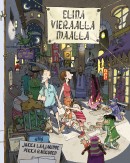
Elina vieraalla maallaElina vieraalla maalla
[Elina in a foreign country]
Kuvitus [Ill. by]: Pekka Rahkonen
Helsinki: WSOY, 2008, 25 p.
ISBN 978-951-0-33983-1
€ 21, hardback

Elina is of preschool age when her parents receive a two-year posting, in the fictional country of Kumarkand. After Elina’s initial enthusiasm, the foreign culture frightens her. But when the time comes to go back to Finland, Elina misses Kumarkand and the close friends she has made there. This picture book deals with a timely theme that affects more families than it used to. The intersection of one’s own national identity with a foreign culture is given nuanced, humorous expression by the work of the cartoonist Pekka Rahkonen. Jukka Laajarinne (born 1970) does not lapse into the obvious, but compresses the essential. The snippets of ‘Kumarkand language’ encourage adults reading the book aloud for children to invent some miniature drama for them.