

poetry
You may say I’m a dreamer
25 November 2014 | Fiction, poetry
Prose poems from Tärnornas station – en drömbok (‘The Lucia Maids’ Station – a dream book’‚ Ellips, 2014). Introduction by Michel Ekman
I nurse a very small, perfectly formed child. It’s a girl. She smiles openly at me, even though she is so small. There is no doubt, neither about that nor anything else. The girl is the size of a nib pen, and just as exclusive. The nursing is going very well, it doesn’t hurt, and she can suckle without any problems. We are both at ease and yet awake, not introspective. The girl has intelligent eyes.
The milk keeps flowing.
Nothing runs dry.
Everything is obvious and neither of us is surprised. Just the fact that she is so small. Like a fountain pen. She is swathed in strips of bird cherry white bandages – like the ones mum had in her summer medicine cabinet – a cocoon, a chrysalis, but she’s not cramped, just secure. It smells good around us. I nurse my daughter who is perfect and the right size.

Love is the only song
7 August 2014 | Fiction, poetry
Poems from Helise, taivas! Valitut runot (‘Ring out, sky! Selected poems’, Siltala, 2014). Introduction by Marja-Leena Mikkola
Who will tell me?
Who will tell me why white butterflies
strew the velvet skin of the night?
Who will tell me?
While people walk, mute and strange
and they have snowy, armoured faces,
such snowy faces!
and the eyes of a stuffed bird.
Who will tell me why in the morning, on the grass,
the thrushes begin their secret game?
Who will tell me?
While black soldiers stand at the gate
in their hands withered roses
such withered roses!
and broken tiger lilies.
Who will tell me, quietly in the sun’s shadow
how to bare my heart?
Who will tell me?
Come to me over the fields
Come close and softly
so softly!
Open the clothes of my heart. More…
Another morning, another day
Poems from Unen kaivo (‘The well of dreams’, WSOY, 1936). Introduction by Satu Grünthal
IN THE MIRROR
Strange and truly wondrous
in the mirror you look at me.
All I really know is
that you I cannot be.
With my eyes you survey me,
with my lips you smile, too,
what I see in the mirror
is not me, but you, just you.
Whoever you are – astral morning,
eternal night – in the frame
like a wraith, a ghostly phantom,
invisible I remain. More…
Bonfires in the garden
6 March 2014 | Fiction, poetry
Poems from Inga stjärnor i natt, sir (‘No stars tonight, Sir’, Schildts & Söderströms, 2012). Introduction by Jukka Koskelainen
With us on the cruise was
an old, old man.
We wondered what
he was doing there.
He sat at a table by himself.
Silent. Drinking water.
Never turned up at the cabaret
or the ballroom.
Once he asked the receptionist,
rumour had it, if it was possible
to go out into the fresh air,
there beneath the stars.
‘No stars tonight, sir!’
said the man in the hatch.
The old man wasn’t seen again
until we reached land.
Wonder what happened to him.
Not that it’s any of our business.
Air, blue and gold
16 January 2014 | Fiction, poetry
Poems. Introduction by Tuula Hökkä
The arch bridge
From Ylitse vuoren lasisen (‘Over the glass mountain’, 1949)
And God said: to others I’ll give other tasks, but the task I’ll give to you
is to make a curving bridge, my child, with an arch that’s round and true.
For everywhere around the earth human beings are laden with gloom,
and they’ll come to cross an arching bridge in their anguish and their doom.
Make a bridge that spans the precipice, a bridge over the abyss,
one that shines to my glory with radiance, sparkling like this.
I said: They will come with heavy boots, and heels caked with clay –
how can my bridge withstand their weight, yet also shine this way,
not tarnish or break apart as their crowding presence nears?
And God said: well, it can only be done by means of blood and tears.
Your heart is stronger than mountain rock, the ore that’s buried there –
Put a piece of it into the bridge support, and you’ll get the bridge to bear.
Add a piece of the hearts of those you love, and I know they won’t condemn,
but will surely grant you forgiveness if you make a bridge for them.
Make a bridge to the glory of God, my child, make a bridge with arching light
that will span the depths and shine for ever, with radiance sparkling bright.
Don’t lock the sorrow out of your heart as the bridge you make appears.
Nothing gleams more beautifully than the brilliance of pure tears. More…
A fleeting scent
24 October 2013 | Fiction, poetry
Poems from Öar i ett hav som strömmar (‘Islands in a flowing sea’, Schildts and Söderströms, 2013). Introduction by Michel Ekman
A fig wasp’s life
She squeezes in. The opening closes and the world overflows. She swims in the sweet flowing moisture. In the sycamore fig tree, a myriad of delicate white blossoms have burst out. For her eyes alone, a damp garden, alabaster-clear. The home she’s been longing for. There she lays her eggs, empties her pouches. Tiny little pollen grains for the tiny little blossoms. Membranes form round the eggs, they live off the sweetness, it rocks them gently. Fine, frail swaying thicket of embryos More…
Solid, intangible
26 September 2013 | Fiction, poetry
Poems from Mot natten. Dikter 2010 (‘Towards the night. Poems 2010’, Schildts & Söderströms, 2013). Introduction by Michel Ekman
Memory
If you give me time
I don’t weigh it in my hand:
it’s so light, so transparent
and heavy as the thick
shining darkness
in the backyard gateway
to memory
Writing silence
6 June 2013 | Fiction, poetry, Reviews
In contemporary poetry the ‘lyric I’ of previous decades often hides behind language; the poem’s speaker is not the poet him/herself, narrative is not the norm. The website of a Finnish family magazine in 2007 discussed this: ‘OMG, this thing called contemporary poetry – crap!’; ‘Who knows what kind of psychopharma the writer’s on!’; ‘No meanings, just words one after the other. Why can’t people write something sensible?’ But the writer – and the reader – of contemporary poetry deliberately ventures onto the boundaries of language, and art requires readers (listeners, viewers) to make the decision of what they consider ‘sensible’. Mervi Kantokorpi explores and interprets two new collections of poetry
I read two of this spring’s new collections of poetry one after the other: Kivirivit (‘Stone lines’, Otava 2013) by Harry Salmenniemi and Pysty hiljaisuus (‘Vertical silence’, Teos 2013) by Miia Toivio. The experience was perplexing.
These two works are completely different from one another as regards their individual poetics, and yet the similarities between the themes that arise from them was arresting. Both works seem to inhabit an internal world of sorrow and depression, a world where the function of poetry is to forge and show its readers a path out of the anxiety. In their silence – and even emptiness – both collections have two faces: one lit up, the other darkened by grief. More…
Within the mirror
 An extract from Kivirivit (‘Stone lines’, Otava, 2013). Introduction and commentary, Writing silence,
by Mervi Kantokorpi
Then, not now. White birches against the white
sky. A vase in the middle of the room.
An attempt to make contact, but with what? The room slowly
fills with whisper and touch. A woman,
turning to catch herself in the mirror,
is afraid the phone will start ringing and startle
her. A gap-closer, not an equaliser.
Beneath the bridges, faces around the fire, these, those. More…
Twisted tongues
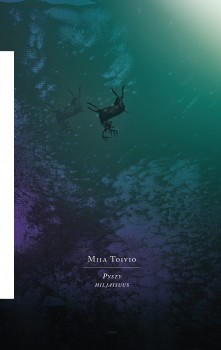 Poems from Pysty hiljaisuus (‘Vertical silence’, Teos, 2013). Introduction and commentary, Writing silence, by Mervi Kantokorpi
She said, it was I who said, alone, my feelings confused. Should I somehow have cleared my head, though all I wanted to do was write in the water? ‘Behind me I drag desire’s reflection, like the skirts of a boat sinking towards the depths,’ she once bespoke me. ‘Your skirts are heavy with algae and their smell would banish even the insects. A deer, swimming across a long lake, becomes entangled by the heel, only worsening things as it thrashes there, until it too falls straight down, never floating, to the bottom of the lake,’ I replied. She turned her back and leant against the wall. I couldn’t see her fingers as she, controlling the sound, ripped off a small, wriggling fin, closed it in her fist and turned towards me with an unnatural smile:
All the grace
21 February 2013 | Fiction, poetry
Poems from Huhtikuu (‘April’, 1932), Sateen jälkeen (‘After the rain’, 1935), Hunnutettu (‘Veiled’, 1936), Kaukainen maa (‘Distant land’, posthumous, 1937; all published by WSOY). Introduction by Vesa Haapala
ON THE SHORE
The wonderful pale clouds
cross the sky like wings.
Quiet and enchanting
the open water sings.
The sand has grown weary
of the waves’ caressing play.
Now come in perfect quiet,
now come here, right away…
17.3.1930 More…
The dead speak kindly
1 November 2012 | Fiction, poetry
Memory, winter and everyday are studied in Tua Forsström’s new collection of poems, En kväll i oktober rodde jag ut på sjön (‘One evening in October I rowed out on the lake’, Schildts & Söderströms, 2012). Introduction by Michel Ekman
I fell through the papers laid aside
I came to a place where I was supposed to stay
for four nights but I stayed four years
Someone said: you have caused the council considerable expense
I said: this is my situation
A brave little cat came to my rescue
I could see what I wanted in the dark
at night and no one saw me
It was like a dream but I wasn’t dreaming
I was not afraid and I could pass through chalcedony
I could pass through quartz crystals
I could pass through sad and sick
On the bottom in the mud coins from many lands lay gleaming
We wish for anything between heaven and earth
All that we see and cannot see and lost
I do not recognise myself, and no one sees me More…
Dear diary
18 October 2012 | Authors, Extracts, Non-fiction, poetry
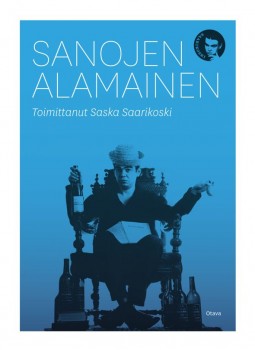 The poet and translator Pentti Saarikoski (1937–1983) was a legend in his own lifetime, a media darling, a public drinker who had five children with four women. His oeuvre nevertheless encompasses 30 works, and his translations include Homer and James Joyce. The journalist Saska Saarikoski (born 1963) has finally read all that work – in search of the father whom he seldom met. The following samples are from his annotated selection of Pentti Saarikoski’s thoughts over 30 years, Sanojen alamainen (‘Servant of words’, Otava, 2012; see Figuring out father)
I try to write books whose reading will bring enjoyment, in other words not entertaining ones.
Suomentajan päiväkirjat (‘Translator’s diaries’, 1970)
The term ‘world literature’ was invented by Goethe to describe the importance of Goethe.
Päiväkirjat (‘Diaries’, 1978)
A work of art is bad if it ‘makes you think’. About something other than itself. What is wrong with ‘art for art’s sake’ – or bread for bread’s sake? Art is art and bread is bread, and people need both in their diet.
Päiväkirjat (‘Diaries’, 1978) More…
Taken by surprise
In her fifth collection of poems, Pauliina Haasjoki explores night flights, water, islands, sandy beaches where time is found stratified in stones and fossils. Interview by Teemu Manninen
Poems from Aallonmurtaja (‘Breakwater’, Otava, 2011)
Night flight
Man cannot hide in the night, his desire will betray him.
Man turns toward the lights, light sparkles as though it were close at hand
even if it is far away.
Lights, which offer themselves like jewels to the one who sits in the plane above them, are already
                                                                                                                                 in their viewers’
eyes even if they have only just begun to stream from their source. A city-jewel swaying
in the black night air.
A solitary light on the surface of an island. Seen close up it is a soft-lit lamp
which casts light only on the table and the faces around it,
but from above, at a distance of kilometres, it is an immediate spot, a straight line that
                                                                                                                                aims at the viewer
and pierces her. A fierce light-beam.
Word-flames
1 March 2012 | Fiction, poetry
Harri Nordell breaks up grammar, invents words and leaves sentences unfinished. His poems are like minimalist, language-shattering sculptures of words. In her introduction Tarja Roinila compares Nordell’s poems to windows on to another world
Poems from Sanaliekki äänettömyydessä. Valitut runot 1980–2006 (‘Word-flame in silence. Selected poems 1980–2006’, WSOY, 2011)
You are beautiful
light-cupola-ecstasy of the eye
I look at you
from I-silence
daughter, bringer of the Word
involvement has been inscribed
with the name’s black reed
Girl, salt-grain of light
the mighty river of blood rinses memory,
otherness has come through us