

Archive for May, 2009
In praise of melancholy
28 May 2009 | Authors, Essays, Non-fiction, On writing and not writing
In this series, Finnish authors ponder the difficulties of their profession. Sirpa Kähkönen, author of six novels, gives an account of going unseen – the painful initiation, triggered by the lukewarm reception of one of her books, of a more mature and profound phase in her life as a creative writer
I found myself in a temporary but intense period of creative crisis in the spring of 2006. The crisis was expressed outwardly in the classic manner – as an emptiness, a desertification. Suddenly I was unable to get to the place between dream and reality where an artist operates. Something was missing from my writing; the spark, the vibration, the lifeblood. More…
Literary prizes: the Dancing Bear 2009
21 May 2009 | In the news
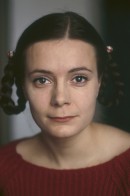
Sanna Karlström. - Photo: Irmeli Jung
This year’s Dancing Bear Poetry Prize, worth €3,500, has gone to Sanna Karlström (born 1975) for her third collection of poems, Harry Harlow’n rakkauselämät (‘The love lives of Harry Harlow’, WSOY, 2008). The prize is awarded every May by the Finnish Broadcasting Company to a book of poetry published the previous year. It was given this year for the 16th time.
The collection, containing short, condensed tales of love and lovelessness, forms a fragmented portrait of the American psychologist Harry Harlow who, in the 1950s, made notorious experiments with young rhesus monkeys in which he separated them from their mothers.
Chosen by a jury of three radio journalists, Barbro Holmberg, Marit Lindqvist and Tarleena Sammalkorpi, and the poet Risto Oikarinen, the other shortlisted authors were Ralf Andtbacka, Kari Aronpuro, Eva-Stina Byggmästar, Jouni Inkala and Silja Järventausta.
Re-inventing the book: on the papernet, pod and the unbook
20 May 2009 | Articles, Non-fiction
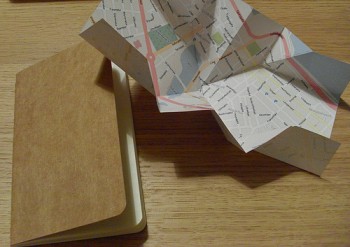
Mind-map: using the papernet to produce books just for you. - Photo: Brian Suda
Just as Books from Finland finally goes online, the brightest minds of the internet are forecasting a return to paper. In the first of a series of articles, the poet and scholar Teemu Manninen celebrates the second coming of the book
Last week I did something I’ve never done before. I uploaded the manuscript of my third book on to the website Books on Demand, an internet print-on-demand (‘pod’) service, chose the format (a large 19×22 cm size with a hard cover), selected a picture for my cover, copy-pasted a poem by Clark Ashton Smith – an American science fiction and fantasy writer – on the back flap and ordered a copy. More…
New translations?
15 May 2009 | In the news
Where to find new translations of Finnish books? Until last year, Books from Finland published lists of new translations of Finnish literature into other languages in its printed issues. These data are compiled and updated by the Finnish Literature Exchange FILI and the Library of the Finnish Literature Society, and you can find them in this database.
Desire versus apathy
14 May 2009 | Authors, Reviews
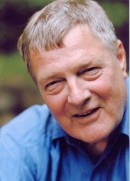
Claes Andersson. - Photo: Johan Bargum.
Bror Rönnholm on the poetry of Claes Andersson
‘Use it or lose it,’ writes Claes Andersson in his latest collection of poetry, Lust (‘Desire’, Söderström, 2008). The collection deals not only with the flesh and bones of things, but with thoughts and emotions: ‘First you are unfeeling then cold / then insensible’. And just like hate, love and desire, you will lose friendship too if you don’t use it.
Perhaps after 28 books and an active life as a psychiatrist, a politician and a jazz pianist, Claes Andersson (born 1937) has reached the age at which he realises that desire, in the broadest sense of the word, is not a self-evident, constantly regenerating spring, but something to nurture and to fight for. It goes without saying that an older person’s perspective and the proximity of death run through the collection like an active undercurrent. Despite the title there is also room for plenty of apathy in this collection. Or, rather, desire also has its darker, complicated sides. More…
Writers meet again in Lahti
14 May 2009 | In the news
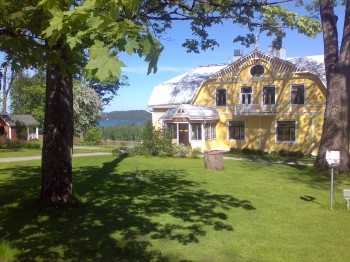
In other words: LIWRE at Messilä Manor
The Lahti International Writers’ Reunion (LIWRE; www.liwre.fi) will be held this year between 14 and 16 June.
In the politically and culturally active 1960s, marked by the confrontation between East and West, an idea was born to found an international, bi-annual rendezvous where writers from all over the world could freely engage in discussions on various themes.
The personal and the political
In his new collection, Claes Andersson (born 1937) – poet, pianist and politician – takes a look at what human existence is about: excess, apathy, greed, devotion, freedom, and the simple pleasures of everyday life (see the introduction)
Poems from Lust (‘Desire’, Söderströms, 2008), translated by David McDuff and David Hackston
A Finnish translation, by Jyrki Kiiskinen, is entitled Ajan meno (WSOY, 2008)
(easter)
Despite the prognoses of the Earth's imminent warming
today April 8 it is cold enough to make one’s teeth chatter

In a few weeks I will turn seventy, my ninth grandchild
  August (Siiri's younger brother)
was born two months ago and the tenth is on the way
Ruma sota [The ugly war]
11 May 2009 | Mini reviews, Reviews
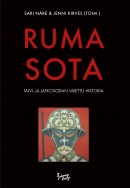 Ruma sota. Talvi- ja jatkosodan vaiettu historia
[The ugly war. The suppressed history of the Winter and Continuation Wars ]
Toim. [Ed. by] Näre, Sari & Kirves, Jenni
Helsinki: Johnny Kniga, 2008. 468 p., ill.
ISBN 978-951-0-32917-7
€ 39, hardback
The book is about the conflicts associated with the interpretation of the Finnish Winter and Continuation Wars (1939–1944) and the culture of silence which followed them. It argues that the psychological impact of those wars, which shifted from one generation to the next, caused suffering, and that those who had traumatic experiences were left largely alone with their distress. The articles examine children’s experiences of war, the experiences of cowards and deserters, the effects of war on sexual behaviour and drug use, and the impact of propaganda on people’s minds. There is a startling essay on violence at the front line based on the writings of veterans, with photographic archival material. The book also discusses the views of Finnish writers who served in the wars, and the violations of human rights encountered by prisoners of war.
I hate your Face(book)
5 May 2009 | Columns, Tales of a journalist
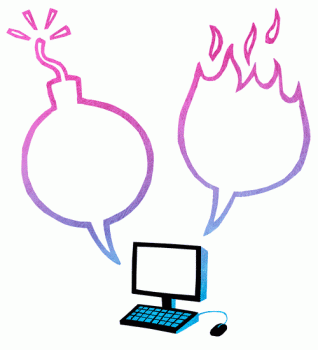
Illustration: Joonas Väänänen
Just how ‘free’ is free speech? Pay a visit to any internet chatroom, and you’ll see. In the first column of a new series called ‘Journalist’s tales’, the media critic Jyrki Lehtola investigates intolerance on the internet
First there was utopia. Then came people, and utopia suffered.
As with all new inventions, from electricity to the atom bomb, internet social networks were supposed to make our lives better. They were supposed to give us license to network, to participate, to get to know each other, to get reacquainted, to flirt, to find an extramarital lover and to be connected to as many people as possible in as many inconsequential ways as possible. More…