

Tag: literary history
H. K. Riikonen: Nukuin vasta aamuyöstä. Olavi Paavolainen 1903–1964 [I didn’t fall asleep until morning. Olavi Paavolainen 1903–1964]
9 April 2015 | Mini reviews, Reviews
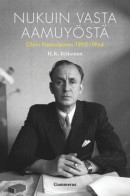 Nukuin vasta aamuyöstä. Olavi Paavolainen 1903–1964
[I didn’t fall asleep until morning. Olavi Paavolainen 1903–1964]
Helsinki: Gummerus, 2014. 584 pp., ill.
ISBN 978-951-20-9714-2
€36.90 , hardback
In the 1920s and 1930s the author and journalist Olavi Paavolainen was a prominent cultural figure among young writers and artists. Published after the Second World War, his controversial war diary, Synkkä yksinpuhelu (‘Sombre monologue’, 1946), remains his best-known literary work. This book, by Professor of Literature H.K.Riikonen, focuses on Paavolainen’s literary activities and his oeuvre; it complements and deepens another biography of Paavolainen published in 2014, Tulisoihtu pimeään (‘A torch into the darkness’) by Panu Rajala. Riikonen thoroughly examines Paavolainen’s works as well as his post-war career as a director at the Finnish Broadcasting Company. At times Riikonen’s views, based on careful research, differ from Rajala’s interpretations. Riikonen also features the cultural life and eminent contemporary figures of Paavolainen’s era. At times the text, with its precise references and culture-historical details, meanders somewhat. The book includes plenty of quotes from Paavolainen’s works as well as interesting fact boxes related to the circumstances of his life.
Archives open!
12 December 2014 | This 'n' that
Illustration: Hannu Konttinen
For 41 years, from 1967 to 2008, Books from Finland was a printed journal. In 1976, after a decade of existence as not much more than a pamphlet, it began to expand: with more editorial staff and more pages, hundreds of Finnish books and authors were featured in the following decades.
Those texts remain archive treasures.
In 1998 Books from Finland went online, partially: we set up a website of our own, offering a few samples of text from each printed issue. In January 2009 Books from Finland became an online journal in its entirety, now accessible to everyone.
We then decided that we would digitise material from the printed volumes of 1976 to 2008: samples of fiction and related interviews, reviews, and articles should become part of the new website.
The process took a couple of years – thank you, diligent Finnish Literature Exchange (FILI) interns (and Johanna Sillanpää) : Claire Saint-Germain, Bruna di Pastena, Merethe Kristiansen, Franziska Fiebig, Saara Wille and Claire Dickenson! – and now it’s time to start publishing the results. We’re going to do so volume by volume, going backwards.
The first to go online was the fiction published in 2008: among the authors are the poets Tomi Kontio and Rakel Liehu and prose writers Helvi Hämäläinen (1907–1998), Sirpa Kähkönen, Maritta Lintunen, Arne Nevanlinna, Hagar Olsson (1893–1979), Juhani Peltonen (1941–1998) and Mika Waltari (1908–1979).
To introduce these new texts, we will feature a box on our website, entitled New from the archives, where links will take you to the new material. The digitised texts work in the same way as the rest of the posts, using the website’s search engine (although for technical reasons we have been unable to include all the original pictures).

By the time we reach the year 1976, there will be texts by more than 400 fiction authors on our website. We are proud and delighted that the printed treasures of past decades – the best of the Finnish literature published over the period – will be available to all readers of Books from Finland.
The small world of Finnish fiction will be even more accessible to the great English-speaking universe. Read on!
Panu Rajala: Tulisoihtu pimeään. Olavi Paavolaisen elämä [A torch into the darkness. The life of Olavi Paavolainen]
13 November 2014 | Mini reviews, Reviews
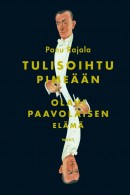 Tulisoihtu pimeään. Olavi Paavolaisen elämä
[A torch into the darkness. The life of Olavi Paavolainen]
Helsinki: WSOY, 2014. 624 pp., ill.
ISBN 978-951-040254-2
€32.90, hardback
In the 1920s Olavi Paavolainen (1903–1964) became the charismatic figurehead of the influential Tulenkantajat (‘Firebearers’) movement, which placed emphasis on internationalism and modernism. After the movement broke up Paavolainen worked as a prominent cultural leader and critic who knew how to provoke and to arouse admiration. The original travel book he wrote about Nazi Germany in peacetime is still read, as is his book Synkkä yksinpuhelu (‘A sombre monologue’, 1946), based on the diaries he kept during the Second World War. The criticism the book received (and doubts about its author’s ‘wisdom of hindsight’) contributed to Paavolainen’s silence as a writer. Although in the 1950s and 1960s as a director he brought about a flourishing of radio drama at the Finnish Broadcasting Company, he became an alcoholic. Much has been written about Paavolainen, but author and researcher Panu Rajala’s popular biography has managed to find new perspectives and gives a vivid portrayal of Paavolainen’s personality, the writers he knew, the colourful story of his complex relationships with women, and his travels. There is less analysis of his literary production, though the content and reception of his books are discussed.
Translated by David McDuff
Finlands svenska litteratur 1900–2012 [Finland’s Swedish literature 1900–2012]
6 November 2014 | Mini reviews, Reviews
 Finlands svenska litteratur 1900–2012
[Finland’s Swedish literature 1900–2012]
Red. [Edited by] Michel Ekman
Helsingfors: Svenska litteratursällskapet i Finland / Stockholm: Atlantis, 2014. 376 pp., ill.
ISBN 978-951-583-272-6
€35.90, paperback
This history of Finland-Swedish literature is an updated version of the second volume of Finlands svenska litteraturhistoria (eds. Johan Wrede and Clas Zilliacus, 1999–2000), and it concentrates on the period from 1900 to 2012, with much new critical material relating to the years after 1975. Some 20 contributors under the editorship of Michel Ekman provide a diverse and inclusive overview of a literature that embraces poetry, prose fiction, children’s writing, essays and drama. The book traces the story of Finland-Swedish literature from the ‘fresh start’ of the turn of the 19th century, through the experiments of modernists like the poets Edith Södergran and Elmer Diktonius, to the work of present-day novelists like Monika Fagerholm and Kjell Westö. However, the emphasis throughout is on general lines of development rather than on individual authors’ careers. The authors discuss the relationship between the work of Finland’s Swedish-language writers and their Finnish-language counterparts in a perspective that not only views the minority literature as a part of the Finnish whole, but also considers it as a bridge between the literatures of Sweden and Finland – the subject of a concluding essay by Clas Zilliacus. The material is presented in essays subdivided in a readable way that combines factual information with critical and historical analysis.
Monikulttuurisen maamme kirja. Suomen kielen ja kulttuurin lukukirja [The book of our multicultural land. A reader of Finnish language and culture]
23 October 2014 | Mini reviews, Reviews
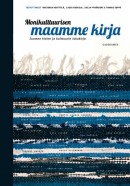 Monikulttuurisen maamme kirja. Suomen kielen ja kulttuurin lukukirja
[The book of our multicultural land. A reader of Finnish language and culture]
Toim. [Ed. By] Marjukka Kenttälä, Lasse Koskela, Saija Pyhäniemi, Tuomas Seppä
Helsinki: Gaudeamus, 2013. 252 pp.
ISBN 978-952-495-253-8
€ 34, hardback
This book opens a fascinating, often entertaining and eminently readable perspective on Finnishness and Finnish culture. It contains short Finnish texts supplied with introductions, from the Kalevala and the writings of Finland’s national author Aleksis Kivi to the present day. There are also Finnish translations of the work of Finnish-Swedish authors. The older texts are drawn from the literary ‘canon’, in works by J.L. Runeberg, Z. Topelius, Juhani Aho, Maria Jotuni, Eino Leino, F.E. Sillanpää, Väinö Linna and Tove Jansson. Among the excerpts that date from more recent times there are even pop and rock lyrics. The writing often throws light on some aspect of Finnishness, sometimes with a critical or ironic note. There is also writing by immigrants. Interspersed with the literary examples are short essays giving the views of experts on subjects like Finnish history, language or sport. Some of the texts conclude with a glossary of unfamiliar words and terms. The explanations are arranged in order of their appearance in the text: for the casual reader seeking the meaning of a word, alphabetical order would have been more practical, though even then some phrases might have remained unnoticed.
Translated by David McDuff
Updated, alive
8 May 2014 | Non-fiction, Reviews
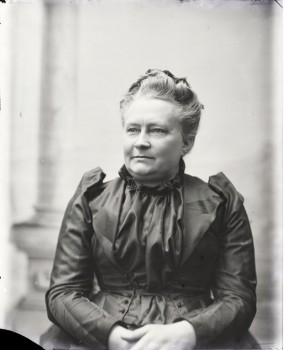
Minna at 50. The Finnish flag is flown on her birthday: 19 March has been named the Day of Equality. Canth also flies on the tail of one of the aircrafts of the Nordic airline Norwegian: the fleet carries portraits of ‘heroes’ and ‘heroines’ of four Nordic countries (the other Finn is the 19th-century poet J.L. Runeberg). Original photo: Viktor Barsokevich / Kuopio Museum of Cultural History
Herkkä, hellä, hehkuvainen – Minna Canth
[Sensitive, gentle, radiant – Minna Canth]
Helsinki: Otava, 2014. 429 pp., ill.
ISBN 978-951-1-23656-6
€40.20, hardback
There are two sure methods of preserving the freshness of the works of a classical author in a reading culture that is increasingly losing its vigour.
The first is to give a high profile to new interpretations of them, either in the form of scholarly lectures or of artistic re-workings, such as dramatisations, librettos or film scripts. Another unbeatable way to keep them alive as a subject of discussion is an updated biography, through which the author is seen with new eyes.
Minna Canth (1844–1897) is now celebrating her 170th anniversary, and she is fortunate in both respects. Having begun her literary career in the late nineteenth century, she still continues to be Finland’s most significant female writer.
Her influence on the role of women in society and, in particular, her promotion of girls’ education, is the cornerstone of Finland’s social equality. In the twenty-first century Canth’s plays are still receiving new interpretations, and they have also been made into operas and musicals. (Read her short story, ‘The nursemaid’, here.) More…
Minority report
20 February 2014 | Reviews
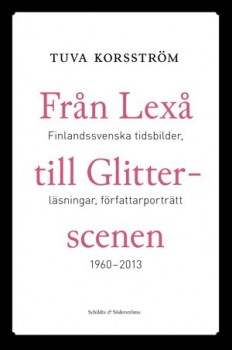 Tuva Korsström
Från Lexå till Glitterscenen. Finlandssvenska tidsbilder, läsningar, författarporträtt 1960–2013
[From Lexå to the Glitter Scene. Finland-Swedish period pieces, readings, portraits of authors 1960-2013]
Helsinki: Schildts & Söderströms, 2013. 529 pp., ill.
ISBN 978-951-52-3224-3
€37.90, hardback
The only thing unequivocally separating the Swedish minority in Finland from the Finnish majority is language. Therefore the word – be it written, spoken, sung – has always occupied a privileged position amongst Finland-Swedes. This has resulted in a richness of literature and mass media, which is surprising for a minority that today numbers fewer than 300,000 people, or just over five per cent of the population. For Swedish language literature in Finland – the topic of Tuva Korsström’s book Från Lexå till Glitterscenen. Finlandssvenska tidsbilder, läsningar, författarporträtt 1960–2013 – the period following the Second World War has been a success history.
The strength and force of this literature has manifested itself in many ways: through an increasing professionalisation of the writing community, through a steady stream of new writing talent, and through increased diversification, both in terms of regions and genres. In competition for major national and Nordic prizes, such as the Finlandia Prize for Fiction, the Runeberg Prize, and the Nordic Council Literature Prize, Finland-Swedish books have been strong contenders, and authors [see the list] such as Tove Jansson, Märta Tikkanen, Bo Carpelan, Kjell Westö, and Monika Fagerholm have gained large audiences, both nationally and internationally. More…
Happy birthday to us!
13 February 2014 | Letter from the Editors

Picture: Wikipedia
It’s been five years since Books from Finland went online, and we’re celebrating with a little bit of good news.
In the past year, the number of visits to the Books from Finland website has grown by 11 per cent. The number of US and UK readers grew by 29 per cent, while the number of readers in Germany – stimulated perhaps by the publicity Finnish literature is attracting as a result of its Guest Country status at this year’s Frankfurt Book Fair – increased by an astonishing 59 per cent.
We’re chuffed, to put it mildly – and very thankful to you, dear readers, old and new. More…
Kirjailijoiden Kalevala [The writer’s Kalevala]
7 February 2014 | Mini reviews, Reviews
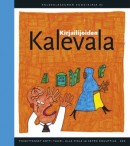 Kirjailijoiden Kalevala
[The writer’s Kalevala]
Toim. [Ed. by]: Antti Tuuri, Ulla Piela ja Seppo Knuuttila
(Kalevalaseuran vuosikirja 92, the Kalevala Society’s yearbook 92)
Helsinki: Suomalaisen Kirjallisuuden Seura, 2013. 313 pp., ill.
ISBN 978-952-222-429-3
€47, hardback
The Kalevala is the Finnish national epic, compiled from oral folk poetry by Elias Lönnrot. It has provided a source of inspiration to Finnish culture since 1839. Kirjailijoiden Kalevala continues a project entitled ‘The artists’ Kalevala’, started in 2009. To start with, four scholars examine, from different viewpoints, the influence of folk poetry and the Kalevala on literature. Some twenty Finnish-language authors then approach the epic with original thoughts and literary means. The result may take the form of reminiscing, of a short story, poem or cartoon. In some texts the Kalevala is present only indirectly, in others some character of the epic is placed in the focus – Väinämöinen, Kullervo, Lemminkäinen or Aino. Kirjailijoiden Kalevala offers a multifaceted collection of viewpoints; aptly, the editors, in their foreword refer to the epic as a literary sampo, the mysterious, mythical object of the Kalevala that generates wealth and riches.
3 x Runeberg: poet, cake & prize
5 February 2014 | This 'n' that
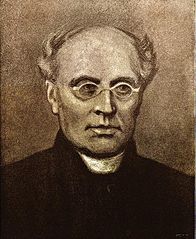
J.L. Runeberg. Painting by Albert Edelfelt, 1893. WIkipedia
Today, the fifth of February, marks the birthday of the poet J.L. Runeberg (1804–1877), writer, among other things, of the words of Finnish national anthem.
Runeberg’s birthday is celebrated among the literary community by the award of the Runeberg Prize for fiction; the winner is announced in Runeberg’s house, in the town of Borgå/Porvoo.
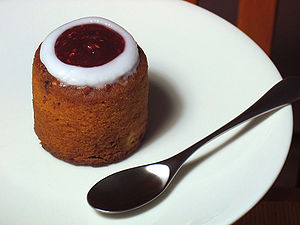
Runeberg’s favourite. Photo: Ville Koistinen
Mrs Runeberg, a mother of seven and also a writer, is said to have baked ‘Runeberg’s cakes’ for her husband, and these cakes are still sold on 5 February. Read more – and even find a recipe for them – by clicking our story Let us eat cake!
The Runeberg Prize 2014, worth €10,000, went to Hannu Raittila and his novel Terminaali (‘Terminal’, Siltala).

Hannu Raittila. Photo: Laura Malmivaara
According to the members of the prize jury – the literary scholar Rita Paqvalen, the author Sari Peltoniemi and the critic and writer Merja Leppälahti – they were unanimous in their decision; however, the winner of the 2013 Finlandia Prize for Fiction, Jokapäiväinen elämämme (‘Our everyday lives’) by Riikka Pelo, was also seriously considered.
Read more about the 2014 Runeberg shortlist In the news.
Verse and freedom
16 January 2014 | Articles, Non-fiction
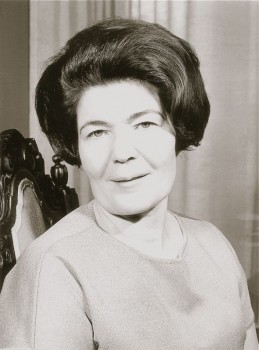
Aale Tynni (1913–1997). Photo: WSOY
Finnish poetic modernism, which with its freedom of rhythm came to dominate the literary mainstream of the 1950s, posed a particular challenge to the poets of the classical metrical and romantic poetic tradition. Aale Tynni (1913–1997) is not a poet of any one school or form, but rhythm is the deepest foundation of her poems, whether expressed in metre, free verse or the speech rhythms that characterise some of her poems of the 1950s and 60s, as well as those of her final years.
An Ingrian Finn, Tynni left Ingermanland near Petersburg for Finland as a refugee after the First World War, in 1919. The war and the period of uncertainty that followed it are present in her poems as an allegory, sometimes appearing as a dance of death or a carnival. At other times they emerge in the myth of Phaethon, who with his sun chariot is in danger of throwing Mother Earth off her axis, or as a game of chess in which God and the angel Gabriel play with the planets and moons as pieces. The poet makes use of mythic and cosmic references to widen her scope and to portray Man in the stages of history and the present age. More…
Mikko-Olavi Seppälä & Riitta Seppälä: Aale Tynni. Hymyily, kyynel, laulu [Aale Tynni. A smile, a tear, a song]
16 January 2014 | Mini reviews, Reviews
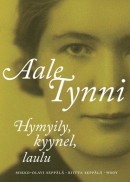 Aale Tynni. Hymyily, kyynel, laulu
[Aale Tynni. A smile, a tear, a song]
Helsinki: WSOY, 2013. 488 pp., ill.
ISBN 978-951-0-38306-3
€37, hardback
The poet, author and translator Aale Tynni (1913–1997), an Ingrian Finn who came to Finland as a refugee after the First World War in 1919, published 15 collections of poetry between 1938 and 1987. Among her translations are works by Ibsen, Shakespeare, Yeats and Racine. This extensive biography, compiled and written by Tynni’s daughter Riitta Seppälä and her grandson, historian Mikko-Olavi Seppälä, is an in-depth, lively portrait of a poet who, in her time, was both admired and criticised for her choices of form and content. Tynni felt that classical metrical tradition was closest to her, and patriotism was one of her themes; however, in the postwar years the freedom of rhythm of Finnish modernism began to flourish, and politics also gained strength in the literary world. In 1948 Tynni won the gold medal for literature in the – rather bizarre and short-lived – art competitions at the Summer Olympics in London with her poem ‘Laurel of Hellas’. Tynni experienced dramatic turns in her personal life; she underwent a prolonged divorce from her first husband who bitterly fought it. Two of her three children committed suicide in adulthood. She was finally free to marry the widowed poet Martti Haavio (aka P. Mustapää) in 1960, a marriage of soulmates that lasted until Haavio’s death in 1973.
Aleksis Kivi: Kirjeet [Letters]
8 August 2013 | Mini reviews, Reviews
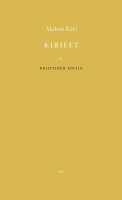 Kirjeet
[Letters]
Critical edition, edited by Juhani Niemi et al.
Swedish-language letters translated into Finnish by Juhani Lindholm and Ossi Kokko
Helsinki: Suomalaisen Kirjallisuuden Seura (the Finnish Literature Society), 2012. 426 p, two map drawings
ISBN 978-952-222-390-6
€ 43, paperback
In his poetry, plays and masterly novel Seitsemän veljestä (Seven Brothers, 1870), Aleksis Kivi (1834–72) laid the foundations of Finnish fiction. Kivi died an early death, impoverished and mentally ill. In this critical edition seventy of his letters and three letters received by him are presented with notes and an introduction. Most of the book consists of background articles and supplementary items. Professor Jyrki Nummi provides an interesting analysis of biographies of Kivi. The other authors discuss, for example the literature Kivi drew on in his own works: he had read world classics in Swedish, but in Finnish there was not yet much to read apart from the folk poetry. Other topics of discussion are Kivi’s skill in using Swedish – the language of the educated class in Finland – and what his letters reveal about his network of acquaintances. The letters are grouped in chronological order, with introductions by Professor Emeritus Juhani Niemi. Most of the letters are comparatively short, sent to relatives and friends. They reflect Kivi’s attitude towards his own work, as well as his worries about his financial situation and declining health.
Translated by David McDuff
Books from Helsinki
30 June 2013 | This 'n' that
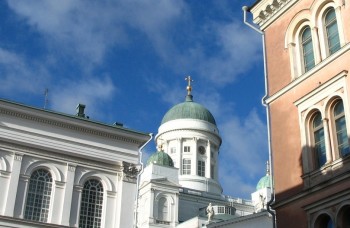
Helsinki: view it from different angles! Photo: Leena Lahti
Helsinki is relatively young city, Finnish literature even younger.
Flushed with a huge wave of migration at the beginning of the 20th century, the capital and its people went through the dramatic times of gaining independence and the Civil War (1917–18). The capital – since 1812 – and the life experiences of its inhabitants have been plentifully featured in Finnish fiction.
In his doctoral dissertation, Lieven Ameel has concentrated on a period of Finnish literary history. His Moved by the City: Experiences of Helsinki in Finnish Prose Fiction 1889–1941 (2013, Department of Finnish, Finno-Ugrian and Scandinavian Studies, University of Helsinki) examines more than sixty novels, collections of short stories and individual short stories portraying the city: how do the characters experience this urban public space? (Popular – crime fiction, for example – and children’s literature are excluded.) More…
Becoming Finland
23 May 2013 | Reviews
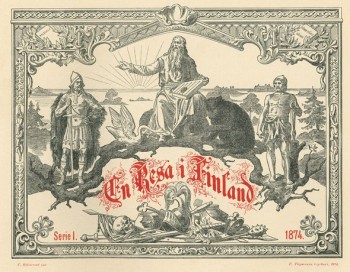
Imaginary heroes: the title page of En resa i Finland. Illustration by C.E. Sjöstrand (1828–1906)
Zacharias Topelius
En resa i Finland
[A journey in Finland (1873)]
Helsinki: Svenska litteratursällskapet i Finland, 2013. 173 p., ill.
Utgivare [Editor]: Katarina Pihlflyckt
ISBN 978-951-583-260-3
€38, hardback
(Stockholm: Atlantis förlag, 2013. ISBN 978-91-7353-616-5)
The birth of Finland as a country came as a surprise to those who lived there.
It was created by Napoleon and Alexander I, becoming a reality following Russia’s victory over Sweden in the so called Finnish War. In 1809 Alexander exalted Finland as ‘a nation among nations’, however the new nation still needed to feel like a nation. The Russian rulers supported gentle and non-political nationalism in Finland, in the hope that it would mentally distance the country from Sweden. In this tranquillity, the sense of community they had envisioned grew in Finland.
For this, there were three key factors, all of which stemmed from the 1830s. Elias Lönnrot published the Kalevala, the national epic, proving that Finnish mythology and culture did indeed exist. The poet J.L. Runeberg (who would later become known as the national poet) gave Finland an appearance that was an ideology. He depicted a poor, pious and simple people, a harsh and beautiful wilderness, and with his poems he described the Finnish War, that Finland had lost, as a heroic battle of the people, fought for Finnish values. More…