

Author: Päivi Heikkilä-Halttunen
Jukka Laajarinne & Timo Mänttäri: Isä vaihtaa vapaalle [Dad takes time off]
9 January 2014 | Mini reviews, Reviews
 Isä vaihtaa vapaalle
[Dad takes time off]
Kuvitus [Ill. by]: Timo Mänttäri
Helsinki: WSOY, 2013. 31 pp., ill.
ISBN 978-951-0-39780-0
€26.90, hardback
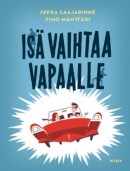
Isä vaihtaa vapaalle is a picture book infused with wry humour which lends itself to both realistic and fanciful readings. In the story, a girl’s father is a secret agent. He’d like to reduce his working hours to spend more time with his daughter, but his employer has other ideas. This book provides an amusing reflection of its time: parents’ job titles often do not mean much to children, so their strange roles and the heavy briefcases parents lug home start to take on a life of their own in children’s minds. The story is free from clichés about gender roles and will entertain boys and girls alike. Timo Mänttäri, making his debut as a children’s book illustrator here, depicts fast-paced, dangerous situations and amusing details. The comic book-style narrative and large, double-page illustrations create suspense in this zippy story. The words and pictures are seamlessly integrated, and the not-overlong text is balanced by the exceptionally strong, expressive visuals.
Translated by Ruth Urbom
Riitta Jalonen & Kristiina Louhi: Aatos ja Sofian meri [Aatos and Sofia’s sea]
9 January 2014 | Mini reviews, Reviews
 Aatos ja Sofian meri
[Aatos and Sofia’s sea]
Kuvitus [Ill. by]: Kristiina Louhi
Helsinki: Tammi, 2013. 36 pp., ill.
ISBN 978-951-31-7048-6
€21.90, hardback
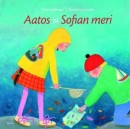
The duo of Riitta Jalonen and Kristiina Louhi has come up with yet another well-rounded picture book trilogy. Aatos and Sofia are sensitive, independent preschoolers, each with a good imagination and the ability to savour fleeting moments. It is rare for children’s books to contain such a nuanced yet natural portrayal of companionship and devoted friendship between children. Sofia has her feet more firmly planted on the ground that Aatos, who is more prone to let his emotions run free. Sofia’s mum’s aerobics sessions are a fun contrast with the children’s slower-paced lifestyle, in which they hold on to individual moments. This book champions children’s free, creative play and their right to a long childhood. Kristiina Louhi’s illustration style is both traditional and extremely modern.
Translated by Ruth Urbom
Riina Katajavuori & Salla Savolainen: Pentti ja kitara [Pentti and the guitar]
9 January 2014 | Mini reviews, Reviews
 Pentti ja kitara
[Pentti and the guitar]
Kuvitus [Ill. by]: Salla Savolainen
Helsinki: Tammi, 2013. 32 pp., ill.
ISBN 978-951-31-6646-5
€22.90, hardback
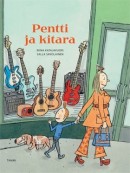
Even early-years education is packed with activities these days. Pentti has a large extended family who really know how to have fun. He wants to learn how to play the guitar as well as his uncle Jaska. His mum tries to suggest an instrument she thinks would be more appropriate, but Pentti will not be put off. The Pentti picture book series is attractive for its nostalgic style; you can never be quite sure whether the era depicted is in the past or the present day. In this story, Riina Katajavuori focuses on what’s essential, yet still manages to convey the basics of playing the guitar – including dissonance and Jimi Hendrix. Salla Savolainen’s illustrations effectively capture the excitement of a child’s new hobby.
Translated by Ruth Urbom
Laura Lähteenmäki: Iskelmiä [Hits songs]
9 January 2014 | Mini reviews, Reviews
 Iskelmiä
[Hit songs]
Helsinki: WSOY, 2013. 230 pp.
ISBN 978-951-0-39493-9
€28.90, hardback
Laura Lähteenmäki addresses the difficult topics of friendship and loyalty in her novels for young adult readers. Now she has taken on an important topic: the right of a girl approaching adulthood to set boundaries around her body and mind. Sixteen-year-old Aino is a good girl who hasn’t had time for anything in her life besides her involvement in the Girl Guides. Her mother’s unemployment has repercussions on their family relations, and Aino turns elsewhere to escape the melancholy atmosphere at home. Interest from her classmate Samuli comes at an opportune time, but inexperienced Aino is confused by his erratic emotions.The depiction of emotional and physical abuse in this novel is grimly authentic. Lähteenmäki provides an excellent sense of a girl’s feeling of detachment and her struggle between her environment and the pressures she has created for herself.
Translated by Ruth Urbom
Katri Tapola & Karoliina Pertamo: Toivon talvi [Toivo’s winter]
9 January 2014 | Mini reviews, Reviews
 Toivon talvi
[Toivo’s winter]
Kuvitus [Ill. by]: Karoliina Pertamo
Helsinki: Tammi, 2013. 23 pp., ill.
ISBN 978-951-31-7047-9
€14.90, hardback
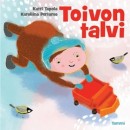
Most Finnish board books have been following the contemporary trend for strong colour palettes with pared-down character designs. Toivon talvi is a refreshing exception to the rule, dealing with everyday things children experience in their lives. One-year-old Toivo loves being outdoors. What’s most fun is when his mum comes out and plays with him. The first snowfall of the year causes him some confusion, but gradually Toivo learns to get the best out of the joys of winter. Katri Tapola’s story, with its child-friendly pacing which genuinely empathises with little ones’ fickle emotions, focuses on the boy’s everyday routines, thus conveying a sense of security. Karoliina Pertamo’s characters are simple sketches yet expressive enough to suit small children.
Translated by Ruth Urbom
Ville Hytönen & Matti Pikkujämsä: Hipinäaasi, apinahiisi [Donkeymonkey]
9 January 2014 | Mini reviews, Reviews
 Hipinäaasi, apinahiisi
[Donkeymonkey]
Kuvitus [Ill. by]: Matti Pikkujämsä
Helsinki: Tammi, 2013. 32 pp., ill.
ISBN 978-951-31-7043-1
€24.90, hardback
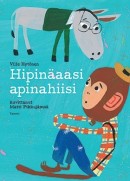
In Ville Hytönen’s gently educational tale, some woodland creatures poke fun at a wheezy donkey and an oddball monkey. In the end, the animals who were the target of derision turn their unusual characteristics into strengths. Then they all make up, all the residents of the forest launch into an exuberant dance, and the earlier teasing is forgotten. Matti Pikkujämsä has been an extraordinarily productive in recent years: his illustrations have appeared in numerous newspapers and magazines as well as children’s books. Hipinäaasi, apinahiisi, which is his first solo picture book, features rhythm and movement; sometimes he creates extremely elaborate ornamentation, while other images calm the eye with spare yet colourful scraffito techniques.
Translated by Ruth Urbom
Future, fantasy and everyday life: books for young readers
24 January 2013 | Articles, Children's books, Non-fiction
A giant meets the bunnies: a new story by Esko-Pekka Tiitinen, illustrated by Nikolai Tiitinen
Fantasy novels and dystopias feature in the new Finnish fiction for young readers; popular children’s books are recycled – stories and illustrations are adapted to new media and for new age groups. Päivi Heikkilä-Halttunen takes a look at new books for young readers published in 2012
All new mothers in Finland receive a ‘maternity package’ from the state containing items for the baby (including bedding, clothing and various childcare products) intended to give each baby a good start in life. This tradition, which started in 1938, is believed to be the only such programme in the world.
Each package also contains the baby’s first book, traditionally a sturdy board book by a Finnish author. The past few years have seen more original board books published in Finland than ever before: they are doing well in competition alongside books translated from other languages. Board books for babies have become a focus for Finnish illustrators and graphic artists. These books, with their simple visual language, have taken on a retro look.
History was made with the Finlandia Junior award, when for the first time the prestigious prize was given to a picture book originally written in Finland-Swedish: Det vindunderliga ägget (‘A most extraordinary egg’, Schildts & Söderströms) by Christel Rönns. The award can also be seen as an acknowledgement of the brave, experimental Finland-Swedish children’s picture books that are being published these days. Finnish-language picture books, on the other hand, are still crying out for more figures to shake up traditional practices. More…
Seita Vuorela: Karikko [The reef]
24 January 2013 | Mini reviews, Reviews
 Karikko
[The reef]
Kuvitus [Ill. by]: Jani Ikonen
Helsinki: WSOY, 2012. 357 pp., ill.
ISBN 978-951-0-38640-8
€28.90, hardback
Karikko is a self-assured work, aware of its odd charm. It is intended for readers who prefer not to have pre-digested material fed to them; this book has been classified as both a young adult and adult book. Vuorela (née Parkkola) is excellent proof that the global boom in fantasy literature can be harnessed in support of an author’s own artistic ambitions to reinvigorate the genre. She has also crossed a difficult barrier by making it into the American publishing market. Karikko delves into feelings of decay, devastation and abandonment. The text is redolent with the smells of seaweed and mildew; there are textures pockmarked with rust and the melancholy of abandoned homes. At the centre of Karikko is a family with mismatched siblings – 14-year-old Mitja and his elder brother Waldemar – as well as abandonment, sorrow and guilt. Seita Vuorela structures her plot as a mosaic with flashbacks, foreshadowing and random bits. This technique is quite challenging for the reader but ultimately rewarding.
Translated by Ruth Urbom
Mila Teräs & Karoliina Pertamo: Elli ja tuttisuu [Elli and the dummy]
24 January 2013 | Mini reviews, Reviews
 Elli ja tuttisuu
[Elli and the dummy]
Kuvitus [Ill. by]: Karoliina Pertamo
Helsinki: Otava, 2012. 31 pp.
ISBN 978-951-1-26045-5
€16.90, hardback
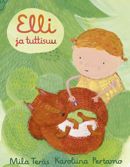
The new Elli series of picture books continues the tradition in Finnish children’s literature of giving an idyllic portrayal of the natural world: even a small child and her parents have time to marvel at nature together. In reality, more and more children are becoming estranged from their natural surroundings. Elli is an energetic little two-year-old whose mother encourages her to give away her beloved dummy (pacifier) to a young squirrel in the garden. This book tells a typical story about everyday life that will reinforce children’s self-esteem and sense of identity, but fortunately Elli is also allowed to be a little girl who needs looking after by her parents. Our performance-obsessed society expects nearly superhuman effort and skills even from children, so it is important that kids are allowed to be kids – in children’s literature, at least. Karoliina Pertamo’s illustrations glow with warm, invigorating colours. Pertamo (b. 1971) has quickly established a highly individual illustration style for herself.
Translated by Ruth Urbom
Esko-Pekka Tiitinen & Nikolai Tiitinen: Jätti ja jänöset [The giant and the bunnies]
24 January 2013 | Mini reviews, Reviews
 Jätti ja jänöset
[The giant and the bunnies]
Kuvitus [Ill. by]: Nikolai Tiitinen.
Helsinki: Tammi, 2012. 25 pp., ill.
ISBN 978-951-31-6573-4
€19.90, hardback
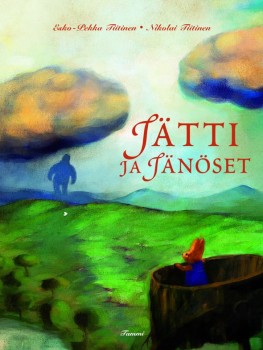
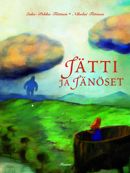
This powerful allegory set in the animal kingdom is a tale of global inequality – with a lovely, take-it-easy, imaginative approach that emphasises tolerance and respect for nature. The rabbit community is shaken up when an arrogant giant barges into their territory. At first, the rabbits try to take an understanding view of the interloper, but he ends up in grave danger as a result of his own actions. Only the actions of the kind-hearted rabbits can save him. The calm tone and engaging pace of Esko-Pekka Tiitinen’s story make it ideal for reading out loud. It has the timeless enchantment of traditional animal fairy tales. The mixed-media illustrations by Esko-Pekka Tiitinen’s son Nikolai radiate warmth and a sense of togetherness, but also power, hatred and estrangement where necessary. The seamlessly integrated text and illustrations create an enjoyable reading and visual experience for children and adults in much the same vein as Herra Kuningas (‘Mister King’, Otava, 1986) by Raija Siekkinen and Hannu Taina, which has already joined the ranks of classic Finnish children’s titles.’
Translated by Ruth Urbom
Sari Peltoniemi: Gattonautti ja muita arkisatuja [The cattonaut and other everyday tales]
24 January 2013 | Mini reviews, Reviews
 Gattonautti ja muita arkisatuja
[The cattonaut and other everyday tales]
Kuvitus [Ill. by]: Liisa Kallio
Helsinki: Tammi, 2012. 67 pp.
ISBN 978-951-31-6576-5
€19.90, hardback
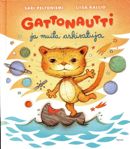
There has been a desperate shortage of short stories and fairy tales for a long time. Now Sari Peltoniemi has bravely risen to this challenge. In her previous young adult novels, she cultivated the ‘new weird’ genre, in which strange and fantastical elements encroach on everyday life. This collection can be categorised as the first Finnish children’s book that makes use of that fantasy subgenre. Peltoniemi’s ten stories also pay homage to traditional Finnish folk tales: a deceased grandfather makes a reappearance to his grandson at midnight; a little sister imagines her teenage sister changing from a fairy into a troll, as in folk tales about changelings. Everyday life is wrenched into strange or absurd situations without warning. Peltoniemi’s portrayals of children display real psychological understanding and insight. The age range for this book, for reading aloud as well as independent reading, extends from preschool to older school-aged children, as the age of the main characters is not emphasised. Liisa Kallio’s child-like, rounded illustration style does indicate, however, that the intended target group is children under 10.
Translated by Ruth Urbom
Sanna Pelliccioni: Onni-poika saa uuden ystävän [Onni gets a new friend]
24 January 2013 | Mini reviews, Reviews
 Onni-poika saa uuden ystävän
[Onni makes a new friend]
Kuvitus [Ill. by]: Sanna Pelliccioni
Helsinki: Minerva, 2012. 32 pp.
ISBN 978-952-492-674-4
€15.90, hardback
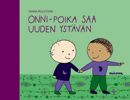
The series about a boy named Onni has become a firm favourite among preschool-aged children. Even small children’s picture books are alert to real-life changes in society; in this book – the seventh in the series – Onni gets a new neighbour: a little boy named Aram and Onni quickly become firm friends, even though they do not speak the same language at first. Their friendship across cultural barriers is explained in a straightforward manner that children can grasp. It says something about the introversion of Finnish society and about cultural differences that the friendship is initiated by Aram, who brings some rice pudding made by his mother as a treat for his new neighbours. Pelliccioni’s round-headed figures, characteristic of her style, are suitably simple. She manages to convey fine nuances in their expressions and body language.
Translated by Ruth Urbom
Timo Parvela: Maukka, Väykkä ja Karhu Murhinen [Meowser, Barker and Killington Bear]
24 January 2013 | Mini reviews, Reviews
 Maukka, Väykkä ja Karhu Murhinen
[Meowser, Barker and Killington Bear]
Kuvitus [Ill. by]: Virpi Talvitie
Helsinki: Tammi, 2012. 127 pp.
ISBN 978-951-31-6167-5
€20.90, hardback
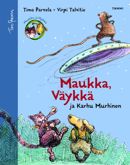
This novel in the Maukka ja Väykkä series tells about friendship among a cat, a dog and a shrew. There is a need for more children’s books for the whole family that can be read aloud. The award-winning duo behind this title have created a book with brief chapters and an engaging setting. Maukka is an attention-seeking cat with a quick temper, while Väykkä is a laid-back, worldly-wise dog. Their life together seems to be a constant squabble over which one of them is right. The latest arrival in the animal community is a little shrew, who has a heart of pure gold despite his fearsome name. He manages to teach the cat-and-dog duo a few things about life. The shrew’s life span is much shorter than that of the cat and dog; Murhinen himself has a sanguine attitude to the matter and teaches Maukka, Väykkä and the reader a number of important things about life and death.
Translated by Ruth Urbom
Katarina von Numers-Ekman: Singer
24 January 2013 | Mini reviews, Reviews
 Singer
Kuvitus [Ill. by]: Jenny Lucander-Holm
Helsinki: Schildts & Söderströms, 2012. 144 pp.
ISBN 978-951-52-3013-3
€17.90, hardback
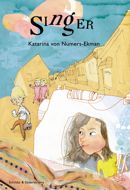
Singer by Finland-Swedish author Katarina von Numers-Ekman deals with some fairly dark childhood emotions in an intense way, but manages to avoid too much angst. Josefin is an 11-year-old girl who lives alone with her father following the death of her mother. The girl does not dwell daily on the loss of her mum, but as she grows up she finds herself missing her mother more. This novel devotes an unusual amount of space to questions of language and identity through the mother’s British background and the family’s Finland-Swedish heritage. Singer is a clever double reference: Josefin has a Singer brand sewing machine, and the key plot point centres around a singing exam. Josefin goes through a number of embarrassing experiences with her friends. Her feelings of embarrassment or shame are linked with things like poor swimming skills, a classmate’s teasing, or a friend’s grandfather’s alcohol consumption. Katarina von Numers-Ekman manages to infiltrate the world of children’s experiences without making the reader feel like a voyeur. Singer provides numerous points of access to the painful growing-up years of childhood and early adolescence.
Translated by Ruth Urbom
Laura Lähteenmäki: North End: Niskaan putoava taivas [North End: Falling Sky]
24 January 2013 | Mini reviews, Reviews
 North End: Niskaan putoava taivas
[North End: Falling Sky]
Helsinki: WSOY, 2012. 258 pp.
ISBN 978-951-0-38598-2
€27.90, hardback
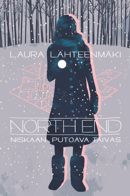
The global success of Suzanne Collins’ The Hunger Games trilogy has spurred a boom in dystopian stories in Finland as well. The core themes of independence and friendship familiar from Lähteenmäki’s previous works are also present in this story about the impending end of the world. North End is set in the near future, around 50 years from now. This is hinted at by a reference to Victoria, queen of Sweden (currently a young princess), as a senior citizen. Recycling is a necessary part of daily life, and devices similar to exercise bikes are used to generate electricity at night. Widespread scarcity has forced people to become watchful of others, for good and bad. Tekla, a 14-year-old girl, has moved to North End with her family and is still looking to make new friends. Everyday life is thrown into disarray for Tekla and her younger brother when their separated parents get their custody weeks muddled up, and the children are left to fend for themselves. After the initial rush of freedom, the responsibility begins to frighten the siblings. Relationships and parenthood are put under the microscope on many occasions in this work, which will eventually grow into a trilogy.
Translated by Ruth Urbom