

Tag: photography
Oldest Helsinki photograph
2 June 2015 | This 'n' that
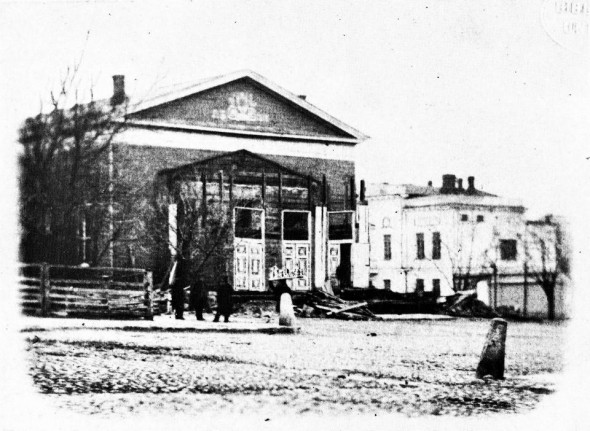
Old Helsinki: this image, taken in the Esplanadi park more than 150 years ago, shows the old theatre building, which was demolished in the 1850s. Photo: Helsinki City Museum / CC BY-ND 4.0.
Hidden in plain sight in Sven Hirn’s Kameran edestä ja takaa – valokuvaus ja valokuvaajat Suomessa 1839-1870 (‘Behind the camera and in front of it – photographs and photographers in Finland 1839-1870’), published more than 40 years ago, the image shows four men standing in front to the theatre designed by Carl Ludvig Engel in 1827 (and demolished when it became too small to accommodate the city’s enthusiastic theatre-going public in the 1850s). Unusually, in those days of slow shutter speeds, the photograph shows people, among them Carl Robert Mannerheim, father of the Marshal Mannerheim who was to lead Finland’s defence forces in the Second World War (third from left).
Among the other photographs published by Helsingin Sanomat are some images of Helsinki decked out in garlands awaiting the arrival of Tsar Alexander II to the capital of his autonomous grand duchy of Finland in July 1863.
Other mid-century images show central Helsinki looking not unlike its present-day self. It’s only when the camera ventures outside the few blocks of the city centre that the view becomes more unfamiliar, the streets lined with one- and two-storey wooden houses.
Most intriguing of all, however is a sequence of eighteen photographs taken in 1866 by one Eugen Hoffers from the top of Helsinki Cathedral. Helsingin Sanomat has linked them into a panorama with views of Suomenlinna fortress, the new Russian Orthodox Uspenski Cathedral, Books from Finland’s old publisher Helsinki University Library, and the burgeoning city beyond.
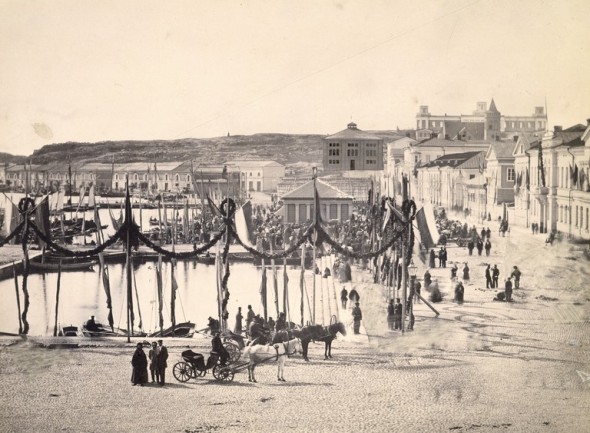
Imperial welcome: Helsinki is bedecked with flowers to welcome Tsar Alexander II on 28 July 1863. Photo: Helsinki City Museum / CC BY-ND 4.0.
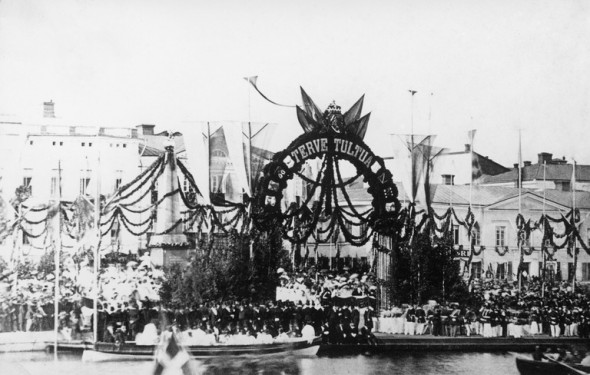
Pomp and circumstance: elaborate floral tributes for the visit of Tsar Alexander II in 1863. Photo: Helsinki City Museum / CC BY-ND 4.0.
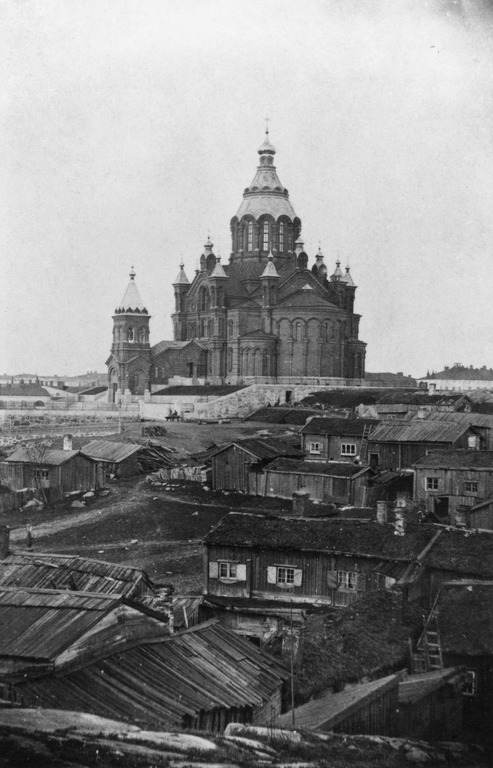
New and old: the recently completed Uspenski Cathedral is surrounded by a shanty-town of tumbledown cottages in this image from 1868. Photo: Hoffers Eugen, Helsinki City Museum / CC BY-ND 4.0.
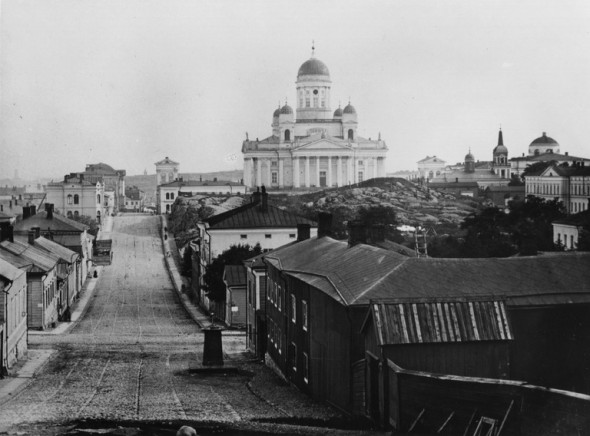
Strange and familiar: this picture, from 1865, shows the Cathedral, the Senate and the University Library surrounded by low wooden buildings and unbuilt land. Photo: Helsinki City Museum / CC BY-ND 4.0.
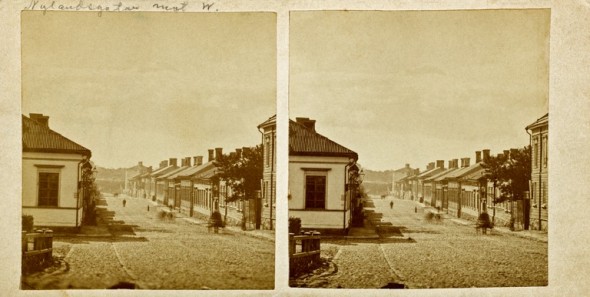
City of wood: beyond the familiar buildings of the few blocks of the then city centre, in this image from the 1860s, lie streets of modest one- and two-storey wooden houses. Photo: Gustaf Edvard Hultin , Helsinki City Museum / CC BY-ND 4.0.
Images of war
5 May 2015 | This 'n' that
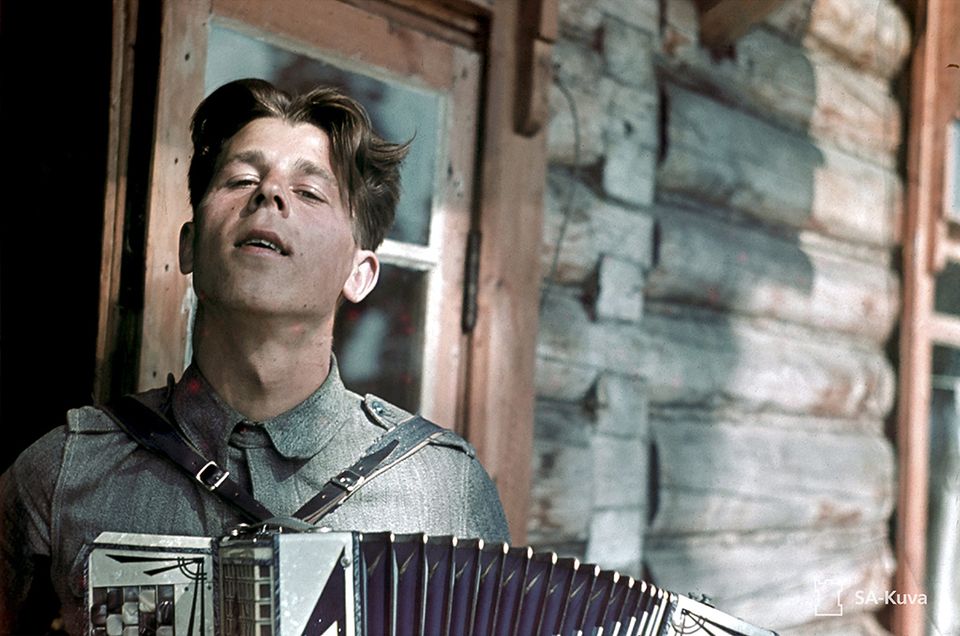
A soldier playing his accordion. Photo: SA-kuva
Between 1939 and 1944 Finland fought not one, but three separate wars – the Winter War (1939-45), the Continuation War (1941-44) and the Lapland War (1944-45).
We have become used to black-and-white images of the conflict, with their distancing effect. Among the 160,000 images in the Finnish Wartime Photograph Archive, however, are some 800 rare colour photographs from the Continuation War, which bring the realities of fighting much closer. The events pictured leap out of history and into the present. More…
Pekka Lassila: Maininki [Surge]
5 May 2015 | Mini reviews, Reviews
 Pekka Lassila
Maininki [Surge]
Helsinki: Tammi, 2014. 278 pp., ill.
ISBN 978-951-31-8126-0
€36, hardback
This book is a journal of a ‘survival project’: a continuous kayak voyage of 1,300 kilometres along the Finnish coast, from the eastern border (Russia) to the northwestern one (Sweden). Pekka Lassila (born 1959) is a photojournalist who, in an attempt to find a way out of the crisis of losing a job he had heald for thirty years, set off on his voyage in May, when the ice had only just melted. Nights were spent mostly in a tent; all washing up had to be done with sea water. Lassila blogged daily for newspapers by the power of his solar-charged phone and tablet. This solitary endeavour seems slightly obsessive at first – but the stories about the geography and history of the places passed by and the descriptions of the personal daily marine routines turn out to be interesting, never repetitive. The shallow west coast, the Gulf of Finland, even proves to be dangerous: the waves, growing rough, threaten to crush the kayak on the rocks, but Lassila’s paddling skills and luck save him. The photographs, taken each day, illustrate the voyage well (even though it is irritating that there are no captions!). Reaching his goal, after 31 days, Lassila manages to complete his ‘project’ – but confesses that he may only later fully understand the reasons why he set out.
Elina Brotherus & Riikka Ala-harja
The passing of time
2 March 2015 | Extracts, Fiction, Prose
In 1999 the Musée Nicéphore Niépce invited the young Finnish photographer Elina Brotherus to Chalon-sur-Saône in Burgundy, France, as a visiting artist.
After initially qualifying as an analytical chemist, Brotherus was then at the beginning of her career as a photographer. Everything lay before her, and she charted her French experience in a series of characteristically melancholy, subjective images.
Twelve years on, she revisited the same places, photographing them, and herself, again. The images in the resulting book, 12 ans après / 12 vuotta myöhemmin / 12 years later (Sémiosquare, 2015) are accompanied by a short story by the writer Riikka Ala-Harja, who moved to France a little later than Brotherus.
In the event, neither woman’s life took root in France. The book represents a personal coming-to-terms with the evaporation of youthful dreams, a mourning for lost time and broken relationships, a level and unselfpitying gaze at the passage of time: ‘Life has not been what I hoped for. Soon it will be time to accept it and mourn for the dreams that will never come true. Mourn for the lost time, my young self, who no longer exists.’
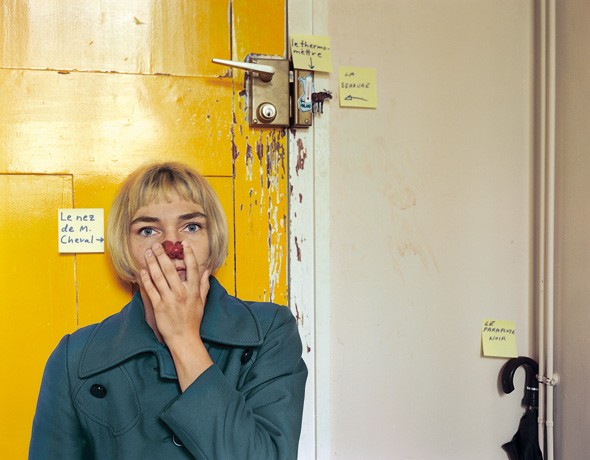
1999 Mr Cheval’s nose
Iconic Inha
5 February 2015 | This 'n' that
From time to time we have featured the charismatic photographs taken of Helsinki by I.K. Inha (1865-1050) in 1908 – most recently in a book pairing Inha’s iconic images with contemporary photographs of the same scenes by Martti Jämsä (2009). Fifty-one of the images have now been made available online to the public for the first time on the Finnish Museum of Photography’s Flickr page.
Many of the scenes are so little changed that it’s a shock to see them peopled with behatted gentlemen and ladies in long skirts. Commissioned for Finland’s first travel guide, the photographs show the handsome buildings, parks and seafronts of a solidly bourgeois looking city that is still the capital of a Russian province, an autonomous Grand Duchy actively fostering the dream of independence that is to be realised nine years later, in 1917.
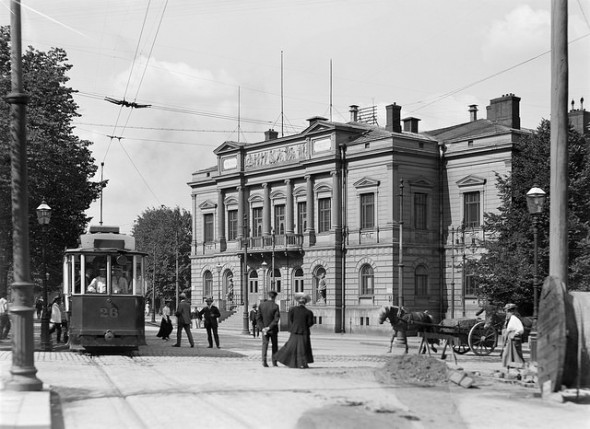
Student Union Building on Itäinen Heikinkatu (now Mannerheimintie). I.K. Inha, 1908.
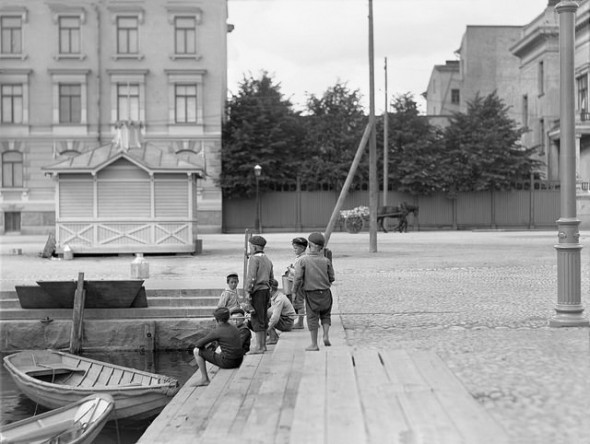
Boys at Hietalahti harbour. I.K. Inha, 1908.
Aho & Soldan: Helsinki 1950-luvun väreissä / Helsingfors in 1950-talets färger / Helsinki in 1950’s colours
11 January 2015 | Mini reviews, Reviews
 Aho & Soldan: Helsinki 1950-luvun väreissä / Helsingfors in 1950-talets färger / Helsinki in 1950’s colours
Teksti / text: Eino Leino
Translation into Swedish by Marjut Hökfelt, into English by Elina Adams
Helsinki: Gummerus, 2014. 168 pp., ill.
ISBN 978-951-20-9527-8
€36.90, hardback
The photographer Claire Aho (born 1925) is the granddaughter of the author and journalist Juhani Aho (1861–1921) and his artist wife Venny Soldan-Brofeldt. Two of Aho’s sons, Heikki and Björn, became photographers and documentary film producers, founding the company Aho & Soldan. In the 1940s Heikki’s daughter Claire began to work for Aho & Soldan and becme a well-known fashion photographer. She also began photographing her native Helsinki; in 1952 she was assigned to film the Helsinki Summer Olympics. She continued her collaboration with Pathé News until the early 1960s. Colour came, literally, into the picture after the war; the photographs in this book feature life in the 1950s Helsinki. The photographs in their gently faded colours of the still small city, its inhabitants, parks, buildings and monuments are taken by either the two brothers or Claire Aho – in their time they were all signed just by Aho & Soldan. In his essay journalist Eino Leino portrays life in the city that he remembers from his own childhood in the post-war era, which to today’s reader appears sweetly idyllic, somehow optimistic and peaceful; the city has changed greatly – and yet stayed the same.
Reflections on light
24 September 2014 | Extracts, Non-fiction
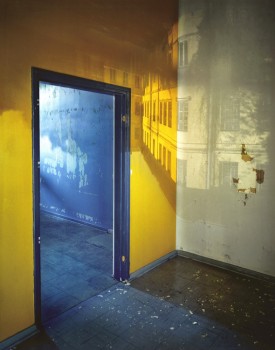
Speaking House #12, 2006. Photo: Marja PIrilä
A camera obscura (‘darkened room’) is the optical device that made photography possible; it is a box – or a room – with a hole in one side. Photographer Marja Pirilä has been using this method as a tool for almost 20 years. The book Carried by Light spans more than 30 years of her photography.
In the book artist and researcher Jyrki Siukonen notes in his essay ‘Eyes and Cameras’ that ‘in photographing spaces Pirilä also depicts people. The dreams continue on the walls of the empty building, as if after the people the house had become like them and were dreaming the dreams itself.’
Photographs and text extracts from Carried by Light by Marja Pirilä (Musta Taide, 2014)
Animal magic
3 June 2014 | Extracts, Non-fiction
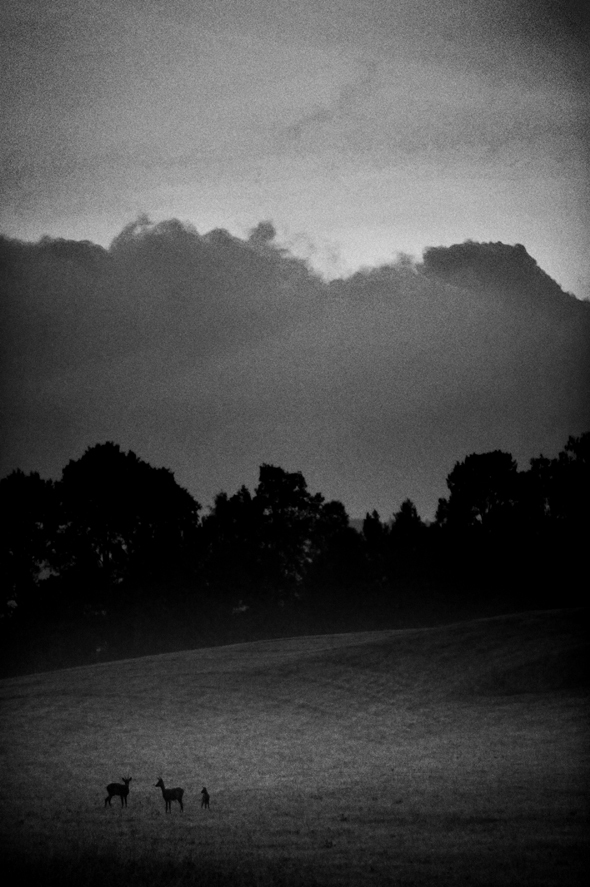
Roe deer, Sweden. Photo: Mats Andersson
A day in the life of an elk, of a lynx? Nature photographers venture into the depths of forests, in pursuit of the inhabitants – predator and prey, mythical and real. Photographs from Kohtaamisia (‘Encounters’), by Mats Andersson and Heikki Willamo, text by Willamo (Maahenki & Musta Taide [Black Art], 2014)
The feelings in our dreams. They well from depths – from those layers of awareness that the mind does not shackle. In sleep we handle and organise the events of our lives in a way which is impossible when awake, when we are conscious of ourselves and our limitations. That is why animals can come into my dreams as friends, equal partners, like me, and therefore I so often dream of having their abilities and skills.
When awake we think all the time. We think about past events and worry about the future or dream of something better. Very seldom do we live in the moment. Photographs are passing moments, often only a thousandth of a second long, but sometimes lasting minutes or even hours. In finished photographs the beholder can see much more – he adds his memories or dreams of the future. The picture-taking moment vanishes, something else comes in its stead. More…
Now and then
22 May 2014 | This 'n' that
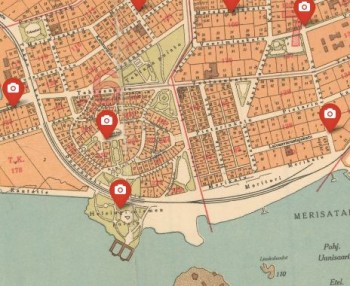 Karttalehtinen, a company that specialises in making orienteering maps, has posted 133 photographs of Helsinki from 1907–1912, by Signe Brander, the pioneering city photographer, together with contemporary Google street shots, on this zoomable site.
Click ‘Google street view’ (Google Maps) down left, for a bigger view. (Kuvan tiedot gives details of Brander’s photo, in Finnish only.) The old photos are from the Helsinki City Museum archives.
Brander (1869–1942) was hired by Helsinki City Council’s Board of Antiquities to record the fast-growing city for almost seven years between 1907 and 1913.
The southernmost photo on the map shows the barren Ursin rocks on the seashore, with Hernesaari (‘Pea island’) in the background. Today, as the Google shot shows, there is a park and a monument for seafarers, particularly those who lost their lives at sea.
Helsinki life and buildings as they existed a hundred years ago are portrayed in these calm shots of a small town going about its business. Signe did a very good job in her capacity as official photographer.
Below and above the surface
13 March 2014 | Extracts, Non-fiction
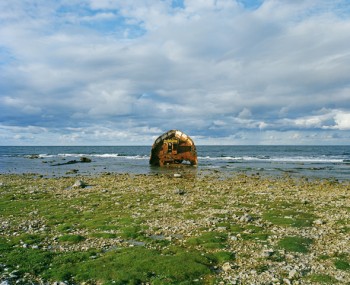
Fårö, Gotland, Sweden. Photo: Lauri Rotko
The Baltic Sea, surrounded by nine countries, is small, shallow – and polluted. The condition of the sea should concern every citizen on its shores. The photographers Jukka Rapo and Lauri Rotko set out in 2010 to record their views of the sea, resulting in the book See the Baltic Sea / Katso Itämerta (Musta Taide / Aalto ARTS Books, 2013). What is endangered can and must be protected, is their message; the photos have innumerable stories to tell
We packed our van for the first photo shooting trip in early May, 2010. The plan was to make a photography book about the Baltic Sea. We wanted to present the Baltic Sea free of old clichés.
No unspoiled scenic landscapes, cute marine animals, or praise for the bracing archipelago. We were looking for compelling pictures of a sea fallen ill from the actions of man. We were looking for honesty. More…
Helsinki hundred
6 March 2014 | This 'n' that
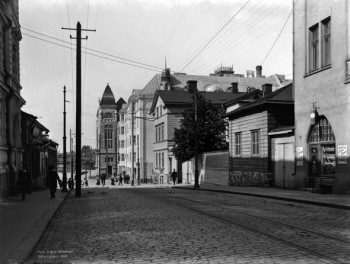
Into the city: Vilhonkatu Street, leading to the National Theatre and the Railway Station. Photo: Signe Brander, 1907. Helsinki City Museum / Finna
Photographer Signe Brander (1869–1942) was hired by the Helsinki City Council’s Board of Antiquities to record the fast-growing city for almost seven years between 1907 and 1913.
Signe was not keen on working indoors, so she must have been pleased to be able to get out into the streets. She chose to capture lively views of the town with people – passers-by, animals, children, flaneurs, people on errands (even though portraits were not her cup of tea either), in all seasons.
Brander’s thoroughly professional work can now be downloaded on the Internet: all of her 906 photos of Helsinki and its citizens a hundred years ago are available from Finna.
The National Digital Library – and its public interface Finna – project aims to ensure that electronic materials of Finnish culture and science are managed with a high standard, are easily accessed and securely preserved well into the future.
Unfortunately Signe Brander was not able to rest peacefully on her laurels. As her eyesight and health deteriorated, she was hospitalised in 1941. Then the war broke out, and when the patients were transferred to a mental hospital outside Helsinki, more than a hundred of them tragically died of hunger in 1942, Brander among them.
Decade of youth: the 1950s revisited
30 January 2014 | Reviews
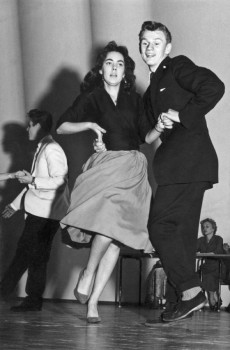
Rock around the clock in Helsinki, too! All photos here from Rasvaletti; photographer unknown, 1958
Rasvaletti. Valokuvia 1950-luvun Helsingistä /
Fotografier från 1950-talets Helsingfors
[Hair-grease. Photographs from 1950s Helsinki]
Työryhmä [working group]: Yki Hytönen, Tuomas Myrén, Riitta Pakarinen, Aki Pohjankyrö, Hilkka Vallisaari
Helsinki: Helsingin kaupunginmuseo, Helsinki City Museum,
2013. 211 pp., ill.
ISBN 978-952-272-499-1
€45, hardback
Onnen aika? Valoja ja varjoja 1950-luvulla
[Time of happiness? Light and shadow in the 1950s]
Toimittaneet [Ed. by]: Kirsi-Maria Hytönen & Keijo Rantanen
Jyväskylä: Atena, 2013. 249 pp., ill.
ISBN 978-951-796-924-6
38€, hardback
The 1950s rocked! They literally did – that is when the world got rhythm: Blue Suede Shoes by Elvis and the film Blackboard Jungle, with Bill Haley’s hit Rock Around the Clock, for example.
The development of new sound reproduction – long-playing records and tape recorders – was essential to the spreading of the gospel of rock and pop here, there and everywhere.
In Finland, the shocking new music was a smash hit among a group of young urban men called lättähatut, flathats, who also wore tight trousers, black overcoats and pointed shoes. Their girls dressed in angora sweaters and tight trousers or skirts. These teenagers, who hung around together very late in the evenings, were largely considered not only a nuisance but also a possible danger to the peaceful development of society (not only in Finland…). More…
Cute or what!
28 November 2013 | This 'n' that
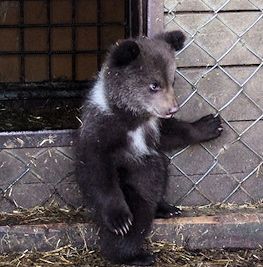
A bear pose: a small bear at the Kuusamo Predator Centre. Photo: Pasi Jäntti
Beardom is a weird, fascinating universe. We admit we have a soft spot for this furry predator, living in Finnish forests, which hibernates during the coldest months and does not eat humans (if it can possibly avoid it).
Take a look at these cuties: the New York Daily News published bear photos by a Finnish photographer on 21 November. This smash hit in bear photography is the series in which Valtteri Mulkahainen, an amateur photographer and teacher living in Sotkamo, north-eastern Finland, managed to capture a bear family in Suomussalmi last summer. Adorable creatures!
These lively triplets seem to be playing a round game while their mummy keeps on eating nearby. We hope they will live happily ever after, and that they found a good home for their winter sleep.
The estimate of the number of brown bears in the country is around 1,300. One hundred and thirty two shooting licences were issued this year. Bears in winter hibernation are strictly protected from hunting.
More bears, from the Kuusamo Predator Centre, also north-eastern Finland, on our page (and more of Valtteri Mulkahainen’s photos can be viewed on 500px.com)!
Mutts and mongrels of architecture
28 November 2013 | This 'n' that
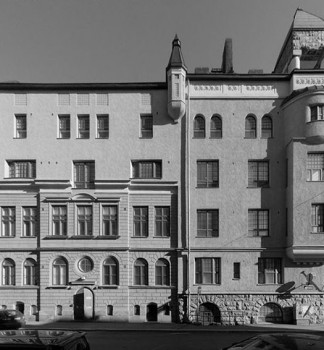
Uudenmaankatu Street 42: a mixture of architecture from 1865–66 and 1905–07
Low-rise wooden buildings in the late 19th-century small town of Helsinki began to disappear as they were beginning to be replaced by houses built of stone. Last century wars and economic interests further changed the façades of Helsinki.
The oldest buildings may contain several generations of constructions, clearly visible or more discreet. In the past houses have been treated in a way which is no longer acceptable.
They were altered in various ways – made taller, smaller or stripped of original ornaments, often after damage in various wars, when restoration would have proved too expensive. In the end, they have become mutts and mongrels of architecture.
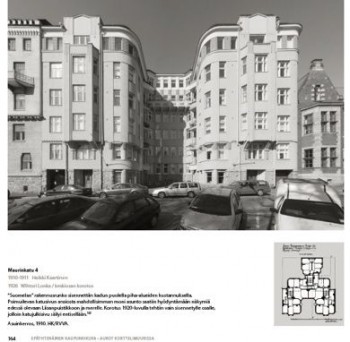
Upwards: an extra floor was added to the middle section of this apartment house (1910–11) in 1926.
Architect Juha Ilonen has wandered around Helsinki with his camera, capturing views that often take a Helsinki citizen by surprise.
In his new, capacious book Kolmas Helsinki – kerroksia arjen arkkitehtuurissa (‘The third Helsinki – layers in the architecture of the everyday’) Ilonen features ca. 300 buildings, from the mid-18th century to 2010. Most of them are apartment buildings situated in downtown Helsinki.
Why is it that I’ve never paid any attention to this or that extraordinary building, even though I hurry past it almost every day? Simply because I often don’t lift my gaze up from street level. The buildings speak volumes about history, aesthetics and demands of practicality.
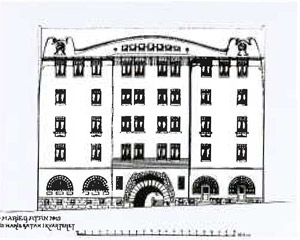
Mariankatu Street 19: original architecture by Gustaf Estlander, 1904–05
But take a look at this house in Kruununhaka in the heart of the city – Books from Finland resided in the back yard building for years, and we had absolutely no idea that the façade had been thoroughly altered and stripped of its beautiful Jugend ornaments…
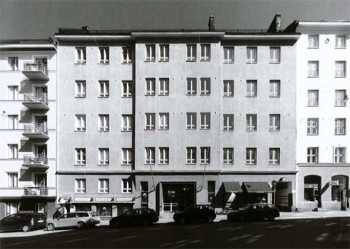
Mariankatu Street 19: new version, by Ole Gripenberg, 1936
Ilonen’s book is a treasure trove for anybody interested in architecture, housing or city life – or photography: hundreds of black-and-white photographs feature delightful samples of the variety and quality of Helsinki architecture.
Juha Ilonen
Kolmas Helsinki – kerroksia arjen arkkitehtuurissa
The third Helsinki – layers in the architecture of the everyday]
Helsinki: AtlasArt, 2013. 304 pp., ill.
ISBN 978-952-5671-51-3
€55, hardback
Valokuva taiteeksi. Photography into Art. Hannula & Hinkka -kokoelma / Collection
30 May 2013 | Mini reviews, Reviews
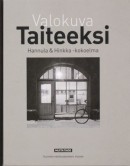 Valokuva taiteeksi. Photography into Art. Hannula & Hinkka -kokoelma / Collection
Toimituskunta [Edited by] Erja Hannula, Jorma Hinkka, Sofia Lahti, Tuomo-Juhani Vuorenmaa
English translation: Jüri Kokkonen
Helsinki: Aalto University School of Arts, Design and Architecture, Aalto ARTS Books (Musta Taide 4/2012; publication series of The Finnish Museum of Photography 44.) 209 p., ill.
ISBN 958-952-292-000-3
€33.90, hardback
It has been typical of Finland that it lacks collections of international photography, private or public. In the politically turbulent 1970s interest in photography began to grow. The Hippolyte Gallery, run by artist Ismo Kajander, exhibited international photography by Diane Arbus, Eugène Atget and Édouard Boubat, among others. The graphic designer Jorma Hinkka (also Art Director of Books from Finland, 1998–2006) began making posters for Hippolyte ‘out of pure enthusiasm’, and designing books by Finnish photographers, among them Pentti Sammallahti, Ismo Hölttö, Jorma Puranen and Merja Salo. As a result of spending so much time with ‘the black art’ (as it was called by a Finnish pioneer of photography, I.K. Inha, in 1908), Hinkka and his art director spouse Erja Hannula began to collect samples of it. After 30 years, in 2012, they donated more than two hundred photographs by almost a hundred artists to The Finnish Museum of Photography. The social status of the black art has risen considerably since the 1970s, as has professionalism in the field. This book presents excellent reproductions of the collection of photos, taken within a century and a half; the variety of styles and subjects chosen surprise with its richness.