

Tag: poetry
New from the archive
11 June 2015 | This 'n' that
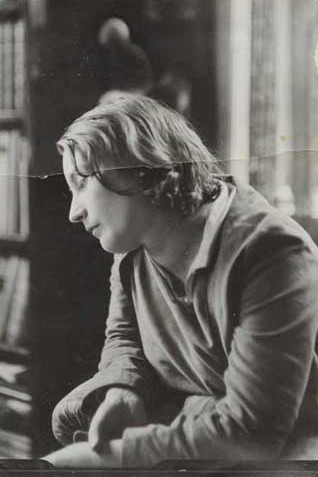
Helvi Hämäläinen. Photo: Literary Archives of the Finnish Literature Society.
This week, an excerpt from Helvi Hämäläinen’s gorgeously sensuous novel Säädyllinen murhenäytelmä (‘A respectable tragedy’,1941)
Right at the top of the list of untranslated Finnish masterpieces, for me, is Helvi Hämäläinen’s monumental Säädyllinen murhenäytelmä.
Written in the fateful summer of 1939, as the world waited for war, this story of love among the Helsinki intelligentsia is at the same time both a roman a clef – it caused a sensation on publication as the real people behind the fictional characters were recognised – and a vivid picture of its age. The falling cadences of its luxuriantly proliferating phrases offer a voluptuously aesthetic poetry of the senses as they slowly tell the story of love lost and then, gradually, regained. And the book answers the question, what was it like to be alive then?, with incomparable vividness. In this extract, the novelty of apartment living in the 1930s, the colours and smells, the new social habits, are all brought to life with extraordinary intensity.
We also republish a selection of poems published much later in Hämäläinen’s life, many of them impassioned elegies for the lives lost in the Second World War, giving voice to the sheer weight of sorrow, of grief for those who were lost.
If you’d like to read more, Soila Lehtonen’s evocative essay on Säädyllinen murhenäytelmä accompanies another excerpt; while a glimpse of its sequel, Kadotettu puutarha, (‘The lost garden’, 1995), follows the story onward to an elegiac description of the parts of Karelia that were ceded to the Soviet Union in the Second World War.

The Books from Finland digitisation project continues, with a total of 396 articles and book excerpts made available on our website so far. Each week, we bring a newly digitised text to your attention.
New from the archive
17 March 2015 | This 'n' that
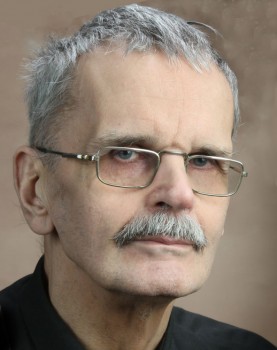
Gösta Ågren. Photo: Studio Paschinsky
Back in the day, in one of our periodic excursions into merchandising – the main criteria were that our goods should be flat (to fit into an envelope) and, of course, literary – we printed Books from Finland t-shirts. They were wildly popular – we must have sold, oh, dozens of them – and top of the list was a shirt with a laconic couplet by Gösta Ågren: ‘Don’t worry / it will never work out.’
Writing in Swedish and hailing from a small village in Ostrobothnia, in the far north-west of Finland, Ågren (born 1936) is the author of poems, essays and biographies. He may often choose to adopt the persona of a country curmudgeon, but the laconic tone of his poems belies a tenderness, a universalism, and an underlying political commitment, that speaks of a love of the world, a desire to make it into a better place.
The volume from which these poems are taken, Jär (‘Here’, 1989), won the Finlandia Prize for Literature in 1989.
*
The digitisation of Books from Finland continues, with a total of 372 articles and book extracts made available online so far. Each week, we bring a newly digitised text to your attention.
New from the archives
19 February 2015 | This 'n' that
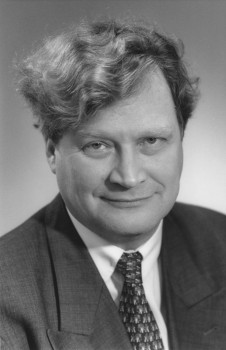
Jarkko Laine. Photo: Kai Nordberg
Our archive find this week is ‘The 101 year anniversary celebration’, a short story by Jarkko Laine.
‘Child of Marx and Coca-Cola’, ‘Nordic beatnik’, Jarkko Laine (1947-2006) published his first work, a volume of poetry entitled Muovinen Buddha (‘Plastic Buddha’) in the 1960s and was immediately hailed as the mouthpiece of his generation. He went on to make his career as a literary all-rounder – poet, writer, playwright, translator, long-time editor of the literary magazine Parnasso and chair of the Finnish Writers’ Union. His wryly ironic story, ‘The 101 year anniversary celebration’ tells the story of what every writer must dread: a guest appearance in a local library where literature from the local town, let alone further afield, is regarded with suspicion.
We’ve also unearthed a 1989 interview, by our late, genial editor-in-chief Erkka Lehtola with a grey-suited Laine who looks more like a civil servant than a 1960s radical – but still doesn’t let a day go by without writing.
*
The digitisation of Books from Finland continues apace, with a total of 360 articles and book extracts made available online so far. Each week, we bring a newly digitised text to your attention.
New from the archives
19 February 2015 | This 'n' that
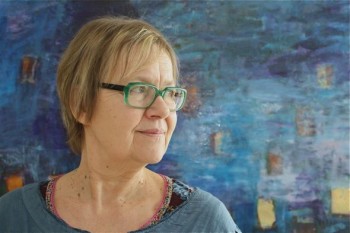
Tua Forsström. Photo: Mao Lindholm
Some weeks the digitisation project turns up material we’ve all but forgotten about; other times it’s like greeting an old friend. The poet Tua Forsström’s voice belongs in the second category: quintessentially feminine, wise, simultaneously vulnerable and strong, she is a quiet, watchful observer of everyday life, fixing the chimerical, the evanescent not with, it seems, but between, the words of her poems. This extensive selection of poems is introduced by her friend and fellow poet, Claes Andersson.
Born in Porvoo in 1947, Forsström publishes rarely. She won the Nordic Council Literary Prize in 1998 with Efter att ha tillbringat en natt bland häster (‘After having spent a night with horses’, 1997). Her breakthrough into the English-speaking world came in 1987 with her sixth collection, Snow Leopard (Snöleopard), which was translated into the English by David McDuff and published by Bloodaxe Books. We’ve featured her work regularly, including her most recent collection, En kväll i oktober rodde jag ut på sjön (‘One evening in October I rode out on the lake’, Söderströms, 2012), with an introduction by Michel Ekström.
*
The digitisation of Books from Finland continues apace, with a total of 358 articles and book extracts made available online so far. Each week, we bring a newly digitised text to your attention.
Why translate?
28 January 2015 | Essays, Non-fiction
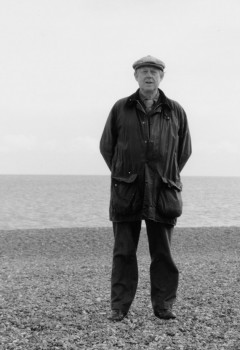
Down by the sea: Herbert Lomas in Aldeburgh. – Photo: Soila Lehtonen
‘People do not read translations to encourage minor literatures but to rediscover themselves in new imaginative adventures‚’ says the poet and translator Herbert Lomas in this essay on translation (first published in Books from Finland 1/1982). ‘Translation is a thankless activity,’ he concludes – and yet ‘you have the pleasure of writing without the agony of primary invention. It’s like reading, only more so. It’s like writing, only less so.’ And how do Finnish and English differ from each other, actually?
Any writer’s likely to feel – unless he’s a star, a celebrity, a very popular and different beast – that the writer is a necessary evil in the publisher’s world, but not very necessary. How much more, then, the translator from a ‘small’ country’s language.
Why do it? The pay’s absurd, you need the time for your own writing, it’s very hard to please people, and translation is, after all, the complacent argument goes, impossible. I’m convinced by all these arguments, and really I can’t afford to go on; but I don’t regret what I’ve done and, looking back, I can find two reasons for translating Finnish writing, one personal, the other cultural. More…
Archives open!
12 December 2014 | This 'n' that
Illustration: Hannu Konttinen
For 41 years, from 1967 to 2008, Books from Finland was a printed journal. In 1976, after a decade of existence as not much more than a pamphlet, it began to expand: with more editorial staff and more pages, hundreds of Finnish books and authors were featured in the following decades.
Those texts remain archive treasures.
In 1998 Books from Finland went online, partially: we set up a website of our own, offering a few samples of text from each printed issue. In January 2009 Books from Finland became an online journal in its entirety, now accessible to everyone.
We then decided that we would digitise material from the printed volumes of 1976 to 2008: samples of fiction and related interviews, reviews, and articles should become part of the new website.
The process took a couple of years – thank you, diligent Finnish Literature Exchange (FILI) interns (and Johanna Sillanpää) : Claire Saint-Germain, Bruna di Pastena, Merethe Kristiansen, Franziska Fiebig, Saara Wille and Claire Dickenson! – and now it’s time to start publishing the results. We’re going to do so volume by volume, going backwards.
The first to go online was the fiction published in 2008: among the authors are the poets Tomi Kontio and Rakel Liehu and prose writers Helvi Hämäläinen (1907–1998), Sirpa Kähkönen, Maritta Lintunen, Arne Nevanlinna, Hagar Olsson (1893–1979), Juhani Peltonen (1941–1998) and Mika Waltari (1908–1979).
To introduce these new texts, we will feature a box on our website, entitled New from the archives, where links will take you to the new material. The digitised texts work in the same way as the rest of the posts, using the website’s search engine (although for technical reasons we have been unable to include all the original pictures).
By the time we reach the year 1976, there will be texts by more than 400 fiction authors on our website. We are proud and delighted that the printed treasures of past decades – the best of the Finnish literature published over the period – will be available to all readers of Books from Finland.
The small world of Finnish fiction will be even more accessible to the great English-speaking universe. Read on!
Imagine
25 November 2014 | Authors, Reviews
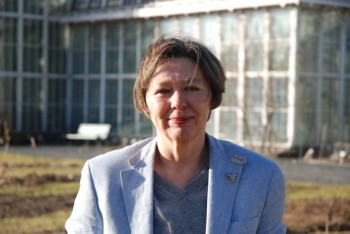
Susanne Ringell. Photo: Anders Larsson
Dreams about and in the Eternal City. Leonard Cohen who plays a shanty by the Swedish poet Dan Andersson on the lute. The narrator of these prose poems gives birth to a daughter who is as small as a fountain pen, but perfect and just the right size – and she brings up a litter of puppies too.
This and much more is included in the wonderful new collection of prose poetry, Tärnornas station – en drömbok (‘The Lucia Maids’ station – a book of dreams’, Ellips, 2014) by Susanne Ringell (born 1955), one of the most personal voices in Finland-Swedish literature today. After an early career as an actress, she made her debut with a short story collection in 1993, and since then she has written short prose of different varieties, poetry, and plays. In Ringell’s work there is nothing amiss in the style and language, in the audacious combinations, in the chronicled sadness and the unwaveringly discrete humour. With fantastic clarity she approaches the most elusive of motifs, the deepest content of the soul, making it vivid and recognisable. More…
You may say I’m a dreamer
25 November 2014 | Fiction, poetry
Prose poems from Tärnornas station – en drömbok (‘The Lucia Maids’ Station – a dream book’‚ Ellips, 2014). Introduction by Michel Ekman
I nurse a very small, perfectly formed child. It’s a girl. She smiles openly at me, even though she is so small. There is no doubt, neither about that nor anything else. The girl is the size of a nib pen, and just as exclusive. The nursing is going very well, it doesn’t hurt, and she can suckle without any problems. We are both at ease and yet awake, not introspective. The girl has intelligent eyes.
The milk keeps flowing.
Nothing runs dry.
Everything is obvious and neither of us is surprised. Just the fact that she is so small. Like a fountain pen. She is swathed in strips of bird cherry white bandages – like the ones mum had in her summer medicine cabinet – a cocoon, a chrysalis, but she’s not cramped, just secure. It smells good around us. I nurse my daughter who is perfect and the right size.
Love is the only song
7 August 2014 | Fiction, poetry
Poems from Helise, taivas! Valitut runot (‘Ring out, sky! Selected poems’, Siltala, 2014). Introduction by Marja-Leena Mikkola
Who will tell me?
Who will tell me why white butterflies
strew the velvet skin of the night?
Who will tell me?
While people walk, mute and strange
and they have snowy, armoured faces,
such snowy faces!
and the eyes of a stuffed bird.
Who will tell me why in the morning, on the grass,
the thrushes begin their secret game?
Who will tell me?
While black soldiers stand at the gate
in their hands withered roses
such withered roses!
and broken tiger lilies.
Who will tell me, quietly in the sun’s shadow
how to bare my heart?
Who will tell me?
Come to me over the fields
Come close and softly
so softly!
Open the clothes of my heart. More…
The Dancing Bear Poetry Prize 2014
7 August 2014 | In the news

Juha Kulmala. Photo: Kajaanin runoviikko, 2014
The Dancing Bear Poetry Prize (Tanssiva karhu -palkinto), founded by Yleisradio, the Finnish Broadcasting Company and worth €3,500, is awarded annually to a book of poetry published the previous year. In July, at a poetry festival – Kajaanin runoviikko – in the north-eastern town of Kajaani, it was given for the 20th time.
The winner was Juha Kulmala: his collection, entitled Pompeijin iloiset päivät (‘The merry days of Pompeii’, Savukeidas, 2013), is written in the vein of the ‘beat’ tradition of the poet’s home town of Turku; the landscape of the poems includes Finland and regions in Southern Europe.
The other finalists were Ville Hytönen, Harry Salmenniemi, Pauliina Haasjoki, Sinikka Vuola and Ralf Andtbacka. The prize jury, chaired by the poet Harri Nordell, chose the winner from almost 200 collections.
Yleisradio also awards a prize for the best poetry translation (Kääntäjäkarhu-palkinto) of the year, worth €1,100; this time it went, for the first time, to an anthology. Entitled 8+8. Suomalaista ja virolaista runoutta / Eesti ja Soome luulet (‘8+8. Finnish and Estonian poetry’, NyNorden, 2014) and edited by the Estonian poet and writer Eeva Park, the book contains poems by eight Estonian and eight Finnish poets, all published in Estonian and in Finnish, translated by twelve translators.
Light songs and dark
4 August 2014 | Authors, Reviews
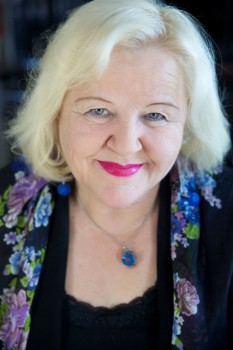
Aulikki Oksanen. Photo: Laura Malmivaara
On my wall at home are paintings given to me by the artist and poet Aulikki Oksanen. A watercolour from 1966 is a stylised depiction, a little in the manner of Modigliani, of a room with a girl by the window. In the background are a harbour and ships.
The work reminds me of the time when I got to know Aulilkki when we both moved in University Theatre circles and I visited her in the room shown in the painting. The flat was later the scene for Lapualaismorsian (‘Lapua bride’), a film which Aulikki (born 1944) took part in.
To me, with her blond, straight hair, she was like a beautiful, slender young filly, so I was not in the least surprised when her debut work included some enchanting horse symbolism. Her first book, an original, fresh collection of poems entitled Hevosen kuolema (‘Death of a horse’, 1966) gained immediate attention. More…
Debt to life
28 May 2014 | Authors, Non-fiction
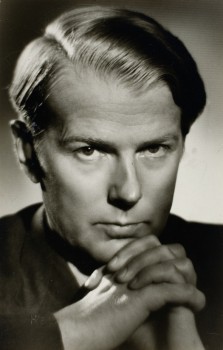
Kaarlo Sarkia (1902–1945). Photo: Ivar Helander (The Literary Archives/Finnish Literature Society)
Joie de vivre, dream, death, love: Kaarlo Sarkia’s rhymed poetry made him one of the Finnish classics, even if he only had time to publish four collections. Like several unfortunate poets of the first half of the 20th century – among them Edith Södergran, Saima Harmaja, Katri Vala, Uuno Kailas – he died of tuberculosis. Poems from Unen kaivo (‘The well of dreams’, WSOY, 1936)
From the point of view of both form and content, Kaarlo Sarkia’s poem ‘Älä elämää pelkää’ (‘Don’t be afraid of life’, 1936) is among the best examples of Finnish poetry. It crystallises several typical themes and features of his work: a declamatory absoluteness and existential courage, a faith in beauty, and the presence of death.
Don’t be afraid of life,
don’t shut out its beauty.
Invite it to sit by your fire,
or should your hearth expire,
to meet it outside is your duty.
– – –
More…
Another morning, another day
Poems from Unen kaivo (‘The well of dreams’, WSOY, 1936). Introduction by Satu Grünthal
IN THE MIRROR
Strange and truly wondrous
in the mirror you look at me.
All I really know is
that you I cannot be.
With my eyes you survey me,
with my lips you smile, too,
what I see in the mirror
is not me, but you, just you.
Whoever you are – astral morning,
eternal night – in the frame
like a wraith, a ghostly phantom,
invisible I remain. More…
Thirsty for poetry
22 May 2014 | This 'n' that
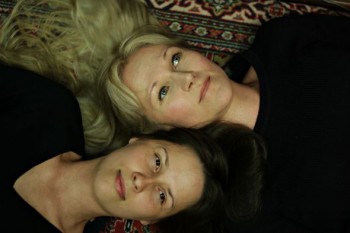
Johanna Venho (above) and Vilja-Tuulia Huotarinen. Photo:
Jano (‘Thirst’) is the name for a new online magazine: according to the writers and poets Johanna Venho and Vilja-Tuulia Huotarinen, its editors, it is a ‘poetry journal for all’ – for poets, the general public, for anybody.
Two issues have been published since November 2013. The theme of the first one is Time, of the second, Place.There are interviews, autobiographical texts, texts by critics and poets. More…
The stars above
6 March 2014 | Authors, Reviews
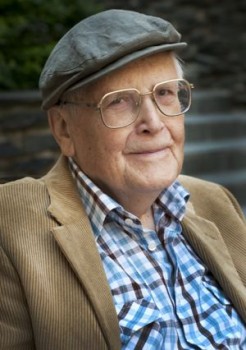
Lars Huldén. Photo: Charlotta Boucht
The state of poetry in Finland has been the subject of heated debate in recent years. The focus of much of this attention has been so-called ‘experimental poetry’. Some commentators have gone as far as to suggest that, in its ability to reshape and reinvent itself, contemporary poetry serves as a model for other forms of literature.
In such a literary climate, a writer like Lars Huldén might easily be overlooked, a writer whose poems give honest expression to thoughts and moods. This Huldén achieves in a manner that is at once recognisable and inventive. His poems are, perhaps, close to what many assume poems should be: concise speech expressing the wisdom of experience and often revealing a clear sense of resignation – which is hardly surprising when you have reached the age of 88. More…