

Tag: translation
For your eyes only
11 May 2015 | This 'n' that
Photo: Steven Guzzardi / CC BY-ND 2.0
Imagine this: you’re a true bibiophile, with a passion for foreign literature (not too hard a challenge, surely, for readers of Books from Finland,…). You adore the work of a particular writer but have come to the end of their work in translation. You know there’s a lot more, but it just isn’t available in any language you can read. What do you do?
That was the problem that confronted Cristina Bettancourt. A big fan of the work of Antti Tuuri, she had devoured all his work that was available in translation: ‘It has everything,’ she says, ‘Depth, style, humanity and humour.’
Through Tuuri’s publisher, Otava, she laid her hands on a list of all the Tuuri titles that had been translated. It was a long list – his work has been translated into more than 24 languages. She read everything she could. And when she had finished, the thought occurred to her: why not commission a translation of her very own? More…
Reasons to be cheerful
14 March 2015 | This 'n' that
Photo: Vipul Mathur / CC BY-NC-SA 2.0
Translation, as the German philosopher and critic Walter Benjamin argued, is an art form. Amid all the conventional doom ‘n’ gloom about literary translation, then – and even though we at Books from Finland are among its biggest supporters, we have to put up our hands and admit that we do our fair share of hand-wringing – it’s refreshing to see this over at Better than Sliced Bread, a blog edited by English students at Helsinki University: a love-letter by Seattle student Elizabeth Oakes to the ‘vast and beautiful’ vistas that the process of translation can open up.
Why translate?
28 January 2015 | Essays, Non-fiction
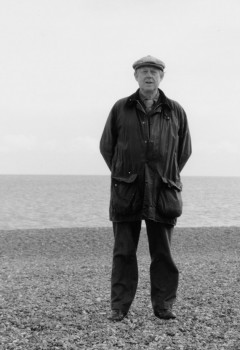
Down by the sea: Herbert Lomas in Aldeburgh. – Photo: Soila Lehtonen
‘People do not read translations to encourage minor literatures but to rediscover themselves in new imaginative adventures‚’ says the poet and translator Herbert Lomas in this essay on translation (first published in Books from Finland 1/1982). ‘Translation is a thankless activity,’ he concludes – and yet ‘you have the pleasure of writing without the agony of primary invention. It’s like reading, only more so. It’s like writing, only less so.’ And how do Finnish and English differ from each other, actually?
Any writer’s likely to feel – unless he’s a star, a celebrity, a very popular and different beast – that the writer is a necessary evil in the publisher’s world, but not very necessary. How much more, then, the translator from a ‘small’ country’s language.
Why do it? The pay’s absurd, you need the time for your own writing, it’s very hard to please people, and translation is, after all, the complacent argument goes, impossible. I’m convinced by all these arguments, and really I can’t afford to go on; but I don’t regret what I’ve done and, looking back, I can find two reasons for translating Finnish writing, one personal, the other cultural. More…
Not a world language, and yet….
16 January 2015 | Articles, Non-fiction
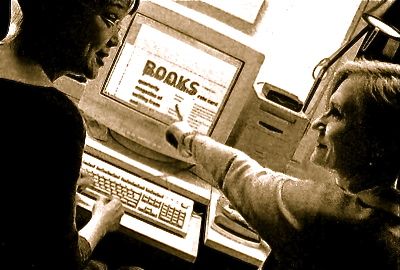
The editors (Hildi Hawkins and Soila Lehtonen) at the screen: we begun publishing material on our website in 1998. Photo: Jorma Hinkka, 2001
Longevity may not generally be a virtue of literary magazines – they tend to come and go – but Books from Finland, which began publication in 1967, has stuck around for a rather impressively long time. Literary life, as well as the means of production, has changed dramatically in the almost half-century we have been in existence. So where do we stand now? And what does the future look like?
This is the farewell letter from the current Editor-in-Chief, Soila Lehtonen – who began working for the journal in 1983
‘The literature of Finland suffers the handicap of being written in a so-called “minor” language, not a “world” language…. Finland has not entirely been omitted from the world-map of culture, but a more complete and detailed picture of our literature should be made available to those interested in it.’
Thus spake the Finnish Minister of Education, R.H. Oittinen, in early 1967, in the very first little issue of Books from Finland, then published by the Publishers’ Association of Finland, financed by the Education Ministry.
Forty-seven years, almost 10,000 printed pages (1967–2008) and (from 2009) 1,400 website posts later, we might claim that the modest publication entitled Books from Finland, has accomplished the task of creating ‘a more complete and detailed picture’ of Finnish literature for anyone interested in it. More…
Archives open!
12 December 2014 | This 'n' that
Illustration: Hannu Konttinen
For 41 years, from 1967 to 2008, Books from Finland was a printed journal. In 1976, after a decade of existence as not much more than a pamphlet, it began to expand: with more editorial staff and more pages, hundreds of Finnish books and authors were featured in the following decades.
Those texts remain archive treasures.
In 1998 Books from Finland went online, partially: we set up a website of our own, offering a few samples of text from each printed issue. In January 2009 Books from Finland became an online journal in its entirety, now accessible to everyone.
We then decided that we would digitise material from the printed volumes of 1976 to 2008: samples of fiction and related interviews, reviews, and articles should become part of the new website.
The process took a couple of years – thank you, diligent Finnish Literature Exchange (FILI) interns (and Johanna Sillanpää) : Claire Saint-Germain, Bruna di Pastena, Merethe Kristiansen, Franziska Fiebig, Saara Wille and Claire Dickenson! – and now it’s time to start publishing the results. We’re going to do so volume by volume, going backwards.
The first to go online was the fiction published in 2008: among the authors are the poets Tomi Kontio and Rakel Liehu and prose writers Helvi Hämäläinen (1907–1998), Sirpa Kähkönen, Maritta Lintunen, Arne Nevanlinna, Hagar Olsson (1893–1979), Juhani Peltonen (1941–1998) and Mika Waltari (1908–1979).
To introduce these new texts, we will feature a box on our website, entitled New from the archives, where links will take you to the new material. The digitised texts work in the same way as the rest of the posts, using the website’s search engine (although for technical reasons we have been unable to include all the original pictures).

By the time we reach the year 1976, there will be texts by more than 400 fiction authors on our website. We are proud and delighted that the printed treasures of past decades – the best of the Finnish literature published over the period – will be available to all readers of Books from Finland.
The small world of Finnish fiction will be even more accessible to the great English-speaking universe. Read on!
Encounters with a language
12 December 2014 | Articles, Non-fiction
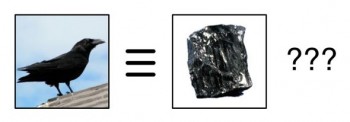
Mistranslation: illustration by Sminthopsis84/Wikimedia
Mother tongue: not Finnish. How do people become interested enough in the Finnish language in order to become translators? In the olden days some might have been greatly inspired by the music Sibelius (as were the eminent British translators of Finnish, David Barrett or Herbert Lomas, for example, back in the 1950s and 1960s). We asked contemporary translators to reminisce on how they in turn have become infatuated enough with Finnish to start studying and translating this small, somewhat eccentric northern language. Three translators into English, one into French, German and Latvian tell us why
A long list of good novels
27 November 2014 | In the news
 The longlist for the International IMPAC Dublin Literary Award 2015 has been announced and, among the 142 translated novels – from 39 countries and 16 original languages – are two from Finland.
Mr Darwin’s Gardener by Kristina Carlson (Peirene Press, UK, 2012), a novel set in the 1860s England, is translated by Emily and Fleur Jeremiah (see the extracts in Books from Finland).
Cold Courage, a thriller by Pekka Hiltunen (Hesperus Press, UK), is translated by Owen Witesman. Both entries were nominated by Helsinki City Library.
Among the authors writing in English are Margaret Atwood, J.M. Coetzee, Roddy Doyle, Stephen King, Jhumpa Lahiri, Thomas Pynchon and Donna Tartt.
This literary award was established by Dublin City, Civic Charter in 1994. Nominations are made by libraries in capital and major cities throughout the world, on the basis of ‘high literary merit’. In order to be eligible for consideration in 2015 a novel translated into English must be first published in the original language between 1 January 2009 and 31 December 2013.
The award for a translated novel is worth €75,000 to the author, €25,000 to the translator. The shortlist of ten titles will be announced by an international panel of judges in April 2015, the winner in June.
We’ll be keeping our fingers crossed for our ex-Editor-in-Chief Kristina Carlson!
Translation prize to Angela Plöger
23 October 2014 | In the news
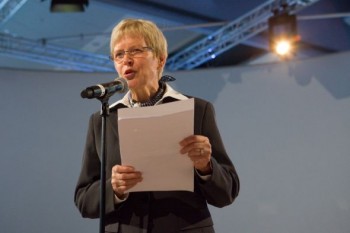
Angela Plöger, Frankfurt Book Fair, 8 October. Photo: Katja Maria Nyman
The 40th Finnish State Prize for the Translation of Finnish Literature of 2014 – worth €15,000 – was awarded to the German translator Angela Plöger at the Frankfurt Book Fair on 8 October.
Dr Angela Plöger (born 1942) studied Finnish and Fennistics in Berlin; she first came to Finland in the 1960s after having become interested in the Finnish language as a result of learning Hungarian.
‘I had been to the restaurant at the Helsinki Railway Station where Bertolt Brecht was thinking how the noblest part of a man is his passport, and how Finns are a people who keeps silent in two languages.’
Plöger then defected to West Germany, starting her career anew. She has also translated texts from Hungarian and Russian. In her speech in the Finnish Pavilion of the Book Fair Plöger said that in her opinion translating literature is the most fascinating profession in the world.
Her first translation of a Finnish novel was Tamara, by Eeva Kilpi, published in 1974. Among the most recent of the 40 novels Plöger has translated during the past five decades from Finnish are the novels Kätilö (‘Midwife’, 2011) by Katja Kettu and Kun kyyhkyset katosivat (‘When the doves disappeared’, 2012) by Sofi Oksanen. Among the other works Plöger has translated are novels by Leena Lander, Eeva-Kaarina Aronen, Anja Snellman, Kaari Utrio, Johanna Sinisalo, Risto Isomäki and Antti Tuuri, as well as a number of drama texts by Laura Ruohonen, Juha Jokela, Aki Kaurismäki, Pirkko Saisio and Sofi Oksanen.
The Minister for Culture and Housing, Pia Viitanen, thanked Plöger for her extensive and multi-faceted work in the field of language and literature and in promoting Finnish literary culture in Germany.
The prize, worth € 15,000, has been awarded by the Ministry of Education and Culture since 1975 on the basis of a recommendation by FILI – Finnish Literature Exchange.
Finland, cool! The Frankfurt Book Fair 8–12 October
30 September 2014 | Articles, Non-fiction

Finnland. Cool. pavilion in Frankfurt, designed by Natalia Baczynska Kimberley, Nina Kosonen and Matti Mikkilä from Aalto University
It starts next week: Finland is Guest of Honour at the Book Fair in the German and global city of Frankfurt. This link will take you to it all.
Approximately 170,000 professionals from the literary world are expected to visit the exhibition halls from Wednesday to Friday; the weekend is reserved for the general public, c.100,000 visitors. Since 1980s different countries have been in focus each year. More…
The Dancing Bear Poetry Prize 2014
7 August 2014 | In the news

Juha Kulmala. Photo: Kajaanin runoviikko, 2014
The Dancing Bear Poetry Prize (Tanssiva karhu -palkinto), founded by Yleisradio, the Finnish Broadcasting Company and worth €3,500, is awarded annually to a book of poetry published the previous year. In July, at a poetry festival – Kajaanin runoviikko – in the north-eastern town of Kajaani, it was given for the 20th time.
The winner was Juha Kulmala: his collection, entitled Pompeijin iloiset päivät (‘The merry days of Pompeii’, Savukeidas, 2013), is written in the vein of the ‘beat’ tradition of the poet’s home town of Turku; the landscape of the poems includes Finland and regions in Southern Europe.
The other finalists were Ville Hytönen, Harry Salmenniemi, Pauliina Haasjoki, Sinikka Vuola and Ralf Andtbacka. The prize jury, chaired by the poet Harri Nordell, chose the winner from almost 200 collections.
Yleisradio also awards a prize for the best poetry translation (Kääntäjäkarhu-palkinto) of the year, worth €1,100; this time it went, for the first time, to an anthology. Entitled 8+8. Suomalaista ja virolaista runoutta / Eesti ja Soome luulet (‘8+8. Finnish and Estonian poetry’, NyNorden, 2014) and edited by the Estonian poet and writer Eeva Park, the book contains poems by eight Estonian and eight Finnish poets, all published in Estonian and in Finnish, translated by twelve translators.
Breadcrumbs and elephants
27 March 2014 | Essays, On writing and not writing
In this series, Finnish authors ponder the pros and cons of their profession. Alexandra Salmela operates in two languages, her native Slovakian and Finnish, which has become her literary language. Adventure and torture alternate as she attempts to shape reality into writing
I had started to write before I knew how. With fat wax crayons, in big stick-letters, I scratched my stories in old diaries. There were lots of pictures. From the very beginning, I wrote both poetry and prose. At 11 I didn’t finish my great sea-adventure novel, but at 12 I was already writing my memoirs. They, too, somehow remained unfinished.
Writing is… I wanted to write fun, but in the end I’m not quite sure about that. Writing is adventure and liberation and terribly hard work. Torture of the imagination and the pale copying of real events. Reading is a way to escape reality and at the same time a route to the sources of reality. By writing, you can shape reality in your own image: it’s your own character fault if the result is ugly and depressing.
If I were to write a pink world, it would be so sugary that it would make everyone sick, me and other people. More…
Potentially translatable
27 March 2014 | In the news
The daily paper Aamulehti, published in Tampere, and the bookshop Tulenkantajat (‘The torch-bearers’), in the same city, founded in 2013 a prize called Tulenkantajat* for a Finnish-language writer whose book, published in the previous year, is estimated to have the ‘best export potential’. The first jury selects four to six candidates, the second chooses the winner. The prize is worth €5,000.
The winner of the 2014 prize was announced on 24 March: it is the graphic novel Vain pahaa unta (‘Just a bad dream’, WSOY) by the father-daughter team Ville Tietäväinen and Aino Tietäväinen; see our feature; we have also reviewed three other finalists on the list of six.
The remaining finalists were the crime novel Niiden kirjojen mukaan teidät on tuomittava (‘You will be judged according to your books’, Atena) by Kai Ekholm, Piippuhylly (‘The pipe shelf’, WSOY), short stories by Katja Kettu, the novel Hotel Sapiens (Teos) by Leena Krohn, the novel Herodes (‘Herod’, WSOY) by Asko Sahlberg and Kirahviäiti ja muita hölmöjä aikuisia (‘The giraffe mummy and other silly adults’, Teos), a picture book for children by Alexandra Salmela and Martina Matlovičová.
Who can say whether the books on this shortlist will be ‘exported’, i.e. translated prolifically? Time will tell.
*) The mid 1920s saw the foundation of a group of writers called the Torch-Bearers; it first published intensely personal nature poetry but later began to import European influences into Finnish literature. The Torch-Bearers aimed for the experience of citizenship of the world as unity between people without denying one’s own fatherland or nationality. (See Vesa Mauriala’s article here.)
A family affair
24 October 2013 | In the news
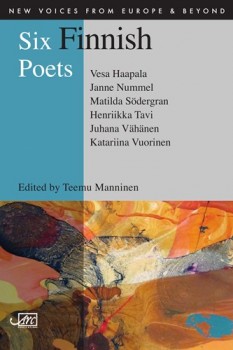 Six Finnish poets, edited by Teemu Manninen – a poet himself – is the tenth volume in a series of bilingual anthologies bringing contemporary poetry from around Europe to English-language readers.
One of the poets introduced is a Finland-Swede, Matilda Södergran, whose poems are presented in their original Swedish alongside the English translations. The other poets, all of whom write in Finnish, are Vesa Haapala, Janne Nummela, Henriikka Tavi, Katariina Vuorinen and Juhana Vähänen. Their translators are Emily & Fleur Jeremiah, Lola Rogers and Helen R. Boultrum.
In his introduction Teemu Manninen briefly outlines the developments of contemporary Finnish poetry around the turn of the 21st century. The poets chosen were born in the 1970s and 1980s; their work could be characterised variously as experimental, surrealist, minimalist and ironic.
According to Manninen, during the last couple of decades, a ‘do-it-yourself’ culture has sprung up among people interested in performing poetry, organising independent festivals and clubs, and disseminating their work via the Internet. New, cheaper methods of publishing printed books have also contributed to a growing interest in poetry and to its popularity. Even so, contemporary poetry is not something that attracts large crowds; people involved in this sort of ‘literary activism’ tend to know each other well.
So, ‘in Finland, poetry is a family affair,’ notes Manninen. ‘The familial communality has to be acknowledged if one is to understand the kind of poetry currently being written in Finland….’ It mostly lives and thrives independent of large publishers, newspapers and literary prizes.
The anthology series is entitled New Voices from Europe and Beyond; it is published in the UK by Arc Publications in co-operation with Literature Across Frontiers.
Cool, not ice-cool
17 October 2013 | This 'n' that
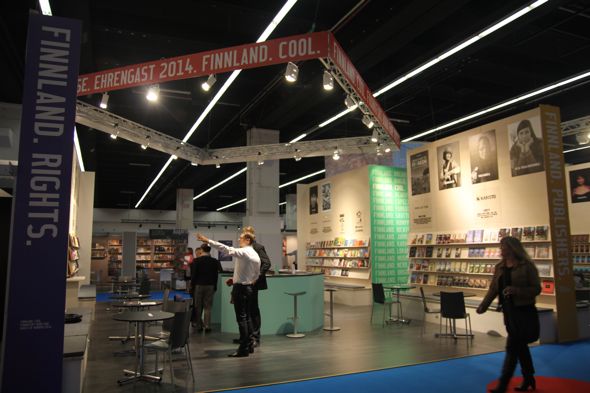
Getting ready: book fair scenery, 2013. Photo: FILI
The Finnish book world is preparing for the big event of ‘F14’: Finland will appear as Guest of Honour at the Frankfurt Book Fair in October next year.
The slogan for this enterprise is Finnland. Cool.
The coordinating organ is FILI, the Finnish Literature Exchange, a part of the Finnish Literature Society. Co-operating with FILI are three ministries, literary organisations and publishers, the Finnish Embassy and Finnland-Institut in Berlin and the Goethe-Institut in Helsinki.
Last week a large proportion of the FILI staff – who now need to keep their cool for the next busy year – went to Frankfurt, and on 10 October (aptly, the memorial day of the national author Aleksis Kivi and also Finnish Literature Day) the press conference was opened by the Finnish Minister of Culture and Sport, Paavo Arhinmäki. On 13 October the 2013 Guest of Honour, Brazil, passed the baton to Finland. (More photographs here.)
The world’s largest book fair, Frankfurt, attracts some 300,000 visitors each year. Accessible to both professionals and the general public, the fair is also the biggest cultural event in Germany.
The Guest of Honour countries receive a vast amount of attention in the media, and the number of new translations from the respective languages into German, as well as other languages, will increase.
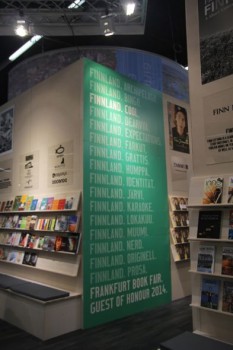
Finnland: arktik. Blondi. Cool. Demokratia. Einsam. Formula 1. Girji. Heimat. Ihminen. Joy…. Photo: FILI
The total Finnish budget for the years 2010–2015 is approximately four million euros, half of it money from the government. And the mission? Here are some warm words from the cool FILI agenda:
‘Why are Finns reading so much? Why are Finns so good at reading? Because we love it. Because reading plays such an important role in everyday life.
‘And because it is so important in Finland that everybody has access to reading – regardless of whether you are male or female, where you live, where you work, what your education or talent is. Fun, everyday life and for everyone – these are the main themes of the satellite programme for the Guest of Honour at the Frankfurt Book Fair 2014.’
It’s four o’clock and the dog is puzzled
26 September 2013 | This 'n' that
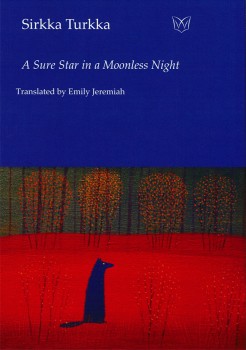
Cover image: ‘Autumn reflections’ by author and painter Saara Tikka
Apart from writing poetry for forty years, Sirkka Turkka has worked as a stable master and as a librarian – and she is a wizard in creating portraits of dogs in her poems.
‘Something kept me awake late. Something woke me up early. It’s four o’clock and the dog is puzzled. He tries to continue his dream: he was just about to catch a squirrel he barked at all of yesterday. He leaves me quite alone in silence, in which not a single breeze stirs. What is in the past ceases to be, what is to come has no significance. There is only the sun, just about to come up. And the calm surface of the lake and the coffee cup, from which leisurely steam rises.’ (From Minä se olen [‘It’s me’], 1973)
Elk, horse, raven, reindeer, jackdaw, fox. Turkka’s universe is populated with creatures, often wiser than man: man may have lost his heart, or ‘he thinks it’s a distant land’, but ‘in dogs the heart is where it should be: just after the muzzle, boulder-like, baby-faced and willing.’ (From Yö aukeaa kuin vilja [‘The night opens like corn’], 1978).
Emily Jeremiah, scholar and translator (her work includes poems by Eeva-Liisa Manner, novels by Asko Sahlberg and Kristina Carlson), found Turkka’s creatures a while ago, and as a result a selection of Turkka’s poems, entitled A Sure Star in a Moonless Night, was published recently by Waterloo Press (UK).
Melancholy: it does go well with autumn, doesn’t it? ‘Once more the stars are like a tearful ballad, and always in the evenings / the dogs tune their cracked violins.’ (From Mies joka rakasti vaimoaan liikaa [‘The man who loved his wife too much’, 1979])