

Author: The Editors
And cool it was
30 October 2014 | This 'n' that
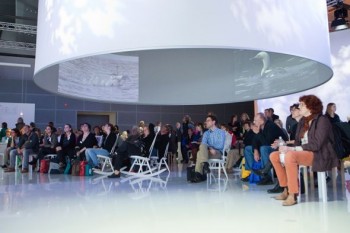
Guests welcome: Finnish pavilion, Frankfurt Book Fair. Photo: Katja Maria Nyman
Finland was Finnland and cool as Guest of Honour at the Frankfurt Book Fair from 8 to 12 October.
There was plenty to choose from, and then some: more than 500 Finland-related events, readings, exhibitions and cultural projects, 50+ Finnish authors, books, pictures, videos, music.
More than 130 books (plus new editions) have been published in German this year, and interest in Finnish literature in other countries – Frankfurt is the world’s biggest book fair, and publishers from all over the world are represented – will inevitably grow.
So the Finnish organiser, FILI – Finnish Literature Exchange – and its staff has now put their feet up for a moment, as it were, after very successfully tangoing through it all, and are savouring all the wow-factor memories of this big enterprise. After several years of preparation and hectic last months, it seems international interest in literary things Finnish exceeded all expectations.
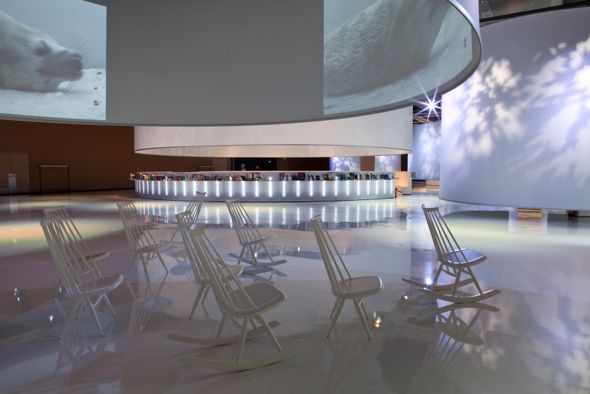
Ready to begin: Finnish Pavilion, Frankfurt Book Fair. Photo: Katja Maria Nyman
For those of you who couldn’t make it to the Finnish Pavilion, there are photographs of various events at Frankfurt, and lots more on this site, so take a look. Vorwärts! / Onwards!
Translation prize to Angela Plöger
23 October 2014 | In the news
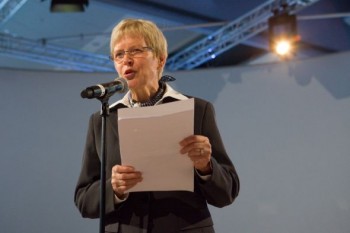
Angela Plöger, Frankfurt Book Fair, 8 October. Photo: Katja Maria Nyman
The 40th Finnish State Prize for the Translation of Finnish Literature of 2014 – worth €15,000 – was awarded to the German translator Angela Plöger at the Frankfurt Book Fair on 8 October.
Dr Angela Plöger (born 1942) studied Finnish and Fennistics in Berlin; she first came to Finland in the 1960s after having become interested in the Finnish language as a result of learning Hungarian.
‘I had been to the restaurant at the Helsinki Railway Station where Bertolt Brecht was thinking how the noblest part of a man is his passport, and how Finns are a people who keeps silent in two languages.’
Plöger then defected to West Germany, starting her career anew. She has also translated texts from Hungarian and Russian. In her speech in the Finnish Pavilion of the Book Fair Plöger said that in her opinion translating literature is the most fascinating profession in the world.
Her first translation of a Finnish novel was Tamara, by Eeva Kilpi, published in 1974. Among the most recent of the 40 novels Plöger has translated during the past five decades from Finnish are the novels Kätilö (‘Midwife’, 2011) by Katja Kettu and Kun kyyhkyset katosivat (‘When the doves disappeared’, 2012) by Sofi Oksanen. Among the other works Plöger has translated are novels by Leena Lander, Eeva-Kaarina Aronen, Anja Snellman, Kaari Utrio, Johanna Sinisalo, Risto Isomäki and Antti Tuuri, as well as a number of drama texts by Laura Ruohonen, Juha Jokela, Aki Kaurismäki, Pirkko Saisio and Sofi Oksanen.
The Minister for Culture and Housing, Pia Viitanen, thanked Plöger for her extensive and multi-faceted work in the field of language and literature and in promoting Finnish literary culture in Germany.
The prize, worth € 15,000, has been awarded by the Ministry of Education and Culture since 1975 on the basis of a recommendation by FILI – Finnish Literature Exchange.
Ice hockey and grumpiness – popular books in September
16 October 2014 | In the news

Ice hockey veteran: Teemu Selänne
The September list of best-selling non-fiction compiled by Suomen Kirjakauppaliitto, the Finnish Booksellers’ Association, included books on mushrooming: a popular pastime that, finding fungi for dinner. However, number one was the biography of the most internationally successful (NHL) ice hockey player so far, Teemu Selänne (recently retired), entitled Teemu (Otava).
Ilosia aikoja, Mielensäpahoittaja (‘Happy times, you who take offence’, WSOY) is the third book in the popular humorous series by Tuomas Kyrö, and it tops the September list of the best-selling Finnish fiction.
Kyrö’s protagonist, this mielensäpahoittaja, the one who ‘takes offence’, is a 80-something grumpy old man living in the countryside and opposing most of what contemporary lifestyles are about. For in the olden days everything was better: for example, food wasn’t complicated and cars were easily repairable.
Apparently Finns can’t get enough of this grumpiness. What began as short monologues written for the radio has become a series of books, and Kyrö’s Mr Grumpy has also appeared on the stage as well as on the screen: the first night of the film, also entitled Mielensäpahoittaja (directed by Dome Karukoski), took place in September. Will there be much more to come, we wonder.
Number two was the latest thriller by Ilkka Remes (pseudonym) with a book entitled Horna (‘Hell’, WSOY), and on third place was the new book by Anna-Leena Härkönen, a novel about a married couple who become lotto winners, Kaikki oikein (‘All correct’, Otava).
First place of the best-selling books for children and young people was occupied by the Moomins – not the original story books or comics by Tove Jansson though, but by other ‘Moomin writers’ and illustrators, whom there have been surprisingly many after Jansson’s Moomin art was made reproducible; this time the book is entitled Muumit ja ihmeiden aika (‘The Moomins and the time of wonders’, Tammi). Another cause of wonder, we think.
Seekers and givers of meaning: what the writer said
2 October 2014 | This 'n' that
 ‘All our tales, stories, and creative endeavours are stories about ourselves. We repeat the same tale throughout our lives, from the cradle to the grave.’ CA
‘Throughout a work’s journey, the writer filters meanings from the fog of symbols and connects things to one another in new ways. Thus, the writer is both a seeker of meaning and a giver of meaning.’ OJ
‘Words are behind locks and the key is lost. No one can seek out another uncritically except in poetry and love. When this happens the doors have opened by themselves.’ EK
‘I realised that I had to have the courage to write my kind of books, not books excessively quoting postmodern French philosophers, even if that meant laying myself open to accusations of nostalgia and sentimentality.’ KW
‘If we look at the writing process as consisting of three C:s – Craft, Creativity and Chaos – each one of them is in its way indispensable, but I would definitely go for chaos, for in chaos lies vision.’ MF
‘In the historical novel the line between the real and the imagined wavers like torchlight on a wall. The merging of fantasy and reality is one of the essential features of the historical novel.’ KU
‘The writer’s block isn’t emptiness. It’s more like a din inside your head, the screams of shame and fear and self-hatred echoing against one another. What right have I to have written anything in the first place? I have nothing to say!’ PT
‘…sometimes stanzas have to / assume the torch-bearer’s role – one / often avoided like the plague. / Resilient and infrangible, the lines have to / get on with their work, like a termite queen / laying an egg every three seconds / for twenty years, / leaving a human to notice / their integrity. ’ JI
In 2007 when Books from Finland was a printed journal, we began a series entitled On writing and not writing; in it, Finnish authors ponder the complexities, pros and cons of their profession. Now our digitised archives make these writings available to our online readers: how do Claes Andersson, Olli Jalonen, Eeva Kilpi, Kjell Westö, Monika Fagerholm, Kaari Utrio, Petri Tamminen and Jouni Inkala describe the process? Pain must coexist with pleasure…
From 2009 – when Books from Finland became an online journal – more writers have made their contributions: Alexandra Salmela, Susanne Ringell, Jyrki Kiiskinen, Johanna Sinisalo, Markku Pääskynen, Ilpo Tiihonen, Kristina Carlson, Tuomas Kyrö, Sirpa Kähkönen – the next, shortly, will be Jari Järvelä.
Finland, cool! The Frankfurt Book Fair 8–12 October
30 September 2014 | Articles, Non-fiction

Finnland. Cool. pavilion in Frankfurt, designed by Natalia Baczynska Kimberley, Nina Kosonen and Matti Mikkilä from Aalto University
It starts next week: Finland is Guest of Honour at the Book Fair in the German and global city of Frankfurt. This link will take you to it all.
Approximately 170,000 professionals from the literary world are expected to visit the exhibition halls from Wednesday to Friday; the weekend is reserved for the general public, c.100,000 visitors. Since 1980s different countries have been in focus each year. More…
Furies and angels: best-selling books in August
10 September 2014 | In the news

On the August list of the best-selling non-fiction compiled by Suomen Kirjakauppaliitto, the Finnish Booksellers’ Association, are two translated books on furies and angels: number two is Hitler’s Furies: German Women in the Nazi Killing Fields by Wendy Lower (Atena), number three is Love from Heaven (Otava) by Lorna Byrne, an Irishwoman and writer of books about angels who claims she has met the Archangel Michael.
At the top of the list, however, was Apulanta, the story of the Finnish rock band of the same name (it translates as ‘Fertilizer’) by Ari Väntänen (Like).
The top three Finnish fiction books were new: the latest novel by Tuomas Kyrö, Ilosia aikoja, Mielensäpahoittaja (‘Happy times, the one who takes offence’, WSOY), a new novel, about a couple who wins the lottery by Anna-Leena Härkönen, Kaikki oikein (‘Direct hit’, Otava) and a first novel, Kissani Jugoslavia (‘My cat Yugoslavia’, Otava), by Pajtim Statovci (born 1990), the story of an Albanian family arriving in Finland as refugees.
Mielensäpahoittaja is a noun: Kyrö’s protagonist is an 80-something man who lives in the countryside and opposes most of what contemporary lifestyles have to offer. His favourite sentence used to begin with ‘so I took offence when…’ This is the third book in the surprisingly popular series, and Kyrö’s Mr Grumpy (who originates from monologues written for the radio) has also appeared on the stage as well as on the screen: the first night of the film Mielensäpahoittaja (directed by Dome Karukoski) took place in early September.
Pig cheeks and chanterelle dust
21 August 2014 | This 'n' that
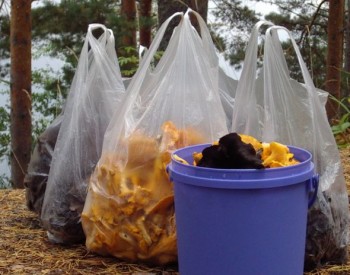
Wild and plentiful: chanterelles, black horns of plenty. Photo: Soila Lehtonen
Pop-up restaurants came into being in Helsinki in 2011: a few times every year any eager amateur cook is able to set up a ‘restaurant’ for one day on a street corner or in a park: citizens are welcome to take their pick, at a modest price.
In a northern city, not exactly suitable for street food trade all year round, in a country where rules of food hygiene are strict, the innovation of the Restaurant Day has been welcomed by the public. The latest event took place on 17 August.
The idea has now spread to at least 60 countries. Foodie culture thrives.
We find an article in The New Yorker by Adam Gopnik, No rules! Is Le Fooding, the French culinary movement, more than a feeling? interesting – according to comments quoted in it, ‘food must belong to its time’, and the traditional French cuisine ‘was caught in a museum culture: the dictatorship of a fossilized idea of gastronomy’.
In the 1960s, ‘nouvelle cuisine’, as opposed to cuisine classique, began to promote lighter, simpler, inventive, technically more advanced cooking. Well – some of us may remember that, at worst, this could also manifest itself in, say, three morsels of some edible substance placed decoratively on a plate topped with three chives: expensive, insubstantially elegant and pretty useless.
Today, Finland, the traditional stronghold of liver casserole, brown sauce and ham-mincemeat-pineapple pizzas (yes), seems to have moved onto a higher level of the culinary art – at least in selected restaurants. In a recent article, Helsinki’s food scene, coming on strong, published in The Washington Post, Tom Sietsema enjoys the pleasure of discovering things Finnish.
He is treated to parsnip leaves turned into ice cream imparting a coconut flavour, crackers made from leek ash and risotto in which ‘tiny green hops and their purple flowers interrupt the beige surface of the bowl, whose rim is dusted with golden chanterelle powder.’
The Executive Chef of Helsinki’s esteemed Savoy restaurant (est. 1937) cooks braised pig cheeks served with rhubarb and spring greens. A hunter-gatherer chef collects wild things: wood sorrel, spruce shoots and orpine and serves them in an omelette, with a drink made of chaga mushrooms (used for making tea; a sort of ‘sterile conk trunk rot of birch’, currently very much in vogue among the most eager of foodies for its medicinal [antioxidant, anti-inflammatory] properties).
It is true that Copenhagen and Stockholm have advanced further on their way to international fame of cuisine, but perhaps Helsinki will follow suit. And people who go out for a meal are no longer expected to settle for morsels with chives on top – food belongs to its time, and time changes food(ies).
A comment on Sietsema’s article claims though that his ‘verbiage’ has ‘nothing to do with what 99.999% of Finns eat! and what 99.99% of Finnish restaurants offer!’
But the truth (we know) is now closer to Sietsema than the commentator: ambitious restaurants may play with golden chanterelle powder, and even if it is not exactly what Finns often have for tea, we believe Finns today are losing interest in cheap chicken slivers in industrial marinade for dinner, and even beginning to accept that greens may not be only for bunnies.
Chanterelles have always been considered as a treat: fresh from the woods, quickly cooked in butter and cream, served with new potatoes and rye bread, or in an omelette: bon appetit (even without orpine)!
The Dancing Bear Poetry Prize 2014
7 August 2014 | In the news

Juha Kulmala. Photo: Kajaanin runoviikko, 2014
The Dancing Bear Poetry Prize (Tanssiva karhu -palkinto), founded by Yleisradio, the Finnish Broadcasting Company and worth €3,500, is awarded annually to a book of poetry published the previous year. In July, at a poetry festival – Kajaanin runoviikko – in the north-eastern town of Kajaani, it was given for the 20th time.
The winner was Juha Kulmala: his collection, entitled Pompeijin iloiset päivät (‘The merry days of Pompeii’, Savukeidas, 2013), is written in the vein of the ‘beat’ tradition of the poet’s home town of Turku; the landscape of the poems includes Finland and regions in Southern Europe.
The other finalists were Ville Hytönen, Harry Salmenniemi, Pauliina Haasjoki, Sinikka Vuola and Ralf Andtbacka. The prize jury, chaired by the poet Harri Nordell, chose the winner from almost 200 collections.
Yleisradio also awards a prize for the best poetry translation (Kääntäjäkarhu-palkinto) of the year, worth €1,100; this time it went, for the first time, to an anthology. Entitled 8+8. Suomalaista ja virolaista runoutta / Eesti ja Soome luulet (‘8+8. Finnish and Estonian poetry’, NyNorden, 2014) and edited by the Estonian poet and writer Eeva Park, the book contains poems by eight Estonian and eight Finnish poets, all published in Estonian and in Finnish, translated by twelve translators.
Crime, no punishment
24 June 2014 | In the news
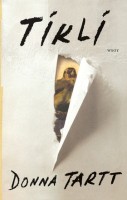 Summer is the season for crime – where buying and reading books is concerned. When spring ends and summer begins, several whodunits and thrillers appear on the list of best-selling books compiled by the Finnish Booksellers’ Association. However, on the translated fiction list Donna Tartt rules with her novel The Goldfinch (Tikli, WSOY).
For the third time since March, number one on the Finnish fiction list in May was Tommi Kinnunen’s first novel, Neljäntienristeys (‘The crossing of four roads’, WSOY). In March this title reached the top after favourable reviews – in the Helsingin Sanomat daily paper in particular.
The narrative spans a century, beginning in the late 19th century, and is set mainly in Northern Finland. The Swedish publisher Norstedts was the first to buy the translation rights.
The next two on the list are crime novels: Cowboy (Otava) by Reijo Mäki and Mustat sydämet (‘Black hearts’, Crime Time) by Seppo Jokinen. The new ‘granny crime’ book by Minna Lindgren, the sequel to her Kuolema Ehtoolehdossa (‘Death at Twilight Grove’, 2013, Teos), entitled Ehtoolehdon pakolaiset (‘Twilight Grove refugees’) is number five; the resourceful 90-year-plus protagonists may not be criminals themselves, but odd things are certainly happening in the home for the elderly again. Lindgren’s first book is making its way into other languages as well.
Soiva laulukirja (‘The singing songbook’, Tammi), edited by Soili Perkiö, tops the list of books for children and young people: the push of a button delivers a piano accompaniment to any one of 50 Finnish songs. It may prove to be particularly popular with parents as entertainment for their kids on long car journeys.
Five of the other nine of the best-selling books on the translated fiction list – on which Tartt was number one – are about serial killers and other murderers.
The non-fiction list is headed by a collection of messages from the spiritual world: the pop star Katri Helena (born 1945) who debuted in 1963, has written down what she feels her dead loved ones have chosen to tell her. Taivaan tie (‘Heaven road’, Otava) deals with love, conscience, good deeds and the good life. One might wonder though why this selection of aphoristic observations is included in the non-fiction category.
On the list there are also books on baking cakes and cooking, and, as usual in summer, on nature, as people retreat to their summer homes to lie in hammocks to listen to birdsong and read about serial killers.
Hip hip hurray!
13 June 2014 | This 'n' that
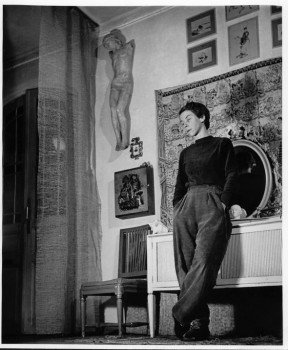
Tove Jansson, 1956. Photo: @Moomin Characters™
The English author of bestselling children’s fantasy books Philip Pullman – of His Dark Materials fame – declares himself a devoted fan of Tove Jansson, the Finnish Moomin-creator and artist, whose stories and novels have been translated into 44 languages.
Pullman has been a fan since the age of eight – now, reassessing Jansson’s work, he notes ‘the perfection of the drawings’. Jansson illustrated her Moomin books, in black-and-white mostly.
Pullman reviews two books in Books for Keeps, the British online children’s book magazine: the newly translated biography of Tove Jansson (1914–2001) by the Swedish scholar Boel Westin (Tove Jansson: Life, Art, Words, Sort of Books, 2014) and Tove Jansson’s memoir from her childhood, Sculptor’s Daughter. ‘Jansson responded to the world with a freshness and originality that have hardly ever been matched in the field of children’s books,’ he writes.
The artist, painter, writer Tove Jansson was born on 9 August – almost a hundred years ago. A major centenary exhibition of her work at the Finnish National Gallery Ateneum is open until 7 September.
Pullman concludes: ‘she could convey all the excitement of wonder as well as the reassurance of comfort and familial love – and [–] evoke a mood of apprehension, loss and mystery. She should have had the Nobel Prize.’
Three cheers – we at Books from Finland agree!
Now and then
22 May 2014 | This 'n' that
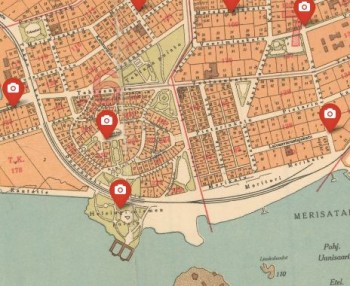 Karttalehtinen, a company that specialises in making orienteering maps, has posted 133 photographs of Helsinki from 1907–1912, by Signe Brander, the pioneering city photographer, together with contemporary Google street shots, on this zoomable site.
Click ‘Google street view’ (Google Maps) down left, for a bigger view. (Kuvan tiedot gives details of Brander’s photo, in Finnish only.) The old photos are from the Helsinki City Museum archives.
Brander (1869–1942) was hired by Helsinki City Council’s Board of Antiquities to record the fast-growing city for almost seven years between 1907 and 1913.
The southernmost photo on the map shows the barren Ursin rocks on the seashore, with Hernesaari (‘Pea island’) in the background. Today, as the Google shot shows, there is a park and a monument for seafarers, particularly those who lost their lives at sea.
Helsinki life and buildings as they existed a hundred years ago are portrayed in these calm shots of a small town going about its business. Signe did a very good job in her capacity as official photographer.
Thirsty for poetry
22 May 2014 | This 'n' that
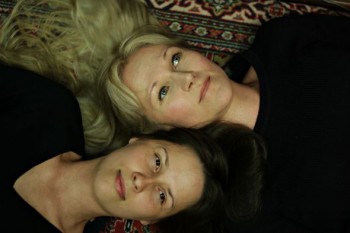
Johanna Venho (above) and Vilja-Tuulia Huotarinen. Photo:
Jano (‘Thirst’) is the name for a new online magazine: according to the writers and poets Johanna Venho and Vilja-Tuulia Huotarinen, its editors, it is a ‘poetry journal for all’ – for poets, the general public, for anybody.
Two issues have been published since November 2013. The theme of the first one is Time, of the second, Place.There are interviews, autobiographical texts, texts by critics and poets. More…
Beautiful books
15 May 2014 | Letter from the Editors, Non-fiction
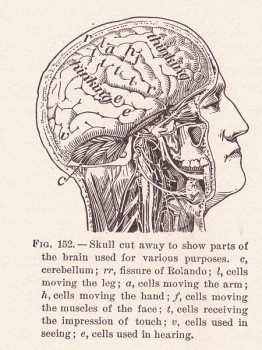
Brains at work. (Alvin Davison, ‘The Human Body and Health’, 1908) Wikimedia
A precise translation of the word non-fiction doesn’t exist in the Finnish language. Fiction is kaunokirjallisuus (a word invented by two diligent scholars, D.E.D. Europaeus and A. Varelius in mid-19th century for their Swedish-Finnish dictionary) – and a pretty word it is: kauno- is derived from the word kaunis, beautiful, beauteous. Non-fiction translates as tietokirjallisuus: literally, ‘literature of knowledge’.
Recently the status of Finnish non-fiction has been discussed in various media. Authors of non-fiction, as well as a number of readers, have been worried about diminishing sales, a decline in interest among both the general public and publishers, a lack of professional publishers’ editors. In a small-language area producing and profitable publishing ‘literature of knowledge’ is financially hard. More…
Still selling best
8 May 2014 | In the news
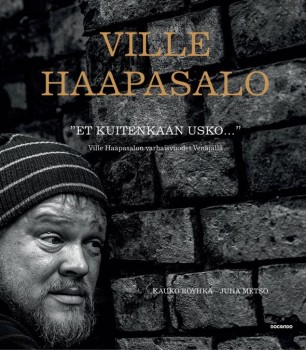
Celebrity in Russia: Ville Haapasalo on the cover of Et kuitenkaan usko… (’You won’t believe it anyway…’)
Not a lot of new titles made it to the list of the best-selling books – compiled by the Finnish Booksellers’ Association – in April, it seems. Number one on the Finnish fiction list was still Tommi Kinnunen’s first novel, Neljäntienristeys (‘The crossing of four roads’, WSOY).
In March this title reached the top after favourable reviews – in the Helsingin Sanomat daily paper in particular. The narrative spans a century beginning in the late 19th century and takes place in the Finnish countryside.
Number two – again – was another first novel about problems arising in a religious family, Taivaslaulu (‘Heaven song’, Gummerus, 2013) by Pauliina Rauhala. Number three was the latest crime/police novel by Seppo Jokinen, Mustat sydämet (‘Black hearts’, Crime Time).
On the translated fiction list, after George R.R. Martin’s A Dance with Dragons – top of the list in March too – is Donna Tartt’s The Goldfinch. Another donna (Donna Leon) was number three with her Beastly Things.
On the non-fiction list number one was a book on the Finnish actor / television journalist Ville Haapasalo’s life – and adventures during his travels in Russia, where he is a big celebrity and film star – by Haapasalo, Kauko Röyhkä and Juha Metso (Docendo). Number two was an autobiographical book by Katri Helena, a pop star who began her career in the 1960s.
The selection among the 20 best-selling books included, as usually, autobiographies and biographies, cookery, books about birds and nature. And Moomins. Books about Moomins and their creator Tove Jansson (1914–2001) certainly will rule this year – Jansson’s centenary.
Favour and fame: becoming a best-seller
10 April 2014 | In the news
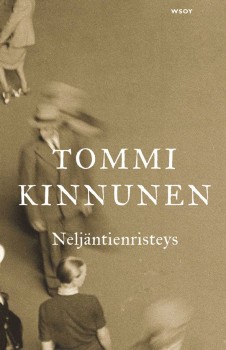 At the top of the list of best-selling books – compiled by the Finnish Booksellers’ Association – in March was the first novel by Tommi Kinnunen, a teacher of Finnish language and literature from Turku. In Neljäntienristeys (‘The crossing of four roads’, WSOY) the narrative spans a century beginning in the late 19th century and is set mainly in Northern Finland, focusing on the lives of four people related to each other. Undoubtedly well-written, it continues the popular tradition of realistic novels set in the 20th-century Finland.
Finland is a small country with one exceptionally large newspaper, Helsingin Sanomat (read by more than 800,000 people daily). The annual literary prize that carries the paper’s name is awarded to a best first work, and candidates are assessed throughout the year.
In February the paper’s literary critic Antti Majander declared in his review of Kinnunen’s book: ’Such weighty and sure-footed prose debuts appear seldom. If I were to say a couple of times in a decade, I would probably be being over-enthusiastic. But let it be. Critics’ measuring sticks are destined for the bonfire.’ More…