

Archive for November, 2009
It’s (virtually) Christmas!
28 November 2009 | This 'n' that
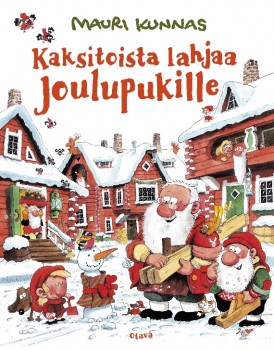
Father Christmas / Santa Claus by Mauri Kunnas
What to give the man who has everything? In prizewinning children’s author and illustrator Mauri Kunnas’s Twelve Gifts for Santa, Zac, one of Father Christmas’s little helpers, decides to give him twelve good deeds. Doing so is not as easy as it looks, however, and you can follow the twists and turns of the story on the Kidzone Finland advent calendar from Tuesday, 1 December, with one window opening each day until Christmas Eve.
Mauri Kunnas (born 1950) published the first of his popular picture books for children in 1980; entitled Koiramäen talossa (‘Doghill Farm’), it describes – with the accuracy of a treatise on folklore studies – life in a country farmhouse at the end of the 19th century. His hilarious canine characters, in more than forty books, have now found readers in almost thirty languages. More…
And the winner is…
27 November 2009 | In the news
 The winner of the Finlandia Prize for Non-Fiction 2009, worth €30,000, is Borgå 1809. Ceremoni och fest (‘Borgå [Porvoo] 1809. Ceremony and feast’) by historian Henrika Tandefelt (born 1972; see this review).
The final choice was made by Björn Wahlroos, Chairman of the Board of the Sampo Insurance Group. No doubt the historical period described in Tandefelt’s book is of great interest to Wahlroos, as he is the owner of the Åminne (in Finnish, Joensuu) estate, which is located in the south-west of Finland and dates from the 18th century. Wahlroos has recently restored the manor house to its full 19th-century glory. The Åminne estate was once the home of Gustaf Mauritz Armfelt, a Finnish-born statesman and officer. Armfelt was also King Gustav III’s trusted adviser – and later adjutant-general under Tsar Alexander I in St Petersburg, and finally, before his death, governor-general of Finland (1813). More…
The house the seniors built
27 November 2009 | Reviews
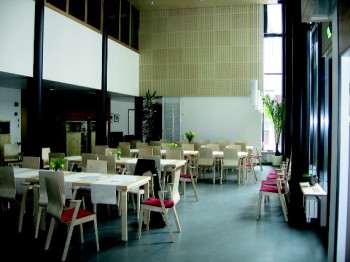
Yours and mine: the common dining room at Sprint
Maija Dahlström – Sirkka Minkkinen
Loppukiri. Vaihtoehtoista asumista seniori-iässä
[Sprint: alternative living for seniors]
Helsinki: WSOY, 2009. 232 p., ill.
ISBN 978-9510-4322-9
€ 32.90, paperback
‘Your elderly mother just told you she fell in the bathroom last night at 4 a.m. Now what?’ advertises the Visiting Nurse Service of New York in the New York Times. Aging people and their desire to live in their own homes is a pressing question around the world. People feel concern over their own living arrangements and those of their loved ones. Living arrangements somewhere between being in one’s own home or in a care facility are sought by many, but there are few of these options available. More…
Jansson’s temptations
27 November 2009 | This 'n' that
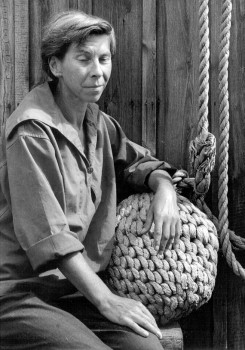
Tove Jansson (c. 1950)
If Tove Jansson’s Moomin books are, as we certainly believe here at Books from Finland, strangely little known in the wider world, the same is even truer of her books for adults.
Incredibly, the Moomins celebrate their 65th birthday in 2010, and have been translated into 40 languages. Jansson (1914–2001) wrote her last Moomin book – there are nine altogether – in 1970. Over the last thirty years of her life, she also wrote a total of 11 volumes – novels and short stories – for grown-ups. (Books from Finland published stories from many of them as they appeared. They will become available again as our digitisation project gets underway; meanwhile, here’s a story from Dockskåpet [‘The doll’s house’, 1978].)
Back out there in the wider world, the tiny, Hampstead-based press Sort Of Books has since 2001 been introducing Jansson’s lesser-known works to British readers. Latest to appear is her bleakly unsettling novel The True Deceiver (Den ärliga bedragaren, 1982), the story of a strange young woman, Katri, who breaks into an elderly artist’s house and attempts to befriend her, for reasons of her own. More…
Poetic excercises by the sea: Herbert Lomas (re)visited
21 November 2009 | Authors, Interviews
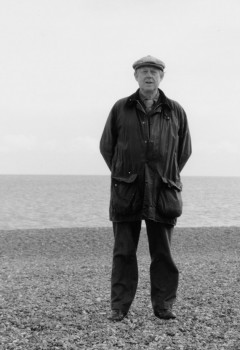
Poet ahoy: Herbert Lomas in Aldeburgh. Photo: Soila Lehtonen
The prize-winning British poet Herbert Lomas has been translating Finnish poetry – much of it for Books from Finland – for more than thirty years. Soila Lehtonen, our Editor-in-Chief and his long-time collaborator, interviews him on the occasion of the publication of his collected poems, A Casual Knack of Living
The shoreline and the seaside promenade stretch out along the windy East Suffolk coast in Aldeburgh, where Herbert Lomas lives in a pink house called North Gable.
In summer thousands of tourists frequent the picturesque village, particularly during the music festival in June, founded in 1948 by the local composer Benjamin Britten. A poetry festival, too, takes place every autumn, this year for the 21st time.
Herbert – Bertie to those, like us at Books from Finland, who know him well – has just published a handsome tome of poetry, A Casual Knack of Living, containing poems from nine earlier collections plus a selection of previously unpublished poems, entitled Nightlights. The home of his publisher, Arc Publications, is in the village where he was born, 85 years ago, Todmorden in the Pennines. More…
Circus days
20 November 2009 | In the news
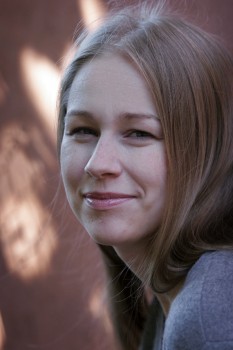
Leena Parkkinen. Photo: Heidi Lehväslaiho
On 19 November the Helsingin Sanomat Literature Prize, the Helsinki newspaper’s prize for the best first work of the year, worth €15,000, was awarded to Leena Parkkinen (born 1979).
Parkkinen’s first novel, entitled Sinun jälkeesi, Max (‘After you, Max’, Teos) depicts life in the circus and Siamese twins in Helsinki after the First World War. The jury made their choice out of more than 70 works.
Tutti frutti
20 November 2009 | In the news
 The chair of the jury for the Finlandia Prize for Non-Fiction 2009, Professor Pekka Puska, compared choosing a winner to the dilemma of choosing between oranges and bananas. The jury found that among the entries were at least 20 or 30 books that could have gone on the final shortlist of six titles. More…
Jorma Luhta: Tähtiyöt [Starry nights]
20 November 2009 | Mini reviews, Reviews
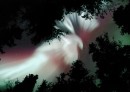 Tähtiyöt
[Starry nights]
Helsinki: Maahenki, 2009. 84 p., ill.
ISBN 978-952-5652-75-8
€ 41, hardback
Jorma Luhta (born 1951) is an award-winning Finnish nature photographer and author. The subject material of this book is night-time in the forests of northern Finland, illuminated by the stars and the Northern Lights. The problem of light pollution means that even in sparsely populated Lapland the lights from population centres can hamper the view over a radius of two hundred kilometres. Jorma Luhta’s photographs are the result of many years of dogged effort. The most impressive images of all were taken on the coldest night in a century: temperatures fell to around –50 °C. It takes split-second precision to achieve the greatest shots, such as when Luhta’s camera records a sheet of Aurora Borealis resembling Picasso’s white dove of peace (above). In his lyrical text Luhta, a night-time walker in the woods, observes his natural surroundings and contemplates such matters as his fear of the dark and feelings of isolation.
Suomalaiset pappilat [Finnish parsonages]
20 November 2009 | Mini reviews, Reviews
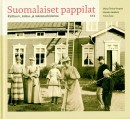 Marja-Terttu Knapas & Markku Heikkilä & Timo Qvist
Suomalaiset pappilat. Kulttuuri-, talous- rakennushistoriaa
[Finnish parsonages. A cultural, economic and architectural history]
Picture research: Sirkku Dölle
Helsinki: the Finnish Literature Society, 2009. 231 p., ill.
ISBN 978-952-222-096-7
€48, hardback
From the Enlightenment period in the 18th century up until the 20th century, Lutheran parsonages played a significant role in Finland as centres of worldly life and propagators of culture and civilisation. Influential figures in many walks of life spent their childhoods in parsonages, and the parsonages themselves served as influences on the built environment of their surroundings. They began to be taken out of active use at an accelerating rate over the course of the 20th century. This book sets out to portray parsonages with interesting personal and social history and architecture. It also creates a narrative of the milieu and family networks of clergymen and their families – an institution that gradually began to break down in Finland after the Second World War. The portrayal of life in the parsonages is closely linked to the broader themes of agriculture, gardening and food. Illustrations from the collections of Finland’s National Board of Antiquities are supplemented by photographs from other museums as well as individuals.
Monika Fagerholm: Glitterscenen [The Glitter Scene]
17 November 2009 | Mini reviews, Reviews
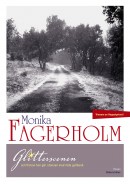 Glitterscenen
[The Glitter Scene]
Helsingfors: Söderströms, 2009. 407p.
ISBN 978-951-522-467-5
€29.90
Säihkenäyttämö
Finnish translation by Liisa Ryömä
Helsinki: Teos, 2009. 455 p.
ISBN 978-951-851-127-7
€29.90, hardback
In Glitterscenen Fagerholm reveals the shabby details of the murder mystery that was the essence of her celebrated Den amerikanska flickan, The American Girl (2006). In a sense, the two books are psychological thrillers, but they are also much more than that: the American girl’s death is a myth about destruction and creation – a narrative about love, death and glamour that attracts and seduces cohort after cohort of young women in the District, a place somewhere in Finland that is in the process of being transformed from the rural to the suburban. Like no other author, Fagerholm combines the advantages of plot-based realism with the deep psychological excavation of collective dreams and the secret layers of the unconscious. In the centre of the District there is a kiosk where the local priest’s daughter, fat May-Gun, presides over dirty magazines, sickly candy and magnificent dreams. Across the square, eyed by horny small-town greasers, walks young and blonde Suzette. The result is a deadly drama, propelled by grief and narcissism. The Glitter Scene is the goal of our dreams, but also a dangerous place of instant gratification and sudden death.
In search of the spirit
13 November 2009 | Authors, Essays, Non-fiction, On writing and not writing

In this series, Finnish authors ponder their trade. Tuomas Kyrö – author of the extraordinary novelistic chronicle of the birth of capitalism Benjamin Kivi, which you can read here – found himself lost for words. Liberation came with the realisation that, unlike in television, in books it is the writer, and the reader, who are in charge, and the only limits are those of the human imagination
In May 2009, after a year of writing, I held in my hand the manuscript of a novel whose plot and characters were complete. There was a subject, theme and the occasional good passage, but something was badly wrong.
When I swapped roles, writer for reader, I realised that my text did not touch the skin, and certainly did not get under the skin. I had wanted do more than raise a smile; I had thought I was writing a book that would make its readers want to turn the page, I had wanted to provoke, to cause laughter and even perhaps tears. Now all that my text provoked in the reader – me – was embarrassment and boredom.
What was wrong? More…
Tuomas Kyrö: 700 grammaa [700 grams]
12 November 2009 | Mini reviews, Reviews
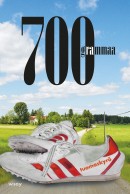 700 grammaa
[700 grams]
Helsinki: WSOY, 2009. 379 p.
ISBN 978-951-0-35601-2
€ 30, hardback
The genre of the picaresque novel is doing well, and one of its foremost exponents in Finland is Tuomas Kyrö (born 1974). The plot of his ingenious first novel, Nahkatakki (‘Leather jacket’, 2001), revolved around a jacket that moves from one owner to another. His later novels maintain this comical tension, but with a deepening of themes and a more sober outlook. Liitto (‘Union’, 2005) portrayed people scarred by war, while Benjamin Kivi (2007, featured in Books from Finland 4/2007) retold Finland’s history in a light-hearted and anachronistic manner. 700 grammaa is a book about sports fever and family relationships, the exploration of love and the pursuit of dreams. The main character is a boy who at birth weighs only 700 grams, and whose father vows to perform a seven metre long-jump if his son survives. He does, and the father has to devote his life to this almost impossible sporting achievement This novel, with its fast-developing plot and varied narrative techniques, is a paean to the heroism latent in mediocrity.
Fair assessment
7 November 2009 | This 'n' that

Hello Tatu – or is it Patu?: heroes from the popular children's books by Aino Havukainen and Sami Toivonen meet a fan. – Photo: Suomen Messut
A thousand people more than last year – a record total of 76,800 – attended the Helsinki Book Fair in late October. This year the event was particularly popular with families with children.
More than half of the visitors said they were interested primarily in writer guests, of whom the most popular were, not surprisingly, crime writers, among them Karin Slaughter from the US and Jens Lapidus from Sweden.
Two other fairs, entitled the Wine, Food and the Good Living and the Helsinki Music Fair, were held at the same time at the Helsinki Fairs Centre.
The theme country in 2010 – when the Book Fair celebrates its tenth anniversary – will be France.
Men and a woman, too
7 November 2009 | This 'n' that
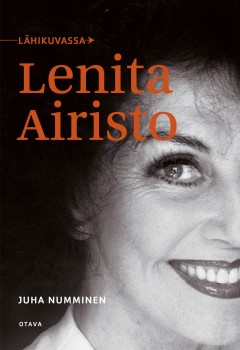 In October, according to the best-seller list (Mitä Suomi lukee, ‘What Finland reads’), the top seven non-fiction titles included biographies of four Finns – an industrial tycoon (Pekka Herlin, one-time director of the Finnish Kone elevator company), a poet (Paavo Haavikko), and a former Prime Minister (Paavo Lipponen).
The seventh place was held by a book on a woman: Lenita Airisto, winner of a 1950s beauty contest, later a television hostess, celebrity, writer and businesswoman (Lähikuvassa Lenita Airisto, ‘Lenita Airisto in closeup’, by Juha Numminen).
The Finnish fiction list was topped by the latest thriller by Ilkka Remes, Isku ytimeen (‘Strike to the core’). Then came Kjell Westö’s novel Älä käy yöhön yksin (‘Don’t go out into the night alone’, a translation of the Swedish-language original, Gå inte ensam ut i natten) and Jari Tervo’s Koljatti (‘Goliath’). The latest Henning Mankell was number one on the translated fiction list.
Jaakko Heinimäki & Juha Metso: Miina – Äkkijyrkkä
6 November 2009 | Mini reviews, Reviews
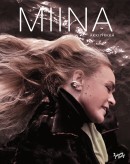 Miina – Äkkijyrkkä
Text: Jaakko Heinimäki
Photos: Juha Metso
Helsinki: Johnny Kniga Kustannus, 2009. 190 p., ill.
ISBN 978.951-0-35552-7
€41, hardback
Miina Äkkijyrkkä (born 1949; real name Riitta Loiva) is a Finnish artist known for her cattle-themed paintings and sculptures. Äkkijyrkkä is also widely known as a passionate supporter and breeder of Eastern Finncattle, an endangered breed native to Finland. Most of the accompanying texts in this book which describe her ideas and her art come from a series of discussions with author and Lutheran minister, writer Jaakko Heinimäki, recorded in the spring of 2009. Miina Äkkijyrkkä speaks openly about her art and the diverse phases of her life, her values and faith, and her clashes with the authorities and the rest of society. This book is magnificently illustrated with Juha Metso’s photographs, which were taken over a period of 15 years in Finland and abroad. More information about the artist and her works is available here.