

Tag: poetry
Within the mirror
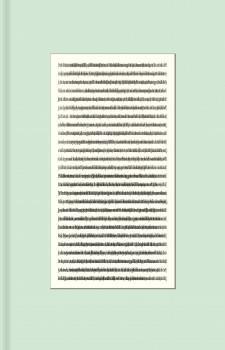 An extract from Kivirivit (‘Stone lines’, Otava, 2013). Introduction and commentary, Writing silence,
by Mervi Kantokorpi
Then, not now. White birches against the white
sky. A vase in the middle of the room.
An attempt to make contact, but with what? The room slowly
fills with whisper and touch. A woman,
turning to catch herself in the mirror,
is afraid the phone will start ringing and startle
her. A gap-closer, not an equaliser.
Beneath the bridges, faces around the fire, these, those. More…
Twisted tongues
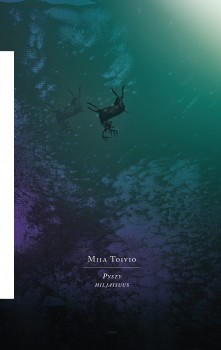 Poems from Pysty hiljaisuus (‘Vertical silence’, Teos, 2013). Introduction and commentary, Writing silence, by Mervi Kantokorpi
She said, it was I who said, alone, my feelings confused. Should I somehow have cleared my head, though all I wanted to do was write in the water? ‘Behind me I drag desire’s reflection, like the skirts of a boat sinking towards the depths,’ she once bespoke me. ‘Your skirts are heavy with algae and their smell would banish even the insects. A deer, swimming across a long lake, becomes entangled by the heel, only worsening things as it thrashes there, until it too falls straight down, never floating, to the bottom of the lake,’ I replied. She turned her back and leant against the wall. I couldn’t see her fingers as she, controlling the sound, ripped off a small, wriggling fin, closed it in her fist and turned towards me with an unnatural smile:

Far from the madding crowd
21 February 2013 | Articles, Non-fiction
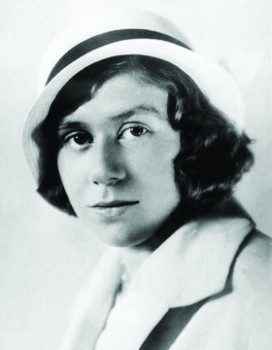
Saima Harmaja (1913–1937). Photo: WSOY
‘I don’t belong to the crowd,’ the young Saima Harmaja wrote in her diary in 1933. Her work as a poet was for her a vocation that superseded everything else. In her diaries she often speaks as a sociable young woman, with a delicious sense of humour, but her best poems seriously explore love, and death which cast its shadow over her. A selection of her poems – the best of which have made her a Finnish classic – is now published in English for the first time
In her diary the young poet claimed: ‘I think I would die if I could not write.’ What Harmaja shared with the poets of the early part of the twentieth century who influenced her was the private and personally experienced nature of poetry itself, rather than the realisation of any current aesthetic programme.
Harmaja is one of those poets whose works have passed through the hands of readers from decade to decade. She is also a prototype of the poet of her generation: gifts that led to the expectation of a brilliant career, a life that was brought to a tragic end by tuberculosis, leaving just five years of work as a poet. More…
All the grace
21 February 2013 | Fiction, poetry
Poems from Huhtikuu (‘April’, 1932), Sateen jälkeen (‘After the rain’, 1935), Hunnutettu (‘Veiled’, 1936), Kaukainen maa (‘Distant land’, posthumous, 1937; all published by WSOY). Introduction by Vesa Haapala
ON THE SHORE
The wonderful pale clouds
cross the sky like wings.
Quiet and enchanting
the open water sings.
The sand has grown weary
of the waves’ caressing play.
Now come in perfect quiet,
now come here, right away…
17.3.1930 More…
Runeberg Prize 2013 for poetry
8 February 2013 | In the news
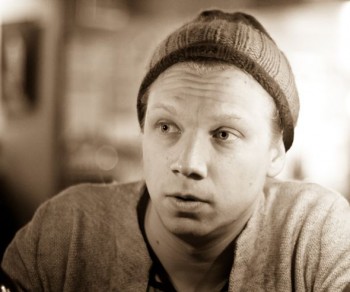
Olli-Pekka Tennilä. Photo: Aleksis Salusjärvi, 2012
The Runeberg Prize for fiction, awarded on 5 February, this year for the twenty-seventh time, went to a book of poetry by Olli-Pekka Tennilä (born 1978).
Tennilä’s second work, Yksinkeltainen on kaksinkeltaista (‘Doubly simple’, a pun: yksinkertainen = simple, kaksinkertainen = double, keltainen = yellow), published by Poesia, makes use of a child’s open-minded use of language and studies the world of the bees. Tennilä is one of the founding members of Osuuskunta Poesia, a poetry cooperative, and is currently its publishing director.
The prize, worth €10,000, was awarded on 5 February – the birthday of the poet J.L Runeberg (1804–1877) – in the southern Finnish city of Porvoo.
The jury, writer Tommi Melender, critic Siru Kainulainen and theatre manager Dan Henriksson – representing the prize’s founders, the Uusimaa newspaper, the city of Porvoo, both the Finnish and Finland-Swedish writers’ associations and the Finnish Critics’ Association – chose the winner from a shortlist of eight books. In their opinion the winning work is both ‘a structurally controlled and expressively vital whole; it demonstrates how the linguistic logic of a small child can be employed again as an adult.’
The other seven finalists were a book of essays, Toinen jalka maassa ja muita esseitä (‘One foot on the ground and other essays’, WSOY) by Markku Envall, two poetry collections, Keisarin tie (‘The emperor’s road’, Otava) by Lassi Hyvärinen and Kuolinsiivous (‘Death cleaning’, WSOY) by Eeva Kilpi, two collections of short stories, Kadonnut ranta (‘Lost shore’, WSOY) by Tiina Laitila Kälvemark and Till dig som saknas (‘To you who are missing’, Schildts&Söderströms) by Peter Sandström, as well as two novels, Rikosromaani (‘Crime novel’, Otava) by Petri Tamminen and Neuromaani (‘Neuromane’, Otava) by Jaakko Yli-Juonikas.
Bombast and the sublime
17 January 2013 | Reviews
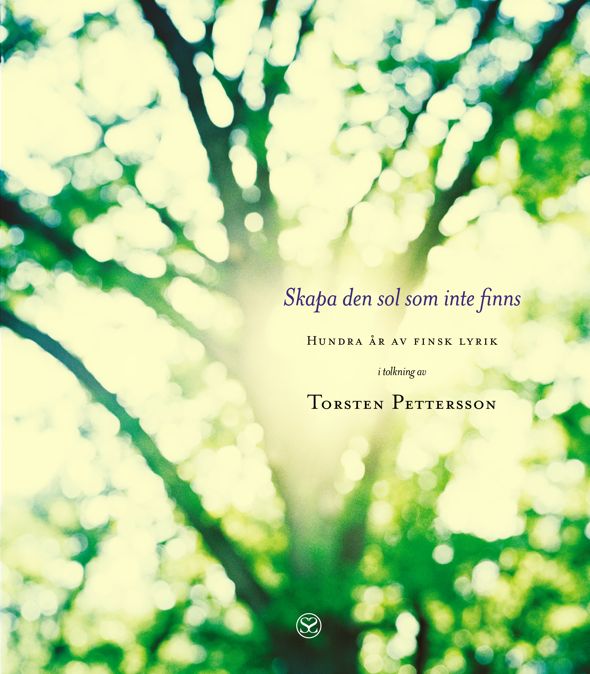 Torsten Pettersson
Skapa den sol som inte finns. Hundra år av finsk lyrik i tolkning av Torsten Pettersson
[Create the sun that is not there. A hundred years of Finnish poetry in Swedish translations by Torsten Pettersson]
Helsinki: Schildts & Söderströms, 2012. 299 p.
ISBN 978-951-52-3034-8
€25, paperback
In the 1960s my mother sometimes used to amuse herself and us children by reciting, in Finnish, in our bilingual family, selected lines of verse from the half-forgotten poetry canon of her school years.
Eino Leino (died 1926) and the great tubercular geniuses Saima Harmaja, Uuno Kailas, Katri Vala and Kaarlo Sarkia (all dead by 1945) were familiar names to me as a child. Early on, I realised that their poetry was both profoundly serious and also slightly silly, just because of its high-flown seriousness. More…
The Dancing Bear Poetry Prize goes to a first work
17 January 2013 | In the news
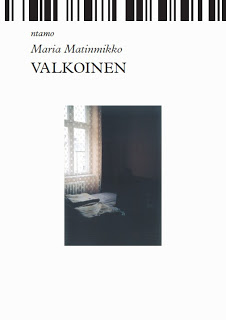 The Dancing Bear Poetry Prize, worth €3,500, is awarded annually by Yleisradio, the Finnish Broadcasting Company, to a book of poetry published the previous year.
This year’s winner – announced on 16 January – is Maria Matinmikko (born 1983) for her first collection, Valkoinen (‘White’, Ntamo). The prize has been awarded since 1994.
The winner was selected by a jury of two journalists, Tarleena Sammalkorpi and Marit Lindqvist, the culture editor Minna Joenniemi and the poet Sinikka Vuola. In their opinion, the publishing of poetry – Finnish and translated – is getting more dependent on small, dedicated publishers.
The jury found the winning work ‘a delicate, suggestive series of consecutive and simultaneous spaces transversing each other…. The layout, with the speakers of the text and the leitmotiv – the colour white, whiteness – form an exciting, spacious surface….’
In addition to the Dancing Bear Poetry Prize, the Finnish Broadcasting Company also awards a prize for the best poetry translation., worth €1,000. This time the winner is translator Jukka Mallinen, specialised in Russian contemporary literature, for his two translations: Punainen auringonlasku (‘Red sunset’) by the Belarussian poet Vladimir Nekljajev and Joulupaasto (‘Christmas fast’, on the siege of Leningrad) by Sergei Zavyalov. The jury commented that the poems have been translated with a passion typical to Mallinen, whose work is based on a profound knowledge of Russian literature.
Kalevala maailmalla. Kalevalan käännösten kulttuurihistoria [The Kalevala in the world. A cultural history of Kalevala translations]
15 November 2012 | Mini reviews, Reviews
 Kalevala maailmalla. Kalevalan käännösten kulttuurihistoria
[The Kalevala in the world. A cultural history of Kalevala translations]
Toim. [Ed. by]: Petja Aarnipuu
Helsinki: Finnish Literature Society and Kalevala Society, 2012. 396 p., ill.
ISBN 978-952-222-372-2
€48, paperback
The Kalevala, based on the folk poetry collected by Elias Lönnrot, is Finland’s national epic. It first appeared in 1835, with a revised edition in 1849. The work has been published in more than 200 different versions in 60 languages, including prose translations, abridgements and adaptations. In this study, scholars and authors examine the Kalevala’s conquest of the world from many angles, ranging from Finland’s neighbouring regions, the epic traditions of Africa, the application of the epic to economic life, and the history of the work’s translation into the major languages of the world. The articles explore the linguistic, stylistic and cultural problems involved in translating the work and the experiences of some of the translators – for example, those who put the Kalevala into Iroquois. They also look at the motives behind the translations, and why in some languages there are several different versions. The book offers a varied and fascinating perspective on the epic’s cultural history.
Translated by David McDuff
Winter journey
1 November 2012 | Authors, Reviews
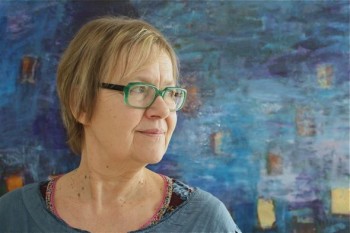
Tua Forsström. Photo: Mao Lindholm
The Finland-Swedish poet Tua Forsström publishes rarely, and so when she does the expectations are always high. It is a pleasure to note that her new book, En kväll i oktober rodde jag ut på sjön (‘One evening in October I rowed out on the lake’), once again lives up to them.
Forsström’s poetry is simultaneously concrete and existential, rooted in attention to the everyday and open to symbolic readings. The highly-charged images in her poems mostly grow out of the sort of things that anyone can observe around them. More…
The dead speak kindly
1 November 2012 | Fiction, poetry
Memory, winter and everyday are studied in Tua Forsström’s new collection of poems, En kväll i oktober rodde jag ut på sjön (‘One evening in October I rowed out on the lake’, Schildts & Söderströms, 2012). Introduction by Michel Ekman
I fell through the papers laid aside
I came to a place where I was supposed to stay
for four nights but I stayed four years
Someone said: you have caused the council considerable expense
I said: this is my situation
A brave little cat came to my rescue
I could see what I wanted in the dark
at night and no one saw me
It was like a dream but I wasn’t dreaming
I was not afraid and I could pass through chalcedony
I could pass through quartz crystals
I could pass through sad and sick
On the bottom in the mud coins from many lands lay gleaming
We wish for anything between heaven and earth
All that we see and cannot see and lost
I do not recognise myself, and no one sees me More…
Figuring out father
18 October 2012 | Extracts, Non-fiction
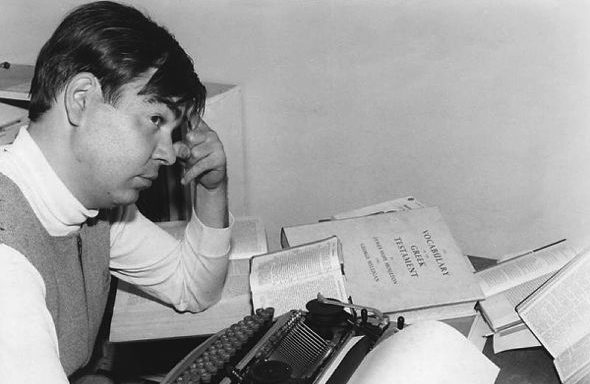
Pentti Saarikoski (1960s). Photo: Otava/Nikolai Naumoff
The poet and translator Pentti Saarikoski (1937–1983) jotted in one of his journals: ‘I have never cared for relatives.’ Thirty years after his death one of his five children set out to find out what his father was like – by reading almost all he left behind in writing; these comments by Saska Saarikoski are from his Sanojen alamainen (‘Servant of words’, Otava, 2012), an annotated selection of Pentti Saarikoski’s thoughts
Pentti Saarikoski died when I was 19. I remember complaining to my mother that I had not yet even got to know my dad. My mother answered: You’ve got plenty of time, the real Pentti is to be found in his books. She did not know how right she was, for she meant Pentti’s published books, not knowing what a mountain of texts awaited its readers in the archives of the Finnish Literature Society. Pentti had written everything down in his diaries.
I read Nuoruuden päiväkirjat (‘Youthful diaries’), published soon after Pentti’s death in 1983, as soon as they were published, but when his Prague, Drunkard’s and Convalescent’s Diaries appeared around the millennium, they went straight on to my library shelf. I was not terribly interested in the ramblings of Pentti’s alcoholic years.
It could be that my reluctance was influenced by the cool attitude I had adopted from early on in relation to my father. Other people were welcome to consider him a genius; for me, he was a father who did not telephone, write or come to see my football matches. I didn’t call him, either; for me, it was a father’s job. More…
Older and wiser?
9 October 2012 | This 'n' that
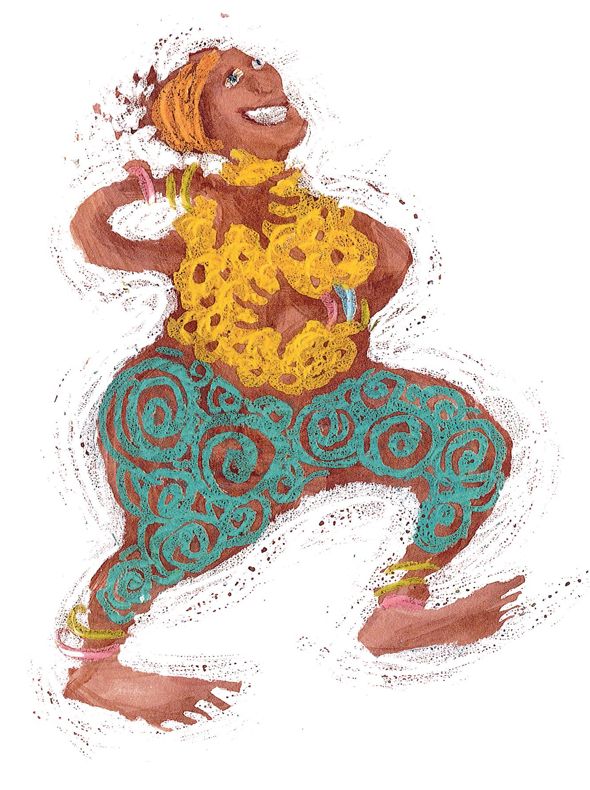
Illustration: Virpi Talvitie (from Täyttä päätä. Runoja ikääntyville, ‘Full steam ahead. Poems for ageing people’, edited by Tuula Korolainen and Riitta Tulusto)
Nobody can claim that old age is hot, or media-sexy. Yes, but what are older people really like? Are they the bingo-obsessed grannies in floral frocks or old geezers living in the past of popular opinion?
No longer. In just a few years the baby-boom generation will be entering their seventies, when ‘old age’, in its current Western definition, begins. (Until then, senior citizens are allowed to remain ‘adults’.)
Are the old people’s homes ready for them? This new elderly generation will be wanting to listen to Elvis, the Rolling Stones and the Beatles rather than the tango. More…
In the same boat
29 May 2012 | Authors, Interviews, Reviews
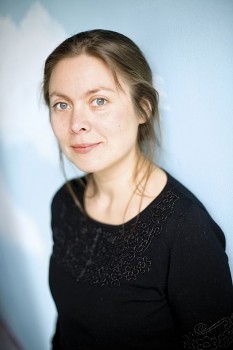
Pauliina Haasjoki. Photo: Tommi Tuomi
For the poet Pauliina Haasjoki, a writing process can begin in many ways, but particular periods – residencies, for example – are dedicated to writing. She attempts to create a cross-swell of influences in which she may read, watch movies, listen to music, have conversations and wander, collecting memories.
In the end, beginning to write becomes easy. Haasjoki may put music on to play, for example, for a certain time and use it to write ‘the poetry that belongs to that time, which sort of jostles there, waiting, because I have put it there.’
Haasjoki’s writing career began in Turku in the 1990s: she was studying literary theory at the university and was a witness to the birth of the poetic movement that developed there. Haasjoki has published five volumes of poetry, of which the latest, Aallonmurtaja (‘Breakwater’), was published in 2011. More…
Taken by surprise
In her fifth collection of poems, Pauliina Haasjoki explores night flights, water, islands, sandy beaches where time is found stratified in stones and fossils. Interview by Teemu Manninen
Poems from Aallonmurtaja (‘Breakwater’, Otava, 2011)
Night flight
Man cannot hide in the night, his desire will betray him.
Man turns toward the lights, light sparkles as though it were close at hand
even if it is far away.
Lights, which offer themselves like jewels to the one who sits in the plane above them, are already
                                                                                                                                 in their viewers’
eyes even if they have only just begun to stream from their source. A city-jewel swaying
in the black night air.
A solitary light on the surface of an island. Seen close up it is a soft-lit lamp
which casts light only on the table and the faces around it,
but from above, at a distance of kilometres, it is an immediate spot, a straight line that
                                                                                                                                aims at the viewer
and pierces her. A fierce light-beam.
The edge of wordlessness
1 March 2012 | Authors, Reviews
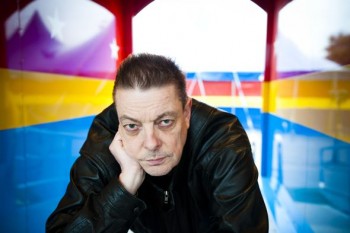
Harri Nordell. Photo: Veikko Somerpuro
The poems of Harri Nordell are a mystery to me. Each time I open one of his books, my reading begins afresh. I have analysed and translated his poems, but the texts have still not become familiar. I have not begun to comprehend them. They always speak to me as if for the first time.
I could not wish for a greater gift from a poem. These poems create a special state of being; I could call it not-knowing or marvelling. I feel I am involved in an unfolding event.
Nordell’s poems open me up, but I am unable to prise them open. I do not want to interpret cryptic expressions, or seek out more explicit meanings for them. I would not wish to write on top of these poems, to mute silence with superfluous words. More…