

In the news
Ecstasy rewarded
28 November 2013 | In the news
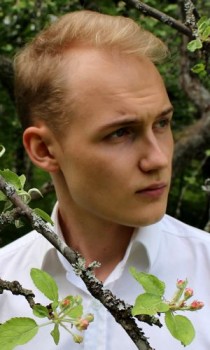
Erkka Filander. Photo: Virpi Alanen
On 14 November Helsingin Sanomat Literature Prize, the Helsinki newspaper’s prize for the best first work of the year, worth €15,000, was awarded for the 19th time.
The jury made its choice from 90 first works, and this time the prize was awarded to a youngest writer ever, the poet Erkka Filander (born 1993), for his collection Heräämisen valkea myrsky (‘The white storm of awakening’; available as a pdf at the home page of the publisher, Poesia).
According to the jury, this poetry is ‘ecstatic poetry, pulsing with the joy of living… there is no place in Filander’s poetry for cynicism or irony. Thus his writing appears, in the context of contemporary poetry, exceptionally open and sincere.’
Finlandia Prize for Fiction 2013
14 November 2013 | In the news
One of the following six novels will be awarded this year’s Finlandia Prize for Fiction, worth 30,000 euros: Ystäväni Rasputin (’My friend Rasputin’) by JP Koskinen, Hotel Sapiens (Teos) by Leena Krohn, Jokapäiväinen elämämme (‘Our everyday life’, Teos) by Riikka Pelo, Terminaali (‘The terminal’, Siltala) by Hannu Raittila, Herodes (‘Herod’, WSOY) by Asko Sahlberg and Hägring 38 (‘Mirage 38’, Schildts & Söderströms; Finnish translation, Kangastus, Otava) by Kjell Westö.
Half of the writers have already won the Finlandia Prize once, namely Krohn (1992), Raittila (2001) and Westö (2006).
Four of the six works deal with a historical character or history: Koskinen with the Russian ‘holy man’ Rasputin, Pelo with the Russian poet Marina Tsvetaeva, Sahlberg with Herod the Great of Judea. Westö goes back to the year 1938 in Finland.
Raittila’s realistic novel takes place on contemporary airports. Krohn, again taking a look at an unknown future, presents the reader with a imaginary Earth which no longer is habitable to humans.
The runners-up were chosen by a jury – appointed by the Finnish Book Publishers’ Association – of three: the journalists Nina Paavolainen and Raisa Rauhamaa and the translator Juhani Lindholm. The winner of the 30th Finlandia Prize for Fiction will chosen by theatre manager of the Helsinki City Theatre and actor Asko Sarkola, and announced on 3 December.
Northern prizes
31 October 2013 | In the news
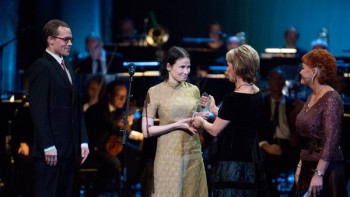
The winners: Seita Vuorela and Jani Ikonen are presented with their prize. Photo: Magnus Froderberg/Nordic Council
The Nordic Council’s five culture prizes were for the first time awarded together at a Gala at the Oslo Opera House on 30 October. The show was broadcast by all the Nordic public service channels.
The winners of the Nordic Council Children and Young People’s Literature Prize 2013 – worth about €43,000 – are Seita Vuorela and Jani Ikonen from Finland. Karikko (‘The reef’, see our review) written by Vuorela and illustrated by Ikonen is the first work to be awarded the newly established Nordic Council Children and Young People’s Literature Prize.
Another Finnish winner this time was the violinist Pekka Kuusisto (born 1976) who won the Nordic Council Music Prize (also worth €43,000). ‘Pekka Kuusisto is a violinist in the absolute elite and with as much unique creativity as musicality,’ said the Adjudication Committee.
The 2013 Nordic Council Literature Prize went to a Danish-Norwegian author Kim Leine. The Finnish nominees were Rosa Liksom and Ulla-Lena Lundberg.
The oldest of the five prizes is the Literature Prize, first awarded in 1962. It was followed by the Music Prize (1965), the Nature and Environment Prize (1995), the Film Prize (2002) and the Children and Young People’s Literature Prize (2013).
A family affair
24 October 2013 | In the news
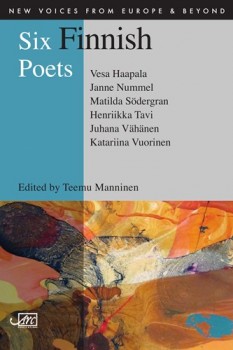 Six Finnish poets, edited by Teemu Manninen – a poet himself – is the tenth volume in a series of bilingual anthologies bringing contemporary poetry from around Europe to English-language readers.
One of the poets introduced is a Finland-Swede, Matilda Södergran, whose poems are presented in their original Swedish alongside the English translations. The other poets, all of whom write in Finnish, are Vesa Haapala, Janne Nummela, Henriikka Tavi, Katariina Vuorinen and Juhana Vähänen. Their translators are Emily & Fleur Jeremiah, Lola Rogers and Helen R. Boultrum.
In his introduction Teemu Manninen briefly outlines the developments of contemporary Finnish poetry around the turn of the 21st century. The poets chosen were born in the 1970s and 1980s; their work could be characterised variously as experimental, surrealist, minimalist and ironic.
According to Manninen, during the last couple of decades, a ‘do-it-yourself’ culture has sprung up among people interested in performing poetry, organising independent festivals and clubs, and disseminating their work via the Internet. New, cheaper methods of publishing printed books have also contributed to a growing interest in poetry and to its popularity. Even so, contemporary poetry is not something that attracts large crowds; people involved in this sort of ‘literary activism’ tend to know each other well.
So, ‘in Finland, poetry is a family affair,’ notes Manninen. ‘The familial communality has to be acknowledged if one is to understand the kind of poetry currently being written in Finland….’ It mostly lives and thrives independent of large publishers, newspapers and literary prizes.
The anthology series is entitled New Voices from Europe and Beyond; it is published in the UK by Arc Publications in co-operation with Literature Across Frontiers.
The 2013 European Union Prizes for Literature
3 October 2013 | In the news
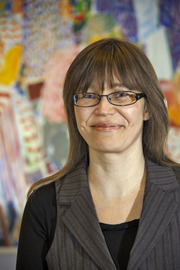
Katri Lipson. Photo: Olli Turunen
The second novel Jäätelökauppias (‘The ice-cream vendor’, Tammi, 2012) by Katri Lipson won her one of the 12 European Union Prizes for Literature this year, announced at the Gothenburg Book Fair, Sweden, on 26 September.
Each winner will receive € 5,000, and the priority to apply for European Union funding to have their book translated into other European languages.
The European Commission, the European Booksellers’ Federation (EBF), the European Writers’ Council (EWC) and the Federation of European Publishers (FEP) are the organisers of the prize which is supported through the European Union’s culture programme. The competition is open to authors in the 37 countries involved in the Culture Programme.
The prize aims to draw attention to new talents and to promote the publication of their books in different countries, as well as celebrating European cultural diversity.
The previous Finnish winner of the prize was Riku Korhonen in 2010.
What Finland read in August
12 September 2013 | In the news
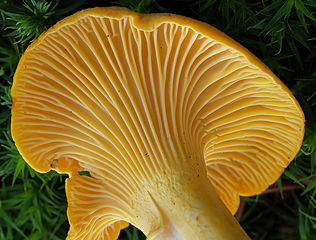
Cantharellus cibarius: very edible. Photo: Wikimedia/Andreas Kunze
The August list of best-selling fiction and non-fiction, compiled by the Finnish Booksellers’ Association, features thrillers, new Finnish fiction, dictionaries and diet guides.
Number one of the Finnish fiction list was a new crime novel by Leena Lehtolainen, Rautakolmio (‘The iron triangle’, Tammi). The new novel, Hägring (‘Mirage’, Schildts & Söderströms; in Finnish, Kangastus, Otava), by Kjell Westö, was number two; in third place was Aapine, an ABC-book written in the south-western dialect by poet and author Heli Laaksonen and illustrated by Elina Warsta (Otava).
The list of translated fiction included – not surprisingly – names like Dan Brown, Jon Nesbø, Camilla Läckberg, Charlaine Harris and Henning Mankell.
5:2 dieetti (The Fast Diet), by Michael Mosley and Mimi Spencer, sold like hot cakes – the Finns are statistically the fattest people in Scandinavia – and was number one on the non-fiction list. There were also several dictionaries (four of them Finnish-English-Finnish) as well as a field guide to mushrooms, of which there are plenty in the woods this early autumn. It is indeed essential to be able to tell the Poisonpie and the Sickener from the real deliciacies.
Night of the Living….
5 September 2013 | In the news
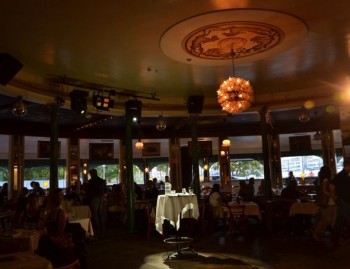
Poetry in focus: Kaisaniemi Restaurant, Helsinki, 24 August. Photo: Irene Dimitropoulos
…Poets was the main event of the annual literature festival Runokuu, Poetry Moon, taking place on 24 August in a Helsinki restaurant. The theme was the sea: the invited guests were from around the Baltic Sea – as well as beyond.
The Poetry Moon festival is organised by Nuoren Voiman Liitto and Helsinki Festival, now for the ninth time, with more than 30 events taking place in the city between 22 and 28 August.
‘In four hours writers and languages kept changing fast,’ reports Irene Dimitropoulos, an intern at FILI (Finnish Literature Exchange): ‘You had to throw yourself into the rhythms and sounds of languages both familiar and strange.
‘The programme contained lots of poetry, but the short story and non-fiction were also included. The idea of the literary evenings is to meet with writers from abroad and also to support translated foreign poetry, as very little gets translated into Finnish, so translators perform with poets.
‘The stylistic and thematic variations of different generations of writers were introduced in many ways. A translation of I Am Going to Clone Myself Then Kill the Clone and Eat It [2009/2012] by the American poet Sam Pink was published in Finnish earlier this year: his style, both simple and strikingly comical, and the way he depicts everyday experiences and the violent fantasies they invoke, made the audience laugh. Crowds were also drawn to listen to the Finnish novelist Monika Fagerholm and the German poet and translator Ulrike Draesner; Fagerholm read from her book of lyrical essays on the sea, Draesner her poems dealing with womanhood and the interaction between language and body.’
Among the other poets were Peeter Sauter and Maarja Kangro from Estonia, Igor Belov and Irina Maksimova from Russia and Toh Hsien Min from Singapore.
Expat, fun
30 August 2013 | In the news
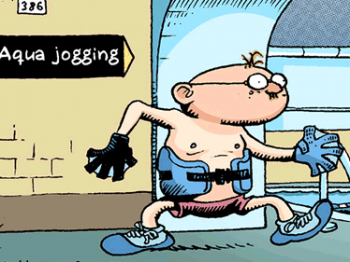
Popular Finnish aqua sports à la Pertti Jarla
Expat Finland, created by Stuart Allt – an Australian web designer living in Turku, Finland – is an information resource on the Internet. It is particularly useful for people moving to Finland, or for anyone who is interested in finding out about Finnish services and products and in living in the country in general.
If you’re looking for maps, restaurants or universities, are interested in knowing more about the language(s), culture, sports etc, take a look at the recently redesigned Expat Finland.
And what do Finns think is funny?
Among latest additions on the Expat site is a selection of comic strips by Pertti Jarla. The creator of the cartoon town Fingerpori is often impossible to translate as he constantly plays with words and their meanings (getting the joke sometimes takes a while, too).
Take also a look at the samples of Jarla’s illustrations to Zoo – eläimellinen tarina (‘Zoo – a bestial story’), a book for children by Roman Schatz and Jarla, featured in Books from Finland.
New library for Helsinki
20 June 2013 | In the news

The new Helsinki library: Käännös by ALA Architects Ltd
The city of Helsinki will have a new Central Library in the near future: an architectural competition for a new building was completed in June. The winner, chosen out of 554 entries, foreign and Finnish, is entitled Käännös (‘Turn’ – or ‘Translation’), entered by the Finnish ALA Architects Ltd (architects Juho Grönholm, Antti Nousjoki, Janne Teräsvirta, Samuli Woolston). The entry was also one of the favourites with the public in an earlier stage of the competition.
The jury’s decision was unanimous: in their opinion, Käännös is ‘impressive’ and ‘casually generous’; it fits into the urban structure as an feasible, usable and ecological construction. The site could not be more central: close to the citys’ railway station, it faces the House of Parliament, next to the Museum of Contemporary Art Kiasma and the new Music Centre (opened 2011): literary art and literature will join the other art forms.
Art online
23 May 2013 | In the news
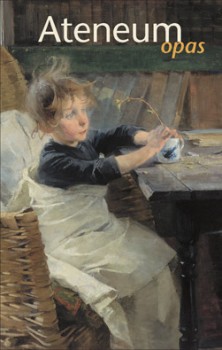
Helene Schjerfbeck’s The convalescent (1888) on the cover of the guidebook of the Ateneum Art Museum
Attention lovers of Finnish art: the Ateneum Art Museum in Helsinki has joined the international Google Art Project (begun in 2011), with 260 participating art institutes and more than 40,000 works of art as high-resolution images.
The website also includes information on the paintings. Among the 55 images from Ateneum on show now are many of the great works of the golden period of Finnish art (1880–1910), including Hugo Simberg’s darkly cute The Garden of Death, Albert Edelfelt’s heartbreakingly beautiful Conveying a Child’s Coffin, Akseli Gallen-Kallela’s classic portrayal of grief, Lemminkäinen’s mother, and – a personal favourite here at the Books from Finland office – Magnus von Wright’s evocative Annankatu Street on a Cold Winter’s Morning.
The Ateneum has few foreign works of art; in the Google Art collection now there are one Rodin, a Modigliani, a van Gogh and two Gauguins.
Favourites in April: what Finland read
8 May 2013 | In the news
 In April number one on the list of best-selling Finnish fiction titles, compiled by the Finnish Booksellers’ Association, was Seppo Jokinen’s crime novel Vihan sukua (‘Akin to hate’, Crime Time). The winner of the 2012 Finlandia Prize for Fiction, Ulla-Lena Lundberg’s Is (‘Ice’), still holds second place.
Pertti Jarla seems to have secured his place on the best-seller list: his latest serial comics book about the inhabitants of the city of Fingerpori (‘Fingerborg’, Arktinen Banaani), Lääkärileikit (‘Playing doctors’) was number three and the album Fingerpori 6 number four.
Paulo Coelho ruled the translated fiction list with his Manuscript Found In Accra. There are more people who find his books fascinating than there are people who don’t.
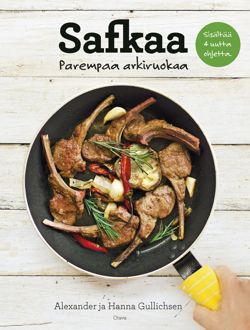
At the top of the non-fiction list remained, for the third time now, Kaiken käsikirja (‘Handbook of everything’, Ursa) by astronomer and popular writer Esko Valtaoja; as it doesn’t provide the reader with instructions for cooking, perhaps buyers went on to buy number two, Safkaa: parempaa arkiruokaa (‘Grub: better food for weekdays’, Otava) by Alexander and Hanna Gullichsen. Last year’s big social-media hit hails from this book: avocado pasta (chili, lime, basil, garlic, spaghetti, parmesan).
Safka, incidentally, comes from the Russian word zavtrak, breakfast. (The title of the book could also have been Sapuskaa…, the word also means ‘grub’, from the Russian word zakuska, hors d’oeuvres.)
Books and roses
23 April 2013 | In the news
 The tradition of the international Day of the Book and the Rose derives from 1920s Barcelona, where the tradition was for men to give women roses while women gave men books.
23 April is the day – and it is (possibly) also Shakespeare’s birthday. In 1995 UNESCO proclaimed it is the World Book and Copyright Day.
(Actually, we’ve always thought the idea of what is exchanged is rather silly. As women, we would much rather be given a a book than a withering cut flower. On the other hand though, a rose is a safe bet….)
Last year, the Finnish booksellers decided to celebrate the occasion by publishing a new novel which was given for free to all customers who made a purchase worth €10. This was the only way to get hold of a copy; the print run was 3,000 copies. The author was Tuomas Kyrö, the novel, Miniä (‘Daughter-in-law’).
This year the print run is more than tenfold, and the author is Jari Tervo. His novel Jarrusukka (‘Slipper sock’) tells the story of a teacher, working in an immigrant neighbourhood, who finds out it’s not possible to lease a baby in a short term.
Writers breaking walls
19 April 2013 | In the news
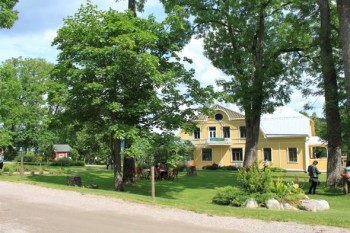
Meeting place for writers: Messilä Manor, Lahti. Photo: LIWRE
The theme of the next biannual International Writers’ Reunion (LIWRE), which takes place in Lahti, southern Finland, will be ‘Breaking walls’.
‘The writer always examines his own limits and boundaries, creates a new version not only of reality but of himself. He addresses, touches and jolts, awakens his readers to see alternative worlds and accept otherness. But is the writer an engine of change, or the eternal stranger?
‘Problems demand answers, answers demand questions. If attitudes harden, arms talk, and everyone erects a wall around himself, where is literature in the equation? Is the highest wall right there inside the writer? Or is literature itself a protecting wall? What happens, when walls break down?’
The 26th Reunion will take place at the Messilä Manor in Lahti 16–18 June. Among the participants – 24 foreign writers so far – will be the Havanna-born Abilio Estévez, Davide Enian from Sicily, Anna Szabo from Hungary and the Dutch-Finnish Kira Wuck.
The chairperson, author and researcher Virpi Hämeen-Anttila, who together with Jarmo Papinniemi (who died last autumn) has chaired the discussions at three Reunions, will now be partnered by writer and journalist Joni Pyysalo.
What Finland read in February
28 March 2013 | In the news
Artist and painter Hannu Väisänen (born 1951) began writing an autobiographical series of novels in 2004. Born in the northern town of Oulu, he colourfully described his somewhat bleak childhood in a family of five children headed by a widowed soldier father. His fourth novel, Taivaanvartijat (‘The guardians of heaven’, Otava), is number one on the February list of best-selling Finnish fiction titles compiled by the Finnish Booksellers’ Association.
Number two is former number one, the Finlandia Prize -winning novel Is (‘Ice’, in Finnish Jää; also to be published in English, possibly later this year) by Ulla-Lena Lundberg.
The latest comic book by Pertti Jarla about the inhabitants of Fingerpori (‘Fingerborg’, Arktinen Banaani), Fingerpori 6, was number three.
In first and second place on the translated fiction list were Stephen King – (11/22/63) and J.R.R. Tolkien (The Hobbit or There and Back Again).
At the top of the non-fiction list is, for the second time, Kaiken käsikirja (‘Handbook of everything’, Ursa) by astronomer and popular writer Esko Valtaoja. In these hard times Finns seems also to be interested in economics, so number two was Talous ja utopia (‘Economics and utopia’, Docendo) by Sixten Korkman, professor and specialist in international and national economics.
In memoriam Kai Laitinen 1924–2013
14 March 2013 | In the news
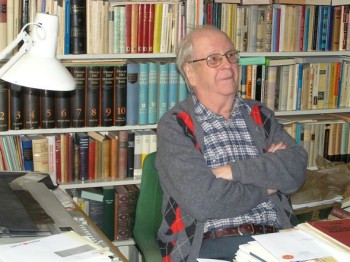
Kai Laitinen. Photo: Ilkka Välimäki (the literature archive/Finnish Literature Society, 2006)
The journalist, critic, author and professor Kai Laitinen died on 11 March in Helsinki, aged 88.
He began his literary career as a critic in the daily paper Helsingin Sanomat in 1950. As the Editor-in-Chief of the new literary journal Parnasso he was able to promote the new trends in modernist fiction and poetry which began to flourish in post-war Finland.
Laitinen’s academic career at Helsinki University involved serving as Associate Professor and Professor of Finnish literature (1975–1989). From the 1950s onwards he was actively involved in the work of dozens of literary societies, publications and organisations, both in Finland and abroad.
Among his publications are two collections of essays, a book of memoirs and two popular books on history of literature: Suomen kirjallisuus 1917–1967 (‘Finnish literature 1917–1967’) and a more concise work, Suomen kirjallisuuden historia (1981‚ Literature of Finland in Brief), which has been published in eleven languages.
Kai Laitinen was appointed Editor-in-Chief of Books from Finland in 1976 when the little magazine, then in its tenth year, began to take the form of a proper literary journal and to be published by Helsinki University Library. He held the job until 1989.
In issue 4/1977 of Books from Finland, on the theme of the 60th anniversary of Finland’s independence and the changing role of literature, Kai wrote in the editorial: ‘Literature is, and must be, much more than a chronicle of national and social history, or the mere accumulation of changing styles and genres. So often it is an author’s critical insight or his struggle against prevailing literary norms that gives birth to the works of the greatrest artistic importance. One of the main tasks of literature, both on a national and a human level, can be summed up succinctly in two lines from T.S. Eliot’s Little Gidding – “To purify the dialect of the tribe / And urge the mind to aftersight and foresight.” This comes close to describing what Finnish literature has achieved over the past sixty years.’
T.S. Eliot was the poet who perhaps had a permanent place in Kai’s personal literary cosmos – he introduced Eliot’s poetry to Finnish readership in the late 1940s. This passage, from Little Gidding, might well serve as his epitaph.
….We shall not cease from exploration
And the end of all our exploring
Will be to arrive where we started
And know the place for the first time.