

 Advanced search
New from the archives
Tritonus
Issue 3/1976 | Archives online, Fiction, poetry | Added 2 November 2017
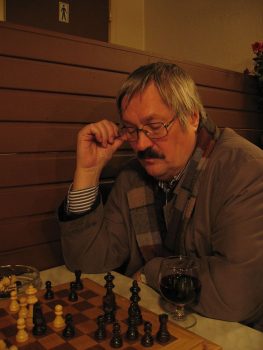
Pentti Saaritsa playing chess. Photo by Otso Kantokorpi, 2006.
Pentti Saaritsa (born 1941), author of six collections of poetry, is one of Finland’s leading left-wing poets, who writes about a wide range of individual and social themes. An outstanding translator, he has had a major role in making Latin American literature, especially the work of Miguel Angel Asturias and Pablo Neruda, known and admired in Finland. He also translates from Russian. The first five poems below have been taken from his latest collection Tritonus (‘Tritone’, Kirjayhtymä 1976), and the last two from his Syksyn runot (‘Autumn poems’, Kirjayhtymä 1973). His poems have appeared in various anthologies abroad and are now being translated into Swedish, English and French. Pentti Saaritsa is a member of the editiorial board of Books from Finland.

1
From the bowels of each apartment house
always that one unknown sound is borne.
Sometimes like drily dripping water, sometimes
as a stone might bite a lump out of itself,
Or a child awake in the dark might learn the word hair.
And a tenant listens, makes a note of it
perhaps to punctuate the interrupted writing of his consciousness
when it makes him restless:
What now, again so soon, is it coming from me
or from the dead building.
An alarm-bell. Did anyone else hear? More…
Extending the Bounds of Reality
Issue 1/1976 | Archives online, Authors | Added 2 November 2017
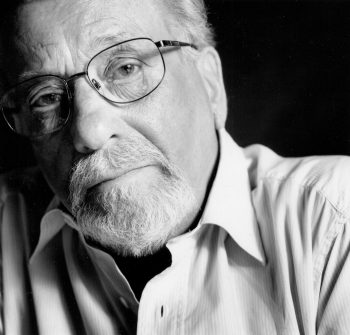
Christer Kihlman. Photo: Magnus Weckström
In any account of Finnish literature written in Swedish during the 60s, the name of Christer Kihlman stands out clearly. For long influential in his native Finland, it is only more recently that he has become well known in Sweden.
Apart from his verse, all his works have been translated into Finnish and several of his novels have also appeared in other Scandinavian languages. Of late he has been writing for the theatre. Christer Kihlman has received important Finnish and Swedish literary prizes and in 1975 was appointed a professor of the arts. Kihlman was born in 1930.
Christer Kihlman’s writing bears many traces of the left-wing radicalism that has characterized much of the literature of the 60s and 70s. He has contributed actively to the discussion of cultural and political issues, both in his novels and in the articles he has written on a wide variety of problems. He has endeavoured to eliminate the conflict that normally arises between an author’s political activity and his creative work, though this has been by no means a painless process. “Our field of activity is society as a whole. The written word, our principal tool, gives us only a limited opportunity to leave a tangible mark on social development, but we should not allow this to deter us from trying: the results of our efforts, after all, can never be determined in advance. Our aim is, and should be, the same as everyone else’s should be: an ever-broadening, everdeveloping democracy. To be an author is, as I experience it, to live one’s life as a social being in a social context, in the full consciousness of what this social context implies and what it demands in terms of intellectual awareness and moral preparedness.” More…
In the early hours
Issue 1/1976 | Archives online, Fiction, Prose | Added 2 November 2017
An extract from Dyre Prins (‘Sweet Prince’, 1975). Introduction by Ingmar Svedberg
Donald Blaadh, a retired businessman, has been called to visit an influential acquaintance in the middle of the night.
He was sitting in the library, listening to Shostakovich, the Leningrad Symphony. The slow crescendo. The insistent march rhythm. Dogged endurance. Indomitability. He switched it off when I came in.
“I can’t sleep,” he said.
“Neither can I.”
He ignored the ironic undertone. “Shostakovich sharpens the decisionmaking faculties, the way chess sharpens the wits,” he said. “A sort of exercise routine … but I forgot, you don’t play chess.”
“No, but I do play the gramophone.”
“To-day I’m going to start you off with a quiz: whose immortal words were these, ‘Minerva’s owl never takes to the air till twilight is falling’?”
“I don’t know.” More…
Front-Line Tourists
Issue 3/1976 | Archives online, Fiction, Prose | Added 2 November 2017
An extract from the novel Nahkapeitturien linjalla (‘On the tanners’ line’, 1976)
Paavo Rintala (born 1930) published his first novel in 1954 and since then has brought out a new book almost every year. A merciless critic of the myths surrounding certain national figures and events, he has written about Marshal Mannerheim, against attempts to glorify war, and the ‘inevitability’ of Finland’s involvment in the German Barbarossa plan. He has made considerable use of reportage technique to produce anti-war documentaries and in more recent years worked with international subjects.
His books have been widely translated and are popular in East and West Europe. Paavo Rintala’s novel Sissiluutnantti (‘Commando Lieuenant’, Otava 1963) and its reception were the subject of a book by the ltterary critic Pekka Tarkka (Paavo Rintalan saarna ja seurakunta. ‘Paavo Rintala’s sermon and congregation’, Otava 1966). Paavo Rintala is chairman of the Finnish Peace Committee. The passage below is taken from Nahkapeitturien linjalla (‘On the tanners’ line’, Otava 1976) in which he again turns his attention to the war years. Rintala looks at the events of the years leading up to the war and the course of the war itself through the eyes of many different people – from the leading politicians of the day to the ordinary soldier.
The novel has already been acclaimed as the monument to the ‘unknown soldier’ of the Winter War.
Hessu duly presented himself at the Viipuri office of the Army Information Department (Visitors’ Escort Section), where it was implied that the expected visitors were Very Important People and that a singular privilege was being conferred upon Hessu and such front-line troops that the party might visit. Although His Excellency Field-Marshal Mannerheim made it a rule never to allow front-line visits by ordinary journalists or even by special correspondents, these gentlemen were, it seemed, such influential people that H.E. had agreed to their visit without demur. “You understand, Padre, what a great responsibility this will be for you? These are very high-up people.” More…
On Matti Pulkkinen
Issue 2/1978 | Archives online, Authors | Added 25 October 2017
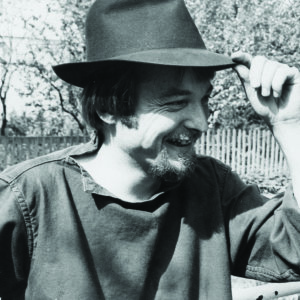
Matti Pulkkinen. Photo: Gummerus
Matti Pulkkinen’s grandfather was born in 1842 in a forest village close to the Russian border, in an area which could only be reached by water. When he grew up he became a tar-burner, a traditional occupation in north-east Finland. Pulkkinen’s father worked for the Otava Publishing Company in the early years of the present century, a time when ordinary Finns were beginning to show a real interest in literature. In his home in one of the most remote parts of North Karelia, he assembled a library which ranged from Mark Twain to the detective stories of G. K. Chesterton. He was 70 when his youngest son, Matti, was born in 1944. Dostoyevsky and Nietzsche were the two writers whose works did most to stimulate Matti Pulkkinen’s enthusiasm for literature. After leaving school he set out to see the world. He worked as a lumberjack, a primary school teacher, a statistics clerk in a gynaecological hospital, a bank teller, an accounts clerk, and later as a carpenter, took part in the restoration of the medieval church at Vanaja. From 1969 to 1971 Pulkkinen worked as a nurse in mental hospitals in Frankfurt, West Berlin and Bern. While in Switzerland he became interested in Jungian psychology and modern group therapy.
Pulkkinen’s novel, Ja pesäpuu itki (‘And the nesting-tree wept’, Gummerus), published in 1977, was awarded the J.H. Erkko Prize for the best first novel of the year and the Kalevi Jäntti Memorial Prize. It rapidly became a best seller and has already had two reprints. More…
Sensitivity session
Issue 2/1978 | Archives online, Fiction, Prose | Added 25 October 2017
An extract from the novel Ja pesäpuu itki (‘And the nesting-tree wept’). Introduction by Pekka Tarkka
Taito Suutarinen knew quite a bit about Freud. Where Mannerheim’s statue now stands, Taito felt that there ought instead to be an equestrian statue of Sigmund Freud. It would be like truth revealed.
Freud, urging on his trusty stallion Libido, would be clad from head to foot in sexual symbols – hat, trousers, shoes: one hand thrust deep into his pocket, the other grasping a walking-stick. The stick would point eloquently in the direction of the railway tracks, where the red trains slid into the arching womb of the station.
Taito had also attended a couple of seven-day sensitivity training courses, where people expressed their feelings openly, directly and spontaneously. By the end of the first course Taito was so direct and spontaneous that he couldn’t get on with anybody. By the end of the second he was so open that everyone was embarrassed. Every member of the group had cried at least once, except the group leader. Never before had Taito witnessed such power. He could not wait to found a group of his own. Taito’s group met in a basement room, where they reclined on mattresses to assist the liberation process. Everyone was free to have problems, quite openly. You were not regarded as ill: on the contrary, if you realized your problem you were more healthy than a person who still thought he mattered. Moreover, as Taito, fixing you with his piercing gaze, was always careful to emphasize, every problem was ultimately a sexual problem. Taito would spontaneously scratch his crotch as he spoke, making it clear that he himself had virtually no problems left. More…
On Heikki Turunen
Issue 1/1977 | Archives online, Authors | Added 25 October 2017
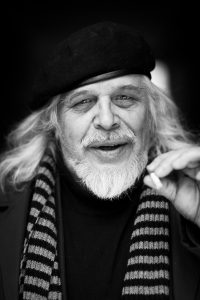
Heikki Turunen.
Photo: Heikki Turunen
Since the 1960s the social and emotional problems caused by the shift of population from the country to the towns have been one of the predominant themes of the regional novel. But while novels on this subject are seldom lacking in sociological interest, the quality of the writing is not always very high. Two writers whose work does stand out are the late Timo K. Mukka, whose novels are set in Northern Finland, and Heikki Turunen (1945– ), who writes about North Karelia. The latter is the part of Finland that has suffered most acutely from the mechanization of traditional occupations and the ensuing depopulation as people have been forced to seek new sources of livelihood either in Southern Finland or in Sweden.
Heikki Turunen grew up in a remote backwoods area of North Karelia where his father had a smallholding. After leaving school he worked for a time as a journalist on a local newspaper and saw for himself the misery caused by depopulation. His first novel, Simpauttaja (‘The Dabster’, Werner Söderström 1973, published also in Swedish by Raben & Sjögren in 1976: Livaren) became a best seller on the scale of the major works of Mika Waltari and Väinö Linna, despite the fact that it is very local in content and is written in broad North Karelian dialect. The novel is set in Turunen’s home area, which is seen through the eyes of a young man attempting to come to terms with the disintegration of the traditional way life. More…
A Wedding Dance
Issue 1/1977 | Archives online, Fiction, Prose | Added 25 October 2017
An extract from the novel Kivenpyörittäjän kylä (‘The stoneroller’s village’). Introduction by Hannes Sihvo
Pölönen got up and went over to his accordion, which he had dumped beside the juke-box. He walked with his stocky trunk thrust forward, his hands dangling; the wallet he had crammed into his hip-pocket, constrained to follow the curve of his fat buttock, made an unsightly bulge suggestive of some kind of excrescence. With a vigorous shoulder movement he hoisted the instrument into position. At once the neck of the bottle in his inside pocket came into view, emitting spurts of foam, and it was some time before he noticed it and managed to nudge it back so that it would lean the other way. Scarlet in the face and streaming with sweat, glaring angrily and doing his utmost to avoid looking in the direction of the assembled company, Pölönen drew some air into the bellows and tried out various notes and chords, fingering the keyboard with an airy nonchalance intended to suggest that he was a complete master of his instrument. All eyes were turned upon this podgy, fair-haired man, with the suit that was far too tight across the shoulders and under the armpits, the very small and rather crumpled tie, the tapering trouser legs with shiny bulges at the knees. The warming-up process continued for what seemed an unconscionably long time, and a certain amount of shuffling and coughing began to be audible; old Nestori Pölönen gazed stiffly down at his shoes, and Saara’s movements, as she busied herself behind the coffee-table, became more and more fidgety. More…
Two Poems
Issue 1/1977 | Archives online, Authors, Fiction, poetry | Added 9 May 2017
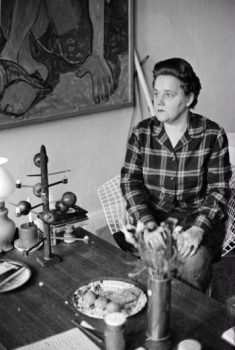
Eeva-Liisa Manner, 1963. Photo: E. Lahtinen
Eeva-Liisa Manner (born 1921) has enjoyed a high reputation as a poet since the 50s. With Tämä matka (‘This journey’, Tammi 1956) she established herself as one of the leading poets of the period.
So far she has published 10 collections of poems. In addition, she has excelled as a playwright, novelist and
translator. Her three plays Uuden vuoden yö (‘New Year’s Eve ‘, Tammi 1965), Toukokuun lumi (‘Snow in May’, Tammi 1967) and Poltettu oranssi (‘A shade of burnt orange’, Tammi 1968) have acquired a permanent place in the repertory of many Finnish theatre companies. Her poetic drama Eros ja Psykhe (‘Eros and Psyche’, Tammi, 1959) has been published in German and a Swedish version of her novel Varokaa voittajat (‘Victors, beware’ Tammi 1972; Mainakes hundar, Schildt) was published in 1974. She was awarded the State Prize for Literature five times between 1952 and 1967, and has received two major prizes for her translations (the Mikael Agricola Prize in 1967 and the State Prize for Translators in 1975). Her poems reflect a deep feeling for music and a special interest in mythology. The influence of oriental philosophy is also clearly discernible. The strong intellectual content of her poetry and its disciplined technique have won her a circle of devoted readers, while her prose writings and her translations of Hermann Hesse and Oscar Parland have reached an even wider public. In a lighter vein, she has ventured into the field of detective novels. Her most recent work is one of humorous and satirical verse: the two poems below are from Kamala kissa (‘An awful cat’, Tammi 1976). While devotees of Old Possum will have no difficulty in recognizing the characters, those familiar with the present cultural scene in Finland may detect nuances never dreamed of by Eliot.
The poems have been ‘remodified’ into English by Herbert Lomas.
Jack, the Terror of the Thames
Jack was a yobbo who lived in an alley,
And his clobbering of rats could hardly be called pally.
He was one of pollution’s blackest of gems
And proud of his cognomen – the Terror of the Thames.
Big-shouldered he was, a good fifteen-pounder
And rejoiced in a furcoat that made him look rounder.
He’d an ear like an aerial, precise and pricked funny,
And only one eye, as hard as money. More…
Mishaps, perhaps
Issue 3/1976 | Archives online, Fiction, poetry | Added 9 May 2017
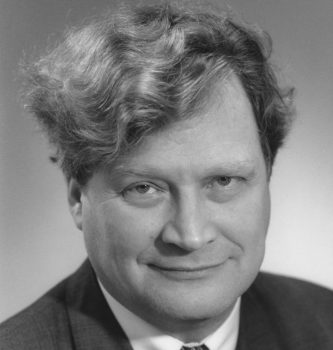
Jarkko Laine. Photo: Kai Nordberg
Jarkko Laine (born 1947) writes both prose and verse. He is the author of several hilarious and highly imaginative novels and a pioneer of the generation of Finnish underground poets. One of the most productive of younger Finland’s poets, he draws on the language and forms of mass commercial entertainment, comics, and pop music to write about people of today.
He is currently the editorial secretary of the literary periodical Parnasso. The poem below is from his latest collection Viidenpennin Hamlet (‘Fivepenny Hamlet’, Otava 1976)
1
In Turku again
the taxi’s travelling East Street
whose wooden sides have gone,
the radio’s laryngeal with static, VHF, the driver’s
telling me the tale,
the ice hockey season’s on us already,
even though there’s rain, green in the park,
I’m staring at the lifted houses
stuffed with sleeping persons,
the landmarks are going out one by one, all of them,
you might as well be
in the middle of the sea in a rubber dinghy,
soon I shan’t recognize anything here but
the cathedral, the castle,
my own name in the telephone directory. More…
On Bo Carpelan
Issue 3/1977 | Archives online, Authors | Added 5 April 2017
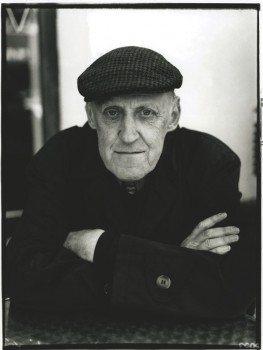
Bo Carpelan. Photo: Ulla Montan
For a small country Finland is richly endowed with poets. Of particular interest, in view of the smallness of the Finland-Swedish population (about 7% of the total), is the number of poets who speak and write Swedish as their first language and consistently produce work of outstanding quality. International recognition of the work of one of these poets came earlier this year with the award of the Nordic Council Literary Prize to Bo Carpelan.
Carpelan’s first volume of verse, Som en dunkel värme (‘Like a dark warmth’) appeared in 1946. Since then he has brought out a further ten volumes of poetry and six prose works (all published by Schildt, Helsinki). It would be difficult, and probably premature, to attempt any detailed analysis of the fusion of influences and inspiration that have come together in Carpelan’s poetry. It is clear, however, that his early work has points of contact with the Finland-Swedish modernism of the 1920s and that he followed with particular interest the 40-talists, a group of Swedish poets active in the 1940s: the influence of their heavy, profuse imagery can be discerned in his early collections.
Critics identify two main periods in Carpelan’s poetry. The first of these is represented by his first volume and by Du mörka överlevande (‘You dark survivor’, 1947), Variationer (‘Variations’, 1950), Minus sju (‘Minus seven’, 1952) and Objekt för ord (‘Objects for words’, 1956). The second period begins with the collection Landskapets förvandlingar (‘The changing landscape’, 1957) and was followed by Den svala dagen (‘The cool day’, 1961), 73 dikter (’73 poems’, 1966), Gården (The courtyard’, 1969), Källan (‘The spring’, 1973) and most recently by I de mörka rummen, i de ljusa (‘In the dark rooms, in the bright ones’, 1976). In all his poetry Carpelan sees life as a mystery, but his approach to this mystery changes and develops. In his earlier works his language is deft, yet at the same time private and intimate, later it becomes sharp and simple. More…
Poems
Issue 3/1977 | Archives online, Fiction, poetry | Added 5 April 2017
Poems from I de mörka rummen, i de ljusa (‘In the dark rooms, in the bright ones’, 1976). Introduction by Kai Laitinen
1
He covers his grey floor with glowing carpets.
He has bought them cheap. No one sees they are fakes
except The Great Specialist – but he never comes.
He covers the windows with curtains like waves of silk
and wraps himself up in his food with a blind look of hunger.
Those who follow him – the wife, the children – have to run.
He goes quickly through the dark as though it were hounding him.
He is right: it is hounding him, it catches up with him
when he wakes defenceless in the night. He is abandoned:
all the time there is a noise in the rooms, a burglary,
he is afraid and does not move but in the dark holds
his hand to his eyes, it is cold and strange.
Each day he goes to his life and comes from it.
He is like a wagon. A wagon has its uses.
It trundles heavily past sidestreets and down to the harbour.
He stops: it is light over the sea, a light
hidden by clouds. As though he had seen it once, before.
What he sees is nothing, stretching far away.
There are waves, but they are all standing still. More…
On Pentti Saarikoski
Issue 4/1977 | Archives online, Authors | Added 30 March 2017
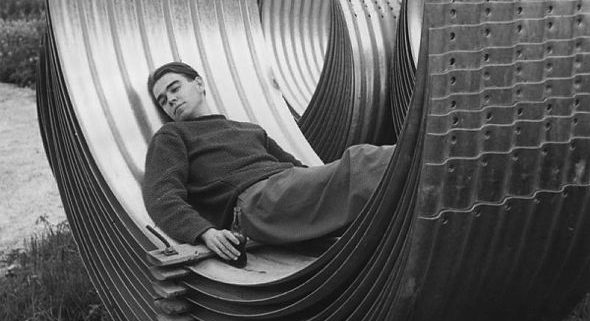
Pentti Saarikoski (1937–1983). Photo: Markku Rautonen / Otava
Born in 1937, Pentti Saarikoski was one of the many Finnish children who were evacuated to safety in Sweden during the Second World War. For almost twenty years – 1958–1975 – he had a sensational career as the enfant terrible of the new wave of post-war Finnish verse and as a translator of classical Greek poetry. Now Saarikoski is once more in Sweden, where he lives in a kind of spiritual and intellectual exile. The vast scope of Saarikoski’s work as a translator reveals the breadth of his interests and poetic skill. Among his translations into Finnish are works by Aristotle, Euripides, Sappho, Theophrastus, Xenophon and Homer’s Odyssey (a free verse translation that has been particularly praised for the freshness it brings to the work). Saarikoski’s translations of J. D. Salinger and Henry Miller have introduced modern urban slang into Finnish literature, and together with his brilliant translation of James Joyce’s Ulysses (1964) epitomise the catholicity of his interests. Saarikoski’s first poems were written in the spirit of ‘Finnish Modernism’: short poems, pleasing in their treatment of language, subtly erotic and ironic, drawing their strength from a fleeting image, metaphor or momentary fancy. Early in the 1960s, Saarikoski emerged from his scholarly retreat. He became a favourite of the yellow press and of television, he was held in the awe normally reserved in other parts of the world for royalty and pop stars. He loved this publicity and the scandal he deliberately created: he saw his function as to provoke the youth of the day to reject established ideas of authority and morality. He further outraged the middle classes (into which he himself was born) by joining the Communist Party.
More…
Poems
Issue 4/1977 | Archives online, Fiction, poetry | Added 30 March 2017
Poems from Tanssilattia vuorella (’The dancing-floor on the mountain’). Introduction by Pekka Tarkka
I
Having studied
Krinagoras
the flower of Philippos’ wreath
under the vaults in a cool library far away in silence
I have gone to see the boat how it is coming on
whether it will be in working order next summer
we have no strong men
have sat on the beach-hut steps thinking of him
the politician the negotiator:
poetry is a holding of council, an art of negotiation More…
On Mirkka Rekola
Issue 2/1978 | Archives online, Authors | Added 28 March 2017
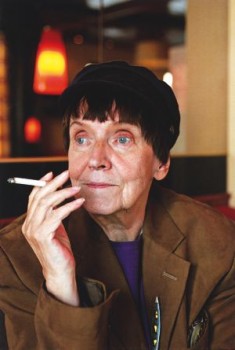
Mirkka Rekola. Photo: Elina Laukkarinen/WSOY
The very title of Mirkka Rekola‘s latest collection of poems, Kohtaamispaikka vuosi (‘Meetingplace the year’, Werner Söderström, 1977), reveals a theme central to Rekola’s poetry: that of unity. The time is the place. ‘I do not imagine I shall meet you this year. / This place will be here in summer.’ Rekola has a particular way of using language of the most intense concentration, so that it brings out unity between a wide variety of moods. ‘I shall meet you this year’ also means that you are this year. ‘This place will be here in the summer’ means that it is autumn and this place (a summer café) will remain deserted until the summer, but also that this place will remain there as the summer.
‘The world, a table already laid, there you see your hunger.’ ‘At the same time a little thirsty and a cowberry.‘ The correspondence of place, the synchrony of season and the general sense of undividedness produce countless pictorial and therefore concrete expressions throughout Rekola’s poetry. ‘I spread my hands / and someone yawned, / I held my fingertips in the breeze / and the boats slid into the water.’ ‘The child said to the old man: you are bent, while I am so little.’ ‘A shout is heard which is no other’s.’ Rekola’s concrete and graphical mode of expression is also based on the same philosophy: ‘Do not make a picture, everything is [a picture]’. ‘The sun, star of the night, introduces the day. And the world is so talkative in its dreams.’ More…
Meetingplace the year
Issue 2/1978 | Archives online, Fiction, poetry | Added 28 March 2017
Poems from Kohtaamispaikka vuosi (‘Meetingplace the year’, 1977). Introduction by Mirjam Polkunen
1.
I look in from the gateway
                         there are children, there in the yard playing.
They look small from here, remote.
                                              From the years
I have walked past this gateway,
there they are: five, six.
                                              The same number.
They have a ball in the air, they yell at it.
Silly that I still here too
                                              remember you,
I could be the same age now.
More…
On Alpo Ruuth
Issue 3/1978 | Archives online, Authors | Added 28 March 2017
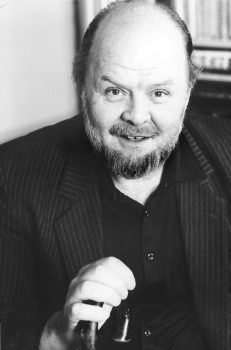
Alpo Ruuth. Photo: Sakari Majantie / Tammi
Alpo Ruuth (born 1943) grew up in Sörnäinen, a working-class quarter of Helsinki, amid dirty grey tenements, railway goods yards, machine shops, timber yards and slaughterhouses; a district reeking of rust and dust, of gasometers, steam locomotives, pinewood, toad-in-the-hole and roasting coffee. Ruuth completed three years of secondary schooling and then decided that he had had enough. He worked as a garage hand, a shoemaker, a casual labourer, a salesman and a storekeeper. The publication of his first novel, Naimisiin (‘Getting married’, Tammi, 1967) set him free to adopt writing as a career.
Ruuth first became known to a wider public through his novel Kämppä (‘The commune’, Tammi, 1969 ). This describes the adolescent years of a group of Sörnäinen boys who live like a tribe of savages in this urban jungle. They establish a commune of their own, cut off completely from the adult world, and rely on a process of trial and error to teach them how to live. The charm of the book comes from the spontaneity and quick reactions of these teen-age youngsters: chattering, mimicking, footballing or fornicating, they are all the time as alert as puppies, while the life of the city around them goes on ‘for real’. The final section of Kämppä describes how they eventually slot themselves into the community. Most of them accept their fetters with resignation, but there is one – the chief character of the novel – who strives to maintain his critical attitude to the values which dominate his surroundings, and to live up to it in practice. Some of Ruuth’s finest writing in this novel is devoted to the harmonious family background of this young man’s early years. He seems to be saying that ethically valid solutions to life’s problems grow out of the personal relationships of early childhood. More…
The Onlookers
Issue 3/1978 | Archives online, Fiction, Prose | Added 28 March 2017
A short story from Naisten vuonna (‘In women’s year’, 1975). Introduction by Pekka Tarkka
The two elks came out on to the road through a gap between timber sheds. They began to cross the road, and the larger one was very nearly run into by a car. Cars stopped and horns tooted, till the elks turned and made off towards the harbour. Several cars swung round and drove along the cinder track in pursuit of the animals.
The elks headed across the rubble towards the power station; after circling some stacks of railway sleepers, they ended up on the flank of a coalheap sixty feet high. The cars pulled up and their occupants poured out, shouting that the elks wouldn’t go that way, it was a dead end. The elder of the two elks had indeed sensed this, and they moved off to the right, skirting the coal-heap and emerging among the timber-stacks. By this time the first cyclists and pedestrians had arrived on the scene.
“They’ll break their legs,” said a pedestrian to a motorist. “There’s all kinds of junk lying about.” More…
On Matti Rossi
Issue 1/1978 | Archives online, Authors | Added 9 March 2017
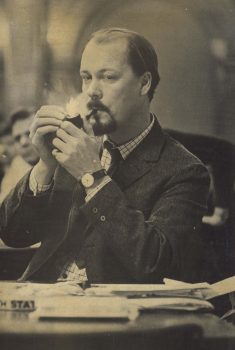
Matti Rossi. Photo: SKS archives
The appearance in 1965 of Matti Rossi’s (born 1934) first work in Finnish, Näytelmän henkilöt (‘Dramatis personae’, Tammi), brought him immediate recognition as an important writer. It confirmed him as a skillful translator – he had already ten important translations to his name – and revealed a new but already mature poet. Näytelmän henkilöt contains biting political parody, highly original myth verse and the Finnish version of a series of poems on Vietnamese themes, which he had first published in English.
Rossi has always worked in many styles and genres. Leikkeja kahdelle (‘Games for two’, Tammi, 1966) is a magnificent collection of sensual love poems; his fantasy poem for the stage, Tilaisuus (‘The occasion’, Tammi, 1967), examines the nature and causes of violence; the events in Czechoslovakia are the subject of his analytical political satire Käännekohta (‘Turning-point’), written as a play for television in 1969. These were followed by a long period in which Rossi’s poetry reflects his political commitment to the far left. He brought out a book about his experiences during a visit of more than a year to South America, and his scathing poetry has always played its part in political controversy. He has composed songs for the stage, and an outstanding ballad narrative, Puulintujen vuolija (The carver of wooden birds’, 1975). More…
Poems
Issue 1/1978 | Archives online, Fiction, poetry | Added 9 March 2017
Poems from Laulu tummana tulevi (‘The song comes darkly’, 1976). Introduction by Pentti Saaritsa
1
                      I have longed for you
as the burning heath for rain,
                      I have asked for you
as fingers of moss for shade,
                      I have yearned for you
as the dusty mind for tears,
                      and I have loved you
as distant lightning the dark,
                      I have been in you
as flowering pine in the wind.
The blue will-o’-the-wisps dance,
strangers stitching happiness.
Silvery the spring mornings,
the trumpets bright in summer,
the autumns cranberry-red,
the white legend of winter. More…