

Search results for "harjunpää/2010/10/mikko-rimminen-nenapaiva-nose-day"
Girl-embryos
30 December 2003 | Authors, Reviews

Photo: Irmeli Jung
Stanza is, of course, Italian for ‘room’, and Saila Susiluoto’s second volume, Huoneiden kirja, is a book of rooms. The 17th-century English poet John Donne said: ‘We’ll build in sonnets pretty rooms’; Susiluoto’s poems are prose poems, not sonnets – but imaginary rooms with real feelings in them. They’re not pretty either, but beautiful, furnished with lyrical echoes, echoing with experience.
The protagonist is a girl, but there are many other personae, women, men, children: ‘Sorrow’s walked through me in the shape of people.’ The personae think there are many ways to walk through things, or towards them. They follow the signs they find on their way – from the ground floor (partly underground) of a draughty house up to the sixth floor (fifth in English), which also floats.
Behind the shining mirror twin girls are squealing, they disappeared inside the walls long ago… Inside us there are two hundred girl-embryos, the girls shout….
The girls are hand-made: fashioned by themselves – ‘like us’ – ‘out of pearls, blood, splinters of mirror’. More…
The tower
31 December 1987 | Archives online, Fiction, Prose
A short story from the collection Torni (‘The tower’, 1987). Introduction by Erkka Lehtola
The dog came through the door first, a big, long-haired brute. He hadn’t said anything about it on the phone, but from the look on his face you could tell it was his and that he meant to take it with him into the forest.
He shuffled across the yard with his rubber boots on and a rucksack on his back. In one hand he held a camera tripod.
I rolled down the window.
‘Wait a minute,’ he said.
He walked behind the cars standing in the parking lot, over to his own car and opened the trunk. The dog twisted around his legs whining softly. He took something out and slammed the trunk shut. More…
The mistake
30 September 2008 | Archives online, Fiction, Prose
A short story (‘Erehdys’, 1956, last published in the collection Lukittu laatikko ja muita kertomuksia, ‘A locked box and other stories’, WSOY, 2003). Introduction by Markéta Hejkalová
My feet are smarter than my head. On an April night in Naples they carried me along the Via Roma past the royal palace and the giant illuminated dome of the church. The people of Naples walked up and down the immortal street like the cool of evening, looking at each other and at the brightly lit display windows. I had nothing against that, but at the comer of Via San Brigida my feet turned to the right. The snow-cold breath of my homeland radiated toward me from Saint Bridget Street.
When I had turned the corner I could see a restaurant window still lit, with its fruit baskets, dead fish and red lobsters. The most hurried diners had already finished their meals. I stepped into the long dining room of the restaurant, the sawdust on the floor stuck to my shoes, a frighteningly icy stare pierced me from behind the counter, but I gathered my courage and whispered bravely, ‘Buona sera, signora.’ More…
The gender of the soul
Scenes from the play Kuningatar K / Queen C
Characters:
Christina, the Queen
Friend
The Queen Mother
Karl Gustav, the Count [Christina’s suitor, the King-to-be]
Descartes, philosopher
Official
Man
The King
Oxenstierna, Per Brahe
A choir of midwives
The play can be performed with six actors (3 female, 3 male). Other ways of dividing the roles are possible. All stage directions may be altered.
1. Prologue
The eels’ court
CHRISTINA
If eels had a court then a great female eel would sit in the centre and the little males would writhe about like seaweed around the throne. However they would not be envious of the queen, because they would know that if they swam up into rivers and lakes, into fresh waters, they themselves would gradually become females, great and heavy, and would be able to rule and close into their great embrace all the small little gentlemen. They just have to wait.
KARL GUSTAV
I don’t know. What I do know is that a great black eel, as thick as a rope, was pulled out of the well last night and the Queen looked at its silver stomach and its thrashing tail, but the eel looked the Queen in the eyes and in the heart and since then she has never been the same. More…
The blow-flower boy and the heaven-fixer
31 December 1984 | Archives online, Fiction, Prose
A short story from Puhalluskukkapoika ja taivaankorjaaja (‘The blow-flower boy and the heaven-fixer’, 1983). Interview by Olavi Jama
Cold.
A chill west wind came over the blue ice. It went right to the skin through woollen clothes. Shivers ran up and down the spine, made shoulders shake.
In the bank of clouds close to the horizon, right where the icebreaker had crunched open a passage to the shore, hung a pale blotch, a substitute for the sun. It gave off more chill than warmth.
Lennu’s teeth were chattering.
He wore a buttoned-up windbreaker, a hand-me-down from Gunnar, over a heavy lambswool shirt. It couldn’t keep off the cold. More…
The unicorn
30 September 1997 | Archives online, Fiction, Prose
A short story from Koira nimeltä Onni ja muita onnettomuuksia (’A dog called Lucky and other misfortunes’, Tammi, 1997)
Hilma was rattling her bars when Pirjo stepped into the ward. Once again, she was the only one awake. The three other old people were asleep, wheezing heavily through their toothless mouths, making the air thick with their breathing. Clutching the bars of her bed, Hilma clambered up to a sitting position and leaned her sparse hair against the side.
‘How are you doing with the medicine?’ Pirjo asked.
‘A mouse took it,’ Hilma said, fixing her with her eyes.
‘And you’re not at all sleepy,’ Pirjo sighed. More…
Elina Brotherus & Riikka Ala-harja
The passing of time
2 March 2015 | Extracts, Fiction, Prose
In 1999 the Musée Nicéphore Niépce invited the young Finnish photographer Elina Brotherus to Chalon-sur-Saône in Burgundy, France, as a visiting artist.
After initially qualifying as an analytical chemist, Brotherus was then at the beginning of her career as a photographer. Everything lay before her, and she charted her French experience in a series of characteristically melancholy, subjective images.
Twelve years on, she revisited the same places, photographing them, and herself, again. The images in the resulting book, 12 ans après / 12 vuotta myöhemmin / 12 years later (Sémiosquare, 2015) are accompanied by a short story by the writer Riikka Ala-Harja, who moved to France a little later than Brotherus.
In the event, neither woman’s life took root in France. The book represents a personal coming-to-terms with the evaporation of youthful dreams, a mourning for lost time and broken relationships, a level and unselfpitying gaze at the passage of time: ‘Life has not been what I hoped for. Soon it will be time to accept it and mourn for the dreams that will never come true. Mourn for the lost time, my young self, who no longer exists.’
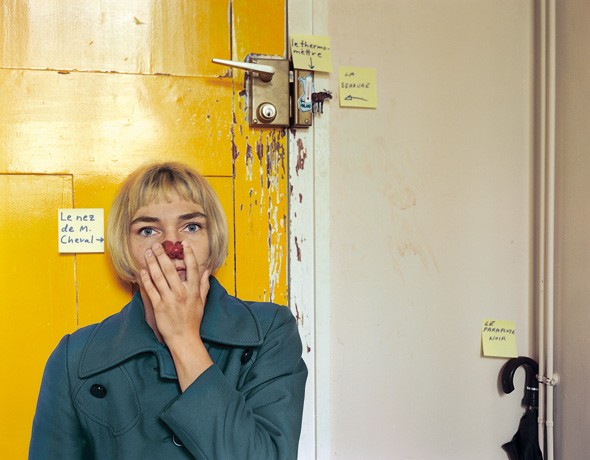
1999 Mr Cheval’s nose
Eroica
31 December 1984 | Archives online, Fiction, poetry
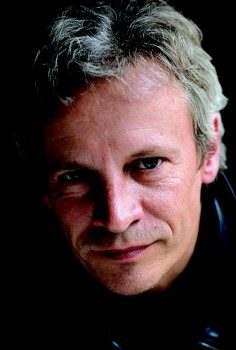
Ilpo Tiihonen. Photo: Irmeli Jung
Poems from From Eroikka (‘Eroica’, 1982). Introduction by Pertti Lassila
Ilpo Tiihonen (born 1950) published his first collection of poetry in 1975. From the beginning, his poems have been couched in the language of the street, and he uses slang liberally. Tiihonen has always been opposed to the miniature idylls of nature that were so characteristic of the 1970s. He aims at the secularisation of poetry, and he uses humour and comedy as a counterweight to high culture. He has evidently been influenced in his technique by Mayakovsky and Yesenin, to whom he often refers in his poems. His preferences in the poetic tradition are apparent in the fresh and liberal new interpretations of poems by Gustav Fröding contained in his collection Eroikka. Unusually for a contemporary Finnish poet, Tiihonen makes extensive use of rhyme. The result is often strongly lyrical poems that could almost be called modern broadsheet ballads, and may also bring Brecht to mind. More…
Mikko Rimminen & Kyösti Salokorpi
Beastly beatitudes
31 December 2001 | Archives online, Fiction, Prose
From Hämärä luonto. Aamunkoista Yön tuhmaan lintuun (niiden käyttäytymysestä ja elämästä yleensä) (’Natura Obscura. From the Moth of Dawn to the Naughty Bird of Night. On their behavior and life in general’, Tammi, 2001. Illustrations by Tatu Tuominen)
Anas cummea
Rubber duck
There are three species living on Earth which, it can be assumed, will survive a possible nuclear catastrophe: the cockroach, the rat and the rubber duck. Of these, the rubber duck is perhaps the most durable. Nothing affects it.
As soon as it emerges from the shell, the rubber duck secretes around its down an insulating layer of gum elastic for it cannot survive among bacteria or other non-mathematical creatures. Here begins the journey toward perfect self-sufficiency.
When young, the rubber duck looks at the world from behind its transparent membrane, protected from causes of disease, bad influences and modern poetry. With age, the rubber layer strengthens and becomes cartilaginous. Finally, the rubber duck lives alone in its own microcosmos, where there are no inter-species competition, nest-usurpers or elephant seals that mishandle their young. On the other hand, it has no room, either, for sunsets, litters of furry soft toys, or the lusty touch of lovers.
Sometimes the rubber duck finds itself in an existential panic: is there anyone, anything, outside the insulating layer? And does it itself exist? Who is speaking? Wrapped up in these thoughts, it reels around, bouncing from one bath to another, one season to the next. More…
Heartstone
2 December 2010 | Reviews
Ulla-Lena Lundberg
‘Knowledge enhances feeling’ is a motto that runs through the whole of Ulla-Lena Lundberg’s oeuvre – both her novels and her travel-writing, covering Åland, Siberia and Africa.
In her trilogy of maritime novels (Leo, Stora världen [‘The wide world’], Allt man kan önska sig [‘All you could wish for’], 1989–1995) she used the form of a family chronicle to depict the development of sea-faring on Åland over the course of a century or so. She gathered her material with historical and anthropological methodology and love of detail. The result was entirely a work of quality fiction, from the consciously old-fashioned rural realism of the first volume to the contradictory postmodern multiplicity of voices in the last – all of it in harmony with the times being depicted.
When Lundberg (born 1947) takes us underground or up onto cliff-faces in her new documentary book, Jägarens leende. Resor i hällkonstens rymd (‘Smile of the hunter. Travels in the space of rock art’), in order to consider cave- and rock-paintings in various parts of the world, she also reveals a little of the background to this attitude towards life that takes such delight in acquiring knowledge – an attitude that is familiar from many of the protagonists of her novels. More…
The train
31 March 1995 | Archives online, Fiction, Prose
Extracts from the novel Koe (‘The experiment’; WSOY, 1994). Interview by Tuva Korrström
In the morning a wild rose tapped beseechingly at the window, the wind sighed in the shaft of the chimney, the entire house creaked, pregnant with so great a longing that they had to awaken.
And as soon as they began to speak to each other, the house settled.
‘I should like to see the train,’ Sari said.
‘Why?’
‘Because that is the reason why I am here.’
‘I didn’t plan it like that,’ Kari said. More…
The monster reveal’d
31 March 1997 | Archives online, Fiction, Prose
Extracts from the novel Frankensteinin muistikirja (‘Frankenstein’s notebook’, Kirjayhtymä, 1996). Ern(e)st Hemingway and Gertrud(e) Stein – the narrator in these extracts – meet the famous creature in Paris. According to Juha K. Tapio in this, his first novel, Mary Shelley’s monster has been leading an interesting life during the past few centuries
My first impression was that there wasn’t anything particularly monstrous about him. I have already said that his age was hard to determine, but there was something about him that tempted one to apply the word ‘elderly’ to him. He was up in years, no doubt about that, but in a rather special, indefinable way – which made it hard to infer, at least from his outward appearance, what stage he had reached in terms of normal human life. It had to do with something outside of time. He was tall and a little more raw-boned than the average person, and this made one wonder, looking at him, what kind of body his very fashionable clothing concealed his suit and tie conformed to the latest style. This was certainly not the misshapen and monstrous creature I vividly remembered from Mary Shelley’s description.
It was obvious that the past decades had brought about an inevitable evolution. More…
In the wars
31 March 2005 | Archives online, Fiction, Prose
A short story from Jussi ja Lassi (‘Jussi and Lassi’, WSOY, 1921). Introduction by Pekka Tarkka
One winter evening, Lassi, who was six, asked: ‘Can’t we go out, mother?’
‘It’s late already,’ she said.
‘We’ve been inside the whole day practically,’ said Jussi, who was seven. ‘It gets on my nerves.’
‘Gets on your nerves, does it? Well, boys, you’ll soon be off in bed,’ she said, ‘so you won’t need to get nervy.’
‘Not off to bed – not yet, it’s not yet, not…’ Lassi broke off, trying to work it out.
‘It’s not six yet,’ Jussi said.
‘No, it isn’t,’ their mother said; ‘but you’ll have to stay in your room and not go charging about here, because visitors are coming.’ More…
Incident at Experience Farm
30 September 1998 | Archives online, Fiction, Prose
A short story from Pakkasyön odottaja (‘Waiting for a frosty night’, WSOY, 1997). Introduction by Jukka Petäjä
I
The round steel teapot is new. Father brought it back from Birmingham, where he went on a visit with the others from the concrete factory. In the shop, the teapot was wrapped in rustling, soft tissue paper. Pirjo was given the honour of opening the package. The pot has been used for brewing tea ever since.
At school, her sister Karoliina is proud of the fact that at home they drink only tea; they are different from other people, different in a good way, one to be proud of. They have a real teapot. Sometimes, during breaktime, a morsel of the excellence of Karoliina Kamppinen falls Pirjo’s way. ‘Yes, let’s include her, she’s Karoliina’s sister, after all.’ More…