

Search results for "tommi+musturi/2010/2009/10/writing-and-power"
Life through the lens
22 December 2010 | Extracts, Non-fiction
Let’s go on a little pictorial journey in time with the photographer Erik Hägglund, whose camera went on clicking for 50 years: gentlefolk, peasants, children, old people and village views, beginning almost a hundred years ago in rural western Finland
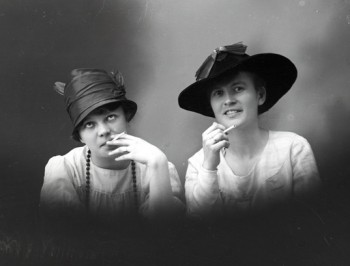
Ladies in hats: in the 1920s Vörå hats were only used by gentlewomen (and smoking was perhaps a little risqué). Photo: Erik Häggblom
Blickfång. En tidsresa med Vöråfotografen Erik Hägglund (‘In focus. A journey in time with the photographer Erik Hägglund from Vörå’. Red. [Ed. by] Katja Hellman, Meta Sahlström & Monica West. Helsingfors: Svenska litteratursällskapet i Finland, 2010
Old photographs may prove that what is utterly local can be perfectly universal.
That’s certainly the impression the reader gets by looking at the pictures taken by Eric Hägglund between 1910 and 1960.
The village of Vörå (in Finnish, Vöyri) on the west coast of Finland, near the Ostrobothnian city of Vasa (in Finnish, Vaasa) is traditionally mostly a Swedish-speaking community. Erik Hägglund, born 1884, lived, photographed and died there in 1962. More…
Government prize for translation 2012
14 September 2012 | In the news

Vladimír Piskoř. Photo: Charlotta Boucht
The Finnish Government Prize for the Translation of Finnish Literature of 2012 – worth €15,000 – was awarded to the Czech translator Vladimír Piskoř.
Piskoř (born 1960), graduated from the Charles University of Prague in 1984, majoring in Finnish. Since the early 1990s he has translated almost 30 titles, most by contemporary authors, including Kristina Carlson, Kari Hotakainen, Leena Krohn, Rosa Liksom, Asko Sahlberg, Juha Seppälä, Petri Tamminen and Maria Peura.
‘I personally am fond of the novels by Kari Hotakainen: I sometimes play with the idea of becoming a writer myself, and I find his style and themes particularly interesting. Kristina Carlson’s latest novel Herra Darwinin puutarhuri (‘Mr Darwin’s gardener’, 2010) is a truly inspiring work both as a reader and a translator,’ he says.
Piskoř is currently working on Kari Hotakainen’s novel Jumalan sana (‘The word of God’) and Leena Lander’s historical novel Käsky (‘Command’). In 2006 he was awarded the Czech translators’ special prize for the novel Höyhen (‘Feather’) by Asko Sahlberg.
Vladimír Piskoř received his award in Helsinki on 10 September from State Secretary Jarmo Lindén; he thanked Piskoř for the work he has done for the last twenty years, particularly in the field of contemporary Finnish fiction.
The prize has been awarded – now for the 38th time – by the Ministry of Education and Culture since 1975 on the basis of a recommendation by FILI – Finnish Literature Exchange.
Finland(ia) of the present day
2 December 2010 | In the news

Mikko Rimminen. Photo: Heini Lehväslaiho
The Finlandia Prize for Fiction 2010, worth €30,000, was awarded on 2 December to Mikko Rimminen (born 1975) ; his novel Nenäpäivä (‘Nose day’, Teos) was selected by the cultural journalist and editor Minna Joenniemi from a shortlist of six.
Appointed by the Finnish Book Foundation, the prize jury (Marianne Bargum, former publishing director of Söderströms, researcher and writer Lari Kotilainen and communications consultant Kirsi Piha) shortlisted the following novels:
Joel Haahtela: Katoamispiste (‘Vanishing point’, Otava), Markus Nummi: Karkkipäivä (‘Candy day’, Otava), Riikka Pulkkinen: Totta (‘True’, Teos), Mikko Rimminen: Nenäpäivä (‘Nose day’, Teos), Alexandra Salmela: 27 eli kuolema tekee taiteilijan (’27 or death makes an artist’, Teos) and Erik Wahlström: Flugtämjaren (in Finnish translation, Kärpäsenkesyttäjä, ‘The fly tamer’, Schildts). Here’s the FILI – Finnish Literature Exchange link to the jury’s comments.
Joenniemi noted the shortlisted books all involve problems experienced by people of different ages. How to be a consenting adult? How do adults listen to children? Contemporary society has been pushing the age limits of ‘youth’ upwards so that, for example, what used to be known as middle age now feels quite young. And, for example, in Erik Wahlström’s Flugtämjaren (now also on the shortlist for the Nordic Literature Prize 2011) the aged, paralysed 19th-century author J.L. Runeberg appears full of hatred: being revered as Finland’s national poet didn’t make him particularly noble-minded.
According to Joenniemi, Rimminen’s novel ‘takes a stand gently’ in its portrayal of contemporary life – in a city where a lonely person’s longing for human contacts takes on tragicomical proportions. Joenniemi finds Rimminen’s language ‘uniquely overflowing’. Its humour poses itself against the prevailing negative attitude, turning black into something lighter.
Rimminen has earlier published two collections of poems and two novels (Pussikaljaromaani, ‘Sixpack novel’, 2004, and Pölkky, ‘The log’, 2007) . Pussikaljaromaani has been translated into Dutch, German, Latvian, Russian and Swedish.
Solzhenitsyn and Silberfeldt: Sofi Oksanen publishes a best-seller
25 April 2012 | In the news
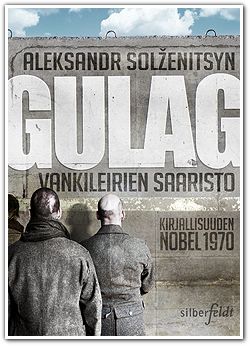
Nobel Prize 1970: Aleksandr Solzhenitsyn
After falling out with her original publisher, WSOY, in 2010, author Sofi Oksanen – whose third novel, Puhdistus (Purge, 2008), has become an international best-seller – has founded a new publishing company, Silberfeldt, in 2011, with the aim of publishing paperback editions of her own books. Its first release was a paperback version of Oksanen’s second novel, Baby Jane.
Oksanen’s new novel, Kun kyyhkyset katosivat (‘When the pigeons disappeared’), again set in Estonia, will appear this autumn, published by Like (a company owned by Finnish publishing giant Otava).
However, in April Silberfeldt published a new, one-volume edition of the autobiographical novel The Gulag Archipelago by the Nobel Prize-winning author Alexandr Solzhenitsyn. This massive book was first published in the West in 1973, in the Soviet Union in 1989.
A Finnish translation was published between 1974 and 1978. Back in those days of Cold War self-censorship, Finnish publishers felt unable to take up the controversial book, and the first volume was eventually printed in Sweden. The work, finally published in three volumes, has long since been unavailable.
This time the 3,000 new copies of Solzhenitsyn’s tome sold out in a few days; a second printing is coming up soon. Oksanen regards the work as a classic that should be available to Finnish readers.
Markku Kuisma: Sodasta syntynyt [Born of war]
8 April 2011 | Mini reviews, Reviews
 Sodasta syntynyt. Itsenäisen Suomen synty Sarajevon laukauksista Tarton rauhaan 1914–1920
[Born of war. The birth of independent Finland, from the shots fired in Sarajevo to the Treaty of Tartu, 1914–1920]
Helsinki: WSOY, 2010. 273 p.
ISBN 978-951-0-36340-9
€ 35, hardback
Professor Markku Kuisma investigates the route to Finland’s independence in the years from the outbreak of the First World War to the Treaty of Tartu in 1920. He disproves some commonly held beliefs about that era, which he maintains were adopted for reasons of political expediency – such as the idea that Finnish independence was the result of focused struggles by patriots. Kuisma claims that Finland in 1917–1918 was adrift, and the actions of the industrial barons around the time of the First World War had a greater impact on Finland’s status in the world than did the unfocused policies of the Finnish Senate. That was when the corporate structures that would shape Finland’s long-term future arose and trade agreements were set up. Bankers and business leaders were in the Senate as well, and the Finnish representatives who negotiated the Treaty of Tartu were chosen from the top ranks of Finnish commerce.
Translated by Ruth Urbom
Finland goes German
17 July 2009 | In the news
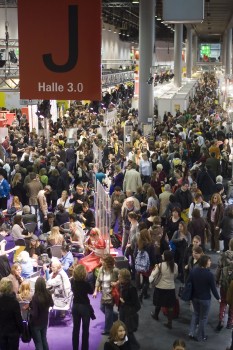
World of books: hustle and bustle at the Frankfurt Book Fair, 2008 - Photo: Fernando Baptista
Competition is hard in the book world, both nationally and internationally, so it’s big news that five years from now Finland will be the theme country at Frankfurt Book Fair, the world’s biggest encounter of those who work in the book publishing business.
Tuomas Kyrö: Mielensäpahoittaja ja ruskeakastike [Taking offence: brown sauce]
25 April 2012 | Mini reviews, Reviews
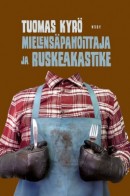 Mielensäpahoittaja ja ruskeakastike
[Taking offence: brown sauce]
Helsinki: WSOY, 2012. 130 p., ill.
ISBN 978-951-0-39079-5
€23.90, hardback
The most popular book by Tuomas Kyrö (born 1974), so far, has been his sixth novel, Mielensäpahoittaja (‘Taking offence’: literally ‘He who takes offence’, 2010). It has sold nearly 65,000 copies as a book and audiobook. The protagonist is a 80-something man, a sturdy old bear who lives in the countryside, now alone, because his demented wife has been taken into care and the children have long since left home. Kyrö inserts genuine humour into the monologues of his stubborn – but by no means simple – character, defiantly critical, opposing new gadgets, fads and all sorts of silly stuff of the contemporary society. In this sequel Kyrö still manages to entertain the reader with his detailed portrait: now Mr Grumpy has to learn to cook, because the food a paid helper brings in just isn’t good enough. With the potato as the cornerstone of his diet, he finally learns how to make good, fatty and salty meals of meat and veg. ‘One must remember what’s important in life, marriage and prostate problems. Time and patience.’ Illustrations remind the reader of the old times: photographs of television programmes and printed recipes from the 1960s and 1970s.
Kari Tarkiainen: Ruotsin Itämaa. Esihistoriasta Kustaa Vaasaan [Sweden’s Eastland. From prehistoric times to Gustav Vasa]
18 April 2013 | Mini reviews, Reviews
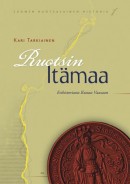 Ruotsin Itämaa. Esihistoriasta Kustaa Vaasaan
[Sweden’s Eastland. From prehistoric times to Gustav Vasa].
[Finlands svenska historia del 1: Sveriges Österland. Från forntiden till Gustav Vasa, 2008; Finland’s Swedish history vol. 1, translated into Finnish by the author]
Helsingfors: Svenska litteratursällskapet i Finland, 2010. 331 p., ill.
ISBN 978-951-583-212-2
€39.90, hardback
The historian and archivist Kari Tarkiainen is starting a four-volume series with the general title ‘Finland’s Swedish history’: it forms part of a project funded by Finland’s Swedish-language cultural organisations. This book examines Finland’s prehistoric, medieval and early modern periods, with special emphasis on the two-way relations between Swedes and Finns, and their mutual influence. Initially Finland’s annexation by Sweden from the 12th to the 14th century as ‘Österland’ (Eastland) was a process that involved many stages and also some belligerence, as the Republic of Novgorod in the east also laid claim to the region. Settlements of Swedish-speakers were established on the Åland islands and the coasts; the Swedish Catholic Church (replaced during the Reformation by the Lutheran Church) and the Swedish-language administrative and social system extended their influence on the country, even though Finnish remained the principal language of Finns. Finland remained part of Sweden until the early 19th century. Ruotsin Itämaa is a fascinating book, which draws on archeology, linguistics and onomastics, and is beautifully illustrated.
Translated by David McDuff
Lassi Saressalo: Pois Suomesta [Out of Finland]
12 July 2010 | Mini reviews, Reviews
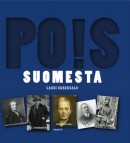 Pois Suomesta – Suomesta paenneita, karkotettuja, väkisin vietyjä, laittomasti lähteneitä
[Out of Finland – refugees, deportees, abductees, illegal emigrants]
Tampere, Traff Kustannus, 2010. 297 p.
ISBN 978-952-99079-7-7
€ 29, hardback
Dr Lassi Saressalo, head of the Finnish Local Heritage Federation, has gathered a large collection of stories about people who were deported or abducted from Finland, or who fled as refugees. The examples relate to several periods of Finland’s history, including Swedish and Russian rule and the period since independence in 1918. People have had to leave Finland at different times for different reasons: some fled the cruelty of conquerors or conscription, others were forced to leave because of their political views or patriotic aims, either on their own initiative or by the government. The most recent cases discussed in the book date from the period following the end of the Second World War. The book is accompanied by a (Finnish-language) website, which provides additional background information on the events that are described as well as a forum for discussion.
Gustaf Mannerheim: Dagbok förd under min resa i Centralasien och Kina 1906–07–08 [Journal of my travels in Central Asia and China 1906–07–08]
11 February 2011 | Mini reviews, Reviews
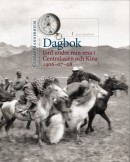 Dagbok förd under min resa i Centralasien och Kina 1906–07–08, Vol 1–3
[Journal of my travels in Central Asia and China 1906–07–08, Vol. 1–3]
Redaktör [Edited by]: Harry Halén
Bildredaktör [Photo editor]: Peter Sandberg
Helsingfors: Svenska litteratursällskapet i Finland, 2010. 1,128 p., ill.
ISBN 978-951-583-196-5 (complete set)
€ 80, hardback
Carl Gustaf Mannerheim (1867–1951), a Finnish officer in the Imperial Russian Army, later Commander-in-Chief of the Finnish Army and President of Finland, undertook a military reconnaissance mission, posing as an academic researcher, to Central Asia and China in 1906–1908. His journey on horseback across Asia to Peking also generated a wealth of ethnographic material: field notes, photographs and artefacts. In his travel diaries, Mannerheim describes the landscapes as well as his diverse encounters with the inhabitants of the areas he travelled through. During his visit to a Tibetan monastery, Mannerheim was pelted with stones by pilgrims. He gave the Dalai Lama an automatic pistol as a gift. These journals are now being published in full for the first time in their original language, Swedish, including Mannerheim’s own notes concerning his military mission. The photographs, some of which have never been published before, show that Mannerheim was a skilled photographer. Harry Halén, an expert in Central Asian languages and cultures, has contributed an extensive preface and copious notes.
Translated by Ruth Urbom
A policeman’s crimes
31 December 1985 | Archives online, Authors
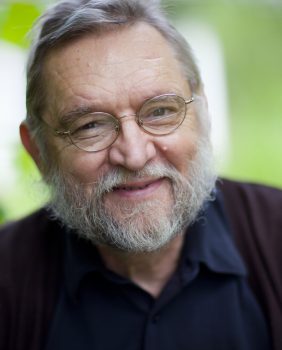
Matti Yrjänä Joensuu. Photo: Jouni Harala 2010
The Finnish section of the major Nordic Crime Novel Competition in 1976 was won by a newcomer, Matti Yrjänä Joensuu, with his Väkivallan virkamies (‘Civil servant in violence’). A realistic crime and police novel in the style of the Swedish writers Sjöwall and Wahlöö, the book represented something completely new in Finland. In the previous competition, held in 1939 as Europe hovered on the brink of war, the winner of the Finnish section was Mika Waltari’s Kuka murhasi Rouva Skrofin (‘Who killed Mrs Skrof?’); the novel is now regarded as one of the classics of Nordic detective fiction. But Waltari was, of course, a literary polymath; his Sinuhe, egyptiläinen (1945; English translation The Egyptian) is among the internationally best-known Finnish novels.
The detective novel and thriller tradition in Finland is both short and slight, and apart from Waltari’s book and its two sequels, many of its representatives – even those that have been most widely acclaimed and read at the time – are of little worth by any objective standards. Joensuu, therefore, has no living tradition to follow, and in interviews he has said that at the start of his career he was not familiar with the two Swedish writers to whom his work is most readily likened, Sjöwall and Wahlöö. This is not difficult to believe; in terms of both politics and social criticism Joensuu’s first novel, in particular, is much tamer than the Swedish writers’ – what all three writers have in common is the gravity with which they approach crime and the individuals who engage in it, and their realistic description of the work of the police. More…
Jukka Rislakki: Paha sektori. Atomipommi, kylmä sota ja Suomi [The sector of evil. The atomic bomb, the Cold War and Finland]
29 April 2011 | Mini reviews, Reviews
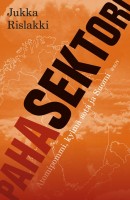 Paha sektori. Atomipommi, kylmä sota ja Suomi
[The sector of evil. The atomic bomb, the Cold War and Finland]
Helsinki: WSOY, 2010. 532 p., ill.
ISBN 978-951-0-36478-9
€ 39, hardback
This book explores the effects of the Cold War and nuclear weapons in Finland and northern Europe in the 1950s and 60s. The Finnish and US armies cooperated closely, without the consent – or even the knowledge – of the Finnish government and parliament. The Finns obtained intelligence on the Soviet Union for the Americans. The Finnish authorities provided around 100,000 aerial photographs of Finland to the US Air Force, and American planes used Finnish airspace to carry out surveillance of the USSR. The United States provided support to Finland by promoting trade between the two countries. When the Soviets carried out nuclear testing on the island territory of Novaya Zemlya, just 800 kilometres from Finland, in 1961, the CIA recommended the US launch a surprise nuclear attack on Novaya Zemlya as a show of force. That was never carried out, but radioactive fallout from the nuclear tests did spread over Finland – however, the Finnish authorities did not want to frighten people ‘unnecessarily’ by mentioning this. Rislakki’s book is based on previously secret archive materials, literature on the subject and interviews. It includes rare surveillance photographs and maps of possible bombing targets in Finland.
Translated by Ruth Urbom
Jorma Ollila – Harri Saukkomaa: Mahdoton menestys. Kasvun paikkana Nokia [Impossible success. Nokia as a growth point]
27 March 2014 | Mini reviews, Reviews
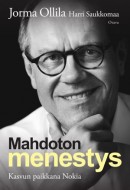 Mahdoton menestys. Kasvun paikkana Nokia
[Impossible success. Nokia as a growth point]
Helsinki: Otava Publishing Company , 2013. 480 pp., ill .
ISBN 978-951-1-18117-0
€39.60, hardback
One of the most fascinating stories in Finland’s recent history is the rapid rise of Nokia, thanks to the establishment of its mobile phones as a global brand in the 1990s, the decline in the company’s success in the 2000s, and its eventual abandonment of mobile phones. The boom was personified by the company’s talented CEO Jorma Ollila. His interesting memoirs are readily accessible to a non-specialist readership. When Ollila began work at the Nokia conglomerate in 1985 he had already shown an aptitude for business. He served first as the company’s director of finance, then as leader of the mobile phone unit, became managing director, and finally CEO from 1999 until 2006. Ollila decided to weed out the operations that were in difficulty and to focus on mobile phones and networks. With the support of a good management team, Ollila proved to be an energetic leader who knew how to share responsibility and also inspire and create trust. In his memoirs he analyses both the company’s successes and its mistakes and losses in the period up to 2010. Ollila stepped down from the post of chairman in 2012.
Translated by David McDuff
Tiia Aarnipuu: Jonkun on uskallettava katsoa. Animalian puoli vuosisataa [Someone’s got to dare to look. Half a century of Animalia]
28 July 2011 | Mini reviews, Reviews
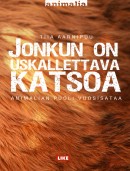 Jonkun on uskallettava katsoa. Animalian puoli vuosisataa
[Someone’s got to dare to look. Half a century of Animalia]
Helsinki: Like Kustannus, 2011. 209 p., ill.
ISBN 978-952-01-0582-2
€ 33, paperback
This book has been published to mark the 50th anniversary of Animalia, the Federation for the Protection of Animals. The public image of the organisation has varied between one of a conservative club of ladies and gentlemen and that of a radical terrorist group. Animalia was founded in 1961, inspired by Johan Börtz, a Swede who gave lectures on the plight of animals used in experiments. Animalia began making visits to inspect animal testing facilities, which were completely unregulated in the early 1960s. Gradually the animal rights movement became more radicalised, somewhat later than in places such as Britain. Animal rights became a subject of wider debate in Finland in the 1980s. In the 1990s, the organisation was falsely linked with attacks made on fur farms by direct-action youth groups. Animalia’s stance has been to renounce vandalism and violence. In February 2010 Animalia launched its largest-ever information campaign, aimed at ridding Finland of fur farms by 2025.
Translated by Ruth Urbom
Konstnärsbröderna von Wrights dagböcker 1–7 [The diaries of the von Wright brothers, Vols. 1–7]
1 April 2010 | Mini reviews, Reviews
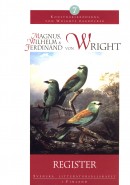 Konstnärsbröderna von Wrights dagböcker 1–7
[The diaries of the von Wright brothers, Vols. 1–7]
Magnus von Wright: Dagbok [Diary] 1824–1834. 407 p., ill. ISBN 951-583-026-5
Magnus von Wright: Dagbok [Diary] 1835–1840. 470 p., ill. ISBN 951-583-040-0
Magnus von Wright: Dagbok [Diary] 1841–1849. 431 p., ill. ISBN 951-583-047-8
Magnus von Wright: Dagbok [Diary] 1850–1862. 496 p., ill. ISBN 951-583-060-5
Magnus von Wright: Dagbok [Diary] 1863–1868. 493 p., ill. ISBN 951-583-085-0
€ 46 each, hardback
Wilhelm & Ferdinand von Wright: Dagböcker [Diaries] 615 p., ill. ISBN 978-951-583-137-8.
€ 46, hardback
Index: 398 p., ill. ISBN 978-951-583-138-5. € 20, hardback
Helsinki: Svenska Litteratursällskapet i Finland, 1996–2010
Toimittaneet [Ed. by]: Anto Leikola, Juhani Lokki, Torsten Stjernberg, Johan Ulfvens
The three von Wright brothers, who came from a family with nine children in rural north Savo (in eastern Finland), shared a talent for meticulous observation combined with masterful technique and a romantic style. Each of these artists, who were active during the Biedermeier era, was a trailblazer in his own field: Magnus (1805–1868) as a proponent of Finnish national art, Wilhelm (1810–1887) as a wildlife illustrator, and Ferdinand (1822–1906) as a painter of landscapes and birds. Their contribution to Nordic ornithology is considerable. The index volume to the von Wright brothers’ diaries (which were written in Swedish) includes lists of their artworks and details of works held by collections abroad. This series is of significant cultural importance, and it is remarkable for its scientific accuracy. Five volumes consist of Magnus von Wright’s diary entries, which he wrote daily from 1820 up until his death. The sixth volume contains diary entries by the two younger brothers, which provide insights into the everyday life and society of that era, as well as the artists’ working practices and their relationship with nature.