

Search results for "Riikka/2010/10/mikko-rimminen-nenapaiva-nose-day"
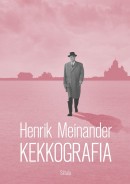
Henrik Meinander: Kekkografia. Historiaesseitä [Kekkography. History essays]
1 April 2011 | Mini reviews, Reviews
 Kekkografia. Historiaesseitä
[Kekkography. History essays]
Suomentanut [Translated into Finnish from the original Swedish texts by] Matti Kinnunen
Helsinki: Siltala, 2010. 229 p.
ISBN 978-952-234-040-5
€ 34, hardback
Professor Henrik Meinander examines the forces that have shaped Finnish history and the controversial issues that have marked its development; Finnish history and culture were formed by chain reactions in European power politics. Finland did not emerge as a nation until the 19th century, as a by-product of the Napoleonic wars, and the independence of 1917 was not the result of an autonomous process of national development but rather a consequence of events elsewhere, especially in Russia. The history of independent Finland is roughly equal in length to that of the Soviet Union; in the early 1990s the Soviet Union collapsed, and Finland joined the European Union. The author does not take a position on the desirability of this development, and points out that the increasing integration and globalisation Finland’s era of independence may appear to be only a transitory phase. President Urho Kekkonen (1900–1986), who influenced Finnish politics for half a century and whose name gives the work its title, figures in approximately half of the texts.
Translated by David McDuff
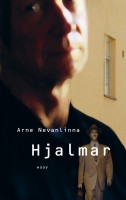
Arne Nevanlinna: Hjalmar
5 November 2010 | Mini reviews, Reviews
 Hjalmar
Helsinki: WSOY, 2010. 294 p.
ISBN 978-951-0-36700-1
€29, hardback
‘Jansson!’ Hjalmar, the protagonist of Arne Nevanlinna’s second novel, is repeatedly woken by voices barking his surname at him. The people shouting at him are primary school teachers, commanding officers, nurses, psychiatrists and his bosses; these figures collectively serve as a sort of Orwellian ‘Big Brother’ figure, or Hjalmar’s social superego. At the core is penniless bohemian office drone Hjalmar’s relationship to his boss, Börje, who personifies the archetype of the Finnish banker, both idolised and loathed. Hjalmar eventually rises up from his lowly position into the opposition, aided by several picaresque characters and his own ‘pokeresque’ skills as a gambler. Arne Nevanlinna (born 1925), an architect and essayist, began writing fiction late in his career: his first novel, Marie (2008), was a runaway success. It tells of a lady from the cream of Strasbourg society who had been married off to Finland and lived in isolation to the age of a hundred. Hjalmar does not quite match its predecessor in terms of quality, but the elegance of old patrician clans persists in its enjoyable irony.
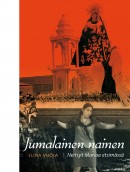
Elina Vuola: Jumalainen nainen. Neitsyt Mariaa etsimässä [The divine woman. In search of the Virgin Mary]
1 April 2011 | Mini reviews, Reviews
 Jumalainen nainen. Neitsyt Mariaa etsimässä
[The divine woman. In search of the Virgin Mary]
Helsinki: Otava, 2010. 220 p., ill.
ISBN 978-951-1-22364-1
€ 34, hardback
This book is about the Virgin Mary and in particular her role in women’s religious experience. Theologian Elina Vuola considers that the doctrines concerning the Virgin Mary have quite a lot in common, as the principal dogmas were formulated in the early centuries of Christianity. As a partial explanation of the difference between the Mary of the Church and the Mary of popular faith, the author adduces the fact that with few exceptions women in Finland did not begin to receive theological training until the second half of the twentieth century. The central question in the book is whether or not Mary is the crowned queen of a patriarchal religious faith that is hostile to women, a harmful role model. Vuola avows herself to be a representative of the trend in women’s religious studies that takes a more positive and multifaceted view of Mary. In the section devoted to the Mary of Karelian folk religion it becomes evident that in Finland and its surrounding regions there are interpretations that are surprisingly similar to those found in Latin America.
Translated by David McDuff
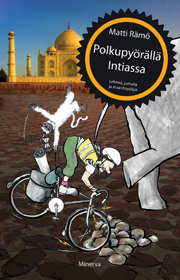
Matti Rämö: Polkupyörällä Intiassa. Lehmiä, jumalia ja maantiepölyä [Cycling in India. Cows, gods, and road dust]
30 July 2010 | Mini reviews, Reviews
 Polkupyörällä Intiassa. Lehmiä, jumalia ja maantiepölyä
[Cycling in India. Cows, gods, and road dust]
Helsinki: Minerva Kustannus Oy, 2010. 301 p., ill.
ISBN 978-952-492-335-4
€ 27.90, hardback
The author decides to take a pinch of the ashes of his dead mother to India’s Varanasi, the city of pilgrims on the banks of the Ganges, and at the same time visit his daughter at an international high school on the country’s west coast. Rämö takes his bicycle on the plane to Delhi and in the course of a month cycles more than 2,600 kilometres, from Delhi to Mumbai. The cyclist is challenged by the heat and humidity, the chaotic traffic, the awkward sections of road and the endless thirst for knowledge on the part of curious bystanders – but his observations are deeper than those of the average travel author, as he worked in India in third world research during the 1980s and 1990s. In the summer of 2007 he completed a four months’ cycle tour of the Sahara, travelling some 9,600 kilometres, and published a book about his experiences (Rengasrikkoja Saharassa, ‘Punctures in the Sahara’, Minerva, 2008). In spite of the shorter length of the Indian journey, the author thinks it possessed a higher difficulty factor.
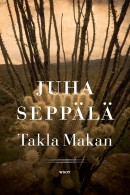
Juha Seppälä: Takla Makan
22 April 2010 | Mini reviews, Reviews
 Takla Makan
Helsinki: WSOY, 2010. 149 p.
ISBN 978-951-0-36322-5
€ 27, hardback
Author Juha Seppälä’s manner of portraying the world is often characterised as harsh and desolate, and this certainly applies to this, his twentieth work. ‘Jesus’ mother was a woman,’ declares the first-person narrator in ‘Ristin tie’ (‘The path of Christ’) in the second novella in Takla Makan. This true but erotically charged statement sums up the themes of the two texts that make up the work. As the narrator of that story bears the cross in an Easter procession, issues of life and death, faith and worldliness, spirit and flesh, masculinity and femininity, are all present. The man carrying the cross, who has recently lost his job, has taken on a greater burden to bear. The other novella in this book, which takes its title from the name of a desert in China, tells of a terminally ill man who has withdrawn to a small rural community and lets his life slowly slip away. In Seppälä’s narratives anguished men are thrown into the world to ponder the big issues of life and death, expressing themselves with admirably precise sentences stripped of everything inessential.
Outsider art protected
31 August 2012 | This 'n' that
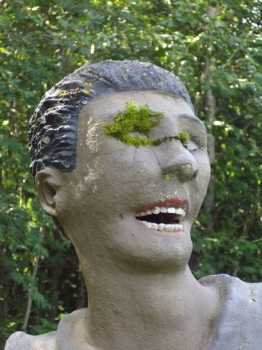
Moss lady: one of the 500 statues
Papermill worker Veijo Rönkkönen (1944–2010) lived all his life on a small, isolated farm in Parikkala, eastern Finland, close to the Russian border. In the 1960s he started sculpting statues in his free time which he placed in the garden around his house. The expanding statue park – take a look at the pictures! – was always open to visitors for free.
When the artist died, the Parikkala authorities were not willing to invest money in acquiring the garden and the park, a unique ‘total work of art’. Fortunately, it was bought by a businessman, Reino Uusitalo, founder of the Pyroll paper and cardboard company. An association now manages the park – and entry is still free. Rönkkönen’s outsider art continuously attracts nearly 30,000 visitors a year.
Over a period of fifty years, Rönkkönen created five hundred human and animal figures made of concrete. Living in his house in the middle of his garden, the artist avoided any contact with the thousands of people who came to wander in his extraordinary open-air gallery.
Now, thanks to Uusitalo’s generosity and the work of the association, the garden will keep growing – and the statues grow lichen and moss, ageing naturally.

Photographer and writer Veli Granö introduced the life and works of this self-made artist in his book Veijo Rönkkösen todellinen elämä / The real life of Veijo Rönkkönen (Maahenki, 2007): see Books from Finland‘s extract.
Opera of the everyday
5 November 2010 | Reviews

Saila Susiluoto. Photo: Pekka Holmström
A plaza in Seville suddenly turns into a modern shopping mall in the new collection of poetry by Saila Susiluoto (born 1971). In Carmen (Otava, 2010) Susiluoto combines the elements of Georges Bizet’s eponymous 1875 opera – popular folk tradition and intense emotions.
The Carmen of these poems is a gypsy, a stranger, a femme fatale, a fiery augury of death. These terse poems combine a narrative continuum, a love story, the triangle drama of the opera, and Susiluoto’s own, distinctive visually flowing style, which is both fresh and familiar.
Her debut collection Siivekkäät ja Hännäkkäät (‘The Winged and the Tailed’, 2001) seems to exist within the frame of a narrative painting or a film. In this suburban story of human relations, she is both an individual growing in passions and her lover’s deserter. More…
Forest and fell
8 May 2013 | Reviews
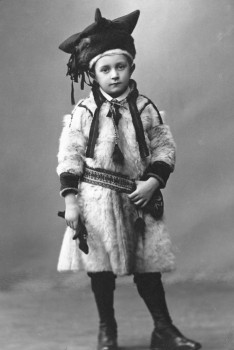
From North to South: young Heikki Soriola on his way to represent Utsjoki in Helsinki, in 1912. Photo from Saamelaiset suomalaiset
Veli-Pekka Lehtola
Saamelaiset suomalaiset: Kohtaamisia 1896–1953
[Sámi, Finns: encounters 1896–1953]
Helsinki: Suomalaisen Kirjallisuuden Seura, 2012. 528 p., ill.
ISBN 978-952-222-331-9
€53, hardback
Leena Valkeapää
Luonnossa: Vuoropuhelua Nils-Aslak Valkeapään tuotannon kanssa
[In nature, a dialogue with the works of Nils-Aslak Valkeapää]
Helsinki: Maahenki, 2011. 288 p., ill.
ISBN 978-952-5870-54-1
€40, hardback
The study of the Sámi people, like that of other indigenous peoples, has become considerably more diverse and deeper over recent decades. Where non-Sámi scholars, officials and clergymen once examined the Sámi according to the needs and values of the holders of power, contemporary scholarship starts out from dialogue, from an attempt to understand the interactions between different groups. More…
Winner of the Susan Sontag Prize
25 December 2010 | In the news
The Susan Sontag Foundation was established in New York in 2004 in memory of the celebrated author and cultural journalist Susan Sontag (1933–2004). The Foundation grants a prize to a young American who translates from other languages into English. In 2010 the prize was awarded for the third time.
Benjamin Mier-Cruz is currently pursuing his PhD in Scandinavian Languages and Literatures at University College Berkeley, with a particular interest in Finland-Swedish modernism and German expressionist poetry. His winning translation proposal is entitled Modernist Missives of Elmer Diktonius – Letters and Poetry of Elmer Diktonius.
Elmer Diktonius (1896–1961) was a rebellious Finland-Swedish avant-garde poet and composer, who was fluent in Finnish as well as his native Swedish. His letters to a wide range of European authors and critics, written between 1919 (the year of the Finnish Civil War) and 1951, reflect the political, artistic and personal developments in Finland and Europe.
The prize ceremony took place first in Helsinki on 5 November in a seminar at the Svenska litteratursällskapet i Finland (the Society of Swedish Literature in Finland), then at Scandinavia House, New York, on 12 November.
Serial fun, or comics celebrated
24 January 2011 | In the news
The art of comics celebrates its first centenary in Finland this year. The first Finnish picture story was a book called Professori Itikaisen tutkimusretki (‘Professor Itikainen’s expedition’, WSOY), by Ilmari Vainio, published in 1911; see our post on the Books from Finland website.
By the way, comics in Finnish is sarjakuva, ‘serial picture’, covering the modern usage of ‘comics’ – including serious, graphically impressive stuff such as the newish genre of the graphic novel.
The annual Helsinki Comics Festival, organised by Finnish Comics Society (founded 1971), is the biggest event in the field in northern Europe; this year’s festival will take place in September. In 2011 comics exhibitions will take place at the Finnish Design Museum, the Finnish Post Museum and the National Library of Finland.
Tommi Musturi. Photo: the Finnish Comics Society
The Society awarded its Puupää prize 2011 to Tommi Musturi (born 1975) – take a look at an extract from his Walking with Samuel which we ran on the Books from Finland website in May 2010.
Among Musturi’s publications are ten anthologies entitled Glömp; he has also worked for Kuti magazine and Huuda Huuda publisher. The jury remarked, in particular, on their appreciation of Musturi’s highly original, often wordless, stories and their graphic brilliance.

The prize: Puupää's hat
The prize is not money but a honorary hat, and is named after a classic Finnish cartoon character, Pekka Puupää (‘Pete Blockhead’), created by Ola Fogelberg and his daughter Toto. The Puupää comic books were published between 1925 and 1975, and some of the stories were made into film.
Kai Ekholm & Yrjö Repo: Kirja tienhaarassa vuonna 2020 [The book at the crossroads in 2020]
10 December 2010 | Mini reviews, Reviews
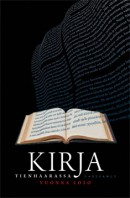 Kirja tienhaarassa vuonna 2020
[The book at the crossroads in 2020]
Helsinki: Gaudeamus, 2010. 205 p., ill.
ISBN 978-952-495-158-6
€29, paperback
This book looks at Finnish book publishing and its likely rate and direction of change. The future of the Finnish industry looks slightly more favourable than similar international forecasts have made out, although there have been some shake-ups in the Finnish book world too. The authors point out that while the decrease of reading as a leisure pursuit appears to be part of a long-term international trend, many feared for the future of the book in previous centuries as well. Book production and distribution, as well as changes undergone by various genres, are illustrated through a variety of statistics. They also go a long way towards explaining whether the publishing industry’s current difficulties are intrinsic or extrinsic in origin. The authors strive to find new perspectives to get away from a fear of the online world. The renewable publishing and reading culture envisioned by the authors will benefit from the novelty and efficiency of electronic publishing and will reinforce traditional knowledge. Professor Kai Ekholm is the Director of the National Library of Finland; Yrjö Repo is a researcher and statistician.
Bright lights, small city
26 August 2010 | Articles, Non-fiction
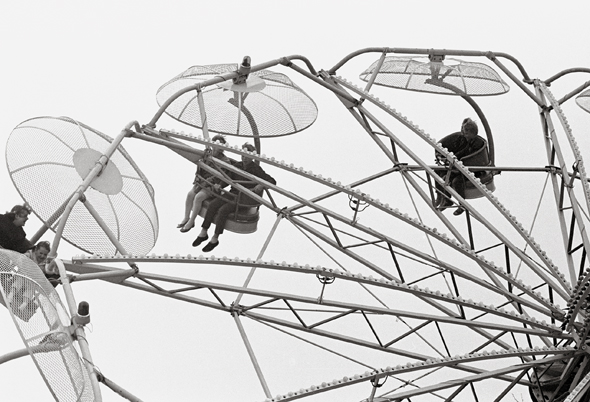
Helsinki people on the big wheel: Linnanmäki amusement park, 1968
Helsinki people on the big wheel: Linnanmäki amusement park, 1968
Photographs and excerpts from Helsinki 1968 by Claire Aho and Kjell Westö (text in Finnish, Swedish and English; WSOY, 2010)
A year that rocked the world: 1968. The Vietnam War, the Chinese cultural revolution, the invasion of Czechoslovakia, hunger in Biafra. Helsinki that year: a quiet little city, in a quiet little country. But Finland’s baby-boomers, born after the war, were now coming of age, resulting in the beginnings of a change of generation in politics; and the students of Helsinki University joined the global student unrest of this ‘crazy year’. Photographer Claire Aho takes a series of photographs of her home town, participating in an exhibition in Kiel, Germany. Forty-two years later her photos are published in Helsinki 1968, together with reflections by Kjell Westö, whose novels are deeply rooted in his native city. Here are words and images of Helsinki that mirror the past – and the present
Both the city and its people carry their past with them, find it hard to let go, and don’t really want to. Many of us are reluctant to embrace the new. Hence there is often something ambivalent, something enigmatic in the frozen moment of the photograph…. More…
Asko Sahlberg: Häväistyt [Disgraced]
2 February 2012 | Mini reviews, Reviews
 Häväistyt
[Disgraced]
Helsinki: WSOY, 2011. 331 p.
ISBN 978-951-0-38275-2
€ 33, hardback
The tenth novel by Asko Sahlberg (born 1964) is reminiscent of the earlier works of this distinctive author: its principal characters are hardened by experience and lead their lives somewhere in the Finnish countryside during a recent period of the country’s history. The sentences are beautifully constructed, and the pace of the narrative is very slow – sometimes even too slow. The main role is played by a middle-aged man who is running away with a woman and a small boy. What they are running away from for a long time remains a puzzle, as does the question of who they are looking for, a man called The Master. In the flashbacks of the last part of the book all is explained, and the rhythm of the story quickens. Considering the book’s desolate, even fatalistic view of the world, it is slightly surprising that everything eventually turns out as happily as in a fairytale. But perhaps this is Sahlberg’s tribute to his characters, and to all of us human beings, for whom he seems to care a great deal? His novel He (2010) will be published in February in England under the title The Brothers (Peirene Press).
Translated by David McDuff
Petri Keto-Tokoi & Timo Kuuluvainen: Suomalainen aarniometsä [The Finnish virgin forest]
12 November 2010 | Mini reviews, Reviews
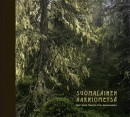 Suomalainen aarniometsä
[The Finnish virgin forest]
Helsinki: Maahenki, 2010. 302 p., ill.
ISBN 978-952-5870-06-0
€ 48, hardback
This book explains the cultural significance of forests – particularly virgin forests – to Finns. That term is used to refer to old-growth forests in their natural state, characterised by trees of different ages, an abundance of decaying tree remains, and continuous incremental changes. Nowadays around four per cent of Finnish forests are in a natural or near-natural state, and light is being shed on their ecosystems and the history of the slowly vanishing virgin forests. They are associated with deep-seated values and a multiplicity of roles throughout history. To many artists forests have been a significant elemental force, worthy even of worship; peasants and the timber industry have exploited the virgin forests. The authors also consider whether answers to key environmental issues will be found in old-growth forests: safeguarding natural diversity and slowing climate change. In addition to illustrative material from the authors, the book contains photographs by award-winning photographers Ritva Kovalainen and Sanni Seppo.
Kari Kuula: Paholaisen biografia [The biography of the Devil]
13 May 2011 | Mini reviews, Reviews
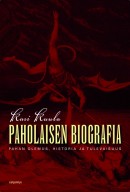 Paholaisen biografia. Pahan olemus, historia ja tulevaisuus
[The biography of the Devil. The essence of evil, history and future]
Helsinki, Kirjapaja, 2010. 381 p.
ISBN 978-951-607-837-6
€ 38, hardback
This book is a chronological study of the Devil, seen through the history of ideas and cultural history. As the Devil is mainly a concept in Christian theology, the most profound studies of his essence have been carried out by experts of this field. The book also studies the Devil’s ‘disciples’, demons, and beliefs related to them. The main theme of the work consists of the history of diabology and demonology, from the Old Testament to contemporary theology. Another central theme is the theological dilemma of why God allows evil and suffering. In the cultural history section the author concentrates on the practical implications of belief in the Devil in different ages as well as parallel phenomena such as possession and belief in witchcraft. Folk tales about the Devil and descriptions of his putative looks as well as some classic works of fiction featuring the Devil are discussed. Kari Kuula is doctor of theology and priest who has published several non-fiction books on the Bible and Christianity.