

Search results for "harjunpää/2010/10/mikko-rimminen-nenapaiva-nose-day/2009/09/what-god-said"
Mikko Rimminen: Nenäpäivä [Nose day]
29 October 2010 | Mini reviews, Reviews
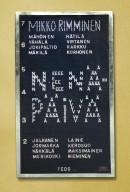 Nenäpäivä
[Nose day]
Helsinki: Teos, 2010. 339 p.
ISBN 978-951-327-1
€ 25.90, hardback
Female protagonists as sympathetic as this are rare in contemporary literature; in this third novel by Mikko Rimminen (born 1975), Irma is a solitary, slightly awkward outsider who gets badly tangled up in a muddle of her own making. She poses as a door-to-door market researcher – in order to meet people. Rimminen employs a more complex plot than in his previous novels (his 2004 debut work, Pussikaljaromaani, ‘A six-pack novel’, about idle young men, has been translated into five languages). The author is an acknowledged master of the slow narration: he is skilled at describing the sound of silence and giving a page-long description of the behaviour of a mobile phone in someone’s hand. All that passes unsaid and unseen between people is cleverly and hilariously put into words. Rimminen’s Finnish is highly original – he keeps creating new verbs and compounds – and his characters who stand on the margins hankering after ordinary life gain the reader’s genuine sympathy.
Finland(ia) of the present day
2 December 2010 | In the news

Mikko Rimminen. Photo: Heini Lehväslaiho
The Finlandia Prize for Fiction 2010, worth €30,000, was awarded on 2 December to Mikko Rimminen (born 1975) ; his novel Nenäpäivä (‘Nose day’, Teos) was selected by the cultural journalist and editor Minna Joenniemi from a shortlist of six.
Appointed by the Finnish Book Foundation, the prize jury (Marianne Bargum, former publishing director of Söderströms, researcher and writer Lari Kotilainen and communications consultant Kirsi Piha) shortlisted the following novels:
Joel Haahtela: Katoamispiste (‘Vanishing point’, Otava), Markus Nummi: Karkkipäivä (‘Candy day’, Otava), Riikka Pulkkinen: Totta (‘True’, Teos), Mikko Rimminen: Nenäpäivä (‘Nose day’, Teos), Alexandra Salmela: 27 eli kuolema tekee taiteilijan (’27 or death makes an artist’, Teos) and Erik Wahlström: Flugtämjaren (in Finnish translation, Kärpäsenkesyttäjä, ‘The fly tamer’, Schildts). Here’s the FILI – Finnish Literature Exchange link to the jury’s comments.
Joenniemi noted the shortlisted books all involve problems experienced by people of different ages. How to be a consenting adult? How do adults listen to children? Contemporary society has been pushing the age limits of ‘youth’ upwards so that, for example, what used to be known as middle age now feels quite young. And, for example, in Erik Wahlström’s Flugtämjaren (now also on the shortlist for the Nordic Literature Prize 2011) the aged, paralysed 19th-century author J.L. Runeberg appears full of hatred: being revered as Finland’s national poet didn’t make him particularly noble-minded.
According to Joenniemi, Rimminen’s novel ‘takes a stand gently’ in its portrayal of contemporary life – in a city where a lonely person’s longing for human contacts takes on tragicomical proportions. Joenniemi finds Rimminen’s language ‘uniquely overflowing’. Its humour poses itself against the prevailing negative attitude, turning black into something lighter.
Rimminen has earlier published two collections of poems and two novels (Pussikaljaromaani, ‘Sixpack novel’, 2004, and Pölkky, ‘The log’, 2007) . Pussikaljaromaani has been translated into Dutch, German, Latvian, Russian and Swedish.
Being God
30 September 2006 | Fiction, Prose
Extracts from the novel Gud (‘God’, Schildts, 2006)
Side by side, wolves and antelopes graze on the juicy grass.
A deer playfully chases a lion through the bushes.
‘Can you do this?’
Adam crosses his arms in front of his chest and folds his hands back to front so that the right hand is on the left and the left hand is on the right. With his hands folded he twists them downwards and holds them out. Now they point to Eve, still folded, and still with the right hand on the left.
Eve tries. She succeeds, and laughs with delight.
A gentle breeze is blowing from the east, just strongly enough for the couple not to be troubled by the heat, but not so they would feel the need for clothes to keep them warm. More…
Chronicles of crisis
31 December 1982 | Archives online, Fiction, Prose
Books from Finland presents here an extract from Dyre prins, a novel by the Finland-Swedish writer Christer Kihlman that is to be published in 1983 by Peter Owen of London under the title Sweet Prince, in a translation by Joan Tate.
Christer Kihlman (born 1930) first became known as a poet; but, after publishing two collections of poetry, he turned to novels. He has been branded a merciless scourge of the bourgeoisie. Equally important in his writing, however, are his masterly psychological analyses, his examination of the myriad aspects of the human personality, his sovereign disregard for taboos and his unflagging search for the truth. His books are about crises – the conflict between the generations, between the individual and society, between opposing political ideologies, between homosexual and heterosexual love. As Ingmar Svedberg remarked in an extensive appreciation of Kihlman’s work that appeared in Books from Finland 1-2/1976, ‘In his perceptive moral analyses, his exploration of the depths of human destructiveness and degradation, Kihlman is sometimes reminiscent of Faulkner.’ Since 1970, Kihlman has published three revealing autobiographical works, two of them dealing with his encounter with South America; Dyre prins, first published in 1975, represents a brief interlude of fiction.
The extract printed below is accompanied with a personal appreciation of the novel by its English translator, Joan Tate
Grandfather’s astonishing revelation gave me a new perspective on my life. I had suddenly been given a concrete, genuine foundation for both my hatred and my self-esteem. In a way I took the story of my origins as an extreme confirmation of the rightness of the Communist interpretation of reality, and at the same time it gave me a wonderful, dazzling sensation of being someone, despite everything, of having a place in a meaningful human perspective of time, despite everything, of being a link, however modest, in the historical family tradition. I did not need to found a dynasty; I already belonged to a dynasty, if only a minor branch. One was less important than the other, and even if the two experiences were irreconcilable and contradictory, they existed all the same in the same consciousness, contained within the same consciousness, my consciousness. I, Donald Blad! More…
The engineer’s story
30 June 1981 | Archives online, Fiction, Prose
A short story from Maailman kivisin paikka (‘The stoniest place in the world’, 1980). Introduction by Pekka Tarkka
Coffee was going to be served down by the river. The engineer took my elbow and led me across his paved courtyard and over his lawn; we settled ourselves down in cane chairs under the trees. Mirja came out of the house with a tray of coffee and coffee-cups, a loaf of sweet bread, already cut, some marble cake and some biscuits. The engineer said nothing. My eye wandered over the ample weeping birches by the river, the mist creeping up in the cool of the evening and shifting in the cross-pull of the breeze and the current, and I watched Mirja moving under the trees back to the house and then down again to the riverbank.
As we sipped our coffee we spoke about chance, and the part it plays in life, about my husband – for I was able to speak about him now: enough time had gone by. The engineer eased himself into a comfortable position, gave me a quick look and then launched off into an account of his own, about his trip abroad:
I spotted the news item as I was going through the morning paper on the plane. I sat more or less speechless all of the first leg, listening to Kirsti and her husband confabulating. I didn’t say anything during the stop-over in Copenhagen, either, where they wanted to get some schnapps and, of course, some chocolate ‘if Kirsti would really like some’. We came rushing back into the plane just as the last English, German and Danish announcements were coming over, and then we sat waiting for the take-off. That was delayed too because of a check-up (not announced), and then we were off again for Zurich, me without a word and they whispering together. Then it was the bus as far as the terminal, and after that a taxi to the hotel. Quite clearly Kirsti hadn’t heard a thing about it yet, and probably hadn’t had much contact with Erkki for quite some time, her new husband even less. More…
Picture this
9 April 2015 | Articles
It’s impossible to put Finnish graphic novels into one bottle and glue a clear label on to the outside, writes Heikki Jokinen. Finnish graphic novels are too varied in both graphics and narrative – what unites them is their individuality. Here is a selection of the Finnish graphic novels published in 2014
Graphic novels are a combination of image and word in which both carry the story. Their importance can vary very freely. Sometimes the narrative may progress through the force of words alone, sometimes through pictures. The image can be used in very different ways, and that is exactly what Finnish artists do.
In many countries graphic novels share some common style or mainstream in which artists aim to place themselves. In recent years an autobiographical approach has been popular all over the worlds in graphic novels as well as many other art forms. This may sometimes have led to a narrowing of content as the perspective concentrates on one person’s experience. Often the visual form has been felt to be less important, and clearly subservient to the text. This, in turn, has sometimes even led to deliberately clumsy graphic expression.
This is not the case in Finland: graphic diversity lies at the heart of Finnish graphic novels. Appreciation of a fluent line and competent drawing is high. The content of the work embraces everything possible between earth and sky.
Finnish graphic novels are indeed surprisingly well-known and respected internationally precisely for the diversity of their content and their visual mastery.
Life on the block
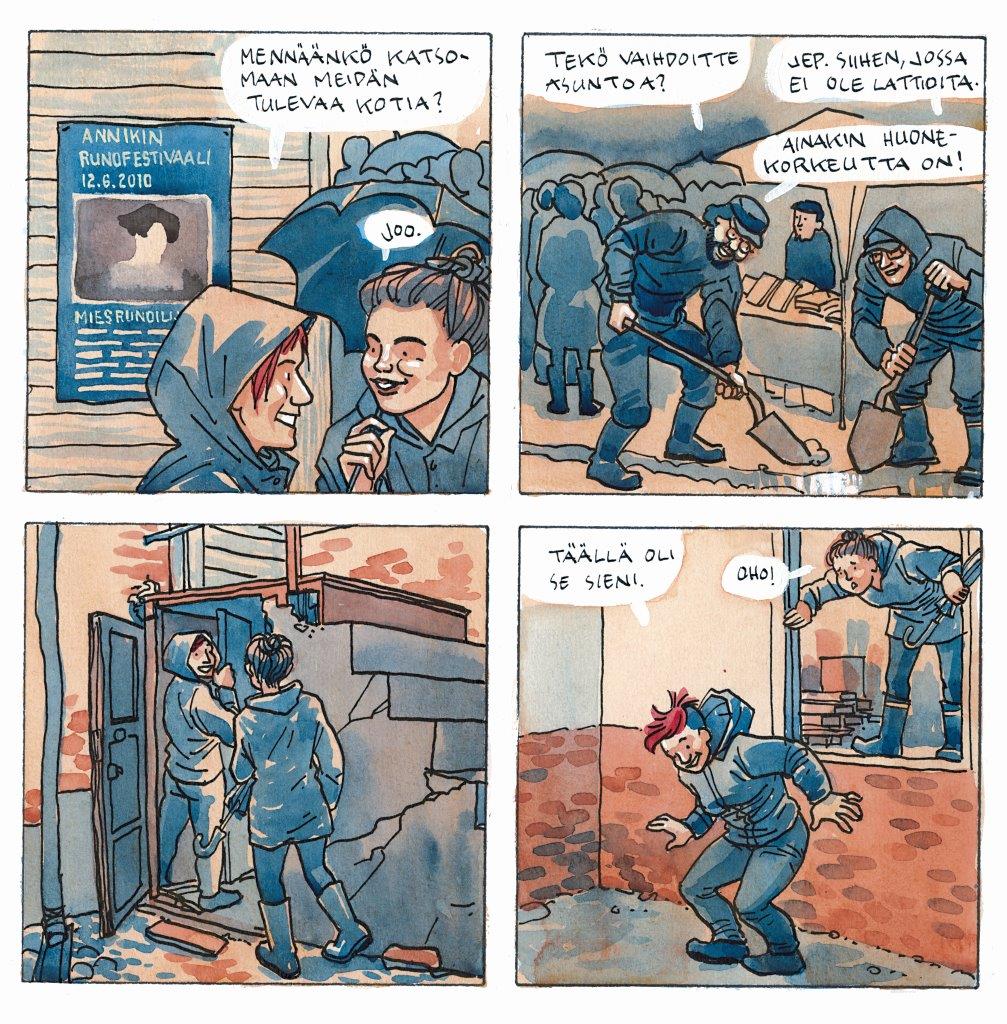
‘Shall we go and look at our new house? / Yeah. / Did you move house? / Yeah, to one without a floor. / At least you have head-space! / This is where the mould was. / Oh dear!’. Tiitu Takalo, Minä, Mikko ja Annikki (‘Me, Mikko and Annikki’, Suuri kurpitsa).
Human Freedom
30 June 1986 | Archives online, Fiction, Prose
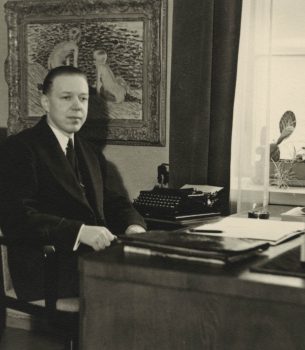
Mika Waltari. Photo: SKS Archives
Extract from lhmisen vapaus (‘Human Freedom’, 1950)
‘Where are we?’ Yvonne asked. ‘This isn’t the right street either. Somewhere between Alma and Georges V, they said. But there’s no sign of an aquarium.’
‘Talking of aquariums’, I suggested, ‘there’s a dog shop near here where they wash dogs in the back room. If you like, I’ll take you to see how they wash a dog. It’s a very soothing experience.’
‘You’re crazy’, said Yvonne.
My feelings were hurt. ‘I may sleep badly’, I admitted, ‘but I love you. I walk up and down the embankments all night. My heart aches, my brain is on fire. Then comes blissful intoxication, and for a little while I can be happy. And all you can do is to keep nagging, Gertrude.’
She wrinkled her brow, but I went on impatiently, ‘Look, Rose dear, just at present I have the whole world throbbing in my temples and in my finger-tips. Age-old poems are bubbling up within me. I am grieving for lost youth. I am boggling at the future. For just this one moment it is given to me to see life with the living eyes of a real human being. Why won’t you let me be happy?’
‘I have walked two hundred kilometres’, said a low, timid voice at my elbow. I stopped. Yvonne had stuck her arm through mine. She, too, stopped. We both looked down and saw a little man. He doffed a ragged cap and bowed. Flushed scars glowed through a grey stubble of beard. He was wearing a much-patched battle-dress from which the badges had long since disappeared. His face was wrinkled, but the little eyes were animated and sorrowful. More…
Summer child
30 September 1988 | Archives online, Fiction, Prose
A short story from Resa med lätt bagage (‘Travelling light’, 1987). Introduction by Marianne Bargum
From the very beginning it was quite clear no one at Backen liked him, a thin gloomy child of eleven; he looked hungry somehow. The boy ought to have inspired a natural protective tenderness, but he didn’t at all. To some extent, it was his way of looking at them, or rather of observing them, a suspicious, penetrating look, anything but childish. And when he had finished looking, he commented in his own precocious way, and my goodness, what that child could wring out of himself.
It would have been easier to ignore if Elis had come from a poor home, but he hadn’t. His clothes and suitcase were sheer luxury, and his father’s car had dropped him off at the ferry. It had all been arranged over the phone. The Fredriksons had taken on a summer child out of the goodness of their hearts, and naturally for some compensation. Axel and Hanna had talked about it for a long time, about how town children needed fresh air and trees and water and healthy food. They had said all the usual things, until they had all been convinced that only one thing was left in order to do the right thing and feel at ease. Despite the fact that all the June work was upon them, many of the summer visitors’ boats were still on the slips, and the overhaul of some not even completed. More…
Mikko-Olavi Seppälä & Riitta Seppälä: Aale Tynni. Hymyily, kyynel, laulu [Aale Tynni. A smile, a tear, a song]
16 January 2014 | Mini reviews, Reviews
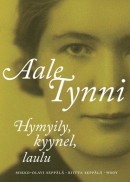 Aale Tynni. Hymyily, kyynel, laulu
[Aale Tynni. A smile, a tear, a song]
Helsinki: WSOY, 2013. 488 pp., ill.
ISBN 978-951-0-38306-3
€37, hardback
The poet, author and translator Aale Tynni (1913–1997), an Ingrian Finn who came to Finland as a refugee after the First World War in 1919, published 15 collections of poetry between 1938 and 1987. Among her translations are works by Ibsen, Shakespeare, Yeats and Racine. This extensive biography, compiled and written by Tynni’s daughter Riitta Seppälä and her grandson, historian Mikko-Olavi Seppälä, is an in-depth, lively portrait of a poet who, in her time, was both admired and criticised for her choices of form and content. Tynni felt that classical metrical tradition was closest to her, and patriotism was one of her themes; however, in the postwar years the freedom of rhythm of Finnish modernism began to flourish, and politics also gained strength in the literary world. In 1948 Tynni won the gold medal for literature in the – rather bizarre and short-lived – art competitions at the Summer Olympics in London with her poem ‘Laurel of Hellas’. Tynni experienced dramatic turns in her personal life; she underwent a prolonged divorce from her first husband who bitterly fought it. Two of her three children committed suicide in adulthood. She was finally free to marry the widowed poet Martti Haavio (aka P. Mustapää) in 1960, a marriage of soulmates that lasted until Haavio’s death in 1973.
Gypsy life
21 March 2013 | Extracts, Non-fiction
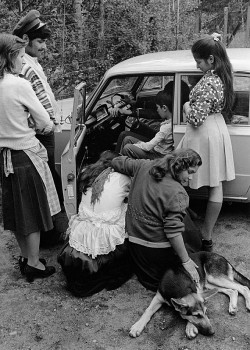
Romani teenagers, Kouvola, 1976. Photo: Mikko Savolainen
Photographer Mikko Savolainen began taking photos of Finnish Romani life in the 1960s, in the time of transition from nomadism to life in housing estates. New trends in the 1960s and 1970s also brought Romani culture to the fore – singers, musicians, festivals; an act baning racial discrimination had been passed. Savolainen became interested in Gypsy life
The text and the photographs are from Suomen romanit. Romanielämää 1960–1970-luvuilla / The Roma of Finland. Roma life in the 1960s and 1970s (Musta Taide, 2008. English translation: Jüri Kokkonen)
I have visited over a hundred Roma homes. Respect for parents, care of the elderly and hospitality are the first things that come to mind.
I have come across similar consideration for visitors only in cottages in Karelia, where the first question was whether I wanted a cup of coffee or to eat first.
I took my first photographs of Roma people in the Market Square of Hamina as an amateur photographer who only wanted to take good portraits. More…
Daddy’s girl
30 September 2004 | Archives online, Fiction, Prose
Extracts from the novel Maskrosguden (‘The dandelion god’, Söderströms, 2004). Introduction by Maria Antas
The best cinema in town was in the main square. The other was a little way off. It was in the main square too, but you couldn’t compare it to the Royal. At the Grand there was hardly any room between the rows, the floor was flat and there was a dance-hall on the other side of the wall, so that Zorro rode out of time with waltzes, in time with oompahs, out of time with the slow steps of tangos and in time with quick numbers. The Royal was different and had a sloping floor.
Inside, the Royal was several hundred metres long. You could buy sweets on one side and tickets on the other. From Martina Wallin’s mum. She was refined. So was everyone except us: Mum, Dad and me. More…
Animal crackers
30 June 2004 | Children's books, Fiction
Fables from the children’s book Gepardi katsoo peiliin (‘A cheetah looks into the mirror’, Tammi, 2003). Illustrations by Kirsi Neuvonen
Rhinoceros
 The rhinoceros was late. She went blundering along a green tunnel she’d thrashed through the jungle. On her way, she plucked a leaf or two between her lips and could herself hear the thundering of her own feet. Snakes’ tails flashed away from the branches and apes bounded out of the rhino’s path, screaming. The rhino had booked an afternoon appointment and the sun had already passed the zenith.
When the rhinoceros finally arrived at the beautician’s, the cosmetologist had already prepared her mud bath. The rhino was able to throw herself straight in, and mud went splattering all round the wide hollow. More…
Mikko Lahtinen: Kirjastojen maa [Land of libraries]
4 March 2011 | Mini reviews, Reviews
 Kirjastojen maa
[Land of libraries]
Tampere: Vastapaino, 2010. 394 p., ill.
ISBN 978-951-768-315-9
€ 43, hardback
Libraries are the most widely used cultural service in Finland. Kirjastojen maa describes the journey undertaken by the protagonist, who refers to himself as ‘the Library Man’, and his entourage to 250 public libraries around Finland between 2008 and 2010. Many of these sites were celebrating their 150th anniversaries at the time, since there was a great enthusiasm for establishing public libraries in Finland in the 1850s. This travel journal provides a history of libraries as an institution and their development into a central pillar of society. The author also considers Finnish intellectual space in this age of digital media. Libraries currently face significant challenges: the recent wave of local authority mergers, centralisation of public services and funding cuts are all hampering the development of library operations. The importance of libraries is further underlined by the fact that local residents have launched protests in support of libraries threatened with closure – in spite of the usual difficulty of rousing Finns to man the barricades. The author is a philosopher, political researcher and active participant in public policy discussions.
Translated by Ruth Urbom
Mikko Ylikangas: Unileipää, kuolonvettä, spiidiä. Huumeet Suomessa 1800–1950 [Opium, death’s tincture, speed. Drugs in Finland 1800–1950]
29 April 2010 | Mini reviews, Reviews
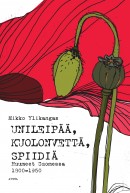 Unileipää, kuolonvettä, spiidiä. Huumeet Suomessa 1800–1950
[Opium, death’s tincture, speed. Drugs in Finland 1800–1950]
Jyväskylä: Atena, 2009. 264 p., ill.
ISBN 978-951-796-578-1
€ 34, hardback
This book presents an account of the history of drugs in Finland, as well as changes in legal and illegal drug use. Even in the early 19th century, the authorities were concerned about opium abuse. Medical doctor Elias Lönnrot – best known for collecting the folk poems that make up the Kalevala, the Finnish national epic – coined the name ‘unileipä’, ‘the staff of dreams’, for opium. A period of prohibition of alcohol in the 1920s spurred a huge increase in the sale of cocaine; in the 1930s Finland led the Western world in consumption of heroin as a cough suppressant. In the late 1940s, the United Nations investigated why Finland, with a population of four million, consumed as much heroin in a year as other countries did over an average of 25 years. This was explained by the severity of wartime conditions: drugs were used to maintain battle readiness and to combat anxiety, sleeplessness and tuberculosis. Social problems caused by misuse did not, however, get out of control. This book was awarded a prize for the best science book of the year in Finland in 2009.
The books that sold
11 March 2011 | In the news
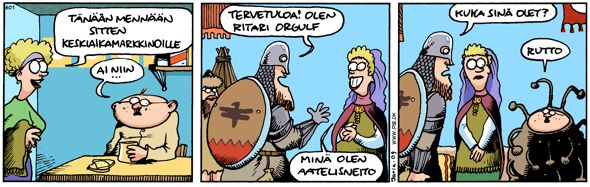
-Today we're off to the Middle Ages Fair. – Oh, right. - Welcome! I'm Knight Orgulf. – I'm a noblewoman. -Who are you? – The plague. *From Fingerpori by Pertti Jarla
Among the ten best-selling Finnish fiction books in 2010, according statistics compiled by the Booksellers’ Association of Finland, were three crime novels.
Number one on the list was the latest thriller by Ilkka Remes, Shokkiaalto (‘Shock wave‘, WSOY). It sold 72,600 copies. Second came a new family novel Totta (‘True’, Otava) by Riikka Pulkkinen, 59,100 copies.
Number three was a new thriller by Reijo Mäki (Kolmijalkainen mies, ‘The three-legged man’, Otava), and a new police novel by Matti Yrjänä Joensuu, Harjunpää ja rautahuone (‘Harjunpää and the iron room’, Otava), was number six.
The Finlandia Fiction Prize winner 2010, Nenäpäivä (‘Nose day’, Teos) by Mikko Rimminen, sold almost 54,000 copies and was fourth on the list. Sofi Oksanen’s record-breaking, prize-winning Puhdistus (Purge, WSOY; first published in 2008) was still in fifth place, with 52,000 copies sold.
Among translated fiction books were, as usual, names like Patricia Cornwell, Dan Brown and Liza Marklund.
In non-fiction, the weather, fickle and fierce, seems to be a subject of endless interest to Finns; the list was topped by Sääpäiväkirja 2011 (‘Weather book 2011’, Otava), with a whopping 140,000 copies. Number two was the Guinness World Records 2011, but with just 43,000 copies. Books on wine, cookery and garden were popular. A book on Finnish history after the civil war, Vihan ja rakkauden liekit (‘Flames of hate and love’, Otava) by Sirpa Kähkönen, made it to number 8 on the list.
The Finnish children’s books best-sellers’ list was topped by the latest picture book by Mauri Kunnas, Hurja-Harri ja pullon henki (‘Wild Harry and the genie’, Otava), selling almost 66,000 copies. As usual, Walt Disney ruled the roost in the translated fiction list.
The Finnish comics list was dominated by Pertti Jarla (his Fingerpori series books sold more than 70,000 copies, almost as much as Remes’ Shokkiaalto!) and Juba Tuomola (Viivi and Wagner series; both mostly published by Arktinen Banaani): between them, they grabbed 14 places out of 20!