

Search results for "harjunpää/2010/10/mikko-rimminen-nenapaiva-nose-day/2011/04/matti-suurpaa-parnasso-1951–2011-parnasso-1951–2011"
Jarmo Papinniemi in memoriam 1968–2012
9 October 2012 | In the news
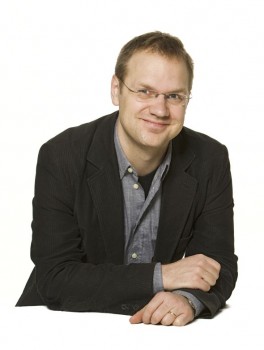
Jarmo Papinniemi
The editor, literary critic and writer Jarmo Papinniemi has died of a sudden illness in Helsinki.
Two days later, the latest edition of Parnasso was published: Papinniemi became editor-in-chief of this august 60-year-old literary magazine in 2005. During his period as editor, the magazine’s readership increased, quite an achievement in the difficult world of periodicals.
Jarmo Papinniemi worked as a literary critic and as a news and arts reporter for Finnish Broadcasting Company from 1998 to 2005. He wrote and directed television documentaries, and was the author of numerous books on literature and music, including Aloittamisen taito (‘The art of beginning’, 2010, with Kaisa Neimala) and Sävelten siivillä (‘On the wings of music’, 2011), a study of the work of the composer Ilkka Kuusisto.
Jarmo was also a member of the Editorial Board of Books from Finland from 2002. He was a quick, industrious and knowledgeable reader and writer whose opinions were well grounded and expressed, and he was interested in an unusually wide range of culture. Cheerful, humorous, a connoisseur of music, Jarmo was a colleague with whom conversations were always enjoyable and thought-provoking; he will be greatly missed by all of us who worked with him.
New literary prize
6 May 2011 | In the news
A new literary prize was founded in 2010 by an association bearing the name of Jarkko Laine (1947–2006) – poet, writer, playwright, translator, long-time editor of the literary journal Parnasso and chair of the Finnish Writers’s Union.
The Jarkko Laine Literary Prize will be awarded to a ‘challenging new literary work’ published during the previous two years. The jury, of nine members, will announce the winner on 19 May.
The shortlist for the first prize is made of Kristina Carlson’s novel Herra Darwinin puutarhuri (‘Mr Darwin’s gardener’, Otava, 2009), Juha Kulmala’s collection of poems, Emme ole dodo (‘We are not dodo’, Savukeidas, 2009) and Erik Wahlström’s novel Flugtämjaren (‘Fly tamer’, Finnish translation Kärpäsenkesyttäjä, Schildts, 2010).
The prize money, €10,000, comes jointly from the publishing houses Otava, Otavamedia and WSOY, the Haavikko Foundation, the City of Turku and the University of Turku.
European Union literature prizes 2010
8 October 2010 | In the news
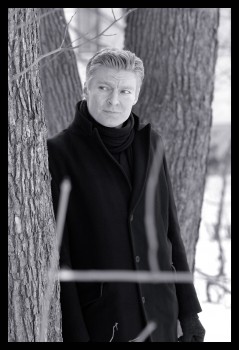
Riku Korhonen. Photo: Harri Pälviranta
With his novel Lääkäriromaani (‘Doctor novel’, Sammakko, 2009), Riku Korhonen (born 1972) is one of the 11 winners of the 2010 European Union Prize for Literature, worth €5,000 each. The winners were announced at Frankfurt Book Fair on 6 October.
The European Commission, the European Booksellers’ Federation (EBF), the European Writers’ Council (EWC) and the Federation of European Publishers (FEP) award the annual prize, which is supported through the European Union’s culture programme. It aims to draw attention to new talents and to promote the publication of their books in different countries, as well as celebrating European cultural diversity. Authors who have published two to four prose works during the last five years and whose work has been translated into two foreign languages at the most are eligible for the prize.
Korhonen has published two novels, a collection of short prose and a collection of poetry. Read translated extracts, published in Books from Finland in 2003, from his first novel, Kahden ja yhden yön tarinoita (‘Tales from two and one nights’, 2003) here. More…
Jarl Hellemann in memoriam 1920–2010
15 March 2010 | In the news
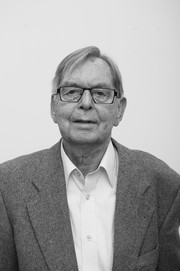
Jarl Hellemann 1920–2010. Photo: Pertti Nisonen (2009)
One of the grand old men of Finnish publishing, Jarl Hellemann, wrote in one of his own books: ‘Book publishing is by nature personified, a personal activity.
‘Most of the world’s old publishing houses still bear their founders’ names: Bonnier, Collins, Heinemann, Harper, Knopf, Bertelsmann, Werner Söderström, Gummerus. Americans ignorant of the exceptions to this rule among Finnish publishers still occasionally begin their letters, “Dear Mr Otava” or “Dear Mr Tammi”.’ (From Kustantajan näkökulma, ‘A publisher’s point of view’, Otava, published in Books from Finland 3/1999)
Hellemann himself was Mr Tammi for a long time; he started as a publishing editor at Tammi Publishing Company in 1945 and retired as managing director in 1982.
In 1955 he founded Keltainen kirjasto, the ‘Yellow Library’, an imprint of novels published since the First World War by prominent writers from all over the world. The first was Too Late the Phalarope by Alan Paton, the latest – published in 2009 – was The Disappeared by Kim Echlin. The series now contains more than 400 works, among them novels by 24 Nobel prize-winners.
Among the books in Keltainen kirjasto (list, in Finnish), Hellemann’s favourite was James Joyce’s Ulysses, translated by the poet and author Pentti Saarikoski in 1964. Hellemann continued choosing books for Keltainen kirjasto long after he retired.
Born in Copenhagen, Hellemann moved with his family to his mother’s home country, Finland, in the 1930s. Well-travelled and fluent in many languages, Hellemann himself published a novel (at the age of 25), three books on publishing and, in 1996, his memoirs.
Images of isolation
31 March 1992 | Archives online, Fiction, poetry
Poems by Helvi Juvonen, commentary by Soila Lehtonen
Little is known of the circumstances of Helvi Juvonen’s life. Her fame rests on five collections of poetry – mixing humility and celebration with an uncompromising rigour – published in the ten years before her death at the age of 40 (a sixth appeared posthumously). Her existence, in the drab surroundings of post-war Helsinki, was modest: after studies at Helsinki University, and posts as a bank clerk and proof-reader, she lived by writing and translation, including some brilliant renderings into Finnish of the poems of the 19th-century American poet Emily Dickinson.
Helvi Juvonen’s universe is crowded with ostensibly insignificant phenomena: her eye discerns a mole, lichen, dwarf-trees, a shrew; she studies tones of stone and moss; she ‘doesn’t often dare to look at the clouds’.
Us
Rocks, forgotten within themselves,
have grown dear to me.
The trees’ singing, so useless,
is my friend.
Silver lichen,
brother in beggary,
please don’t hate my shadow
on the streaked rock. More…
Close encounters
31 March 1999 | Fiction, Prose
Viimeinen syli (‘The last embrace’, Otava, 1998)
The hospital looked as if a child had been given a big pile of building blocks and told to make a house, a big house. And then, when the building was ready, more bricks had been brought, and the child had been forced to pile them up over a wider and wider area, to spread rows of blocks across the adults’ routes and over the edge of the carpet until at last it had grown bored and left the last blocks higgledy-piggledy next to its creation.
Around the hospital ran a road from which the whole mess was revealed. Wing after wing, corridors and windows from which no one really ever looked out. The hospital was full of window views that did not belong to anyone, which did not open up from anyone’s office or day-room, but varied meaninglessly like a motorway landscape from the window of an accelerating car. Viivi had been born there, on the sixth floor of the old part of the hospital. As Mikael waited in the tiled fathers’ room next to the room where the Caeserean section was being carried out for his child to be brought to him, the view out had been breathtaking. More…
Finlandia Junior Prize 2011
7 December 2011 | In the news
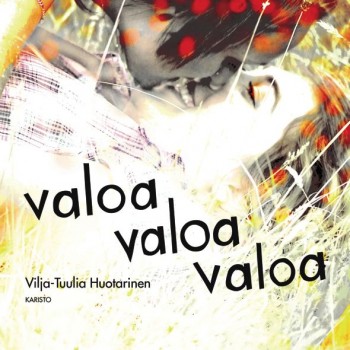 The musician Paula Vesala has chosen, from a shortlist of six, a book for young people by the poet Vilja-Tuulia Huotarinen, Valoa valoa valoa (‘Light light light’, Karisto). The story, which is set at the time of the Chernobyl nuclear power station disaster, poetically describes the passion and pain of first love, longing for mother and death.
‘Not just what is told, but how it is told. The rythm and timbre of Vilja-Tuulia Huotarinen’s language are immensely beautiful. Her phrases do not exist merely to tell the story, but live like poetry or song. Valoa valoa valoa does not incline toward young people from the world of adults; rather, its voice comes, direct and living, from painful, confusing, complex youth, in which young people should really be protected from adults and their blindness. I would have liked to read this book when I was fourteen,’ commented Vesala.
The other five shortlisted books were a picture book for small children, Rakastunut krokotiili (‘Crocodile in love’, Tammi) by Hannu Hirvonen & Pia Sakki, a philosophical picture book about being different and courageous entitled Jättityttö ja Pirhonen (‘Giant girl and Pirhonen’, Tammi) by Hannele Huovi and Kristiina Louhi; a dystopic story set in the 2300s, Routasisarukset (‘Sisters of permafrost’, WSOY), by Eija Lappalainen & Anne Leinonen; a novel about the war experiences of an Ingrian family, Kaukana omalta maalta (‘Far away from homeland’, WSOY) by Sisko Latvus and an illustrated book about gods and myths of the world, Taivaallinen suurperhe (‘Extended heavenly family’, Otava) by Marjatta Levanto & Julia Vuori.
The prize, awarded by the Finnish Book Foundation on 23 November, is worth €30,000.
In memoriam Herbert Lomas 1924–2011
23 September 2011 | In the news
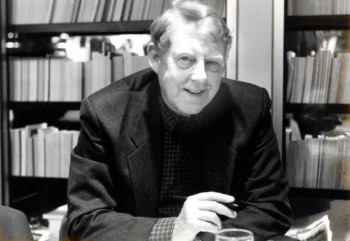
Herbert Lomas. Photo: Soila Lehtonen
Herbert Lomas, English poet, literary critic and translator of Finnish literature, died on 9 September, aged 87.
Born in the Yorkshire village of Todmorden, Bertie lived for the past thirty years in the small town of Aldeburgh by the North Sea in Suffolk. (Read an interview with him in Books from Finland, November 2009.)
After serving two years in India during the war, Bertie taught English first in Greece, then in Finland, where he settled for 13 years. His translations – as well as many by his American-born wife Mary Lomas (died 1986) – were published from as early as 1976 in Books from Finland.
Bertie’s first collection of poetry (of a total of ten) appeared in 1969. His Letters in the Dark (1986) was an Observer book of the year, and he was the recipient of several literary prizes. His collected poems, A Casual Knack of Living, appeared in 2009.
In England Bertie won the Poetry Society’s 1991 biennial translation award for one of his anthologies, Contemporary Finnish Poetry. The Finnish government recognised his work in making Finnish literature better known when it made him a Knight First Class of Order of the White Rose of Finland in 1987.
To Books from Finland, he made an invaluable contribution over almost 35 years – an incredibly long time in the existence of a small literary magazine. The number of Finnish authors and poets whose work he made available in English is countless: classics, young writers, novelists, poets, dramatists.
Bertie’s speciality was ‘difficult’ poets, whose challenge lay in their use of end-rhymes, special vocabulary, rhythm or metre. He loved music, so the sounds and tones of words, their musicality, were among the things that fascinated him. Kirsi Kunnas’ hilarious, limerick-inspired children’s rhymes were among his best translations – although actually nothing in them would make the reader think that the originals might not have been written in English. A sample: There once was a crane / whose life was led / as a uniped. / It dangled its head / and from time to time said:/ It would be a pain / if I looked like a crane. (From Tiitiäisen satupuu, ‘Tittytumpkin’s fairy tree’, 1956, published in Books from Finland 1/1979.)
Bertie also translated work by Eeva-Liisa Manner, Paavo Haavikko, Mirkka Rekola, Pentti Holappa, Ilpo Tiihonen, Aaro Hellaakoski and Juhani Aho among many, many others; for example, the prolific writer Arto Paasilinna’s best-known novel, Jäniksen vuosi / The Year of the Hare, appeared in his translation in 1995. Johanna Sinisalo’s unusually (in the Finnish context) non-realist troll novel Ennen päivänlaskua ei voi / Not Before Sundown, subsequently translated into many other languages, appeared in 2003. His last translation for Books from Finland was of new poems by Vilja-Tuulia Huotarinen in 2009.
It was always fun to talk with Bertie about translations, language(s), writers, books, and life in general. He himself said he was a schoolboy at heart – which is easy to believe. He was funny, witty, inventive, impulsive, sometimes impatient – and thoroughly trustworthy: he just knew how to find the precise word, tone of voice, figure of speech. He had perfect poetic pitch. As dedicated and incredibly versatile translators are really hard to find anywhere, we all realise our good fortune – both for Finnish literature and for ourselves – to have worked, and enjoyed with such enjoyment, with Bertie.
Poet Aaro Hellaakoski (1893–1956) was not a self-avowed follower of Zen, but his last poems, in particular, show surprisingly close contacts with the philosophy. ‘Secrets of existence are revealed once one ceases seeking them’, the literary scholar Tero Tähtinen wrote in an essay published alongside Bertie’s new Hellaakoski translations in (the printed) Books from Finland (2/2007). Bertie was fond of Hellaakoski, whose existential verses fascinated him; among his 2007 translations is The new song (from Vartiossa, ‘On guard’, 1941):
The new song |
Uusi laulu |
| No compulsion, not a sting. | Ei mitään pakota, ei polta. |
| My body doesn’t seem to be. | On ruumis niinkuin ei oisikaan. |
| As if a nightbird started to sing | Kuin alkais kaukovainioilta |
| its far shy carol from some tree – | yölintu arka lauluaan |
| as if from its dim chrysalis | kuin hyönteistoukka heräämässä |
| a little grub awoke to bliss – | ois kotelossaan himmeässä |
| or someone struck from off his shoulder | kuin hartioiltaan joku loisi |
| a miserable old bugaboo – | pois köyhän muodon entisen |
| and a weird flying creature | ja outo lentäväinen oisi |
| stretched a fragile wing and flew. | ja nostais siiven kevyen. |
| Ah limitless bright light: | Oi kimmellystä ilman pielen. |
| the gift of lyrical flight! | Oi rikkautta laulun kielen. |
Everyday life at the Science Forum 2011
20 January 2011 | In the news
‘Everyday life’ in focus: scientific approaches. Picture: Elina Warsta
This year’s Science Forum took place in Helsinki between 12 and 16 January. This biennial science festival – which has existed in its current format since 1977 – invites a wide audience to lectures, debates, discussions and various other events where scholars introduce their branch of research and science. This time the theme was ‘Science and everyday life’.
The Science Forum is organised by the Federation of Finnish Learned Societies, the Finnish Academies of Sciences and Letters and the Finnish Cultural Foundation.
In Finnish, the word for ‘everyday life’ is arki. Professor of Consumer Economics Visa Heinonen defined arki as follows: ‘Scientifically arki cannot be defined undisputably. An individual experiences the everyday as a ‘stream’ of life. Arki is mostly the recurrence of the small basic elements of life and the constant renewal of the prerequisites of existence. The everyday contains much that is routine as well as small moments of joy. Carpe diem, seize the moment, might be a good guideline to life.’
Among the Forum’s topics were the everyday work of scientific research and its significance for the development of everyday life in society, dimensions of consumer culture, multicultural society, religion, the arts and the media, technological advances in food production and the built environment, future energy sources and the global economy.
The Science Forum attracted 18,000 visitors, in addition to the 3,000 who participated in the Forum via the Internet. The five most popular topics, or sessions, were those entitled ‘Good life’, ‘Ageing as a biological phenomenon’, ‘Nanotechnology changing everyday life’, ‘Sleep – a third of life’ and ‘Food and everyday chemistry’.
Turku, city of culture 2011
21 January 2011 | In the news
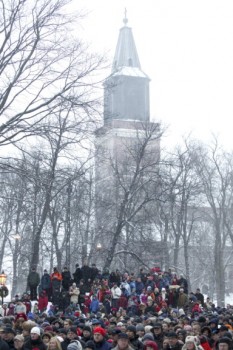
Passing the peace: citizens of Turku gathering to listen to the traditional declaration of peace at Christmas in front of the Cathedral. Photo: Esko Keski-oja
Since 1985, cities in the countries of the European Union have been chosen as European Capitals of Culture each year. More than 40 cities have been designated so far; a city is not chosen only for what it is but, more importantly, what it plans to do for year and also for what will remain after the year is over – the intention is that citizens and the local culture should profit from the investments made.
This year the two cities are Tallinn in Estonia and Turku, the oldest city and briefly (1809–1812) the capital of what was then the Grand Duchy of Finland, on the coast, 160 kilometres west of Helsinki. The pair will also co-operate in making this year a special one in their cultural lives.
The city of Turku declared its Cultural Capital year open on 15 January with a massive firework display glittering over the River Aura. This cultural capital enterprise, with a budget of 50 million euros and an ambitious programme will, hopefully, involve two million participants in the five thousand cultural events and occasions.
Eeva-Kaarina Aronen: Kallorumpu [Skull drum]
23 December 2011 | Mini reviews, Reviews
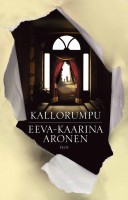 Kallorumpu
[Skull drum]
Helsinki: Teos, 2011. 390 p.
ISBN 978-951-851-413-1
€ 27.40, hardback
Eeva-Kaarina Aronen (born 1948) did not begin her writing career untill 2005, after a long career as editor of the newspaper Helsingin Sanomat. Her third novel Kallorumpu was shortlisted for the Finlandia Prize for Fiction 2011. Aronen’s interest in historical characters and themes that challenge historical truth was already evident in the of her first novel Maria Renforsin totuus (‘The truth of Maria Renfors’, Teos, 2005). At the centre of Kallorumpu is the legendary figure of Finland’s Field Marshal C.G. Mannerheim (1867–1951). The book concentrates on the description of one day in November 1935 by an old filmmaker, the narrator of the novel, who is showing his documentary to a small group of viewers in the present day. He comments on his own film, complementing it with stories about Mannerheim’s home in Helsinki. At home the Marshal’s staff – a cook, a maid and a valet – not only provide narrative twists and turns, but also an insight into the class divisions of the Finnish civil war. Aronen’s portrayal of her gallery of characters is an interesting one, and the novel’s demanding structure, with its alternating time zones, is sound.
Translated by David McDuff
Finlandia Junior Prize 2010
26 November 2010 | In the news
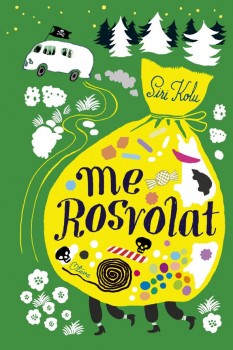 The Finlandia Junior Prize has gone to author Siri Kolu and illustrator Tuuli Juusela for the novel Me Rosvolat (‘Me and the Robbersons’, Otava); they will share the award of €30,000 (see the Prize jury assessments of the shortlist here). The winner was chosen by actor and writer Hannu-Pekka Björkman.
Awarding the prize on 25 November he said: ‘It caught my attention that in none of the six shortlisted children’s books are there any so-called nuclear families, at least not for long. The main characters constantly live and grow without something – the lack of parents or the attention of an adult is a serious matter to a child. However, in these books there is always someone who cares, not perhaps a stereotypical mom or dad, but an adult nevertheless.’ In Björkman’s opinion Me Rosvolat, with its rich language and a whiff of anarchy, presents the reader with moments of realisation and wonderment.
Marja-Leena Tiainen: Kahden maailman tyttö [The girl from two worlds]
18 January 2012 | Mini reviews, Reviews
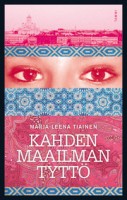 Kahden maailman tyttö
[The girl from two worlds]
Helsinki: Tammi, 2011. 261 p.
ISBN 978-951-31-5937-5
€ 26.65, hardback
Marja-Leena Tiainen (born 1951) has dealt with unemployment, immigration, and racism in her works, in ways that are accessible to her young readership. She researches her topics with care. The idea for this book dates back to 2004, when the author made the acquaintance of a Muslim girl who lived in a reception centre in eastern Finland; her experiences fed into Tara’s story. Tiainen’s central theme, ‘honour’ violence in the Muslim community, is surprisingly similar to Jari Tervo’s Layla (WSOY, 2011). Tiainen’s is a traditional story about a girl growing up and surviving, but the novel’s strong points are the authentic description of everyday multiculturalism, and the intensity of the narration. The reader identifies with Tara’s balancing act, which she must carry out in the crossfire of her father’s authority, family tradition, and her own dreams. In spite of everything, the community also becomes a source of security and support for Tara. The narrative arc is coherent and, despite the numerous overlapping time-frames, the tension is sustained right up to the final, conciliatory solution.
Translated by Fleur Jeremiah and Emily Jeremiah
Icy prospects
8 October 2010 | This 'n' that
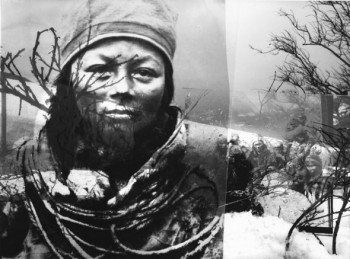
Jorma Puranen: Juovlajohka, Norway, 1997
Photographer Jorma Puranen (born 1951) has long been concerned with nature and the representation of northern landscapes, particularly Lapland, as well as light and its reflection.
One of his most famous projects is Imaginary Homecoming. In the 1990s, on a visit in the Musée de l’Homme in Paris, he found some old archive boxes full of glass negatives. They were ethnographical images of the Sámi, taken by G. Roche, employed by the French Count Bonaparte on an expedition to Lapland in 1884.
Puranen took them back to the wildernesses of Lapland and photographed them once more in their native surroundings, where they became a photographic installation in the tundra. He published them in his book Kuvitteellinen kotiinpaluu / Imaginary Homecoming (Pohjoinen, 1999).
Puranen’s 2006 series Icy Prospects explores landscape: the large pictures are made by painting wood with black gloss paint, reflecting the landscape on the wood and photographing the reflection.
Snow, ice, water, sky and trees are portrayed the way that brings Impressionism to mind, as Liz Wells writes in her introduction in the book entitled Icy Prospects, published by Hatje Cantz (Germany, 2009).
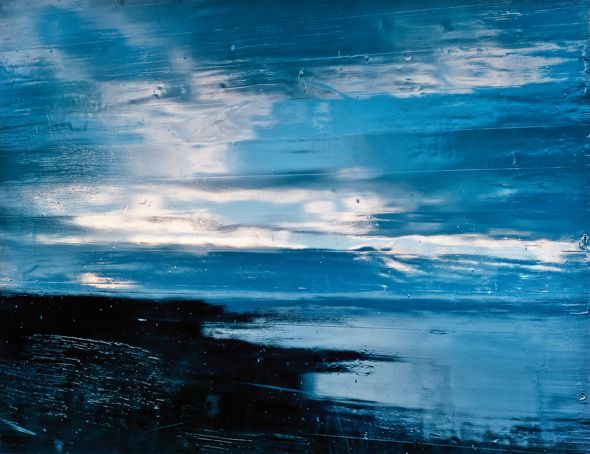
Jorma Puranen: Icy Prospects (series, 2006)
A new exhibition of Jorma Puranen’s work from 1992 to 2010, at EMMA, the Espoo Museum of Modern Art, opened on 29 September; it runs until 9 January 2011. Partly retrospective, it features Puranen’s techniques of chromogenic colour and black and white photography, showcasing his highly original style.