

Search results for "kjell west"
Solzhenitsyn and Silberfeldt: Sofi Oksanen publishes a best-seller
25 April 2012 | In the news
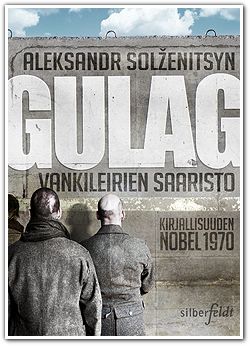
Nobel Prize 1970: Aleksandr Solzhenitsyn
After falling out with her original publisher, WSOY, in 2010, author Sofi Oksanen – whose third novel, Puhdistus (Purge, 2008), has become an international best-seller – has founded a new publishing company, Silberfeldt, in 2011, with the aim of publishing paperback editions of her own books. Its first release was a paperback version of Oksanen’s second novel, Baby Jane.
Oksanen’s new novel, Kun kyyhkyset katosivat (‘When the pigeons disappeared’), again set in Estonia, will appear this autumn, published by Like (a company owned by Finnish publishing giant Otava).
However, in April Silberfeldt published a new, one-volume edition of the autobiographical novel The Gulag Archipelago by the Nobel Prize-winning author Alexandr Solzhenitsyn. This massive book was first published in the West in 1973, in the Soviet Union in 1989.
A Finnish translation was published between 1974 and 1978. Back in those days of Cold War self-censorship, Finnish publishers felt unable to take up the controversial book, and the first volume was eventually printed in Sweden. The work, finally published in three volumes, has long since been unavailable.
This time the 3,000 new copies of Solzhenitsyn’s tome sold out in a few days; a second printing is coming up soon. Oksanen regards the work as a classic that should be available to Finnish readers.
Kullervo
31 March 1989 | Archives online, Drama, Fiction
An extract from the tragedy Kullervo (1864). Introduction by David Barrett
The plot of the Kullervo story as told in the Kalevala: Untamo defeats his brother Kalervo’s army, and Kalervo’s son Kullervo is born a slave. Untamo sells him as a young child to llmarinen whose wife, the Daughter of Pohjola, makes the boy a shepherd and bakes him a loaf with a stone inside it. Kullervo takes his revenge by sending home a flock of wild animals, instead of cattle, who tear her to pieces. He flees, and discovers that his parents and two sisters are alive on the borders of Lapland. He finds them, but one of his sisters is lost. Life in the family home is unhappy: Kullervo fails in all the tasks his father sets him. On his way home one day he finds a girl in the forest whom he abducts in his sledge and seduces. It turns out the girl is his lost sister, who drowns herself when she learns that Kullervo is her brother. Kullervo sets out to revenge himself on Untamo; he kills and destroys. When he returns home, he finds the house empty and deserted, goes into the forest and falls on his sword.
ACT II, Scene 3
Kalervo’s cottage by Kalalampi Lake. It is night-time. Kimmo, seated by a fire of woodchips, is mending nets. More…
Christer Lindgren: Stadin klassikot. Maukkainta retroruokaa [City classics. The tastiest retro fare]
18 May 2012 | Mini reviews, Reviews
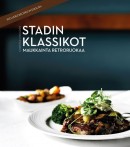 Stadin klassikot. Maukkainta retroruokaa
[City classics. The tastiest retro fare]
Helsinki: Teos, 2012. 135 p., ill.
ISBN 978-951-851-433-9
€32.90, hardback
Even a small metropolis like Helsinki has a few restaurants that have survived the changes of time by sticking to traditional dishes. This book features Sea Horse, Elite, Kosmos and Kolme Kruunua (‘The Three Crowns’), established in 1934, 1932, 1924 and 1928 respectively. Their interiors – stylish art deco and functionalism – date from the 1920s and 1930s. A Sea Horse specialty, fried Baltic herrings, 16 per portion, delighted trumpetist Dizzy Gillespie so much that he ate his, his Finnish host’s and half of a fellow guest’s. The most popular recipes have been influenced by food cooked to the east, north and west (Russia, Lapland, Sweden) and mainly feature meat, fish, poultry and potatoes – cooked with plenty of butter and cream. These restaurants were – and are – frequented by politicians and artists of various fields, so the recipes include ‘Tauno Palo’s cream onion steaks’ or ‘Cod Mannerheim’. It is unfortunate that only the recipes have been translated, not the little stories about the restaurants, so an English reader has no idea who Tauno Palo was (1908–1982; the Finnish equivalent of Cary Grant). The translations sometimes go amiss: a recipe entitled ‘Sautéed reindeer’ first lists a kilo of ‘sautéed reindeer’, when it should of course list ‘a kilo of sliced reindeer meat’. The photos have been shot in situ, so the dishes look nicely authentic.
Poetry and Patriotism
31 December 1985 | Archives online, Authors, Essays
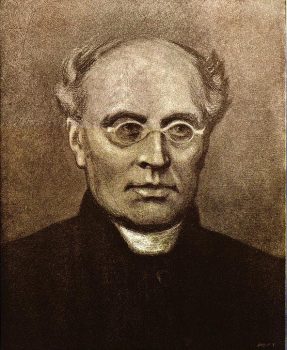
J.L. Runeberg. Painting by Albert Edelfelt. 1893.
Much revered, but little read today, Johan Ludvig Runeberg (1804-1877) is famed for his patriotism and glorification of war in a just cause. Yet Finland’s national poet did not write in Finnish, and never heard a shot fired in anger. It is, perhaps, time for a reappraisal.
What did he himself think about becoming a national poet?
Enjoyed it, probably? Who wouldn’t!
Did he write what he wanted and let
the people find their own interpretation?
Or did he write what he believed
the people expected
of a national poet?
Lars Huldén, 1978
It would not be inappropriate to begin a collection of thoughts about Finland’s ‘national poet,’ Johan Ludvig Runeberg, with a biblical text, Second Samuel, 1:25: ‘How are the mighty fallen!’ Runeberg does not own the position he once did, either in the world at large or in Scandinavia; even in his home land his exceptional grandeur has been reduced or, horribile dictu, smiled at. More…
Nature girl: on the poetry of Sirkka Turkka
21 January 2010 | Authors, Reviews
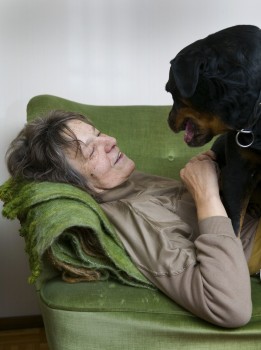
Sirkka Turkka with a friend. Photo: Pertti Nisonen
Sirkka Turkka writes precise, lucid sentences, as if composing a treatise. But her poems often relate utterly loopy things; the work is playful, frisky. It is not based on explication or hidden themes. When it refers to abstract matters, it always couples them with concrete reality, with natural or everyday occurrences. ‘Trees have the snowy faces of ancestors, and on the road where dogs walk in their wind-blasted trousers, silence eats itself like silk.’
The poems contain numerous allusions to literature and culture, including popular culture. The tone can be parodic in these instances, but not critical; rather, a new point of departure is established, as when Turkka writes about Hamlet in her 1970s collection, Yö aukeaa kuin vilja (‘The night opens like corn’). ‘On long, silent winter days, when his father immersed himself in additional studies or demonstrations of learning, Hamlet would shut himself up in his room in order to rewrite history. He colonised countries and swapped their locations. At one stage he even thought of making the sun rise in the West and America encounter Columbus, but he restrained himself.’ More…
Father
31 December 1980 | Archives online, Fiction, Prose
An excerpt from Laturi (‘The explosives expert’, 1979). Introduction by Pekka Tarkka
“It only took one good bash!” With tears in his eyes, chuckling and spluttering, Korppi, the sentimentalist, told the story of Linda’s love affair. Korppi hadn’t been an old codger then; like Chekov’s Versinin, he could have been dubbed the love-lorn major, although he was only a lieutenant for he had loved little Linda when he had been an officer guarding the refugees interned on Suursaari: interned not for their safety but for the protection of his country. “She loved getting parcels, oh yes, but she didn’t give a damn for me! And did I take what belonged to me?
Yes! No! I nibbled here and there but I never swallowed a whole bite … On the other hand, there were some who took a bite and swallowed it, one of them was called …”
“Selim!” shouted Enver.
Selim, that jelly. He was Korppi’s subordinate on guard duty, and had he known the other fellow had been flirting with Linda he would have killed her! But how could he have known? What took place under a clump of hills along a wooded lake shore… More…
Between life and death
23 September 2011 | Authors, Reviews
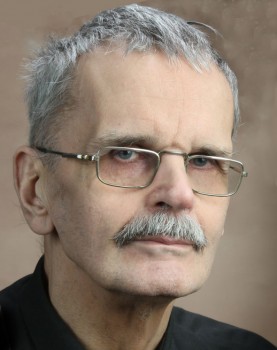
Gösta Ågren. Photo: Studio Paschinsky
The latest poems by Gösta Ågren, in the collection I det stora hela (‘On the whole’, Söderströms, 2011), are a continuation of the poet’s lifelong striving to unite the realm of private and personal experience with the domain of the shared, the social and the universal.
Ågren, born in 1936 in Ostrobothnia, on the west coast of Finland, has published twenty-eight collections of poetry. I det stora hela is the latest in an apparently inexhaustible series of books that reflect upon life and death, mostly in terse, aphoristic blocks that are hewn out of the poet’s own existence.
In the background of nearly all his poems is an Ostrobothnian childhood which, in its remoteness and solidarity with his close relatives, sets him apart in the same way as the Swedish language in which he writes sets him apart within a Finnish cultural context, though perhaps not in a Finland-Swedish one – for he shares not only its linguistic heritage, but also its traditional concern with the polarity and ultimate reconciliation of the individual and the community. More…
Writer in demand
30 September 1982 | Archives online, Fiction, poetry
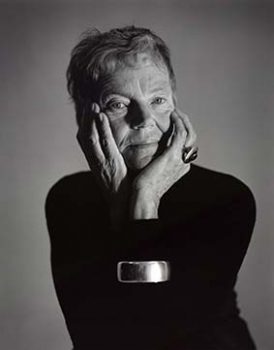
Märta Tikkanen. Photo: Stefan Bremer
Poems from Århundradets kärlekssaga (The Love Story of the Century)
Märta Tikkanen (born 1935), a Finland-Swedish journalist, teacher and mother of four children, made her literary debut with the novel Nu imorron (‘Now tomorrow’) in 1970. It is a story of the liberation of one woman who breaks free from her traditional role. Her next novels, Ingenmansland (‘No man’s land’, 1972) and Vem bryr sej om Doris Mihailov (‘Who cares about Doris Mihailov’, 1974) brought her fame in Scandinavia, but it was not until her fourth novel, Män kan inte våldtas (Manrape, translated by Alison Weir, Virago, 1978) appeared in 1975 that she made her international breakthrough. To date the book has been translated into eight languages and a film adaptation has been made by Jörn Donner.
Her next work, a cycle of poems called Århundradets kärlekssaga (The Love Story of the Century, 1978) became very popular: it has been translated into seven languages as well as adapted for radio, television and the stage . In 1979 she was awarded the Nordic Women’s Alternative Literature Prize. Die Liebesgeschichte des Jahrhunderts, a monologue play based on Verena Reichel’s translation (Rohwolt Taschenbuch Verlag, 1981) is presently being staged in some twenty theatres in West Germany, Austria and Switzerland. Recently Der Spiegel devoted a page to her career. The American première, directed by Margaret Booker, will take place in Intiman Theatre, Seattle. More…
Suburban dreams
30 March 2004 | Fiction, Prose
Extracts from the novel Kahden ja yhden yön tarinoita (‘Tales from two and one nights’, Sammakko, 2003)
Reponen, Tane, Aleksi and Little Juha; once we all climbed up the path to the old dump with bows on our backs, our arrows sticking out from the tops of our boots. It was April. In the field above the dump puddles reflected the opaque sky, where we were going to shoot our arrows.
The field was the highest point in our neighbourhood. We could see the shopping centre, the library and the sawdust running track through the school woods. We could see the high-rise flats on Tora-alhontie road and the huts in the allotments. We could make out the thick spruce forest of Sovinnonvuori along the greenish grey coastline at Kapeasalmi. Our homes sat there below us. Softly droning cranes, yellow totem animals of hope, swung back and forth above the unfinished houses. In the distance was the centre of town with all its churches and scars. Here everything was just beginning. The swaggering confidence of ten-year-old boys was straining within us and would carry us far like Geronimo’s bow. More…
Snowbirds
2 November 2011 | Extracts, Non-fiction
The short winter days of the northerly latitudes are made brighter by snow cover, which almost doubles the amount of available light. Reflection from the snow is an aid for photographers working outdoors in winter conditions. A new book, entitled Linnut lumen valossa (‘Birds in the light of snow’), presents the best shots by four professionals, Arto Juvonen, Tomi Muukkonen, Jari Peltomäki and Markus Varesvuo, who specialise in patiently stalking the feathered survivors in the cold
The photographs and texts are from the book Linnut lumen valossa (‘Birds in the light of snow’, edited by Arno Rautavaara. Design and layout by Jukka Aalto/Armadillo Graphics. Tammi, 2011)
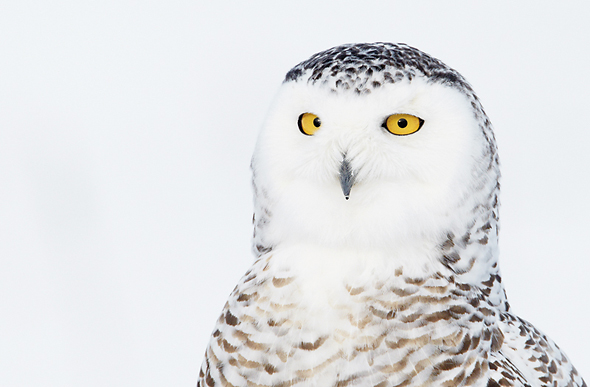
Snowy owl. Photo: Markus Varesvuo, 2010
New from the archives
11 May 2015 | This 'n' that
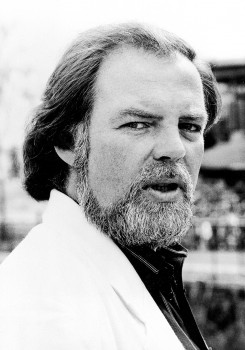
Juhani Peltonen. Photo: C-G Hagström / WSOY.
This week’s pick is, like last week’s, a period piece – this time a cry for help from the 1980s in the work of Juhani Peltonen (1941-1998).
Like Runar Schildt’s short story Raketen, written shortly before Finland gained independence from Russia and was almost immediately plunged into civil war, these pieces by the multitalented Juhani Peltonen, who wrote plays for stage and radio as well as short stories, novels and poems, were published shortly before major and irrevocable change.
In the short story ‘The Blinking Doll’, we are a year short of the fall of the Berlin Wall, and it seems as if things are never going to change. We follow two forty-year-old lawyers, Juutinen and Multikka, as they trudge along the beach in one of the charming resort towns of the west coast in which they have spent a couple of days dealing with a minor felony case.
They’re both forty, and divorced, disillusioned with their jobs and with the world; and both are infatuated with one of their colleagues, a woman whom they call ‘The Blinking Doll’.
There is, Peltonen says, a ‘pact of friendship and mutual assistance between the men’ – a jocular reference to the notorious treaty of 1948 in which Finland was obliged to resist attacks on the Soviet Union through its territory, and to ask for Soviet aid if necessary. In 1988, this seemed as if it were written in stone – and the men’s emotional lives are similarly petrified. They discuss their isolation, their lack of purpose, their inexplicable weeping fits. The most painful thing, says Multikka, is love; or, says Juutinen, and which comes to the same thing, the lack of it.
As Erkka Lehtola, our then Editor-in-Chief, remarks in his introduction, Peltonen – Finnish literature’s best-known comi-tragedian, he calls him – focuses on the difficulty of loving in a violent, mechanical, oppressed world. Is it the passage of twenty-five years that imbues his writing with such a poignant sense of stasis and futility? There is a sense of desperation, barely controlled. As one of his poems has it,
Too abundant in the course of the evening
Cries for help from the heart of stifled detail, legato.

The Books from Finland digitisation project continues, with a total of 388 articles and book extracts made available on our website so far. Each week, we bring a newly digitised text to your attention.
The tower
31 December 1987 | Archives online, Fiction, Prose
A short story from the collection Torni (‘The tower’, 1987). Introduction by Erkka Lehtola
The dog came through the door first, a big, long-haired brute. He hadn’t said anything about it on the phone, but from the look on his face you could tell it was his and that he meant to take it with him into the forest.
He shuffled across the yard with his rubber boots on and a rucksack on his back. In one hand he held a camera tripod.
I rolled down the window.
‘Wait a minute,’ he said.
He walked behind the cars standing in the parking lot, over to his own car and opened the trunk. The dog twisted around his legs whining softly. He took something out and slammed the trunk shut. More…
At the sand pit
30 September 1985 | Archives online, Fiction, Prose
Antti Tuuri. Photo: Jouni Harala
‘After nearly 40 years of observing the Ostrobothnians, I am convinced that they have certain characteristics which explain the historical events that took place there and which also shed light on the region today. I do not know how these characteristics develop, but it appears that heredity, economic factors and even the landscape form the nature of people. Everywhere people who live in the plains are different from those who dwell in the mountains, and from those who fish the archipelagos,’ writes the author Antti Tuuri, himself an Ostrobothnian.
Antti Tuuri’s Pohjanmaa (‘Ostrobothnia’, 1982), which last January was awarded the Nordic Prize for Literature, has now been translated into each language of the Nordic countries. Tuuri’s novel describes the events of one summer day in Ostrobothnia, on the west coast of Finland, where a farming family, the Hakalas, has gathered for the reading of the will of a grandfather who emigrated to the United States in the 1920s.
The inheritance itself is insignificant, but it has brought together the four grandsons, with their wives and children. The story is narrated from the point of view of one of the brothers. The women of the family remain inside while the men take out an automatic pistol which has been kept hidden away since one of them smuggled it home from the Continuation War. The men go off to a sand pit to do some shooting and to drink some illegal home brew. There they meet their former schoolteacher, who joins in with their drinking and shooting. Some surprising events take place as the day’s action unfolds, and Tuuri’s narrator views them in an unsentimental way, describing them matter-of-factly and at times with ironic humour. The men recall the violent history of Ostrobothnia, the years of the Civil War and the right-wing Lapua movement of the 1930s.
The Nordic Prize jury commented that the novel ‘portrays the breaking up of the old society, and conflicts between generations as well as between men and women.’ Tuuri has constructed his novel on conflicts, and the result is a highly dramatic narrative.
An extract from Pohjanmaa (‘Ostrobothnia’)
A Finnish hound dog came out of the woods just beyond the sandpit, stopped at the edge of the pit and started to bark at us. The boys quickly began putting the weapon together. Veikko yelled that you were allowed to shoot a dog running loose in the woods out of hunting season. He kept asking me for cartridges; he’d shoot the dog right away, before it could tear to pieces the young game birds that couldn’t fly yet. I told him to shut up. Seppo finished putting the automatic pistol together and gave it to me. I ran to the car, put the gun down on the floor in front of the back seat and tossed a blanket over it.
When I got back, I saw the teacher coming out of the woods over by the pit. He snapped a leash on the dog and started towards us through the pine grove. The boys sat down around the campfire and began taking swigs of home brew from their cups. More…
About calendars and other documents
30 June 1982 | Archives online, Fiction, Prose
An extract from Sudenkorento (‘The dragonfly’, 1970). Introduction by Aarne Kinnunen
I now have. Right here in front of me. To be interviewed. Insulin artist. Caleb Buttocks. I have heard. About his decision. To grasp his nearly. Nonexistent hair and. Lift. Himself and. At the same time. His horse. Out of the swamp into which. He. Claims. He has sunk so deep that. Only. His nose is showing. How is it now, toe dancer Caleb Buttocks. Are you. Perhaps. Or is It your intention. To explain. The self in the world or. The world. In the self. Or is It now that. Just when you. Finally have agreed to. Be interviewed by yourself. You have decided. To go. To the bar for a beer?
– Yes. Can you spare a ten?
– Yes.
– Thanks. See, what’s really happened is that. My hands have started shaking. But when I down two or three bottles of beer, that corpse-washing water as I’ve heard them call it, my hands stop shaking and I don’t make so many typing errors. If I put away six or seven they stop shaking even more and the typing mistakes turn really strange. They become like dreams: all of a sudden you notice you’ve struck it just right. Let’s say, ‘arty’ becomes ‘farty’. Or I mean to say, ‘it strikes me to the core’ I end up typing ‘score’. It’s like that. A friend of mine, an artist, once stuck a revolver in my hand. Imagine, a revolver! I’ve never shot anything with any kind of weapon except a puppy once with a miniature rifle. My God, how nicely it wagged its tail when I aimed at it, but what I’m talking about are handguns, those shiny black steelblue clumps people worship as heaven knows what symbols. It’s not as if I haven’t been hoping to all my life. And now, finally, after I’d waited over fifty years, it turned out that the revolver was a star Nagant, just the kind I’d always dreamed of. So if I ever got one of those, oh, then would sleep through the lulls between shots with that black steel clump ready under my pillow. Well, my friend the artist set out one vodka bottle with a white label and three brown beer bottles with gold labels on the edge of a potato pit – we had just emptied all of them together – stuck the fully loaded star Nagant into my hand, took me thirty yards away and said:
– Oh, Lord. More…