

Search results for "kjell west"
Coming in from the cold
13 December 2012 | This 'n' that
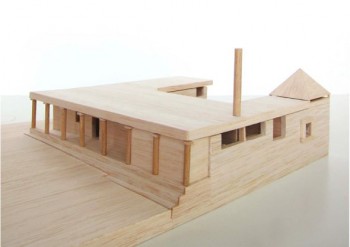
Kulttuurisauna in Helsinki: design by Tuomas Toivonen and Nene Tsuboi
Kulttuurisauna, ‘The culture sauna’, will soon be opened in Helsinki as a part of the World Design Capital 2012 programme. The idea was developed into a project by architect Tuomas Toivonen and designer Nene Tsuboi, a Finnish-Japanese couple who will also run the sauna.
‘When we started considering the idea of building a public sauna in Helsinki, I realised that my dream job is to run a public sauna – offering people a place for cleansing, bathing and sharing quiet togetherness. We have been working in the field of design and architecture for 10 years now, and felt that we can use all of our skills in this project, developing a new public sauna in Helsinki; as a building, as a service and as an environment. By doing this, we want to contribute to the city, participating in making Helsinki more interesting and enjoyable’, says Tsuboi. More…
One and twenty
30 September 2007 | Archives online, Fiction, poetry
(Extracts from the epic poem Kaksikymmentä ja yksi, Otava, 1974)
[Canto I]
Twenty-one and a sail, days and nights.
              Nights, they sleep. Days, they row, days and days up the Nevá,
they row, stop at night, pull the vessel with ten pairs of oars
              across the bare water,
from the Nevá to the Roiling Waves, from the Roiling Waves
              up to Novgorod, from Novgorod to the headwaters,
                        and from there across the isthmus,
over round logs, running the last log up to the prow, they pull,
they row, they descend, they pull, they sail toward Pohja,
               the Southland.
Twenty-one and a sail, days and nights,
              nights, they sleep, they row, day and night, up the Nevá.
The rower turns into arms, the arms turn into palms,
              the palms turn into oars, the oars turn into the river, the river runs.
Night changes to day, day changes to autumn, autumn to wind,
              the wind turns into a sail,
as one single bird ten pairs of oars pairs of wings fly upriver,
              across the isthmus, all night without stopping
they pull, they float the vessel, they keep going
              toward the Southland.
And South is the name of a slave.
 …
They stand in the Southland's yard.
              Bent, Bent, Nightbird, Big Toe, Crow's Son, Cuckoo's Son,
Väinö's Son, Dead Man’s Son, Whitefish, Black Dick
              Man’s Wood, Broom, Lover Boy, Pumpkin,
Water Cloak, Fishless, Stocking Foot, Fist, Mast and Fishery.
              Bent and Bent are twins, their father is also a Bent,
                      Bent the Guardian of the Spears.
More…
Cruising
30 September 1993 | Archives online, Fiction, Prose
An extract from the novel Vieras (‘The stranger’, Otava 1992). Introduction by Pekka Tarkka
I lay there for a moment, motionless, eyes closed.
The bunk was damp. It felt damp around my thighs; I slid down lower – and there, it was really wet.
My sleeping bag was obviously soaked, and that meant that the mattress was soaked, too. Oh, rats. I couldn’t imagine having wet myself. Or – worse – had the boat sprung a leak, the water already rising up to the floorboards? I bounded to my feet: the rugs were dry. So was the cabin floor. I raised the boards, peered down: two fingers of water in the forward bilge, as usual. So, where the –? In the course of yesterday’s rough sailing, some water had seeped in below the windowframe. No more than a cupful, but it had trickled down inside the panel and then onto the mattress. I tried the other side of the bunk. It was dry. Well, I would just have to pick up the mattress and set it on its side. More…
The blow-flower boy and the heaven-fixer
31 December 1984 | Archives online, Fiction, Prose
A short story from Puhalluskukkapoika ja taivaankorjaaja (‘The blow-flower boy and the heaven-fixer’, 1983). Interview by Olavi Jama
Cold.
A chill west wind came over the blue ice. It went right to the skin through woollen clothes. Shivers ran up and down the spine, made shoulders shake.
In the bank of clouds close to the horizon, right where the icebreaker had crunched open a passage to the shore, hung a pale blotch, a substitute for the sun. It gave off more chill than warmth.
Lennu’s teeth were chattering.
He wore a buttoned-up windbreaker, a hand-me-down from Gunnar, over a heavy lambswool shirt. It couldn’t keep off the cold. More…
Beautiful books
15 May 2014 | Letter from the Editors, Non-fiction
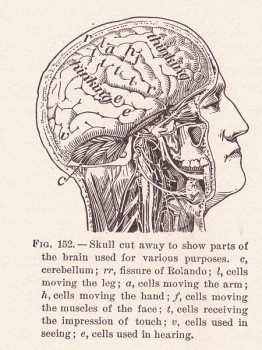
Brains at work. (Alvin Davison, ‘The Human Body and Health’, 1908) Wikimedia
A precise translation of the word non-fiction doesn’t exist in the Finnish language. Fiction is kaunokirjallisuus (a word invented by two diligent scholars, D.E.D. Europaeus and A. Varelius in mid-19th century for their Swedish-Finnish dictionary) – and a pretty word it is: kauno- is derived from the word kaunis, beautiful, beauteous. Non-fiction translates as tietokirjallisuus: literally, ‘literature of knowledge’.
Recently the status of Finnish non-fiction has been discussed in various media. Authors of non-fiction, as well as a number of readers, have been worried about diminishing sales, a decline in interest among both the general public and publishers, a lack of professional publishers’ editors. In a small-language area producing and profitable publishing ‘literature of knowledge’ is financially hard. More…
And the winner is…
27 November 2009 | In the news
 The winner of the Finlandia Prize for Non-Fiction 2009, worth €30,000, is Borgå 1809. Ceremoni och fest (‘Borgå [Porvoo] 1809. Ceremony and feast’) by historian Henrika Tandefelt (born 1972; see this review).
The final choice was made by Björn Wahlroos, Chairman of the Board of the Sampo Insurance Group. No doubt the historical period described in Tandefelt’s book is of great interest to Wahlroos, as he is the owner of the Åminne (in Finnish, Joensuu) estate, which is located in the south-west of Finland and dates from the 18th century. Wahlroos has recently restored the manor house to its full 19th-century glory. The Åminne estate was once the home of Gustaf Mauritz Armfelt, a Finnish-born statesman and officer. Armfelt was also King Gustav III’s trusted adviser – and later adjutant-general under Tsar Alexander I in St Petersburg, and finally, before his death, governor-general of Finland (1813). More…
Melba, Mallinen and me
30 June 1993 | Archives online, Fiction, Prose
From Fallet Bruus (‘The Bruus case’, Söderströms, 1992; in Finnish, Tapaus Bruus, Otava), a collection of short stories
After the war Helsingfors began to grow in earnest.
Construction started in Mejlans [Meilahti] and Brunakärr [Ruskeasuo]. People who moved there wondered if all the stone in the country had been damaged by the bombing or if all the competent builders had been killed; if you hammered a nail into a wall you were liable to hammer it right into the back of your neighbor’s head and risk getting indicted for manslaughter.
Then the Olympic Village in Kottby [Käpylä] was built, and for a few weeks in the summer of 1952 this area of wood-frame houses became a legitimate part of the city that housed such luminaries as the long-legged hop-skip-and-jump champion Da Silva, the runner Emil Zatopek (with the heavily wobbling head), the huge heavyweight boxer Ed Saunders and the somewhat smaller heavyweight Ingemar Johansson who had to run for his life from Saunders. More…
New from the archive
9 April 2015 | This 'n' that
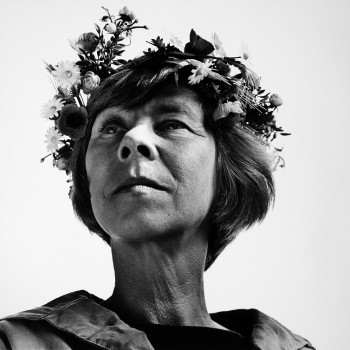
Tove Jansson. Photo: Hans Gedda
After she stopped writing the Moomin stories in 1970, Tove Jansson (1914-2001) began an entirely new career as the author of fiction for adults. This story, ‘Summer child’, comes from her third volume of short stories for adults, Resa med lätt baggage (Travelling light, 1988), where travelling – even if only by motor boat, between the islands of the archipelago that lies off Finland’s south-west coast – is the central theme.
‘Summer child’ tells the story of what happens when Elis, a morbidly serious little boy, spends the summer with a family in the Finnish archipelago. His gloomy world-view disquiets the cheerful Fredriksons to such a degree that in the end their differences can only be settled by violence….
*
The same story is republished, in a different translation, by Sort Of Books of London, with an introduction by the Scottish writer Ali Smith. For Smith, this tale of a young lad, ‘well-informed about everything that’s dying and miserable’, amid the idyllic landscapes of the Finnish summer, is ‘a fable about innocence and knowledge’; the book itself is ‘one of [Jansson’s] funniest, most unputdownably airy works’.
Ali Smith is far from being the only fan of Jansson’s work for adults. Sort Of Books has now published a total of seven volumes of her short stories, memoirs and novels, and her fame has also spread to the United States, where her Moomin books are much less well-known. Her The True Deceiver won the Best Translated Book Award in 2011, and has appeared on Publisher’s Weekly’s list of ‘The 20 Best Books in Translation You’ve Never Read’. It’s in good company – other books include Thomas Bernhard’s Concrete, Knut Hamsun’s Mysterie, Dubravka Ugresic’s The Museum of Unconditional Surrender and George Perec’s Life, A User’s Manual.
Matti Rämö: Polkupyörällä Intiassa. Lehmiä, jumalia ja maantiepölyä [Cycling in India. Cows, gods, and road dust]
30 July 2010 | Mini reviews, Reviews
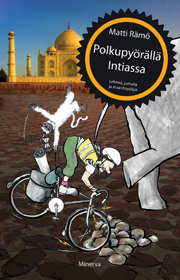 Polkupyörällä Intiassa. Lehmiä, jumalia ja maantiepölyä
[Cycling in India. Cows, gods, and road dust]
Helsinki: Minerva Kustannus Oy, 2010. 301 p., ill.
ISBN 978-952-492-335-4
€ 27.90, hardback
The author decides to take a pinch of the ashes of his dead mother to India’s Varanasi, the city of pilgrims on the banks of the Ganges, and at the same time visit his daughter at an international high school on the country’s west coast. Rämö takes his bicycle on the plane to Delhi and in the course of a month cycles more than 2,600 kilometres, from Delhi to Mumbai. The cyclist is challenged by the heat and humidity, the chaotic traffic, the awkward sections of road and the endless thirst for knowledge on the part of curious bystanders – but his observations are deeper than those of the average travel author, as he worked in India in third world research during the 1980s and 1990s. In the summer of 2007 he completed a four months’ cycle tour of the Sahara, travelling some 9,600 kilometres, and published a book about his experiences (Rengasrikkoja Saharassa, ‘Punctures in the Sahara’, Minerva, 2008). In spite of the shorter length of the Indian journey, the author thinks it possessed a higher difficulty factor.
On the bridge
30 June 1993 | Archives online, Fiction, Prose
From Saksalainen sikakoira (‘Schweinehund’, WSOY, 1992). Introduction by Tuva Korsström
From somewhere beneath the bridge – I still hadn’t managed to get across it, which may sound pathetic, or even ridiculous, unless you take into account my exceptional state of mind – or, rather, to one side, I heard a dragging, ominous grinding and rumbling. It stopped for a moment; then, after a short but clearly defined pause, there was a heavy splash. A snow-plough was emptying its load into the bay from the end of the pier. The mounds of snow sank deep into the black water; the tightly packed, sticky snow rose slowly to the surface in greyish-yellow blocks and clods; loose pieces of snow boiled and foamed in the eddies and melted before my eyes. My time was melting away, too, being junked, my remaining time… More…
The man and his work
30 September 1984 | Archives online, Authors
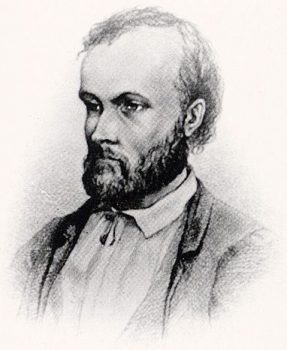
Aleksis Kivi. Drawn in 1873 almost certainly by Albert Edelfelt (1854–1905).
Aleksis Kivi’s Seitsemän veljestä (Seven Brothers, English translation 1929), is the best known and the most beloved in Finland. Its sentences have become part and parcel of the common tongue. Its events are often cited as historical happenings, its characters and their vicissitudes are now permanent national property just as the characters of Shakespeare are for the English, those of Molière for the French, or those of Cervantes for the Spaniards.
Aleksis Kivi’s life (1834–1872) is filled with paradoxes and unanswered questions. How could a village tailor’s son who has acquired only a little learning at home and who managed to graduate from secondary school, after many efforts, only at the age of 23, became an author of the first rank? How could a man who travelled within a radius of only a few dozen miles during his life know the Finnish landscape and the Finnish mind so thoroughly that his novel even today, mutatis mutandis, conveys a true picture of an entire nation? How could he free himself from the spirit and the idealised conception of the art of his own day so completely as to be able to write books sharply at variance with the other literary works of the same era, in which he followed his own path and found fully independent artistic solutions? And how could a book which is, practically speaking, the first Finnish-language novel and which thus springs up as a unique phenomenon from an inadequately cultivated linguistic soil, reach such heights as to become the supreme achievement of all Finnish literature? The enigmatic quality of Kivi’s character is further enhanced by the fact that there exists only one authentic portrait of him, drawn when he already lay dead; that the original manuscript of Seitsemän veljestä is not extant; and that of his letters, only about seventy have been preserved, some only brief notes and most of them dealing with financial arrangements. More…
Between three cultures
5 February 2010 | Authors, Reviews
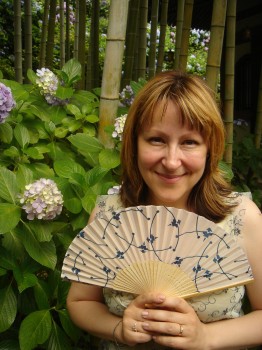
Zinaida Lindén. Photo: Johan Lindén
A new collection of short stories by the Leningrad-born author Zinaida Lindén explores the ambiguities of life between three cultures: her native Russia, her adopted Finland, and Japan, where she has also lived. In this introduction to Lindén’s short story Shards from the empire, Janna Kantola appreciates Lindén’s capricious, recalcitrant prose, and the positive, generous spirit that lies behind her work
Seen from a distance, Finns and Russians seem very like one another.
Zinaida Lindén has written her books from a cultural no-man’s-land in which she may have been forced to ponder the central questions of national identity. After studying Swedish in her native Russia, Lindén (born 1963) settled in Finland with her Finland-Swedish husband, and has written all of her works in Swedish. A recurring theme is that of encounters with the foreign, the other. More…
The honey of the bee
30 June 2005 | Archives online, Fiction, Prose
A short story from the collection Mitä sähkö on (‘What electricity is’ WSOY, 2004). Introduction by Jarmo Papinniemi
Five days before I was born my grandfather reached sixty-six. He’d always been old. The first image I have of him gleams like a knife on sunny spring-time snow: he was pulling me on my sledge over hard frost under a bright glaring-blue sky. In the Winter War a squadron of bombers had flown through the same blue sky on their way to Vaasa; the boys leapt into the ditches for cover, as if the enemy planes could be bothered to waste their bombs on a couple of kids. Be bothered? Wrong: kids were always the most important targets.
Now it’s summer, August, and I’m sitting on the grassy, mossy face of the earth, which is slowly warming in a sun that’s accumulated a leaden shadiness. I’m sitting on my grandfather’s land. It’s the time when the drying machines buzz. Even with eyes shut, you can sense the corn dust glittering in the sun. Even with eyes shut, you can take in the smell of the barn’s old wood, the sticky fragrance of the blackcurrants barrelled on its floor, the tins of coffee and the china dishes on the shelves, and the empty grain bins; there’s the cupboard Kalle made, with its board sides and veneered door, and the dust-covered trunk that was going to accompany my grandfather to another continent. The ticket was already hooked, but Grandfather’s world remained here for good. When Easter comes we’ll gather the useless junk out into the yard and burn it; Grandfather’s travel chest will rise skywards. Grandfather stands in the barn entrance, leaning on the doorpost. He’s dead. Over all lies a heavy overbearing sun. Beyond the field the river’s flowing silently in its deep channel. At night time its dark and warm. More…
Poems
30 June 1979 | Archives online, Children's books, Fiction, poetry
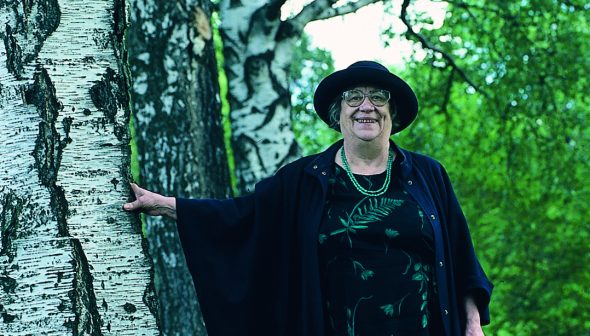
Kirsi Kunnas. Photo: Jyrki Luukkonen
Poems from Tiitiäisen satupuu (‘The Tittytumpkin’s fairy tree’, 1956)
The old water rat
There’s a shiver of a reed,
a rustle in the grass,
a slop-slopping through the mud:
Who’s that puffing past?
Who’s that peeping there?
A whiskery head
and a muddy tread.
It’s Old Mattie
Water Rattie.
Squeezing water from his eyes,
trickling from his sneezing nose,
freezing and sneezing.
Then: Oh dear Misery!
A-snee, a-snee, a-snizzery! More…