

Search results for "Riikka/2010/10/mikko-rimminen-nenapaiva-nose-day/2011/04/matti-suurpaa-parnasso-1951–2011-parnasso-1951–2011/2009/09/what-god-said"
Book-giving time!
12 November 2010 | In the news
 The few weeks before Christmas are when most books are bought in Finland, so shortlists of literary prizes start popping up in November.
All the juries of the three biggest prizes – worth €30,000 each, awarded by the Finnish Book Foundation – have now published their shortlists: the Finlandia Prize for Non-Fiction, the Finlandia Junior Prize and the Finlandia Prize for Fiction.
The winners, each chosen by one person, will be announced in December. This FILI – Finnish Literature Exchange newsletter link will take you to the jury members’ assessments of the shortlisted non-fiction and Junior Prize works.
The following six novels ended up on the Finlandia Prize for Fiction list:
Joel Haahtela: Katoamispiste (‘Vanishing point’, Otava), Markus Nummi: Karkkipäivä (‘Candy day’, Otava), Riikka Pulkkinen: Totta (‘True’, Teos), Mikko Rimminen: Nenäpäivä (‘Nose day’, Teos), Alexandra Salmela: 27 eli kuolema tekee taiteilijan (’27 or death makes an artist’, Teos) and Erik Wahlström: Flugtämjaren (in Finnish translation, Kärpäsenkesyttäjä, ‘The fly tamer’, Schildts). Here’s the FILI link to the jury’s comments.
Mikko-Olavi Seppälä & Riitta Seppälä: Aale Tynni. Hymyily, kyynel, laulu [Aale Tynni. A smile, a tear, a song]
16 January 2014 | Mini reviews, Reviews
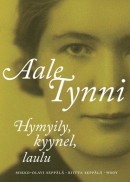 Aale Tynni. Hymyily, kyynel, laulu
[Aale Tynni. A smile, a tear, a song]
Helsinki: WSOY, 2013. 488 pp., ill.
ISBN 978-951-0-38306-3
€37, hardback
The poet, author and translator Aale Tynni (1913–1997), an Ingrian Finn who came to Finland as a refugee after the First World War in 1919, published 15 collections of poetry between 1938 and 1987. Among her translations are works by Ibsen, Shakespeare, Yeats and Racine. This extensive biography, compiled and written by Tynni’s daughter Riitta Seppälä and her grandson, historian Mikko-Olavi Seppälä, is an in-depth, lively portrait of a poet who, in her time, was both admired and criticised for her choices of form and content. Tynni felt that classical metrical tradition was closest to her, and patriotism was one of her themes; however, in the postwar years the freedom of rhythm of Finnish modernism began to flourish, and politics also gained strength in the literary world. In 1948 Tynni won the gold medal for literature in the – rather bizarre and short-lived – art competitions at the Summer Olympics in London with her poem ‘Laurel of Hellas’. Tynni experienced dramatic turns in her personal life; she underwent a prolonged divorce from her first husband who bitterly fought it. Two of her three children committed suicide in adulthood. She was finally free to marry the widowed poet Martti Haavio (aka P. Mustapää) in 1960, a marriage of soulmates that lasted until Haavio’s death in 1973.
Gypsy life
21 March 2013 | Extracts, Non-fiction
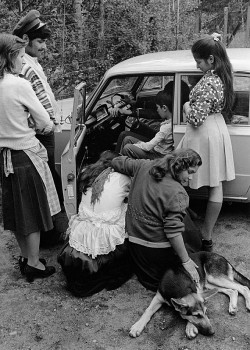
Romani teenagers, Kouvola, 1976. Photo: Mikko Savolainen
Photographer Mikko Savolainen began taking photos of Finnish Romani life in the 1960s, in the time of transition from nomadism to life in housing estates. New trends in the 1960s and 1970s also brought Romani culture to the fore – singers, musicians, festivals; an act baning racial discrimination had been passed. Savolainen became interested in Gypsy life
The text and the photographs are from Suomen romanit. Romanielämää 1960–1970-luvuilla / The Roma of Finland. Roma life in the 1960s and 1970s (Musta Taide, 2008. English translation: Jüri Kokkonen)
I have visited over a hundred Roma homes. Respect for parents, care of the elderly and hospitality are the first things that come to mind.
I have come across similar consideration for visitors only in cottages in Karelia, where the first question was whether I wanted a cup of coffee or to eat first.
I took my first photographs of Roma people in the Market Square of Hamina as an amateur photographer who only wanted to take good portraits. More…
Riikka Pelo: Jokapäiväinen elämämme [Our everyday life]
13 June 2013 | Mini reviews, Reviews
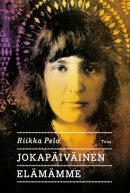 Jokapäiväinen elämämme
[Our everyday life]
Helsinki: Teos, 2013. 526 p.
ISBN 978-951-851-389-9
35.90€, hardback
At the centre of Riikka Pelo’s second novel are the Russian poet Marina Tsvetaeva (1892–1941) and her daughter Ariadna Efron (1912–1975). This broad historical novel depicts the mental landscape of Russia during the period between the two great wars, from the 1920s to the 1940s. The mother is a religious believer and idealist, her daughter a more pragmatic empiricist. The family’s fate is controlled by the Soviet state apparatus, which sends it into exile in Paris where Tsvetaeva’s husband Sergei Efron takes a job as a secret police informer in an organisation devoted to the repatriation of Soviet emigrés. In the 1930s they return to Moscow, where life under the watchful eye of Stalin is filled with difficulty and paranoia. Pelo portrays the awkward relationship between mother and daughter with particular vividness. The indisputable star of the family is the mother – her ambition extends to her daughter, who to her disappointment is more interested in the visual arts than in poetry. The historical characters of Pelo’s impressive novel live their contradictory lives in decades of social upheaval.
Translated by David McDuff
On Matti Pulkkinen
30 June 1978 | Archives online, Authors
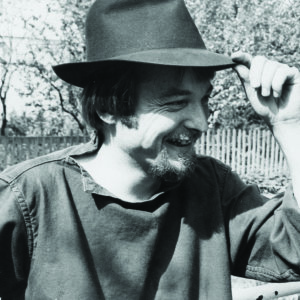
Matti Pulkkinen. Photo: Gummerus
Matti Pulkkinen’s grandfather was born in 1842 in a forest village close to the Russian border, in an area which could only be reached by water. When he grew up he became a tar-burner, a traditional occupation in north-east Finland. Pulkkinen’s father worked for the Otava Publishing Company in the early years of the present century, a time when ordinary Finns were beginning to show a real interest in literature. In his home in one of the most remote parts of North Karelia, he assembled a library which ranged from Mark Twain to the detective stories of G. K. Chesterton. He was 70 when his youngest son, Matti, was born in 1944. Dostoyevsky and Nietzsche were the two writers whose works did most to stimulate Matti Pulkkinen’s enthusiasm for literature. After leaving school he set out to see the world. He worked as a lumberjack, a primary school teacher, a statistics clerk in a gynaecological hospital, a bank teller, an accounts clerk, and later as a carpenter, took part in the restoration of the medieval church at Vanaja. From 1969 to 1971 Pulkkinen worked as a nurse in mental hospitals in Frankfurt, West Berlin and Bern. While in Switzerland he became interested in Jungian psychology and modern group therapy.
Pulkkinen’s novel, Ja pesäpuu itki (‘And the nesting-tree wept’, Gummerus), published in 1977, was awarded the J.H. Erkko Prize for the best first novel of the year and the Kalevi Jäntti Memorial Prize. It rapidly became a best seller and has already had two reprints. More…
Animal crackers
30 June 2004 | Children's books, Fiction
Fables from the children’s book Gepardi katsoo peiliin (‘A cheetah looks into the mirror’, Tammi, 2003). Illustrations by Kirsi Neuvonen
Rhinoceros
 The rhinoceros was late. She went blundering along a green tunnel she’d thrashed through the jungle. On her way, she plucked a leaf or two between her lips and could herself hear the thundering of her own feet. Snakes’ tails flashed away from the branches and apes bounded out of the rhino’s path, screaming. The rhino had booked an afternoon appointment and the sun had already passed the zenith.
When the rhinoceros finally arrived at the beautician’s, the cosmetologist had already prepared her mud bath. The rhino was able to throw herself straight in, and mud went splattering all round the wide hollow. More…
Mikko Lahtinen: Kirjastojen maa [Land of libraries]
4 March 2011 | Mini reviews, Reviews
 Kirjastojen maa
[Land of libraries]
Tampere: Vastapaino, 2010. 394 p., ill.
ISBN 978-951-768-315-9
€ 43, hardback
Libraries are the most widely used cultural service in Finland. Kirjastojen maa describes the journey undertaken by the protagonist, who refers to himself as ‘the Library Man’, and his entourage to 250 public libraries around Finland between 2008 and 2010. Many of these sites were celebrating their 150th anniversaries at the time, since there was a great enthusiasm for establishing public libraries in Finland in the 1850s. This travel journal provides a history of libraries as an institution and their development into a central pillar of society. The author also considers Finnish intellectual space in this age of digital media. Libraries currently face significant challenges: the recent wave of local authority mergers, centralisation of public services and funding cuts are all hampering the development of library operations. The importance of libraries is further underlined by the fact that local residents have launched protests in support of libraries threatened with closure – in spite of the usual difficulty of rousing Finns to man the barricades. The author is a philosopher, political researcher and active participant in public policy discussions.
Translated by Ruth Urbom
Mikko Ylikangas: Unileipää, kuolonvettä, spiidiä. Huumeet Suomessa 1800–1950 [Opium, death’s tincture, speed. Drugs in Finland 1800–1950]
29 April 2010 | Mini reviews, Reviews
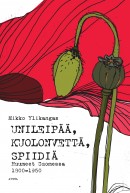 Unileipää, kuolonvettä, spiidiä. Huumeet Suomessa 1800–1950
[Opium, death’s tincture, speed. Drugs in Finland 1800–1950]
Jyväskylä: Atena, 2009. 264 p., ill.
ISBN 978-951-796-578-1
€ 34, hardback
This book presents an account of the history of drugs in Finland, as well as changes in legal and illegal drug use. Even in the early 19th century, the authorities were concerned about opium abuse. Medical doctor Elias Lönnrot – best known for collecting the folk poems that make up the Kalevala, the Finnish national epic – coined the name ‘unileipä’, ‘the staff of dreams’, for opium. A period of prohibition of alcohol in the 1920s spurred a huge increase in the sale of cocaine; in the 1930s Finland led the Western world in consumption of heroin as a cough suppressant. In the late 1940s, the United Nations investigated why Finland, with a population of four million, consumed as much heroin in a year as other countries did over an average of 25 years. This was explained by the severity of wartime conditions: drugs were used to maintain battle readiness and to combat anxiety, sleeplessness and tuberculosis. Social problems caused by misuse did not, however, get out of control. This book was awarded a prize for the best science book of the year in Finland in 2009.
Funny stuff favoured
13 April 2011 | In the news
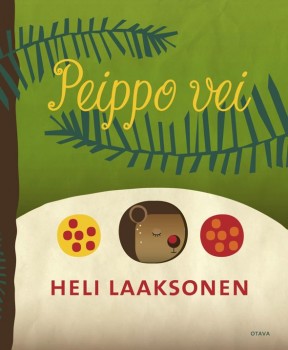 In March the Bookseller’s Association of Finland’s list of the best-selling Finnish fiction was topped – for a change – by a collection of poems. Like all her collections, Heli Laaksonen’s Peippo vei (‘The chaffinch took it’, Otava) is written in a local dialect spoken in south-western Finland.
Perttti Jarla’s latest comics book, Fingerpori 4 (‘Fingerborg 4’, Arktinen Banaani) was number two – and, demonstrating the Finns’ love of cartoons and comics, another of his titles, Fingerpori book, Fingerpori – Kamppailuni (‘Fingerborg – My fight’) occupied fourth place, following Sofi Oksanen’s Puhdistus (Purge), published in 2008 and still number three on the list. More…
What God said
3 September 2009 | Fiction, Prose
Extracts from the novel Herra Darwinin puutarhuri (Otava, 2009; Mr Darwin’s Gardener, Peirene Press, 2013). Interview by Soila Lehtonen
The congregation sits in the church pews and the jackdaws caw in the belfry.
We smell of wet dog, the rain made us wet and it is cold but the singing warms us, the hymn rises to the roof and above the roof dwells God, Amen.
We saw Thomas Davies on the hill, he is working in Mr Darwin’s garden,
the atheist and lunatic, he stood in the field alone and the water lashed his face
an irreligious pit pony wandering in the darkness he is from Wales
does the godless man think he can stand in the rain without getting wet did he get an umbrella or bat wings from the devil
perhaps Thomas imagines that he can hold back the rain and the rain not hold him back, he thinks he is more exalted than God with his head in the clouds
The church’s hard pews press into posteriors, the poor man will not grow fatter, for there are no fat and lean years but only lean ones, and thin are the poor man’s sheep and cows and children too, but the rich man cultivates weeds for his amusement as Mr Darwin did and earns money and fame! More…
In a class of their own
31 December 2006 | Children's books, Fiction
Extracts from the children’s book Ella: Varokaa lapsia! (‘Ella: Look out for children!’, Tammi, 2006). Interview by Anna-Leena Nissilä
There was a large van in the schoolyard with a thick cable winding its way from the van into the school. It was from the TV station, and the surprise was that they wanted to do a programme about our teacher, believe it or not.
The classroom was filled with lights, cameras, and adults.
‘Are you the weird teacher?’ a young man asked. He had a funny, shaggy beard and a t-shirt that said ‘errand boy’.
‘Not nearly as weird as your beard,’ our teacher answered.
‘Can we do a little piece about you?’ the errand boy asked.
‘Of course. A big one even. I’ve been expecting you, actually. Is it some educational programme?’
‘Not exactly.’
‘A substantive discussion programme, though?’
‘Not exactly.’
‘A documentary about our contemporary educators?’
‘Not quite.’ More…
For love or money
30 June 1994 | Archives online, Fiction, Prose
Extracts from the novel Paratiisitango (‘Paradise tango’, WSOY, 1993). Introduction by Markku Huotari
The bishops’ dilemma
They are waiting for Blume in the front room of the office. On the sofa sits a man whom Blume has never learned to like. He himself chose and appointed the man, for a job not insignificant from the point of view of the company. Blume has good reasons for the appointment. If he employed only men he liked, the business would have gone bankrupt years ago.
Reinhard Kindermann gets up from the sofa and waits in silence while Blume hangs up his overcoat. Mrs Giesler stands next to Blume. She does not try to help her superior take off his coat, for she knows from experience that he would not tolerate it, but the old man does allow her to stand next to him and wait in silence, like a servant expressing submission. More…
The Othello of Sand Alley
31 March 1989 | Archives online, Drama, Fiction
Eeva-Liisa Manner’s Woyzeck is an independent ending to Georg Büchner’s fragmentary play. Introduction by Riitta Pohjola
PROLOGUE
(Dawn in the market square of Leipzig. A gallows looms, dimly visible in the distance. Brisk rumble of drums.)
1st WOMAN
What’s going on here?
1st MAN
They’re getting ready for an execution. Some villain’s going to be executed in public.
1st WOMAN
Who?
2nd WOMAN
Franz Woyzeck. I guess you know him, the barber. More…
One night stand
31 March 1987 | Archives online, Fiction, Prose
Stories from Yhden yön pysäkki (‘One night stand’, 1985) and Unohdettu vartti (‘The forgotten quarter’, 1986). Introduction by Pekka Tarkka
At the beginning of November it really started to freeze. A month earlier than usual. There was little snow to speak of, but the ground froze hard as bone.
Tamed by hunger, reindeer clustered along the roadsides and on the village outskirts. Many of them ended their misery by flinging themselves under the timber-lorries in the evening dark. Bony and bloody carcasses littered the ditches and field-edges.
Then the snowstorms came. It snowed without stop for nearly two weeks. At times the whole landscape was reduced to a white line. Snowdrifts mounted round the houses and up the snow fences. The reindeer carcasses lay about under the snowbanks, waiting for spring. More…
No place to go
30 March 2008 | Archives online, Fiction, Prose
Extracts from the novel Lakanasiivet (‘Linen wings’, Otava, 2007)
The clothesline swayed in the wind. Helvi closed her eyes and felt herself flutter into the air with the laundry. She flapped her white linen wings, straining higher, now seeing below the whole small peninsula city, its damp rooftops glittering in the morning sun, the blue sighs of the chimneys, the steamboats toiling on the lake and the trains chugging on their tracks. The whole of heaven was clear and blue; only far off in the east were there white pillars roiling – whether smoke or clouds, Helvi could not tell.
She flew north on her linen wings and saw the great bridges leading to the city, on whose flanks the hidden anti-aircraft batteries gasped the fumes of gun oil and iron, and continued her journey over the land, following the straight lines of the telephone wires. She flew over wooded hills and deep green fields, finally arriving on the slope of the great hill where her daughter now lived, in hiding from the war. More…