

Search results for "Riikka/2010/10/mikko-rimminen-nenapaiva-nose-day/2011/04/matti-suurpaa-parnasso-1951–2011-parnasso-1951–2011"
What the snail thought
30 September 2005 | Fiction, Prose
Poems from Tapahtui Tiitiäisen maassa
(‘It happened in Tumpkin land’, WSOY, 2004)
Illustrations by Christel Rönns

Meritähti
Eli merenpohjassa Meritähti
tuhat tonnia vettä yllä.
      - Minä jaksan kyllä,
      sanoi Meritähti.
      - On terävät sakarat,
      ja litteät pakarat
ja paineenkestävät kakarat!
Scent of greenness
21 April 2011 | Fiction, poetry
‘Time the unstoppable’ features in the last collection of poems, Gramina, by Bo Carpelan (1926–2011), who reads timeless poetry while writing his own verses. In his introduction, Michel Ekman quotes the American poet and philosopher Ralph Waldo Emerson, who thought books should stimulate the reader’s thoughts instead of merely being devoured
Poems from the collection Gramina. Marginalia till Horatius, Vergilius och Dante (‘Gramina. Marginalia to Horace, Virgil and Dante’, Schildts, 2011)
Surf on the net –
in the net you are
with mouse and waiting spider

Fills life’s piggy bank
until it is emptied
The paved road of envy
where you stumble
Be sufficient unto oneself?
And who is this ‘self’
who doesn’t introduce himself? More…
Elina Brotherus & Riikka Ala-harja
The passing of time
2 March 2015 | Extracts, Fiction, Prose
In 1999 the Musée Nicéphore Niépce invited the young Finnish photographer Elina Brotherus to Chalon-sur-Saône in Burgundy, France, as a visiting artist.
After initially qualifying as an analytical chemist, Brotherus was then at the beginning of her career as a photographer. Everything lay before her, and she charted her French experience in a series of characteristically melancholy, subjective images.
Twelve years on, she revisited the same places, photographing them, and herself, again. The images in the resulting book, 12 ans après / 12 vuotta myöhemmin / 12 years later (Sémiosquare, 2015) are accompanied by a short story by the writer Riikka Ala-Harja, who moved to France a little later than Brotherus.
In the event, neither woman’s life took root in France. The book represents a personal coming-to-terms with the evaporation of youthful dreams, a mourning for lost time and broken relationships, a level and unselfpitying gaze at the passage of time: ‘Life has not been what I hoped for. Soon it will be time to accept it and mourn for the dreams that will never come true. Mourn for the lost time, my young self, who no longer exists.’
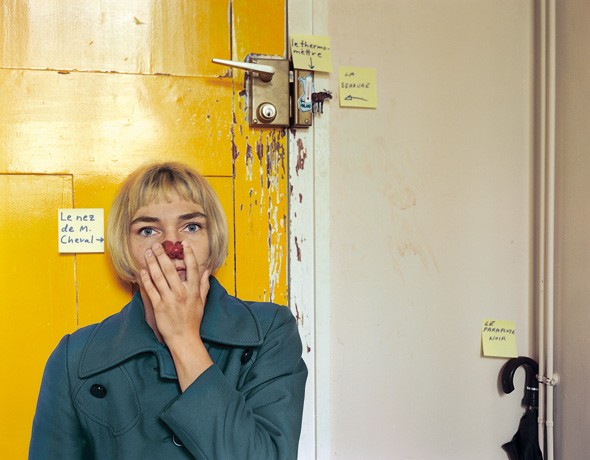
1999 Mr Cheval’s nose
Once upon a time…
13 January 2012 | Articles, Non-fiction
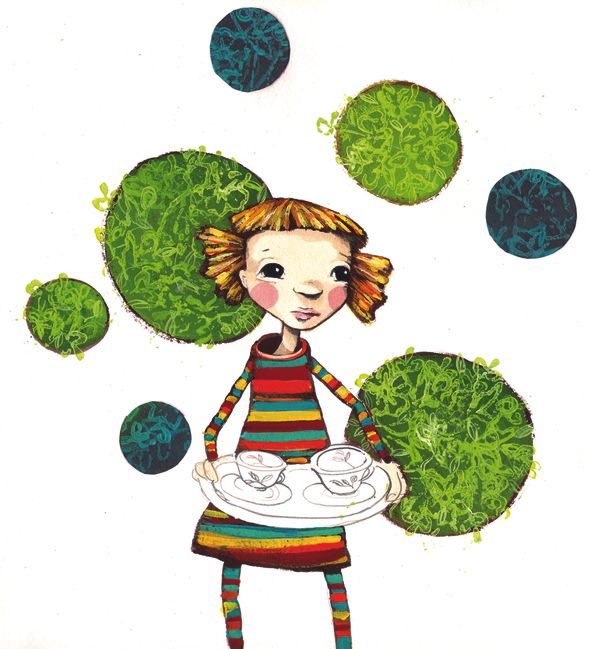
Sari Airola's illustration in Silva och teservisen som fick fötter (‘Silva and the tea set that took to its feet’, Schildts) by Sanna Tahvanainen
The future of book publishing is not easy to predict. Books for children and young people are still produced in large quantities, and there’s no shortage of quality, either. But will the books find their readers? Päivi Heikkilä-Halttunen takes a look at the trends of 2011, while in the review section we’ve picked out a selection of last year’s best titles
The supply of titles for children and young adults is greater than ever, but the attention the Finnish print media pays to them continues to diminish. Writing about this genre appears increasingly ghettoised, featuring only in specialist publications or internet chat rooms and blogs.
Yet, defying the prospect of a recession, Suomen lastenkirjakauppa, a bookshop specialising in children’s literature, was re-established in central Helsinki in autumn 2011, following a ten-year break. Pro lastenkirjallisuus – Pro barnlitteraturen ry, the Finnish society for the promotion of children’s literature, has been making efforts to found a Helsinki centre dedicated to writing and illustration for children. The society made progress in this ambition when it organised a pilot event in May 2011. More…
When the viewer vanishes
26 May 2015 | Essays, Non-fiction
 For the author Leena Krohn, there is no philosophy of art without moral philosophy
I lightheartedly promised to explain the foundations of my aesthetics without thinking at any great length about what is my very own that could be called aesthetics. Now I am forced to think about it. The foundations of my possible aesthetics – like those of all aesthetics – lie of course somewhere quite different from aesthetics itself. They lie in human consciousnesses and language, with all the associated indefiniteness.
It is my belief that we do not live in reality, but in metareality. The first virtual world, the simulated Pretend-land is inherent in us.
It is the human consciousness, spun by our own brains, which is shared by everyone belonging to this species. Thus it can be called a shared dream, as indeed I have done. More…
Petra Heikkilä: Pikku Nunuun löytöretki [Little Nunuu’s treasure hunt]
1 February 2011 | Mini reviews, Reviews
 Pikku Nunuun löytöretki
[Little Nunuu’s treasure hunt]
Helsinki: Lasten keskus, 2010. 32 p., ill.
ISBN 978-951-627-829-5
€23.50, hardback
Petra Heikkilä (born 1976) is a visual artist and author. Her debut title, an illustrated children’s book entitled Mikko Kettusen pupupöksyt (‘Micky Fox’s bunny pants’, 2001), was nominated for the Finlandia Junior prize in 2001. Heikkilä’s practice of portraying children as animal characters is based on their facial expressions – particularly their luminous eyes. Typical features of all eight of her picture books published so far include a warm sense of humour, wordplay and the use of collage techniques in the illustrations. At the centre of this tale set in Africa is a kanga cloth, which can be twisted and wound in a variety of ways, and Nunuu, a little lion girl who learns about the inventive uses for kanga. The rich image textures utilise collage and photographs, as well as characters painted on Ugandan barkcloth.
Translated by Ruth Urbom
The bully
31 March 1996 | Archives online, Fiction, Prose
A short story from Tulen jano (‘Thirst for fire’, Gummerus, 1995); power relations between doctor and patient in a situation where the past will not leave either alone
Nurmikallio, an apparently ordinary middle-aged man, came back again and again, and it seemed as if there would be no end to his story.
I listened to him patiently at first. Repeatedly he returned to the same subject. The form and emphases of the story changed, new memories emerged, but the gist was the same: he had failed in his life and believed that the root cause of his failure was a particular person, a childhood class-mate, a bully.
On the basis of his first visit I wrote a short character-sketch:
Intellectually average. Talkative, but by his own account solitary. Difficulties in human relationships, separated, no children. Electrician by profession, says he likes his work. Biggest problem obsessive attachment to childhood traumas.
And that’s all, I thought. But he was not to be so easily dismissed.
The show must go on
30 June 2007 | Archives online, Fiction, Prose
Extracts from the novel Piru, kreivi, noita ja näyttelijä (‘The devil, the count, the witch and the actor’, Gummerus, 2007). Introduction by Anna-Leena Ekroos
‘I hereby humbly introduce the maiden Valpuri, who has graciously consented to join our troupe,’ Henrik said.
A slight girl thrust herself among us and smiled.
‘What can we do with a somebody like her in the group? A slovenly wench, as you see. She can hardly know what acting is,’ Anna-Margareta snapped angrily.
‘What is acting?’ Valpuri asked.
Henrik explained that acting was every kind of amusing trick done to make people enjoy themselves. I added that the purpose of theatre was to show how the world worked, to allow the audience to examine human lives as if in a mirror. Moreover, it taught the audience about civilised behavior, emotional life, and elegant speech. Ericus thought that the deepest essence of theatre was to give visible incarnation to thoughts and feelings. None of us understood what he meant by this, but we nodded enthusiastically. Anna-Margareta insisted that, say what you will, in the end acting was a childish game. Actors were being something they were not, just like children pretending to be little pigs or baby goats. More…
Living with a genius
23 June 2015 | Extracts, Non-fiction
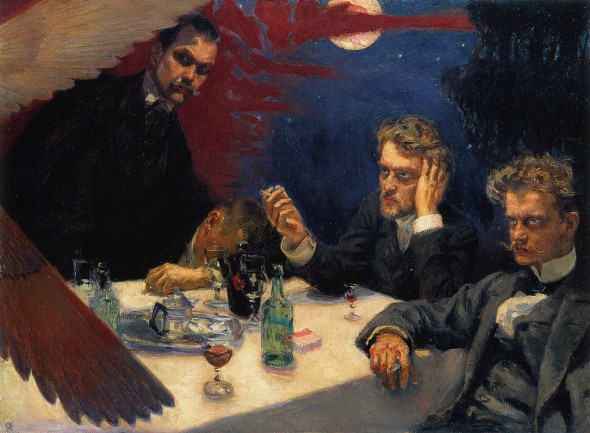
Akseli Gallen-Kallela’s painting Symposium (1894). From left: Akseli Gallen-Kallela, the composer Oskar Merikanto, the conductor Robert Kajanus and Jean Sibelius. Aino Sibelius was not pleased with this depiction of her husband depicted during a drinking session with his buddies
It is 150 years since the birth of Finland’s ‘national’ composer, Jean Sibelius. Much has been written about his life; Jenni Kirves’s new book casts light on his wife, Aino (1871–1969), and through her on the composer’s emotional and family life.
Aino, Kirves remarks in her introduction, has often been viewed as an almost saintly muse who sacrificed her life for her husband. But she was flesh and blood, and the book charts the difficulties of life with her brilliant husband from the very beginning – his unfaithfulness during their engagement, how to deal with a sexually transmitted infection he had contracted, his alcohol problem, the death of a child. It was Aino’s choice, time and again, to stand by her man; she felt it was her privilege to support her husband in his work in every possible way. ‘For me it is as if we two are not alone in our union,’ she wrote, far-sightedly, as a young bride. ‘There is also an equally rightful third: music.’
Aino’s own family, the Järnefelts, were a considerable cultural force in Finland, supporters of Finnish-language education and the growing independence movement. Her brothers included the writer Arvid Järnefelt, the artist Erik Järnefelt and the composer Armas Järnefelt. It was Armas who introduced her to his friend Jean Sibelius.
Aino bore Sibelius – known in family circles as Janne – six daughters, and offered her husband her unfailing support through 65 years of married life. ‘I must have you,’ Sibelius wrote, ‘in order for my innermost being to be complete; without you I am nothing… For this reason you are as much an artist as I am – if not more.’
As an old lady, Aino remarked of her own life that it had been ‘like a long, sunny day.’
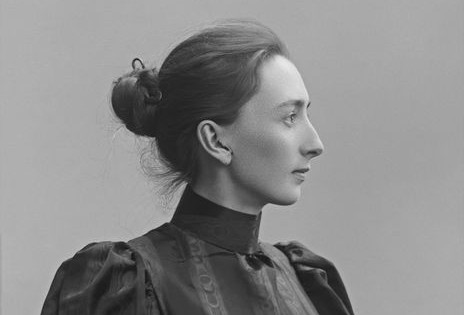
Aino Sibelius, 1891. Photo: National Board of Antiquities – Musketti.
An excerpt from Aino Sibelius: Ihmeellinen olento (‘Aino Sibelius: wondrous creature’, Johnny Kniga, 2015). We join the young couple in 1892 as they prepare for their long-awaited wedding.
At last, the wedding!
In the spring of 1892 the wedding really began to seem possible, as Janne’s symphonic poem Kullervo was very favourably received and Janne finally began to believe that he could support Aino. His financial situation was still, however, far from brilliant, and there were only two weeks to the wedding, as Janne wrote on 27 May 1892: ‘All the same, we must really be very careful about money. You will keep the cashbox and we will decide on everything together.’ The wedding grew closer and three days later Janne wrote triumphantly:
Do you understand, Aino, that we shall be man and wife in 1 ½ weeks – that we shall be able to kiss each other however we like and wherever we like (!) – and live together and have a household together – eat and make coffee together – it’s just so lovely.
A couple of weeks before the wedding, however, Janne wrote to Aino about some wishes for Aino in the future:
A skill with which a married artist can be protected from regressing is that the ‘wife’ understands to make him as little as possible into a model citizen. The man must not be allowed to be a paterfamilias with a pipe in his mouth, drowsy and docile; he must continually seek as many impressions as before, that’s clear, isn’t it? The kind of marriage whose main goal is the bringing of children into the world is repugnant to me – there are most certainly other things to do for those who work in the arts. More…
Speaking with silence
26 September 2013 | Reviews
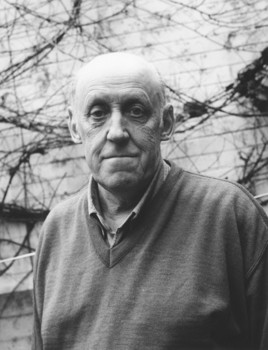
Bo Carpelan. Photo: Charlotta Boucht / Schildts & Söderströms
Bo Carpelan
Mot natten
[Towards the night. Poems 2010]
Helsinki: Schildts & Söderströms, 2013. 69 p.
ISBN 978-951-52-32-20-5
€21, paperback
‘Don’t change, grow deeper ,’ wrote Bo Carpelan: over the years he broadened his poetic range and his personal idiom evolved, but it happened organically, without sudden upheavals of style or idea.
Mot natten (‘Towards the night’) is Carpelan’s last collection of poems. This is underlined by the book’s subtitle, Poems 2010. By then Carpelan (1926–2011) was already marked by the illness that took his life in early 2011. It doesn’t show in the quality of the poems, but knowing it may make it harder for the reader to approach them with unclouded eyes. When a great poet concludes his work one wants to seek a synthesis or a concluding message, and that may encumber one’s reading. So is there such a message? In some ways there is, but Carpelan was not a man of pointed formulations. His ideals emerged without much fuss. More…
Hatefully yours
23 December 2011 | Non-fiction, Tales of a journalist
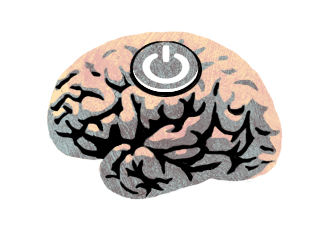
Illustration: Joonas Väänänen
In the new media it’s easy for our pet hatreds to be introduced to anyone who is interested. And of course everyone is interested, how else could it be? Jyrki Lehtola investigates
Twitter, Facebook, Twitter, Twitter, Twitter, Facebook, Twitter, how can we get the revenue model to work by using our old media, Twitter, Facebook, Twitter, Twitter, hey, what about that revenue model of ours, Twitter.
The preceding is a poignant summary of what the Finnish media was like in 2011 when the rules of the game changed like they have changed every year. And we still don’t even fully understand what the game is supposed to be. More…
Best-selling books in September
15 October 2010 | In the news
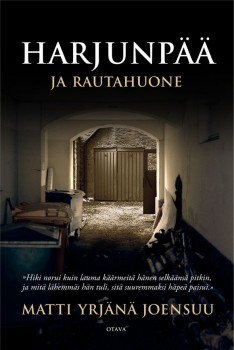 In September, Finns read crime novels. Matti Yrjänä Joensuu’s latest book featuring his police protagonist Timo Harjunpää, Harjunpää ja rautahuone (‘Harjunpää and the iron room’, Otava), topped the Booksellers’ Association of Finland’s best-seller list.
Joensuu’s Harjunpää ja pahan pappi was published in English in 2006 and reissued in 2008 under the title Priest of Evil. A film adaptation will be released in Finland in late October, directed by Olli Saarela and starring Peter Franzén in the title role.
Number two was the latest thriller from the pseudonymous Ilkka Remes, Shokkiaalto (‘Shock wave’, WSOY), and number three was Leena Lehtolainen’s Minne tytöt kadonneet (‘Where have all the young girls gone’, Tammi).
Sofi Oksanen’s record-breaking seller and critical success Puhdistus (WSOY; English edition: Purge, Atlantic Books) held strong in fourth place.
In translated fiction, Paul Auster, Diana Gabaldon ja Paulo Coelho headed the list.
The non-fiction list was topped by a study of sociability and social skills by Liisa Keltikangas-Järvinen (Sosiaalisuus ja sosiaaliset taidot, WSOY). Readers seem to be interested in survival, as the number two book was in a similar vein, Lilli Loiri-Seppä’s Selviämistarinoita (‘Stories of coping’ – also translatable as ‘Stories about getting sober’, Gummerus), about how to stop drinking.
Walt Disney was missing again from the top of the children’s list, the number one and number two spots being taken by Finnish picture books, Tatu ja Patu supersankareina (‘Tatu and Patu as superheroes’, Otava) by Aino Havukainen and Sami Toivonen, and Hurja-Harri ja pullon henki (‘Scary Harry and the genie in the bottle’, Otava) by the veteran graphic artist and children’s book author Mauri Kunnas. A new installment of the Ella storybook series by Timo Parvela, Ella ja Yön ritarit (‘Ella and the Knights of the Night’, Tammi) held the number three spot. In September, Finns read crime novels. Matti Yrjänä Joensuu’s latest book featuring his police protagonist Timo Harjunpää, Harjunpää ja rautahuone (‘Harjunpää and the iron room’, Otava), topped the Booksellers’ Association of Finland’s best-seller list.
The Finlandia prizes: Non-fiction, Junior
28 November 2013 | In the news

Ville Kivimäki. Photo: Pertti Nisonen
The Finlandia Prize for Non-Fiction 2013, worth €30,000, was awarded on 21 November to the historian Ville Kivimäki for his book Murtuneet mielet. Taistelu suomalaissotilaiden hermoista 1939–1945 (‘Broken minds. The battle ofor the nerves of Finnish soldiers 1939–1945’, WSOY).
The other works on the shortlist of six were as follows: 940 päivää isäni muistina (‘940 days as my father’s memory’, Teos; a book on Alzheimer’s disease) by Hanna Jensen, Kokottien kultakausi: Belle Epoquen mediatähdet modernin naiseuden kuvastimina (‘The golden era of the cocottes: the media stars of Belle Epoque as mirrors of modern femininity’, Finnish Literature Society) by Harri Kalha, Viipuri 1918 (‘Vyborg 1918’, Siltala) by Teemu Keskisarja, Suomi öljyn jälkeen (‘Post-oil Finland’, Into) by Rauli Partanen, Harri Paloheimo and Heikki Waris and Vapaalasku – tieto, taito, turvallisuus (‘Freestyle – knowledge, skill, safety’, Kustannus Oy Vapaalasku) by Matti Verkasalo, Jarkko-Juhani Henttonen and Kai Arponen.
The prize-winner was chosen by the director of the Ateneum Art Museum, Maija Tanninen–Mattila. In her celebratory speech she said: ‘The symptoms of many psychologically disturbed soldiers remained untreated during the war. For many, their symptoms appeared only after the war. Their experiences have remained unexpressed in language, the history of those who lack history. Ville Kivimäki has given voice to these experiences… and succeeded in writing a book that speaks across the generations.’
In his acceptance speech Ville Kivimäki (born 1976) commented: ‘The great majority of the war generation is now dead, and the words of a youngish scholar cannot, even when successful, reach those traumatic experiences whose depth we can never fully understand. But all the same, I would like to take this opportunity to say something that should have been said years ago: the psychological injuries of the war were war wounds in exactly the same sense as physical ones. In the end anyone could suffer a psychological breakdown.’

Kreetta Onkeli. Photo: Jouni Harala
The Finlandia Junior Prize 2013 was awarded on 26 November, also worth €30,000. It went to Kreetta Onkeli for her book Poika joka menetti muistinsa (‘The boy who lost his memory’, Otava).
Arto, 12, gets such a massive fit of laughter that he loses his memory and needs to find his identity and his home in contemporary Helsinki.
The winner was chosen from the shortlist of six by Jarno Leppälä, a media personality and member of the popular stunt group Duudsonit, the Dudesons. At the award ceremony he said:
‘Poika joka menetti muistinsa is, in my opinion, a well-written story about how young people in society are put on the same starting line and expected to do equally well in all circumstances – often irrespective of the fact that their starting points may actually be very different, and completely independent of the young people themselves.’
Kreetta Onkeli (born 1970) explained in her award speech how her aim was to write a proper, old-fashioned novel for children: ‘Not hundreds of pages of magic tricks but ordinary, real contemporary life that children could identify with.’ In her opinion the current, massive trend of fantasy has narrowed the scope of children’s literature.
The following five books made it on to the shortlist: Poika (‘The boy’, Like), about a boy who feels he was born in the wrong gender by Marja Björk, Hipinäaasi, apinahiisi (onomatopoetic pun, ‘Donkeymonkey’, Tammi), about bullying and friendship, written by Ville Hytönen and illustrated by Matti Pikkujämsä, Isä vaihtaa vapaalle (‘Father on his own time’, WSOY), an illustrated story about children with too busy parents, written by Jukka Laajarinne and illustrated by Timo Mänttäri, Aapine (‘ABC’, Otava), an illustrated primer written by Heli Laaksonen in her own south-western dialect and illustrated by Elina Warsta and Vain pahaa unta (‘Just a bad dream’, WSOY) by graphic designer and writer Ville Tietäväinen and his daughter Aino, a book on a child’s nightmares.
Finlandia literary prizes are awarded by Suomen Kirjasäätiö, The Finnish Book Foundation, established in 1983.
The first Finlandia Prize for Fiction was awarded in 1984. This year it will be announced on 3 December.
Thrills and spills
23 October 2009 | This 'n' that
In September the comic strip Viivi & Wagner by Juba, number two in August on the list of best-selling books (Mitä Suomi lukee, ‘What Finland reads’ – in Finnish only), gave way to Jari Tervo’s political satire Koljatti (‘Goliath’) and to a new thriller by Ilkka Remes (Isku ytimeen, ‘Strike to the core’).
Number three was Kjell Westö’s novel Älä käy yöhön yksin (in Finnish; the original, Gå inte ensam ut i natten, was published in Swedish, Westö’s mother tongue; ‘Don’t go out into the night alone’) and number four Kari Hotakainen’s novel Ihmisen osa (‘The human condition’).
Numbers eight and nine were new thrillers / crime novels by Leena Lehtolainen and Matti Rönkä. Historical novels by Kaari Utrio and Laila Hirvisaari took the fifth and sixth places.
Not surprisingly, the international bestsellers Paulo Coelho, Henning Mankell, Donna Leon and Patricia Cornwell led the translated fiction list.
As for non-fiction, the doings of Finnish Security Police interests people greatly: a history of it from 1949 to 2009 (edited by Matti Simola), entitled Ratakatu 12 (‘Ratakatu street 12’, WSOY) made its way to the top. It was followed by a biography of the industrial magnate Pekka Herlin of the Kone elevator company, Koneen ruhtinas (‘The prince of Kone’) – and Hitler by Ian Kershaw.
The Finlandia Prize for Fiction 2012
13 December 2012 | In the news
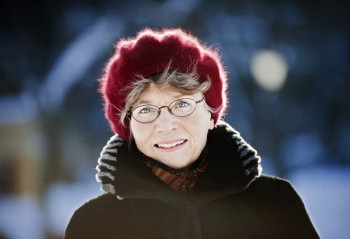
Ulla-Lena Lundberg. Photo: Cata Portin
The winner of the 29th Finlandia Prize for Fiction 2012, worth €30,000, is Ulla-Lena Lundberg for her novel Is (‘Ice’, Schildts & Söderströms), Finnish translation Jää (Teos & Schildts & Söderströms). The prize was awarded on 4 December.
The winning novel – set in a young priest’s family in the Åland archipelago – was selected by Tarja Halonen, President of Finland between 2000 and 2012, from a shortlist of six.
In her award speech she said that she had read Lundberg’s novel as ‘purely fictive’, and that it was only later that she had heard that it was based on the history of the writer’s own family; ‘I fell in love with the book as a book. Lundberg’s language is in some inexplicable way ageless. The book depicts the islanders’ lives in the years of post-war austerity. Pastor Petter Kummel is, I believe, almost the symbol of the age of the new peace, an optimist who believes in goodness, but who needs others to put his visions into practice, above all his wife Mona.’
Author and ethnologist Ulla-Lena Lundberg (born 1947) has since 1962 written novels, short stories, radio plays and non-fiction books: here you will find extracts from her Jägarens leende. Resor in hällkonstens rymd (‘Smile of the hunter. Travels in the space of rock art’, Söderströms, 2010). Among her novels is a trilogy (1989–1995) set in her native Åland islands, which lie midway between Finland and Sweden. Her books have been translated into five languages.
Appointed by the Finnish Book Foundation, the prize jury (researcher Janna Kantola, teacher of Finnish Riitta Kulmanen and film producer Lasse Saarinen) shortlisted the following novels: Maihinnousu (‘The landing’, Like) by Riikka Ala-Harja, Popula (Otava) by Pirjo Hassinen, Dora, Dora (Otava) by Heidi Köngäs, Nälkävuosi (‘The year of hunger’, Siltala) by Aki Ollikainen and Mr. Smith (WSOY) by Juha Seppälä.