

Search results for "harjunpää/2010/10/mikko-rimminen-nenapaiva-nose-day/2009/09/what-god-said"
The report
30 September 1984 | Archives online, Fiction, Prose
A short story from Kesä ja keski-ikäinen nainen (‘Summer and the middle-aged woman’) Introduction by Margareta N. Deschner
Dear Colleague,
First of all, I want to thank you and your wife for the pleasant evening I and my wife had in your summer villa in August. Briitta (since we are old acquaintances: with two i’s and two t’s, remember?) especially wants me to mention that she will never forget the half moon climbing the hill behind your sauna, surprising us with its speed. The next time we looked it was half-way up the sky! Without doubt, your fine tequila had something to do with the matter, one shouldn’t forget that. Even so, it was quite a show, just like the time a bunch of us guys had gone skiing and you bragged that you had arranged for the barn to catch fire. I hope that you and your wife – I mean Alli – will be able to visit us next winter and taste a superb Mallorca red wine called Comas, which we brought home. It is by far the best red I have ever tasted and indecently cheap to boot. I hope you will come soon. The wine won’t keep indefinitely, as you well know. We’ll save it for you. So thanks again.
Time difference
30 December 2003 | Fiction, Prose
A short story from Kalliisti ostetut päivät (Dearly bought days, Otava, 2003)
She arrived at the airport too early, as always. The reason was not that connections from the small town in which she lived were slow and difficult, or even that she liked the airport’s atmosphere of swift departures and long waits. No; she wanted to spend time at the airport to see that the planes took off and landed without anything awful happening. She wanted to see that a departing plane’s acceleration was rapid, that the plane left the asphalt of the runway elegantly, that its tail did not hit the ground as it rose, break, the plane explode, catch fire, but that, like an arrow fired into the air, following its flight path, it curved upward and, sunlight glancing off the metal of the body, disappeared from view. She wanted to see that the landing gear of a descending plane was out, as it should be, that a tyre did not burst as it hit the ground, at that there was no ice or oil on the runway; that the brakes worked, and that the fire engines at the edge of the airfield stayed in place as a sign that all was well. More…
Manmother
31 December 2002 | Archives online, Fiction, Prose
Extracts from the novel Granaattiomena (‘Pomegranate’, WSOY, 2002). Introduction by Kristina Carlson
The journey
Mother had sent her son to the island of Rome.
She’d sent him for pleasure and recreation, and also to have a little time by herself. Even though their life together was on an even keel, it was sensible to have some time away from each other. She herself was sixty-eight, and her son an unmarried hermit in his thirties, on sickness allowance for the last couple of years. He was afflicted with chronic depression. The doctors had been unable to identify the cause. The origin of a disorder of that sort was often looked for in some infant trauma; but the boy’s childhood, from all appearances, had been harmonious. One doctor suspected the time of his father’s terminal illness, when the boy had had to nurse his father for a long while. More…
On the bridge
30 June 1993 | Archives online, Fiction, Prose
From Saksalainen sikakoira (‘Schweinehund’, WSOY, 1992). Introduction by Tuva Korsström
From somewhere beneath the bridge – I still hadn’t managed to get across it, which may sound pathetic, or even ridiculous, unless you take into account my exceptional state of mind – or, rather, to one side, I heard a dragging, ominous grinding and rumbling. It stopped for a moment; then, after a short but clearly defined pause, there was a heavy splash. A snow-plough was emptying its load into the bay from the end of the pier. The mounds of snow sank deep into the black water; the tightly packed, sticky snow rose slowly to the surface in greyish-yellow blocks and clods; loose pieces of snow boiled and foamed in the eddies and melted before my eyes. My time was melting away, too, being junked, my remaining time… More…
Incident at Experience Farm
30 September 1998 | Archives online, Fiction, Prose
A short story from Pakkasyön odottaja (‘Waiting for a frosty night’, WSOY, 1997). Introduction by Jukka Petäjä
I
The round steel teapot is new. Father brought it back from Birmingham, where he went on a visit with the others from the concrete factory. In the shop, the teapot was wrapped in rustling, soft tissue paper. Pirjo was given the honour of opening the package. The pot has been used for brewing tea ever since.
At school, her sister Karoliina is proud of the fact that at home they drink only tea; they are different from other people, different in a good way, one to be proud of. They have a real teapot. Sometimes, during breaktime, a morsel of the excellence of Karoliina Kamppinen falls Pirjo’s way. ‘Yes, let’s include her, she’s Karoliina’s sister, after all.’ More…
Des res
Extracts from the novel Juoksuhaudantie (‘The Trench Road’, WSOY, 2002)
Matti Virtanen
I belonged to that small group of men who were the first in this country to dedicate themselves to the home front and to women’s emancipation. I feel I can say this without boasting and without causing any bickering between the sexes.
A home veteran looks after all the housework and understands women. Throughout our marriage I have done everything that our fathers did not. I did the laundry, cooked the food, cleaned the flat, I gave her time to herself and protected the family from society. For hours on end I listened to her work problems, her emotional ups and downs and her hopes for more varied displays of affection. I implemented comprehensive strategies to free her from the cooker. I was always ready with provisions when she got home exhausted after a day at work. More…
Finlandia Junior Prize 2010
26 November 2010 | In the news
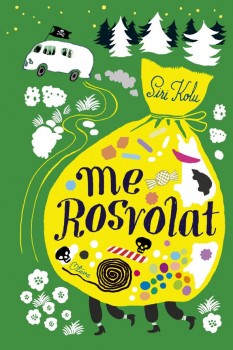 The Finlandia Junior Prize has gone to author Siri Kolu and illustrator Tuuli Juusela for the novel Me Rosvolat (‘Me and the Robbersons’, Otava); they will share the award of €30,000 (see the Prize jury assessments of the shortlist here). The winner was chosen by actor and writer Hannu-Pekka Björkman.
Awarding the prize on 25 November he said: ‘It caught my attention that in none of the six shortlisted children’s books are there any so-called nuclear families, at least not for long. The main characters constantly live and grow without something – the lack of parents or the attention of an adult is a serious matter to a child. However, in these books there is always someone who cares, not perhaps a stereotypical mom or dad, but an adult nevertheless.’ In Björkman’s opinion Me Rosvolat, with its rich language and a whiff of anarchy, presents the reader with moments of realisation and wonderment.
The blow-flower boy and the heaven-fixer
31 December 1984 | Archives online, Fiction, Prose
A short story from Puhalluskukkapoika ja taivaankorjaaja (‘The blow-flower boy and the heaven-fixer’, 1983). Interview by Olavi Jama
Cold.
A chill west wind came over the blue ice. It went right to the skin through woollen clothes. Shivers ran up and down the spine, made shoulders shake.
In the bank of clouds close to the horizon, right where the icebreaker had crunched open a passage to the shore, hung a pale blotch, a substitute for the sun. It gave off more chill than warmth.
Lennu’s teeth were chattering.
He wore a buttoned-up windbreaker, a hand-me-down from Gunnar, over a heavy lambswool shirt. It couldn’t keep off the cold. More…
Living with a genius
23 June 2015 | Extracts, Non-fiction
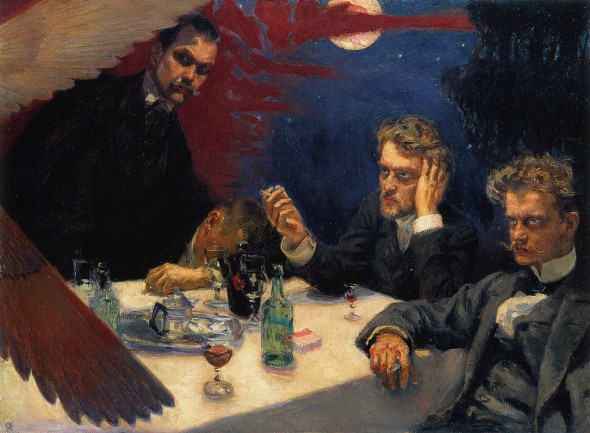
Akseli Gallen-Kallela’s painting Symposium (1894). From left: Akseli Gallen-Kallela, the composer Oskar Merikanto, the conductor Robert Kajanus and Jean Sibelius. Aino Sibelius was not pleased with this depiction of her husband depicted during a drinking session with his buddies
It is 150 years since the birth of Finland’s ‘national’ composer, Jean Sibelius. Much has been written about his life; Jenni Kirves’s new book casts light on his wife, Aino (1871–1969), and through her on the composer’s emotional and family life.
Aino, Kirves remarks in her introduction, has often been viewed as an almost saintly muse who sacrificed her life for her husband. But she was flesh and blood, and the book charts the difficulties of life with her brilliant husband from the very beginning – his unfaithfulness during their engagement, how to deal with a sexually transmitted infection he had contracted, his alcohol problem, the death of a child. It was Aino’s choice, time and again, to stand by her man; she felt it was her privilege to support her husband in his work in every possible way. ‘For me it is as if we two are not alone in our union,’ she wrote, far-sightedly, as a young bride. ‘There is also an equally rightful third: music.’
Aino’s own family, the Järnefelts, were a considerable cultural force in Finland, supporters of Finnish-language education and the growing independence movement. Her brothers included the writer Arvid Järnefelt, the artist Erik Järnefelt and the composer Armas Järnefelt. It was Armas who introduced her to his friend Jean Sibelius.
Aino bore Sibelius – known in family circles as Janne – six daughters, and offered her husband her unfailing support through 65 years of married life. ‘I must have you,’ Sibelius wrote, ‘in order for my innermost being to be complete; without you I am nothing… For this reason you are as much an artist as I am – if not more.’
As an old lady, Aino remarked of her own life that it had been ‘like a long, sunny day.’

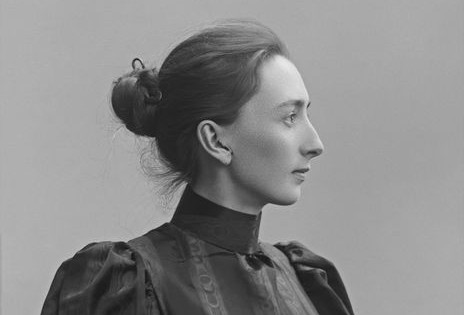
Aino Sibelius, 1891. Photo: National Board of Antiquities – Musketti.
An excerpt from Aino Sibelius: Ihmeellinen olento (‘Aino Sibelius: wondrous creature’, Johnny Kniga, 2015). We join the young couple in 1892 as they prepare for their long-awaited wedding.
At last, the wedding!
In the spring of 1892 the wedding really began to seem possible, as Janne’s symphonic poem Kullervo was very favourably received and Janne finally began to believe that he could support Aino. His financial situation was still, however, far from brilliant, and there were only two weeks to the wedding, as Janne wrote on 27 May 1892: ‘All the same, we must really be very careful about money. You will keep the cashbox and we will decide on everything together.’ The wedding grew closer and three days later Janne wrote triumphantly:
Do you understand, Aino, that we shall be man and wife in 1 ½ weeks – that we shall be able to kiss each other however we like and wherever we like (!) – and live together and have a household together – eat and make coffee together – it’s just so lovely.
A couple of weeks before the wedding, however, Janne wrote to Aino about some wishes for Aino in the future:
A skill with which a married artist can be protected from regressing is that the ‘wife’ understands to make him as little as possible into a model citizen. The man must not be allowed to be a paterfamilias with a pipe in his mouth, drowsy and docile; he must continually seek as many impressions as before, that’s clear, isn’t it? The kind of marriage whose main goal is the bringing of children into the world is repugnant to me – there are most certainly other things to do for those who work in the arts. More…
Dead calm
31 December 2007 | Fiction, Prose
Extracts from the novel En lycklig liten ö (‘A happy little island’, Söderströms, 2007)
In the beginning the computer screen was without form, and void, and the scribe’s fingers rested on the keyboard.
The scribe bit his lower lip. His gaze travelled like a fly from the workroom’s crowded bookshelves to the rocking chair in front of the window and the coloured prints of birds on the walls. He went out into the kitchen and drank some water. Then he sat down in front of the computer again.
To create from nothing a fictitious world assisted only by the tools language places at our disposal, surely that must be a great and exacting undertaking!
The scribe hesitated and racked his brains for a long time before finally typing the first word: ‘sky’. Then after long thought he typed another word: ‘sea’. More…
At the sand pit
30 September 1985 | Archives online, Fiction, Prose
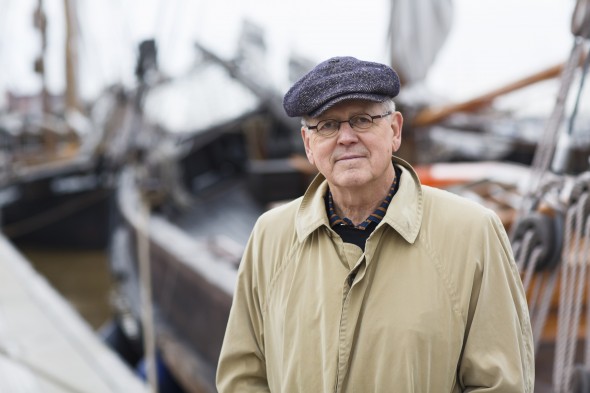
Antti Tuuri. Photo: Jouni Harala
‘After nearly 40 years of observing the Ostrobothnians, I am convinced that they have certain characteristics which explain the historical events that took place there and which also shed light on the region today. I do not know how these characteristics develop, but it appears that heredity, economic factors and even the landscape form the nature of people. Everywhere people who live in the plains are different from those who dwell in the mountains, and from those who fish the archipelagos,’ writes the author Antti Tuuri, himself an Ostrobothnian.
Antti Tuuri’s Pohjanmaa (‘Ostrobothnia’, 1982), which last January was awarded the Nordic Prize for Literature, has now been translated into each language of the Nordic countries. Tuuri’s novel describes the events of one summer day in Ostrobothnia, on the west coast of Finland, where a farming family, the Hakalas, has gathered for the reading of the will of a grandfather who emigrated to the United States in the 1920s.
The inheritance itself is insignificant, but it has brought together the four grandsons, with their wives and children. The story is narrated from the point of view of one of the brothers. The women of the family remain inside while the men take out an automatic pistol which has been kept hidden away since one of them smuggled it home from the Continuation War. The men go off to a sand pit to do some shooting and to drink some illegal home brew. There they meet their former schoolteacher, who joins in with their drinking and shooting. Some surprising events take place as the day’s action unfolds, and Tuuri’s narrator views them in an unsentimental way, describing them matter-of-factly and at times with ironic humour. The men recall the violent history of Ostrobothnia, the years of the Civil War and the right-wing Lapua movement of the 1930s.
The Nordic Prize jury commented that the novel ‘portrays the breaking up of the old society, and conflicts between generations as well as between men and women.’ Tuuri has constructed his novel on conflicts, and the result is a highly dramatic narrative.
An extract from Pohjanmaa (‘Ostrobothnia’)
A Finnish hound dog came out of the woods just beyond the sandpit, stopped at the edge of the pit and started to bark at us. The boys quickly began putting the weapon together. Veikko yelled that you were allowed to shoot a dog running loose in the woods out of hunting season. He kept asking me for cartridges; he’d shoot the dog right away, before it could tear to pieces the young game birds that couldn’t fly yet. I told him to shut up. Seppo finished putting the automatic pistol together and gave it to me. I ran to the car, put the gun down on the floor in front of the back seat and tossed a blanket over it.
When I got back, I saw the teacher coming out of the woods over by the pit. He snapped a leash on the dog and started towards us through the pine grove. The boys sat down around the campfire and began taking swigs of home brew from their cups. More…
Snowbirds
2 November 2011 | Extracts, Non-fiction
The short winter days of the northerly latitudes are made brighter by snow cover, which almost doubles the amount of available light. Reflection from the snow is an aid for photographers working outdoors in winter conditions. A new book, entitled Linnut lumen valossa (‘Birds in the light of snow’), presents the best shots by four professionals, Arto Juvonen, Tomi Muukkonen, Jari Peltomäki and Markus Varesvuo, who specialise in patiently stalking the feathered survivors in the cold
The photographs and texts are from the book Linnut lumen valossa (‘Birds in the light of snow’, edited by Arno Rautavaara. Design and layout by Jukka Aalto/Armadillo Graphics. Tammi, 2011)
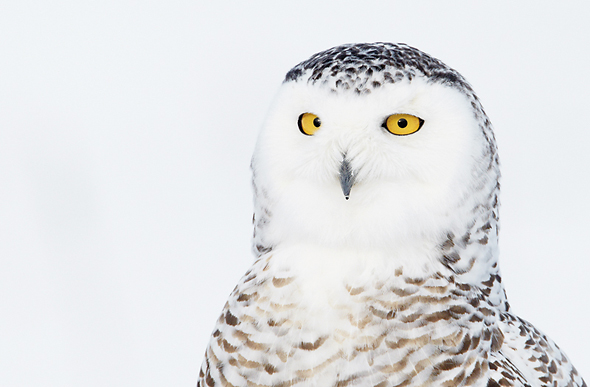
Snowy owl. Photo: Markus Varesvuo, 2010
In the beginning was… DNA?
8 October 2010 | Reviews
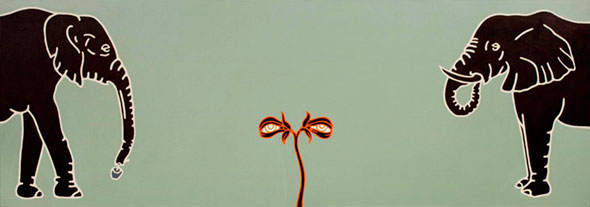
Adam and Eve, or the elephants: Osmo Rauhala’s sketch of The Fall of Man. As the bull eats the apple, evil rises from the ground in the form of a plant with eyes: a ‘misbreed’, a cross of two species alien to each other
Kuutti Lavonen – Osmo Rauhala – Pirjo Silveri
Tyrvään Pyhän Olavin kirkko – sata ja yksi kuvaa /
St Olaf’s Church in Tyrvää – One Hundred and One Paintings
Toim. / Edited by Pirjo Silveri
Translations: Silja Kudel, Jüri Kokkonen
Helsinki: Kirjapaja, 2010. 143 p., ill.
ISBN 978-952-247-103-1
€44.30, hardback
The old shingle roof of the early 16th-century stone church of St Olaf in Tyrvää, in the province of Pirkanmaa, southern Finland, was repaired by village volunteers in 1997. Three weeks after they completed their work, a drunken arsonist set the church on fire. More…
The son of the chimera
30 September 1999 | Fiction, Prose
A short story from Pereat mundus. Romaani, eräänlainen (‘Pereat mundus. A novel, sort of’, WSOY, 1998)
I was born, but not because anyone wanted it to happen. No one even knew it was possible, for my mother was a human being, my father a chimera. He was one of the first multi-species hybrids.
Only one picture of my father survives. It is not a photograph, but a water-colour, painted by my mother. My father is sitting in an armchair, book in hand, one cloven hoof placed delicately on top of the other. According to my mother, he liked to leaf through illustrated books, although he never learned to read. He is wearing an elegant, muted blue suit jacket, but no trousers at all. Thick grey fur covers his strong legs, right down to his hoofs. Small horns curve gracefully over his convex forehead. Striking in his face are his round, yellow eyes, his extraordinarily wide mouth, his tiny chin and his surprisingly large but flat nose. More…