

Search results for "harjunpää/2010/10/mikko-rimminen-nenapaiva-nose-day/2011/04/matti-suurpaa-parnasso-1951–2011-parnasso-1951–2011"
Madness and method
10 May 2012 | Authors, Reviews
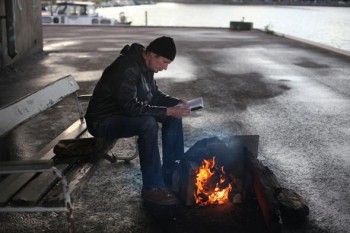
Juha Hurme. Photo: Stefan Bremer
One day during Advent in Helsinki the narrator in the novel Hullu (‘The lunatic’, Teos, 2012), a middle-aged man, goes mad.
Complete confusion fills his mind. He thinks he must be dead, but nevertheless manages to knock on the door of the mental hospital. To his amazement, he is admitted to the yellow building.
Because the boundaries between reality and self are, for him, completely blurred, he believes that the people in the hospital know absolutely everything about his unsuccessful life, and that he must expect humiliations and punishments. The people in white coats are aliens, or perhaps holograms. More…
A slow passion
30 September 2007 | Fiction, Prose
A short story from the collection of short stories Hidas intohimo (‘A slow passion’, Gummerus, 2007)
I don’t want to interfere with it. If something comes of it, then something comes of it. You can’t interfere with time, or fate, or another person. Time ripens things on its own. Fate takes a longer view of things than people do. Like the prophet says, there is a time for every purpose, for my purposes and other people’s.
This garden cottage is a good place to watch everything quietly, a ringside seat for someone who doesn’t want to flail around getting smashed up. The potatoes bloom when it’s time for them to bloom, depending on the length of the summer, the weather, and the time they were planted. Their white and purple flowers are worthy of admiration– potato flowers are flowers, after all. But when the flowers are just opening, it’s not yet time to go digging around among the roots. You have to restrain yourself and wait until the tubers form. You have to wait until they’re finished blooming and the flowers are replaced by plumping green, poisonous berries – though not all potato varieties produce them. But if your fingers are really itching for them, you can poke into the dirt and grope around a little before it’s really time, feel for tubers and remove them carefully, patiently, leaving the plant undisturbed for the smaller ones to grow. If the groping turns up something, you can slip away and savour it, but you still have to wait before you can dig up the whole plant with its rootstock, its beautiful pure tubers heaved up onto the soil, as if Life were offering itself on a silver salver. Then you can have them. They’re ready. But it takes time. Many good things are destroyed by impatience. More…
For the love of a city
31 December 2004 | Archives online, Fiction, Prose
Extracts from the novel I väntan på en jordbävning (‘Waiting for an earthquake’, Söderströms, 2004). Introduction by Petter Lindberg
Nonna Rozenberg lived quite near the special school where I was a boarder, in a block nine stories high with a bas-relief to the right of the door. This bas-relief featured a fairy-tale figure – the Firebird or the Bird Sirin.
I often saw Nonna stepping out of a tram carrying a large brown case. She moved carefully, as if afraid of falling.
She played the cello, and resembled that bulky, melodious instrument herself. Women’s figures are often compared to guitars. But Nonna’s appearance never hinted at parties at home with parents away or singsongs around the camp-fire.
She was no beauty. Her slow, precociously mature body was neither graceful nor girlishly delicate. If I’d met her later, when I was working at a gym, I’d have said she was overweight and lacking in self-discipline. More…
Markus Nummi: Karkkipäivä [Candy day]
26 November 2010 | Mini reviews, Reviews
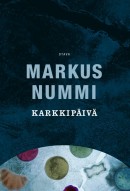 Karkkipäivä
[Candy day]
Helsinki: Otava, 2010. 383 p.
ISBN 978-951-1-24574-2
€28, hardback
Like this one, Markus Nummi’s previous novel, Kiinalainen puutarha (‘Chinese garden’, 2004), set in Asia at the turn of the 20th century, involves a child’s perspective. Karkkipäivä‘s main theme, however, is a portrait of contemporary Finland. Tomi is a little boy whose alcoholic parents are incapable of looking after him; Mirja’s mother is a frantic workaholic heading for a nervous breakdown. She is a control freak who secretly gorges on chocolate at work and beats her little daughter – a grotesque portrait of contemporary womanhood. Tomi manages to get some adult attention and help from a writer; the relation between them gradually builds into one of trust. Katri is a social worker, empathetic but virtually helpless as part of the social services bureaucracy. Virtually every adult suspects others of lying, finding each other’s motives doubtful. Nummi (born 1959) has structured Karkkipäivä with great skill; the ending, in which matters are resolved almost by chance, is particularly gripping. This novel was nominated for the 2010 Finlandia Prize for Fiction.
Forest and fell
8 May 2013 | Reviews
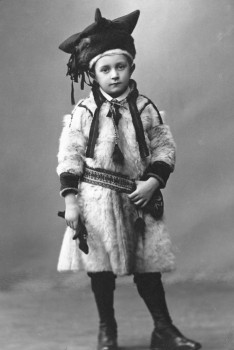
From North to South: young Heikki Soriola on his way to represent Utsjoki in Helsinki, in 1912. Photo from Saamelaiset suomalaiset
Veli-Pekka Lehtola
Saamelaiset suomalaiset: Kohtaamisia 1896–1953
[Sámi, Finns: encounters 1896–1953]
Helsinki: Suomalaisen Kirjallisuuden Seura, 2012. 528 p., ill.
ISBN 978-952-222-331-9
€53, hardback
Leena Valkeapää
Luonnossa: Vuoropuhelua Nils-Aslak Valkeapään tuotannon kanssa
[In nature, a dialogue with the works of Nils-Aslak Valkeapää]
Helsinki: Maahenki, 2011. 288 p., ill.
ISBN 978-952-5870-54-1
€40, hardback
The study of the Sámi people, like that of other indigenous peoples, has become considerably more diverse and deeper over recent decades. Where non-Sámi scholars, officials and clergymen once examined the Sámi according to the needs and values of the holders of power, contemporary scholarship starts out from dialogue, from an attempt to understand the interactions between different groups. More…
Serial fun, or comics celebrated
24 January 2011 | In the news
The art of comics celebrates its first centenary in Finland this year. The first Finnish picture story was a book called Professori Itikaisen tutkimusretki (‘Professor Itikainen’s expedition’, WSOY), by Ilmari Vainio, published in 1911; see our post on the Books from Finland website.
By the way, comics in Finnish is sarjakuva, ‘serial picture’, covering the modern usage of ‘comics’ – including serious, graphically impressive stuff such as the newish genre of the graphic novel.
The annual Helsinki Comics Festival, organised by Finnish Comics Society (founded 1971), is the biggest event in the field in northern Europe; this year’s festival will take place in September. In 2011 comics exhibitions will take place at the Finnish Design Museum, the Finnish Post Museum and the National Library of Finland.
Tommi Musturi. Photo: the Finnish Comics Society
The Society awarded its Puupää prize 2011 to Tommi Musturi (born 1975) – take a look at an extract from his Walking with Samuel which we ran on the Books from Finland website in May 2010.
Among Musturi’s publications are ten anthologies entitled Glömp; he has also worked for Kuti magazine and Huuda Huuda publisher. The jury remarked, in particular, on their appreciation of Musturi’s highly original, often wordless, stories and their graphic brilliance.
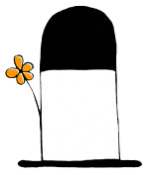
The prize: Puupää's hat
The prize is not money but a honorary hat, and is named after a classic Finnish cartoon character, Pekka Puupää (‘Pete Blockhead’), created by Ola Fogelberg and his daughter Toto. The Puupää comic books were published between 1925 and 1975, and some of the stories were made into film.
Graphic success
10 May 2012 | In the news
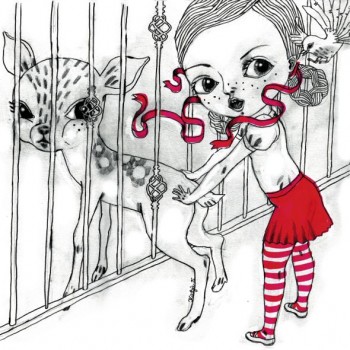
Finnish Comics Annual: picture by Katja Tukiainen
The 2012 Finnish Comics Annual, edited by Reija Sann, was published in May by HuudaHuuda and the Finnish Comics Association. The book focuses on everyday realism, featuring eleven artists: Terhi Ekebom, Grönroos & Rantio, Matti Hagelberg, Pauli Kallio, Tarmo Koivisto, Mika Lietzen, Petteri Tikkanen, Tiitu Takalo, Katja Tukiainen and Riitta Uusitalo. In their work the limits of the individual and the collective, the local and the universally human are explored by means of fantasy.
The first Finnish Comics Annual, featuring Finnish comics and graphic novels in English, was published last year. The editor was Ville Hänninen.
This year’s Finlandia Comics Prize, worth €5,000, awarded by the association Tampere Kuplii (‘Tampere bubbles’) at a comics festival of the same name in Tampere on 4 May, went to graphic designer and illustrator Ville Tietäväinen for his voluminous graphic novel Näkymättömät kädet (‘Invisible hands’, WSOY, 2011). Ten finalists were chosen by a jury out of 68 candidates, and the final choice was made by actor Armi Toivanen.
Näkymättömät kädet is the story of a Moroccan tailor, Rashid, who loses his job and has to leave his family to look for work in Europe. For an illegal alien life in Spain is unbearably difficult. Introducing the work in the article ‘Funny peculiar’ (there is also a sample from Tietäväinen’s work) Heikki Jokinen comments: ‘Through the story of one person, Tietäväinen speaks of important matters: poverty, human value and what keeps us going, hope.’
On the bridge
30 June 1993 | Archives online, Fiction, Prose
From Saksalainen sikakoira (‘Schweinehund’, WSOY, 1992). Introduction by Tuva Korsström
From somewhere beneath the bridge – I still hadn’t managed to get across it, which may sound pathetic, or even ridiculous, unless you take into account my exceptional state of mind – or, rather, to one side, I heard a dragging, ominous grinding and rumbling. It stopped for a moment; then, after a short but clearly defined pause, there was a heavy splash. A snow-plough was emptying its load into the bay from the end of the pier. The mounds of snow sank deep into the black water; the tightly packed, sticky snow rose slowly to the surface in greyish-yellow blocks and clods; loose pieces of snow boiled and foamed in the eddies and melted before my eyes. My time was melting away, too, being junked, my remaining time… More…
Childhood revisited
31 March 2006 | Archives online, Fiction, Prose
Extracts from the novel Tämän maailman tärkeimmät asiat (‘The most important things of this world’, Tammi, 2005). Introduction by Jarmo Papinniemi
I was supposed to meet my mother at a café by the sea. She would be dressed in the same jacket that I had picked out for her five years ago. She would have on a high-crowned hat, but I wasn’t sure about the shoes. She loved shoes and she always had new ones when she came to visit. She liked leather ankle boots. She might be wearing some when she stepped off the train, looking out for puddles. She didn’t wear much make-up. I don’t remember her ever using powder, although I’m sure she did. I could describe her eye make-up more precisely: a little eye shadow, a little mascara, and that’s all.
That’s all? I don’t know my mother. As a child, I lived too much in my own world and it was only after I left home that I was able to look at her from far enough away to learn to know her. She had been so near that I hadn’t noticed her. More…
Make or break?
17 November 2011 | This 'n' that
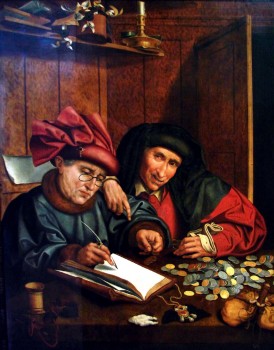
Two tax collectors: anonymous painter, after Marinus van Reymerswaele (ca. 1575–1600). Musée des Beaux-Arts de Nancy. Wikimedia
In Finland, tax returns are public information. So, every November the media publish lists of the top earners in Finland, dividing them into the categories of earned and investment income. Every November it is revealed who are millionaires and who are just plain rich.
The Taloussanomat (‘The economic news’) newspaper offers a list (Finnish only) of the 5,000 people who earned most last year (in terms of both earned and investment income, together with the proportion of income they have paid in tax). You can also search lists of various status and professions: rock/pop stars, media, sports, MPs, celebrities, politicians of various political parties…
So let’s take a look at Taloussanomat’s selected list of authors: number one is the celebrity author Jari Tervo (309,971 euros, tax percentage 45); number two, the internationally famous Sofi Oksanen (302,634 euros, 46 per cent); the next two are Sinikka Nopola, writer of children’s books, (264,000) and Arto Paasilinna (262,300; now after an illness, retired as a writer), translated into more than 30 languages since the 1970s. (The film critic and author Peter von Bagh made almost 900,000 euros – not by writing books, but by selling his share of a music company to an international enterprise.)
As tax data are public in Finland, there’s vigorous and decidedly informed public debate on how much money, for example, directors of public pension institutions and government offices or ministers and other top politicians are paid, and how much they should be paid: what is equitable, what is reasonable? A million dollar question indeed…
Among the European Union countries, it is only in Finland, Sweden and Denmark that there is no universal minimum wage. Here, wages are determined in trade wage negotiations. The average monthly salary in the private sector in 2010 was approximately 3,200 euros. In contrast to that, Olli-Pekka Kallasvuo, the Nokia CEO and President, who tops the 2010 tax list, earned a salary of 8 million last year, because – and precisely because – he was sacked (and replaced by the Irishman Steven Elop).
The CIA’s Gini index measures the degree of inequality in the distribution of family income in a country. The more unequal a country’s income distribution, the higher is its Gini index. The country with the highest number is Sweden, 23; the lowest, South Africa, 65 (data from both, 2005). Finland’s figure is 26.8 (2008), Germany 27 (2006), the European Union’s 34. The United Kingdom stands at 34 (2005), and the USA at 45 (2007). The figure in Finland seems to be on the rise though, as the figure back in 1991 was 25.6.
There’s been plenty of research and debate on economic inequality and the ways it harms societies. This link takes you to a fascinating video lecture (July 2011 – now seen by almost half a million people) by Richard Wilkinson, British author, Profefssor Emeritus of social epidemiology.
Hip hip hurray, Moomins!
22 October 2010 | This 'n' that
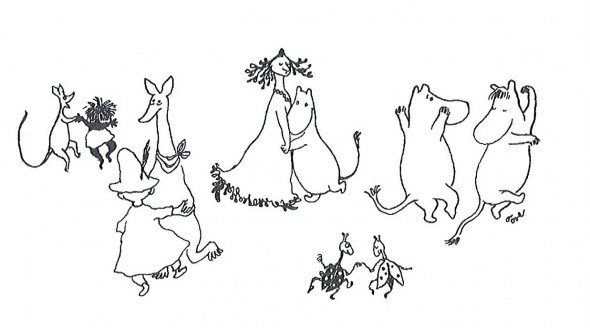
Partying in Moomin Valley: Moomintroll (second from right) dancing through the night with the Snork Maiden (from Tove Jansson’s second Moomin book, Kometjakten, Comet in Moominland, 1946)
The Moomins, those sympathetic, rotund white creatures, and their friends in Moomin Valley celebrate their 65th birthday in 2010.
Tove Jansson published her first illustrated Moomin book, Småtrollen och den stora översvämningen (‘The little trolls and the big flood’) in 1945. In the 1950s the inhabitants of Moomin Valley became increasingly popular both in Finland and abroad, and translations began to appear – as did the first Moomin merchandise in the shops.
Jansson later confessed that she eventually had begun to hate her troll – but luckily she managed to revise her writing, and the Moomin books became more serious and philosophical, yet retaining their delicious humour and mild anarchism. The last of the nine storybooks, Moominvalley in November, appeared in 1970, after which Jansson wrote novels and short stories for adults.
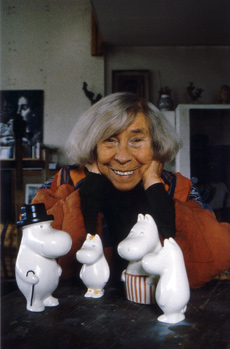
Tove Jansson with her creations (Photo: www.moomin.com/tove/travel, 1993)
Tove Jansson (1914–2001) was a painter, caricaturist, comic strip artist, illustrator and author of books for both children and adults. Her Moomin comic strips were published in the daily paper the London Evening News between 1954 and 1974; from 1960 onwards the strips were written and illustrated by Tove’s brother Lars Jansson (1926–2000).
Tove’s niece, Sophia Jansson (born 1962) now runs Moomin Characters Ltd as its artistic director and majority shareholder. (The company’s latest turnover was 3,6 million euros).
For the ever-growing fandom of Jansson there is a delightful biography of Tove (click ‘English’) and her family on the site, complete with pictures, video clips and texts.
The world now knows Moomins; the books have been translated into 40 languages. The London Children’s Film Festival in October 2010 featured the film Moomins and the Comet Chase in 3D, with a soundtrack by the Icelandic artist Björk. An exhibition celebrating 65 years of the Moomins (from 23 October to 15 January 2011) at the Bury Art Gallery in Greater Manchester presented Jansson’s illustrations of Moominvalley and its inhabitants.
In association with several commercial partners in the Nordic countries Moomin Characters launched a year-long campaign collecting funds to be donated to the World Wildlife Foundation for the protection of the Baltic Sea. Tove Jansson lived by the Baltic all her life – she spent most of her summers on a small barren island called Klovharu – and the sea featured strongly in her books for both children and adults.
Comic prize
26 March 2010 | In the news
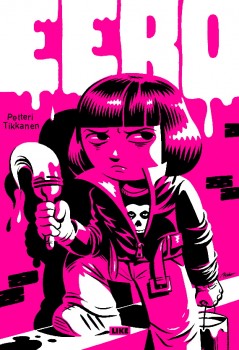
Eero the hero: the winner of the Sarjakuva-Finlandia comics prize 2010
Sarjakuva-Finlandia, worth €5,000, is the name of a prize created in 2007 for Finnish graphic novels or comic books. (Sarjakuva, literally ‘serial picture’, refers to both comic strips and books as well as graphic novels.)
It is awarded annually at the Tampere comics festival (and has nothing to do with the Finlandia prizes for literature, awarded by the Finnish Book Foundation).
Out of 56 contestants, ten made it into the final run, and the winner, Eero, by Petteri Tikkanen, was chosen by the thriller writer Matti Rönkä.
Petteri Tikkanen (born 1975) is a graphic artist who has published several books. In his previous graphic novels about a girl named Kanerva, Eero has appeared as her friend. Now Eero is the central character, and it seems childhood is over. Kanerva likes to chill out with her girlfriends only – what is a boy to do?
Henrik Meinander: Kekkografia. Historiaesseitä [Kekkography. History essays]
1 April 2011 | Mini reviews, Reviews
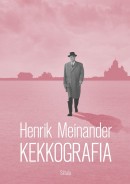 Kekkografia. Historiaesseitä
[Kekkography. History essays]
Suomentanut [Translated into Finnish from the original Swedish texts by] Matti Kinnunen
Helsinki: Siltala, 2010. 229 p.
ISBN 978-952-234-040-5
€ 34, hardback
Professor Henrik Meinander examines the forces that have shaped Finnish history and the controversial issues that have marked its development; Finnish history and culture were formed by chain reactions in European power politics. Finland did not emerge as a nation until the 19th century, as a by-product of the Napoleonic wars, and the independence of 1917 was not the result of an autonomous process of national development but rather a consequence of events elsewhere, especially in Russia. The history of independent Finland is roughly equal in length to that of the Soviet Union; in the early 1990s the Soviet Union collapsed, and Finland joined the European Union. The author does not take a position on the desirability of this development, and points out that the increasing integration and globalisation Finland’s era of independence may appear to be only a transitory phase. President Urho Kekkonen (1900–1986), who influenced Finnish politics for half a century and whose name gives the work its title, figures in approximately half of the texts.
Translated by David McDuff