

Search results for "harjunpää/2010/10/mikko-rimminen-nenapaiva-nose-day"
Linnoista lähiöihin. Rakennetut kulttuuriympäristöt Suomessa [From castles to suburbs. Built cultural environments in Finland]
26 August 2010 | Mini reviews, Reviews
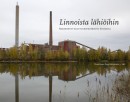 Linnoista lähiöihin. Rakennetut kulttuuriympäristöt Suomessa
[From castles to suburbs. Built cultural environments in Finland]
Toim. [Ed. by] Pinja Metsäranta
Helsinki: Finnish Literature Society, 2010. 239 p., ill.
ISBN 978-952-616-206-8
€ 42, hardback
The 2009 inventory of the Finnish National Board of Antiquities includes about 1,300 nationally important built cultural environments, about a tenth of which are represented in this volume. The book introduces the reader to churches, mansions and military barracks, as well as to idyllic countryside and areas formed by industrial agglomerations. Reflected in the inventory is the diversity of the built landscape: the timber prefab districts and concrete housing estates, the reindeer fences of Lapland and the lighthouses of the archipelagos. On display are architectural masterpieces as well as everyday environments: hospitals, schools and prisons. Rural depopulation and urban sameness have changed the landscape in recent decades, but the book shows that much of value still remains. The book contains a list of all the inventory items, also available on the Board’s website (in Finnish and Swedish).
Nordic prize
11 December 2009 | In the news
The Finnish nominees for the Nordic Council’s Literary Prize, to be awarded in March 2010, are the novels Puhdistus (‘Purge’, the winner of the Finlandia Prize for Fiction in 2008) by Sofi Oksanen, and Glitterscenen (‘The Glitter Scene’, 2009) by Monika Fagerholm.
The prize, worth €47,000, will be selected by a jury from a shortlist of 11 works from the Nordic countries. The most recent Finnish winner of the prize was Kari Hotakainen’s Juoksuhaudantie (‘Trench Road’, which also won the Finlandia Prize for Fiction) in 2004.
Funny peculiar
9 December 2011 | Articles, Comics, Non-fiction
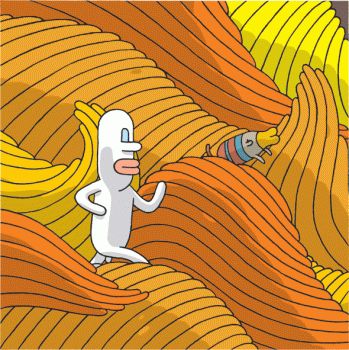
Samuel, the creation of Tommi Musturi (featured in Books from Finland on 7 May, 2010, entitled ‘Song without words’)
Comics? The Finnish word for them, sarjakuva, means, literally, ‘serial picture’, and lacks any connotation with the ‘comic’. The genre, which now also encompasses works called graphic novels, has been the subject of celebrations this year in Finland, where it has reached its hundredth birthday. Heikki Jokinen takes a look at this modern art form
Comics are an art form that combines image and word and functions according to its own grammatical rules. It has two mother tongues: word and image. Both of them carry the story in their own way. Images and sequences of images have been used since ancient times to tell stories, and stories, for their part, are the common language of humanity. The long dark nights of the stone age were no doubt enlivened by storytellers.
One of the pioneers of comics was the Swiss artist Rodolphe Töpffer. As early as 1837, he explained how his books, combinations of images and words, should be read: ‘This little booklet is complex by nature. It is made up of a series of my own line drawings, each accompanied by a couple of lines of text. Without text, the meaning of the drawings would remain obscure; without drawings, the text would remain without content. The whole gives birth to a sort of novel – but one which is in fact no more reminiscent of a novel than of any other work.’ More…
Lassi Saressalo: Pois Suomesta [Out of Finland]
12 July 2010 | Mini reviews, Reviews
 Pois Suomesta – Suomesta paenneita, karkotettuja, väkisin vietyjä, laittomasti lähteneitä
[Out of Finland – refugees, deportees, abductees, illegal emigrants]
Tampere, Traff Kustannus, 2010. 297 p.
ISBN 978-952-99079-7-7
€ 29, hardback
Dr Lassi Saressalo, head of the Finnish Local Heritage Federation, has gathered a large collection of stories about people who were deported or abducted from Finland, or who fled as refugees. The examples relate to several periods of Finland’s history, including Swedish and Russian rule and the period since independence in 1918. People have had to leave Finland at different times for different reasons: some fled the cruelty of conquerors or conscription, others were forced to leave because of their political views or patriotic aims, either on their own initiative or by the government. The most recent cases discussed in the book date from the period following the end of the Second World War. The book is accompanied by a (Finnish-language) website, which provides additional background information on the events that are described as well as a forum for discussion.
Gustaf Mannerheim: Dagbok förd under min resa i Centralasien och Kina 1906–07–08 [Journal of my travels in Central Asia and China 1906–07–08]
11 February 2011 | Mini reviews, Reviews
 Dagbok förd under min resa i Centralasien och Kina 1906–07–08, Vol 1–3
[Journal of my travels in Central Asia and China 1906–07–08, Vol. 1–3]
Redaktör [Edited by]: Harry Halén
Bildredaktör [Photo editor]: Peter Sandberg
Helsingfors: Svenska litteratursällskapet i Finland, 2010. 1,128 p., ill.
ISBN 978-951-583-196-5 (complete set)
€ 80, hardback
Carl Gustaf Mannerheim (1867–1951), a Finnish officer in the Imperial Russian Army, later Commander-in-Chief of the Finnish Army and President of Finland, undertook a military reconnaissance mission, posing as an academic researcher, to Central Asia and China in 1906–1908. His journey on horseback across Asia to Peking also generated a wealth of ethnographic material: field notes, photographs and artefacts. In his travel diaries, Mannerheim describes the landscapes as well as his diverse encounters with the inhabitants of the areas he travelled through. During his visit to a Tibetan monastery, Mannerheim was pelted with stones by pilgrims. He gave the Dalai Lama an automatic pistol as a gift. These journals are now being published in full for the first time in their original language, Swedish, including Mannerheim’s own notes concerning his military mission. The photographs, some of which have never been published before, show that Mannerheim was a skilled photographer. Harry Halén, an expert in Central Asian languages and cultures, has contributed an extensive preface and copious notes.
Translated by Ruth Urbom
A policeman’s crimes
31 December 1985 | Archives online, Authors

Matti Yrjänä Joensuu. Photo: Jouni Harala 2010
The Finnish section of the major Nordic Crime Novel Competition in 1976 was won by a newcomer, Matti Yrjänä Joensuu, with his Väkivallan virkamies (‘Civil servant in violence’). A realistic crime and police novel in the style of the Swedish writers Sjöwall and Wahlöö, the book represented something completely new in Finland. In the previous competition, held in 1939 as Europe hovered on the brink of war, the winner of the Finnish section was Mika Waltari’s Kuka murhasi Rouva Skrofin (‘Who killed Mrs Skrof?’); the novel is now regarded as one of the classics of Nordic detective fiction. But Waltari was, of course, a literary polymath; his Sinuhe, egyptiläinen (1945; English translation The Egyptian) is among the internationally best-known Finnish novels.
The detective novel and thriller tradition in Finland is both short and slight, and apart from Waltari’s book and its two sequels, many of its representatives – even those that have been most widely acclaimed and read at the time – are of little worth by any objective standards. Joensuu, therefore, has no living tradition to follow, and in interviews he has said that at the start of his career he was not familiar with the two Swedish writers to whom his work is most readily likened, Sjöwall and Wahlöö. This is not difficult to believe; in terms of both politics and social criticism Joensuu’s first novel, in particular, is much tamer than the Swedish writers’ – what all three writers have in common is the gravity with which they approach crime and the individuals who engage in it, and their realistic description of the work of the police. More…
Jukka Rislakki: Paha sektori. Atomipommi, kylmä sota ja Suomi [The sector of evil. The atomic bomb, the Cold War and Finland]
29 April 2011 | Mini reviews, Reviews
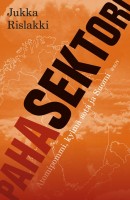 Paha sektori. Atomipommi, kylmä sota ja Suomi
[The sector of evil. The atomic bomb, the Cold War and Finland]
Helsinki: WSOY, 2010. 532 p., ill.
ISBN 978-951-0-36478-9
€ 39, hardback
This book explores the effects of the Cold War and nuclear weapons in Finland and northern Europe in the 1950s and 60s. The Finnish and US armies cooperated closely, without the consent – or even the knowledge – of the Finnish government and parliament. The Finns obtained intelligence on the Soviet Union for the Americans. The Finnish authorities provided around 100,000 aerial photographs of Finland to the US Air Force, and American planes used Finnish airspace to carry out surveillance of the USSR. The United States provided support to Finland by promoting trade between the two countries. When the Soviets carried out nuclear testing on the island territory of Novaya Zemlya, just 800 kilometres from Finland, in 1961, the CIA recommended the US launch a surprise nuclear attack on Novaya Zemlya as a show of force. That was never carried out, but radioactive fallout from the nuclear tests did spread over Finland – however, the Finnish authorities did not want to frighten people ‘unnecessarily’ by mentioning this. Rislakki’s book is based on previously secret archive materials, literature on the subject and interviews. It includes rare surveillance photographs and maps of possible bombing targets in Finland.
Translated by Ruth Urbom
Jorma Ollila – Harri Saukkomaa: Mahdoton menestys. Kasvun paikkana Nokia [Impossible success. Nokia as a growth point]
27 March 2014 | Mini reviews, Reviews
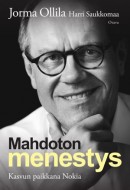 Mahdoton menestys. Kasvun paikkana Nokia
[Impossible success. Nokia as a growth point]
Helsinki: Otava Publishing Company , 2013. 480 pp., ill .
ISBN 978-951-1-18117-0
€39.60, hardback
One of the most fascinating stories in Finland’s recent history is the rapid rise of Nokia, thanks to the establishment of its mobile phones as a global brand in the 1990s, the decline in the company’s success in the 2000s, and its eventual abandonment of mobile phones. The boom was personified by the company’s talented CEO Jorma Ollila. His interesting memoirs are readily accessible to a non-specialist readership. When Ollila began work at the Nokia conglomerate in 1985 he had already shown an aptitude for business. He served first as the company’s director of finance, then as leader of the mobile phone unit, became managing director, and finally CEO from 1999 until 2006. Ollila decided to weed out the operations that were in difficulty and to focus on mobile phones and networks. With the support of a good management team, Ollila proved to be an energetic leader who knew how to share responsibility and also inspire and create trust. In his memoirs he analyses both the company’s successes and its mistakes and losses in the period up to 2010. Ollila stepped down from the post of chairman in 2012.
Translated by David McDuff
Tiia Aarnipuu: Jonkun on uskallettava katsoa. Animalian puoli vuosisataa [Someone’s got to dare to look. Half a century of Animalia]
28 July 2011 | Mini reviews, Reviews
 Jonkun on uskallettava katsoa. Animalian puoli vuosisataa
[Someone’s got to dare to look. Half a century of Animalia]
Helsinki: Like Kustannus, 2011. 209 p., ill.
ISBN 978-952-01-0582-2
€ 33, paperback
This book has been published to mark the 50th anniversary of Animalia, the Federation for the Protection of Animals. The public image of the organisation has varied between one of a conservative club of ladies and gentlemen and that of a radical terrorist group. Animalia was founded in 1961, inspired by Johan Börtz, a Swede who gave lectures on the plight of animals used in experiments. Animalia began making visits to inspect animal testing facilities, which were completely unregulated in the early 1960s. Gradually the animal rights movement became more radicalised, somewhat later than in places such as Britain. Animal rights became a subject of wider debate in Finland in the 1980s. In the 1990s, the organisation was falsely linked with attacks made on fur farms by direct-action youth groups. Animalia’s stance has been to renounce vandalism and violence. In February 2010 Animalia launched its largest-ever information campaign, aimed at ridding Finland of fur farms by 2025.
Translated by Ruth Urbom
Konstnärsbröderna von Wrights dagböcker 1–7 [The diaries of the von Wright brothers, Vols. 1–7]
1 April 2010 | Mini reviews, Reviews
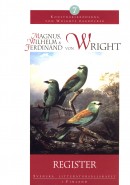 Konstnärsbröderna von Wrights dagböcker 1–7
[The diaries of the von Wright brothers, Vols. 1–7]
Magnus von Wright: Dagbok [Diary] 1824–1834. 407 p., ill. ISBN 951-583-026-5
Magnus von Wright: Dagbok [Diary] 1835–1840. 470 p., ill. ISBN 951-583-040-0
Magnus von Wright: Dagbok [Diary] 1841–1849. 431 p., ill. ISBN 951-583-047-8
Magnus von Wright: Dagbok [Diary] 1850–1862. 496 p., ill. ISBN 951-583-060-5
Magnus von Wright: Dagbok [Diary] 1863–1868. 493 p., ill. ISBN 951-583-085-0
€ 46 each, hardback
Wilhelm & Ferdinand von Wright: Dagböcker [Diaries] 615 p., ill. ISBN 978-951-583-137-8.
€ 46, hardback
Index: 398 p., ill. ISBN 978-951-583-138-5. € 20, hardback
Helsinki: Svenska Litteratursällskapet i Finland, 1996–2010
Toimittaneet [Ed. by]: Anto Leikola, Juhani Lokki, Torsten Stjernberg, Johan Ulfvens
The three von Wright brothers, who came from a family with nine children in rural north Savo (in eastern Finland), shared a talent for meticulous observation combined with masterful technique and a romantic style. Each of these artists, who were active during the Biedermeier era, was a trailblazer in his own field: Magnus (1805–1868) as a proponent of Finnish national art, Wilhelm (1810–1887) as a wildlife illustrator, and Ferdinand (1822–1906) as a painter of landscapes and birds. Their contribution to Nordic ornithology is considerable. The index volume to the von Wright brothers’ diaries (which were written in Swedish) includes lists of their artworks and details of works held by collections abroad. This series is of significant cultural importance, and it is remarkable for its scientific accuracy. Five volumes consist of Magnus von Wright’s diary entries, which he wrote daily from 1820 up until his death. The sixth volume contains diary entries by the two younger brothers, which provide insights into the everyday life and society of that era, as well as the artists’ working practices and their relationship with nature.
Nature’s own
22 April 2010 | Extracts, Non-fiction
As night falls, the silence is broken by pattering of small feet on the greying windowsill of an old, abandoned house: entire families may live under the rotten floorboards. Houses now inhabited not by humans but by wild animals are observed by Kai Fagerström and Heikki Willamo
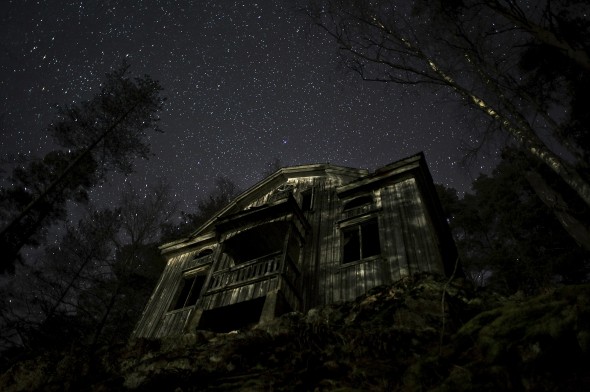
The wolf's hour? An abandoned house is alive...
Extracts from Viimeiset vieraat. Elämää autiotaloissa [The last visitors. Life in abandoned houses, Maahenki, 2010] by Kai Fagerström, Risto Rasa & Heikki Willamo. Text by Willamo, poems by Rasa, photographs by Fagerström and Willamo
Some thirty years later I found the badgers’ cottage again – it wasn’t the same one, but the mood of my childhood still floated there. Grey walls and a shingle roof, bare gaping windows, the door creaking on its single hinge. Oak tree in the yard, lilacs flourishing wild. The forest was rapidly reclaiming its own behind the cottage. The mounds of sand beside the wall bases showed prints of strong-clawed paws and a number of paths, hardened from use, led into the woods. More…
The guest event
12 November 2010 | Fiction, Prose
A short story from Vattnen (‘Waters’, Söderströms, 2010)
It was a lagoon. The water was not like out at sea, not a turquoise dream with white vacation trimming on the crests of the waves. This water was completely still and strange, brown yet clear, sepia and umber, perhaps cinnamon, possibly cigar with the finest flakes of finest wrapper. Clean. This water of meetings was clear and clean in a non-platonic, remarkably earthbound way.
Sediment and humus, humus floating about in the morning sun.
It felt comforting, as if the water didn’t repel the foreign bodies as a matter of course, didn’t immediately suppress the other particles and sanctimoniously hasten to force anything that wasn’t water, anything that could be interpreted as pollution and encroachment, down to the bottom and let it dissolve and die all by itself. This water sang its earth-brown song of unity without thereby becoming any less water than water-water was.
Helena felt cold. More…
Too much, too soon?
20 January 2012 | This 'n' that
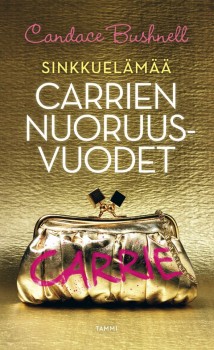 Candace Bushnell’s Summer & the City (about Carrie Bradshaw’s first years in NYC, published last year) is categorised among books for children and young people on the Finnish best-sellers’ list. The Finnish translation occupied the eighth place in December.
But hang on, wasn’t this Carrie in the fantastically famous HBO television adaptation of Bushnell’s novel Sex and the City very much in her thirties, as were her three best friends – all with, yes, quite active ‘adult’ sex lives…? In Finland the series had a rather silly title, Sinkkuelämää, ‘Single life’.
Well, of course it would be foolish not to continue the fantasticaly famous money-spinning saga, so Bushnell has gone back in time, first to Carrie’s school years in small-town America in The Carrie Diaries (2010), then to her first years in NYC in Summer & the City (2011) – and HarperCollins has pigeonholed them among its ‘teen books’.
Confusingly, the Finnish titles of these two books also contain the word referring to the television series: Sinkkuelämää – Carrien nuoruusvuodet and Sinkkuelämää – Ensimmäinen kesä New Yorkissa. As the Finnish publisher Tammi has attached TV title to them, the customer assumes these are books for ‘adults’ – as indeed was the original Sex and the City.
This makes one wonder what exactly ‘books for young people’ are. The main characters are teens themselves? If Bushnell goes still further back in time, we shall be reading about naughty Li´l Carrie hitting another toddler on the head with her doll, in a board book.
Jera Hänninen & Jyri Hänninen: Tuhansien aatteiden maa. Ääriajattelua nyky-Suomessa [Land of a thousand ideologies. Extremist thought in contemporary Finland]
11 March 2011 | Mini reviews, Reviews
 Tuhansien aatteiden maa. Ääriajattelua Nyky-Suomessa
[Land of a thousand ideologies. Extremist thought in contemporary Finland]
Helsinki: Johnny Kniga Kustannus, 2010. 267 p.
ISBN 978-951-0-36072-9
€ 30, paperback
There are a number of extremist ideologies with a foothold in Finland. Even though most such groups are very small, religious and political extremism have experienced growth and do not always remain on the margins. The authors of this book have chosen to include only those ideologies whose efforts are clearly directed against particular groups or that would result in an erosion of democracy if they were to gain some real power. Topics receiving the greatest amount of attention in the media have been immigration and the polarisation within the Finnish Lutheran Church. According to some reports, the Church is being split over the issues of female clergy and homosexuality. This book also covers Finnish-born Islamists who support Sharia law, Communists who distort history and venerate the Soviet Union, honour killings carried out in Finland, and NRA Finland, a hard-line pro-gun lobbying organisation. The authors also discuss how these zealots, having gained more support, have also begun to influence the positions of mainstream political parties.
Translated by Ruth Urbom
Aquatic escapades
12 November 2010 | Reviews
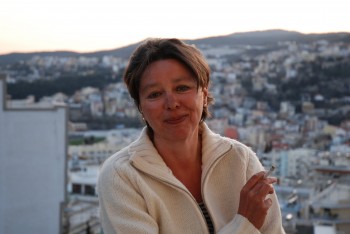
Susanne Ringell. Photo: Anders Larsson
First about the form: the wavy, turquoise cover of Vattnen (‘Waters’), Susanne Ringell’s third collection of short stories, is protected by a layer of waxed paper that looks like a thin film of ice.
Inside the book, water flows everywhere: the twelve stories are set in it or near it, or mimic it in form. The water symbolises a fundamental force, a consolation, but also an elusivity. The characters in the stories exist in a kind of volatile, intermediate state – they are heading for a crisis or are in the moment immediately after one.
Since 1993 Ringell (born 1955) has produced short story collections, poetry, prose poetry, mini-stories and a novel. In them, as in Vattnen (Söderströms, 2010), Ringell’s language is her own: beautiful, robust and fragile, vivid, subtle and at the same time practical. More…