

Search results for "jarkko laine prize"
Translation prize to Angela Plöger
23 October 2014 | In the news
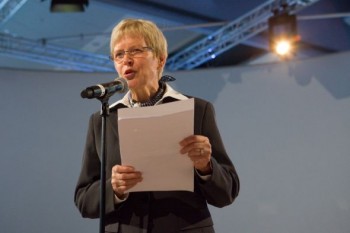
Angela Plöger, Frankfurt Book Fair, 8 October. Photo: Katja Maria Nyman
The 40th Finnish State Prize for the Translation of Finnish Literature of 2014 – worth €15,000 – was awarded to the German translator Angela Plöger at the Frankfurt Book Fair on 8 October.
Dr Angela Plöger (born 1942) studied Finnish and Fennistics in Berlin; she first came to Finland in the 1960s after having become interested in the Finnish language as a result of learning Hungarian.
‘I had been to the restaurant at the Helsinki Railway Station where Bertolt Brecht was thinking how the noblest part of a man is his passport, and how Finns are a people who keeps silent in two languages.’
Plöger then defected to West Germany, starting her career anew. She has also translated texts from Hungarian and Russian. In her speech in the Finnish Pavilion of the Book Fair Plöger said that in her opinion translating literature is the most fascinating profession in the world.
Her first translation of a Finnish novel was Tamara, by Eeva Kilpi, published in 1974. Among the most recent of the 40 novels Plöger has translated during the past five decades from Finnish are the novels Kätilö (‘Midwife’, 2011) by Katja Kettu and Kun kyyhkyset katosivat (‘When the doves disappeared’, 2012) by Sofi Oksanen. Among the other works Plöger has translated are novels by Leena Lander, Eeva-Kaarina Aronen, Anja Snellman, Kaari Utrio, Johanna Sinisalo, Risto Isomäki and Antti Tuuri, as well as a number of drama texts by Laura Ruohonen, Juha Jokela, Aki Kaurismäki, Pirkko Saisio and Sofi Oksanen.
The Minister for Culture and Housing, Pia Viitanen, thanked Plöger for her extensive and multi-faceted work in the field of language and literature and in promoting Finnish literary culture in Germany.
The prize, worth € 15,000, has been awarded by the Ministry of Education and Culture since 1975 on the basis of a recommendation by FILI – Finnish Literature Exchange.
Finlandia Prize candidates 2011
17 November 2011 | In the news
 The candidates for the Finlandia Prize for Fiction 2011 are Eeva-Kaarina Aronen, Kristina Carlson, Laura Gustafsson, Laila Hirvisaari, Rosa Liksom and Jenni Linturi.
Their novels, respectively, are Kallorumpu (‘Skull drum’, Teos), William N. Päiväkirja (‘William N. Diary’, Otava), Huorasatu (‘Whore tale’, Into), Minä, Katariina (‘I, Catherine’, Otava), Hytti no 6 (‘Compartment number 6’, WSOY) and Isänmaan tähden (‘For fatherland’s sake’, Teos).
Kallorumpu takes place in 1935 in Marshal Mannerheim’s house in Helsinki and in the present time. Laila Hirvisaari is a popular writer of mostly historical fiction: Minä, Katariina, a portrait of Russia’s Catherine the Great, is her 39th novel. Gustafsson’s and Linturi’s novels are first works; the former is a bold farce based on women’s mythology, the latter is about guilt born of the Second World War.
The jury – journalist and critic Hannu Marttila, journalist Tuula Ketonen and translator Kristiina Rikman – made their choice out of 130 novels. The winner, chosen by the theatre manager of the KOM Theatre Pekka Milonoff, will be announced on the first of December. The prize is worth 30,000 euros. It has been awarded since 1984, to novels only from 1993.
The fact that this time all the candidates are women has naturally been the object of criticism: why are the popular male writers’ books of 2011 missing from the list?
Another thing that these novels share is history: five of them are totally or partially set in the past – Finland in 1935, Paris in the 1890s, Russia/Soviet Union in the 18th century and in the 1980s, and 1940s Finland during the Second World War. Even the sixth, Huorasatu, bases its depiction of the present day in women’s prehistory, patriarchy and the ancient myths.
The jury’s chair, Hannu Marttila, commented: ‘This book year is sure to be remembered for a generational and gender change among those who write literature about the Second World War in Finland. Young woman writers describe the war with probably greater diversity than before. From the non-fiction writing of recent years it is clear that the struggles and difficulties of the home front are increasingly being recognised as part of the general struggle for survival, and on the other hand the less heroic aspects of war, the shameful and criminal elements, have also become acceptable as objects of study.’
Marttila concluded his speech: ‘When picking mushrooms in the forest, I have learned that it is often worth humbly peeking under the grass, and that the most glaring cap is not necessarily the best…. Perhaps it is time to forget the old saying that there is literature, and then there is women’s literature.’
Comic prize
26 March 2010 | In the news
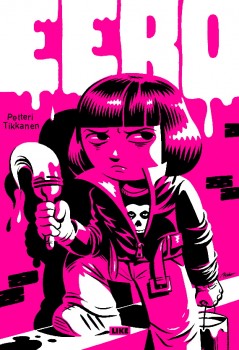
Eero the hero: the winner of the Sarjakuva-Finlandia comics prize 2010
Sarjakuva-Finlandia, worth €5,000, is the name of a prize created in 2007 for Finnish graphic novels or comic books. (Sarjakuva, literally ‘serial picture’, refers to both comic strips and books as well as graphic novels.)
It is awarded annually at the Tampere comics festival (and has nothing to do with the Finlandia prizes for literature, awarded by the Finnish Book Foundation).
Out of 56 contestants, ten made it into the final run, and the winner, Eero, by Petteri Tikkanen, was chosen by the thriller writer Matti Rönkä.
Petteri Tikkanen (born 1975) is a graphic artist who has published several books. In his previous graphic novels about a girl named Kanerva, Eero has appeared as her friend. Now Eero is the central character, and it seems childhood is over. Kanerva likes to chill out with her girlfriends only – what is a boy to do?
Candidates for the Runeberg Prize
23 December 2009 | In the news
Seven books were chosen out of approximately 200 to be the candidates of the Runeberg Prize, to be awarded on 5 February 2010. More…
Translation prize
27 August 2010 | In the news

Rami Saari. Photo: Charlotta Boucht
This year the Finnish Government Prize for Translation of Finnish Literature – worth € 10,000 – was awarded to the poet, translator, linguist and literary critic Rami Saari who translates into Hebrew.
Saari (born 1963) has studied and taught Hebrew, Semitic languages and Finno-Ugric Language Studies at universities in Helsinki, Budapest and Jerusalem. He has been the editor of the Israeli section of the international poetry website poetryinternational.org since 2002 and has edited a book series for Ha-kibbutz hameuchad which publishes predominantly Nordic and Baltic literature.
Saari, who has also published seven collections of his own poetry, now lives in Athens. He has also translated Albanian, Spanish, Catalan, Greek, Portuguese, Hungarian and Estonian fiction.
Among the Finnish writers Saari has translated are Daniel Katz, Eeva Kilpi, Eino Leino, Veijo Meri, Timo K. Mukka, Sofi Oksanen, Arto Paasilinna, Raija Siekkinen, Eeva Tikka, Sirkka Turkka and Mika Waltari.
Rami Saari received his award in Helsinki on 25 August from the minister of culture and sports, Stefan Wallin. The prize has been awarded by the Ministry of Education and Culture since 1975 on the basis of a recommendation from FILI – Finnish Literature Exchange.
Translation prize
20 August 2009 | In the news
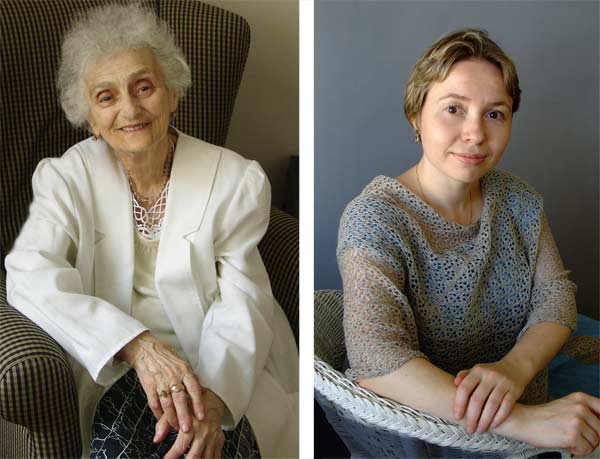
Left: Ljudmila Braude; right: Anna Sidorova. Photos: Irmeli Jung
This year the Finnish Government Prize for Translation of Finnish Literature, worth €10,000, was divided between two Russian translators. Lyudmila Braude and Anna Sidorova received their awards in Helsinki on 12 August from the minister of culture and sports, Stefan Wallin.
Braude was born in Leningrad in 1927, Sidorova half a century later in Vyborg, in 1978.
Dr Lyudmila Braude specialised in the translation of German and Nordic literature. Since 1991 she has translated Finland-Swedish fiction, Tove Jansson’s works in particular; all Jansson’s Moomin books as well as a selection of her novels and stories for adults are available to Russian readers. Books by the classic children’s writer Zachris Topelius as well as Finland-Swedish poetry by classic and contemporary poets have also been among her translations. Braude has received various international prizes for her work. More…
Prize for the best debut book
20 November 2014 | In the news
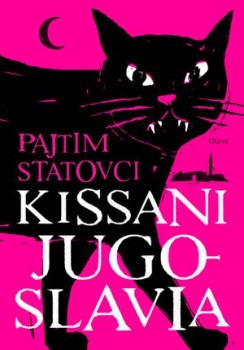 The Helsingin Sanomat literature prize for the best first work, written in Finnish, for 2014 was awarded on 13 November to Kosovo-born Pajtim Statovci, 24, for his novel Kissani Jugoslavia (‘Yugoslavia my cat’, Otava – see translated extracts here).
The choice was made by a five-strong jury from a total of 65 books. The prize, which was this year awarded for the 20th time, is worth €15,000.
Among the ten finalists were a collection of essays, three collections of poetry and six novels. According to the jury, Statovci’s novel, ‘drowns the reader, after a realistic description of events, in a dreamlike, lyrical vision. This kind of writing is not taught anywhere. The skill either resides in the writer or it doesn’t.’
Government Prize for Translation 2011
24 November 2011 | In the news
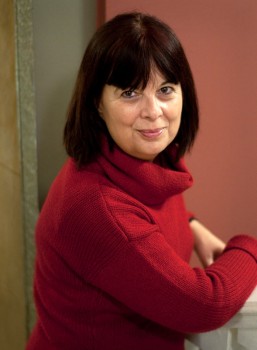
María Martzoúkou. Photo: Charlotta Boucht
The Finnish Government Prize for Translation of Finnish Literature of 2011 – worth € 10,000 – was awarded to the Greek translator and linguist María Martzoúkou.
Martzoúkou (born 1958), who lives in Athens, where she works for the Finnish Institute, has studied Finnish language and literature as well as ancient Greek at the Helsinki University, where she has also taught modern Greek. She was the first Greek translator to publish translations of the Finnish epic, the Kalevala: the first edition, containing ten runes, appeared in 1992, the second, containing ten more, in 2004.
‘Saarikoski was the beginning,’ she says; she became interested in modern Finnish poetry, in particular in the poems of Pentti Saarikoski (1937–1983). As Saarikoski also translated Greek literature into Finnish, Martzoúkou found herself doubly interested in his works.
Later she has translated poetry by, among others, Tua Forsström, Paavo Haavikko, Riina Katajavuori, Arto Melleri, Annukka Peura, Pentti Saaritsa, Kirsti Simonsuuri and Caj Westerberg.
Among the Finnish novelists Martzoúkou has translated are Mika Waltari (five novels; the sixth, Turms kuolematon, The Etruscan, is in the printing press), Väinö Linna (Tuntematon sotilas, The Unknown Soldier) and Sofi Oksanen (Puhdistus, Purge).
María Martzoúkou received her award in Helsinki on 22 November from the minister of culture and sports, Paavo Arhinmäki. Thanking Martzoúkou for the work she has done for Finnish fiction, he pointed out that The Finnish Institute in Athens will soon publish a book entitled Kreikka ja Suomen talvisota (‘Greece and the Finnish Winter War’), a study of the relations of Finland and Greece and the news of the Winter War (1939–1940) in the Greek press, and it contains articles by Martzoúkou.
The prize has been awarded – now for the 37th time – by the Ministry of Education and Culture since 1975 on the basis of a recommendation from FILI – Finnish Literature Exchange.
Finlandia Prize for Non-Fiction 2011
24 November 2011 | In the news
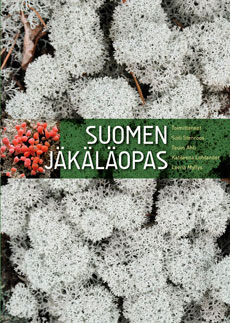 ‘Scientific, aesthetic, timely: the work is all of these. A work of non-fiction can be both precisely factual and emotional, full of both information and soul. A good non-fiction book will surprise. I did not expect to be enthused by lichens, their variety and colours,’ declared Professor Alf Reen in announcing the winner of this year’s Finlandia Prize for Non-Fiction on 17 November.
The winning work is Suomen jäkäläopas (‘Guidebook of lichens in Finland’), edited by Soili Stenroos & Teuvo Ahti & Katileena Lohtander & Leena Myllys (The Botanical Museum / The Finnish Museum of Natural History). The prize is worth €30,000.
The other works on the shortlist of six were the following: Kustaa III ja suuri merisota. Taistelut Suomenlahdella 1788–1790 [(‘Gustav III and the great sea war. Battles in the Gulf of Finland 1788–1790’, John Nurminen Foundation), written by Raoul Johnsson, with an editorial board consisting of Maria Grönroos & Ilkka Karttunen &Tommi Jokivaara & Juhani Kaskeala & Erik Båsk; Unihiekkaa etsimässä. Ratkaisuja vauvan ja taaperon unipulmiin (‘In search of the sandman. Solutions to babies’ and toddlers’ sleep problems’ ) by Anna Keski-Rahkonen & Minna Nalbantoglu (Duodecim); Operaatio Hokki. Päämajan vaiettu kaukopartio (‘Operation Hokki. Headquarters’ silenced long-distance patrol’), an account of a long-distance patrol strike in eastern Karelia during the Continuation War in 1944, by Mikko Porvali (Atena); Trotski (‘Trotsky’, Gummerus; biography) by Christer Pursiainen; and Lintukuvauksen käsikirja (‘Handbook of bird photography’) by Markus Varesvuo & Jari Peltomäki & Bence Máté (Docendo).
The Finlandia Prize for Fiction 2013
5 December 2013 | In the news
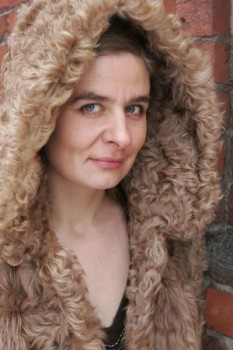
Riikka Pelo. Photo: Heini Lehväslaiho
The director general of the Helsinki City Theatre, Asko Sarkola, announced the winner of the 30th Finlandia Literature Prize for Fiction, chosen from a shortlist of six novels, on 2 December in Helsinki. The prize, worth €30,000, was awarded to Riikka Pelo for her novel Jokapäiväinen elämämme (‘Our everyday life’, Teos).
In his award speech Sarkola – and actor by training – characterised the six novels as ‘six different roles’:
‘They are united by a bold and deep understanding of individuality and humanity against the surrounding period. They are the perspectives of fictive individuals, new interpretations of the reality we imagine or suppose. Viewfinders on the present, warnings of the future.
‘Riikka Pelo‘s Jokapäiväinen elämämme is wound around two periods and places, Czechoslovakia in 1923 and the Soviet Union in 1939–41. The central characters are the poet Marina Tsvetaeva and her daughter Alya. This novel has the widest scope: from stream of consciousness to interrogations in torture chambers and the labour camps of Vorkuta; always moving, heart-stopping, irrespective of the settings.’
The five other novels were Ystäväni Rasputin (’My friend Rasputin’) by JP Koskinen, Hotel Sapiens (Teos) by Leena Krohn, Terminaali (‘The terminal’, Siltala) by Hannu Raittila, Herodes (‘Herod’, WSOY) by Asko Sahlberg and Hägring 38 (‘Mirage 38’, Schildts & Söderströms; Finnish translation, Kangastus, Otava) by Kjell Westö (see In the news for brief features).
How to win literary prizes
30 September 1991 | Archives online, Fiction, Prose
A short story from Terveessä ruumiissa (‘In a healthy body’, Gummerus, 1990)
Later, as he mulled over the moments just before it all happened – with himself delivering his appreciative peroration to the prizewinner in the front row – the Chairman of the Prize Committee could recall no warning sign. Antti was tense, of course, but, considering his artistic sensitivity and the hundred-strong audience, there was nothing abnormal about that.
The Chairman was improvising from scanty notes: only the finishing touch was written out in full:
‘And so, with immense gratitude, we shall store up your many achievements in our hearts and minds.’ More…
And the winner is… Finlandia Prize for Fiction 2014
27 November 2014 | In the news
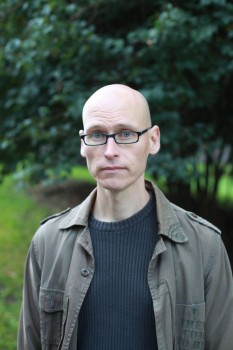
Jussi Valtonen. Photo: Markko Taina
The winner of the prize this year, worth €30,000 and awarded on 27 November, is He eivät tiedä mitä he tekevät (‘For they know not what they do’, Tammi) by Jussi Valtonen (born 1974), a psychologist and writer. The novel – 558 pages – is his third: it focuses on the relationship of science and ethics in the contemporary world, with an American professor of neuroscience, married to a Finn, as the protagonist.
Professor Anne Brunila – who has worked, among other posts, as a CEO in forest and energy industry – chose the winner. In her awarding speech she said: ‘The novel is an astonishing combination of perceptive description of human relationships, profound moral and ethical reasoning, science fiction and suspense…. I have never encountered a Finnish portrayal of our present era that is anything like it.’
The other five novels on the shortlist of six were the following:
Kaksi viatonta päivää (‘Two innocent days’, Gummerus) by Heidi Jaatinen is a story of a child whose parents are not able to take care of her; Olli Jalonen’s Miehiä ja ihmisiä (’Men and human beings’, Otava) focuses on a young man’s summer in the 1970s. Neljäntienristeys (‘The crossing of four roads’, WSOY), a first novel by Tommi Kinnunen, is a story set in the 20th-century Finnish countryside over three generations. Kultarinta (‘Goldbreast’, Gummerus) by Anni Kytömäki is a first novel about generations, set in the years between 1903 and 1937, celebrating the Finnish forest and untouched nature. Graniittimies (‘Granite man’, Otava) by Sirpa Kähkönen portrays a young, idealistic Finnish couple who move to the newly-founded Soviet Union to work in the utopia they believe in.
Finlandia Junior Prize 2011
7 December 2011 | In the news
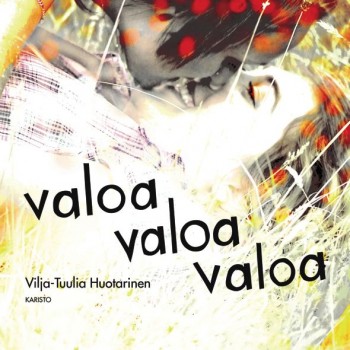 The musician Paula Vesala has chosen, from a shortlist of six, a book for young people by the poet Vilja-Tuulia Huotarinen, Valoa valoa valoa (‘Light light light’, Karisto). The story, which is set at the time of the Chernobyl nuclear power station disaster, poetically describes the passion and pain of first love, longing for mother and death.
‘Not just what is told, but how it is told. The rythm and timbre of Vilja-Tuulia Huotarinen’s language are immensely beautiful. Her phrases do not exist merely to tell the story, but live like poetry or song. Valoa valoa valoa does not incline toward young people from the world of adults; rather, its voice comes, direct and living, from painful, confusing, complex youth, in which young people should really be protected from adults and their blindness. I would have liked to read this book when I was fourteen,’ commented Vesala.
The other five shortlisted books were a picture book for small children, Rakastunut krokotiili (‘Crocodile in love’, Tammi) by Hannu Hirvonen & Pia Sakki, a philosophical picture book about being different and courageous entitled Jättityttö ja Pirhonen (‘Giant girl and Pirhonen’, Tammi) by Hannele Huovi and Kristiina Louhi; a dystopic story set in the 2300s, Routasisarukset (‘Sisters of permafrost’, WSOY), by Eija Lappalainen & Anne Leinonen; a novel about the war experiences of an Ingrian family, Kaukana omalta maalta (‘Far away from homeland’, WSOY) by Sisko Latvus and an illustrated book about gods and myths of the world, Taivaallinen suurperhe (‘Extended heavenly family’, Otava) by Marjatta Levanto & Julia Vuori.
The prize, awarded by the Finnish Book Foundation on 23 November, is worth €30,000.
French prize for Sofi Oksanen
26 August 2010 | In the news
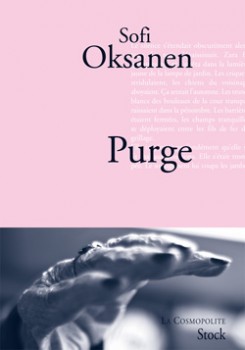 In August the ninth Prix du Roman FNAC was awarded to Sofi Oksanen (born 1977) for her novel Puhdistus (English translation, by Lola Rogers: Purge; see a recent British review [Guardian, August 21] here), to be published in French (by Editions Stock) on August 25 under the title Purge. This is the first time FNAC – the largest bookshop chain in France – has awarded the prize to an author who doesn’t write in French.
The jury consists of 900 booksellers and representatives from the general public. They read 300 novels published in France this year, and the winner was chosen out of 30 finalists.
The Finnish production company Solar Films Inc. will transform Puhdistus into a film in 2012: the screenwriter is Marko Leino.
Finlandia Prize for Non-Fiction 2010
19 November 2010 | In the news
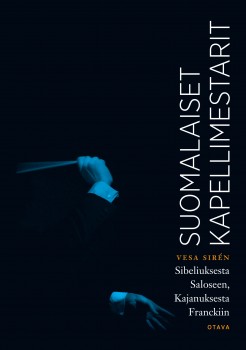 A massive tome running to 1,000 pages by Vesa Sirén, journalist and music critic of the Helsingin Sanomat newspaper, features Finnish conductors from the 1880s to the present day. On 18 November it became the recipient of the 2010 Finlandia Prize for Non-Fiction by the Finnish Book Foundation, worth €30,000.
The choice, from six shortlisted works, was made by economist Sinikka Salo. Suomalaiset kapellimestarit: Sibeliuksesta Saloseen, Kajanuksesta Franckiin (‘Finnish conductors: from Sibelius to Salonen, from Kajanus to Franck’) is published by Otava.
The other five works on the shortlist were Itämeren tulevaisuus (‘The future of the Baltic Sea’, Gaudeamus) by Saara Bäck, Markku Ollikainen, Erik Bonsdorff, Annukka Eriksson, Eeva-Liisa Hallanaro, Sakari Kuikka, Markku Viitasalo and Mari Walls; the Finnish Marshal C.G. Mannerheim’s early 20th-century travel diaries, Dagbok förd under min resa i Centralasien och Kina 1906–07–08 (‘Diary from my journey to Central Asia and China 1906–07–08’, Svenska litteratursällskapet i Finland & Atlantis), edited by Harry Halén; Vihan ja rakkauden liekit. Kohtalona 1930-luvun Suomi (‘Flames of hatred and love. 1930s Finland as a destiny’, Otava) by Sirpa Kähkönen; Suomalaiset kalaherkut (‘Finnish fish delicacies’, Otava) by Tatu Lehtovaara (photographs by Jukka Heiskanen) and Puukon historia (‘A history of the Finnish puukko knife’, Apali) by Anssi Ruusuvuori.