

Search results for "tommi+musturi/2010/05/song-without-words/2009/09/what-god-said/2011/04/matti-suurpaa-parnasso-1951–2011-parnasso-1951–2011"
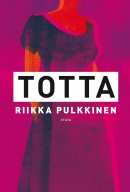
Riikka Pulkkinen: Totta [True]
22 October 2010 | Mini reviews, Reviews
 Totta
Totta
[True]
Helsinki: Otava, 2010. 333 p.
ISBN 978-951-1-22965-0
€ 31,40, hardback
The second novel by Riikka Pulkkinen (born 1980) is a comprehensive work that tackles big themes: love, death and rejection. Pulkkinen’s particular strengths as an author are her richly nuanced language and her mastery of structure. While the ending provides food for thought, the book is an enjoyable novel about childhood, growing up, daring to love and live. Martti, a seventy-year-old artist, is caring for his sick wife, a highly respected psychologist. Martti and Elsa have had a long and happy marriage. Then it emerges that Martti had a long affair with their live-in childminder Eeva, whose story grows into one of the main plot strands of the book. Their love story takes place against the background of the 1960s, when the waves passing through European society reached Finland as well. Pulkkinen skilfully brings the perspective of the now grown-up daughter Eleonoora into the mix, as she views her early childhood under the care of two mother figures. At the 2010 Frankfurt Book Fair translation rights to Totta were sold to six countries, which at least goes to show that there is interesting literature to be found in the Nordic countries beyond the ubiquitous crime novels.
Georg August Wallin: Skrifter. Band 1 [Writings. Volume 1]
2 December 2010 | Mini reviews, Reviews
 Skrifter. Band 1: Studieåren och resan till Alexandria
[Writings. Vol. 1: Studies and the journey to Alexandria]
Utg. [Edited by] av Kaj Öhrnberg & Patricia Berg & Kira Pihlflyckt
Helsinki: Svenska litteratursällskapet i Finland, 2010. 455 p., ill.
ISBN 978-951-583-189-7
ISBN 978-91-7353-371-3 (Bokförlaget Atlantis, Stockholm, 2010)
€ 43, hardback
This is the first volume of a planned six-volume critical edition of the writings of Finnish Arabic scholar Georg August Wallin (1811–1852). The main material for the first volume consists of full text of Wallin’s travel diaries and letters from the years 1831–1843. The Arabic texts are accompanied by parallel Swedish translations. The preface contains an overview of the phases of Wallin’s life and the schools of Orientalism and Rousseau which influenced his work. Wallin’s seven-year research journey to the Middle East, and particularly his crossing of the northern Arabian peninsula as the first Western researcher to do so, brought Wallin great international acclaim. Wallin was the first researcher to record the poetry and study the dialects of the desert Bedouin. He is particularly well known for his visits to the holy cities of Mecca and Medina, forbidden to non-Muslims, and to the women’s quarters in their harems.
Panem et circenses?
2 February 2012 | This 'n' that

The Guggenheim Foundation's global network of museums
What does Helsinki need? Bread and circuses, yes, but at what cost the latter?
In January – after a study that cost the Finns a couple of million euros – the Salomon R. Guggenheim Foundation (est. 1937) indicated that it was favourably inclined toward the construction of a new art museum, bearing its name, in Helsinki. The leaders of Helsinki city council are aiming to make a positive decision as soon as possible.
The cost of the building, whose site adjoins the Presidential Palace in central Helsinki, is estimated at 130–140 million euros, with design costs of about 11 million euros. Unlike in the case of Berlin, no existing building is considered suitable; instead, an architectural dream must be realised, with plenty of wow-factor.
Its mere maintenance costs will be around 14.5 million euros a year. It has been estimated that the Helsinki Guggenheim’s income could be 7.7 million a year. In addition, a 20-year Guggenheim licence costs 24.6 million euros.
The project has provoked widely differing reactions. Proponents of the project believe that the Guggenheim brand would bring thousands of new visitors to Helsinki and that half a million people would visit it each year. Opponents doubt this, speak of a ‘Guggenburger’ franchising concept and of the fact that not even the existing art museums of Helsinki are particularly crowded.
The odd thing is, however, that the basic demographic differences between Helsinki and, say, Bilbao – where the Guggenheim museum has been a big success – are constantly ignored in the discussions: the population of Spain is almost 50 million and another 50 million visitors go there every year, while the corresponding figures for this most northerly part of Europe are five million inhabitants and visitors.
In Bilbao, moreover, there was no museum of contemporary art before the advent of the Guggenheim; Helsinki, on the other hand, opened Kiasma, a new museum of contemporary art (165,000 visitors in 2010) in 1998 and the neighbouring city of Espoo its Emma museum of modern art (82,000 visitors in 2010) in 2006.
Economic prospects on any level now offer little hope. The Finnish government, in the shape of the ministry of culture, has just cut grants to state-aided museums by three million euros – the Museum of Cultures in Helsinki, for example, is closing its doors, and some 40 of the museum staff elsewhere will be sacked. The government is not promising any money to the Guggenheim.
How, then, to fund an annual deficit of 7 million euros? Finland does not have a great supply of art-minded millionaire sponsors, and no one has so far made any concrete offers on how to fund this project.
The Guggenheim Foundation itself is not taking any financial risks with this project. Neither has it announced in any detail what sort of art will feature in the museum’s temporary exhibitions.
People who live in the city are more preoccupied with, for example, the shortcomings of the health services: there are waiting lists for everything, often of many weeks, and the old university children’s hospital has outgrown its present space. There are cuts and shrinkages yet to come in the spending structure of the country as a whole and of Helsinki – civil servants themselves estimate that the city’s budget is not sufficient to cover even the upkeep of basic services.
To judge by the public debate, the deep ranks of Helsinki taxpayers do not want a new monument, one for which it will be necessary to pay – in addition to maintenance – more than a million euros a year to an American brand for the mere use of its name, for more than 20 years.
Do the people of Helsinki wish to begin to pay additional taxes for the revival, yet again, of the age-old dream of guaranteeing Finland ‘a place on the world map’, in a situation where economic difficulties are a matter of everyday life for increasing numbers of them? (We believe, incidentally, that Finland already has an appropriate place on the world map.) Will their opinion be asked, or heard?
Paris 2
30 September 1987 | Archives online, Fiction, Prose
An extract from the novel Paholaispoika (‘The devil boy’, 1987). Introduction by Austin Flint
You must sit down, sayes Love, and taste my meat:
So I did sit and eat.
(George Herbert)
The city was the sum of the whole century, the capital of the eighteen hundreds, of no particular country. Like millions of others, I passed time reading the newspapers and keeping up with what was happening in Europe. Acorns would get crushed. There were many omens of how everything would turn out.
There were still a few remnants of the World’s Fair over by the Palais Royal. Not very many. The latest and most shocking incident was that the Lipschitz sculpture, ‘Prometheus Strangling the Vulture’, had been chopped to bits. Then it was put into storage, in some secret place. Crumbling rough grey stone that gave no idea of its shape. Rumour had it that the statue had offended official policy, and all sorts of things were certainly in the air. There was no longer any sign of the sculpture near the Palais Royal. More…
The fox and the bear
30 December 2008 | Children's books, Fiction
A story from the children’s book Sorsa norsun räätälinä (‘The mallard as tailor to the elephant’, Otava, 2008; illustrated by Christel Rönns. Introduction by Päivi Heikkilä-Halttunen
Back in the days when mallard still had horns, earthworms, claws, and the bear had a long tail, a bear was trudging dejectedly along the road.
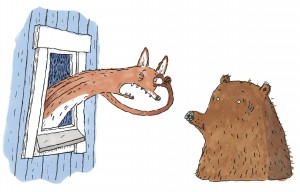
Up drove a fox in his van, studded tires crunching, for it was winter and freezing cold. The fox was coming from fishing and his van was bursting with fresh fish. When he saw the bear, the fox stopped, rolled down the window and called, ‘Why hi there, old honey snout! Where’re you coming from?’
‘I was playing cards at Badger’s. I lost all my money and now I’m starving,’ the bear replied.
‘Jump in. No need to suffer in the grip of this cold,’ the fox said. The fox and the bear were good friends. However, the fox envied the bear, because Mr Honeypaws had a much longer, more handsome tail than the fox did. The bear clambered into the fox’s car and saw the enormous catch of fish.
‘Wherever did you get such an incredible amount of fish?’ the bear marvelled.
‘The lake. That’s where you get fish,’ the fox replied. ‘Last week I caught such a big pike that I made snow shovels out of its scales.’ More…
Liisa Kallio: Pikku Papu [Little Papu]
31 January 2011 | Mini reviews, Reviews
 Pikku Papu
[Little Papu]
Kuvitus [Ill. by]: Liisa Kallio
Helsinki: Tammi, 2010. 31 p.
ISBN 978-951-31-5242-0
€10.30, hardback
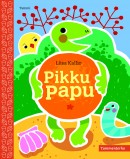
In 2009, Finnish publisher Tammi launched its Tammenterho (‘Acorn’) series of picture books written by established Finnish authors to run along its Tammen Kultaiset kirjat (Tammi Golden Books series, modelled after a US imprint dating back to the 1940s). Pikku Papu is a jolly wandering tale for the smallest children. Papu the Tortoise notices that his shell, which he left on the beach while he went for a swim, has shrunk. In his search for a solution to his problem, he encounters a number of animals. Papu tries to cover himself with a glove he finds on the beach, but it proves to be too warm, and an eggshell he is given by a bird cracks. Fortunately, of course, everything works out in the end. This gentle story lets children identify colours and shapes and recognise various animals. The collage illustrations are attractive, and the text is simple, calmly told and appropriately short.
Translated by Ruth Urbom
Reetta Niemelä & Salla Savolainen: Sinisen kärpäsen sirkus ja muita runoja [The blue fly circus and other poems]
3 February 2011 | Mini reviews, Reviews
 Sinisen kärpäsen sirkus ja muita runoja naapurinötököistä
[The blue fly circus and other poems about neighbourhood creepy-crawlies]
Kuvitus [Ill. by]: Salla Savolainen
Helsinki: Otava, 2010. 40 p.
ISBN 978-951-1-24002-0
€20, hardback
Reetta Niemelä has provided a breath of fresh air in Finnish children’s poetry with her collections Makkarapiruetti (‘Sausage pirouette’, 2005) and Kakaduu (‘Cockatooo’, 2009), whose onomatopoeic sounds and whimsical grammar are reminiscent of children’s language play as they learn to speak. This book opens up the secrets of the world of earthworms and the tiniest of insects to the reader, revealing natural wonders at (literally) grass-roots level. The most delightful aspect, however, is to be found in its illustrations: Salla Savolainen employs a painstaking, richly nuanced woodcut technique, which puts a natural finishing touch to the collection. This sort of delicacy has not been seen in children’s book illustration in a very long time! Savolainen’s images seem light, breezy and lively – each little bug has its own charismatic personality.
Translated by Ruth Urbom
Timo Parvela & Jussi Kaakinen: Taro maan ytimessä [Taro at the centre of the Earth]
3 February 2011 | Mini reviews, Reviews
 Taro maan ytimessä
[Taro at the centre of the Earth]
Kuvitus [Ill. by]: Jussi Kaakinen
Helsinki: WSOY, 2010. 24 p.
ISBN 978-951-0-36718-6
€22, hardback
Illustrator Jussi Kaakinen (born 1978) is known for, among other things, his illustrations for the graphic novel version of Risto Isomäki’s sci-fi work Sarasvatin hiekkaa (‘The sands of Sarasvati’, 2008) and two children’s non-fiction books, Suomen lasten historia (‘A Finnish children’s history’, 2005) and Suomen lasten taidehistoria (‘A Finnish children’s art history’, 2009). Taro maan ytimessä is his first picture book in his own right. Kaakinen employs an experimental illustration style here, borrowing from comic book techniques, to create an appropriately fast-paced text. The children in the story are curious to find out whether they can dig deep enough in their sandbox to reach the other side of the world. Taro has a bear for a friend who constructs a machine out of old junk that can dig into the Earth and then into outer space. On their daredevil journey, the pair encounter a greedy monster worm with a sweet tooth. Their adventure ends when Taro returns home, although the space worm, making a racket in the sewers, ought to be hidden from his parents…. Taro maan ytimessä is a pacey, visually striking adventure that will be especially enthralling to boys.
Translated by Ruth Urbom
Good school, bad pupils, or vice versa?
21 December 2012 | This 'n' that

Number one: Finland. The Pearson analysis, 2012
Finland is used to feeling pretty good about itself when it comes to education. In the widely respected PISA tests – the Organisation for Economic Co-operation and Development’s exams in science and literacy – Finnish schoolchildren have, since the turn of the century, been outperforming most of their peers.
A shock came in 2009 when the tests revealed that Finnish kids were only third-best at reading, and sixth in maths; but by this time they were competing against the newly participating Asian countries, with their huge concentration on education.
Now, however, a new league table, drawn up by the education publishers Pearson, places Finland right at the top (2006–2010, 40 countries). Second place is held by South Korea; third is Hong Kong. The Pearson analysis uses a broader set of criteria, using not just test results but broader measures such as how many people go to university. In a result that is causing some puzzlement in the United Kingdom, Britain is rated sixth. Entirely, say critics, because British universities are so easy to get into.
The results are indeed flattering to Finland – but Finnish children’s motivation to learn is among the weakest in the survey’s countries. In reading, mathematics and the sciences Finns’ attitudes and application were low. It looks as if Finnish children consider school a place to hang out with their friends, not a place for teaching and learning. Countries where competition is stronger breed different attitudes.
So here’s the Finnish paradox: kids here hate school – yet still end up at the top of the list.
Must be something in the water.
Linnoista lähiöihin. Rakennetut kulttuuriympäristöt Suomessa [From castles to suburbs. Built cultural environments in Finland]
26 August 2010 | Mini reviews, Reviews
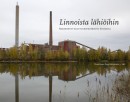 Linnoista lähiöihin. Rakennetut kulttuuriympäristöt Suomessa
[From castles to suburbs. Built cultural environments in Finland]
Toim. [Ed. by] Pinja Metsäranta
Helsinki: Finnish Literature Society, 2010. 239 p., ill.
ISBN 978-952-616-206-8
€ 42, hardback
The 2009 inventory of the Finnish National Board of Antiquities includes about 1,300 nationally important built cultural environments, about a tenth of which are represented in this volume. The book introduces the reader to churches, mansions and military barracks, as well as to idyllic countryside and areas formed by industrial agglomerations. Reflected in the inventory is the diversity of the built landscape: the timber prefab districts and concrete housing estates, the reindeer fences of Lapland and the lighthouses of the archipelagos. On display are architectural masterpieces as well as everyday environments: hospitals, schools and prisons. Rural depopulation and urban sameness have changed the landscape in recent decades, but the book shows that much of value still remains. The book contains a list of all the inventory items, also available on the Board’s website (in Finnish and Swedish).
Nordic prize
11 December 2009 | In the news
The Finnish nominees for the Nordic Council’s Literary Prize, to be awarded in March 2010, are the novels Puhdistus (‘Purge’, the winner of the Finlandia Prize for Fiction in 2008) by Sofi Oksanen, and Glitterscenen (‘The Glitter Scene’, 2009) by Monika Fagerholm.
The prize, worth €47,000, will be selected by a jury from a shortlist of 11 works from the Nordic countries. The most recent Finnish winner of the prize was Kari Hotakainen’s Juoksuhaudantie (‘Trench Road’, which also won the Finlandia Prize for Fiction) in 2004.
Last flamenco in Seville
5 November 2010 | Fiction, poetry
The tragic story of a gypsy woman, famously transformed into an opera by Georges Bizet, inspired Saila Susiluoto to write about freedom in the contemporary world: her new collection of poems, entitled Carmen, is set in the shopping centre of an asphalt city. But is this classic femme fatale really a human being – or a cyborg, perhaps? Introduction by Teppo Kulmala
She was made of plastic strips, metal bits, artificial skin, implants, circuit boards. Her heart pumped blood like a real one, her eyes watered as necessary. She was made free and loving, and almost soulful. But the soul is a quirk, said the Creator, a human mistake causing pain and death. And confusion. And the degradation of this world. They left out what they couldn’t say, what they were unable to say. They said: your name is Carmen, go forth, find your balance on threads across the world, you are a meek machine, built to love everything except just one man. You are glowing wires, bright shiny strips of plastic, a mind made of images and tones, your step is light, go, go.
The mall’s scintillating youth choir
(gesticulating in the manner of a musical)

The Confirmation Present
30 June 1980 | Archives online, Fiction, Prose
An excerpt from Rakas rouva K (‘Dear Mrs K.’, 1979). Introduction and interview by Auli Viikari
Lahtinen read through what he had written so far, and it pleased him, especially the quotation from Clausewitz. “It could be said,” he went on, “that the victories of the French Revolution during those two decades were due in most cases to the mistaken policies of its opponents, even though the actual coup that shook the world took place within the framework of war.” His article was about the British attitude to Germany’s expansionist policies. There would not be another Munich, he felt sure: the House of Commons had cheered Chamberlain for the last time. Where, he asked himself, would England eventually abandon the role of passive onlooker? At Danzig, surely. It would not be like Poland to give something for nothing. She would set a world war in motion, of that he had no doubt. And he could see Poland dissolving into ruin before his very eyes. More…
Delina
30 September 1999 | Archives online, Fiction, Prose
A short story from Löytöretkeilijä ja muita eksyneitä (‘The explorer and other lost people’, Tammi, 1999). Introduction by Soila Lehtonen
The stranger met Delina at a development organisation’s work camp, but Delina was not a volunteer. Delina lived in the country permanently.
The stranger did not spend very much time in Delina’s company. His evenings were spent with fellow-volunteers in the village cafe, where Delina’s parents did not allow her to go. During the day, both of them worked in their separate ways: Delina at home and the stranger in the work camp’s fields.
The stranger did, however, get to know the girl well enough to hear that she was in love with a soldier called Zmiri from the nearest garrison. This soldier was arrested once when he and his comrades drunkenly molested volunteers – but Delina knew nothing of the case. More…
Choosing a play
30 September 1981 | Archives online, Fiction, Prose
A short story from Leiri (‘The camp’). Introduction by Vesa Karonen
The local amateurs were having their theatre club meeting on a Friday evening in the main part of the parish hall. It was late August, the light was beginning to fade and no one had remembered to put the lights on. First the stage grew dark, then the floor, then the ceiling. The light lingered on the inside wall for the longest. There were creaks and groans from the rooms at the back and from the attic. The caretaker had been moving around in there about three in the afternoon, and his traces lingered, as they do in old buildings.
“Something of that sort but short, and it’s got to be bloody funny,” said the chairman, a carpenter called Ranta.
In the store cupboard there were 108 old scripts. Tammilehto, the secretary, hauled out about 30 scripts onto the table. His job was running a kiosk down the road.
“Nothing out of date,” said Ranta.
“There’s got to be a bit of love in it, I say,” said Mrs Ranta.
She had a taxi-driver’s cap on her head and was wearing a man’s grey summer jacket, a white shirt and a blue tie. Her car could be seen from the window. It was in the yard. She always parked her car so it could be seen from inside. More…