

Search results for "tommi+musturi/2010/05/song-without-words/2009/09/what-god-said/2011/04/matti-suurpaa-parnasso-1951–2011-parnasso-1951–2011"
The magic box: childhood revisited
25 December 2014 | Essays, Non-fiction
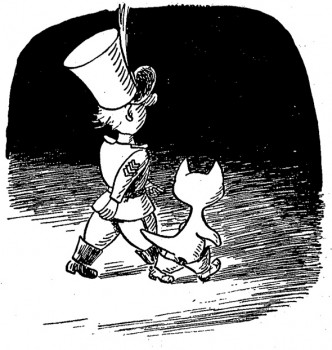
The tin soldier and the Blue Cat. Illustration: Usko Laukkanen
A tribute to Oiva Paloheimo’s children’s novel Tinaseppä ja seitsemän (‘The Tinsmith and the Seven’, illustrated by Usko Laukkanen, WSOY, 1956)
I’ve happened upon this (Christmassy) text of mine – first published in Books from Finland back in 1995 – when sorting through my papers as I begin to contemplate my retirement. With it I would like to offer my goodbyes, and many thanks, to you – to our readers, for whom I have been commissioning, editing and writing texts for the past thirty-one years – it’s time to do other things; time to read the books that still remain unread…
A dusky winter’s afternoon. Outside, soft and grey, a little snow is falling. I am sitting in our living-room, in an armchair covered in a pale yellow boucle fabric, my legs curled up, eating a carrot. In my lap is a book which I have fetched from the library after school. Conversation, the faint clattering of crockery, a singing kettle, the smell of food: grandmother and mother are cooking supper in the kitchen. My little sister is asleep.
But these sounds and the room around me do not really exist: there is only the world of make-believe in which Tiina sets off on her adventures with the Blue Cat, the Tinsmith, the St Bernard dog, the star and the spider: that world is a magic box which is able to contain all of childhood. More…
What Finland read in November
17 December 2010 | In the news
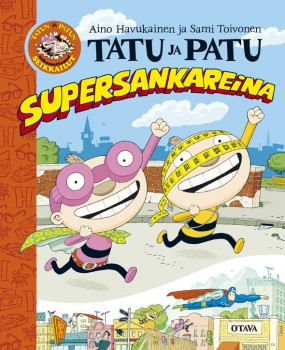
Superheroes: Tatu and Patu by Aino Havukainen & Sami Toivonen
In November the latest thriller by Ilkka Remes, Shokkiaalto (‘Shock wave’, WSOY) topped the Booksellers’ Association of Finland’s list of the best-selling Finnish fiction. Sofi Oksanen’s prize-winning, much-translated 2008 novel Puhdistus (Purge, WSOY), has not left the best-selling list since it was awarded the Finlandia Prize for Fiction this autumn and was now number two.
Riikka Pulkkinen’s novel Totta (‘True’, Otava) was number three, and Tuomas Kyrö’s colllection of episodes from a grumpy old man’s life as told by himself, Mielensäpahoittaja (‘Taking offense’, WSOY), from last spring, occupied fourth place.
A new novel, Harjunpää ja rautahuone (‘Harjunpää and the iron room’, Otava), by the grand old man of Finnish crime, ex-policeman Matti Yrjänä Joensuu, was number five.
The most popular children’s book was a new picture book about two inventive and curious brothers, Tatu ja Patu supersankareina (‘Tatu and Patu as superheroes’, Otava) by Aino Havukainen and Sami Toivonen.
On the translated fiction list were books by, among others, Ildefonso Falcones, Jo Nesbø, Lee Child, Stephen King, Paulo Coelho and Paul Auster.
The non-fiction list included the traditional annual encyclopaedia Mitä missä milloin (‘What, where, when’, Otava, second place) as well as a political skit entitled Kuka mitä häh (‘Who what eh’, Otava) by Pekka Ervasti and Timo Haapala – the latter sold better, coming in at number one. In November the latest thriller by Ilkka Remes, Shokkiaalto (‘Shock wave’, WSOY) topped the Booksellers’ Association of Finland’s list of the best-selling Finnish fiction.
Fairy tales of a journalist
31 March 1984 | Archives online, Authors
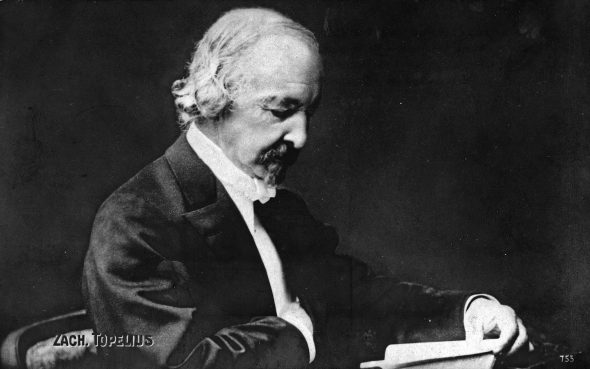
Zacharias Topelius. Photo: SLS
In 1918, Selma Lagerlöf, the Swedish novelist and recipient of the Nobel Prize for literature, was commissioned by the Swedish Academy to write a book on the life and works of Zacharias Topelius, in celebration of the centennial of his birth. As she says in the introduction to her Zachris Topelius of 1920 (where she uses the familiar contraction of the great man’s given name), she realized that she was up against the monster work-in-progress of Valfrid Vasenius, which had already reached three volumes and which would not be finished, with six, until 1930.
Lagerlöf jotted down her almost novelistic account of Topelius’s first thirty-eight years, from his birth in Ostrobothnia, as the son of a country doctor with strong folkloristic interests, to the appearance of his major patriotic poem of 1856, Islossningen i Uleå älv (‘The breakup of the ice in Uleå river’), filled with hopeful thoughts about an independent Finland. It can be reckoned that more people have enjoyed Lagerlöf’s chatty pages than have struggled with Vasenius’ positivistic monument, and that a common notion of Topelius, influenced either by Aunt Selma or schoolteachers who have partaken of her burbling spirit, is that of a man too good and emotionally too limited to be great. More…
Johanna Ilmakunnas: Kapiot, kartanot, rykmentit. Erään aatelissuvun elämäntapa 1700-luvun Ruotsissa [Trousseaus, manors, regiments. The lifestyle of one noble house in 18th-century Sweden]
28 July 2011 | Mini reviews, Reviews
 Kapiot, kartanot, rykmentit. Erään aatelissuvun elämäntapa 1700-luvun Ruotsissa
[Trousseaus, manors, regiments. The lifestyle of one noble house in 18th-century Sweden]
Helsinki: Suomalaisen Kirjallisuuden Seura, 2011. 524 p., ill.
ISBN 978-952-222-264-0
€ 38, hardback
This book deals with the lifestyles, finances and consumption habits of the high nobility of Sweden in the 18th century (which included Finland at that time). The central figure is Count Axel von Fersen (1719–1794), a very influential statesman and soldier, and his German-Baltic lineage. This portrait broadens into a lifestyle study, providing extensive information on the customs and the world of the nobility of that era, such as the institution of marriage, child-rearing, mistresses, clothing and interior decor – as indicators of one’s social status – artistic activities, games and gastronomy. The topic of consumption is linked to social, cultural, ideological and legal perspectives. In the lives of the high nobility, money – or lack thereof – was not a defining feature; rather, choices were governed by ideals, values and obligations such as honour, reputation, faith and origin. Johanna Ilmakunnas is a historical researcher and editor. This book is based on her award-winning doctoral thesis (2009).
Translated by Ruth Urbom
Pen to paper
25 October 2012 | Articles, Non-fiction
Writing is ancient: the act of taking a stylus, a quill or a pen into one’s hand still feels powerful. Will we find a way of scrawling in space, to mark our individuality, wonders Teemu Manninen
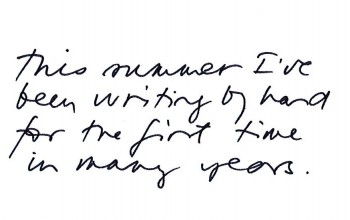
It was my vacation, and I wanted to catch up on some fun writing projects, but because I didn’t want to depend on my devices (would we have wifi? would the batteries last?) or carry around too much extra stuff I bought a red notebook and wrote in black ink on white paper while sitting in cafes and restaurants with my wife.
Writing by hand got me – surprise – to thinking about handwriting in general. Etymologically, ‘writing’, from Old English writan, means scratching, drawing, tearing. In the original Hebrew, God does not simply fashion humans out of clay, he writes them: his word is his image, giving life to the letter of his meaning, the human being.
Writing is violence. It brings about vivid change in the matter of the world: in the age of clay tablets, the stylus was a carving instrument. During the age of ink, cutting the tip of the quill was, if we believe the early Renaissance manuals of handwriting, as precise and violent an act as cutting someone’s head off. More…
A gay fantasy on national themes
19 March 2012 | Authors, Reviews
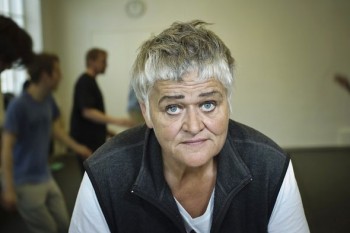
Pirkko Saisio. Photo: Laura Malmivaara
Why does the private become political? Who makes it happen? Why should religious doctrines define private matters such as sexuality? Why should those who wield power in the political system define personal sexuality?
Pirkko Saisio (born 1949), a theatremaker as well as a prolific and versatile author of plays, novels, film and television scripts, has written a play for the Finnish National Theatre entitled HOMO! and subtitled, ‘An anarchist musical farce’.
Answers to the above questions – and they are complicated – are to be found in, for example, historical, psychological and sociological research.
In the last century, Stalin and Hitler condemned gays. Thirty years ago homosexuality was considered an sickness in Finland; forty years ago it was a crime. Today, it is still illegal in more than 75 countries: punishments vary from flogging to life imprisonment or death. In democratic societies, the ‘gay problem’ is a question of human rights, and hence a subject for public debate – for example, in a musical play, for of course the issue also involves that eternally fascinating and entertaining feature of human life, love. More…
Stories in the stone
2 December 2010 | Extracts, Non-fiction
Extracts from Jägarens leende. Resor in hällkonstens rymd (‘Smile of the hunter. Travels in the space of rock art’, Söderströms, 2010)
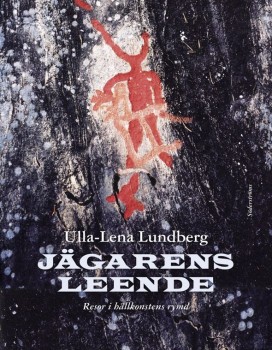 ‘Why do some people choose to expend what is often a great deal of effort hammering images in the bedrock itself, while others conjure up, in the blink of an eye, brilliantly radiant pictures on a rock-face that was empty yesterday but is now peopled by mythological animals, spirits and shamans?
‘I think about this often – I who love painting but who still chose a career that involves me sitting and hammering away, day in and day out, like a true rock-carver,’ writes author and ethnologist Ulla-Lena Lundberg in her new book on the art of the primeval man
When the children of Israel went into Babylonian captivity, hanging up their harps on the willow-trees and weeping as they remembered Zion, my sister and I were already sitting by the rivers of Babylon. We knew how they felt. Our father was dead and we had been sent away from our home. We sat there clinging to each other, or rather I was the one clinging to Gunilla, and she had to try to rouse herself and find something for us to do, to give us something else to think about. More…
Mikko Lahtinen: Kirjastojen maa [Land of libraries]
4 March 2011 | Mini reviews, Reviews
 Kirjastojen maa
[Land of libraries]
Tampere: Vastapaino, 2010. 394 p., ill.
ISBN 978-951-768-315-9
€ 43, hardback
Libraries are the most widely used cultural service in Finland. Kirjastojen maa describes the journey undertaken by the protagonist, who refers to himself as ‘the Library Man’, and his entourage to 250 public libraries around Finland between 2008 and 2010. Many of these sites were celebrating their 150th anniversaries at the time, since there was a great enthusiasm for establishing public libraries in Finland in the 1850s. This travel journal provides a history of libraries as an institution and their development into a central pillar of society. The author also considers Finnish intellectual space in this age of digital media. Libraries currently face significant challenges: the recent wave of local authority mergers, centralisation of public services and funding cuts are all hampering the development of library operations. The importance of libraries is further underlined by the fact that local residents have launched protests in support of libraries threatened with closure – in spite of the usual difficulty of rousing Finns to man the barricades. The author is a philosopher, political researcher and active participant in public policy discussions.
Translated by Ruth Urbom
Jorma & Päivi Tuomi-Nikula: Nikolai II: Suomen suuriruhtinas [Nicholas II: Grand Duke of Finland]
11 March 2011 | Mini reviews, Reviews
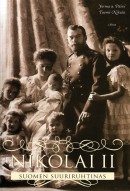 Nikolai II: Suomen suuriruhtinas
[Nicholas II: Grand Duke of Finland]
Jyväskylä: Atena, 2010. 283 p., ill.
ISBN 978-951-796-650-4
Swedish-language edition:
Nikolaj II: Storfurste av Finland
Helsingfors: Schildts, 2010
ISBN 9789515018714
€ 41, hardback
This work is the first Finnish biography of the last Grand Duke of Finland, Tsar Nicholas II (1868–1918). It provides a new approach to historical writing in its treatment of the Tsar’s relationship with Finland in the face of increasing terror, the First World War and the 1917 revolutions. Terrorism as a form of resistance during the period of oppression in 1904–07 was more widespread in Finland than previously thought. Extracts from diaries, letters and other documents provide the background to events on the global political stage as well as the private lives of the figures. Finns initially responded favourably to Nicholas’ ascent to the throne in 1894, but this trust soon declined with Nicholas’ policy of Russification. Despite these increasingly strained relations, Nicholas enjoyed spending his holidays in Finland. This book contains a wealth of photographs, including some from the personal albums of Anna Vyrubova, a lady-in-waiting who fled to Finland. There are also never-before-published postcards dating from the era of oppression and revolution. The authors have previously written about the Tsars in Finland’s era as a Grand Duchy of Russia in their book Keisarit kesälomalla Suomessa (‘The emperors on summer holiday in Finland’, 2002).
Translated by Ruth Urbom
Vesa Sirén: Suomalaiset kapellimestarit. Sibeliuksesta Saloseen, Kajanuksesta Franckiin [Finnish conductors. From Sibelius to Salonen and from Kajanus to Franck]
17 February 2011 | Mini reviews, Reviews
 Suomalaiset kapellimestarit. Sibeliuksesta Saloseen, Kajanuksesta Franckiin
[Finnish conductors. From Sibelius to Salonen and from Kajanus to Franck]
Helsinki: Otava, 2010. 1,000 p., ill.
ISBN 978-951-1-21203-1
€ 38, hardback
This work, by music critic Vesa Sirén – awarded the Finlandia Prize for non-fiction in 2010 – attempts to explain what makes a good orchestra conductor. Including hundreds of interviews, the book takes a chronological approach, presenting portraits of sixty conductors from the 1880s up to current students of conducting. There are also contributions from music critics, as well as even tougher assessments from musicians, contemporaries of the conductors. The high standard of Finnish music education, which has been easily accessible to young people – at least until the recent times –, provides part of the answer, as does the conducting course at the Sibelius Academy under the long-serving leadership of Jorma Panula. Sirén’s archival research has unearthed some forgotten treasures, including the lost archives of Robert Kajanus and conductor’s notes in Jean Sibelius’ own handwriting.
Translated by Ruth Urbom
Candidates for the Runeberg Prize
23 December 2009 | In the news
Seven books were chosen out of approximately 200 to be the candidates of the Runeberg Prize, to be awarded on 5 February 2010. More…
Markus Nummi: Karkkipäivä [Candy day]
26 November 2010 | Mini reviews, Reviews
 Karkkipäivä
[Candy day]
Helsinki: Otava, 2010. 383 p.
ISBN 978-951-1-24574-2
€28, hardback
Like this one, Markus Nummi’s previous novel, Kiinalainen puutarha (‘Chinese garden’, 2004), set in Asia at the turn of the 20th century, involves a child’s perspective. Karkkipäivä‘s main theme, however, is a portrait of contemporary Finland. Tomi is a little boy whose alcoholic parents are incapable of looking after him; Mirja’s mother is a frantic workaholic heading for a nervous breakdown. She is a control freak who secretly gorges on chocolate at work and beats her little daughter – a grotesque portrait of contemporary womanhood. Tomi manages to get some adult attention and help from a writer; the relation between them gradually builds into one of trust. Katri is a social worker, empathetic but virtually helpless as part of the social services bureaucracy. Virtually every adult suspects others of lying, finding each other’s motives doubtful. Nummi (born 1959) has structured Karkkipäivä with great skill; the ending, in which matters are resolved almost by chance, is particularly gripping. This novel was nominated for the 2010 Finlandia Prize for Fiction.
Teemu Keskisarja: Vihreän kullan kirous. G.A. Serlachiuksen elämä ja afäärit [The curse of green gold. The life and affairs of G.A. Serlachius]
17 March 2011 | Mini reviews, Reviews
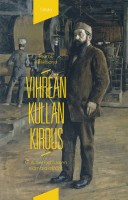 Vihreän kullan kirous. G.A. Serlachiuksen elämä ja afäärit
[The curse of green gold. The life and affairs of G.A. Serlachius]
Helsinki: Kustannusosakeyhtiö Siltala, 2010. 350 p., ill.
ISBN 978-952-234-041-2
€ 35, hardback
In the famine years of the 1860s and with no inherited fortune to his name, G.A. Serlachius (1830–1901) built his industrial centre in the rural backwoods of Mänttä. His work laid the foundations for what would become one of Europe’s leading paper manufacturers. G.A. Serlachius was a Finnish self-made man whose education was cut short due to his family’s financial difficulties. The energetic Serlachius is considered to have pioneered contacts with Western European markets; he was responsible for bringing the first icebreaker ship to Finland. Serlachius was also known as a patron of the arts and a supporter of artists; the collection of the Serlachius Art Foundation is his best-known legacy. According to this biography, Serlachius suffered from ‘an extremely advanced megalomania’ in the opinion of his bankers, and his personality was ‘more aggressive than many Finnish-born generals of the Pax Russica’. The Association of the Friends of History selected this book as its History Book of the Year for 2010.
Translated by Ruth Urbom
Markku Koski: ‘Hohto on mennyt herrana olemisesta’ [‘The glory has gone from being a VIP’]
7 May 2010 | Mini reviews, Reviews
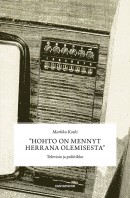 ‘Hohto on mennyt herrana olemisesta’ – Televisio ja poliitikko
[‘The glory has gone from being a VIP’ – the television and the politician]
Tampere: Vastapaino, 2010. 254 p.
ISBN 978-951-768-249-7
€ 29, paperback
This book, based on the author’s doctoral thesis in Media and Communication Studies at the University of Tampere, presented in February 2010, takes as its starting point Walter Benjamin’s well-known essay, ‘The Work of Art in the Age of Mechanical Reproduction’. Koski applies Benjamin’s ideas on cinema and film stars to contemporary television and politics. Koski maintains that while the public have become alienated from politics, politicians have also become alienated from themselves and have become reiterative entities whose essential content is repetition. After television and other new media have called into question traditional forms of politics, a significant challenge for politicians has been to prevent viewers from getting bored. Koski discusses relationship between politics and comedy, the ‘cynical’ viewer, the popular public image of Marshal Mannerheim (an iconic figure in Finnish history and politics) and the popularity of Sauli Niinistö, the frontrunner in the upcoming (2012) Finnish presidential election. Dr Koski also considers historical and contemporary image politicians in various other countries.