

Search results for "tommi+musturi/2010/05/song-without-words/2009/09/what-god-said/2011/04/matti-suurpaa-parnasso-1951–2011-parnasso-1951–2011"
Tuomas Kyrö: Mielensäpahoittaja ja ruskeakastike [Taking offence: brown sauce]
25 April 2012 | Mini reviews, Reviews
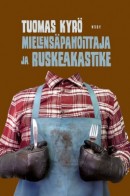 Mielensäpahoittaja ja ruskeakastike
[Taking offence: brown sauce]
Helsinki: WSOY, 2012. 130 p., ill.
ISBN 978-951-0-39079-5
€23.90, hardback
The most popular book by Tuomas Kyrö (born 1974), so far, has been his sixth novel, Mielensäpahoittaja (‘Taking offence’: literally ‘He who takes offence’, 2010). It has sold nearly 65,000 copies as a book and audiobook. The protagonist is a 80-something man, a sturdy old bear who lives in the countryside, now alone, because his demented wife has been taken into care and the children have long since left home. Kyrö inserts genuine humour into the monologues of his stubborn – but by no means simple – character, defiantly critical, opposing new gadgets, fads and all sorts of silly stuff of the contemporary society. In this sequel Kyrö still manages to entertain the reader with his detailed portrait: now Mr Grumpy has to learn to cook, because the food a paid helper brings in just isn’t good enough. With the potato as the cornerstone of his diet, he finally learns how to make good, fatty and salty meals of meat and veg. ‘One must remember what’s important in life, marriage and prostate problems. Time and patience.’ Illustrations remind the reader of the old times: photographs of television programmes and printed recipes from the 1960s and 1970s.
Kari Tarkiainen: Ruotsin Itämaa. Esihistoriasta Kustaa Vaasaan [Sweden’s Eastland. From prehistoric times to Gustav Vasa]
18 April 2013 | Mini reviews, Reviews
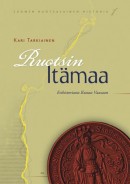 Ruotsin Itämaa. Esihistoriasta Kustaa Vaasaan
[Sweden’s Eastland. From prehistoric times to Gustav Vasa].
[Finlands svenska historia del 1: Sveriges Österland. Från forntiden till Gustav Vasa, 2008; Finland’s Swedish history vol. 1, translated into Finnish by the author]
Helsingfors: Svenska litteratursällskapet i Finland, 2010. 331 p., ill.
ISBN 978-951-583-212-2
€39.90, hardback
The historian and archivist Kari Tarkiainen is starting a four-volume series with the general title ‘Finland’s Swedish history’: it forms part of a project funded by Finland’s Swedish-language cultural organisations. This book examines Finland’s prehistoric, medieval and early modern periods, with special emphasis on the two-way relations between Swedes and Finns, and their mutual influence. Initially Finland’s annexation by Sweden from the 12th to the 14th century as ‘Österland’ (Eastland) was a process that involved many stages and also some belligerence, as the Republic of Novgorod in the east also laid claim to the region. Settlements of Swedish-speakers were established on the Åland islands and the coasts; the Swedish Catholic Church (replaced during the Reformation by the Lutheran Church) and the Swedish-language administrative and social system extended their influence on the country, even though Finnish remained the principal language of Finns. Finland remained part of Sweden until the early 19th century. Ruotsin Itämaa is a fascinating book, which draws on archeology, linguistics and onomastics, and is beautifully illustrated.
Translated by David McDuff
Lassi Saressalo: Pois Suomesta [Out of Finland]
12 July 2010 | Mini reviews, Reviews
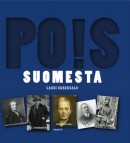 Pois Suomesta – Suomesta paenneita, karkotettuja, väkisin vietyjä, laittomasti lähteneitä
[Out of Finland – refugees, deportees, abductees, illegal emigrants]
Tampere, Traff Kustannus, 2010. 297 p.
ISBN 978-952-99079-7-7
€ 29, hardback
Dr Lassi Saressalo, head of the Finnish Local Heritage Federation, has gathered a large collection of stories about people who were deported or abducted from Finland, or who fled as refugees. The examples relate to several periods of Finland’s history, including Swedish and Russian rule and the period since independence in 1918. People have had to leave Finland at different times for different reasons: some fled the cruelty of conquerors or conscription, others were forced to leave because of their political views or patriotic aims, either on their own initiative or by the government. The most recent cases discussed in the book date from the period following the end of the Second World War. The book is accompanied by a (Finnish-language) website, which provides additional background information on the events that are described as well as a forum for discussion.
Jukka Rislakki: Paha sektori. Atomipommi, kylmä sota ja Suomi [The sector of evil. The atomic bomb, the Cold War and Finland]
29 April 2011 | Mini reviews, Reviews
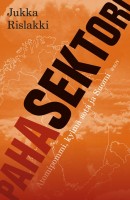 Paha sektori. Atomipommi, kylmä sota ja Suomi
[The sector of evil. The atomic bomb, the Cold War and Finland]
Helsinki: WSOY, 2010. 532 p., ill.
ISBN 978-951-0-36478-9
€ 39, hardback
This book explores the effects of the Cold War and nuclear weapons in Finland and northern Europe in the 1950s and 60s. The Finnish and US armies cooperated closely, without the consent – or even the knowledge – of the Finnish government and parliament. The Finns obtained intelligence on the Soviet Union for the Americans. The Finnish authorities provided around 100,000 aerial photographs of Finland to the US Air Force, and American planes used Finnish airspace to carry out surveillance of the USSR. The United States provided support to Finland by promoting trade between the two countries. When the Soviets carried out nuclear testing on the island territory of Novaya Zemlya, just 800 kilometres from Finland, in 1961, the CIA recommended the US launch a surprise nuclear attack on Novaya Zemlya as a show of force. That was never carried out, but radioactive fallout from the nuclear tests did spread over Finland – however, the Finnish authorities did not want to frighten people ‘unnecessarily’ by mentioning this. Rislakki’s book is based on previously secret archive materials, literature on the subject and interviews. It includes rare surveillance photographs and maps of possible bombing targets in Finland.
Translated by Ruth Urbom
Jorma Ollila – Harri Saukkomaa: Mahdoton menestys. Kasvun paikkana Nokia [Impossible success. Nokia as a growth point]
27 March 2014 | Mini reviews, Reviews
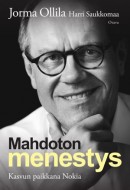 Mahdoton menestys. Kasvun paikkana Nokia
[Impossible success. Nokia as a growth point]
Helsinki: Otava Publishing Company , 2013. 480 pp., ill .
ISBN 978-951-1-18117-0
€39.60, hardback
One of the most fascinating stories in Finland’s recent history is the rapid rise of Nokia, thanks to the establishment of its mobile phones as a global brand in the 1990s, the decline in the company’s success in the 2000s, and its eventual abandonment of mobile phones. The boom was personified by the company’s talented CEO Jorma Ollila. His interesting memoirs are readily accessible to a non-specialist readership. When Ollila began work at the Nokia conglomerate in 1985 he had already shown an aptitude for business. He served first as the company’s director of finance, then as leader of the mobile phone unit, became managing director, and finally CEO from 1999 until 2006. Ollila decided to weed out the operations that were in difficulty and to focus on mobile phones and networks. With the support of a good management team, Ollila proved to be an energetic leader who knew how to share responsibility and also inspire and create trust. In his memoirs he analyses both the company’s successes and its mistakes and losses in the period up to 2010. Ollila stepped down from the post of chairman in 2012.
Translated by David McDuff
Konstnärsbröderna von Wrights dagböcker 1–7 [The diaries of the von Wright brothers, Vols. 1–7]
1 April 2010 | Mini reviews, Reviews
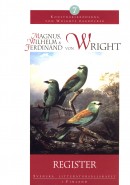 Konstnärsbröderna von Wrights dagböcker 1–7
[The diaries of the von Wright brothers, Vols. 1–7]
Magnus von Wright: Dagbok [Diary] 1824–1834. 407 p., ill. ISBN 951-583-026-5
Magnus von Wright: Dagbok [Diary] 1835–1840. 470 p., ill. ISBN 951-583-040-0
Magnus von Wright: Dagbok [Diary] 1841–1849. 431 p., ill. ISBN 951-583-047-8
Magnus von Wright: Dagbok [Diary] 1850–1862. 496 p., ill. ISBN 951-583-060-5
Magnus von Wright: Dagbok [Diary] 1863–1868. 493 p., ill. ISBN 951-583-085-0
€ 46 each, hardback
Wilhelm & Ferdinand von Wright: Dagböcker [Diaries] 615 p., ill. ISBN 978-951-583-137-8.
€ 46, hardback
Index: 398 p., ill. ISBN 978-951-583-138-5. € 20, hardback
Helsinki: Svenska Litteratursällskapet i Finland, 1996–2010
Toimittaneet [Ed. by]: Anto Leikola, Juhani Lokki, Torsten Stjernberg, Johan Ulfvens
The three von Wright brothers, who came from a family with nine children in rural north Savo (in eastern Finland), shared a talent for meticulous observation combined with masterful technique and a romantic style. Each of these artists, who were active during the Biedermeier era, was a trailblazer in his own field: Magnus (1805–1868) as a proponent of Finnish national art, Wilhelm (1810–1887) as a wildlife illustrator, and Ferdinand (1822–1906) as a painter of landscapes and birds. Their contribution to Nordic ornithology is considerable. The index volume to the von Wright brothers’ diaries (which were written in Swedish) includes lists of their artworks and details of works held by collections abroad. This series is of significant cultural importance, and it is remarkable for its scientific accuracy. Five volumes consist of Magnus von Wright’s diary entries, which he wrote daily from 1820 up until his death. The sixth volume contains diary entries by the two younger brothers, which provide insights into the everyday life and society of that era, as well as the artists’ working practices and their relationship with nature.
Nature’s own
22 April 2010 | Extracts, Non-fiction
As night falls, the silence is broken by pattering of small feet on the greying windowsill of an old, abandoned house: entire families may live under the rotten floorboards. Houses now inhabited not by humans but by wild animals are observed by Kai Fagerström and Heikki Willamo
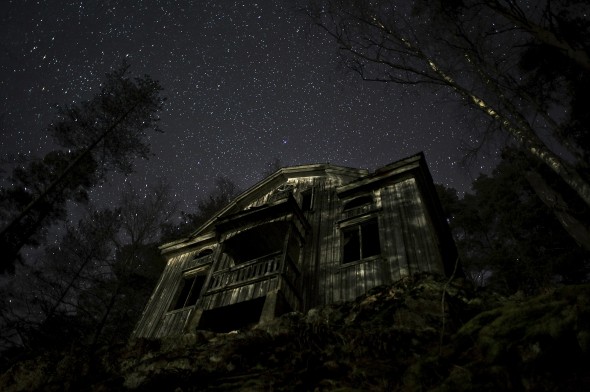
The wolf's hour? An abandoned house is alive...
Extracts from Viimeiset vieraat. Elämää autiotaloissa [The last visitors. Life in abandoned houses, Maahenki, 2010] by Kai Fagerström, Risto Rasa & Heikki Willamo. Text by Willamo, poems by Rasa, photographs by Fagerström and Willamo
Some thirty years later I found the badgers’ cottage again – it wasn’t the same one, but the mood of my childhood still floated there. Grey walls and a shingle roof, bare gaping windows, the door creaking on its single hinge. Oak tree in the yard, lilacs flourishing wild. The forest was rapidly reclaiming its own behind the cottage. The mounds of sand beside the wall bases showed prints of strong-clawed paws and a number of paths, hardened from use, led into the woods. More…
Jera Hänninen & Jyri Hänninen: Tuhansien aatteiden maa. Ääriajattelua nyky-Suomessa [Land of a thousand ideologies. Extremist thought in contemporary Finland]
11 March 2011 | Mini reviews, Reviews
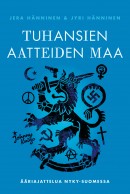 Tuhansien aatteiden maa. Ääriajattelua Nyky-Suomessa
[Land of a thousand ideologies. Extremist thought in contemporary Finland]
Helsinki: Johnny Kniga Kustannus, 2010. 267 p.
ISBN 978-951-0-36072-9
€ 30, paperback
There are a number of extremist ideologies with a foothold in Finland. Even though most such groups are very small, religious and political extremism have experienced growth and do not always remain on the margins. The authors of this book have chosen to include only those ideologies whose efforts are clearly directed against particular groups or that would result in an erosion of democracy if they were to gain some real power. Topics receiving the greatest amount of attention in the media have been immigration and the polarisation within the Finnish Lutheran Church. According to some reports, the Church is being split over the issues of female clergy and homosexuality. This book also covers Finnish-born Islamists who support Sharia law, Communists who distort history and venerate the Soviet Union, honour killings carried out in Finland, and NRA Finland, a hard-line pro-gun lobbying organisation. The authors also discuss how these zealots, having gained more support, have also begun to influence the positions of mainstream political parties.
Translated by Ruth Urbom
Aquatic escapades
12 November 2010 | Reviews
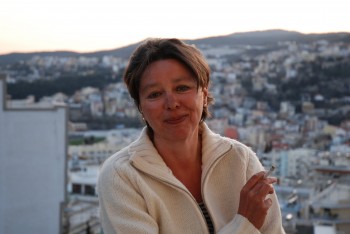
Susanne Ringell. Photo: Anders Larsson
First about the form: the wavy, turquoise cover of Vattnen (‘Waters’), Susanne Ringell’s third collection of short stories, is protected by a layer of waxed paper that looks like a thin film of ice.
Inside the book, water flows everywhere: the twelve stories are set in it or near it, or mimic it in form. The water symbolises a fundamental force, a consolation, but also an elusivity. The characters in the stories exist in a kind of volatile, intermediate state – they are heading for a crisis or are in the moment immediately after one.
Since 1993 Ringell (born 1955) has produced short story collections, poetry, prose poetry, mini-stories and a novel. In them, as in Vattnen (Söderströms, 2010), Ringell’s language is her own: beautiful, robust and fragile, vivid, subtle and at the same time practical. More…
Best foot forward
14 May 2010 | This 'n' that
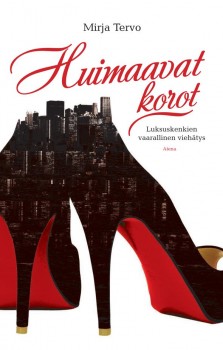 C’est moi. Tribute. Eliza. Muse. Monica. Very Privé, Super Private.
These are names of shoes that women buy in luxury shops on New York’s Fifth Avenue. Six inches or more of heels that cost anything between 500 and 5,000 dollars, make walking torture; but pain is tolerated, as along with the shoes a woman acquires a deeply satisfying feeling of being envied, beautiful and sexy (her toe cleavage has to be clearly visible).
Mirja Tervo (born 1971) is an ethnologist who spent a year and a half selling luxury shoes in Manhattan. Among her fellow sales personnel were a medical doctor, a musician, an actor and a retired baseball pro.
The shoe salon paid no salary, just commission of ten per cent, and the required minimum sale per week was 3,500 dollars. If a sales person failed to sell merchandise worth this sum, he or she was given a loan of 300 dollars, payable immediately when the results improved, and they quickly had to. More…
Itämeren tulevaisuus [The future of the Baltic Sea]
17 February 2011 | Mini reviews, Reviews
 Itämeren tulevaisuus
[The future of the Baltic Sea]
Contributors: Saara Bäck, Markku Ollikainen, Erik Bonsdorff, Annukka Eriksson, Eeva-Liisa Hallanaro, Sakari Kuikka, Markku Viitasalo, Mari Walls
Helsinki: Gaudeamus, 2010. 350 p., ill.
ISBN 978-952-459-132-6
€ 39, paperback
This publication covers the key environmental issues affecting the Baltic Sea and provides new perspectives on those issues. The Baltic, with its relatively small, shallow dimensions and low salinity, is one of only a few seas in the world that is home to both freshwater and saltwater fish species and inland and marine birds. The Kvarken Archipelago in the Gulf of Bothnia was granted UNESCO World Heritage Site status in 2006. There are some 85 million people living within range of the environmentally sensitive, heavily trafficked Baltic Sea in nine countries around its coastline and its drainage basin. Serious environmental alarm bells began to ring in the 1960s with the realisation that the white-tailed eagle was on the brink of extinction. The socio-political history of the Baltic has had an effect on its protection, since the border between two competing economic systems – communism and capitalism – ran right through it. The articles in this book make it clear that science has identified ways to protect the Baltic Sea, but these research findings are not being put into practice in official decision-making.
Translated by Ruth Urbom
Elina Hirvonen: Kauimpana kuolemasta [Furthest from death]
30 September 2010 | Mini reviews, Reviews
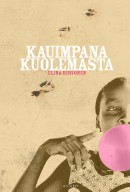 Kauimpana kuolemasta
[Furthest from death]
Helsinki: Avain, 2010. 240 p.
ISBN 978-952-5524-81-9
€ 30, hardback
Elina Hirvonen (born 1975) came to international attention with her first novel, Että hän muistaisi saman (English translation: When I forgot). With Kauimpana kuolemasta she shows that her success was well deserved: she has both talent and originality, and also courage linked with a sense of form. This book belongs to the genre of Finnish novels set at the interface between two countries, a device that in some hands can become a facile dramaturgical trick for the creation of contrasts. The interweaving of human stories from Finland with stories from Zambia sets all the alarm bells ringing, but the encounter between Paul and Esther, two sad people who lack a secure homeland, vibrates with emotion-charged scenes. Paul is the son of Finnish overseas aid workers, Esther is an outcast from her Zambian village, in flight from one hell to the next. Slowly Paul and Esther are brought together and the reader hovers in uncertainty as to whether their paths will ever cross. The two characters see and experience violence as they journey towards pain, but Elina Hirvonen’s sensual and life-affirming language conveys the realisation that hope is – sometimes – stronger than death.
Funny stuff favoured
13 April 2011 | In the news
 In March the Bookseller’s Association of Finland’s list of the best-selling Finnish fiction was topped – for a change – by a collection of poems. Like all her collections, Heli Laaksonen’s Peippo vei (‘The chaffinch took it’, Otava) is written in a local dialect spoken in south-western Finland.
Perttti Jarla’s latest comics book, Fingerpori 4 (‘Fingerborg 4’, Arktinen Banaani) was number two – and, demonstrating the Finns’ love of cartoons and comics, another of his titles, Fingerpori book, Fingerpori – Kamppailuni (‘Fingerborg – My fight’) occupied fourth place, following Sofi Oksanen’s Puhdistus (Purge), published in 2008 and still number three on the list. More…
Maarit Knuuttila: Kauha ja kynä. Keittokirjojen kulttuurihistoriaa [The ladle and the pen. The cultural history of the cookbook]
24 September 2010 | Mini reviews, Reviews
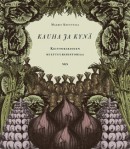 Kauha ja kynä. Keittokirjojen kulttuurihistoriaa
[The ladle and the pen. The cultural history of the cookbook]
Helsinki: SKS (The Finnish Literature Society), 2010. 207 p., ill.
ISBN 978-952-222-187-2
€ 26, hardback
This book by ethnologist Maarit Knuuttila describes the history of European cookbooks, recipes and cooking. Knuuttila familiarises the reader with the earliest documents relating to the preparation of food, which were written by the ancient Greeks and Romans, but of which only a few have been preserved. Instead of haute cuisine the book concentrates on the authors and users of basic Finnish cookery books, and examines how those books reflect the times in which they were written, as well as their significance for women. While the literary high culture of gastronomy has been produced mainly by men, the everyday dishes represented in the basic cookbooks are the work of women. The author discusses the changes in perceptions of the ideal home and health, as well as the ways in which Finnish cookery, housekeeping and food culture have altered during the past hundred years.
Timo Kalevi Forss & Martti Lintunen: Karjala edestakaisin [Karelia back and forth]
3 August 2011 | Mini reviews, Reviews
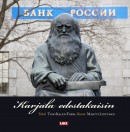 Karjala edestakaisin
[Karelia back and forth]
Teksti [Text by]: Timo Kalevi Forss
Kuvat [Photographs by]: Martti Lintunen
Helsinki: Like Kustannus, 2010. 164 p., ill.
ISBN 978-952-01-0504-4
€ 29, paperback
At the end of the Continuation War (1941–44), some 400,000 Karelians were forced to abandon their homes. They were resettled in various parts of Finland, and nowadays around a fifth of Finns have some Karelian heritage. Through interviews with fifteen people living in the modern-day region of Karelia, this book documents the part of Karelia that was ceded to the Soviet Union. The researchers travelled to Vyborg, Sortavala, Priozersk, and the Valaam Monastery. The interviewees include a construction company owner building a house on an old Finnish stone foundation, a rock music club owner from Vyborg and a colonel who served in the counter-terrorism division of the Russian army. The photographs convey the range of buildings in Karelia, from Finnish houses to traditional Karelian homesteads, from mansions of the nouveaux riches to Soviet-era tower blocks. In the idyllic villages around Lake Ladoga, cows graze near small houses; time seems to have been frozen around the turn of the last century. The long sandy beaches of the spa towns on the shores of the Gulf of Finland are now filled with tourists from St Petersburg.
Translated by Ruth Urbom