

Search results for "tommi+musturi/2010/05/song-without-words/2009/09/what-god-said/2011/04/matti-suurpaa-parnasso-1951–2011-parnasso-1951–2011"
Sodan haavoittama lapsuus [A childhood scarred by war]
11 August 2011 | Mini reviews, Reviews
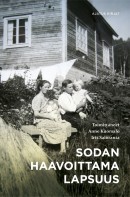 Sodan haavoittama lapsuus
[A childhood scarred by war]
Toimittaneet [Edited by]: Anne Kuorsalo & Iris Saloranta
Helsinki: Gummerus, 2010. 288 p., ill.
ISBN 978-951-20-8107-3
€ 34, hardback
Around 1.5 million Finns were children during the Winter and Continuation Wars of 1939–1944. Three hundred children are estimated to have been killed by bombs, and between 55,000 and 80,000 were orphaned by the war. Many more deaths were caused by diseases such as tuberculosis, polio and cerebral meningitis. Some children lived fairly secure lives on farms with their own families or with relatives; some were sent to live with foster families in Sweden; some were evacuated from Karelia and a small number were interned in camps because of their German heritage. Many under-18s served in the Finnish military and would now be considered child soldiers. Finns who were born in the 1930s and early 1940s have long been a neglected group: for several decades, discussions of the victims of war were avoided for foreign policy reasons as well. It is only in recent years that discussions have emerged concerning the fates of the children who were sent to Sweden during the war and those who were born to Finnish women, fathered by German soldiers. This book includes the stories of thirty people. The views of some refugees who have settled in Finland are included as well, such as the story of Mahmoud, who fled from Iraq via people smugglers.
Translated by Ruth Urbom
The 2013 European Union Prizes for Literature
3 October 2013 | In the news
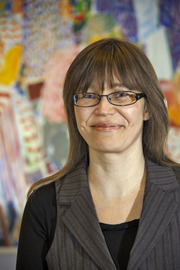
Katri Lipson. Photo: Olli Turunen
The second novel Jäätelökauppias (‘The ice-cream vendor’, Tammi, 2012) by Katri Lipson won her one of the 12 European Union Prizes for Literature this year, announced at the Gothenburg Book Fair, Sweden, on 26 September.
Each winner will receive € 5,000, and the priority to apply for European Union funding to have their book translated into other European languages.
The European Commission, the European Booksellers’ Federation (EBF), the European Writers’ Council (EWC) and the Federation of European Publishers (FEP) are the organisers of the prize which is supported through the European Union’s culture programme. The competition is open to authors in the 37 countries involved in the Culture Programme.
The prize aims to draw attention to new talents and to promote the publication of their books in different countries, as well as celebrating European cultural diversity.
The previous Finnish winner of the prize was Riku Korhonen in 2010.
Valta Suomessa [Power in Finland]
5 August 2010 | Mini reviews, Reviews
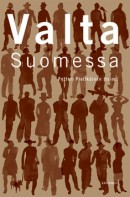 Valta Suomessa
[Power in Finland]
Toim. [Ed. by] Petteri Pietikäinen
Helsinki: Gaudeamus, 2010. 287 p., ill.
ISBN 978-952-495-143-2
33 €, paperback
The authors have been involved in the Academy of Finland’s ‘Power and society in Finland’ research programme, which supports the multidisciplinary study of the historical impact that changes in Finnish society have on its power structures and on those who exert power in Finland. Among the changes are Finland’s accession to the European Union and the internationalisation of corporate and business life. Major power management and policy decisions have often been made without extensive public debate. The articles include studies of the historical changes in economic history and women’s status; other subjects include the conflicts between the forestry industry and nature conservationists; energy policy and the relatively low level of opposition to nuclear power among Finns, labour relations and the opportunities that citizens have to influence media content.
Arne Nevanlinna: Hjalmar
5 November 2010 | Mini reviews, Reviews
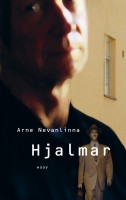 Hjalmar
Helsinki: WSOY, 2010. 294 p.
ISBN 978-951-0-36700-1
€29, hardback
‘Jansson!’ Hjalmar, the protagonist of Arne Nevanlinna’s second novel, is repeatedly woken by voices barking his surname at him. The people shouting at him are primary school teachers, commanding officers, nurses, psychiatrists and his bosses; these figures collectively serve as a sort of Orwellian ‘Big Brother’ figure, or Hjalmar’s social superego. At the core is penniless bohemian office drone Hjalmar’s relationship to his boss, Börje, who personifies the archetype of the Finnish banker, both idolised and loathed. Hjalmar eventually rises up from his lowly position into the opposition, aided by several picaresque characters and his own ‘pokeresque’ skills as a gambler. Arne Nevanlinna (born 1925), an architect and essayist, began writing fiction late in his career: his first novel, Marie (2008), was a runaway success. It tells of a lady from the cream of Strasbourg society who had been married off to Finland and lived in isolation to the age of a hundred. Hjalmar does not quite match its predecessor in terms of quality, but the elegance of old patrician clans persists in its enjoyable irony.
Elina Vuola: Jumalainen nainen. Neitsyt Mariaa etsimässä [The divine woman. In search of the Virgin Mary]
1 April 2011 | Mini reviews, Reviews
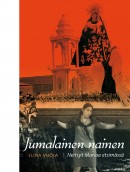 Jumalainen nainen. Neitsyt Mariaa etsimässä
[The divine woman. In search of the Virgin Mary]
Helsinki: Otava, 2010. 220 p., ill.
ISBN 978-951-1-22364-1
€ 34, hardback
This book is about the Virgin Mary and in particular her role in women’s religious experience. Theologian Elina Vuola considers that the doctrines concerning the Virgin Mary have quite a lot in common, as the principal dogmas were formulated in the early centuries of Christianity. As a partial explanation of the difference between the Mary of the Church and the Mary of popular faith, the author adduces the fact that with few exceptions women in Finland did not begin to receive theological training until the second half of the twentieth century. The central question in the book is whether or not Mary is the crowned queen of a patriarchal religious faith that is hostile to women, a harmful role model. Vuola avows herself to be a representative of the trend in women’s religious studies that takes a more positive and multifaceted view of Mary. In the section devoted to the Mary of Karelian folk religion it becomes evident that in Finland and its surrounding regions there are interpretations that are surprisingly similar to those found in Latin America.
Translated by David McDuff
Juha Seppälä: Takla Makan
22 April 2010 | Mini reviews, Reviews
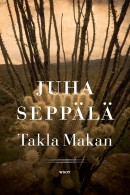 Takla Makan
Helsinki: WSOY, 2010. 149 p.
ISBN 978-951-0-36322-5
€ 27, hardback
Author Juha Seppälä’s manner of portraying the world is often characterised as harsh and desolate, and this certainly applies to this, his twentieth work. ‘Jesus’ mother was a woman,’ declares the first-person narrator in ‘Ristin tie’ (‘The path of Christ’) in the second novella in Takla Makan. This true but erotically charged statement sums up the themes of the two texts that make up the work. As the narrator of that story bears the cross in an Easter procession, issues of life and death, faith and worldliness, spirit and flesh, masculinity and femininity, are all present. The man carrying the cross, who has recently lost his job, has taken on a greater burden to bear. The other novella in this book, which takes its title from the name of a desert in China, tells of a terminally ill man who has withdrawn to a small rural community and lets his life slowly slip away. In Seppälä’s narratives anguished men are thrown into the world to ponder the big issues of life and death, expressing themselves with admirably precise sentences stripped of everything inessential.
Outsider art protected
31 August 2012 | This 'n' that
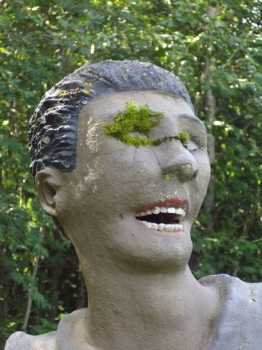
Moss lady: one of the 500 statues
Papermill worker Veijo Rönkkönen (1944–2010) lived all his life on a small, isolated farm in Parikkala, eastern Finland, close to the Russian border. In the 1960s he started sculpting statues in his free time which he placed in the garden around his house. The expanding statue park – take a look at the pictures! – was always open to visitors for free.
When the artist died, the Parikkala authorities were not willing to invest money in acquiring the garden and the park, a unique ‘total work of art’. Fortunately, it was bought by a businessman, Reino Uusitalo, founder of the Pyroll paper and cardboard company. An association now manages the park – and entry is still free. Rönkkönen’s outsider art continuously attracts nearly 30,000 visitors a year.
Over a period of fifty years, Rönkkönen created five hundred human and animal figures made of concrete. Living in his house in the middle of his garden, the artist avoided any contact with the thousands of people who came to wander in his extraordinary open-air gallery.
Now, thanks to Uusitalo’s generosity and the work of the association, the garden will keep growing – and the statues grow lichen and moss, ageing naturally.

Photographer and writer Veli Granö introduced the life and works of this self-made artist in his book Veijo Rönkkösen todellinen elämä / The real life of Veijo Rönkkönen (Maahenki, 2007): see Books from Finland‘s extract.
Kai Ekholm & Yrjö Repo: Kirja tienhaarassa vuonna 2020 [The book at the crossroads in 2020]
10 December 2010 | Mini reviews, Reviews
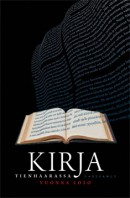 Kirja tienhaarassa vuonna 2020
[The book at the crossroads in 2020]
Helsinki: Gaudeamus, 2010. 205 p., ill.
ISBN 978-952-495-158-6
€29, paperback
This book looks at Finnish book publishing and its likely rate and direction of change. The future of the Finnish industry looks slightly more favourable than similar international forecasts have made out, although there have been some shake-ups in the Finnish book world too. The authors point out that while the decrease of reading as a leisure pursuit appears to be part of a long-term international trend, many feared for the future of the book in previous centuries as well. Book production and distribution, as well as changes undergone by various genres, are illustrated through a variety of statistics. They also go a long way towards explaining whether the publishing industry’s current difficulties are intrinsic or extrinsic in origin. The authors strive to find new perspectives to get away from a fear of the online world. The renewable publishing and reading culture envisioned by the authors will benefit from the novelty and efficiency of electronic publishing and will reinforce traditional knowledge. Professor Kai Ekholm is the Director of the National Library of Finland; Yrjö Repo is a researcher and statistician.
Petri Keto-Tokoi & Timo Kuuluvainen: Suomalainen aarniometsä [The Finnish virgin forest]
12 November 2010 | Mini reviews, Reviews
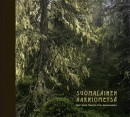 Suomalainen aarniometsä
[The Finnish virgin forest]
Helsinki: Maahenki, 2010. 302 p., ill.
ISBN 978-952-5870-06-0
€ 48, hardback
This book explains the cultural significance of forests – particularly virgin forests – to Finns. That term is used to refer to old-growth forests in their natural state, characterised by trees of different ages, an abundance of decaying tree remains, and continuous incremental changes. Nowadays around four per cent of Finnish forests are in a natural or near-natural state, and light is being shed on their ecosystems and the history of the slowly vanishing virgin forests. They are associated with deep-seated values and a multiplicity of roles throughout history. To many artists forests have been a significant elemental force, worthy even of worship; peasants and the timber industry have exploited the virgin forests. The authors also consider whether answers to key environmental issues will be found in old-growth forests: safeguarding natural diversity and slowing climate change. In addition to illustrative material from the authors, the book contains photographs by award-winning photographers Ritva Kovalainen and Sanni Seppo.
Northern exposure
21 June 2012 | Reviews
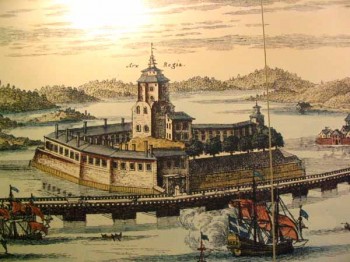
Between Helsinki and St Petersburg: Vyborg. Illustration of Vyborg Castle by an unknown artist, 1709, Wikimedia
Tony Lurcock
‘Not So Barren or Uncultivated’. British travellers in Finland 1760–1830
London: CB Editions, 2010. 230 p.
ISBN 9-780956-107398
£10.00, paperback
Finland is not unique in raising scholars who have often attempted to treat historical travellers’ accounts as source material for historical facts, and then prove how ‘wrong’ they are in relation to reality. This is an unproductive way in which to read them: travel books are nearly always based on the authors’ own country and experiences projected on what they encounter abroad.
Paradoxically, much of what was written about foreign countries in the past was really about conditions and problems in the author’s own land, and can be understood only against that background – something that also emerges in this book about British travellers in Finland. More…
Women and the city
17 April 2010 | This 'n' that
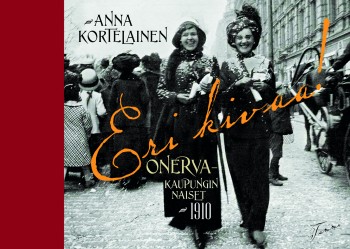
Jolly good! Young women celebrating the First of May in Helsinki in 1912. Photo: Ivan Timiryasev
How was city life for the single woman a hundred years ago in Helsinki?
She could ride a bike, for example, provided it was equipped with an ‘alarm system’ and the speed was not high. Socially she could have fun as long as she obeyed the rules. No admittance to restaurants without male company, for example.
Some young women in those days had to make a living by teaching or by working in an office – before they got married, of course.
A new exhibition (25 March–29 August) at Helsinki’s Ateneum art museum, entitled Kaupungin naiset (‘Women of the city’), focuses on the cultural life of young women in Helsinki in the 1910s through the eyes of the writer and critic L. Onerva (aka Hilja Onerva Lehtinen, 1882–1972). More…
Outside the human realm
28 May 2010 | Authors, Reviews
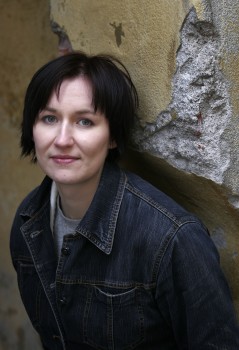
Tiina Raevaara. Photo: Heini Lehväslaiho
Themes enriched by the natural sciences set in a kind of naturalised literary fantasy make Tiina Raevaara an interesting young prose-writer. She is a doctor of genetics and a science writer whose collection of fourteen short stories, En tunne sinua vierelläni (‘I don’t feel you beside me’, Teos, 2010), is her second literary work.
Fantasy and a sombre dystopia combine in her debut novel, Eräänä päivänä tyhjä taivas (‘One day an empty sky’, 2008), which took its readers to the centre of ecological catastrophes and struggles for power taking the form of family relationships. The novel was seen as a morality tale examining the issue of human responsibility, and Leena Krohn, Johanna Sinisalo, Maarit Verronen and Jyrki Vainonen were identified as its literary godparents.
What unites these Finnish writers working at the borders of fact, fiction and fantasy? They are distinguished from realist prose by the way they pose a certain type of ethical question: the complex relationship between humankind and what is called nature, and the inexplicable fuzzy area between the two, which the hard sciences are unable to grasp. In these writers’ work, fantasy often layers into philosophical allegories which examine the limits of what can be experienced as human. More…
Kaipaus Karjalaan. Matkoja kotiseudulle [Longing for Karelia. Journeys to the homeland]
8 October 2010 | Mini reviews, Reviews
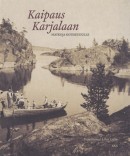 Kaipaus Karjalaan. Matkoja kotiseudulle
[Longing for Karelia. Journeys to the homeland]
Toim. [Ed. by] Liisa Lehto
Helsinki: Finnish Literature Society, 2010. 231 p., ill.
ISBN 978-952-222-167-4
€34, hardback
The interest among Finns in making journeys to the areas of Karelia that were lost to the Soviet Union after the wars of 1939–1944 has showed no signs of lessening. On the contrary: the increasing preoccupation of researchers and ordinary citizens with the roots of the Karelians and with their modern way of life makes it possible to speak of a kind of Karelian renaissance. The opening of the borders after the fall of the Soviet Union triggered an enormous enthusiasm for tourism. This book contains fifty accounts of such journeys, drawn from the material of the Finnish Literature Society’s Folklore Archives collected in 1992 and 2007. The personal travel stories are by writers of different ages – the oldest was born in 1906, the youngest in the 1980s – and they focus on attitudes to loss of homeland that range from deep feelings of anger and failure to emotions of joy and of ‘reconciliation with oneself and with the whole of one’s life.’ Acts of purification in the water of the home village well or of swimming in Lake Ladoga are described in terms of a sacred ritual.
‘The Lion of the North’ wins the non-fiction Finlandia Prize
25 November 2014 | In the news
The Finlandia Prize for Non-Fiction 2014, worth €30,000 and awarded by Suomen Kirjasäätiö (The Finnish Book Foundation), went to the historian and author Mirkka Lappalainen on 19 November for her book on a 17th-century Swedish king.
The winning entry, entitled Pohjolan leijona, Kustaa II Adolf ja Suomi 1611–1632 (‘The Lion of the North. Gustavus II Adolphus and Finland 1611–1632’, Siltala), was chosen by from a shortlist of six finalists by Heikki Hellman, journalist and Dean of the School of Communication, Media and Theatre in Tampere. According to him, ‘Pohjolan leijona is an exceptionally well-written narrative for a non-fiction book; the author uses both earlier literature and numerous primary and secondary sources with great skill. Lappalainen succeeds in demonstrating how, during the reign of Gustavus II Adolphus, both Sweden and its easterly province, Finland, began to develop an organised society with its structure of officials and bureaucracy, how jurisdiction replaced the arbitrary rule of the aristocracy and how it was only then that Finland developed its role as part of Sweden. Pohjolan leijona sweeps the reader along and helps us to understand where we have come from and who we are.’
Hellman also commented on the growing practice of publishing non-fiction texts in English only: ‘Research is not done only for other scholars; it must also be relevant to people’s lives and be brought to their attention. We must also publish in our mother tongue, or else it will not survive as a language for research. This is one of the reasons why non-fiction is so necessary.’
Mirkka Lappalainen has received other prizes for her work. Susimessu (‘Wolf mass’), for example, was voted History Book of the year in 2010.
Riitta Jalonen & Kristiina Louhi: Aatos ja Sofia [Aatos and Sofia]
28 January 2011 | Mini reviews, Reviews
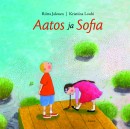 Aatos ja Sofia
[Aatos and Sofia]
Kuvitus [ill. by]: Kristiina Louhi
Helsinki: Tammi, 2010. 36 p.
ISBN 978-951-31-5240-6
€14.30, hardback
Riitta Jalonen (born 1954) writes books for children and adults with the same emotional intensity. This picture book throws readers in alongside two children, Aatos and Sofia, to play in a sandpit. Aatos (or ‘Thought’, in Finnish) is a bit of a dreamer, while Sofia, who is slightly older, takes a more practical approach to life. As in her Tyttö (‘Girl’) trilogy, Riitta Jalonen uses an impressionistic mode of storytelling. Through a selection of brief, random scenes, Aatos ja Sofia tells the deeply personal story of a little boy’s fondness for his playmate. Kristiina Louhi’s bold, broad-brush illustrations have an almost hypnotic effect on the reader.
Translated by Ruth Urbom