

Search results for "tommi+musturi/2010/05/song-without-words/2009/09/what-god-said/2011/04/matti-suurpaa-parnasso-1951–2011-parnasso-1951–2011"
The house the seniors built
27 November 2009 | Reviews

Yours and mine: the common dining room at Sprint
Maija Dahlström – Sirkka Minkkinen
Loppukiri. Vaihtoehtoista asumista seniori-iässä
[Sprint: alternative living for seniors]
Helsinki: WSOY, 2009. 232 p., ill.
ISBN 978-9510-4322-9
€ 32.90, paperback
‘Your elderly mother just told you she fell in the bathroom last night at 4 a.m. Now what?’ advertises the Visiting Nurse Service of New York in the New York Times. Aging people and their desire to live in their own homes is a pressing question around the world. People feel concern over their own living arrangements and those of their loved ones. Living arrangements somewhere between being in one’s own home or in a care facility are sought by many, but there are few of these options available. More…
Vesa Karonen & Panu Rajala: Yrjö Jylhä, talvisodan runoilija [Yrjö Jylhä, poet of the Winter War]
11 December 2009 | Mini reviews, Reviews
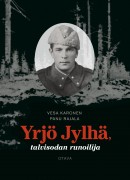 Yrjö Jylhä, talvisodan runoilija
[Yrjö Jylhä, poet of the Winter War]
Helsinki: Otava, 2009. 351 p., ill.
ISBN 978-951-1-23840-9
€ 35, hardback
Yrjö Jylhä (1903–1957) was a poet and translator whose collection of poems entitled Kiirastuli (‘Purgatory’), published in 1941 after the Winter War, is one of the most popular works of Finnish verse. Jylhä served as commander of a Karelian army company during the Winter War. A certain sternness, melancholy and pessimism about life are considered to be characteristic of Jylhä’s writing. The author of this book, the first biography of Jylhä, had access to new source materials including letters written from the front. The war meant not only great change for Jylhä as a writer, but also a test of his own limits as a leader and a soldier among other men. After the war, Jylhä’s reputation began to wane – partly for political reasons, as people took a more dismissive attitude towards war poetry about the Finnish fatherland. Jylhä suffered from a serious illness and artistic frustration in his middle age, which led him to take his own life.
Teemu Kaskinen: Sinulle, yö [To you, the night]
29 October 2009 | Mini reviews, Reviews
 Sinulle, yö
[To you, the night]
Helsinki: WSOY, 2009. 268 p.
ISBN 978-951-0-35599-2
€ 29, hardback
In Teemu Kaskinen’s debut novel, Finland is at war with Norway and its NATO ally the United States. Fierce battles rage in the winter darkness in Lapland, and Helsinki has become the stage for a contemporary war, which seems rather ridiculous – except for the fact that there are neighbouring countries currently at war with each other after having previously coexisted peacefully for ages, and it would be easy to name several thriving cities whose streets have suddenly been filled with soldiers, bomb blasts and terror. In this novel by Kaskinen (born in 1976; he has previously written four plays) the streets and interiors are also filled with lust and the satisfaction of basic needs. In cool, modernistic episodes, the author shows how people’s instincts begin to drag them along in a crisis situation. Sinulle, yö is a grotesque, brutal novel – but then again, what would happen if you, I and the neighbour’s lad ended up in similar circumstances, like those that engulfed Sarajevo not all that long ago?
And the winner is…
9 February 2010 | In the news
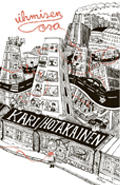
Illustration: Elina Warsta
The Runeberg Prize for fiction, given this year for the twenty-fourth time, went to Kari Hotakainen (born 1957) for his novel Ihmisen osa (‘The human lot’, Siltala, 2009). The prize, worth €10,000, was awarded on 5 February – on the birthday of the poet J.L. Runeberg (1804–1877) – in the city of Porvoo.
The jury – representing the prize-founders, the Uusimaa newspaper, the city of Porvoo, both the Finnish and Finland-Swedish writers’ associations and as the Finnish Critics’ Association – chose the winner from a shortlist of seven books. ‘The picture of a fast-changing society that Hotakainen paints in his novel is not a comforting one, but neither is it hopeless…. chilling and perceptive, but not without sharp comedy’, the jury concluded.
Monika Fagerholm: Lolauppochner [Lola upside down]
20 September 2012 | Mini reviews, Reviews
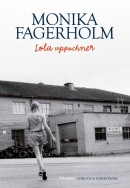 Lolauppochner
[Lola upside down]
Helsinki: Schildts & Söderströms, 2012. 461 p.
ISBN 978-951-52-2997-7
€ 31, hardback
Lola ylösalaisin
Suomentanut [Translated into Finnish by]: Liisa Ryömä
Helsinki: Teos, 2012. 300 p.
ISBN 978-951-851-480-3
€28.40, hardback
Lolauppochner (‘Lola upside down’) is a more authentic crime novel than the same author’s Den amerikanska flickan (English translation: The American Girl, 2004) and Glitterscenen (The Glitter Scene, 2009), though they too wove their dense fiction around an old crime. Readers who are at ease in Fagerholm’s luxuriant wordscapes with their tragic teens, country bumpkins and summer visitors will still be able to find their way around the small community where Jana Marton, a teenage girl on the way to her job at the local store, discovers the corpse of a boy, a key player among the local gilded youth. The novel’s opening, and many sections that follow, are extremely effective, with sharp and lightning-swift characterisations and a fine intuition for both the fear and the excitement in the social circle where the murder turns up hidden connections like worms from the soil. But the novel is too long for its own good – somewhere towards the end it ceases to gain depth, and the gallery of characters starts to feel too big. All the same, this book is a must for Fagerholm’s readership at home and abroad. A bonus for locals – and attentive outsiders – is present in the outlines of the small seaside town of Ekenäs that can be glimpsed behind the text. They supply a kind of physical magic that rubs off on much else besides – characters, moods and sense of place.
Translated by David McDuff
Pekka Tarkka: Joel Lehtonen 1. Vuodet 1881–1917 [Joel Lehtonen 1. The years 1881–1917]
13 August 2009 | Mini reviews, Reviews
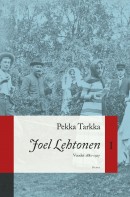 Joel Lehtonen 1. Vuodet 1881–1917
[Joel Lehtonen 1. The years 1881–1917]
Helsinki: Otava, 2009. 431 p., ill.
ISBN 978-951-1-23229-2
€ 37, hardback
The early years of the author Joel Lehtonen (1881–1934) were harsh ones: he was the illegitimate child of a mentally disturbed mother who abandonded her six-month-year baby in the forest. Fortunately Joel was adopted by a cultured clergyman who supported his education, making it possible for him to find a career in journalism and writing. The author and critic Pekka Tarkka published his doctoral dissertation on the changes in Joel Lehtonen’s view of human character in 1977. In this new book, the first general account of Lehtonen’s life and work, he presents an interesting view of the writer’s contradictory personality. Lehtonen’s travels in France, Italy and Switzerland strengthened his knowledge of foreign languages and his interest in Romance culture essential to his translator’s work. Lehtonen’s novels and short stories are often set in his home province of Savo, which he depicted through many phases of its social development. His most popular novel, Putkinotko, was published in 1919–1920. The first volume of Tarkka’s biography ends with Lehtonen’s writing in 1917 of the novel Kerran kesällä (‘Once in summer’), about a composer returning to Finland from abroad just as the Finnish Civil War is about to begin.
Anu-Hanna Anttila & al.: Kuriton kansa [Unruly nation]
13 August 2010 | Mini reviews, Reviews
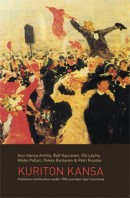 Anu-Hanna Anttila & Ralf Kauranen & Olli Löytty & Pollari Mikko Rantanen Pekka & Petri Ruuska
Kuriton kansa. Poliittinen mielikuvitus vuoden 1905 suurlakon ajan Suomessa
[Unruly nation. The political imagination of the 1905 general strike in Finland]
Tampere: Vastapaino, 2009. 317 p., ill.
ISBN 978-951-768-246-6
€ 33, paperback
In the beginning of the 20th century the Grand Duchy of Finland, a part of the Russian Empire, entered a period of crisis and began to turn into a nation with its own institutions. Universal and equal suffrage increased tenfold the number of those eligible to vote. A move to the granting of political rights was demanded during the 1905 general strike, which was both an internal political power struggle and a demonstration by Finns against the Russification measures being imposed by their rulers. The book examines the ideological currents of the strike period and investigates their definitions of ‘nation’ and ‘nationality’, with reference to literary research, historical sociology, cultural studies and women’s studies, making extensive use of contemporary documents. The book’s essays portray the spectrum of ideas, reflected in groups like the theosophists, Tolstoyans and anarchists.
Kimmo Oksanen: Kerjäläisten valtakunta [Kingdom of beggars]
24 September 2009 | Mini reviews, Reviews
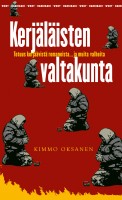 Kimmo Oksanen: Kerjäläisten valtakunta.Totuus kerjäävistä romaneista ja muita valheita
[Kingdom of beggars. The truth about Roma beggars, and other lies]
Helsinki: WSOY, 2009. 214 p.
ISBN 978-951-0-35778-1
€ 15, paperback
After Romania and Bulgaria had joined the European Union in 2007, a small group of Roma beggars from Romania arrived in Helsinki. This was a sight that was familiar to Finns on their travels abroad, but alien to them in the environment of their own city. Begging is not a crime in Finland, but the phenomenon caused a great stir in the media and, eventually, among political decision-makers. This polemic by journalist Kimmo Oksanen gives a face to the beggars and reveals many factors behind begging, as well as experiences of poverty and discrimination. Oksanen observed the beggars on the streets daily and travelled to their home villages to investigate their backgrounds. Roma criminal activity indisputably occurs elsewhere in Europe, but Oksanen maintains that there is no evidence that organised crime has arrived in Finland. The beggars are nevertheless objects of fear as well as racist attitudes.
Maritta Pohls & Annika Latva-Äijö: Lotta Svärd. Käytännön isänmaallisuutta [Lotta Svärd: practical patriotism]
1 April 2010 | Mini reviews, Reviews
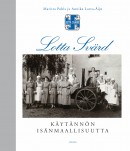 Lotta Svärd. Käytännön isänmaallisuutta
[Lotta Svärd: Practical patriotism]
Helsinki: Otava, 2009. 454 p., ill.
€ 46, hardback
Lotta Svärd was the name of the Finnish women’s voluntary military organisation, which performed auxiliary defence work between 1921 and 1944. It took its name from a character in a poem by the 19th-century Finnish writer J.L. Runeberg: Lotta Svärd accompanied her soldier husband to the front in the Finnish War of 1709. During the Winter and Continuation Wars (1939–1944), the ‘Lottas’ provided assistance to soldiers and took over men’s jobs, freeing them to go to the front. Around 40,000 Lottas assisted the Finnish army by performing maintenance and staff duties as well as air-raid monitoring. When the organisation was disbanded in 1944, it had some 300,000 members. As Lotta Svärd was ideologically an organisation for women emphasising home, nation and religion, it divided public opinion, and may still do so today. This book, which details the organisation’s history, work and people, is fourth and final volume in the history project on Lotta Svärd.
Juba: Minerva. Alajuoksun kelluva pullukka [Minerva. The floating dumpling of the Lower Reaches]
9 January 2014 | Mini reviews, Reviews
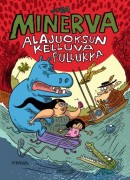 Minerva. Alajuoksun kelluva pullukka
[The floating dumpling of the Lower Reaches]
Helsinki: Otava, 2013. 48 pp., ill.
ISBN 978-951-1-25731-8
€17.80, hardback
Minerva is a cartoon character who has appeared in two previous volumes (2006, 2009) by Juba, a.k.a. Jussi Tuomola. Juba is the creator of an extremely popular comics series for adults about the woman and the pig (both male chauvinist and porcine), Viivi and Wagner. Minerva is a brave and extremely resourceful little heroine who is never daunted by even the wildest adventures she experiences after leaving home to fly around in weird lands. Petra, the floating dumpling of the Lower Reaches, is a woman with magical powers who likes to travel in a flying gondola. In this volume Minerva also meets other old friends on her journey under water, underground, on a river and in the air above a jungle, in pursuit of a rare ingredient for a perfume that Petra has determined to acquire no matter what. The comedy in the uninhibitedly fantastic adventures, illustrated effectively in cartoon squares of different sizes, will amuse readers of many ages.
Sakari Toiviainen: Kadonnutta paratiisia etsimässä [In search of a lost paradise]
12 August 2009 | Mini reviews, Reviews
 Kadonnutta paratiisia etsimässä. Markku Lehmuskallion ja Anastasia Lapsuin
elokuvat
[In search of a lost paradise. The films of Lehmuskallio and Anastasia Lapsui]
Helsinki: Finnish Literature Society, 2009. 274 p., ill.
ISBN 978-952-222-067-7
€ 28, paperback
Markku Lehmuskallio (born 1938) is a filmmaker and photographer who since 1973 has made 18 full-length feature films, as well as a number of shorter ones. A half of his work is a collaborative venture with his wife Anastasia Lapsui, who is a native of the Nenets region in Arctic Russia. The main subjects of his films are the relationship between people and nature, and indigenous cultures throughout the northern hemisphere. Lehmuskallio’s early work reflects his activity as a pioneer of the green movement, as his films from that period deal with the environmental threat to the forests. Lehmuskallio has also directed fiction films, including the first to be made in the Nenets language, the award-winning Seven songs from the tundra. He has documented the conflicts between indigenous and national cultures, such as the destruction of the environment of the Siberian peoples in the process of gas and oilfield exploration. The filmographer Sakari Toiviainen had access to original material ranging from brittle old reels of film to diaries; Lehmuskallio’s own voice comes through clearly in the text.
Re-inventing the book: on the papernet, pod and the unbook
20 May 2009 | Articles, Non-fiction
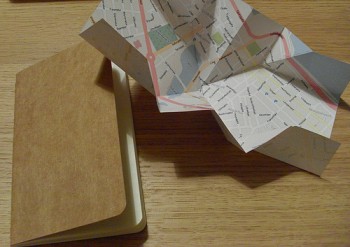
Mind-map: using the papernet to produce books just for you. - Photo: Brian Suda
Just as Books from Finland finally goes online, the brightest minds of the internet are forecasting a return to paper. In the first of a series of articles, the poet and scholar Teemu Manninen celebrates the second coming of the book
Last week I did something I’ve never done before. I uploaded the manuscript of my third book on to the website Books on Demand, an internet print-on-demand (‘pod’) service, chose the format (a large 19×22 cm size with a hard cover), selected a picture for my cover, copy-pasted a poem by Clark Ashton Smith – an American science fiction and fantasy writer – on the back flap and ordered a copy. More…
Under the August moon
26 August 2011 | In the news
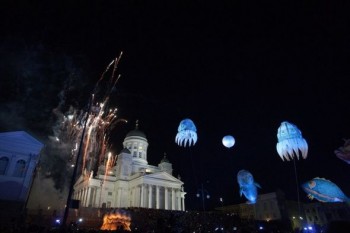
The Night of the Arts, 2009. Photo: Sasa Tkalcan
Helsinki becomes a busy cultural city in every August: Helsinki Festival, Stage Theatre Festival and Poetry Moon festival, for example, have a great variety of happenings on offer.
Also the seventh annual Helsinki Poetics Conference – an international and interdisciplinary conference for poets, writers and literary scholars – takes place on 27 and 28 August.
The organisers are the poetry organisation Nihil Interit (the publisher of the journal Tuli&Savu, ‘Fire&Smoke’) in collaboration with the Finnish Literary Research Society, and it is a part of the Runokuu / Poetry Moon international poetry festival.
And The Night of the Arts, of Helsinki Festival, takes over the city – for the 23rd time, tonight.
Esko Rahikainen: Impivaaran kaski [The burnt clearing at Impivaara]
24 September 2009 | Mini reviews, Reviews
 Impivaaran kaski. Aleksis Kivi kirjallisuutemme tienraivaajana
The burnt clearing at Impivaara. Aleksis Kivi as trailblazer of Finnish literature.
Helsinki: Suomalaisen Kirjallisuuden Seura, 2009. 270 p., ill.
ISBN 978-952-222-107-0
€ 29, hardback
This year marks the 175th anniversary of the birth of Finnish national author Aleksis Kivi (1834–1872). His work as a creator and cultivator of the Finnish language and literature was truly pioneering. Impivaaran kaski (the title refers to his major work, the novel Seitsemän veljestä, Seven Brothers, 1870) deals with the social conditions surrounding the creation of his works and examines their critical reception. Divisive literary disputes raged, and it was not until the second decade of the 20th century that Kivi’s status came to be acknowledged more widely. Esko Rahikainen – a librarian at the National Library and the author of several books on the life and works of Kivi – has utilised new sources to investigate the criticism and marketing of Kivi, as well as readers’ experiences and the use of his works in Finnish education.
Erkki Lampén: Neljä retkeä läpi Suomen [Four trips across Finland]
15 March 2010 | Mini reviews, Reviews
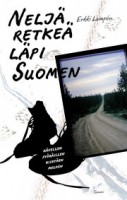 Neljä retkeä läpi Suomen. Kävellen – pyöräillen – hiihtäen – meloen
[Four trips across Finland. On foot – by bicycle – on skis – by kayak]
Helsinki: Tammi, 2009. 272 p., ill.
ISBN 978-951-31-4988-8
€ 25, hardback
In the spring of 2000, a downbeat 40-year-old man sat musing on the meaning of life when an idea suddenly came to him: why not walk from Helsinki to the Arctic Ocean? In his diary of this trek, which covered more than seven weeks and over a thousand kilometres, the journalist and writer Erkki Lampén describes the landscape, people, events and his own thoughts along the journey. Lampén made another three journeys (in 2003, 2004 and 2006) travelling by bicycle, on skis and by kayak, sleeping in a tent, in rustic cabins, in motels and hotels. His circular cycle journey aimed to follow Finland’s national borders as closely as possible; on skis he covered the distance from Porvoo on the south coast to Utsjoki in the far north; he then paddled his kayak from Lapland to the Gulf of Finland (this journey required plenty of wheeling the vessel from one river or lake to another). Lampén’s diary entries convey an entertaining blend of a realistic battle for survival, philosophising, joy, fury and humour.