

Search results for "tommi+musturi/2010/05/song-without-words/2009/09/what-god-said/2011/04/matti-suurpaa-parnasso-1951–2011-parnasso-1951–2011"
Suomalaiset tutkimusmatkat [Finnish scientific expeditions]
23 December 2009 | Mini reviews, Reviews
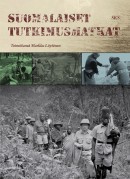 Suomalaiset tutkimusmatkat
[Finnish scientific expeditions]
Toim. [Edited by] Markku Löytönen
Helsinki: Suomalaisen Kirjallisuuden Seura, 2009. 480 p., ill.
ISBN 978-951-746-774-2
€ 64, hardback
This book is a comprehensive survey of Finnish scientific expeditions from the 18th century up to the present day. It covers the sciences that traditionally involve field research: geology and palaeontology, botany and zoology, geography, oceanography, archaeology, linguistics, and anthropology. The book consists of 13 chapters written by experts in their respective fields. The best-known expeditions undertaken by Finns are A. E. Nordenskiöld’s voyage to the North-East Passage, J. G. Granö’s expedition to the Altai Mountains and Rafael Karsten’s travels with Amazonian headhunters. Other chapters tell of current fieldwork projects involving Finns, including research in the Amazon region and Antarctica, as well as the high Arctic. This book does not confine itself to Earth-bound scientific research; it even includes cosmology and space research – areas where scientific equipment developed by Finns have played important roles.
Eero ja Saimi Järnefeltin kirjeenvaihtoa ja päiväkirjamerkintöjä 1889–1914 [Eero and Saimi Järnefelt: Correspondence and diary entries, 1889–1914]
12 March 2010 | Mini reviews, Reviews
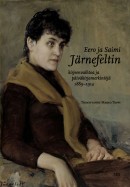 Eero ja Saimi Järnefeltin kirjeenvaihtoa ja päiväkirjamerkintöjä 1889–1914
[Eero and Saimi Järnefelt: Correspondence and diary entries, 1889–1914]
Toim. [Ed. by] Marko Toppi
Helsinki: Suomalaisen Kirjallisuuden Seura, 2009. 403 p., ill.
ISBN 978-952-222-113-1
€ 38, hardback
The actress Saimi Swan (1867–1944) and painter Eero Järnefelt (1863–1937) were both born into prominent Finnish families united by similar creative and cultural ideals. The book consists mainly of correspondence between the couple, beginning with their engagement in 1890, and their diary entries up to 1914. Eero Järnefelt’s letters from Paris and Rome provide fascinating glimpses into personal relationships, discussions on artistic practices and aims, and political movements from the golden era of Finnish art. Saimi Järnefelt’s letters illuminate the conflict she experienced between her career and family life. She had to keep her engagement secret in order to safeguard her career; once married, Saimi Järnefelt left the theatre. In letters written to her sister-in-law Aino Sibelius – the wife of composer Jean Sibelius – Saimi Järnefelt often described the cycle of the seasons in her garden: gardening was a hobby the two women shared, in which their need for self-expression could find an outlet.
Suomalaiset pappilat [Finnish parsonages]
20 November 2009 | Mini reviews, Reviews
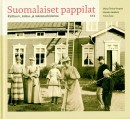 Marja-Terttu Knapas & Markku Heikkilä & Timo Qvist
Suomalaiset pappilat. Kulttuuri-, talous- rakennushistoriaa
[Finnish parsonages. A cultural, economic and architectural history]
Picture research: Sirkku Dölle
Helsinki: the Finnish Literature Society, 2009. 231 p., ill.
ISBN 978-952-222-096-7
€48, hardback
From the Enlightenment period in the 18th century up until the 20th century, Lutheran parsonages played a significant role in Finland as centres of worldly life and propagators of culture and civilisation. Influential figures in many walks of life spent their childhoods in parsonages, and the parsonages themselves served as influences on the built environment of their surroundings. They began to be taken out of active use at an accelerating rate over the course of the 20th century. This book sets out to portray parsonages with interesting personal and social history and architecture. It also creates a narrative of the milieu and family networks of clergymen and their families – an institution that gradually began to break down in Finland after the Second World War. The portrayal of life in the parsonages is closely linked to the broader themes of agriculture, gardening and food. Illustrations from the collections of Finland’s National Board of Antiquities are supplemented by photographs from other museums as well as individuals.
What Finland read in February
19 March 2010 | In the news

In the town of Fingerborg:Pertti Jarla's cartoon characters
We read comics. Numbers one, six and seven on the February list of Finnish best-selling books (of the Booksellers’ Association of Finland) were comics by Pertti Jarla.
Jarla’s series about the weird town of Fingerpori with its weird citizens seems to have hit the book-buying crowds. Milla Paloniemi’s foul-mouthed hedgehog appeared as number 4.
Number two in February was the victorious latest novel by Kari Hotakainen, Ihmisen osa (‘The human lot’, Siltala, 2009), soon to be published in no less than eight languages – including English, in 2012, by Christopher Maclehose Press (UK).
Number three was a first novel by Elina Tiilikka, Punainen mekko (‘The red dress’, Gummerus), the sad story of a young woman choosing to sell sex. Tiilikka has indicated that the novel is autobiographical, which will sell copies.
Last year’s Finlandia Prize-winning novel Uuni (‘The stove’) by the veteran author Antti Hyry was still at eighth place.
Glenda Goss Dawn: Vieläkö lähetämme hänelle sikareja? [Do we still send him cigars?]
30 December 2009 | Mini reviews, Reviews
 Vieläkö lähetämme hänelle sikareja? Sibelius, Amerikka ja amerikkalaiset. 24 tarinaa
[Do we still send him cigars? Sibelius, America and Americans: 24 stories]
Translated into Finnish (from the manuscript) by Martti Haapakoski
Helsinki: WSOY, 2009. 268 p., ill.
ISBN 978-951-0-35517-6
€ 35, paperback
Finnish composer Jean Sibelius (1865–1957) was very highly regarded in the United States; the world’s first Sibelius appreciation society was set up in a small town in Pennsylvania, and at one time there was even a sort of Sibelius cult in Boston. In 1935 American radio listeners voted Sibelius their favourite living composer of symphonies. Walt Disney was an admirer of Sibelius’ music, though his plan to transfer The Swan of Tuonela to the big screen was never realised. Sibelius’ affinity for fine cigars was widely known, and sending boxes of cigars to the composer became a typical expression of admiration among Americans. Cigars were sent by regular citizens as well as prominent figures like Louis Armstrong. This book consists of 24 accounts describing interactions between Sibelius and Americans. It also details rises and falls in Sibelius’ popularity.Glenda Dawn Goss, is an American expert on Sibelius and possesses a doctorate in musicology. She has lectured at the Sibelius Academy in Helsinki since 2007.
Leena Krohn: Valeikkuna [False window]
12 June 2009 | Mini reviews, Reviews
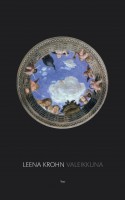 Valeikkuna
[False window]
Helsinki: Teos, 2009. 155 p.
ISBN 978-951-851-183-3
€ 21, hardback
The themes of the fiction of Leena Krohn (born 1947) have always included the distinction between life and art, the influence of the media and technology, and the dialogue between truth, illusion and falsehood. In Valeikkuna, her 28th book, the protagonist is a former student of philosophy who has installed a flotation tank in his home, where he spends most of his time, receiving customers to whom he gives advice. The philosopher ‘s teenage daughter lives in the mostly virtual but safe ‘Fake Fake Land’; their home town is ruled by the Dividers League, who use violence to establish their control. The impossibility of defining reality runs as a prominent theme throughout the novel. As is often the case in her novels, Krohn concentrates on the philosophical attitudes of her characters rather than on psychological depth; Valeikkuna is a wise and critical novel, although not perhaps among her best work. Krohn’s books have been translated into 15 languages; her novel Pereat Mundus (1998) is to be issued in English later this year by the San Francisco publisher Omnidawn.
Slowly does it
5 November 2009 | Reviews
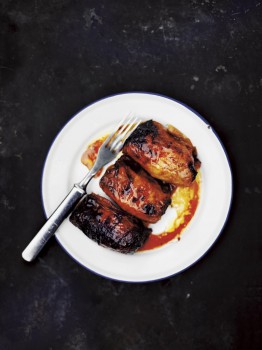
Straight from the oven: cabbage rolls. – Photo: Sami Repo
Mummola
[Grandma’s house]
(food: Hans Välimäki, photographs: Sami Repo, text: Mikko Takala, graphic design: Timo Numminen)
Helsinki: Otava, 2009. 224 p., ill.
ISBN 978-951-1-23930-7
€ 40
How paradoxical: in the past couple of decades, numerous internationally famous gourmet restaurants have sprung up in Finland, and at the same time it’s harder than ever to find ordinary, well-prepared ingredients for cooking at home.
It’s hard to get used to the fact that foods like beef and lamb kidneys, sweetbread, and cheaper cuts for use in stews and soups have made way for cheap Brazilian steaks on special offer, even at the largest stores’ meat counters. There’s no point in looking for whole chickens (and certainly not organic poultry), let alone whole, locally caught fish. The last time I asked at the fish counter of my local market if they might have any salmon heads and bones for chowder, the seller looked for a moment like she might summon security. The consumer wasn’t consulted when ‘taste’ and ‘variety’ were replaced by ‘ease’ and ‘speed’. More…
Armas Järnefelt. Kahden maan mestari [Armas Järnefelt. Maestro of two countries]
2 October 2009 | Mini reviews, Reviews
 Armas Järnefelt. Kahden maan mestari
[Armas Järnefelt. Maestro of two countries]
Toim. [Ed. by] Hannu Salmi
Helsinki: Suomalaisen Kirjallisuuden Seura, 2009. 438 p., ill.
ISBN 978-952-222-057-8
€ 35, hardback
The conductor and composer Armas Järnefelt (1868–1959) was a member of one of Finland’s most prominent cultural families. His sister Aino was married to the composer Jean Sibelius. From 1905 he was the conductor of the Royal Opera in Stockholm and became a Swedish citizen. In the 1930s Järnefelt served as the artistic director and conductor of the Finnish Opera, forerunner of today’s Finnish National Opera. This book covers the various stages of his life and surveys the background to his compositions, with input from a number of Finnish music experts. Järnefelt, as a composer of beautiful melodies, was a part of the National Romantic tradition; his best-known piece, Berceuse (1904), is familiar to listeners around the world in many adaptations. Influences from Richard Wagner and Jean Sibelius are often seen in Järnefelt’s works. This book provides a more complete artistic portrait of Järnefelt than the rather superficial coverage previously available. Prior to the publication of this book, the committee responsible for the editorial work was incorporated as a society dedicated to Armas Järnefelt and has released musical scores, recordings and performances of Järnefelt’s works.
Happy days, sad days
28 February 2013 | Reviews
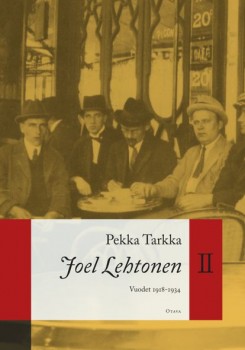 Pekka Tarkka
Joel Lehtonen II. Vuodet 1918–1934
[Joel Lehtonen II. The years 1918–1934]
Helsinki: Otava, 2012. 591 p., ill.
ISBN 978-951-1-25924-4
€38.50, hardback
A well-meaning bookseller’s idealism, inspired by Tolstoyan ideology, is brought crashing down by the laziness and ingratitude of the man hired to look after his estate: conflicts between the bourgeoisie and the ‘ordinary folk’ are played out in heart of the Finnish lakeside summer idyll in Savo province.
Taking place within a single day, the novel Putkinotko (an invented, onomatopoetic place name: ‘Hogweed Hollow’) is one of the most important classics of Finnish literature. Putkinotko was also the title of a series (1917–1920) of three prose works – two novels and a collection of short stories – sharing many of the same characters [here, a translation of ‘A happy day’ from Kuolleet omenapuut, ‘Dead apple trees’, 1918] .
In 1905 Joel Lehtonen bought a farmstead in Savo which he named Putkinotko: it became the place of inspiration for his writing. With an output that is both extensive and somewhat uneven, the reputation of Joel Lehtonen (1881–1934) rests largely on the merits of his Putkinotko, written between 1917 and 1920. More…
And the winner is…
27 November 2009 | In the news
 The winner of the Finlandia Prize for Non-Fiction 2009, worth €30,000, is Borgå 1809. Ceremoni och fest (‘Borgå [Porvoo] 1809. Ceremony and feast’) by historian Henrika Tandefelt (born 1972; see this review).
The final choice was made by Björn Wahlroos, Chairman of the Board of the Sampo Insurance Group. No doubt the historical period described in Tandefelt’s book is of great interest to Wahlroos, as he is the owner of the Åminne (in Finnish, Joensuu) estate, which is located in the south-west of Finland and dates from the 18th century. Wahlroos has recently restored the manor house to its full 19th-century glory. The Åminne estate was once the home of Gustaf Mauritz Armfelt, a Finnish-born statesman and officer. Armfelt was also King Gustav III’s trusted adviser – and later adjutant-general under Tsar Alexander I in St Petersburg, and finally, before his death, governor-general of Finland (1813). More…
Archive news!
11 May 2012 | This 'n' that
We’re delighted to be able to announce that the selection of the material published on the web pages of Books from Finland in the last phase of its existence as a printed journal, 1998–2008, is now available on this website.
The monthly archive selection has been extended back to 1998, and more than two dozen new contributor details have been added. Plus, any term you enter in the search box at the top right of the webpage will now look through everything we have online – not just what has been published since we went digital in 2009. So if you vaguely remember a piece about xx, or just want to play games by seeing how often we’ve featured yy, just enter your term in the search box and away you go.
This is just the first step in our bigger project of digitising a broad selection of pieces from Books from Finland‘s history, from 1976 (when it began to appear as a quarterly journal) onwards. The Books from Finland archive – 132 printed issues were published from 1976 to 2008, featuring hundreds of authors – represents an unparalleled treasure trove of Finnish literature and literary debate in English, and we can’t wait to get as much as we can online.
It is a long, slow process, so don’t hold your breath… But as we add new pieces we’ll be flagging them up and drawing them to your attention, from classics to some real period pieces, sometimes with new introductions by contemporary writers.
Watch this space – please remember, good things are worth waiting for!
Panu Rajala: Hirmuinen humoristi. Veikko Huovisen satiirit ja savotat [The awesome humorist. The satires and logging sites of Veikko Huovinen]
16 May 2013 | Mini reviews, Reviews
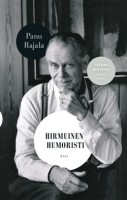 Hirmuinen humoristi. Veikko Huovisen satiirit ja savotat
[The awesome humorist. The satires and logging sites of Veikko Huovinen]
Helsinki: WSOY, 2012. 310 p.
ISBN 978-951-0-38952-2
€38, hardback
Author Veikko Huovinen (1927–2009) became widely popular with the publication of his novel Havukka-ahon ajattelija (‘The backwoods philosopher’, 1952). Huovinen, who trained as a forest ranger, spent his life mainly in north-eastern Finland and did not like publicity; the author and theatre scholar Panu Rajala deals with Huovinen’s biography relatively briefly, focusing on a thematic analysis of Huovinen’s extensive and thematically rich output of novels and short stories. He places the the books in the context of Finnish literature, and also examines their film and television adaptations. Huovinen was an intellectually conservative, a highly original humorist; among his books are satirical biographies of Hitler and Stalin. His prose fiction, set in the natural wilds of the North, has not always won the appreciation of pro-modernist critics. Huovinen’s lively and original language is not easy to translate – for example, his only work published in English is a beautiful documentary novel Puukansan tarina (‘Tale of the forest folk’), which received a Finlandia Prize nomination in 1984.
Translated by David McDuff
Leena Parkkinen: Galtbystä länteen [West from Galtby]
19 December 2013 | Mini reviews, Reviews
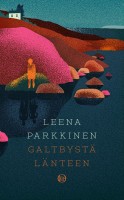 Galtbystä länteen
[West from Galtby]
Helsinki: Teos, 2013. 339 p.
ISBN 978-951-851-510-7
€32.90, hardback
Leena Parkkinen’s first novel, Sinun jälkeesi, Max (‘After you, Max’) was awarded the Helsingin Sanomat literature prize for best first work of 2009. Her new novel contains crime story ingredients, but the focus is on love between siblings, loss and the demand for truth. The story begins in 1947, after the war, on an island in the south-western Finnish archipelago. Sebastian, brother of Karen, has returned from the front; it’s time to mend the best clothes and dancing shoes. But to the horror of the island community, the body of a young girl is found on the shore, and Sebastian gets the blame. Sixty-five years later her brother’s fate has not left Karen alone, and she sets out to find the truth. Capable of handling different times, Parkkinen (born 1979) is also a skilful interpreter of conflicting sentiments, as unexpected twists develop towards the end.
Johanna Holmström: Camera Obscura
6 January 2010 | Mini reviews, Reviews
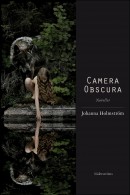 Camera Obscura
Helsinki: Söderströms, 2009, 334 p.
ISBN 978-951-52-2616-7
€ 24,90, hardback
This short story collection is Johanna Holmström’s fourth book since her debut in 2003. Camera Obscura is a fabric of narratives and personal destinies which create a dense, novel-like whole. The preamble is a young environmental activist’s suicide. The form is interwoven with the content, so that the stories in the book can be read as separate narratives, but to understand them fully we must read them all. Each person’s destiny is shaped in part by the choices and actions of others; to what extent is the individual responsible for the whole? Holmström (born 1981) writes fiction that is unpredictable but stylistically assured. She seamlessly weaves with classic fairytale motifs and also has a keen eye for detail and psychology. Camera Obscura is at once eerie, suspense-filled and socially aware.
Minä, Mauri Kunnas [I, Mauri Kunnas]
4 March 2010 | Mini reviews, Reviews
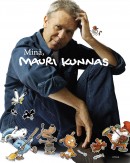 Minä, Mauri Kunnas
[I, Mauri Kunnas]
Muistiin merkitsi [As told to] Lotta Sonninen
Helsinki: Otava, 2009. 182 p., ill.
ISBN 978-951-1-23186-8
€ 40, hardback
Mauri Kunnas (born 1950) is a cartoonist and graphic artist. His children’s books have been translated into 28 languages; the translations have sold approximately 2,5 million copies. His anthropomorphic canine characters from Koiramäki, Doghill, are well known for their adventures in historical milieus; researching these settings is one of Kunnas’ passions. His reinterpretations of Finnish literary classics are also popular: The Canine Kalevala and Seven Dog Brothers offer affectionately humorous homages to the Kalevala, the Finnish folk epic, and the classic novel by Aleksis Kivi. Joulupukki (1981), published in English as Santa Claus, is arguably the world’s best-known Finnish children’s book. In this book, Kunnas gives a lively account of his childhood and youth, as well as his influences and the different phases of his career as an illustrator. The text is complemented by photos from Kunnas’ family album and his own archives, from adventure stories he illustrated as a boy to a pair of hippy bell-bottomed jeans adorned with doodles.