

Search results for "tommi+musturi/2010/2009/10/writing-and-power"
About us
8 January 2009 |
The Books from Finland online journal ceased operation on 1 July 2015, and no new articles will be published on the site.
A comprehensive online archive is available for readers to access. Brief extracts from Books from Finland may be quoted, provided that the source is cited.
If you wish to use longer extracts, please contact .
Books from Finland, an independent English-language literary journal, was aimed at readers interested in Finnish literature and culture. Its online archive constitutes a wide-ranging collection of Finnish writing in English: over 550 short pieces and extracts from longer works by Finnish authors were published from 1967 onwards.
Books from Finland featured classics as well as new writing, fiction and non-fiction, and other materials aimed at giving readers additional information on Finnish society and the wellsprings of Finnish literature. The target audience encompasses literary and publishing professionals, editors, journalists, translators, researchers, students, universities, Finns living abroad and everyone else with an interest in Finland and its literature.
Of course, publishing Finnish and Finland-Swedish literature in English requires skilled translators. Books from Finland’s editorial policy was always to use native English-speaking translators. In recent years David Hackston, Hildi Hawkins, Emily & Fleur Jeremiah, David McDuff, Lola Rogers, Neil Smith, Jill Timbers, Ruth Urbom and Owen Witesman translated for us.
Books from Finland was founded in 1967 and appeared in print format up to the end of 2008. From 2009 to 2015 it was an online publication. The journal’s archives have been fully digitised, and remaining issues will be made available in late 2015.
The Finnish Book Publishers’ Association (Suomen Kustannusyhdistys, SKY) began publishing the print edition of Books from Finland in 1967 with grant support from the Finnish Ministry of Education and Culture. In 1974 the Finnish Library Association (Suomen Kirjastoseura) took over as publisher until 1976, when it was succeeded by the Helsinki University Library, which remained as the journal’s publisher for the next 26 years. In 2003 publishing duties were handed over to the Finnish Literature Society (Suomalaisen Kirjallisuuden Seura, SKS) and its FILI division, which remained its home until 2015. The journal received financial assistance from the Finnish Ministry of Education and Culture throughout its 48 years of existence.
The editors-in-chief of Books from Finland were Prof. Kai Laitinen (1976–1989), journalist and critic Erkka Lehtola (1990–1995), author Jyrki Kiiskinen (1996–2000), author and journalist Kristina Carlson (2002–2006), and journalist and critic Soila Lehtonen (2007–2014), who had previously been deputy editor. The journal was designed by artist and graphic designer Erik Bruun from 1976 to 1989 and thereafter by a series of graphic designers: Ilkka Kärkkäinen (1990–1997), Jorma Hinkka (1998–2006) and Timo Numminen (2007–2008).
In 1976 Marja-Leena Rautalin, the director of the Finnish Literature Information Centre (now known as FILI), became deputy editor of Books from Finland. She was succeeded by Anna Kuismin (neé Makkonen), a literary scholar. Soila Lehtonen served as deputy editor from 1983 to 2006. Hildi Hawkins, who had been translating texts for the journal since the early 1980s, held the post of London editor from 1992 until 2015.
The editorial board of Books from Finland was chaired from 1976 to 2002 by chief librarian Esko Häkli, from 2004 to 2005 by the Secretaries-General the Finnish Literature Society, Jussi Nuorteva and Tuomas M.S. Lehtonen, and from 2006 to 2015 by Iris Schwanck, director of FILI. Members of the board included literary scholars, journalists, authors and publishers.
This history of Books from Finland was compiled by Soila Lehtonen, who served as the journal’s deputy editor from 1983 to 2006 and editor-in-chief from 2007 to 2014. English translation by Ruth Urbom.
Pekka Tarkka: Joel Lehtonen 1. Vuodet 1881–1917 [Joel Lehtonen 1. The years 1881–1917]
13 August 2009 | Mini reviews, Reviews
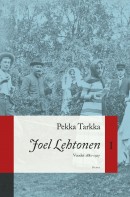 Joel Lehtonen 1. Vuodet 1881–1917
[Joel Lehtonen 1. The years 1881–1917]
Helsinki: Otava, 2009. 431 p., ill.
ISBN 978-951-1-23229-2
€ 37, hardback
The early years of the author Joel Lehtonen (1881–1934) were harsh ones: he was the illegitimate child of a mentally disturbed mother who abandonded her six-month-year baby in the forest. Fortunately Joel was adopted by a cultured clergyman who supported his education, making it possible for him to find a career in journalism and writing. The author and critic Pekka Tarkka published his doctoral dissertation on the changes in Joel Lehtonen’s view of human character in 1977. In this new book, the first general account of Lehtonen’s life and work, he presents an interesting view of the writer’s contradictory personality. Lehtonen’s travels in France, Italy and Switzerland strengthened his knowledge of foreign languages and his interest in Romance culture essential to his translator’s work. Lehtonen’s novels and short stories are often set in his home province of Savo, which he depicted through many phases of its social development. His most popular novel, Putkinotko, was published in 1919–1920. The first volume of Tarkka’s biography ends with Lehtonen’s writing in 1917 of the novel Kerran kesällä (‘Once in summer’), about a composer returning to Finland from abroad just as the Finnish Civil War is about to begin.
The party’s not yet over
14 November 2013 | Authors, Interviews
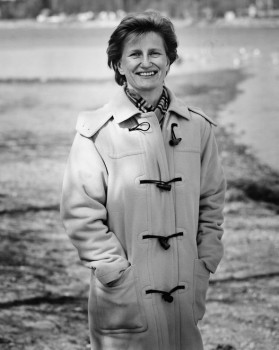
Minna Lindgren. Photo: Ville Palonen
Ordinary, boring, controlled life in an old folks’ home takes an interesting turn as crimes are committed. But daily tramrides in Helsinki, the virtues of friendship and general joie de vivre are enjoyed by 90-year-plus-old ladies who refuse to act as expected – as Bette Davis put it, old age is no place for sissies. Minna Lindgren is interviewed by Anna- Leena Ekroos
Welcome to Twilight Grove, a Helsinki home for the elderly – the bright, institutional lighting in its parlour creating an atmosphere like a dentist’s office, the odd resident dozing on the sofas, waiting for the next meal. The menu often includes mashed potatoes, easy for those with bad teeth. Residents seeking recreation are offered chair aerobics, accordion recitals, and crafts. A very ordinary assisted living centre, or is it? In Minna Lindgren’s novel, Kuolema Ehtoolehdossa (‘Death at Twilight Grove’, Teos), the everyday life of a home for the elderly is the setting for absurd and even criminal happenings, suspicious deaths and medical mix-ups.
Anna-Leena Ekroos: You’re a journalist and writer. Formerly you worked for the Finnish Broadcasting Company. In 2009 you won the Bonnier journalism prize for an article of yours about the last phases of your father’s life, and his death. Kuolema Ehtoolehdossa is your first novel. How did it come into being?
Minna Lindgren: I’ve always known I was a writer but the mere urge to write isn’t enough for a novel – you have to have a meaningful story. The more absorbed I became in the life of the old, the more important it felt to me to write this story. Writing a novel turned out to be carefree compared to working as a journalist. Many of the stories I heard would have become bad social porn in the media, dissolved into banality, but in a novel they become genuinely tragic, or tragicomic, as the case may be. More…
On Sirkka Turkka
30 June 1982 | Archives online, Authors
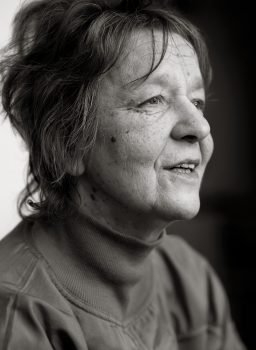
Sirkka Turkka. Photo: Pertti Nisonen
1.
I met Sirkka Turkka towards the end of the sixties; she was a friend of a girl-friend of mine.
We called her Hemuli. Not that she bore any resemblance to the Hemulen of the Moomin books, but she did view the world with the same charitable curiosity as some of Tove Jansson’s immortal characters.
In the evenings Hemuli would speak with wit and wisdom, as the sky darkened, then paled towards dawn. Her words were spontaneous: she talked of nature, of the city, always with a gentle understanding, a compelling magic which dissolved ideas into music, full of a sad beauty, echoes of loneliness, painful and happy memories. She looked life straight in the eye, without illusions.
What I’m saying, Sirkka Turkka was a master of the spoken word. She was a story-teller, a ballad-singer, a reciter of epic tales, creating literature of a kind no longer recognized as literature. More…
What if?
30 December 2001 | Articles, Authors

 For an extraordinary period between 1944 and 1956 part of Finland – the Porkkala peninsula, close to Helsinki – was leased to the Soviet Union as a military base. Inspired by the photographs by Jan Kaila, Olli Jalonen explores those silenced and mysterious years, which prompted Finns to ask the question: what if the whole of Finland had succumbed to the same fate?
In the autumn of 1944, the Soviet Union set up an enormous military base close to Helsinki. The Porkkala area, which had been forcibly leased from Finland for 50 years, was returned to the Finns early, in 1956. Completely divorced from its surroundings and strongly armed, the foreign power’s base was like a bear sleeping in Finland’s back yard. It has left in the minds of Finns hidden images of silence, fear and mystery. More…
Money makes the world go round
31 August 2012 | Fiction, Prose
Extracts from the novel Mr. Smith (WSOY, 2012). Introduction by Tuomas Juntunen
I have a confession to make.
I couldn’t have lived on my salary. Most people would solve this by taking out a loan, living on credit. I’ve never lived in debt. Instead I’ve had to make my modest capital grow by investing it – through the company, of course, because irrespective of their colour governments generally understand companies better than small investors. You have to make money somewhere other than the Social Security Office.
Work doesn’t make money; money makes money.
You have to let money do the work.
This is nothing short of a profound human tragedy: most people are forced to waste the majority of their lives, to use it in the service of complete strangers, for unknown purposes, doing something for money that they would never do if they didn’t have to. The most shocking thing is that people actively seek out this state of affairs, strive towards it; it is a goal towards which society lends us its full support, no less.
Such wage slavery is called ‘work’. More…
The engineer’s story
30 June 1981 | Archives online, Fiction, Prose
A short story from Maailman kivisin paikka (‘The stoniest place in the world’, 1980). Introduction by Pekka Tarkka
Coffee was going to be served down by the river. The engineer took my elbow and led me across his paved courtyard and over his lawn; we settled ourselves down in cane chairs under the trees. Mirja came out of the house with a tray of coffee and coffee-cups, a loaf of sweet bread, already cut, some marble cake and some biscuits. The engineer said nothing. My eye wandered over the ample weeping birches by the river, the mist creeping up in the cool of the evening and shifting in the cross-pull of the breeze and the current, and I watched Mirja moving under the trees back to the house and then down again to the riverbank.
As we sipped our coffee we spoke about chance, and the part it plays in life, about my husband – for I was able to speak about him now: enough time had gone by. The engineer eased himself into a comfortable position, gave me a quick look and then launched off into an account of his own, about his trip abroad:
I spotted the news item as I was going through the morning paper on the plane. I sat more or less speechless all of the first leg, listening to Kirsti and her husband confabulating. I didn’t say anything during the stop-over in Copenhagen, either, where they wanted to get some schnapps and, of course, some chocolate ‘if Kirsti would really like some’. We came rushing back into the plane just as the last English, German and Danish announcements were coming over, and then we sat waiting for the take-off. That was delayed too because of a check-up (not announced), and then we were off again for Zurich, me without a word and they whispering together. Then it was the bus as far as the terminal, and after that a taxi to the hotel. Quite clearly Kirsti hadn’t heard a thing about it yet, and probably hadn’t had much contact with Erkki for quite some time, her new husband even less. More…
Figuring out father
18 October 2012 | Extracts, Non-fiction
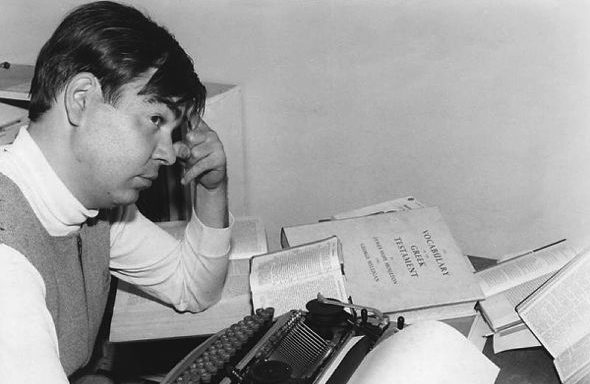
Pentti Saarikoski (1960s). Photo: Otava/Nikolai Naumoff
The poet and translator Pentti Saarikoski (1937–1983) jotted in one of his journals: ‘I have never cared for relatives.’ Thirty years after his death one of his five children set out to find out what his father was like – by reading almost all he left behind in writing; these comments by Saska Saarikoski are from his Sanojen alamainen (‘Servant of words’, Otava, 2012), an annotated selection of Pentti Saarikoski’s thoughts
Pentti Saarikoski died when I was 19. I remember complaining to my mother that I had not yet even got to know my dad. My mother answered: You’ve got plenty of time, the real Pentti is to be found in his books. She did not know how right she was, for she meant Pentti’s published books, not knowing what a mountain of texts awaited its readers in the archives of the Finnish Literature Society. Pentti had written everything down in his diaries.
I read Nuoruuden päiväkirjat (‘Youthful diaries’), published soon after Pentti’s death in 1983, as soon as they were published, but when his Prague, Drunkard’s and Convalescent’s Diaries appeared around the millennium, they went straight on to my library shelf. I was not terribly interested in the ramblings of Pentti’s alcoholic years.
It could be that my reluctance was influenced by the cool attitude I had adopted from early on in relation to my father. Other people were welcome to consider him a genius; for me, he was a father who did not telephone, write or come to see my football matches. I didn’t call him, either; for me, it was a father’s job. More…
Misery me
Extracts from the collection of short prose, Mielensäpahoittaja (‘Taking offense’, WSOY, 2010)
Past pushing up daisies
Well, yeah, so I took offense when the doctor said that considering my age I’m in tip-top shape. His theory was that my 25-kilometre ski circuits would keep an old coot like me in shape, if they didn’t kill me first. He said if I were to start just sitting on the couch and waiting, then the Reaper would be on my back in no time.
I don’t ski for my health. I ski because it’s pretty in the forest, and when a body is sweating he doesn’t think a whole lot. More…
Jera Hänninen & Jyri Hänninen: Tuhansien aatteiden maa. Ääriajattelua nyky-Suomessa [Land of a thousand ideologies. Extremist thought in contemporary Finland]
11 March 2011 | Mini reviews, Reviews
 Tuhansien aatteiden maa. Ääriajattelua Nyky-Suomessa
[Land of a thousand ideologies. Extremist thought in contemporary Finland]
Helsinki: Johnny Kniga Kustannus, 2010. 267 p.
ISBN 978-951-0-36072-9
€ 30, paperback
There are a number of extremist ideologies with a foothold in Finland. Even though most such groups are very small, religious and political extremism have experienced growth and do not always remain on the margins. The authors of this book have chosen to include only those ideologies whose efforts are clearly directed against particular groups or that would result in an erosion of democracy if they were to gain some real power. Topics receiving the greatest amount of attention in the media have been immigration and the polarisation within the Finnish Lutheran Church. According to some reports, the Church is being split over the issues of female clergy and homosexuality. This book also covers Finnish-born Islamists who support Sharia law, Communists who distort history and venerate the Soviet Union, honour killings carried out in Finland, and NRA Finland, a hard-line pro-gun lobbying organisation. The authors also discuss how these zealots, having gained more support, have also begun to influence the positions of mainstream political parties.
Translated by Ruth Urbom
Henrik Meinander: Kekkografia. Historiaesseitä [Kekkography. History essays]
1 April 2011 | Mini reviews, Reviews
 Kekkografia. Historiaesseitä
[Kekkography. History essays]
Suomentanut [Translated into Finnish from the original Swedish texts by] Matti Kinnunen
Helsinki: Siltala, 2010. 229 p.
ISBN 978-952-234-040-5
€ 34, hardback
Professor Henrik Meinander examines the forces that have shaped Finnish history and the controversial issues that have marked its development; Finnish history and culture were formed by chain reactions in European power politics. Finland did not emerge as a nation until the 19th century, as a by-product of the Napoleonic wars, and the independence of 1917 was not the result of an autonomous process of national development but rather a consequence of events elsewhere, especially in Russia. The history of independent Finland is roughly equal in length to that of the Soviet Union; in the early 1990s the Soviet Union collapsed, and Finland joined the European Union. The author does not take a position on the desirability of this development, and points out that the increasing integration and globalisation Finland’s era of independence may appear to be only a transitory phase. President Urho Kekkonen (1900–1986), who influenced Finnish politics for half a century and whose name gives the work its title, figures in approximately half of the texts.
Translated by David McDuff
Forest and fell
8 May 2013 | Reviews
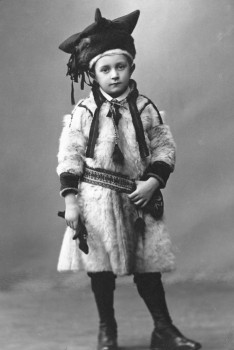
From North to South: young Heikki Soriola on his way to represent Utsjoki in Helsinki, in 1912. Photo from Saamelaiset suomalaiset
Veli-Pekka Lehtola
Saamelaiset suomalaiset: Kohtaamisia 1896–1953
[Sámi, Finns: encounters 1896–1953]
Helsinki: Suomalaisen Kirjallisuuden Seura, 2012. 528 p., ill.
ISBN 978-952-222-331-9
€53, hardback
Leena Valkeapää
Luonnossa: Vuoropuhelua Nils-Aslak Valkeapään tuotannon kanssa
[In nature, a dialogue with the works of Nils-Aslak Valkeapää]
Helsinki: Maahenki, 2011. 288 p., ill.
ISBN 978-952-5870-54-1
€40, hardback
The study of the Sámi people, like that of other indigenous peoples, has become considerably more diverse and deeper over recent decades. Where non-Sámi scholars, officials and clergymen once examined the Sámi according to the needs and values of the holders of power, contemporary scholarship starts out from dialogue, from an attempt to understand the interactions between different groups. More…
Vieraita työssä. Työelämän etnistyvä eriarvoisuus [Foreign workforce. Increasingly ethnic inequality in working life]
21 January 2011 | Mini reviews, Reviews
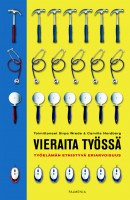 Vieraita työssä. Työelämän etnistyvä eriarvoisuus
[Foreign workforce. Increasingly ethnic inequality in working life]
Toim. [Editors]: Sirpa Wrede & Camilla Nordberg
Helsinki: Gaudeamus, 2010. 285 p.
ISBN 978-951-570-776-5
€20, paperback
There has been a great deal of discussion in Finland about whether educated people should be recruited from abroad for high-level positions, and whether immigrants with lower levels of education could redress the labour shortage in low-paid fields. In this collection of twelve scholarly articles, sociologists have situated immigrants into the field of research into the workplace. This book seeks answers to questions about the factors that hamper immigrants’ acceptance into Finnish society and how ethnic otherness is determined in public discourse by those in positions of power within society. The fields of work investigated include health care, food service, building trades and highly skilled immigrants. Immigrants’ perception of discrimination in hiring is addressed in an article by Pakistani-born Akhlaq Ahmad, based on his PhD thesis. Ahmad himself replied to 400 job advertisements and compared his progress in the recruitment process to the experiences of a Finnish test subject with similar educational qualifications. He received a favourable response rate of 1.5 percent, compared to 25% for the Finnish control. This book also considers media images of immigrants and traditional ethnic hierarchies in the workplace.