

Search results for "tommi+musturi/2010/2009/10/writing-and-power"
Moving on
30 June 2003 | Archives online, Fiction, Prose
Extracts from the short story ‘Tunnin kuvat’ (‘One-hour processing’, from the collection Vapiseva sydän, ‘Tremulous heart’, Tammi, 2002). Introduction by Harry Forsblom
Last summer, when I was helping my brother with his move, he said I could take as many of his old LPs as I wanted. There were actually two of us on the job: his younger friend Timbe was along, and when we’d almost completely cleared out the flat and my brother’s two cellar closets (he’d rented an extra closet from the next-door flat, as he was submerging under the clobber lying around everywhere), he said the same to Timbe: ‘Just help yourself.’ The records we ourselves didn’t want would be chucked in the rubbish.
A sense of order
30 June 1987 | Archives online, Authors, Reviews
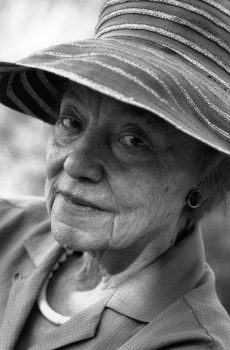
Solveig von Schoultz. Photo: Charlotta Boucht
That Solveig von Schoultz occupies the position of ‘grand old lady’ of Finland-Swedish poetry is beyond question; yet it is an epithet that fits her badly. It all too easily suggests the image of a stern and queenly poetess, an Edith Sitwell, Marianne Moore or Gabriela Mistral. The poetesses of Scandinavia are, by and large, less solemn – more gentle and down-to-earth, even when they grow older and wiser and ascend some of Parnassus’s more elevated thrones.
Solveig von Schoultz has, of course, had a long journey to the top. She has behind her twelve collections of poetry, at least fifteen volumes of prose, and an even greater number of plays for radio, television and theatre, spanning a good fifty years’ acitivity as a writer.
In this long artistic career there is both continuity and development. It might be said that the continuity is represented by the fact that from the very beginning she has preferred to describe women – their daily lives, their loves, thoughts, impulses, relationships. But since so much in the world of women and in women’s thinking has changed during the decades since her literary debut in the 1930s, both her themes and her outlook have necessarily altered, too. Among other things, she has had many of her early, then only half-developed ideas taken up by a later generation, and has thereby had them given back to her renewed. As a feminist she has always been one of the least militant, and for a short time some of her younger co-sisters were uncertain about the strength of her commitment to the Cause. More…
For love or money
30 June 1994 | Archives online, Fiction, Prose
Extracts from the novel Paratiisitango (‘Paradise tango’, WSOY, 1993). Introduction by Markku Huotari
The bishops’ dilemma
They are waiting for Blume in the front room of the office. On the sofa sits a man whom Blume has never learned to like. He himself chose and appointed the man, for a job not insignificant from the point of view of the company. Blume has good reasons for the appointment. If he employed only men he liked, the business would have gone bankrupt years ago.
Reinhard Kindermann gets up from the sofa and waits in silence while Blume hangs up his overcoat. Mrs Giesler stands next to Blume. She does not try to help her superior take off his coat, for she knows from experience that he would not tolerate it, but the old man does allow her to stand next to him and wait in silence, like a servant expressing submission. More…
On Erno Paasilinna
31 December 1978 | Archives online, Authors
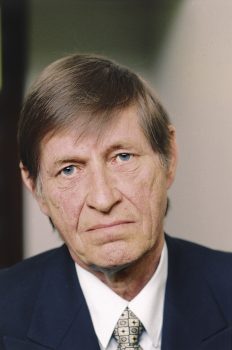
Erno Paasilinna. Photo: Irmeli Jung
In one of his essays Erno Paasilinna speaks of a modern phenomenon, the ‘quasi-author’. A quasi-author is the kind of literary buff who writes for the papers, takes part in congresses, sits in panels and appears frequently on television. Wherever there is controversy, be it over the function of the President, the legality of strikes, the abortion laws, the evangelical movement or the present state of lyric poetry, the quasi-author is invariably to be found. Paasilinna atones for his irony by freely admitting that he is himself a typical specimen of the breed.
For the concept of the quasi-author Paasilinna refers us back to Ilya Ehrenburg, who noted in his memoirs that the profession of authorship had been undergoing a steady diminution of social and political influence ever since the early 30s. Since Ehrenburg’s day the process has accelerated: television, efficient communications, and the ceaseless output of ‘information’ by what amounts to a major modern industry, have finally toppled the novelist from the throne he successfully occupied for so long. The quasi-author has replaced him, availing himself of all the new media in the hope of achieving a more rapid and direct impact on the public – and perhaps also of preserving the traditional influence of the writing fraternity. Erno Paasilinna was born in 1935 near Petsamo (now Pechenga) on the Arctic coast: from 1922 till 1944 this region was part of Finland. Evacuated during the upheavals of the Second World War, the family was forced to lead the nomadic life of refugees, wandering across the Arctic wastes as far as Norway before they were able to find a settled home in Finland. Erno Paasilinna has not rejected the landscape or the traditions of his native area: he has edited four anthologies of extracts from early accounts of travel in Lapland. It was in Northern Finland, too, that Paasilinna completed his education (he attended the Lapland College of Further Education) and began his writing career. More…
Matti Suurpää: Parnasso 1951–2011 [Parnasso, 1951–2011]
21 April 2011 | Mini reviews, Reviews
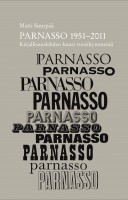 Parnasso 1951–2011. Kirjallisuuslehden kuusi vuosikymmentä.
[Parnasso, 1951–2011. Six decades of a literary journal]
Helsinki: Otava, 2011. 559 p., ill.
ISBN 978-951-1-23368-8
€ 45.90, hardback
The 60-year history of Parnasso, Finland’s longest-running literary journal, is a chronicle of the assimilation of ‘the modern’ into Finnish literature. Matti Suurpää – a long-time contributor, and former head of the SKS publishing house – singles out the 1958–1965 period under the editorship of Kai Laitinen (professor of literature, Editor-in-Chief of Books from Finland from 1976 to 1990) as the era with the broadest editorial scope. Finnish modernist literature, developed during the 1950s, had by then staked out its territory, and the journal consolidated its power to promote it. Laitinen published an excellent themed issue on Finland-Swedish literature to rehabilitate and reintegrate writing by Swedish-speaking authors into the field of Finnish literature. Subsequent editors considered it important to include translations of foreign literature in Parnasso. As the archives of the journal have been lost, Suurpää carried out a close reading of the annual volumes. The result is an eminently clear and readable work in which a wealth of extracts of writing and discussions illuminate the story of the modernisation of Finnish literature.
Translated by Ruth Urbom
About butterflies
30 September 2000 | Authors, Reviews

Photo: Charlotta Boucht
To think that it can be so cold in Cairo…
A woman sits there writing, and she feels cold. Her name is merely J; around her lie her mother’s posthumous papers. They look like a kaleidoscope. Beautiful formations succeed one another, but the picture is never fixed or unambiguous. Not until the day J is able to see something more than the enticing pictures in the kaleidoscope is she free. That day she stops feeling cold. That day she leaves Cairo in order to continue loving in Finland. More…
On reading, books and horses
4 June 2010 | Articles, Non-fiction
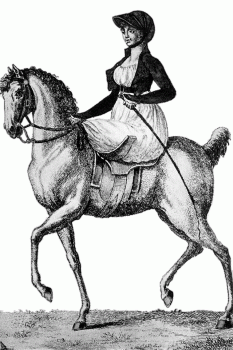
Ladylike: woman riding sidesaddle (Journal des Dames, 1799)
Horses, women, cars, men and reading: Teemu Manninen takes a look at the changes that illogical history makes
I have a friend who is an avid reader and who also talks about the books he reads. But being a staunch conservative when it comes to reading habits, I just cannot consider him a true friend of literature. The reason: he only reads non-fiction books. To me, ‘being a reader’ means reading fiction and poetry.
But increasingly it seems that real literature is becoming more and more marginal, whereas non-fiction (self-help, history, travel guides, popular science, popular economics, cookbooks) is what sells and keeps the industry afloat. The recent Finnish ‘essay-boom’ is an example of this development, with young writers like Antti Nylén or Timo Hännikäinen gaining recognition as important contemporary authors solely through their work as essayists; Hännikäinen has also written poetry, but Nylén is strictly a non-fiction writer. More…
Like father, like daughter
31 March 1999 | Archives online, Fiction, Prose
Extracts from Tom Tom Tom (Gummerus, 1998). Introduction by Soila Lehtonen
A father and daughter in a hospital back garden
Bits of nail flick to the ground as Kokko cuts Tom’s nails, leaving rather brittle nail-ends among the lichen. In the middle of the hospital afternoon they’ve made their way down to the little park, to care for the hands of both of them, all four.
In the days before Africa Tom used to nurse Kokko on the living-room sofa and cut the nails on her most difficult hand, pushed the cuticles back and taught her the care that ought to be taken of nails, or she’d have smarting and pain round the cuticles. Kokko used to plead to be taken into his nail cutting lap oftener than she should, even when she’d really have preferred to grow longer nails. More…
At the sand pit
30 September 1985 | Archives online, Fiction, Prose
Antti Tuuri. Photo: Jouni Harala
‘After nearly 40 years of observing the Ostrobothnians, I am convinced that they have certain characteristics which explain the historical events that took place there and which also shed light on the region today. I do not know how these characteristics develop, but it appears that heredity, economic factors and even the landscape form the nature of people. Everywhere people who live in the plains are different from those who dwell in the mountains, and from those who fish the archipelagos,’ writes the author Antti Tuuri, himself an Ostrobothnian.
Antti Tuuri’s Pohjanmaa (‘Ostrobothnia’, 1982), which last January was awarded the Nordic Prize for Literature, has now been translated into each language of the Nordic countries. Tuuri’s novel describes the events of one summer day in Ostrobothnia, on the west coast of Finland, where a farming family, the Hakalas, has gathered for the reading of the will of a grandfather who emigrated to the United States in the 1920s.
The inheritance itself is insignificant, but it has brought together the four grandsons, with their wives and children. The story is narrated from the point of view of one of the brothers. The women of the family remain inside while the men take out an automatic pistol which has been kept hidden away since one of them smuggled it home from the Continuation War. The men go off to a sand pit to do some shooting and to drink some illegal home brew. There they meet their former schoolteacher, who joins in with their drinking and shooting. Some surprising events take place as the day’s action unfolds, and Tuuri’s narrator views them in an unsentimental way, describing them matter-of-factly and at times with ironic humour. The men recall the violent history of Ostrobothnia, the years of the Civil War and the right-wing Lapua movement of the 1930s.
The Nordic Prize jury commented that the novel ‘portrays the breaking up of the old society, and conflicts between generations as well as between men and women.’ Tuuri has constructed his novel on conflicts, and the result is a highly dramatic narrative.

An extract from Pohjanmaa (‘Ostrobothnia’)
A Finnish hound dog came out of the woods just beyond the sandpit, stopped at the edge of the pit and started to bark at us. The boys quickly began putting the weapon together. Veikko yelled that you were allowed to shoot a dog running loose in the woods out of hunting season. He kept asking me for cartridges; he’d shoot the dog right away, before it could tear to pieces the young game birds that couldn’t fly yet. I told him to shut up. Seppo finished putting the automatic pistol together and gave it to me. I ran to the car, put the gun down on the floor in front of the back seat and tossed a blanket over it.
When I got back, I saw the teacher coming out of the woods over by the pit. He snapped a leash on the dog and started towards us through the pine grove. The boys sat down around the campfire and began taking swigs of home brew from their cups. More…