

Search results for "tommi+musturi/2010/2009/10/writing-and-power"
A toast before dying
30 June 2005 | Archives online, Fiction, Prose
Extracts from the novel Voin jo paljon paremmin. Tšehov Badenweilerissa (‘I already feel much better. Chekhov in Badenweiler’, Loki, 2004). Introduction by Hannu Marttila
I went to meet them Friday and I did not plan to take other patients that week. They had a small but comfortable room with striped wallpaper.
The Russian was a tall man, but stooped. It soon became apparent that his wife spoke fluent German because she was of German descent. That made it much easier to take care of things.
Of course I knew who the patient was. I have always enjoyed literature and other forms of art. I could play several pieces rather well on the piano. When I was younger I had even written a couple of stories set in the mountains, though I had never offered them for publication. As for Chekhov, I had read a couple of his stories that had just come out in German translation, and I had liked them quite a lot in a way, even though they of course reflected that characteristic Russian nature, with its vodka and untidiness.
The patient’s wife seized both my hands when I entered. It was a bit confusing, but not necessarily unpleasant.
‘Our name is Chekhov. We have come from Russia,’ the woman said in a strong, carrying voice. ‘I trust you’ve been told?’ More…
Mothers and sons
30 March 2008 | Archives online, Fiction, Prose
Extracts from Helvi Hämäläinen’s novel Raakileet (‘Unripe’, 1950. WSOY, 2007)
In front of the house grew a large old elm and a maple. The crown of the elm had been destroyed in the bombing and there was a large split in the trunk, revealing the grey, rotting wood. But every spring strong, verdant foliage sprouted from the thick trunk and branches; the tree lived its own powerful life. Its roots penetrated under the cement of the grey pavement and found rich soil; they wound their way under the pavement like strong, dark brown forearms. Cars rumbled over them, people walked, children played. On the cement of the pavement the brightly coloured litter of sweet papers, cigarette stubs and apple cores played; in the gutter or even in the street a pale rubber prophylactic might flourish, thrown from some window or dropped by some careless passer-by.
The sky arched blue over the six-and seven-storey buildings; in the evenings a glimmer could be seen at its edges, the reflection of the lights of the city. A group of large stone buildings, streets filled with vehicles, a small area filled with four hundred thousand people, an area in which they were born, died, owned something, earned their daily bread: the city – it lived, breathed….
Six springs had passed since the war…. Ilmari’s eyes gleamed yellow as a snake’s back, he took a dance step or two and bent over Kauko, pretending to stab him with a knife. More…
The Conference
31 December 1978 | Archives online, Fiction, Prose
A short story from Alamaisen kyyneleet (‘Tears of an underdog’, Karisto 1970). Introduction by Pekka Tarkka
Dr Smith said that he did not believe that any immediate threat of an invasion from Space was likely to arise for some time. Observations to date had given no support to the view that any such preparations had been put in hand. Technically they were of course ahead of us, but in his opinion there was no cause for panic. Nor could he endorse the widespread but naive assumption that any confrontation with beings from Space must inevitably lead to war. If human beings had reason to feel threatened, it was from each other that the chief threat came. He urged the Conference to work for a situation in which every country would be preparing for peace rather than for war. He said he had no wish to sound sardonic, but that he had noticed that when war was prepared for, it was usually war that ensued. More…
Studies in obsession
30 June 1981 | Archives online, Authors
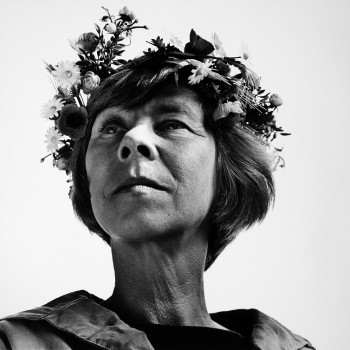
Tove Jansson. Photo: Hans Gedda
From Tove Jansson’s first short book, Småtrollen och den stora överstämningen (‘The little troll and the great flood’, 1945) to her latest volume of short stories, Dockskåpet (‘The doll’s house’, 1978 – see extracts 1 & 2), there is a great step, and few of the readers of that first children’s story could conceivably have foreseen just how far its writer was to go. Since her start in 1945 Tove Jansson’s reputation as the originator of the Moomintroll stories has become worldwide, and in one sense her own creation must have become a burden to her, not least because many of the themes which have emerged have been difficult to encompass within the Moomin framework. It is not easy for a writer who has created a reputation as a children’s author to break through what might be termed the ‘adult barrier’, but Tove Jansson has shown herself determined to do so, and with Dockskåpet she must surely have overcome any lingering doubts her readers may have had. Here is the adult writer, firmly in control of her art and delving into subjects far removed from the child mentality. More…
The lady who could fly
30 June 1989 | Archives online, Fiction, Prose
A short story from Kenkää suurempi jalka (‘The foot bigger than the shoe’, 1992)
A day came when she felt she could fly. You used technological gear and gadgets for flying, or meteorological shifts in the air masses: rising currents gave you a weightless ecstasy with the lightest of equipment. But that wasn’t it.
To begin with it was one of those typical flying dreams, which gradually extended into the waking state: she could feel it coming in her sinews, her nervous system, her cortex. She was acquainted with Freud and Jung and the other dream-interpreters of today. Characters in the myths and fairytales flew; cruel princesses flew on the wings of the storm; Gogol’s overcoats, Chagall’s lovers, cows and cats flew; and vampires – those last leather-winged flutterings of the prehistoric archaeopterix in the mud of the gene pool. More…
Being God
30 September 2006 | Fiction, Prose
Extracts from the novel Gud (‘God’, Schildts, 2006)
Side by side, wolves and antelopes graze on the juicy grass.
A deer playfully chases a lion through the bushes.
‘Can you do this?’
Adam crosses his arms in front of his chest and folds his hands back to front so that the right hand is on the left and the left hand is on the right. With his hands folded he twists them downwards and holds them out. Now they point to Eve, still folded, and still with the right hand on the left.
Eve tries. She succeeds, and laughs with delight.
A gentle breeze is blowing from the east, just strongly enough for the couple not to be troubled by the heat, but not so they would feel the need for clothes to keep them warm. More…
Eerikinkronikka [Eric’s Chronicle]
6 March 2014 | Mini reviews, Reviews
 Eerikinkronikka
[Eric’s Chronicle]
Finnish translation by Harry Lönnroth, Martti Linna
Helsinki: Suomalaisen Kirjallisuuden Seura [Finnish Literature Society], 2013. 221pp.
ISBN 978-952-222-445-3
€35, hardback
Eerikinkronikka (Erikskrönikan) is both an important source of knowledge about Finland’s medieval history and a chivalric epic poem. The Old Swedish text was possibly written during the 1320s by Duke Eric’s secretary, the priest Torkel Kristinsson. Philologist Harry Lönnroth and historian Martti Linna have translated the work into Finnish for the first time, in prose form, with an extensive introduction by Lönnroth. The epic depicts the political history of Sweden in the 13th and 14th centuries, and also the struggle for power within the family of the well-known statesman Birger Jarl (died 1266). One of the central characters is the idealised Duke Eric (died c.1318), whose son becomes King Magnus Eriksson. The narrator comments on events in a laconic style that often has a religious tinge. The epic gives a vivid and dramatic account of chivalric life and life in the kingdom of Sweden, of which Finland was a part. At the time the Swedes were consolidating their power in Finland; the work mentions Birger’s ‘crusade ‘ to Häme in southern Finland, the founding of Häme Castle, and battles in Karelia.
Translated by David McDuff
On Alpo Ruuth
30 September 1978 | Archives online, Authors
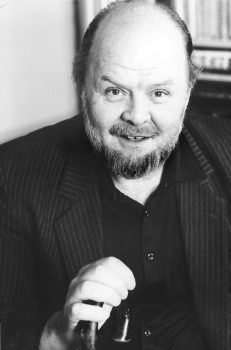
Alpo Ruuth. Photo: Sakari Majantie / Tammi
Alpo Ruuth (born 1943) grew up in Sörnäinen, a working-class quarter of Helsinki, amid dirty grey tenements, railway goods yards, machine shops, timber yards and slaughterhouses; a district reeking of rust and dust, of gasometers, steam locomotives, pinewood, toad-in-the-hole and roasting coffee. Ruuth completed three years of secondary schooling and then decided that he had had enough. He worked as a garage hand, a shoemaker, a casual labourer, a salesman and a storekeeper. The publication of his first novel, Naimisiin (‘Getting married’, Tammi, 1967) set him free to adopt writing as a career.
Ruuth first became known to a wider public through his novel Kämppä (‘The commune’, Tammi, 1969 ). This describes the adolescent years of a group of Sörnäinen boys who live like a tribe of savages in this urban jungle. They establish a commune of their own, cut off completely from the adult world, and rely on a process of trial and error to teach them how to live. The charm of the book comes from the spontaneity and quick reactions of these teen-age youngsters: chattering, mimicking, footballing or fornicating, they are all the time as alert as puppies, while the life of the city around them goes on ‘for real’. The final section of Kämppä describes how they eventually slot themselves into the community. Most of them accept their fetters with resignation, but there is one – the chief character of the novel – who strives to maintain his critical attitude to the values which dominate his surroundings, and to live up to it in practice. Some of Ruuth’s finest writing in this novel is devoted to the harmonious family background of this young man’s early years. He seems to be saying that ethically valid solutions to life’s problems grow out of the personal relationships of early childhood. More…
The everyday flow
30 June 2006 | Authors, Reviews

Johanna Venho. Photo: Heini Lehväslaiho
Johanna Venho on her own poems
While writing Yhtä juhlaa (‘It’s all a celebration’), my third collection, I was pretty aware of it as a whole. But, generally speaking, the process of writing poetry can’t be fully conscious, or in your control: you can steer it a little, but quite a lot has to be let go. My title shows there’s an irony. It points to the duality of everyday life – and of life in general: both involve celebration and the opposite of celebration.
I’ve played with rhyme – something quite new to me – and reading these poems aloud does, I’ve noticed, work. I’ve recently been having a go at writing song lyrics, too. Something else new is that the collection grows the arc of a story line, and story-telling brings along a fairytale element. More…
Leave and stay
19 December 2011 | Fiction, poetry
Butterflies, metamorphoses, burial and remembering are the recurrent images in Henriikka Tavi’s third collection, entitled Toivo (‘Hope’). Introduction by Mervi Kantokorpi
Poems from the collection Toivo (‘Hope’, Teos, 2011)
Mourning cloak
I will tell you, though you cannot hear it.
This is a story that you will come to forget.
I have gone, but there is no departure. And as
the meadow of absence begins to lapse into grief:
Do not grieve.
I was here a moment ago and
soon will be between the dermis and the epidermis.
I stand in a row behind myself; I am a memory of you.
Oh, you weak spark! You powerful
desire to turn into a fortune!
You were the crowd in my head.
I am serious, you only imagine me.
Don’t disappear. Leave and stay.
I’ll be no further than this. More…
Future, fantasy and everyday life: books for young readers
24 January 2013 | Articles, Children's books, Non-fiction
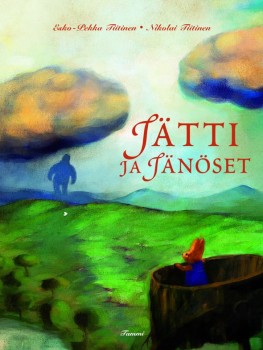
A giant meets the bunnies: a new story by Esko-Pekka Tiitinen, illustrated by Nikolai Tiitinen
Fantasy novels and dystopias feature in the new Finnish fiction for young readers; popular children’s books are recycled – stories and illustrations are adapted to new media and for new age groups. Päivi Heikkilä-Halttunen takes a look at new books for young readers published in 2012
All new mothers in Finland receive a ‘maternity package’ from the state containing items for the baby (including bedding, clothing and various childcare products) intended to give each baby a good start in life. This tradition, which started in 1938, is believed to be the only such programme in the world.
Each package also contains the baby’s first book, traditionally a sturdy board book by a Finnish author. The past few years have seen more original board books published in Finland than ever before: they are doing well in competition alongside books translated from other languages. Board books for babies have become a focus for Finnish illustrators and graphic artists. These books, with their simple visual language, have taken on a retro look.
History was made with the Finlandia Junior award, when for the first time the prestigious prize was given to a picture book originally written in Finland-Swedish: Det vindunderliga ägget (‘A most extraordinary egg’, Schildts & Söderströms) by Christel Rönns. The award can also be seen as an acknowledgement of the brave, experimental Finland-Swedish children’s picture books that are being published these days. Finnish-language picture books, on the other hand, are still crying out for more figures to shake up traditional practices. More…
On becoming a forest
30 June 2006 | Archives online, Fiction, poetry
Extracts from Ei, siis kyllä (‘No. That’s to say, yes’, WSOY, 2006). Introduction by Anselm Hollo
Propaganda-as-prayer-wheel is a powerful weapon, because it is a
prayer-wheel.
If there is nothing else to write about, it is always possible to write a
biography of Stalin, with all the spices.
A neat composition has always sufficed as good history, one according
to which an administration has done its best when it has elected itself.
Direct and indirect conclusions are impossible.
‘Legitimised historians explicate the nature of documents in a taciturn
manner…’
Scholarship cannot be based on what Aristotle did not say.
What Aristotle did not say is not a fact.
It is useless. Silence alone is a helpful rhetorical figure. But I do not know
how to use it. Nor am I trying to learn.

Once upon a time…
13 January 2012 | Articles, Non-fiction
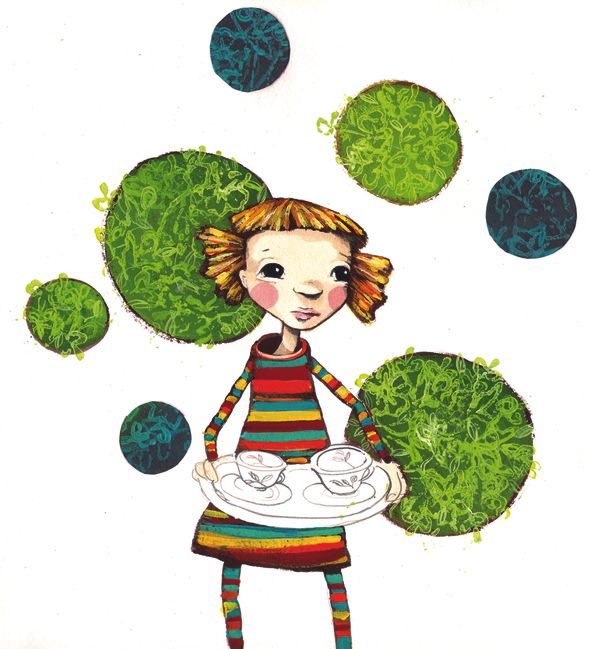
Sari Airola's illustration in Silva och teservisen som fick fötter (‘Silva and the tea set that took to its feet’, Schildts) by Sanna Tahvanainen
The future of book publishing is not easy to predict. Books for children and young people are still produced in large quantities, and there’s no shortage of quality, either. But will the books find their readers? Päivi Heikkilä-Halttunen takes a look at the trends of 2011, while in the review section we’ve picked out a selection of last year’s best titles
The supply of titles for children and young adults is greater than ever, but the attention the Finnish print media pays to them continues to diminish. Writing about this genre appears increasingly ghettoised, featuring only in specialist publications or internet chat rooms and blogs.
Yet, defying the prospect of a recession, Suomen lastenkirjakauppa, a bookshop specialising in children’s literature, was re-established in central Helsinki in autumn 2011, following a ten-year break. Pro lastenkirjallisuus – Pro barnlitteraturen ry, the Finnish society for the promotion of children’s literature, has been making efforts to found a Helsinki centre dedicated to writing and illustration for children. The society made progress in this ambition when it organised a pilot event in May 2011. More…