

Search results for "harjunpää/2010/10/mikko-rimminen-nenapaiva-nose-day/2011/04/matti-suurpaa-parnasso-1951–2011-parnasso-1951–2011"
Matti Suurpää: Parnasso 1951–2011 [Parnasso, 1951–2011]
21 April 2011 | Mini reviews, Reviews
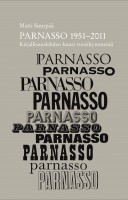 Parnasso 1951–2011. Kirjallisuuslehden kuusi vuosikymmentä.
[Parnasso, 1951–2011. Six decades of a literary journal]
Helsinki: Otava, 2011. 559 p., ill.
ISBN 978-951-1-23368-8
€ 45.90, hardback
The 60-year history of Parnasso, Finland’s longest-running literary journal, is a chronicle of the assimilation of ‘the modern’ into Finnish literature. Matti Suurpää – a long-time contributor, and former head of the SKS publishing house – singles out the 1958–1965 period under the editorship of Kai Laitinen (professor of literature, Editor-in-Chief of Books from Finland from 1976 to 1990) as the era with the broadest editorial scope. Finnish modernist literature, developed during the 1950s, had by then staked out its territory, and the journal consolidated its power to promote it. Laitinen published an excellent themed issue on Finland-Swedish literature to rehabilitate and reintegrate writing by Swedish-speaking authors into the field of Finnish literature. Subsequent editors considered it important to include translations of foreign literature in Parnasso. As the archives of the journal have been lost, Suurpää carried out a close reading of the annual volumes. The result is an eminently clear and readable work in which a wealth of extracts of writing and discussions illuminate the story of the modernisation of Finnish literature.
Translated by Ruth Urbom
Mikko Rimminen: Nenäpäivä [Nose day]
29 October 2010 | Mini reviews, Reviews
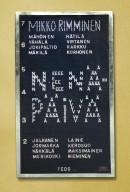 Nenäpäivä
[Nose day]
Helsinki: Teos, 2010. 339 p.
ISBN 978-951-327-1
€ 25.90, hardback
Female protagonists as sympathetic as this are rare in contemporary literature; in this third novel by Mikko Rimminen (born 1975), Irma is a solitary, slightly awkward outsider who gets badly tangled up in a muddle of her own making. She poses as a door-to-door market researcher – in order to meet people. Rimminen employs a more complex plot than in his previous novels (his 2004 debut work, Pussikaljaromaani, ‘A six-pack novel’, about idle young men, has been translated into five languages). The author is an acknowledged master of the slow narration: he is skilled at describing the sound of silence and giving a page-long description of the behaviour of a mobile phone in someone’s hand. All that passes unsaid and unseen between people is cleverly and hilariously put into words. Rimminen’s Finnish is highly original – he keeps creating new verbs and compounds – and his characters who stand on the margins hankering after ordinary life gain the reader’s genuine sympathy.
Finland(ia) of the present day
2 December 2010 | In the news

Mikko Rimminen. Photo: Heini Lehväslaiho
The Finlandia Prize for Fiction 2010, worth €30,000, was awarded on 2 December to Mikko Rimminen (born 1975) ; his novel Nenäpäivä (‘Nose day’, Teos) was selected by the cultural journalist and editor Minna Joenniemi from a shortlist of six.
Appointed by the Finnish Book Foundation, the prize jury (Marianne Bargum, former publishing director of Söderströms, researcher and writer Lari Kotilainen and communications consultant Kirsi Piha) shortlisted the following novels:
Joel Haahtela: Katoamispiste (‘Vanishing point’, Otava), Markus Nummi: Karkkipäivä (‘Candy day’, Otava), Riikka Pulkkinen: Totta (‘True’, Teos), Mikko Rimminen: Nenäpäivä (‘Nose day’, Teos), Alexandra Salmela: 27 eli kuolema tekee taiteilijan (’27 or death makes an artist’, Teos) and Erik Wahlström: Flugtämjaren (in Finnish translation, Kärpäsenkesyttäjä, ‘The fly tamer’, Schildts). Here’s the FILI – Finnish Literature Exchange link to the jury’s comments.
Joenniemi noted the shortlisted books all involve problems experienced by people of different ages. How to be a consenting adult? How do adults listen to children? Contemporary society has been pushing the age limits of ‘youth’ upwards so that, for example, what used to be known as middle age now feels quite young. And, for example, in Erik Wahlström’s Flugtämjaren (now also on the shortlist for the Nordic Literature Prize 2011) the aged, paralysed 19th-century author J.L. Runeberg appears full of hatred: being revered as Finland’s national poet didn’t make him particularly noble-minded.
According to Joenniemi, Rimminen’s novel ‘takes a stand gently’ in its portrayal of contemporary life – in a city where a lonely person’s longing for human contacts takes on tragicomical proportions. Joenniemi finds Rimminen’s language ‘uniquely overflowing’. Its humour poses itself against the prevailing negative attitude, turning black into something lighter.
Rimminen has earlier published two collections of poems and two novels (Pussikaljaromaani, ‘Sixpack novel’, 2004, and Pölkky, ‘The log’, 2007) . Pussikaljaromaani has been translated into Dutch, German, Latvian, Russian and Swedish.
Lauri Timonen: Lähikuvassa Matti Pellonpää [Matti Pellonpää in closeup]
16 July 2009 | Mini reviews, Reviews
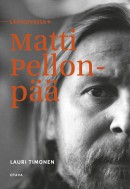 Lähikuvassa Matti Pellonpää
[Matti Pellonpää in close-up]
Helsinki: Otava, 2009. 335 p., ill.
ISBN 978-951-1-22903-2
€ 25, hardback
Matti Pellonpää (1951–1995) was one of the trusted actors, almost a trademark, of the film director Aki Kaurismäki. In 1993 he won the Felix Prize for best European male actor at the Berlin Film Festival for his role in La Vie de Bohéme. With his characteristic restrained empathy Pellonpää mostly played bohemians, unemployed people and outcasts. This portrait is built on the recollections of his friends and colleagues, as well as on the interviews by the author. These conversations deal with Pellonpää’s theatrical career and the musical experiments of his highly original band, Peltsix. The actor spent most of his free time in restaurants, where he eavesdropped on table talk and watched the eccentric personalities he encountered; the reader is also offered a sample of Pellonpää anecdotes.
Tellervo Krogerus: Sanottu. Tehty. Matti Kuusen elämä 1914–1998. [Said. Done. The life of Matti Kuusi, 1914–1998]
22 May 2014 | Mini reviews, Reviews
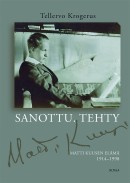 Sanottu. Tehty. Matti Kuusen elämä 1914–1998
[Said. Done. The life of Matti Kuusi, 1914–1998]
Helsinki: Siltala , 2014. 856 pp., ill .
ISBN 978-952-234-194-5
€31.50, hardback
The folklorist Matti Kuusi vied for the status of the world’s leading researcher of proverbs with the Californian scholar Archer Taylor, his work extending from the shores of the Baltic Sea to Namibia’s Ovamboland. Proverbs revealed to him the deep structures of the human mind and showed that the nations of the world possessed a basis for mutual understanding. As a young man Kuusi read Spengler and predicted the destruction of the Western world. According to his ‘Kalevalan imperialism’, the Nordic region was to be the new world power. The war brought him to his senses: he understood that patriotism was mainly a matter of bland resilience. Professor Kuusi was a rigorous scholar, but also a provocative man of ideas who showed that pop music was today’s folk poetry. That idea received a mixed reception, but nowadays his department studies both rap music and ancient folk song. This biography by Tellervo Krogerus creates a rich portrait of a complex personality.
Translated by David McDuff
Chronicles of crisis
31 December 1982 | Archives online, Fiction, Prose
Books from Finland presents here an extract from Dyre prins, a novel by the Finland-Swedish writer Christer Kihlman that is to be published in 1983 by Peter Owen of London under the title Sweet Prince, in a translation by Joan Tate.
Christer Kihlman (born 1930) first became known as a poet; but, after publishing two collections of poetry, he turned to novels. He has been branded a merciless scourge of the bourgeoisie. Equally important in his writing, however, are his masterly psychological analyses, his examination of the myriad aspects of the human personality, his sovereign disregard for taboos and his unflagging search for the truth. His books are about crises – the conflict between the generations, between the individual and society, between opposing political ideologies, between homosexual and heterosexual love. As Ingmar Svedberg remarked in an extensive appreciation of Kihlman’s work that appeared in Books from Finland 1-2/1976, ‘In his perceptive moral analyses, his exploration of the depths of human destructiveness and degradation, Kihlman is sometimes reminiscent of Faulkner.’ Since 1970, Kihlman has published three revealing autobiographical works, two of them dealing with his encounter with South America; Dyre prins, first published in 1975, represents a brief interlude of fiction.
The extract printed below is accompanied with a personal appreciation of the novel by its English translator, Joan Tate
Grandfather’s astonishing revelation gave me a new perspective on my life. I had suddenly been given a concrete, genuine foundation for both my hatred and my self-esteem. In a way I took the story of my origins as an extreme confirmation of the rightness of the Communist interpretation of reality, and at the same time it gave me a wonderful, dazzling sensation of being someone, despite everything, of having a place in a meaningful human perspective of time, despite everything, of being a link, however modest, in the historical family tradition. I did not need to found a dynasty; I already belonged to a dynasty, if only a minor branch. One was less important than the other, and even if the two experiences were irreconcilable and contradictory, they existed all the same in the same consciousness, contained within the same consciousness, my consciousness. I, Donald Blad! More…
Des res
Extracts from the novel Juoksuhaudantie (‘The Trench Road’, WSOY, 2002)
Matti Virtanen
I belonged to that small group of men who were the first in this country to dedicate themselves to the home front and to women’s emancipation. I feel I can say this without boasting and without causing any bickering between the sexes.
A home veteran looks after all the housework and understands women. Throughout our marriage I have done everything that our fathers did not. I did the laundry, cooked the food, cleaned the flat, I gave her time to herself and protected the family from society. For hours on end I listened to her work problems, her emotional ups and downs and her hopes for more varied displays of affection. I implemented comprehensive strategies to free her from the cooker. I was always ready with provisions when she got home exhausted after a day at work. More…
The books that sold
11 March 2011 | In the news
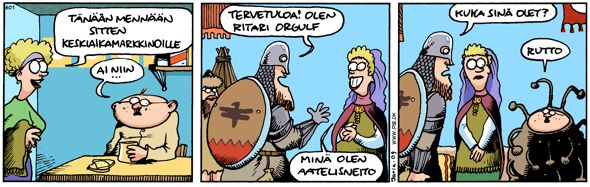
-Today we're off to the Middle Ages Fair. – Oh, right. - Welcome! I'm Knight Orgulf. – I'm a noblewoman. -Who are you? – The plague. *From Fingerpori by Pertti Jarla
Among the ten best-selling Finnish fiction books in 2010, according statistics compiled by the Booksellers’ Association of Finland, were three crime novels.
Number one on the list was the latest thriller by Ilkka Remes, Shokkiaalto (‘Shock wave‘, WSOY). It sold 72,600 copies. Second came a new family novel Totta (‘True’, Otava) by Riikka Pulkkinen, 59,100 copies.
Number three was a new thriller by Reijo Mäki (Kolmijalkainen mies, ‘The three-legged man’, Otava), and a new police novel by Matti Yrjänä Joensuu, Harjunpää ja rautahuone (‘Harjunpää and the iron room’, Otava), was number six.
The Finlandia Fiction Prize winner 2010, Nenäpäivä (‘Nose day’, Teos) by Mikko Rimminen, sold almost 54,000 copies and was fourth on the list. Sofi Oksanen’s record-breaking, prize-winning Puhdistus (Purge, WSOY; first published in 2008) was still in fifth place, with 52,000 copies sold.
Among translated fiction books were, as usual, names like Patricia Cornwell, Dan Brown and Liza Marklund.
In non-fiction, the weather, fickle and fierce, seems to be a subject of endless interest to Finns; the list was topped by Sääpäiväkirja 2011 (‘Weather book 2011’, Otava), with a whopping 140,000 copies. Number two was the Guinness World Records 2011, but with just 43,000 copies. Books on wine, cookery and garden were popular. A book on Finnish history after the civil war, Vihan ja rakkauden liekit (‘Flames of hate and love’, Otava) by Sirpa Kähkönen, made it to number 8 on the list.
The Finnish children’s books best-sellers’ list was topped by the latest picture book by Mauri Kunnas, Hurja-Harri ja pullon henki (‘Wild Harry and the genie’, Otava), selling almost 66,000 copies. As usual, Walt Disney ruled the roost in the translated fiction list.
The Finnish comics list was dominated by Pertti Jarla (his Fingerpori series books sold more than 70,000 copies, almost as much as Remes’ Shokkiaalto!) and Juba Tuomola (Viivi and Wagner series; both mostly published by Arktinen Banaani): between them, they grabbed 14 places out of 20!
Picture this
9 April 2015 | Articles
It’s impossible to put Finnish graphic novels into one bottle and glue a clear label on to the outside, writes Heikki Jokinen. Finnish graphic novels are too varied in both graphics and narrative – what unites them is their individuality. Here is a selection of the Finnish graphic novels published in 2014
Graphic novels are a combination of image and word in which both carry the story. Their importance can vary very freely. Sometimes the narrative may progress through the force of words alone, sometimes through pictures. The image can be used in very different ways, and that is exactly what Finnish artists do.
In many countries graphic novels share some common style or mainstream in which artists aim to place themselves. In recent years an autobiographical approach has been popular all over the worlds in graphic novels as well as many other art forms. This may sometimes have led to a narrowing of content as the perspective concentrates on one person’s experience. Often the visual form has been felt to be less important, and clearly subservient to the text. This, in turn, has sometimes even led to deliberately clumsy graphic expression.
This is not the case in Finland: graphic diversity lies at the heart of Finnish graphic novels. Appreciation of a fluent line and competent drawing is high. The content of the work embraces everything possible between earth and sky.
Finnish graphic novels are indeed surprisingly well-known and respected internationally precisely for the diversity of their content and their visual mastery.
Life on the block
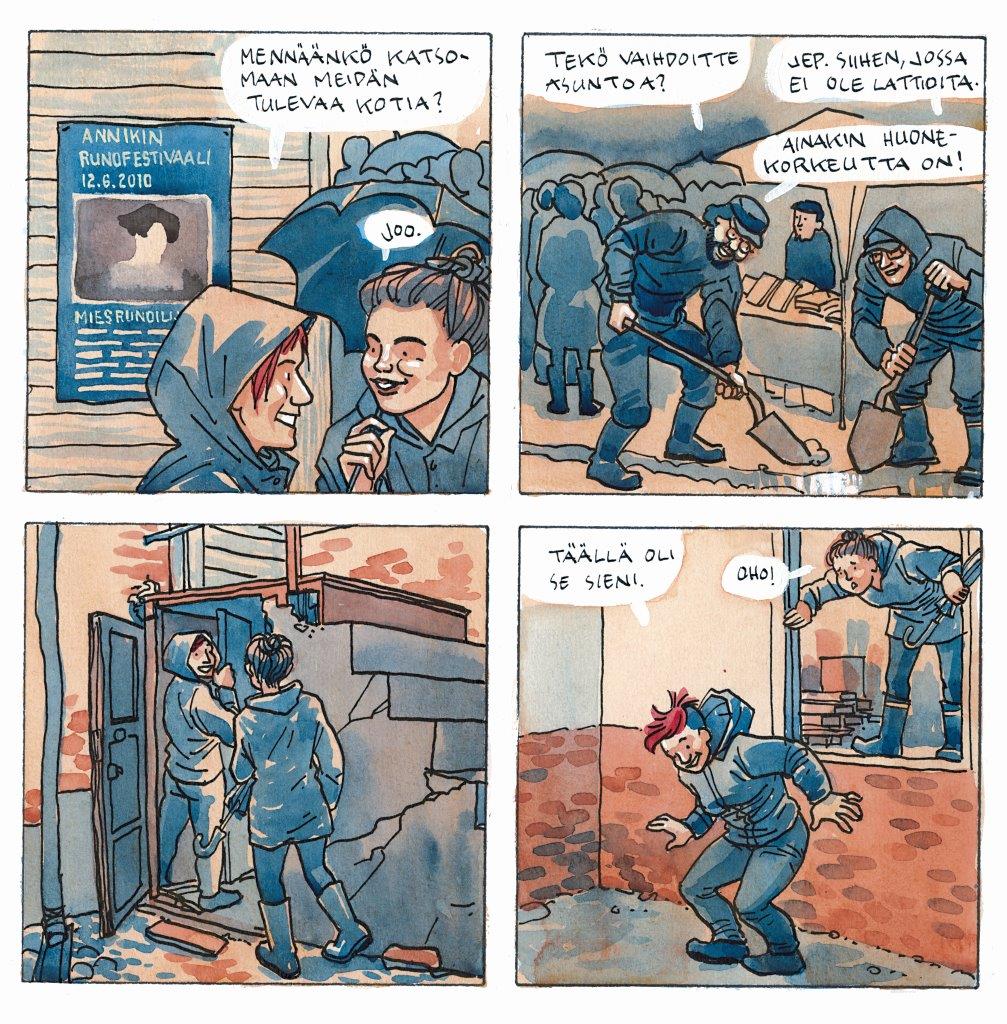
‘Shall we go and look at our new house? / Yeah. / Did you move house? / Yeah, to one without a floor. / At least you have head-space! / This is where the mould was. / Oh dear!’. Tiitu Takalo, Minä, Mikko ja Annikki (‘Me, Mikko and Annikki’, Suuri kurpitsa).
Mikko-Olavi Seppälä & Riitta Seppälä: Aale Tynni. Hymyily, kyynel, laulu [Aale Tynni. A smile, a tear, a song]
16 January 2014 | Mini reviews, Reviews
 Aale Tynni. Hymyily, kyynel, laulu
[Aale Tynni. A smile, a tear, a song]
Helsinki: WSOY, 2013. 488 pp., ill.
ISBN 978-951-0-38306-3
€37, hardback
The poet, author and translator Aale Tynni (1913–1997), an Ingrian Finn who came to Finland as a refugee after the First World War in 1919, published 15 collections of poetry between 1938 and 1987. Among her translations are works by Ibsen, Shakespeare, Yeats and Racine. This extensive biography, compiled and written by Tynni’s daughter Riitta Seppälä and her grandson, historian Mikko-Olavi Seppälä, is an in-depth, lively portrait of a poet who, in her time, was both admired and criticised for her choices of form and content. Tynni felt that classical metrical tradition was closest to her, and patriotism was one of her themes; however, in the postwar years the freedom of rhythm of Finnish modernism began to flourish, and politics also gained strength in the literary world. In 1948 Tynni won the gold medal for literature in the – rather bizarre and short-lived – art competitions at the Summer Olympics in London with her poem ‘Laurel of Hellas’. Tynni experienced dramatic turns in her personal life; she underwent a prolonged divorce from her first husband who bitterly fought it. Two of her three children committed suicide in adulthood. She was finally free to marry the widowed poet Martti Haavio (aka P. Mustapää) in 1960, a marriage of soulmates that lasted until Haavio’s death in 1973.
Gypsy life
21 March 2013 | Extracts, Non-fiction
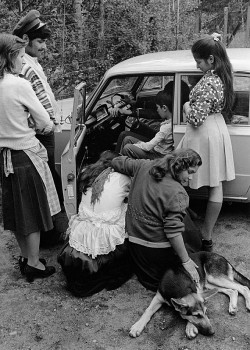
Romani teenagers, Kouvola, 1976. Photo: Mikko Savolainen
Photographer Mikko Savolainen began taking photos of Finnish Romani life in the 1960s, in the time of transition from nomadism to life in housing estates. New trends in the 1960s and 1970s also brought Romani culture to the fore – singers, musicians, festivals; an act baning racial discrimination had been passed. Savolainen became interested in Gypsy life
The text and the photographs are from Suomen romanit. Romanielämää 1960–1970-luvuilla / The Roma of Finland. Roma life in the 1960s and 1970s (Musta Taide, 2008. English translation: Jüri Kokkonen)
I have visited over a hundred Roma homes. Respect for parents, care of the elderly and hospitality are the first things that come to mind.
I have come across similar consideration for visitors only in cottages in Karelia, where the first question was whether I wanted a cup of coffee or to eat first.
I took my first photographs of Roma people in the Market Square of Hamina as an amateur photographer who only wanted to take good portraits. More…
On Matti Pulkkinen
30 June 1978 | Archives online, Authors
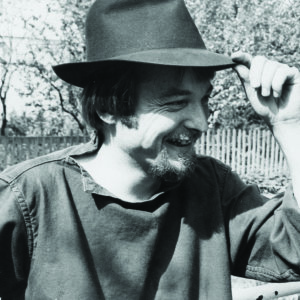
Matti Pulkkinen. Photo: Gummerus
Matti Pulkkinen’s grandfather was born in 1842 in a forest village close to the Russian border, in an area which could only be reached by water. When he grew up he became a tar-burner, a traditional occupation in north-east Finland. Pulkkinen’s father worked for the Otava Publishing Company in the early years of the present century, a time when ordinary Finns were beginning to show a real interest in literature. In his home in one of the most remote parts of North Karelia, he assembled a library which ranged from Mark Twain to the detective stories of G. K. Chesterton. He was 70 when his youngest son, Matti, was born in 1944. Dostoyevsky and Nietzsche were the two writers whose works did most to stimulate Matti Pulkkinen’s enthusiasm for literature. After leaving school he set out to see the world. He worked as a lumberjack, a primary school teacher, a statistics clerk in a gynaecological hospital, a bank teller, an accounts clerk, and later as a carpenter, took part in the restoration of the medieval church at Vanaja. From 1969 to 1971 Pulkkinen worked as a nurse in mental hospitals in Frankfurt, West Berlin and Bern. While in Switzerland he became interested in Jungian psychology and modern group therapy.
Pulkkinen’s novel, Ja pesäpuu itki (‘And the nesting-tree wept’, Gummerus), published in 1977, was awarded the J.H. Erkko Prize for the best first novel of the year and the Kalevi Jäntti Memorial Prize. It rapidly became a best seller and has already had two reprints. More…
Mikko Lahtinen: Kirjastojen maa [Land of libraries]
4 March 2011 | Mini reviews, Reviews
 Kirjastojen maa
[Land of libraries]
Tampere: Vastapaino, 2010. 394 p., ill.
ISBN 978-951-768-315-9
€ 43, hardback
Libraries are the most widely used cultural service in Finland. Kirjastojen maa describes the journey undertaken by the protagonist, who refers to himself as ‘the Library Man’, and his entourage to 250 public libraries around Finland between 2008 and 2010. Many of these sites were celebrating their 150th anniversaries at the time, since there was a great enthusiasm for establishing public libraries in Finland in the 1850s. This travel journal provides a history of libraries as an institution and their development into a central pillar of society. The author also considers Finnish intellectual space in this age of digital media. Libraries currently face significant challenges: the recent wave of local authority mergers, centralisation of public services and funding cuts are all hampering the development of library operations. The importance of libraries is further underlined by the fact that local residents have launched protests in support of libraries threatened with closure – in spite of the usual difficulty of rousing Finns to man the barricades. The author is a philosopher, political researcher and active participant in public policy discussions.
Translated by Ruth Urbom
Funny stuff favoured
13 April 2011 | In the news
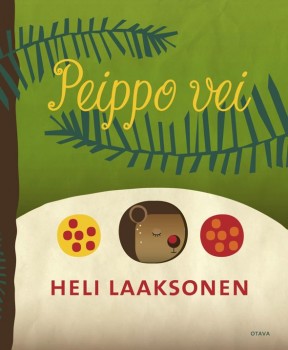 In March the Bookseller’s Association of Finland’s list of the best-selling Finnish fiction was topped – for a change – by a collection of poems. Like all her collections, Heli Laaksonen’s Peippo vei (‘The chaffinch took it’, Otava) is written in a local dialect spoken in south-western Finland.
Perttti Jarla’s latest comics book, Fingerpori 4 (‘Fingerborg 4’, Arktinen Banaani) was number two – and, demonstrating the Finns’ love of cartoons and comics, another of his titles, Fingerpori book, Fingerpori – Kamppailuni (‘Fingerborg – My fight’) occupied fourth place, following Sofi Oksanen’s Puhdistus (Purge), published in 2008 and still number three on the list. More…
Book-giving time!
12 November 2010 | In the news
 The few weeks before Christmas are when most books are bought in Finland, so shortlists of literary prizes start popping up in November.
All the juries of the three biggest prizes – worth €30,000 each, awarded by the Finnish Book Foundation – have now published their shortlists: the Finlandia Prize for Non-Fiction, the Finlandia Junior Prize and the Finlandia Prize for Fiction.
The winners, each chosen by one person, will be announced in December. This FILI – Finnish Literature Exchange newsletter link will take you to the jury members’ assessments of the shortlisted non-fiction and Junior Prize works.
The following six novels ended up on the Finlandia Prize for Fiction list:
Joel Haahtela: Katoamispiste (‘Vanishing point’, Otava), Markus Nummi: Karkkipäivä (‘Candy day’, Otava), Riikka Pulkkinen: Totta (‘True’, Teos), Mikko Rimminen: Nenäpäivä (‘Nose day’, Teos), Alexandra Salmela: 27 eli kuolema tekee taiteilijan (’27 or death makes an artist’, Teos) and Erik Wahlström: Flugtämjaren (in Finnish translation, Kärpäsenkesyttäjä, ‘The fly tamer’, Schildts). Here’s the FILI link to the jury’s comments.