

Search results for "harjunpää/2010/10/mikko-rimminen-nenapaiva-nose-day/2011/04/matti-suurpaa-parnasso-1951–2011-parnasso-1951–2011"
Mikko Ylikangas: Unileipää, kuolonvettä, spiidiä. Huumeet Suomessa 1800–1950 [Opium, death’s tincture, speed. Drugs in Finland 1800–1950]
29 April 2010 | Mini reviews, Reviews
 Unileipää, kuolonvettä, spiidiä. Huumeet Suomessa 1800–1950
[Opium, death’s tincture, speed. Drugs in Finland 1800–1950]
Jyväskylä: Atena, 2009. 264 p., ill.
ISBN 978-951-796-578-1
€ 34, hardback
This book presents an account of the history of drugs in Finland, as well as changes in legal and illegal drug use. Even in the early 19th century, the authorities were concerned about opium abuse. Medical doctor Elias Lönnrot – best known for collecting the folk poems that make up the Kalevala, the Finnish national epic – coined the name ‘unileipä’, ‘the staff of dreams’, for opium. A period of prohibition of alcohol in the 1920s spurred a huge increase in the sale of cocaine; in the 1930s Finland led the Western world in consumption of heroin as a cough suppressant. In the late 1940s, the United Nations investigated why Finland, with a population of four million, consumed as much heroin in a year as other countries did over an average of 25 years. This was explained by the severity of wartime conditions: drugs were used to maintain battle readiness and to combat anxiety, sleeplessness and tuberculosis. Social problems caused by misuse did not, however, get out of control. This book was awarded a prize for the best science book of the year in Finland in 2009.
On Matti Rossi
31 March 1978 | Archives online, Authors
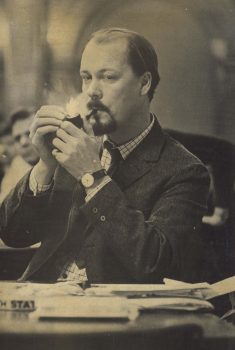
Matti Rossi. Photo: SKS archives
The appearance in 1965 of Matti Rossi’s (born 1934) first work in Finnish, Näytelmän henkilöt (‘Dramatis personae’, Tammi), brought him immediate recognition as an important writer. It confirmed him as a skillful translator – he had already ten important translations to his name – and revealed a new but already mature poet. Näytelmän henkilöt contains biting political parody, highly original myth verse and the Finnish version of a series of poems on Vietnamese themes, which he had first published in English.
Rossi has always worked in many styles and genres. Leikkeja kahdelle (‘Games for two’, Tammi, 1966) is a magnificent collection of sensual love poems; his fantasy poem for the stage, Tilaisuus (‘The occasion’, Tammi, 1967), examines the nature and causes of violence; the events in Czechoslovakia are the subject of his analytical political satire Käännekohta (‘Turning-point’), written as a play for television in 1969. These were followed by a long period in which Rossi’s poetry reflects his political commitment to the far left. He brought out a book about his experiences during a visit of more than a year to South America, and his scathing poetry has always played its part in political controversy. He has composed songs for the stage, and an outstanding ballad narrative, Puulintujen vuolija (The carver of wooden birds’, 1975). More…
Ville Hytönen & Matti Pikkujämsä: Hipinäaasi, apinahiisi [Donkeymonkey]
9 January 2014 | Mini reviews, Reviews
 Hipinäaasi, apinahiisi
[Donkeymonkey]
Kuvitus [Ill. by]: Matti Pikkujämsä
Helsinki: Tammi, 2013. 32 pp., ill.
ISBN 978-951-31-7043-1
€24.90, hardback
In Ville Hytönen’s gently educational tale, some woodland creatures poke fun at a wheezy donkey and an oddball monkey. In the end, the animals who were the target of derision turn their unusual characteristics into strengths. Then they all make up, all the residents of the forest launch into an exuberant dance, and the earlier teasing is forgotten. Matti Pikkujämsä has been an extraordinarily productive in recent years: his illustrations have appeared in numerous newspapers and magazines as well as children’s books. Hipinäaasi, apinahiisi, which is his first solo picture book, features rhythm and movement; sometimes he creates extremely elaborate ornamentation, while other images calm the eye with spare yet colourful scraffito techniques.
Translated by Ruth Urbom
Matti Klinge: Pääkaupunki – Helsinki ja Suomen valtio 1808–1863 [Capital City – Helsinki and the Finnish government 1808–1863]
27 June 2012 | Mini reviews, Reviews
 Pääkaupunki – Helsinki ja Suomen valtio 1808–1863
[Capital city — Helsinki and the Finnish government 1808–1863]
Kuvitussuunnitelma [Pictorial design by] Matti Klinge and Yrjö Klinge
Helsinki: Otava, 2012. 509p., ill.
ISBN 978-951-1-26235-0
€ 53, hardback
As a result of the war between Sweden and Russia in 1808–1809, Finland became an autonomous Grand Duchy of the Russian Empire. In 1812 Helsinki was made Finland’s new capital, being more suitable than Turku, the administrative city of the time, as it boasted features such as the coastal fortress of Sveaborg (Suomenlinna), which was important to Russia. In his new book, Emeritus Professor Matti Klinge gives an account of the development of Helsinki as a capital city. Between 1808 and 1843 the Grand Duchy established its central administrative office, its civil service and the University in Helsinki. Tsars Alexander I and Nicholas I wanted Finland to have a monumental capital; Klinge describes the implementation of the carefully detailed city plan and the key buildings. He portrays the work of the individuals who contributed to Helsinki’s development as well as the city’s political, social and cultural life – Helsinki’s history is essentially the history of Finland. Also published in Swedish, this extensive work, which owes its origin to the Historical Commission of the City of Helsinki, is illustrated in a rich and informative manner.
Translated by David McDuff
Kristiina Kalleinen: Kansallisen tieteen ja taiteen puolesta. Kalevalaseura 1911–2011 [On behalf of national science and art. The Kalevala Society 1911–2011]
10 June 2011 | Mini reviews, Reviews
 Kansallisen tieteen ja taiteen puolesta. Kalevalaseura 1911–2011
[On behalf of national science and art. The Kalevala Society 1911–2011]
Helsinki: Finnish Literature Society, 2011. 314 p., ill.
ISBN 978-952-223-256-5
€ 37, hardback
In 1911, the Finnish national epic Kalevala (1835, 1849), compiled by Elias Lönnrot and based on Finnish folk poetry, inspired the artist Akseli Gallen-Kallela, the sculptor Alpo Sailo, Professor E.N. Setälä and the folklorist Väinö Salminen to found the Kalevala Society (established in 1919), aimed at uniting Finland’s national science and art into a harmonious whole. As Russia tightened its grip on the Grand Duchy during the latter part of the nineteenth century, it awakened a desire to demonstrate the vitality of the Finnish language and national spirit. This book maps out the effect of the changing social and political situation on the Society’s activities. In the 1920s and 1930s the Kalevala Society remained largely outside the political and linguistic conflicts of the time. This was a period of extreme Finnish nationalism, but in the Society there was little inclination towards ‘Greater Finland’ thinking or anti-Russian or anti-Swedish sentiment. During Finland’s wars with the Soviet Union some members nonetheless had hopes of a Greater Finland, as many of the regions where the Kalevala poems originated lay on the Soviet side of the border. In recent years the Society has participated with other organisations in projects devoted to the regeneration of Russian Karelian villages and the protection of the last traditional Finnish landscapes.
Translated by David McDuff
Matti Yrjänä Joensuu: Harjunpää ja rautahuone [Harjunpää and the iron room]
19 November 2010 | Mini reviews, Reviews
 Harjunpää ja rautahuone
[Harjunpää and the iron room]
Helsinki: Otava, 2010. 302 p.
ISBN 978-951-1-24742-5
€ 26, hardback
This book’s shocking opening scene, a cot death, is not followed by anything that lightens the tone. Finland’s best-selling crime writer, Matti Yrjänä Joensuu (born 1948) – whose work has been translated into nearly 20 languages – focuses here on a criminal investigation conducted by Inspector Timo Harjunpää into the murderer of several wealthy women. The victims are linked via their purchases of sex; the detective’s attention soon falls on Orvo, a masseur who also turns tricks as a gigolo. Nearly every scene is shot through with themes of lovelessness, exploitation and the connection between malice and sex. Harjunpää is an empathetic, slightly rumpled cop who has an ambitious yet somewhat downbeat attitude to his job. Joensuu’s Harjunpää ja pahan pappi (Priest of Evil) was published in English in 2006. Joensuu himself is a retired police officer; his particular strength as an author is his extraordinarily precise, realistic portrayal of police work. But it’s not just about who did what; why they did it is equally important. One reason for Joensuu’s popularity is his extremely well-developed understanding of human nature. He observes and analyses, but never judges.
Matti Klinge: Suomalainen ja eurooppalainen menneisyys [The Finnish and European past]
8 April 2011 | Mini reviews, Reviews
 Suomalainen ja eurooppalainen menneisyys. Historiankirjoitus ja historiankulttuuri keisariaikana
[The Finnish and European past. Historiography and history culture in the Imperial era]
Helsinki: Suomalaisen Kirjallisuuden Seura, 2010. 360 p., ill.
ISBN 978-952-222-208-4
€ 34, hardback
The term ‘Imperial era’ in Finnish history refers to Finland’s period as a Grand Duchy of Russia, 1809–1917. This work is a study of the shaping of Finland’s national culture of history. ‘History culture’ refers to the ways in which ideas about the past are generated, utilised and modified. The brief essays in this book look at the way the past, the events and people involved in historiography are treated in academic research – including those who did not hold high-level academic posts and were therefore absent from previous works. Matti Klinge, an emeritus professor of history, maintains that Finnish historiography has been characterised by an emphasis on nationalism and national development and has focused chiefly on historical writing about Finland. Historians have often been viewed as following in their predecessors’ footsteps, without demonstrating influences acquired from contemporary foreign research. The author emphasises the multilingual intellectual world of the Imperial era; at that time in Finland, people were able to read more foreign languages than nowadays.
Translated by Ruth Urbom
Rainer Knapas: Kunskapens rike. Helsingfors universitetsbibliotek – Nationalbiblioteket 1640–2010 [In the kingdom of knowledge. Helsinki University Library – National Library of Finland 1640–2010]
9 August 2012 | Mini reviews, Reviews
 Kunskapens rike. Helsingfors universitetsbibliotek – Nationalbiblioteket 1640–2010
Helsingfors: Svenska litteratursällskapet i Finland, 2012. 462 p., ill.
ISBN 978-951-583-244-3
€54, hardback
Tiedon valtakunnassa. Helsingin yliopiston kirjasto – Kansalliskirjasto 1640–2010
[In the kingdom of knowledge. Helsinki University Library – National Library of Finland 1640–2010]
Suomennos [Finnish translation by]: Liisa Suvikumpu
Helsinki: Finnish Literature Society, 2012. 461 p., ill.
ISBN 978-952-222-272-5
€54, hardback
The National Library of Finland was founded in 1640 as the library of Turku Academy. In 1827 it was destroyed by fire: only 828 books were preserved. In 1809 Finland was annexed from Sweden by Russia, and the collection was moved to the new capital of Helsinki, where it formed the basis of the University Library. The neoclassical main building designed by Carl Ludwig Engel is regarded as one of Europe’s most beautiful libraries and was completed in 1845, with an extension added in 1906. Its collections include the Finnish National Bibliography, an internationally respected Slavonic Library, the private Monrepos collection from 18th-century Russia, and the valuable library of maps compiled by the arctic explorer Adolf Erik Nordenskiöld. Renamed in 2006 as Kansalliskirjasto – the National Library of Finland – this institution, which is open to general public, now contains a collection of over three million volumes as well as a host of online services. This beautifully illustrated book by historian and writer Rainer Knapas provides an interesting exposition of the library’s history, the building of its collections and building projects, and also a lively portrait of its talented – and sometimes eccentric – librarians.
Translated by David McDuff
One night stand
31 March 1987 | Archives online, Fiction, Prose
Stories from Yhden yön pysäkki (‘One night stand’, 1985) and Unohdettu vartti (‘The forgotten quarter’, 1986). Introduction by Pekka Tarkka
At the beginning of November it really started to freeze. A month earlier than usual. There was little snow to speak of, but the ground froze hard as bone.
Tamed by hunger, reindeer clustered along the roadsides and on the village outskirts. Many of them ended their misery by flinging themselves under the timber-lorries in the evening dark. Bony and bloody carcasses littered the ditches and field-edges.
Then the snowstorms came. It snowed without stop for nearly two weeks. At times the whole landscape was reduced to a white line. Snowdrifts mounted round the houses and up the snow fences. The reindeer carcasses lay about under the snowbanks, waiting for spring. More…
Snowbirds
2 November 2011 | Extracts, Non-fiction
The short winter days of the northerly latitudes are made brighter by snow cover, which almost doubles the amount of available light. Reflection from the snow is an aid for photographers working outdoors in winter conditions. A new book, entitled Linnut lumen valossa (‘Birds in the light of snow’), presents the best shots by four professionals, Arto Juvonen, Tomi Muukkonen, Jari Peltomäki and Markus Varesvuo, who specialise in patiently stalking the feathered survivors in the cold
The photographs and texts are from the book Linnut lumen valossa (‘Birds in the light of snow’, edited by Arno Rautavaara. Design and layout by Jukka Aalto/Armadillo Graphics. Tammi, 2011)
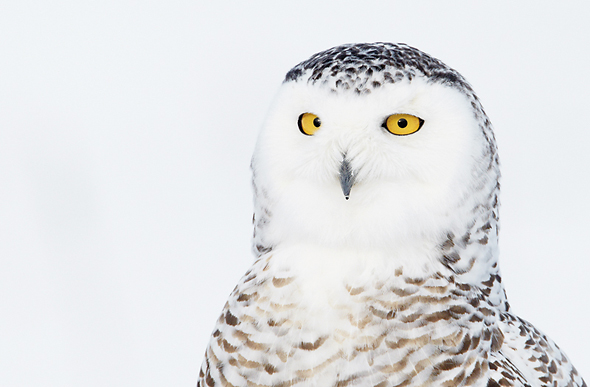
Snowy owl. Photo: Markus Varesvuo, 2010
Matti Klinge: Kadonnutta aikaa löytämässä. Muistelmia 1936–1960 [Finding lost time. Memoirs 1936–1960]
10 January 2013 | Mini reviews, Reviews
 Kadonnutta aikaa löytämässä. Muistelmia 1936–1960
[Finding lost time. Memoirs 1936–1960]
Helsinki: Siltala, 2012. 557 p., ill.
ISBN 978-952-234-136-5
€31.95, hardback
Professor (Emeritus) Matti Klinge (born 1936) is a prolific historian who has specialised in the history of culture and ideas as well as in the debate on contemporary culture; he has also published 12 volumes of his diaries. In this fascinating volume of memoirs, inspired by writer Marcel Proust, he gives a detailed account of his childhood, schooldays and military service as well as his years of active study, shedding light on the cultural and social life of his time, from the point of view of Helsinki’s educated bourgeoisie, and draws telling character sketches of his contemporaries. The cultural heritage is reflected in the world of Klinge’s values and in his language. This handsomely produced book contains plenty of illustrative material ranging from entrance tickets and works of art to the jacket pictures of books important to the author and photographs. The volume lacks an index of personal names, which will hopefully be added to the final part of the work.
Translated by David McDuff
For love or money
30 June 1994 | Archives online, Fiction, Prose
Extracts from the novel Paratiisitango (‘Paradise tango’, WSOY, 1993). Introduction by Markku Huotari
The bishops’ dilemma
They are waiting for Blume in the front room of the office. On the sofa sits a man whom Blume has never learned to like. He himself chose and appointed the man, for a job not insignificant from the point of view of the company. Blume has good reasons for the appointment. If he employed only men he liked, the business would have gone bankrupt years ago.
Reinhard Kindermann gets up from the sofa and waits in silence while Blume hangs up his overcoat. Mrs Giesler stands next to Blume. She does not try to help her superior take off his coat, for she knows from experience that he would not tolerate it, but the old man does allow her to stand next to him and wait in silence, like a servant expressing submission. More…
Keeping the day job
30 September 2003 | Authors, Interviews

Photo: Irmeli Jung
Finland’s most famous cop, Chief Superintendent Timo Harjunpää, is the fictional creation of another policeman, Matti Yrjänä Joensuu. The long-awaited eleventh novel in the Harjunpää series, Harjunpää ja pahan pappi (‘Harjunpää and the priest of evil’) appeared this autumn after a gap of a decade. Joensuu talks to Jarmo Papinniemi about crime, the creative process and the powers of darkness
Matti Yrjänä Joensuu (born 1948) is one of the best-known Finnish crime writers and is certainly one of the most respected. He writes novels about ordinary policemen and ordinary crimes; bleak tales of murder which do not pander to the reader with complicated plots, non-stop action or glamorous settings. Like the Swedish writers Maj Sjöwall and Per Wahlöö or Henning Mankell, Joensuu’s narratives focus on social reality and expose the darker sides of society and the day-to-day misery and suffering which gives rise to crime. More…
Matti Salminen: Yrjö Kallisen elämä ja totuus [The life and truth of Yrjö Kallinen]
15 September 2011 | Mini reviews, Reviews
 Yrjö Kallisen elämä ja totuus
[The life and truth of Yrjö Kallinen]
Helsinki: Like Kustannus, 2011. 271 p., ill.
ISBN 978-952-01-0612-6
€ 27, hardback
Counsellor of Education Yrjö Kallinen (1886–1976) was a Social Democrat politician, a passionate speaker and a pacifist who served for one parliamentary term as an MP and for two years as a cabinet minister. Kallinen was a working-class man who independently acquired a broad general education. His life and thought contain many paradoxes and contradictions. In the Civil War (1918) he received four death sentences, though he tried to act as a peace-broker between the Whites and the Reds. Kallinen avoided the death penalty but suffered a long prison sentence. After the Second World War he became Minister of Defence, though in spite of holding the post he did not abandon his pacifism. Kallinen was also strongly influenced by oriental religions and theosophy, and he is known as an early advocate of vegetarianism. The most important sources for this biography are Yrjö Kallinen’s own writings, many of which have never been published before, and his recently discovered correspondence. The summaries of Kallinen’s interviews for foreign newspapers open up interesting perspectives on recent Finnish political history.
Translated by David McDuff
Matti Rämö: Polkupyörällä Intiassa. Lehmiä, jumalia ja maantiepölyä [Cycling in India. Cows, gods, and road dust]
30 July 2010 | Mini reviews, Reviews
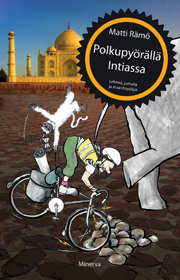 Polkupyörällä Intiassa. Lehmiä, jumalia ja maantiepölyä
[Cycling in India. Cows, gods, and road dust]
Helsinki: Minerva Kustannus Oy, 2010. 301 p., ill.
ISBN 978-952-492-335-4
€ 27.90, hardback
The author decides to take a pinch of the ashes of his dead mother to India’s Varanasi, the city of pilgrims on the banks of the Ganges, and at the same time visit his daughter at an international high school on the country’s west coast. Rämö takes his bicycle on the plane to Delhi and in the course of a month cycles more than 2,600 kilometres, from Delhi to Mumbai. The cyclist is challenged by the heat and humidity, the chaotic traffic, the awkward sections of road and the endless thirst for knowledge on the part of curious bystanders – but his observations are deeper than those of the average travel author, as he worked in India in third world research during the 1980s and 1990s. In the summer of 2007 he completed a four months’ cycle tour of the Sahara, travelling some 9,600 kilometres, and published a book about his experiences (Rengasrikkoja Saharassa, ‘Punctures in the Sahara’, Minerva, 2008). In spite of the shorter length of the Indian journey, the author thinks it possessed a higher difficulty factor.