

Search results for "harjunpää/2010/10/mikko-rimminen-nenapaiva-nose-day/2011/04/matti-suurpaa-parnasso-1951–2011-parnasso-1951–2011/2009/09/what-god-said"
Year of the cat
13 November 2014 | Fiction, Prose
Extracts from the novel Kissani Jugoslavia (‘Yugoslavia, my cat’, Otava 2014). Introduction by Mervi Kantokorpi
I met the cat in a bar. And he wasn’t just any cat, the kind of cat that likes toy mice or climbing trees or feather dusters, not at all, but entirely different from any cat I’d ever met.
I noticed the cat across the dance floor, somewhere between two bar counters and behind a couple of turned backs. He loped contentedly from one place to the other, chatting to acquaintances in order to maintain a smooth, balanced social life. I had never seen anything so enchanting, so alluring. He was a perfect cat with black-and-white stripes. His soft fur gleamed in the dim lights of the bar as though it had just been greased, and he was standing, firm and upright, on his two muscular back paws.
Then the cat noticed me; he started smiling at me and I started smiling at him, and then he raised his front paw to the top button of his shirt, unbuttoned it and began walking towards me. More…
Close encounters
31 March 1999 | Fiction, Prose
Viimeinen syli (‘The last embrace’, Otava, 1998)
The hospital looked as if a child had been given a big pile of building blocks and told to make a house, a big house. And then, when the building was ready, more bricks had been brought, and the child had been forced to pile them up over a wider and wider area, to spread rows of blocks across the adults’ routes and over the edge of the carpet until at last it had grown bored and left the last blocks higgledy-piggledy next to its creation.
Around the hospital ran a road from which the whole mess was revealed. Wing after wing, corridors and windows from which no one really ever looked out. The hospital was full of window views that did not belong to anyone, which did not open up from anyone’s office or day-room, but varied meaninglessly like a motorway landscape from the window of an accelerating car. Viivi had been born there, on the sixth floor of the old part of the hospital. As Mikael waited in the tiled fathers’ room next to the room where the Caeserean section was being carried out for his child to be brought to him, the view out had been breathtaking. More…
The Cheap Contractor
30 June 1986 | Archives online, Fiction, Prose
From Kauan kukkineet omenapuut (‘Long-blossoming apple trees’, 1982). Introduction by Arto Seppälä
The men who delivered the hot-water cylinder offered to do the installation as well. I asked how much it would be. They lolled about a bit, exchanged a few private looks, pretended to be thinking. Then one of them fired off a sum. It was three times the quotation I’d already had. They didn’t even look at the location. I told myself I wouldn’t even go to the end of the road with big-dealers like these.
The same evening I rang up ‘a little man’ and told him he could get started as soon as it suited him.
The cheap contractor turned up a couple of days later, driving an elderly van into the yard. I went out. He’d sat himself down in a garden chair near the white lilacs. The morning sun only partially reached there; so half his body was in shade, looking colder than the sunny half. More…
Brief lives
30 September 1989 | Archives online, Fiction, Prose
Rosa Liksom’s characters live in the tiny villages of empty Lapland, speaking a dialect that rings oddly in the ears of the southern Finnish majority; or they may inhabit anonymous towns, but there, too, life is full of the anguish of existence. Liksom, whose black comedy can be compared with that of the Danish writer Vita Andersen, is able to cram into her short texts complete life histories, bizarre, comic or tragic. Her first volume of short stories, Yhden yön pysäkki (‘One night stand’) appeared in 1985; the following short stories are from Tyhjän tien paratiisit (‘Paradises of the open road’, 1989)
We got hitched up the 14th of November and by the end of the month it was all over. As far as I’m concerned call it a marriage exactly two weeks too long. We hadn’t set eyes on each other till the Pampam that’s the place me and the girls go after work for a drink and I was sitting there having one with them when who comes through the door but this bloke and it hits me. That bloke’s for me. In the end I went over to his table and said up yours stud. We went over to my place to bunk down and after that I couldn’t get the sod out. The bloody shitbag got his claws into me and hung on just on the strength of that one night. He glued himself to my bed. Lay there flat out when I set off to work and shit he was still there when I came back only arse up this time. More…
A policeman’s crimes
31 December 1985 | Archives online, Authors
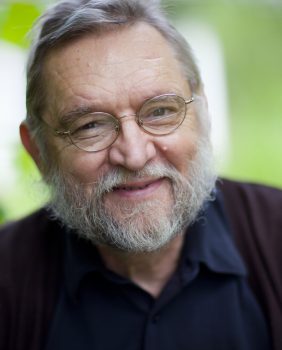
Matti Yrjänä Joensuu. Photo: Jouni Harala 2010
The Finnish section of the major Nordic Crime Novel Competition in 1976 was won by a newcomer, Matti Yrjänä Joensuu, with his Väkivallan virkamies (‘Civil servant in violence’). A realistic crime and police novel in the style of the Swedish writers Sjöwall and Wahlöö, the book represented something completely new in Finland. In the previous competition, held in 1939 as Europe hovered on the brink of war, the winner of the Finnish section was Mika Waltari’s Kuka murhasi Rouva Skrofin (‘Who killed Mrs Skrof?’); the novel is now regarded as one of the classics of Nordic detective fiction. But Waltari was, of course, a literary polymath; his Sinuhe, egyptiläinen (1945; English translation The Egyptian) is among the internationally best-known Finnish novels.
The detective novel and thriller tradition in Finland is both short and slight, and apart from Waltari’s book and its two sequels, many of its representatives – even those that have been most widely acclaimed and read at the time – are of little worth by any objective standards. Joensuu, therefore, has no living tradition to follow, and in interviews he has said that at the start of his career he was not familiar with the two Swedish writers to whom his work is most readily likened, Sjöwall and Wahlöö. This is not difficult to believe; in terms of both politics and social criticism Joensuu’s first novel, in particular, is much tamer than the Swedish writers’ – what all three writers have in common is the gravity with which they approach crime and the individuals who engage in it, and their realistic description of the work of the police. More…
Teemu Kupiainen & Stefan Bremer
Music on the go
3 March 2010 | Extracts, Non-fiction
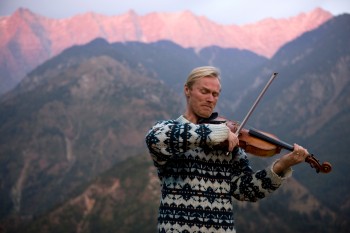
A little night music: Teemu Kupiainen playing in Baddi, India, as the sun sets. Photo: Stefan Bremer (2009)
It was viola player Teemu Kupiainen‘s desire to play Bach on the streets that took him to Dharamsala, Paris, Chengdu, Tetouan and Lourdes. Bach makes him feel he is in the right place at the right time – and playing Bach can be appreciated equally by educated westerners, goatherds, monkeys and street children, he claims. In these extracts from his book Viulun-soittaja kadulla (‘Fiddler on the route’, Teos, 2010; photographs by Stefan Bremer) he describes his trip to northern India in 2004.
In 2002 I was awarded a state artist’s grant lasting two years. My plan was to perform Bach’s music on the streets in a variety of different cultural settings. My grant awoke amusement in musical circles around the world: ‘So, you really do have the Ministry of Silly Walks in Finland?’ a lot of people asked me, in reference to Monty Python. More…
The business of war
30 September 2004 | Archives online, Fiction, Prose
Extracts from the novel Lahti (‘Slaughter’, WSOY 2004). Introduction by Jarmo Papinniemi
Major Tuppervaara put his plate down on a tree stump and walked over towards us. He had long legs and walked with a spring in his step. Twigs crunched beneath every step.
‘Okay, boys,’ he said. ‘Peckish?’
‘Yes.’
‘Take your time and listen carefully to what I’m about to tell you. The training exercise will begin soon. Your job is to help out here, you’ll be doing the medical officers’ jobs, all things you’re familiar with. During the course of this drill you will see things you have never seen before. You must not tell anyone about them. I repeat: no one. Not your father, not your mother’ not your girlfriend or your mates, not even the staff at your divisions. No one. That’s an order. Is that clear?’
‘Yes, Sir,’ said Äyräpää. Hiitola and I nodded. More…
Looking back on a dark winter
31 December 1989 | Archives online, Fiction, Prose
Extracts from the autobiographical novel Talvisodan aika (‘The time of the Winter War’), the childhood memoirs of Eeva Kilpi. During the winter of 1939–40 she was an 11-year old-schoolgirl in Karelia when it was ceded to the Soviet Union and the population evacuated
Time is the most valuable thing
we can give each other
War’s coming.
One day my father comes out with the familiar words in a totally unfamiliar way, while we’re sitting round the kitchen table eating, or just starting to eat.
He says to mother, as if we simply aren’t there, as if we don’t need to bother, or as if listening means not understanding. Or perhaps they’ve simply no other chance to speak to each other, as father’s always got to be off hunting, or on his way to the station, and mother’s always cooking. More…
Success after success
9 March 2012 | This 'n' that
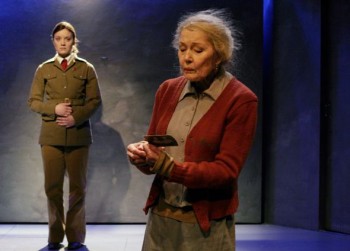
The women of Purge: Elena Leeve and Tea Ista in Sofi Oksanen's Puhdistus at the Finnish National Theatre, directed by Mika Myllyaho. Photo: Leena Klemelä, 2007
Sofi Oksanen’s Purge, an unparalleled Finnish literary sensation, is running in a production by Arcola Theatre in London, from 22 February to 24 March.
First premiered at the Finnish National Theatre in Helsinki in 2007, Puhdistus, to give it its Finnish title, was subsequently reworked by Oksanen (born 1977) into a novel – her third.
Puhdistus retells the story of her play about two Estonian women, moving through the past in flashbacks between 1939 and 1992. Aliide has experienced the horrors of the Stalin era and the deportation of Estonians to Siberia, but has to cope with the guilt of opportunism and even manslaughter. One night in 1992 she finds a young woman in the courtyard of her house; Zara has just escaped from the claws of members of the Russian mafia who held her as a sex slave. (Maya Jaggi reviewed the novel in London’s Guardian newspaper.) More…
On the make
31 December 2007 | Fiction, Prose
Extracts from the novel Benjamin Kivi (WSOY, 2007). Introduction by Lauri Sihvonen
Benjamin Kivi alias Into Penger, the 1930s
What was Kuihkä worth? What were this little man and his sons worth? What was I worth?
I drove where the little man told me to, with no lights, through a densely populated area. I could only see half a meter in front of me, trying to sense the bends and curves in the road and still keep Tallus’ car in good shape. When we got to the woods I turned on the lights and glanced at the little man sitting next to me. He was stuffing a handkerchief into his sleeve like an old housewife. The top of his head was sweating. He brushed his hair back and shoved his cap down on his head.
I had two hours to think as I drove, but it felt like a few minutes. If I didn’t drive the car, someone else would have, everything would happen just like the little man had planned, and I wouldn’t know anything about Kuihkä. What was I going to do, watch while he was thrown to the wolves? Kuihkä rescued me once. Was it meant to be that I should drive the car? Was I meant to change the course of events? How many coincidences can there be in one lifetime, and what do they signify? If events weren’t random, then what the hell was I supposed to do? More…
Tutti frutti
20 November 2009 | In the news
 The chair of the jury for the Finlandia Prize for Non-Fiction 2009, Professor Pekka Puska, compared choosing a winner to the dilemma of choosing between oranges and bananas. The jury found that among the entries were at least 20 or 30 books that could have gone on the final shortlist of six titles. More…
About calendars and other documents
30 June 1982 | Archives online, Fiction, Prose
An extract from Sudenkorento (‘The dragonfly’, 1970). Introduction by Aarne Kinnunen
I now have. Right here in front of me. To be interviewed. Insulin artist. Caleb Buttocks. I have heard. About his decision. To grasp his nearly. Nonexistent hair and. Lift. Himself and. At the same time. His horse. Out of the swamp into which. He. Claims. He has sunk so deep that. Only. His nose is showing. How is it now, toe dancer Caleb Buttocks. Are you. Perhaps. Or is It your intention. To explain. The self in the world or. The world. In the self. Or is It now that. Just when you. Finally have agreed to. Be interviewed by yourself. You have decided. To go. To the bar for a beer?
– Yes. Can you spare a ten?
– Yes.
– Thanks. See, what’s really happened is that. My hands have started shaking. But when I down two or three bottles of beer, that corpse-washing water as I’ve heard them call it, my hands stop shaking and I don’t make so many typing errors. If I put away six or seven they stop shaking even more and the typing mistakes turn really strange. They become like dreams: all of a sudden you notice you’ve struck it just right. Let’s say, ‘arty’ becomes ‘farty’. Or I mean to say, ‘it strikes me to the core’ I end up typing ‘score’. It’s like that. A friend of mine, an artist, once stuck a revolver in my hand. Imagine, a revolver! I’ve never shot anything with any kind of weapon except a puppy once with a miniature rifle. My God, how nicely it wagged its tail when I aimed at it, but what I’m talking about are handguns, those shiny black steelblue clumps people worship as heaven knows what symbols. It’s not as if I haven’t been hoping to all my life. And now, finally, after I’d waited over fifty years, it turned out that the revolver was a star Nagant, just the kind I’d always dreamed of. So if I ever got one of those, oh, then would sleep through the lulls between shots with that black steel clump ready under my pillow. Well, my friend the artist set out one vodka bottle with a white label and three brown beer bottles with gold labels on the edge of a potato pit – we had just emptied all of them together – stuck the fully loaded star Nagant into my hand, took me thirty yards away and said:
– Oh, Lord. More…
Mothers and sons
30 March 2008 | Archives online, Fiction, Prose
Extracts from Helvi Hämäläinen’s novel Raakileet (‘Unripe’, 1950. WSOY, 2007)
In front of the house grew a large old elm and a maple. The crown of the elm had been destroyed in the bombing and there was a large split in the trunk, revealing the grey, rotting wood. But every spring strong, verdant foliage sprouted from the thick trunk and branches; the tree lived its own powerful life. Its roots penetrated under the cement of the grey pavement and found rich soil; they wound their way under the pavement like strong, dark brown forearms. Cars rumbled over them, people walked, children played. On the cement of the pavement the brightly coloured litter of sweet papers, cigarette stubs and apple cores played; in the gutter or even in the street a pale rubber prophylactic might flourish, thrown from some window or dropped by some careless passer-by.
The sky arched blue over the six-and seven-storey buildings; in the evenings a glimmer could be seen at its edges, the reflection of the lights of the city. A group of large stone buildings, streets filled with vehicles, a small area filled with four hundred thousand people, an area in which they were born, died, owned something, earned their daily bread: the city – it lived, breathed….
Six springs had passed since the war…. Ilmari’s eyes gleamed yellow as a snake’s back, he took a dance step or two and bent over Kauko, pretending to stab him with a knife. More…
Misery me
Extracts from the collection of short prose, Mielensäpahoittaja (‘Taking offense’, WSOY, 2010)
Past pushing up daisies
Well, yeah, so I took offense when the doctor said that considering my age I’m in tip-top shape. His theory was that my 25-kilometre ski circuits would keep an old coot like me in shape, if they didn’t kill me first. He said if I were to start just sitting on the couch and waiting, then the Reaper would be on my back in no time.
I don’t ski for my health. I ski because it’s pretty in the forest, and when a body is sweating he doesn’t think a whole lot. More…
European Union literature prizes 2010
8 October 2010 | In the news
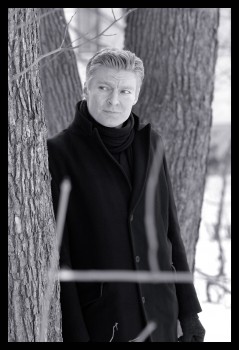
Riku Korhonen. Photo: Harri Pälviranta
With his novel Lääkäriromaani (‘Doctor novel’, Sammakko, 2009), Riku Korhonen (born 1972) is one of the 11 winners of the 2010 European Union Prize for Literature, worth €5,000 each. The winners were announced at Frankfurt Book Fair on 6 October.
The European Commission, the European Booksellers’ Federation (EBF), the European Writers’ Council (EWC) and the Federation of European Publishers (FEP) award the annual prize, which is supported through the European Union’s culture programme. It aims to draw attention to new talents and to promote the publication of their books in different countries, as well as celebrating European cultural diversity. Authors who have published two to four prose works during the last five years and whose work has been translated into two foreign languages at the most are eligible for the prize.
Korhonen has published two novels, a collection of short prose and a collection of poetry. Read translated extracts, published in Books from Finland in 2003, from his first novel, Kahden ja yhden yön tarinoita (‘Tales from two and one nights’, 2003) here. More…