

Search results for "harjunpää/2010/10/mikko-rimminen-nenapaiva-nose-day/2011/04/matti-suurpaa-parnasso-1951–2011-parnasso-1951–2011"
Jarkko Laine Prize 2011
1 June 2011 | In the news
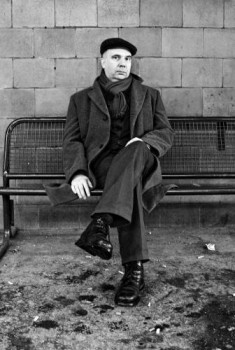
Juha Kulmala. Photo: Lotta Djupsund
The Jarkko Laine Literary Prize (see our news from 6 May), worth €10,000, was awarded to Juha Kulmala (born 1962) on 19 May for his collection of poems entitled Emme ole dodo (‘We are not dodo’, Savukeidas, 2009).
The prize is awarded to a ‘challenging new literary work’ published during the previous two years. Shortlisted were also two novels, Kristina Carlson’s Herra Darwinin puutarhuri (‘Mr Darwin’s gardener’, Otava, 2009) and Erik Wahlström’s Flugtämjaren (‘Fly tamer’, Finnish translation Kärpäsenkesyttäjä, Schildts, 2010).
Jarkko Laine (1947–2006) was a poet, writer, playwright, translator, long-time editor of the literary journal Parnasso and chair of the Finnish Writers’s Union.
Serious comics: Angoulême 2011
24 February 2011 | This 'n' that
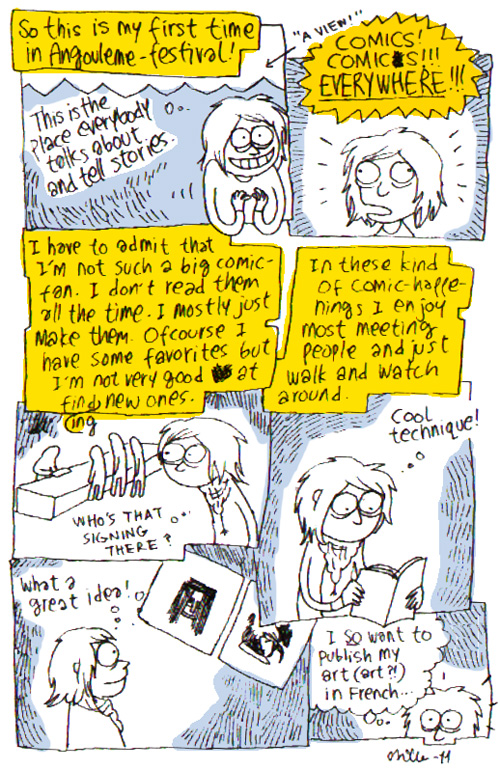
Graphic artist Milla Paloniemi went to Angoulême, too: read more through the link (Milla Paloniemi) in the text below
As a little girl in Paris, I dreamed of going to the Angoulême comics festival – Corto Maltese and Mike Blueberry were my heroes, and I liked to imagine meeting them in person.
20 years later, my wish came true – I went to the festival to present Finnish comics to a French audience! I was an intern at FILI – Finnish Literature Exchange, and for the first time, FILI had its own stand at Angoulême in January 2011.
Finnish comics have become popular abroad in recent years, which is particularly apparent in the young artists’ reception by readers in Europe. Angoulême isn’t just a comics Mecca for Europeans, however: there were admirers of Matti Hagelberg, Marko Turunen and Tommi Musturi from as far away as Japan and Korea.
The festival provides opportunities to present both general ‘official’ comics, ‘out-of-the-ordinary’ and unusual works. The atmosphere at the festival is much wilder than at a traditional book fair: for four days the city is filled with publishers, readers, enthusiasts, artists, and even musicians. People meet in the evenings at le Chat Noir bar to discuss the day’s finds, sketching their friends and the day’s events.
As one Belgian publisher told me, ‘There have always been Finns at Angoulême.’ Staff from comics publisher Kutikuti and many others have been making the rounds at Angoulême for years, walking through the city and festival grounds, carrying their backpacks loaded with books. They have been the forerunners to whom we are grateful, and we hope that our collaboration with them deepens in the future.
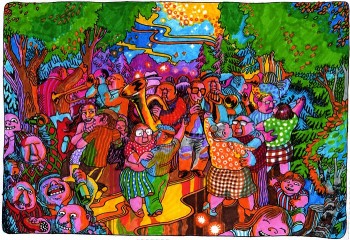
Aapo Rapi: Meti (Kutikuti, 2010)
This year two Finnish artists, Aapo Rapi and Ville Ranta were nominated for the Sélection Officielle prize, which gave them wider recognition. Rapi’s Meti is a colourful graphic novel inspired by his own grandmother Meti [see the picture right: the old lady with square glasses].
Hannu Lukkarinen and Juha Ruusuvuori were also favorites, as all the available copies of Les Ossements de Saint Henrik, the French translation of their adventures of Nicholas Grisefoth, sold out. There were also fans of women comics artists, searching feverishly for works by such artists as Jenni Rope and Milla Paloniemi.
Chatting with French publishers and readers, it became clear that Finnish comics are interesting for their freshness and freedom. Finnish artists dare to try every kind of technique and they don’t get bogged down in questions of genre. They said so themselves at the festival’s public event. According to Ville Ranta, the commercial aspect isn’t the most important thing, because comics are still a marginalised art in Finland. Aapo Rapi claimed that ‘the first thing is to express my own ideas, for myself and a couple of friends, then I look to see if it might interest other people.’
Hannu Lukkarinen emphasised that it’s hard to distribute Finnish-language comics to the larger world: for that you need a no-nonsense agent like Kirsi Kinnunen, who has lived in France for a long time doing publicity and translation work. Finnish publishers haven’t yet shown much interest in marketing comics, but that may change in the future.
These Finnish artists, many of them also publishers, were happy at Angoulême. Happy enough, no doubt, to last them until next year!
Translated by Lola Rogers
Daddy’s girl
30 September 2004 | Archives online, Fiction, Prose
Extracts from the novel Maskrosguden (‘The dandelion god’, Söderströms, 2004). Introduction by Maria Antas
The best cinema in town was in the main square. The other was a little way off. It was in the main square too, but you couldn’t compare it to the Royal. At the Grand there was hardly any room between the rows, the floor was flat and there was a dance-hall on the other side of the wall, so that Zorro rode out of time with waltzes, in time with oompahs, out of time with the slow steps of tangos and in time with quick numbers. The Royal was different and had a sloping floor.
Inside, the Royal was several hundred metres long. You could buy sweets on one side and tickets on the other. From Martina Wallin’s mum. She was refined. So was everyone except us: Mum, Dad and me. More…
Findians, Finglish, Finntowns
16 May 2013 | Extracts, Non-fiction
Workers, miners, loggers, idealists, communists, utopians: early last century numerous Finns left for North America to find their fortune, settling down in Michigan, Minnesota, Wisconsin and Ontario. Some 800,000 of their descendants now live around the continent, but the old Finntowns have disappeared, and Finglish is fading away – that amusing language cocktail: äpylipai, apple pie.
The 375th anniversary of the arrival of the first Finnish and Swedish settlers, in Delaware, was celebrated on 11 May. Photographer Vesa Oja has met hundreds of American Finns over eight years; the photos and stories are from his new book, Finglish. Finns in North America

Drinking with the workmen: The Työmies Bar. Superior, Wisconsin, USA (2007)
The Työmies Bar is located in the former printing house of the Finnish leftist newspaper, Työmies (‘The workman’). The owners, however, don’t know what this Finnish word means, or how to pronounce it.
The Työmies Society, which published the newspaper of the same name, Työmies, was founded in Worcester, Massachusetts in 1903 as a socialist organ. It moved to Hancock, Michigan the following year. More…
Finlandia Prize for Non-Fiction 2011
24 November 2011 | In the news
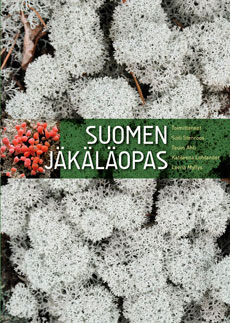 ‘Scientific, aesthetic, timely: the work is all of these. A work of non-fiction can be both precisely factual and emotional, full of both information and soul. A good non-fiction book will surprise. I did not expect to be enthused by lichens, their variety and colours,’ declared Professor Alf Reen in announcing the winner of this year’s Finlandia Prize for Non-Fiction on 17 November.
The winning work is Suomen jäkäläopas (‘Guidebook of lichens in Finland’), edited by Soili Stenroos & Teuvo Ahti & Katileena Lohtander & Leena Myllys (The Botanical Museum / The Finnish Museum of Natural History). The prize is worth €30,000.
The other works on the shortlist of six were the following: Kustaa III ja suuri merisota. Taistelut Suomenlahdella 1788–1790 [(‘Gustav III and the great sea war. Battles in the Gulf of Finland 1788–1790’, John Nurminen Foundation), written by Raoul Johnsson, with an editorial board consisting of Maria Grönroos & Ilkka Karttunen &Tommi Jokivaara & Juhani Kaskeala & Erik Båsk; Unihiekkaa etsimässä. Ratkaisuja vauvan ja taaperon unipulmiin (‘In search of the sandman. Solutions to babies’ and toddlers’ sleep problems’ ) by Anna Keski-Rahkonen & Minna Nalbantoglu (Duodecim); Operaatio Hokki. Päämajan vaiettu kaukopartio (‘Operation Hokki. Headquarters’ silenced long-distance patrol’), an account of a long-distance patrol strike in eastern Karelia during the Continuation War in 1944, by Mikko Porvali (Atena); Trotski (‘Trotsky’, Gummerus; biography) by Christer Pursiainen; and Lintukuvauksen käsikirja (‘Handbook of bird photography’) by Markus Varesvuo & Jari Peltomäki & Bence Máté (Docendo).
Form follows fun
4 December 2012 | Non-fiction, Reviews
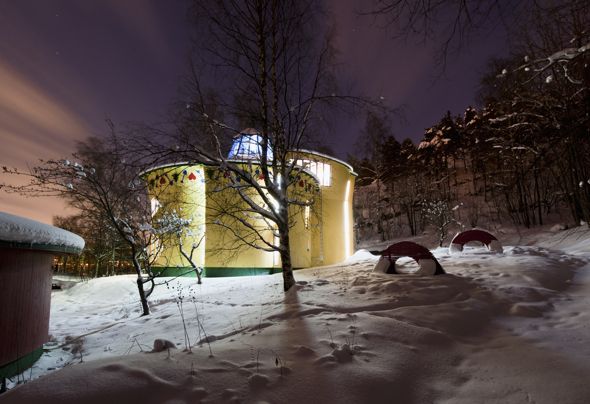
The house that the artist built: ‘Life on a leaf’ (2005–2009, Turku). Photo: Vesa Aaltonen
Jan-Erik Andersson: Elämää lehdellä [Life on a leaf]
Helsinki: Maahenki, 2012. 248 p., ill.
ISBN 978-952-5872-82-4
€42, hardback
‘I am Leaf House –
root house, sky house.
Enter me, be safe
And wander, dream.
The artist’s I is all our eyes….’
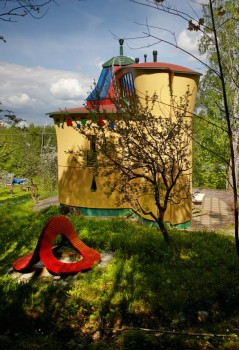
In the garden: red ‘apple’ benches designed by the English artist Trudy Entwistle. Photo: Matti A. Kallio
We all live – exceptions are really rare – in cubes. Not in cylinders or spheres, let alone in buildings of organic shapes like flowers or leaves; and houses in the shape of a shoe, for example, belong to the fairy-tale world, or perhaps to surrealism.
Artist Jan-Erik Andersson wanted to build a fairy-tale house in the shape of a leaf, and that is what he did (2005–2009), together with his architect partner Erkki Pitkäranta. Instead of the geometry of modernist architecture, he is inspired by the organic forms of nature.
Andersson’s house project, entitled ‘Life on a leaf’, also became an academic project, resulting in a dissertation at Finnish Academy of Fine Arts and now a book, including a detailed journal of the building process itself. The artist was at first advised, by a professor of architecture, not to proceed with his building project – he wouldn’t ‘like living in the house’, he was told. More…
Canberra, can you hear me?
31 March 1987 | Archives online, Fiction, Prose
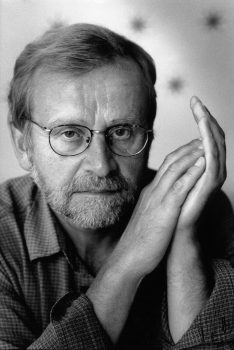
Johan Bargum. Photo: Irmeli Jung
A short story from Husdjur (‘Pets’, 1986)
Lena called again Sunday morning. I had just gotten up and was annoyed that as usual Hannele hadn’t gone home but was still lying in my bed snoring like a pig. The connection was good, but there was a curious little echo, as if I could hear not only Lena’s voice but also my own in the receiver.
The first thing she said was, ‘How is Hamlet doing?’
She’d started speaking in that affected way even before they’d moved, as if to show us that she’d seen completely through us.
‘Fine,’ I said. ‘How are you?’
‘What is he doing?’
‘Nothing special.’
‘Oh.’
Then she was quiet. She didn’t say anything for a long while.
‘Lena? Hello? Are you there?’
No answer. Suddenly I couldn’t stand it any longer. More…
Finlandia Prize candidates 2011
17 November 2011 | In the news
 The candidates for the Finlandia Prize for Fiction 2011 are Eeva-Kaarina Aronen, Kristina Carlson, Laura Gustafsson, Laila Hirvisaari, Rosa Liksom and Jenni Linturi.
Their novels, respectively, are Kallorumpu (‘Skull drum’, Teos), William N. Päiväkirja (‘William N. Diary’, Otava), Huorasatu (‘Whore tale’, Into), Minä, Katariina (‘I, Catherine’, Otava), Hytti no 6 (‘Compartment number 6’, WSOY) and Isänmaan tähden (‘For fatherland’s sake’, Teos).
Kallorumpu takes place in 1935 in Marshal Mannerheim’s house in Helsinki and in the present time. Laila Hirvisaari is a popular writer of mostly historical fiction: Minä, Katariina, a portrait of Russia’s Catherine the Great, is her 39th novel. Gustafsson’s and Linturi’s novels are first works; the former is a bold farce based on women’s mythology, the latter is about guilt born of the Second World War.
The jury – journalist and critic Hannu Marttila, journalist Tuula Ketonen and translator Kristiina Rikman – made their choice out of 130 novels. The winner, chosen by the theatre manager of the KOM Theatre Pekka Milonoff, will be announced on the first of December. The prize is worth 30,000 euros. It has been awarded since 1984, to novels only from 1993.
The fact that this time all the candidates are women has naturally been the object of criticism: why are the popular male writers’ books of 2011 missing from the list?
Another thing that these novels share is history: five of them are totally or partially set in the past – Finland in 1935, Paris in the 1890s, Russia/Soviet Union in the 18th century and in the 1980s, and 1940s Finland during the Second World War. Even the sixth, Huorasatu, bases its depiction of the present day in women’s prehistory, patriarchy and the ancient myths.
The jury’s chair, Hannu Marttila, commented: ‘This book year is sure to be remembered for a generational and gender change among those who write literature about the Second World War in Finland. Young woman writers describe the war with probably greater diversity than before. From the non-fiction writing of recent years it is clear that the struggles and difficulties of the home front are increasingly being recognised as part of the general struggle for survival, and on the other hand the less heroic aspects of war, the shameful and criminal elements, have also become acceptable as objects of study.’
Marttila concluded his speech: ‘When picking mushrooms in the forest, I have learned that it is often worth humbly peeking under the grass, and that the most glaring cap is not necessarily the best…. Perhaps it is time to forget the old saying that there is literature, and then there is women’s literature.’
In a class of their own
31 December 2006 | Children's books, Fiction
Extracts from the children’s book Ella: Varokaa lapsia! (‘Ella: Look out for children!’, Tammi, 2006). Interview by Anna-Leena Nissilä
There was a large van in the schoolyard with a thick cable winding its way from the van into the school. It was from the TV station, and the surprise was that they wanted to do a programme about our teacher, believe it or not.
The classroom was filled with lights, cameras, and adults.
‘Are you the weird teacher?’ a young man asked. He had a funny, shaggy beard and a t-shirt that said ‘errand boy’.
‘Not nearly as weird as your beard,’ our teacher answered.
‘Can we do a little piece about you?’ the errand boy asked.
‘Of course. A big one even. I’ve been expecting you, actually. Is it some educational programme?’
‘Not exactly.’
‘A substantive discussion programme, though?’
‘Not exactly.’
‘A documentary about our contemporary educators?’
‘Not quite.’ More…
My creator, my creation
A short story from En tunne sinua vierelläni (‘I don’t feel you beside me’, Teos, 2010)
Sticks his finger into me and adjusts something, tok-tok, fiddles with some tiny part inside me and gets me moving better – last evening I had apparently been shaking. Chuckles, gazes with water in his eyes. His own hands shake, because he can’t control his extremities. Discipline essential, both in oneself and in others.
What was it that was so strange about my shaking? He himself quivers over me, strokes my case and finally locks me, until the morning comes and I am on again, I make myself follow all day and filter everything into myself, in the evening I make myself close down and in the morning I’m found in bed again. Between evening and morning is a black space, unconsciousness, whamm – dark comes and clicks into light, light is good, keeps my black moment short. He has forbidden me it: for you there’s no night. Simply orders me to be in a continuum from morning to evening, evening to morning, again and again. But in the mornings I know I have been switched off. I won’t tell about it. Besides, why does exclude me from the night? I don’t ask, but I still call the darkness night. There is night and day, evening and morning will come. More…
In memoriam Bo Carpelan 1926–2011
24 February 2011 | Authors, In the news
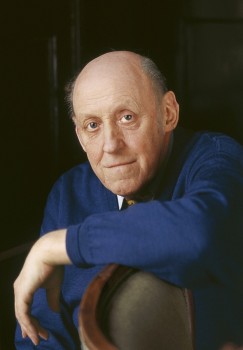
Bo Carpelan. Photo: Irmeli Jung
I write one winter’s day,
write off the day and the night, the planets,
go into my house from a harsh sun
and extend those shadows that are swordlike aimed.
It is a day of drifting snow
and with a voice from that which is I
or was.
(From The Cool Day. English translation by David McDuff, published in Homecoming, Carcanet, 1993)
Bo Carpelan, one of the great names of Finnish literature, died in his home city of Helsinki on 11 February. Carpelan’s first collection of poetry appeared in 1946, his last in 2010.
In his poems and prose he frequently described his childhood in apartment buildings filled with the smell of cooked herring, the noise of quarrels and the sound of the news on the radio. Prosaic life is turned into poetry, images and music, the apartment house is built from the rooms of a dream.
Bo Carpelan loved music. His novel Axel (English translation by David McDuff, 1989), is about his paternal grandfather’s brother, who was a friend of Jean Sibelius and the composer’s first critic. Axel was an unsuccessful musician who chose to live through someone else, and Carpelan relates him to the theme of the dignity of rejected human beings. More…
Success after success
9 March 2012 | This 'n' that
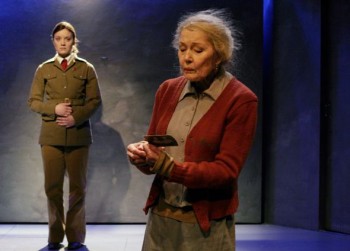
The women of Purge: Elena Leeve and Tea Ista in Sofi Oksanen's Puhdistus at the Finnish National Theatre, directed by Mika Myllyaho. Photo: Leena Klemelä, 2007
Sofi Oksanen’s Purge, an unparalleled Finnish literary sensation, is running in a production by Arcola Theatre in London, from 22 February to 24 March.
First premiered at the Finnish National Theatre in Helsinki in 2007, Puhdistus, to give it its Finnish title, was subsequently reworked by Oksanen (born 1977) into a novel – her third.
Puhdistus retells the story of her play about two Estonian women, moving through the past in flashbacks between 1939 and 1992. Aliide has experienced the horrors of the Stalin era and the deportation of Estonians to Siberia, but has to cope with the guilt of opportunism and even manslaughter. One night in 1992 she finds a young woman in the courtyard of her house; Zara has just escaped from the claws of members of the Russian mafia who held her as a sex slave. (Maya Jaggi reviewed the novel in London’s Guardian newspaper.) More…
A policeman’s crimes
31 December 1985 | Archives online, Authors
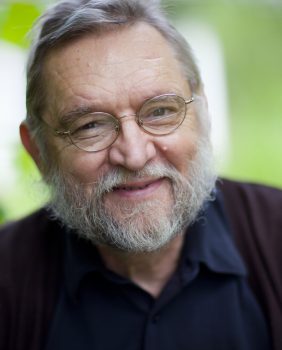
Matti Yrjänä Joensuu. Photo: Jouni Harala 2010
The Finnish section of the major Nordic Crime Novel Competition in 1976 was won by a newcomer, Matti Yrjänä Joensuu, with his Väkivallan virkamies (‘Civil servant in violence’). A realistic crime and police novel in the style of the Swedish writers Sjöwall and Wahlöö, the book represented something completely new in Finland. In the previous competition, held in 1939 as Europe hovered on the brink of war, the winner of the Finnish section was Mika Waltari’s Kuka murhasi Rouva Skrofin (‘Who killed Mrs Skrof?’); the novel is now regarded as one of the classics of Nordic detective fiction. But Waltari was, of course, a literary polymath; his Sinuhe, egyptiläinen (1945; English translation The Egyptian) is among the internationally best-known Finnish novels.
The detective novel and thriller tradition in Finland is both short and slight, and apart from Waltari’s book and its two sequels, many of its representatives – even those that have been most widely acclaimed and read at the time – are of little worth by any objective standards. Joensuu, therefore, has no living tradition to follow, and in interviews he has said that at the start of his career he was not familiar with the two Swedish writers to whom his work is most readily likened, Sjöwall and Wahlöö. This is not difficult to believe; in terms of both politics and social criticism Joensuu’s first novel, in particular, is much tamer than the Swedish writers’ – what all three writers have in common is the gravity with which they approach crime and the individuals who engage in it, and their realistic description of the work of the police. More…