

Search results for "harjunpää/2010/10/mikko-rimminen-nenapaiva-nose-day"
Master of Satire
31 March 1981 | Archives online, Authors
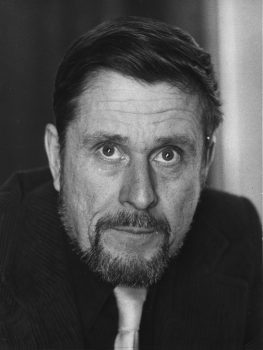
Henrik Tikkanen. Photo: Schildts & Söderströms
Henrik Tikkanen (born 1924) comes of a cultured Swedish-speaking family: his father was an architect, his grandfather an eminent art historian. But it is not only linguistically that Tikkanen belongs to a minority: in a land famous for epic he expresses himself in epigram and satire; in a land of lakes and forests he is an unashamed city-lover; in a land addicted to military virtues he stands out as a pacifist; in a land of books he writes for the newspapers. And in one of his autobiographical novels he confesses that he lacks the sentimental streak that motivates everything that is ever done in Finland.
For a Finnish author, Tikkanen has an exceptionally close relationship with the daily press. He earned his living as a working journalist, initially with Hufvudstadsbladet, the leading Finnish newspaper in Swedish, and later with Helsingin Sanomat, the biggest of the Finnish papers. After serving in the war it became his ambition to be Finland’s ‘best and only’ newspaper artist: he certainly achieved it. As a columnist and documentary feature writer who is at the same time a brilliant wit and coiner of epigrams, and who illustrates his own text, he still has no equal; indeed it would be hard to think of anyone who could even rank as a competitor. More…
See the big picture?
9 November 2012 | Extracts, Non-fiction
Details from the cover, graphic design: Työnalle / Taru Staudinger
In his new book Miksi Suomi on Suomi (‘Why Finland is Finland’, Teos, 2012) writer Tommi Uschanov asks whether there is really anything that makes Finland different from other countries. He discovers that the features that nations themselves think distinguish them from other nations are often the same ones that the other nations consider typical of themselves…. In Finland’s case, though, there does seem to be something that genuinely sets it apart: language. In these extracts Uschanov takes a look at the way Finns express themselves verbally – or don’t
Is there actually anything Finnish about Finland?
My own thoughts on this matter have been significantly influenced by the Norwegian social scientist Anders Johansen and his article ‘Soul for Sale’ (1994). In it, he examines the attempts associated with the Lillehammer Winter Olympics to create an ‘image of Norway’ fit for international consumption. Johansen concluded at the time, almost twenty years ago, that there really isn’t anything particularly Norwegian about contemporary Norwegian culture.
There are certainly many things that are characteristic of Norway, but the same things are as characteristic of prosperous contemporary western countries in general. ‘According to Johansen, ‘Norwegianness’ often connotes things that are marks not of Norwegianness but of modernity. ‘Typically Norwegian’ cultural elements originate outside Norway, from many different places. The kind of Norwegian culture which is not to be found anywhere else is confined to folk music, traditional foods and national costumes. And for ordinary Norwegians they are deadly boring, without any living link to everyday life. More…
On Alpo Ruuth
30 September 1978 | Archives online, Authors
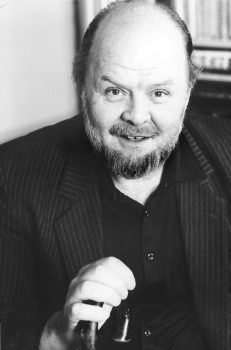
Alpo Ruuth. Photo: Sakari Majantie / Tammi
Alpo Ruuth (born 1943) grew up in Sörnäinen, a working-class quarter of Helsinki, amid dirty grey tenements, railway goods yards, machine shops, timber yards and slaughterhouses; a district reeking of rust and dust, of gasometers, steam locomotives, pinewood, toad-in-the-hole and roasting coffee. Ruuth completed three years of secondary schooling and then decided that he had had enough. He worked as a garage hand, a shoemaker, a casual labourer, a salesman and a storekeeper. The publication of his first novel, Naimisiin (‘Getting married’, Tammi, 1967) set him free to adopt writing as a career.
Ruuth first became known to a wider public through his novel Kämppä (‘The commune’, Tammi, 1969 ). This describes the adolescent years of a group of Sörnäinen boys who live like a tribe of savages in this urban jungle. They establish a commune of their own, cut off completely from the adult world, and rely on a process of trial and error to teach them how to live. The charm of the book comes from the spontaneity and quick reactions of these teen-age youngsters: chattering, mimicking, footballing or fornicating, they are all the time as alert as puppies, while the life of the city around them goes on ‘for real’. The final section of Kämppä describes how they eventually slot themselves into the community. Most of them accept their fetters with resignation, but there is one – the chief character of the novel – who strives to maintain his critical attitude to the values which dominate his surroundings, and to live up to it in practice. Some of Ruuth’s finest writing in this novel is devoted to the harmonious family background of this young man’s early years. He seems to be saying that ethically valid solutions to life’s problems grow out of the personal relationships of early childhood. More…
Fairy tales updated
30 December 2008 | Authors, Reviews
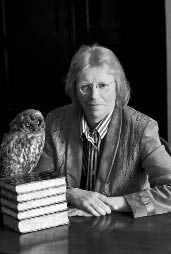
Jukka Itkonen. Photo: Irmeli Jung.
Päivi Heikkilä-Halttunen on Jukka Itkonen’s quirky fables
In Jukka Itkonen’s collection of fables for children, Sorsa norsun räätälinä (‘The mallard as tailor to the elephant’, Otava, 2008) the plots and heroes of traditional fairy tales are turned on their heads. This kind of parody drawing on old-time folktales has been introduced to Finnish readers by translations of the British author Babette Cole and her feminist-flavoured picture books. More…
Poems
31 March 1981 | Archives online, Fiction, poetry
Introduction by Pekka Tarkka
Wind’s whistling through Europe’s windows
In the moonlight
when the mirrors are screeching
cold light, a silvery curse
the newsreel breaks loose, gallops
the window pane into blackness
Wind’s whistling through
Europe’s windows, the sky’s
full of flying Pickwick Club papers
Just a moment
International terror’s
switchboard diagram: the transistors
are hijacking the plane More…
Anna-Lena Laurén: Frihetens pris är okänt. Om demokratiska revolutioner i Georgien, Ukraina och Kirgizistan [The price of freedom is unknown: On democratic revolutions in Georgia, Ukraine and Kyrgyzstan]
22 November 2013 | Mini reviews, Reviews
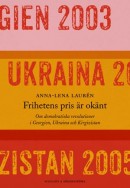 Frihetens pris är okänt. Om demokratiska revolutioner i Georgien, Ukraina och Kirgizistan
[The price of freedom is unknown: On democratic revolutions in Georgia, Ukraine and Kyrgyzstan]
Helsinki: Schildts & Söderströms, 2013. 212 pp., ill.
ISBN 978-951-523-227-4
€25, paperback
Finnish edition:
Kuinka kallis vapaus – värivallankumouksista Georgiassa, Ukrainassa ja Kirgisiassa
Suomentanut [Translated into Finnish by] Liisa Ryömä
Helsinki: Teos, 2013. 219 pp., ill.
ISBN 978-951-851-473-5
€28.40, paperback
Anna-Lena Laurén (born 1976) is an award-winning Finland-Swedish journalist, author and Moscow-based foreign correspondent. In this volume of reportage, she investigates three post-Soviet states after their ‘democratic revolutions’, which took place between 2003 and 2005. Georgia, Ukraine and Kyrgyzstan differ from one another in many respects. Georgia has made the most progress along the road to democracy, but even it remains an authoritarian state. Ukraine is plagued by corruption; impoverished Kyrgyzstan – culturally and linguistically divided, like Ukraine – is relatively free, but corruption is rife. For good or ill, these countries are overshadowed by their former ruling power, the present-day nation of Russia. Anna-Lena Laurén has listened with a keen ear to politicians, intellectuals, farmers and workers, as well as members of minority groups. She is well-versed in the history and current situation of these countries and portrays people’s everyday lives with empathy while spotting the green shoots of democracy in among the difficulties.
Translated by Ruth Urbom
Finding a voice
13 November 2014 | Authors, Reviews
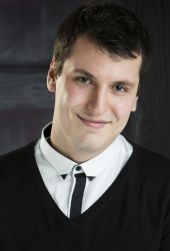
Pajtim Statovci. Photo: Tommi Tuomi
Here it is, finally: Pajtim Statovci’s debut novel is the first book of literary merit written in Finnish by an author who originally came to Finland from the former Yugoslavia, Kosovo. Kissani Jugoslavia (‘Yugoslavia, my cat’, Otava, 2014) is a wild depiction of identity, told simultaneously from the perspectives of the mother of an immigrant family and her son. Statovci builds a keen sense of tension between the narrative of the Albanian woman and that of her youngest son.
Born in Podujevë, Kosovo, in 1990, Statovci came to Finland at the age of two. He is studying comparative literature at the University of Helsinki and film and television scriptwriting at the Aalto University. The French and Norwegian translation rights to Kissani Jugoslavia were sold before the book had even been published. More…
Travelling light
30 September 2005 | Fiction, poetry
Where roads reach through nights
into a fresh infant nightfall
with forest growing rooted to roots and stars,
and darkness canters along
on her black mare,
      canters along at a silent pace,
she combs her hair
on the starry comb
and then slips into eyes to sleep.
But here nights are nights
of rooms, mere darkness:
light a light, it’s no night,
put out the light, it’s night,
that’s all,
and not here alone but everywhere
that rooms are ranged in rows
in piles.
Houses sleep, breathe earth’s vastness
so that each of you, alone,
but neighbouring together,
will fill with stars.
From Vaeltanut (‘Travelled’), 1956 More…
On reading, books and horses
4 June 2010 | Articles, Non-fiction
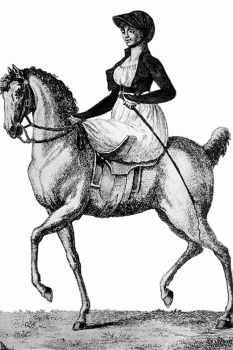
Ladylike: woman riding sidesaddle (Journal des Dames, 1799)
Horses, women, cars, men and reading: Teemu Manninen takes a look at the changes that illogical history makes
I have a friend who is an avid reader and who also talks about the books he reads. But being a staunch conservative when it comes to reading habits, I just cannot consider him a true friend of literature. The reason: he only reads non-fiction books. To me, ‘being a reader’ means reading fiction and poetry.
But increasingly it seems that real literature is becoming more and more marginal, whereas non-fiction (self-help, history, travel guides, popular science, popular economics, cookbooks) is what sells and keeps the industry afloat. The recent Finnish ‘essay-boom’ is an example of this development, with young writers like Antti Nylén or Timo Hännikäinen gaining recognition as important contemporary authors solely through their work as essayists; Hännikäinen has also written poetry, but Nylén is strictly a non-fiction writer. More…
Little and large
5 November 2010 | This 'n' that
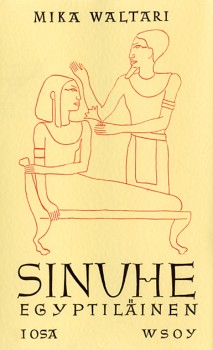
A Finnish tale set in Egypt: Mika Waltari's post-war novel has been translated into 30 languages, English in 1949
a about after again against all also always an and another any are around as at away back be because been before being between both but by came can children come could course day did didn’t do does don’t down each end er even every fact far few find first for from get go going good got great had has have he her here him his home house how i i’m if in into is it its it’s just kind know last left life like little long look looked made make man many may me mean me might more most mr much must my never new no not nothing now of off oh old on once one only or other our out over own part people perhaps place put quite rather really right said same say says see she should so some something sort still such take than that that’s the their them there these they thing things think this those though thought three through time to too two under up us used very want was way we well went were what when where which while who why will with without work world would year years yes you your
Doesn’t this just run like a poem? An extract from somebody’s stream of conscience? ‘…again against all also always… quite rather really right said’? Actually it’s a list of the 200 most used words of the English language in alphabetical order.
This remarkable list is among the references* in a new doctoral thesis from the Department of Modern Languages at the University of Helsinki, Englanniksiko maailmanmaineeseen? Suomalaisen proosakaunokirjallisuuden kääntäminen englanniksi Isossa-Britanniassa vuosina 1945–2003 (‘To world fame in English? The translating of Finnish prose fiction into English in Great Britain between 1945 and 2003’). More…
Mary Bloom
31 December 1983 | Archives online, Drama, Fiction
Introduction by Väinö Vainio
‘Is Mary Bloom about a revivalist religious meeting, a party political conference at which a new leader is born, or a rock concert? These are among the things that have been suggested. I don’t know. I don’t hope for restraint in the imaginations of those who choose.to interpret my work, although I observe it myself. The work of a writer is a part of life, it is an individual and collective experience that seeks, finds, takes and uses its materials like a motor machine. For those who create it the drama is real, as in the theatre, for the duration of the performance.’ Jussi Kylätasku
Characters
Mary Bloom
Martha, a doctor
Otto, a preacher
Disabled veteran
Serenity, his wife
Alcoholic
Cold Cal, a prisoner
Blind man, Deaf Wife More…
On the rocky road to a good translation
19 November 2010 | Essays, Non-fiction
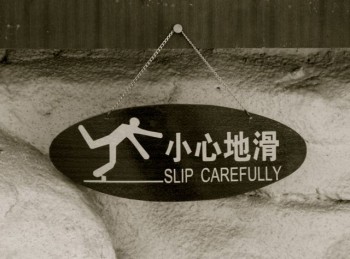
You get the picture? A translation error in China. Photo: Leena Lahti
Why just three per cent? Translator Owen Witesman seeks an explanation for the difficulties of selling foreign fiction to the self-sufficient Anglo-American market. Could there be anything wrong with the translations?
I am a professional translator, and I have a secret: I don’t read translations.
I’m not alone. The literary website Three Percent draws its name from the fact that only about 3 per cent of books published in the United States are translations (the figure for Germany is something like 50 per cent). There are various opinions about why this is, including this one from Three Percent’s Chad Post writing at Publishing Perspectives.
Why do I say it’s a secret that I don’t read translations? Because people expect me to read translations, as if as a translator it were my sacred duty to show solidarity with my professional community. Or maybe I can’t be cosmopolitan otherwise. More…