

Search results for "harjunpää/2010/10/mikko-rimminen-nenapaiva-nose-day"
Sealspotting
14 June 2009 | Reviews
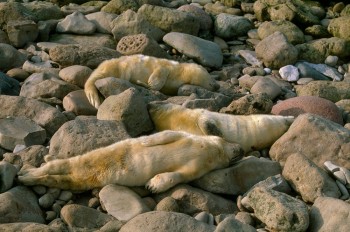
Zzzzzzz! In the grey seal kindergarten babies take a nap after dinner. – Photo: Seppo Keränen
Taskinen, Juha
Paluu Saimaalle
[Return to Lake Saimaa]
Helsinki: WSOY, 2009. 204 p., ill.
ISBN 978-951-0-33745-5
€ 38.90, hardback
Keränen, Seppo & Lappalainen, Markku
Hylkeet [The seals]
Helsinki: Maahenki, 2009. 151 p., ill.
ISBN 978-952-56-5266-6
€ 45, hardback
Sälar
Helsingfors: Söderströms, 2009.
151 p., ill.
Swedish translation: Annika Luther
ISBN 978-951-52-2603-7
€ 45, hardback
The private life of the species of seal that lives only in Lake Saimaa has been carefully investigated lately. Almost everything about this highly endangered species has been revealed, thanks to technological devices such as transmitters that can be glued to their backs…
STOP! WARNING: as I realise that not everybody wants to know what pinnipeds do in their spare time, I suggest you quit reading now, if you aren’t interested in the lives and fates of an obscure group of about 260 mammals that live in a lake in the remote west of Finland.
The books that sold in May
10 June 2011 | In the news
 In May the Bookseller’s Association of Finland’s list of the best-selling Finnish fiction was still topped – as it was in March – by a collection of poems: Heli Laaksonen’s Peippo vei (‘The chaffinch took it’, Otava) is written in a local dialect spoken in south-western Finland. See our introduction to Laaksonen’s new poems.
Pirjo Rissanen’s novel Äitienpäivä (‘Mother’s day’, Gummerus) was number two and Seppo Jokinen’s crime story, Ajomies (‘The driver’, Pulitzer/Crime Time) number three.
Tuomas Kyrö’s short prose about a grumpy old man resisting all sorts of contemporary fads, Mielensäpahoittaja (‘Taking offence’, WSOY), was number four.
Sofi Oksanen’s hugely successful novel about women and Estonian history, Puhdistus (WSOY, 2008) – English version: Purge –, still occupies number five on the list.
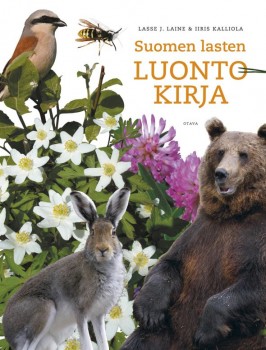
The most popular books for children and young people in May was the Finnish translation of a classic, Saint-Exupéry’s Le Petit Prince. A nature book for children, Suomen lasten luontokirja by Lasse J. Laine and Iiris Kalliola, was number two, and the cartoon kids Tatu and Patu occupied the third place (both published by Otava): Tatun ja Patun Suomi (‘Tatu and Patu’s Finland’), written and illustrated by Aino Havukainen and Sami Toivonen.
The translated fiction list was – as in March – topped by Maalattujen luolien maa (The Land of Painted Caves), by Jean M. Untinen-Auel, an American writer with Finnish roots. The novel is set in the late Paleolithic era.
On the non-fiction list there were books, in particular, on cooking, gardening, birds – and diets.
Fredrik Lång: Av vad är lycka. En Krösusroman [From what is happiness. A Croesus novel]
4 December 2012 | Mini reviews, Reviews
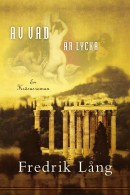 Av vad är lycka. En Krösusroman
[From what is happiness. A Croesus novel]
Helsingfors: Schildts & Söderströms, 2012. 221 p.
ISBN 978-951-523-002-7
€20.25, hardback
What is happiness? According to the Western thought, happiness is to have, to own, and whenever possible to get even more – it is interesting to find out what our forefathers thought about the question before it was answered. This is precisely what Fredrik Lång does in this novel, the best since the ancient-inspired Mitt liv som Pythagoras (‘My life as Pythagoras’, 2005). Lång describes the Lydian king Kroisos, the richest man of his day, and his attempt to overthrow the wise Greek Solon’s idea that moderation and a contemplative lifestyle lead to happiness. Even if the driving force behind this novel is philosophical, it is brought alive with graphic depictions, extravagant battlefield scenes, intrigue and heartrending romance. Lång’s narrative is often ironic or comical, yet it still manages to emphasise the hard lives of its characters and the complete and utter inequality between master and slave, rich and poor, man and woman. Despite the immersion in the past, it is his own time Lång writes about, sometimes via shameless anachronism, sometimes subtle hints.
Translated by Claire Dickenson
All beauty
17 November 2011 | Authors, Reviews
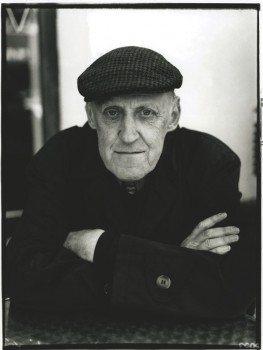
Bo Carpelan. Photo: Ulla Montan
The epigraph to Bo Carpelan’s prose work, Blad ur höstens arkiv. Tomas Skarfelts anteckningar (‘Leaves from autumn’s archive. The notes of Tomas Skarfelt’) is a quotation from Goethe: Zum Erstaunen bin ich da (‘To marvel I am here’). The world is a wonder to behold, one’s curiosity ought to be satisfied with less. It could stand as a motto for the whole of Carpelan’s literary work.
That work is now complete. Bo Carpelan died in February this year at the age of 84. He had made his debut in 1946 with the poetry collection Som en dunkel värme (‘Like an obscure warmth’).
In his prose as in his poetry, Carpelan built on a process of heightened and unconditional perception. Where others see only trees or forest, he saw a complex, branching light. His poetic ‘I’ could even watch itself perceiving, as when one autumn evening Tomas Skarfelt writes of a long-eared owl: ‘The yellow eyes looked at me attentively for a moment: a rather large, feather-clad camera.’ Carpelan often complained of having a poor memory, but it was a photographic one. More…
1968
30 March 2005 | Fiction, Prose
A short story from Lugna favoriter (‘Quiet favourites’, Söderströms, 2004)
We were in the space age, the age that came and went, the age of space and great dreams, when space was what we talked about and space was what the papers wrote about, and about Vietnam and protests and revolution, in articles precocious and prematurely old children spelled their way through, children living in the mixed forests of the North which had recently been transformed into gleaming suburbs where ink-caps, puffballs and parasol mushrooms still grow in the backyards of high-rise tower blocks. It says in the paper that we humans will soon have to move away, leave the Earth because our planet has become overcrowded and almost uninhabitable, and space and the eternity of space are waiting for us and we have engineers of the highest class who will soon solve such small problems as still remain. It’s not a question of forests of mixed trees or ink-caps or parasol mushrooms or other earthly things, it’s a question of it being too late now, that we must go further, first to the moon and then to Mars and Andromeda and further still, and here are some of the key words and phrases: space programme, space race, Apollo, Vostok, Tereshkova and Glenn. For humanity has dreams, dark mixed visions and a nagging and not easily extinguished sense of life’s inscrutability and greatness, but down here all goes on as before, we kill each other, we kill our fellow men in jungles and marshes, we kill them amid rugged mountains and in snow-clad forests, we poison them and blow them to pieces, we kill them in dark backstreets and in ramshackle wooden hovels and in mighty marble palaces where the bath-taps glitter with gold. Only a chosen few are able to escape, and to do this they have to set off upwards into a coolness, and seek out a darkness and solitude where there will be no anxiety or feelings of guilt. But before they can get there they must face opposition of a magnitude that can only be overcome by a fierce rush of power, and before the rocket can start it sits and breathes out smoke and gases and fire for a good thirty seconds before lifting off slowly and reluctantly as if unwilling to leave its home planet, as if it hasn’t the slightest desire to go, but when it gets under way it travels at incomprehensible speeds over unimaginable distances, it’s only 108 years since Lenoir invented the internal combustion engine and we are already up in space where it’s silent and cool and peaceful, just a little anxiety in case some instrument fails, in case some double safeguard shows itself insufficient, otherwise nothing, just weightlessness and silence, just the oceans and deserts and mountain-chains on the surface of our blue globe. Though let’s be fair: the Chinese, who haven’t been up in space, claim that the Great Wall of China must be visible from up there, but on the other hand they have nothing to say about the visibility of new-built suburbs in the miserable little capitals of small underpopulated countries with frosty climates. More…
Where we are now
30 December 2004 | Fiction, poetry
Poems from Taivaan mittakaava (‘The scale of the sky’, Otava, 2004)
Architect
Behind your back the city’s changing,
across the sky a crane’s swinging
ready-made components.
A tie splits the architect’s white shirt,
his paired limbs and individual organs,
two lanes, left and right.
You and I are precisely planned.
Even now we’re on a ruler’s edge. More…
In good company
18 October 2013 | This 'n' that
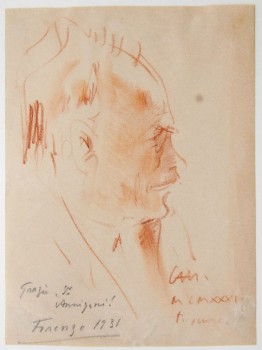
Portrait of an artist: Joel Lehtonen, sketched by Pietro Annigoni in Florence, 1931. Picture: literary archives of the Finnish Literature Society
Margaret, Countess of Snowdon (Princess Margaret, 1930–2002), Joel, Master of Putkinotko (1881–1934), and Philip, Duke of Edinburgh (born 1921) met in the same museum case in Florerence in October, when an exhibition of the work of the artist Pietro Annigoni (1910–1988) was opened.
The morganatic juxtaposition of the English royals and the Finnish writer is based on Annigoni’s reputation as one of the best-known portraitists of the 20th century, in whom the royal courts of England and Denmark, among others, placed their trust.
Joel Lehtonen, author of the novel Putkinotko (‘Hogweed Hollow’, the name also refers to a place) and classic of Finnish literature, is included on account of the fact that, in celebrating his fiftieth birthday in Florence in 1931, he partied throughout the night with students from the Accademia di Belle Arte ‘to the rhythm of an excellent Chianti’.
Also present was the young Piero Annigoni, who, in a cellar restaurant, took out his working tools. A red-chalk portrait of Lehtonen was the result, along with a series of dancing girls drawn in Indian ink. ‘It was five in the morning before I realised,’ Lehtonen wrote back to Finland.
Lehtonen had already spent a year in Italy in 1908 translating Boccaccio’s The Decameron, which, to his annoyance, was censored by the publisher. He published a volume of poetic prose based on his Italian experiences, Myrtti ja alppiruusu (‘The myrtle and the rhododendron’), of which one section is dedicated to Florence, that ‘glittering, passionate city of the spirit’.
Young Florentine artists were used to world-class artists. When the poet Dylan Thomas visited the city in the 1940s, the poet and author Luigi Berti – an acquaintance of Lehtonen’s – complained that ‘poets travelling in Italy no longer give themselves the airs of “milords” – behave like Lord Byron.’ Lehtonen, however, was able to party stylishly and thoroughly in a way that appears to have pleased the sons of Florence.
As he set off on the return journey to Finland, Lehtonen wrote to his wife: ‘An embarrassing day is over’, ‘I am in fine spirits! Heat the sauna.’ He brought with him Annigoni’s works, which are now in the archive of the Finnish Literature Society.
The curator of the Florence exhibition found more sketches of Lehtonen in the Museo Annigoni: in the current show, they are placed alongside sketches of Princess Margaret and Prince Philip.
The opening of the exhibition, in the premises of the Ente Cassa di Risparmio di Firenze, was attended by 300 of the city’s elite. It was as if the nobility of the portraits of the Uffizi art gallery had stepped out of their frames to honour Annigoni, whose paintings continued the traditions of the renaissance. The Corriere della Sera and La Repubblica gave prominent coverage to the event. The young politician and Florence mayor Matteo Renzi said in his speech that in northern Italy Annigoni’s significance to art is parallel to that of Olivetti to industry.
Annigoni’s early portraits of Lehtonen are shown in a section entitled Opere rare o inedited. The 240-page catalogue also includes brief description of Lehtonen as a writer and an account of that night in Florence in 1931.
Translated by Hildi Hawkins
On presence and absence
30 December 2004 | Authors, Reviews

Photo: Irmeli Jung
The calm, precisely defined atmosphere of Sanna Karlström’s poems is interlined by the fragility and seriousness of the ‘I’, suggesting a certain sorrow. The clarity and purity of Finnish modernism’s tradition shows up in her controlled style; one may detect glimpses of the classically modernist images of Paavo Haavikko (1931–2008) in her poems. Karlström’s collection, Taivaan mittakaava (‘The scale of the sky’, Otava, 2004) does consider ‘the scale of the sky’, but her gaze is more centred on what is close at hand, the small. The ‘scale’ she works on is that of windows and rooms, which reflect both the self and ‘the other’. More…
Remembrance
29 March 2014 | This 'n' that
 This year is the centenary of Tove Jansson (1914–2001), the painter, caricaturist, comic strip artist, illustrator and author of books for both children and adults, and, what made her name internationally, the creator of the Moomins. Today, her Moomin books are available in 40 languages.
One sunny April day, walking through the atmospheric old Hietaniemi cemetery by the sea in Helsinki, a charming little bronze statue on top of a narrow granite column caught my eye.
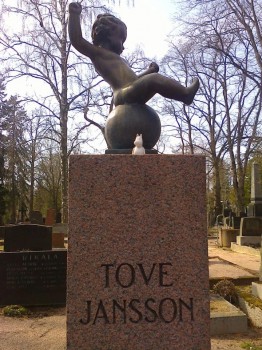
Family grave: sculpture by Victor Jansson
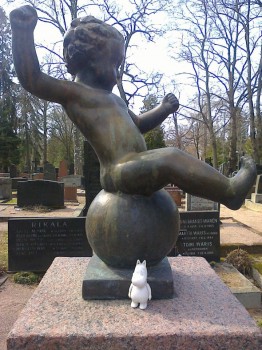
It was a small child balancing on a ball, waving its arms and legs joyously in the air. On a closer look, there was something white attached to the statue: it was a tiny white plastic Moomin.
On the Janssons’ family grave the first little blue flowers had just risen to the surface to bask in the early spring sun. Tove’s father was the sculptor Victor Jansson, her mother was the cartoonist and artist Signe Hammarsten Jansson.
Perhaps one of Tove’s fans had chosen this way of paying homage to the creator of the unique Moomin universe.
Hamlet in blue velvet
22 January 2010 | Fiction, poetry
Physical, mythical, sensual, playful: Sirkka Turkka’s poems, never abstract, speak of life, death, dogs, horses, nature and humans. In her universe the humorous and the grave socialise without effort. These texts, in prose form, with Hamlet as one of the characters, are often set in a wintry landscape (see Nature girl)
Poems from Yö aukeaa kuin vilja (‘The night opens like corn’, Tammi, 1978)
Of his early childhood, Hamlet really only remembered his father’s slightly crooked and gnarled index finger, pointing at the lowest branch of a holly oak. A small owl sat on it. It can’t see anything, it’s asleep now. It won’t fly off until night. These were the only words Hamlet remembered his father saying to him during the first six years of his life. Later, all he saw of his father was his back, bent over in study of agricultural conditions in a village called Jawohl or of waterside traffic on the river Vistula at the turn of a particular century. When it came to governmental matters, the king placed his trust chiefly in his unconscious and in wheat bread, thick white slices of which he devoured from the moment he awoke. More…
Music of the heart
30 December 2003 | Authors

Photo: Irmeli Jung
The short stories of Raija Siekkinen (1953–2004) – she very rarely wrote long fiction – are almost always about women. Something has happened, or is about to happen, vague, unspecified. The change is all-engulfing, and often to do with men. Memories are summoned, or stirred, in the effort to face the future.
‘Throughout the day, memories re-entered her mind, densely, as if in a high fever, drifting from one image to the next, aimless, directionless,’ runs the narrative in the title story from her collection Kuinka rakkaus syntyy (‘How love begins’ 1991), ‘and somewhere behind the clear realisation that moments are long, endlessly expanding, and life is short.’ Resolution, if any is offered, often lies beyond the end of the story, beyond the printed page, in the mind and heart of the reader. More…
The best thing
30 September 2004 | Fiction, poetry
Poems from Valekuun reitti (‘The path of the false moon’, WSOY, 2004). Introduction by Herbert Lomas
At first light I put my hand
     in the hollow of a white willow –
once someone's cigarette box
had been left there –
     now a bird flew out
going seaward.
Touch of a wingquill on the back of my hand.
     It flew higher.
          In the evening
I felt its touch on my shoulder blade.
Celebrity boobs and other news
9 October 2012 | Non-fiction, Tales of a journalist

Illustration: Joonas Väänänen
Anyone can find the latest news and the vital information he or she requires – latest pictures of some celebrity’s breasts, the reasons why men cheat on their wives – immediately from the Internet. Jyrki Lehtola takes a look at why the printed media are in trouble
We are living in an age of newspaper death. Several publications have already closed up shop in Finland just this autumn. The most notable of these was Finland’s oldest and most influential teen magazine, Suosikki (‘Favourite’), which had been in circulation for some 52 years.
This was where several generations, particularly the boys of several generations, got all of their information about sex, where they learned how to tape posters to their walls without them peeling off, where they got information about rock stars’ drug use and favourite foods and where they learned that even if something can be expressed with a period, expressing it with an exclamation point is still preferable. More…