

Search results for "kjell west"
Kjell Westö: Gå inte ensam ut i natten [Don’t go out into the night alone]
23 October 2009 | Mini reviews, Reviews
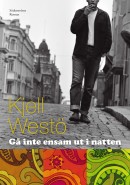 Gå inte ensam ut i natten
[Don’t go out into the night alone]
Helsinki: Söderströms, 2009. 604 p.
ISBN 978-951-52-2609-9
25 €, hardback
Finnish translation (by Katriina Savolainen): Älä käy yöhön yksin
Helsinki: Otava, 2009. 604 p.
ISBN 978-951-1-23833-1
25 €, hardback
This novel completes Kjell Westö’s Helsinki series and is his tenth book. As is the case with the three earlier books in this series (Drakarna över Helsingfors [‘The kites over Helsinki’], 1994, Vådan av att vara Skrake [‘The perils of being a Skrake’], 2000, and Där vi en gång gått [‘Where we once walked’], 2006, all also translated into Finnish) this is a character-driven, nostalgia-laden story that spans several decades. The central factor is music: in the 1960s three young people from different backgrounds become friends and record a single that ought to have been a huge hit, but because the song fades into obscurity, the circle of friends breaks up. In the latter part of the novel, a young man begins to investigate what became of the members of the trio and realises that his own life is linked to theirs. Westö (born 1961) writes remarkable experiential prose that brings the reader close to the characters. The retro setting may be a bit much for some: the avalanche of details feels rather excessive in places. Där vi en gång gått was awarded the Finlandia Prize in 2006. Another of Westö’s novels, Lang (2002), was published in England under the same title in 2005.
Kjell Westö: Hägring 38 [Mirage 38]
31 October 2013 | Mini reviews, Reviews
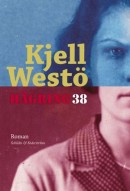 Hägring 38
[Mirage 38]
Helsinki: Schildts & Söderströms, 2013. 296 pp.
ISBN 97895152332069
€34, hardback
Kangastus
Suom. [Translated into Finnish by] Liisa Ryömä
Helsinki: Otava, 2013. 334 pp.
ISBN 9789511274032
€29.90, hardback
The previous novels by Kjell Westö (born 1961) have been sweeping in their scope, encompassing several generations. Westö’s writing is characterised by a precise instinct for historical details and love for his hometown of Helsinki. Hägring 38 focuses on the year 1938; the new ideas of that era and the worsening political climate in Europe are reflected in the differences of opinion among a group of Finland-Swedish gentlemen. In June of 1938 these friends attend the opening gala for the new Olympic stadium in Helsinki and watch as the winner of the 100-metre dash, a Jew, is demoted to fourth place. [In October 2013, after the publication of Westö’s novel, the Finnish Athletics Federation finally corrected that erroneous decision, which had been made for racist reasons.] Claes Thune, a lawyer who has lost his wife to another man and suffers from depressive episodes, is a leading member of the circle of friends. His new secretary, the taciturn Mrs Wiik, is one of the central figures Westö utilises to portray the prison camps and traumatic events of the Finnish civil war of 1918.
Translated by Ruth Urbom
Winner of the Nordic Council Literature Prize
6 November 2014 | In the news
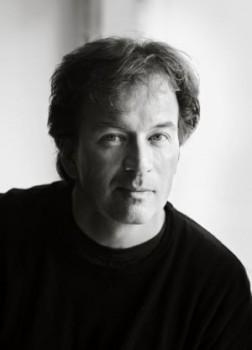
Kjell Westö. Photo: Kata Portin
The Nordic Council Literature Prize 2014 went to Kjell Westö and his novel Hägring 38 (‘Mirage 38’, 2013; in Finnish, Kangastus 38). The prize, awarded since 1962 and worth €47,000, was given on 29 October at a ceremony in Stockholm.
Among the 13 nominees was another Finn, the poet Henriikka Tavi with her collection Toivo (‘Hope’, 2011).
The jury said: ‘The Nordic Council Literature Prize goes to the Finnish writer Kjell Westö for the novel Mirage 38, the evocative prose of which breathes life into a critical moment in Finland’s history [the time before the Winter War, 1939–1940] – one that has links to the present day.’ Here, more on Westö and his winning novel.
Compelled to write
30 June 2000 | Authors, Interviews

Photo: Marica Rosengård
Kjell Westö (born 1961) is one of a generation of younger, urban Swedish-language writers who are at home in both Swedish and Finnish. An extract from his novel Vådan av att vara Skrake (‘The perils of being Skrake’, Söderströms, 2000), which traces the fortunes of the Helsinki family of Skrake from the 1910s to the present day. Here, Westö is interviewed by his alter ego, the discontented poet Anders Hed, editor of the cultural journal Bokassa (now sadly extinct)
Anders Hed: So, to get us going: do you write any poetry at all nowadays?
Kjell Westö: No. The last poem I wrote comes at the end of the title story in Fallet Bruus (‘The Bruus case’). And that book came out in 1992.
It’s a poem about human face and the search for ‘the Thou’, isn’t it?
Exactly. More…
The nearness of the past
30 March 2005 | Authors, Reviews

Kjell Westö. Photo Ulla Montan
Kjell Westö (born 1961) has to a large extent converted the needs and dilemmas of his own generation into material for his own writing.
It was a generation that came too late for the wave of politicisation of the 1970s, but it was strongly influenced by the reaction against it: individualism and postmodernism, the delirium of the ‘casino-economics’ of the 1980s and the crash that followed. True, Westö stood back from many of the currents of the time, but was clearly influenced by them nonetheless. More…
Bright lights, small city
26 August 2010 | Articles, Non-fiction
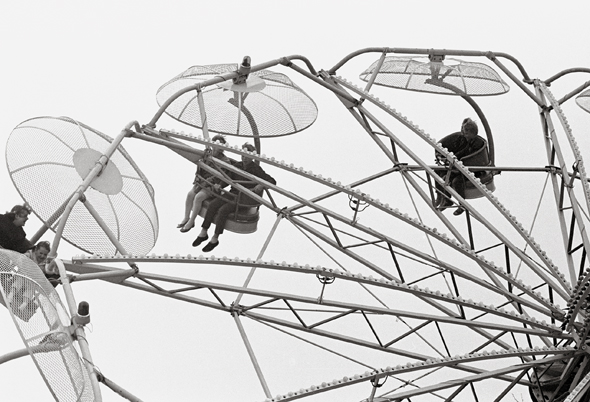
Helsinki people on the big wheel: Linnanmäki amusement park, 1968
Helsinki people on the big wheel: Linnanmäki amusement park, 1968
Photographs and excerpts from Helsinki 1968 by Claire Aho and Kjell Westö (text in Finnish, Swedish and English; WSOY, 2010)
A year that rocked the world: 1968. The Vietnam War, the Chinese cultural revolution, the invasion of Czechoslovakia, hunger in Biafra. Helsinki that year: a quiet little city, in a quiet little country. But Finland’s baby-boomers, born after the war, were now coming of age, resulting in the beginnings of a change of generation in politics; and the students of Helsinki University joined the global student unrest of this ‘crazy year’. Photographer Claire Aho takes a series of photographs of her home town, participating in an exhibition in Kiel, Germany. Forty-two years later her photos are published in Helsinki 1968, together with reflections by Kjell Westö, whose novels are deeply rooted in his native city. Here are words and images of Helsinki that mirror the past – and the present
Both the city and its people carry their past with them, find it hard to let go, and don’t really want to. Many of us are reluctant to embrace the new. Hence there is often something ambivalent, something enigmatic in the frozen moment of the photograph…. More…
How many worlds?
31 March 2000 | Authors, Reviews

Photo: Jukka Uotila
Veronica Pimenoff’s novel Maa ilman vettä (‘A world without water’) recalls in a startling way the time when the founding father of Nordic literature, Georg Brandes, urged readers to ‘make problems a matter of debate’ and when Henrik Ibsen’s plays The Pillars of Society and A Doll’s House provoked widespread debate about money and property, gender and marriage.
The tradition of problem-centred literature in the Nordic countries from the end of the 19th century onward has hardly been studied, but it could certainly be made visible by tracing a line from Brandes to August Strindberg and thence via the working-class literature of Sweden and Finland to, for example, the feminist fiction of recent decades. More…
Tero Tähtinen: Katmandun unet. Kirjoituksia idästä ja lännestä [Kathmandu dreams. Writings about East and West]
26 January 2012 | Mini reviews, Reviews
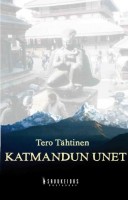 Katmandun unet. Kirjoituksia idästä ja lännestä
[Kathmandu dreams. Writings about East and West]
Turku: Savukeidas, 2011. 332 p.
ISBN 978-952-268-005-1
€ 19.90, paperback
Tero Tähtinen’s second collection of essays is focused physically in the wilds of a Finnish national park and Nepal – where the author (born 1978), a literary scholar and critic, has frequently travelled – and mentally in the divergences of Western and Eastern thought, which Tähtinen, who is familiar with Zen and Buddhist philosophy, studies, occasionally by means of literary examples. The ‘Socratic ego’ of the Western egocentric, individual ‘I’, which strives in vain to understand the whole of reality by rationalising it, is his favourite bête noire. Tähtinen quickens the pace of his verbal virtuosity as he discusses both dogmatic, materialistic faith in science – as well as some of its representatives – and Christian faith: he considers that both, in their pursuit of an absolute and total explanation, end up in a metaphysical vacuum. Unlike them, Eastern philosophy, in which the individual ‘I’ is not the centre and measure of all things, does not give rise to the anxiety of compulsive cognition. The virtual narcissism of Facebook, a platform tailor-made for the Socratic ego, receives Tähtinen’s outright condemnation: ‘Facebook trivialises humanity,’ he declares. At the end of these passionate essays on the author praises silence.
Translated by David McDuff
Leena Parkkinen: Galtbystä länteen [West from Galtby]
19 December 2013 | Mini reviews, Reviews
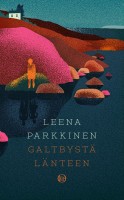 Galtbystä länteen
[West from Galtby]
Helsinki: Teos, 2013. 339 p.
ISBN 978-951-851-510-7
€32.90, hardback
Leena Parkkinen’s first novel, Sinun jälkeesi, Max (‘After you, Max’) was awarded the Helsingin Sanomat literature prize for best first work of 2009. Her new novel contains crime story ingredients, but the focus is on love between siblings, loss and the demand for truth. The story begins in 1947, after the war, on an island in the south-western Finnish archipelago. Sebastian, brother of Karen, has returned from the front; it’s time to mend the best clothes and dancing shoes. But to the horror of the island community, the body of a young girl is found on the shore, and Sebastian gets the blame. Sixty-five years later her brother’s fate has not left Karen alone, and she sets out to find the truth. Capable of handling different times, Parkkinen (born 1979) is also a skilful interpreter of conflicting sentiments, as unexpected twists develop towards the end.
A walk on the West Side
16 March 2015 | Fiction, Prose
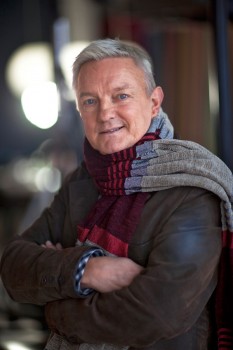
Hannu Väisänen. Photo: Jouni Harala
Just because you’re a Finnish author, you don’t have to write about Finland – do you?
Here’s a deliciously closely observed short story set in New York: Hannu Väisänen’s Eli Zebbahin voikeksit (‘Eli Zebbah’s shortbread biscuits’) from his new collection, Piisamiturkki (‘The musquash coat’, Otava, 2015).
Best known as a painter, Väisänen (born 1951) has also won large readerships and critical recognition for his series of autobiographical novels Vanikan palat (‘The pieces of crispbread’, 2004, Toiset kengät (‘The other shoes’, 2007, winner of that year’s Finlandia Prize) and Kuperat ja koverat (‘Convex and concave’, 2010). Here he launches into pure fiction with a tale that wouldn’t be out of place in Italo Calvino’s 1973 classic The Castle of Crossed Destinies…
Eli Zebbah’s shortbread biscuits
Eli Zebbah’s small but well-stocked grocery store is located on Amsterdam Avenue in New York, between two enormous florist’s shops. The shop is only a block and a half from the apartment that I had rented for the summer to write there.
The store is literally the breadth of its front door and it is not particularly easy to make out between the two-storey flower stands. The shop space is narrow but long, or maybe I should say deep. It recalls a tunnel or gullet whose walls are lined from floor to ceiling. In addition, hanging from the ceiling using a system of winches, is everything that hasn’t yet found a space on the shelves. In the shop movement is equally possible in a vertical and a horizontal direction. Rails run along both walls, two of them in fact, carrying ladders attached with rings up which the shop assistant scurries with astonishing agility, up and down. Before I have time to mention which particular kind of pasta I wanted, he climbs up, stuffs three packets in to his apron pocket, presents me with them and asks: ‘Will you take the eight-minute or the ten-minute penne?’ I never hear the brusque ‘we’re out of them’ response I’m used to at home. If I’m feeling nostalgic for home food, for example Balkan sausage, it is found for me, always of course under a couple of boxes. You can challenge the shop assistant with something you think is impossible, but I have never heard of anyone being successful. If I don’t fancy Ukrainian pickled cucumbers, I’m bound to find the Belorussian ones I prefer. More…
Human destinies
7 February 2014 | Articles, Non-fiction
To what extent does a ‘historical novel’ have to lean on facts to become best-sellers? Two new novels from 2013 examined
When Helsingin Sanomat, Finland’s largest newspaper, asked its readers and critics in 2013 to list the ten best novels of the 2000s, the result was a surprisingly unanimous victory for the historical novel.
Both groups listed as their top choices – in the very same order – the following books: Sofi Oksanen: Puhdistus (English translation Purge; WSOY, 2008), Ulla-Lena Lundberg: Is (Finnish translation Jää, ‘Ice’, Schildts & Söderströms, 2012) and Kjell Westö: Där vi en gång gått (Finnish translation Missä kuljimme kerran; ‘Where we once walked‘, Söderströms, 2006).
What kind of historical novel wins over a large readership today, and conversely, why don’t all of the many well-received novels set in the past become bestsellers? More…
Comics turns
16 April 2010 | In the news
Comics make frequent appearances on the lists of best-selling Finnish books: on the ‘What Finland reads’ list in March, Pertti Jarla’s new comic strip book, Fingerpori 3, about the eponymous, weird city of Fingerpori (‘Fingerborg’), is number one. His two other Fingerpori books are number eight and ten on the list. The zany comedy in them is verbal, based on puns – and therefore not easily exportable.
The new and final volume of Hannu Väisänen’s autobiographical, fictional trilogy about the young wannabe artist Antero, Kuperat ja koverat (‘Convex and concave’) made its way into the top ten right away, making its appearance at number two.
The Finlandia Prize -winning novel, Gå inte ensam ut i natten (‘Don’t go out into the night alone’, translated into Finnish as Älä käy yöhön yksin) by Kjell Westö, is number three – the novel was published in September 2009, and this reappearance is partly explained by special campaigns in the bookstores, says Westö’s publisher, Otava.
Sofi Oksanen’s prize-winning novel Puhdistus (Purge, now published in English) from 2008, is back on the list again, now at number four. Kari Hotakainen’s latest novel, Ihmisen osa (‘Human lot’, 2009, to appear in English in 2012) is at number six.