

Search results for "tommi+musturi/2010/05/song-without-words/2009/09/what-god-said/2011/04/matti-suurpaa-parnasso-1951–2011-parnasso-1951–2011"
We Finns
15 January 2010 | Columns, Tales of a journalist
Illustration: Joonas Väänänen
Is it so bad to criticise a Finn, if you’re a Finn? Columnist Jyrki Lehtola takes another look at what you think about us Finns out there
Recently, the word ’Finland’ has been repeated in Finland, and generalisations made about what we Finns are like.
Last year saw the seventieth anniversary of the Winter War, and we congratulated ourselves on what a fine fighting nation we are.
A government branding work group tells us at regular intervals how creative a nation we are.
From time to time someone remembers to mention the sauna, while someone else is a little more critical and says we are also an envious nation. More…
Between three cultures
5 February 2010 | Authors, Reviews
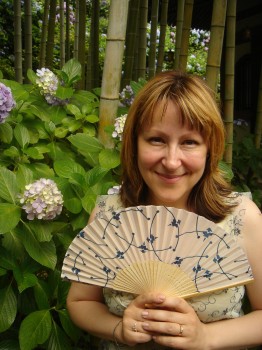
Zinaida Lindén. Photo: Johan Lindén
A new collection of short stories by the Leningrad-born author Zinaida Lindén explores the ambiguities of life between three cultures: her native Russia, her adopted Finland, and Japan, where she has also lived. In this introduction to Lindén’s short story Shards from the empire, Janna Kantola appreciates Lindén’s capricious, recalcitrant prose, and the positive, generous spirit that lies behind her work
Seen from a distance, Finns and Russians seem very like one another.
Zinaida Lindén has written her books from a cultural no-man’s-land in which she may have been forced to ponder the central questions of national identity. After studying Swedish in her native Russia, Lindén (born 1963) settled in Finland with her Finland-Swedish husband, and has written all of her works in Swedish. A recurring theme is that of encounters with the foreign, the other. More…
A respectable tragedy
30 June 1988 | Archives online, Fiction, Prose
An extract from the novel Säädyllinen murhenäytelmä (‘A respectable tragedy’, 1941). Introduction by Kaija Valkonen. The central theme of the novel is love: young, old, passionate, innocent, proper, improper. The main characters are a middle-aged couple, the doctor and his wife Elisabet, his sister Naimi and the love of her youth, Artur. Hämäläinen’s fine irony, careful and thoughtful psychology and colourful language have made the novel a bestseller. Naimi, an aesthete and an uncompromising character, has left her husband Artur twenty years ago because of his infidelity. But slowly she begins to forgive: this tragic but compassionately told love story, not without tragicomedy and humour, ends in reconciliation
Embalmed passion
In that new Helsinki of the ‘thirties, which had opened like a garden flower, gaily coloured, sunlit, practical and impractical, in love with every novelty of the moment, which it thought astonishing, lived Naimi Saarinen, back from her exile, where she had been driven by wounded passion twenty years before. More…
Temporarily out of order
Extracts from the novel Hullu (‘The lunatic’, Teos, 2012). Introduction by Soila Lehtonen
I found myself standing in front of the noticeboard. The rules were on a sheet of paper:
Ward 15 5-C
MEAL TIMES:
Breakfast 8:00 AM
Lunch 11:45 AM
Dinner 4:30 PM
Evening Snack 7:30 PM
COFFEE:
After lunch
We recommend leaving money, valuables, and bankbooks for storage in the ward valuables locker. We take no responsibility for items not left in the locker! Money may be retrieved 1–3 times per day. Use of mobile phones on the ward by arrangement.
VISITING HOURS:
M–F 2–7 PM
Sa–Su 12–7 PM
PERSONAL CLOTHING:
Use of one’s own clothing by individual arrangement. Clothing care individual. Washer and dryer available for use in the evenings after 6 PM.
OUTDOOR RECREATION:
Arranged individually according to health condition. Outdoor pass does not include the right to leave the area.
VACATIONS:
Vacations arranged during morning report, according to health condition.
NOTA BENE!
Smoking is only allowed on the smoking balcony! Smoking prohibited from 11 PM to 6 AM.
Pastor Karvonen available by appointment.
These were impossibly difficult rules. I read them through three times and simply did not understand. ‘Clothing care individual.’ ‘Outdoor pass does not include the right to leave the area.’
What did these sentences mean? With whom did you schedule the pastor and how? And why? More…
What the snail thought
30 September 2005 | Fiction, Prose
Poems from Tapahtui Tiitiäisen maassa
(‘It happened in Tumpkin land’, WSOY, 2004)
Illustrations by Christel Rönns

Meritähti
Eli merenpohjassa Meritähti
tuhat tonnia vettä yllä.
      - Minä jaksan kyllä,
      sanoi Meritähti.
      - On terävät sakarat,
      ja litteät pakarat
ja paineenkestävät kakarat!
Tweet! Oink! Ow!
14 June 2012 | This 'n' that
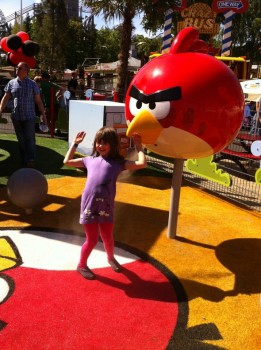
Fan fun: Angry Birds theme park, Tampere. Photo: Hildi Hawkins
For anyone who’s not a fan, it can be hard to see what has made the Finnish-born game Angry Birds the number one paid smartphone app in the world.
Catapulting wingless birds at pigs seems an unlikely route to hours of focused fun; but then, the same could seem true, prima facie, of moving a set of unrelated figures around a chequerboard according to some rather arbitrary rules. There are similarities, though – as 10-year-old Sophia said, ‘Angry Birds is a lot like chess – only more fun.’
So, when the most junior members of the Books from Finland editorial team – Max (3), Tia (6) and the above-mentioned Sophia (see their previous review here) – discovered that the world’s first officially sanctioned Angry Birds theme park was opening during their visit to Finland, it was obvious they had to be there for the occasion.
Friday 8 June was a fabulously sunny day for a trip to Tampere, Finland’s second city, and its famous Särkänniemi fun fair, on a spectacular location between two lakes. Angry Birds Land was packed with the nursery- and primary-aged children it’s intended for. More…
The bodyguard
31 March 1991 | Archives online, Fiction, Prose
An extract from Henkivartija (‘The bodyguard’), winner of the Runeberg Prize, 1991. Introduction by Suvi Ahola
When spring comes Ossi’s sister tries to reach him on the telephone. She is worried; it sounds as if Ossi is partying constantly. Mostly she is told that Ossi is asleep, Ossi has just gone out, Ossi does not feel like talking. Unknown women call her a whore, tell her to fuck off. In the background she can hear muffled roars, shouts of laughter, music, shouting, the clink of glasses.
Ossi’s sister is irritated to have been left to arrange the practical affairs relating to her father’s death. There will not be much to be had from the smallholding, squeezed between two roads, and the fields have long since been sold. All the same, you might have thought that Ossi would be interested in this possible source of funds; it isn’t as if he has a job, at least not a permanent one. More…
Elitist versus pop?
8 August 2013 | Letter from the Editors
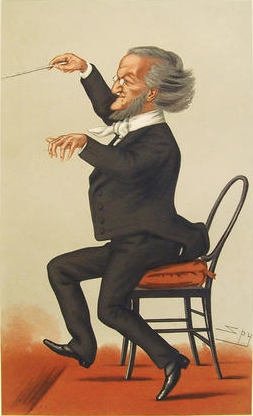
An elitist of his time? A caricature of Richard Wagner by Leslie Ward, published in Vanity Fair in 1877 (caption read ‘The Music of the Future’). Picture: Wikimedia
The old phrase ‘art for art’s sake’ has begun to sound like an appeal instead of an bohemian creed, without any negative ambiguity. Please let art be created for art’s sake!
In our times of neo-liberal ideologies, the criteria for assessing art include its capacity to generate profits to creative industries, to have export value, to be of assistance to business in general. But art, in essence, serves no ideology.
Technology now allows us to be more entertained than ever before, if we so choose. Art and entertainment alike come to us by the use of various devices. What has often been called ‘elitist’ art – opera, modern music, ballet – can be enjoyed lying on the sofa in the home. Money is not an obstacle.
Art, too needs money, of course: orchestras, theatres, training of artists and artists themselves need subsidies from society. Entertainment is by nature profitable business, as it attracts and involves large paying audiences. Smaller audiences want to listen to classical music, read books and see films that are not made solely in order to bring in as much money as possible. But why should these forms of art be called ‘elitist’? More…
Pomp and circumstance
31 October 2013 | Fiction, Prose
Extracts from the novel Bär den som en krona (‘Wear it like a crown’, Schildts & Söderströms, 2013). Sanna Tahvanainen interviewed by Janina Orlov
A kick in the stomach – yes, that is what it feels like each time I catch a glimpse of the Crystal Palace. The miniature on Albert’s desk has finally grown to maturity. The great greenhouse towers where once the elms stood. On a clear day the sun dances along the glass, making it glisten, the whole place all but blinding us. One is forced to squint on approaching it. One reaches out a hand, and when it touches the glass and steel, one knows one is there.
The grand opening is a mere five days hence. I step inside, he will be there somewhere. He is unaware of my arrival; it is to be a surprise. These last months he has been gone long before I have woken, and arrives home only once I am asleep. He seems quite indefatigable, neither sleeps nor eats properly. These last weeks there has been nothing else on his mind but the Great Exhibition. More…
No longer I:
30 September 2001 | Fiction, poetry
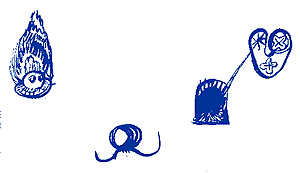
From Voittokulku (‘Triumphal march’, Tammi, 2001). Illustrations by Jukka Korkeila
Tiamat [Bloody moon]
The goat’s cheese that I have just succeeded in swallowing is now grazing in my gullet before its last metamorphosis. Soon it will be washed away into the endless system of tubing, the network of veins that proliferates beneath the paving stones. The body expels the waste and another receives it. Some people believe they are different bodies, but on thorough examination it is clear that they are both part of one and the same liquid-channeling system. I speak of a body which is a city, of liquids which surge beneath the streets, of subterranean waters. I lift a manhole cover and behold a sea which you could never dream of. The sea is a living creature and knows me better than I do myself. When I close my eyes, I see a crayfish that climbs out of the water and stretches out its pincers toward a bloody moon. What does it mean? Of that I do not wish to speak a single word.
Poems
30 June 1979 | Archives online, Children's books, Fiction, poetry
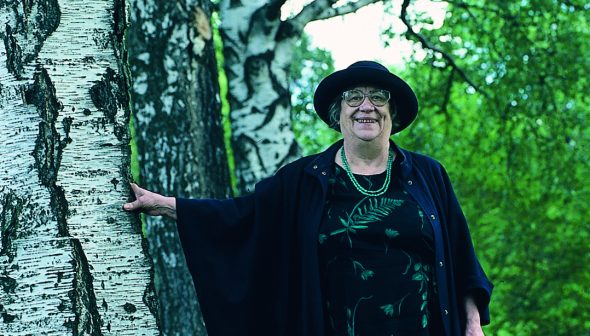
Kirsi Kunnas. Photo: Jyrki Luukkonen
Poems from Tiitiäisen satupuu (‘The Tittytumpkin’s fairy tree’, 1956)
The old water rat
There’s a shiver of a reed,
a rustle in the grass,
a slop-slopping through the mud:
Who’s that puffing past?
Who’s that peeping there?
A whiskery head
and a muddy tread.
It’s Old Mattie
Water Rattie.
Squeezing water from his eyes,
trickling from his sneezing nose,
freezing and sneezing.
Then: Oh dear Misery!
A-snee, a-snee, a-snizzery! More…
In other words
21 June 2012 | This 'n' that
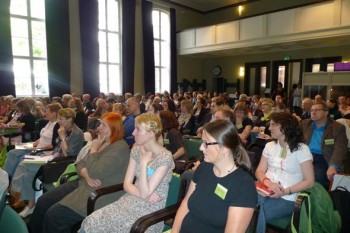
Wordworkers meet: the translators' congress in Helsinki, 11–14 June. Photo: Hannele Jyrkkä
From Finnish or Swedish into 32 languages: in mid June FILI (the Finnish Literature Exchange) held the biggest international meeting of translators of Finnish literature of all time.
The congress, entitled Kääntäjän sana/Översättarens ord (Translator’s word) was planned with one eye on the Finnish theme of the 2014 Frankfurt Book Fair.
The former Lisa Hagman School, now the House of Learning, offered the premises for workshops and lectures for 120 professional translators and almost 70 scholars of language and literature.
Participants translating from both Finnish and Finland-Swedish were offered opportunities to meet writers, listen to lectures from experts in language and literature and gain feedback from other active professional readers. More…
In other words
15 October 2009 | In the news

Top of the list: German translations of Finnish books, including Kari Hotakainen's Juoksuhaudantie ('Trench Road')
According to statistics, last year 204 Finnish books were published in 53 foreign languages. The 2008 list of translations of Finnish books into other languages has German at its head: 29 new translations appeared last year, 19 of them fiction. The list is compiled by the Finnish Literature Exchange (FILI) and the library of the Finnish Literature Society (SKS).
Second on the list is Russian, with 20 entries. Then come Estonian (17 titles, of which 11 are non-fiction), French, Polish, Japanese, Swedish and English. Finnish books for children and young people have been especially popular in Russia (ten titles published) and Japan (seven) last year.
The last three languages on the list of 53 are Croatian, Georgian and Hindi – with two Finnish graphic novels each.
We shall be featuring a small selection of Finnish books published in translation here. The Finnish Literature Society database lists all translations of Finnish titles and provides various search options for both authors and books.