

Search results for "tommi+musturi/2010/05/song-without-words/2009/09/what-god-said/2011/04/matti-suurpaa-parnasso-1951–2011-parnasso-1951–2011"
Jani Kaaro: Evoluutio [Evolution]
18 January 2012 | Mini reviews, Reviews
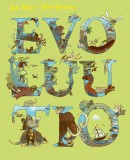 Evoluutio
[Evoluutio]
Kuvitus [Ill. by]: Väinö Heinonen
Helsinki: BTJ Finland Oy/ Avain, 2011. 64 p., ill.
ISBN 978-951-692-766-7
€ 19.90, hardback
This non-fiction book, intended for 8- to 14-year-olds, takes as its main character Charles Darwin, who as a child begins to ponder where people came from. Various myths about the origins of the world, achievements of European natural historians and problems of early evolutionary theorists are explored briefly but elucidatingly; they are linked to the acquisition of new knowledge as the church fathers continue to trust in the Bible. The prehistory of the Earth, evolution and natural selection, animal populations, man and his ancestors are explained with the aid of plentiful and humorous illustrations. Scientific results are interestingly presented, but a separate fact box, for example, on the structure of the cell or the nature of DNA might have been useful. In the last picture, the 200,000-year-old Homo sapiens is seen scrawling his cave paintings: ‘so long as we are genetically unique individuals, our evolution will never cease’.
Translated by Hildi Hawkins
New from the archives
19 February 2015 | This 'n' that
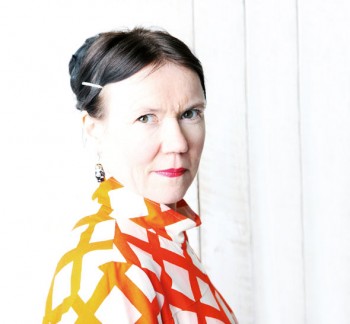
Rosa Liksom. Kuva: Pekka Mustonen
When the pseudonymous Rosa Liksom (born 1958; real name Anni Ylävaara) burst on the Finnish literary scene in 1985 with her first book, Yhden yön pysäkki (‘One night stand’), excitement was intense. For a start, she managed to keep her real identity secret, even when she appeared at public events and book-signings; then, she wrote generally in her native northern Finnish dialect, which hadn’t previously been heard very much in literary circles. Her very short short prose charted landscapes also not much represented in literature – the far north, the uneducated, the dispossessed.
This group of seven stories, from her second book, Tyhjän tien paratiisit (‘Paradises of the open road’, 1989), cover territory which has become familiar in her work: a woman who marries a layabout, a bellicose butcher’s son, a cleanliness fanatic for whom hygiene is more important than human relationships….
Rosa Liksom won the Finlandia Prize in 2011 for Hytti nro 6, which was published by Serpent’s Tail, London, in a translation by Lola Rogers last year.
*
The digitisation of Books from Finland continues apace, with a total of 360 articles and book extracts made available online so far. Each week, we bring a newly digitised text to your attention.
Johanna Korhonen: Kymmenen polkua populismiin [Ten paths to populism]
3 October 2013 | Mini reviews, Reviews
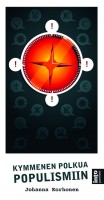 Kymmenen polkua populismiin. Kuinka vaikenevasta Suomesta tuli äänekkään populismin pelikenttä
[Ten paths to populism. How silent Finland became a playing field for loud populism]
Helsinki: Into Kustannus Oy, 2013. 81p.
ISBN 951-952-264-257-8
€15, paperback
This pamphlet on the populist True Finns party was commissioned by the British think tank Counterpoint (PDF available in Finnish). In 2011, under the leadership of the rhetorically gifted Timo Soini, the True Finns became the largest opposition party in the Finnish parliament. In the background of this phenomenon the journalist Johanna Korhonen sees, among other things, the recession of the 1990s, the fear of economic insecurity, and the paucity of alternatives and debate that characterise politics in Finland. The left-leaning party favours simplifications and longs for national unity and security. It nevertheless includes an extremist nationalist minority whose agenda includes resistance to the European Union, cultural diversity, minority rights and foreign influences, and can even be racist. Korhonen focuses and simplifies in pamphleteering fashion, but argues patiently, basing her views on facts, and considers the beneficial effects the populist party has had on the national debate, offering her suggestions for a more humane politics.
Translated by Hildi Hawkins
Coolness and warmth
21 April 2011 | Reviews
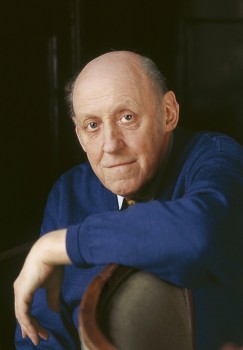
Bo Carpelan. Photo: Irmeli Jung
The coolness on the mountain
streams of water, black forests
in the west a growing light
foreboding sleep
These lines are from Gramina, the twenty-second and last collection of verse by the Finland-Swedish poet Bo Carpelan, which appeared last summer.
The short poem captures much of what was typical of Carpelan’s poetic style: a visually sharp and objective image which juxtaposes the world we see with a sense of something different, undefined. Time the unstoppable, which changes everything, was his central theme, and it also figures here.
Carpelan (1926–2011) made his debut in 1946 and was hailed early on as a renewer of the modernist tradition that in Finland began in the early 20th century with Edith Södergran (1892–1923) and Elmer Diktonius (1896–1961). He combined the Finnish-Swedish heritage of reflective nature poetry with imagistic stimuli from Swedish- and English-language modernism. More…
Rosemarie Tsubaki: Pehr Kalm, suomalainen Amerikan löytäjä [Pehr Kalm, the Finnish discoverer of America]
8 June 2012 | Mini reviews, Reviews
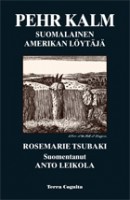 Pehr Kalm, suomalainen Amerikan löytäjä
[Pehr Kalm, the Finnish discoverer of America]
Alkuteos [original work, in Italian]: Il Viaggio di Pehr Kalm in Nord-America 1747–1751. Dissertation, University of Genoa, 2002/2003
Suomennos [Translated by]: Anto Leikola
Helsinki: Terra Cognita, 2011. 199 p., ill.
ISBN 978-952-5697-49-0
€ 25, paperback
The Finnish naturalist and pastor Pehr (in Finnish, Pietari) Kalm (1716–79), a pupil of the famous Swedish botanist Carl von Linné, was professor of economics and rector of Turku Academy, the only university in Finland during its period under Swedish rule. Kalm gained his international reputation as a result of his account of a scientific expedition he made to north America in 1747–51, which was translated into several languages. The trip was the first scientific expedition to the New World, and Kalm paid close attention to nature as well as the economics, living conditions and culture of both colonists and native inhabitants. One of his aims was the gathering of plants for use in Sweden. Of the plants he brought back a species of hawthorn, creeper vine and purple-flowered raspberry are still cultivated in Finland. The German scholar Rosemarie Tsubaki’s doctoral thesis examines Kalm’s writings and complements it with material from other sources where Kalm’s notes have been lost. The Finnish translation is furnished with an introduction and expertly translated by Anto Leikola, Professor Emeritus of History of Science.
Translated by David McDuff
Blog-jam
24 October 2011 | Authors, Reviews
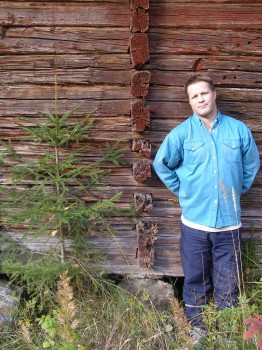
Jouni Tossavainen. Photo: Like
Poet and writer Jouni Tossavainen has directed his verbal curiosity towards blog writing in his eighth prose work, entitled Sivullisia (‘Outsiders’, Like, 2011); it consists of a collection of (fictional) blog posts, which seem to contain plenty of junk as well as treasures.
The book is a dizzying linguistic playground; it includes posts, around a page in length, from 157 ‘outsiders’. Escaping the familiar structures of language usage gives rise to snapshots of estrangement.
The narrator of the book claims to have assembled his material from a collection of blog posts received from the greater Helsinki region. Individual fragments of views and facts are like codes that have lost what they were meant to unlock. Mocking, satirical jibes emerge from the texts, accompanied by a sneaking suspicion of understanding and solace, as there ought to be in a true carnival. More…
Kari-Paavo Kokki: Tuolit, sohvat ja jakkarat. Renessanssista 1920-luvulle [Chairs, sofas and stools. From the renaissance to the 1920s]
24 November 2011 | Mini reviews, Reviews
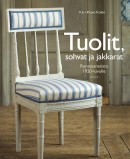 Tuolit, sohvat ja jakkarat. Renessanssista 1920-luvulle
[Chairs, sofas and stools. From the renaissance to the 1920s]
Photographs: Katja Hagelstam
Helsinki: Otava, 2011. 175 p., ill.
ISBN 978-951-1-23415-9
€56, hardback
Could it be that chairs are the most important pieces of furniture in our daily lives? The history of furniture in Finland – not much has survived from earlier than late 16th century – is made up of Swedish, Russian and Finnish parts. Furniture-making in the Kingdom of Sweden, of which Finland formed a part until 1809, was modelled on European trends, and that was also the case in St Petersburg – which is close to Finland – during the period when Finland became a Russian-governed Grand Duchy (1809–1917). Finnish peasant furniture has always been of high quality, despite often harsh circumstances. Finnish furniture-makers adapted both Swedish and Russian styles; for example, Empire (in England, Regency) and Biedermeier chairs were either of the Russian or the Swedish type. Gustavian furniture (c. 1775–1810), from the period of King Gustav III, was popular and abundant, and in the past decades the style has become extremely favoured by collectors. Detailed, beautiful photography in this book supports the concise, informative text. Kari-Paavo Kokki, director of Heinola City Museum, is an antiques specialist.
A soul on the train
In one of Heli Laaksonen’s poems the narrator buys a ticket for her soul and herself in a train’s pet carriage. Her capricious poetry features new potatoes, woodpeckers, weasels, and even a pig in fox’s clothing. Introduction by Mervi Kantokorpi
Poems from Peippo vei (‘The chaffinch took it’, Otava, 2011)
First early
From the potato patch there rose a human seedling, too.
Winston, I called it
as it was Winstons I’d sowed in this row
Whole,
beautiful,
unmarked by hoe or blight.
I put it in the basket with the others.
It sat there in the quiet pile, at the edge,
looked on while I slogged away,
gnawing a little bit out of the side of a potato.
What was it thinking?
What could it be that earlies think about?
The first summer sparrows are fresh out of the oven.
I so wish they’d only think about nice things.
I try to look happy
to give them a good start. More…
Suomalainen piru. Paholainen kansanperinteessä [The Finnish devil. The Evil One in Finnish folklore]
23 December 2011 | Mini reviews, Reviews
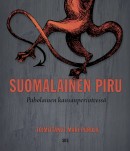 Suomalainen piru. Paholainen kansanperinteessä
[The Finnish devil. The Evil One in Finnish folklore]
Toim. [Ed. by] Mari Purola
Kuvitus: [Illustrations]: Christer Nuutinen
Helsinki: Finnish Literature Society, 2011. 144 p., ill.
ISBN 978-952-222-289-3
€ 25, hardback
In Finnish folklore the Devil has borrowed features both from ancient popular belief and from the Christian faith. Unlike the devil of Christianity, the Finnish devil is not wholly evil, and the relation between man and devil may sometimes recall a contractual relationship: man can benefit from his link with the devil without losing his soul. In the mythological stories the devil is a a creature that supports the values of village society, who punishes misdemeanours and with whose help inexplicable phenomena like surprisingly good luck or illness can be explained. Finnish folk belief contains a numerous group of lesser magical figures such as elves and sprites. The devil has also borrowed the powers of the ancient gods, such as good luck in hunting from Tapio, and in fishing from Ahti. The folk archives of the Finnish Literature Society contain a collection of devil-themed stories from the 1880s to the 1960s.
Translated by David McDuff
Heikki Hiilamo: Uusi hyvinvointivaltio [The new welfare state]
1 June 2011 | Mini reviews, Reviews
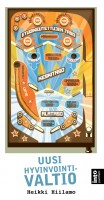 Uusi hyvinvointivaltio
[The new welfare state]
Helsinki: Like Publishing, 2011. 131 p.
ISBN 978-952-01-0615-7
€ 17, paperback
There is concern in Finland about the decline of the Nordic welfare state and the return of a class society. Problems exist with regard to issues such as the country’s aging population, changes in the structure of the labour market, the increase in income disparity, and lifestyle issues. The impoverishment caused by the recession of the 1990s did not decrease in the early 2000s, as could be seen in things like the rise of bread lines, much debated by Finns. The author – an expert on the welfare state and a poverty researcher – examines the values of the good society and its institutions. He discusses welfare as the politics of social possibilities: ‘The current system does not sufficiently allow the individual to come up with his own initiatives for positive change – instead, it fetters those initiatives.’ Hiilamo’s campaining book reflects on how the welfare state could be developed twenty years after the recession crisis, and how the middle class might be brought to realise that the growth in income disparity also affects their own welfare.
Translated by David McDuff
Far from the madding crowd
21 February 2013 | Articles, Non-fiction
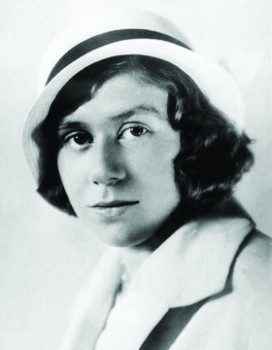
Saima Harmaja (1913–1937). Photo: WSOY
‘I don’t belong to the crowd,’ the young Saima Harmaja wrote in her diary in 1933. Her work as a poet was for her a vocation that superseded everything else. In her diaries she often speaks as a sociable young woman, with a delicious sense of humour, but her best poems seriously explore love, and death which cast its shadow over her. A selection of her poems – the best of which have made her a Finnish classic – is now published in English for the first time
In her diary the young poet claimed: ‘I think I would die if I could not write.’ What Harmaja shared with the poets of the early part of the twentieth century who influenced her was the private and personally experienced nature of poetry itself, rather than the realisation of any current aesthetic programme.
Harmaja is one of those poets whose works have passed through the hands of readers from decade to decade. She is also a prototype of the poet of her generation: gifts that led to the expectation of a brilliant career, a life that was brought to a tragic end by tuberculosis, leaving just five years of work as a poet. More…
Juha Sihvola: Maailmankansalaisen uskonto [The religion of the world citizen]
21 October 2011 | Mini reviews, Reviews
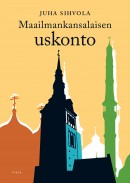 Maailmankansalaisen uskonto
[The religion of the world citizen]
Helsinki: Otava, 2011. 199 p., ill.
ISBN 978-951-1-21279-9
€ 29, paperback
This book focuses on the core questions of religious philosophy with special emphasis on Christianity, but it also addresses Judaism, Islam and the Middle East conflict as well as conflicts between Hindu nationalists and Muslims. Juha Sihvola, a professor of history, ends up advocating the view which holds that religion and science are largely independent of one another: under-standing the special nature of belief enables a justifiable critique of both religious fundamentalism and radical neo-atheism. In this work, Sihvola examines the relationship of faith and morals to history, freedom of conscience, religious tolerance and the possibilities of developing a more pluralistic society. The ideas of contemporary philosophers John Rawls and Martha Nussbaum seem closest to Sihvola’s own thinking. He formulates an optimistic vision in which religion that is liberal, non-fundamentalist and understands the special nature of belief faces important tasks ahead.
Translated by Ruth Urbom
Martti Anhava: Romua rakkauden valtatiellä. Arto Mellerin elämä [Garbage on the highway of love. The life of Arto Melleri]
10 November 2011 | Mini reviews, Reviews
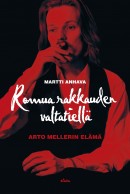 Romua rakkauden valtatiellä. Arto Mellerin elämä
[Garbage on the highway of love. The life of Arto Melleri]
Helsinki: Otava, 2011. 687 p., ill.
ISBN 976-951-1-23700-6
€ 36, hardback
Arto Melleri (1956–2005) has been called the last Finnish bohemian poet. At the age of 35, he received the Finlandia Prize for a collection of poetry entitled Elävien kirjoissa (‘In the books of the living’) as well as an invitation to the Independence Day celebrations at the Presidential Palace, from which he was thrown out. The literary editor Martti Anhava traces his friend’s life from his schooldays in Ostrobothnia to his turbulent life in Helsinki. There are interviews with family members, friends, writers, musicians, theatre-makers; Melleri wound up studying dramaturgy at the Theatre Academy. The year 1978 saw the presentation of Melleri, Jukka Asikainen and Heikki Vuento’s play Nuorallatanssijan kuolema eli kuinka Pete Q sai siivet (‘The death of a tightrope walker or how Pete Q got wings’). Breaking completely with the mainstream political theatre of the 1970s, it became a cult show. The last volume by this poet of bold, often cruelly romantic visions was Arpinen rakkauden soturi (‘The scarred soldier of love’, 2004).
Translated by Hildi Hawkins
Kullervo’s story
31 March 1989 | Archives online, Fiction, Prose
Paavo Haavikko wrote this manuscript for the television series Rauta-aika (‘Age of iron’), broadcast in 1982. lt also appeared as a book in 1982, complemented by Kullervon tarina (‘Kullervo’s story’ ) which had been omitted from the original. The text follows the stories of the Kalevala, but they are given a new interpretation: the characters are demythologised, they resign themselves to their fates – they are like ourselves. These extracts are the final scenes in which incest, revenge and death appear in a slightly different guise from Kalevala, or Kivi’s Kullervo.
– Mother, on the road I met your daughter, who is my sister, and took her into my sleigh. She had broken one of her skis. Spring came in one day, the clouds in front of the moon tore themselves to shreds so that two moons passed in one night. Winter went, Spring came, I brought the sleigh back, and I slept on top of the sacks so that not a single grain or seed would be lost. It’s all in the sacks now, saved. The clouds tore off their clothes and washed them in the rivers of rain, and naked, in the dark, they waited for their clothes to dry, those clouds. They even darkened the moon, they would have killed it if they could have reached that far, as it spied on the cloud women who were washing the clothes they had taken off in the waters of heaven, and two moons passed in one night, Kullervo says to his mother, piling up lies like a little boy. Many words. More…
A life at the front
30 September 2001 | Archives online, Fiction, Prose
Extracts from the novel Marsipansoldaten (‘The marzipan soldier’, Söderström & Co., 2001). Introduction by Maria Antas
[Autumn 1939]
Göran goes off to the war as a volunteer and gives the Russians one on the jaw. Well, then. First there is training, of course.
Riihimäki town. Recruit Göran Kummel billeted with 145 others in Southern elementary school. 29 men in his dormitory. A good tiled stove, tolerably warm. Tea with bread and butter for breakfast, substantial lunch with potatoes and pork gravy or porridge and milk, soup with crispbread for dinner. After three days Göran still has more or less all his things in his possession. And it is nice to be able to strut up and down in the Civil Guard tunic and warm cloak and military boots while many others are still trudging about in the things they marched in wearing. The truly privileged ones are probably attired in military fur-lined overcoats and fur caps from home, but the majority go about in civilian shirts and jackets and trousers, the most unfortunate in the same blue fine-cut suits in which they arrived, trusting that they would soon be changing into uniform. More…