

Search results for "tommi+musturi/2010/05/song-without-words/2009/09/what-god-said/2011/04/matti-suurpaa-parnasso-1951–2011-parnasso-1951–2011"
As in a dream
31 December 1992 | Archives online, Fiction, Prose
From Kun on tunteet (‘When you have feelings’, 1913). Introduction by Irmeli Niemi
‘No, they’re not rich, those Kolehmainens, not rich at all. Even the house is a bit on the small side.’
‘So how did you end up there? That’s one thing I’ve often wondered about.’
‘How did I end up there? Well, it must have been my fate.’
‘You sure weren’t looking to get rich.’
‘No, I sure wasn’t. Got married when I had to.’
‘Had to. You can’t tell me it had to be to him. You, with suitors in every size and shape. All you had to do was pick out the best, but no, you just up and take off with somebody from out of town, and a poor man at that.’ More…
Family mysteries
31 March 2003 | Archives online, Fiction, poetry
Extracts from Einen keittiö, Eines kök (‘Eine’s kitchen’, Tammi, 2002). Introduction by Satu Koskimies
This sort of detached block of flats is as much of a living organism
as the folk dwelling in it.
For above are the brains and below are the intestines and outlets.
The upper floors were flaunting their kitchen taps, sink-tops,
lion-clawed sofas, mahogany chests and
sapphire-pendant crystal chandeliers, flashing the violet-tones of sea and
rain. More…
The dead speak kindly
1 November 2012 | Fiction, poetry
Memory, winter and everyday are studied in Tua Forsström’s new collection of poems, En kväll i oktober rodde jag ut på sjön (‘One evening in October I rowed out on the lake’, Schildts & Söderströms, 2012). Introduction by Michel Ekman
I fell through the papers laid aside
I came to a place where I was supposed to stay
for four nights but I stayed four years
Someone said: you have caused the council considerable expense
I said: this is my situation
A brave little cat came to my rescue
I could see what I wanted in the dark
at night and no one saw me
It was like a dream but I wasn’t dreaming
I was not afraid and I could pass through chalcedony
I could pass through quartz crystals
I could pass through sad and sick
On the bottom in the mud coins from many lands lay gleaming
We wish for anything between heaven and earth
All that we see and cannot see and lost
I do not recognise myself, and no one sees me More…
The ladies’ dining club
30 September 1994 | Archives online, Fiction, Prose
From the novel Luonnollinen ravinto (‘A natural diet’, WSOY, 1994). Interview by Tuva Korsström
My dear, wise and ever-faithful secretary, colleague, friend and right hand, you who, without counting the hours, have been my helpmeet in many awkward situations, and not only in work matters but in others, all sorts of matters that belong to my private life and particularly those, you have remembered things that I have found hard to remember, like the birthday of my wife or some important colleague, and at Christmas you have always remembered me with some small gift, always different and always carefully chosen, of which I hardly need say how much it has warmed my heart, when I haven’t been able to do better than a single miserable hyacinth. And you have always reminded me of engagements I haven’t been able to keep track of: dentists, barbers, garages, less important and more important receptions, lunches and dinners, but what is most important, and why l am most grateful to you, is that in your generosity and open-mindedness – your eternal femininity – you have understood that a person in my position may sometimes find himself in situations whose consequences he cannot always control, and that he begins to be bothered by all sorts of people, although they should understand from the smallest hint that their company is not required, and you have sensitively but firmly turned them away, sometimes telling a little lie, and you have never, ever taken a moral stand or judged my actions, but have averted your eyes, having made the decision to accept that your boss is anything but perfect. For that reason I wish to express my gratitude to you; but not, however, unreservedly. Our seamless collaboration, my ever-lovable secretary, has meant that something belonging to me has begun to belong to you, that you have become part of me just as I have become part of my wife, even before she touches me with her fork. So I have no doubt that you, too, could appear at the dinner that is soon to be arranged. Bon appetit! More…
Leena Lander: Liekin lapset [Children of the flames]
23 June 2010 | Mini reviews, Reviews
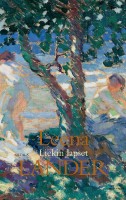 Liekin lapset
[Children of the flames]
Helsinki: Siltala, 2010. 419 p.
ISBN 978-952-231-022-1
€ 27.30, hardback
Novels by Leena Lander (born 1959) have been translated into more than 20 languages. Liekin lapset is a family saga, told in two parallel timelines. One is a portrait of a small coastal community in south-western Finland from the turn of the 20th century up to the end of the Finnish civil war in 1918 and the years following it. Life in the area is governed by a sawmill and a manor, socially dividing the community in two. Saida, Joel, Anders and Arvi grow up together, the future workers dreaming of socialism and the sons of the manor playing warlords. In the contemporary strand of the story, Sakari Salin, Saida’s grandson, begins researching his grandmother’s life. The documents reveal some rather remarkable events: here, the author defends the rights of those who were on the losing side in the civil war and creates a lively – as well as historically grounded – portrait of the times. The dialogues and characters in this novel work well, and the structure supports a complex system of psychosocial interconnections, in which the present finds an explanation in the past.
Toivo Flink: Kotiin karkotettavaksi: Inkeriläisen siirtoväen palautukset Suomesta Neuvostoliittoon [Exiled home: The return of Ingrian emigrants from Finland to the Soviet Union]
15 October 2010 | Mini reviews, Reviews
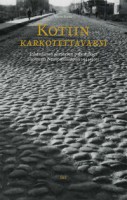 Kotiin karkotettavaksi: Inkeriläisen siirtoväen palautukset Suomesta Neuvostoliittoon 1944–1955
[Exiled home: The return of Ingrian emigrants from Finland to the Soviet Union, 1944–1955]
Helsinki: Finnish Literature Society, 2010. 320 p., ill.
ISBN 978-952-222-183-4
33 €, paperback
It has been 65 years since the Allied Commission operation to repatriate Finnic Ingrian emigrants from Finland to the Soviet Union was completed. During the Continuation War (1941–1944), 63,000 Ingrian civilians fled to Finland to avoid the war; 56,000 of them were returned to the Soviet Union at the order of the Russian-dominated Allied Commission. It is estimated that half of those remaining in Finland secretly fled to Sweden. Ingrians continued to be returned from Finland to the Soviet Union for ten more years. The Ingrians had been promised they would be returned to their former home areas around St Petersburg, but they were actually transferred to more remote parts of the Soviet Union. In this first study to deal exclusively with the travails of the Ingrians, Flink has used Russian archives to uncover how and where the population was moved. This subject has long been a sensitive issue both in domestic and foreign affairs. According to Flink, his research would not have been possible if the return of Ingrians to Finland had not begun in 1990. (There have been about 30,000 immigrants since, and now the state is planning to terminate the right of return.)
Tapani Bagge: Maalla [In the country]
31 January 2011 | Mini reviews, Reviews
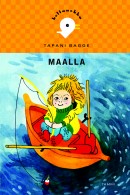 Maalla
[In the country]
Kuvitus [ill. by]: Hannamari Ruohonen
Helsinki: Tammi, 2010. 64 p.
ISBN 978-951-31-4748-8
€9.50, hardback
There have been plenty of books for beginning readers with action-packed plots full of breathtaking twists and turns. Fortunately there are still books that leave room for a more ‘easy does it’ reading style. One of them is this, the sixth title in Tapani Bagge’s series about a girl called Kaisa. Kaisa travels to the countryside with her father and her father’s partner Sirkka. Their journey is overshadowed by the death of Kaisa’s grandmother, and the little girl believes that nothing at her grandma’s place will ever be the same again. Bagge’s extensive work on this material is evident in his spare, finely tuned prose. He portrays the grieving girl’s differing shades of emotion beautifully. Kaisa believes that her grandma has changed into a butterfly following her death. So the butterfly fluttering around in the attic needs to be saved – but this of course has further-reaching consequences…. Hannamari Ruohonen’s black-and-white illustrations provide a lovely depiction of care and protection in the family.
Translated by Ruth Urbom
Asko Sahlberg: He [They]
28 June 2010 | Mini reviews, Reviews
 He
He
[They]
Helsinki: WSOY, 2010. 120 p.
ISBN 978-0-36170-2
€ 24.10, hardback
The Finland-Swedish author Asko Sahlberg (born 1964), who lives in Gothenburg in Sweden, has had an interesting, if uneven, career over the past decade. Sahlberg’s particular strengths lie in his precise use of language and the rhythm of his prose. Since his debut novel, Pimeän ääni (‘The sound of darkness’, 2000), part of Sahlberg’s output has been concerned with meditations on existence and the purging of emotions, with the rest delving into historical themes, such as his 2004 novel Tammilehto (‘Oak Grove’) which is set in the year 1918, and He, his ninth book, which takes place in 1809. (An extract from his novel Eksyneet (‘The lost’) was published in Books from Finland, 2/2002.) In He Sahlberg uses a first-person narrative technique with multiple narrators, which feels justified in this highly distilled portrait of a family. The plot is set against the backdrop of the Finnish War (1808–1809), waged by King Gustav IV Adolf of Sweden and Alexander I, Emperor of Russia. Henrik and Erik are brothers fighting on opposite sides, their mother drowns her sorrows hard liquor, and Anna, the neighbour’s daughter, ends up with the wrong brother. The end of this novella is surprising, dealing with the anatomy of revenge and deceit.
Jansson’s temptations
27 November 2009 | This 'n' that
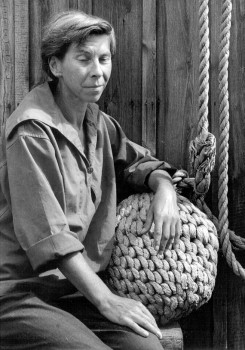
Tove Jansson (c. 1950)
If Tove Jansson’s Moomin books are, as we certainly believe here at Books from Finland, strangely little known in the wider world, the same is even truer of her books for adults.
Incredibly, the Moomins celebrate their 65th birthday in 2010, and have been translated into 40 languages. Jansson (1914–2001) wrote her last Moomin book – there are nine altogether – in 1970. Over the last thirty years of her life, she also wrote a total of 11 volumes – novels and short stories – for grown-ups. (Books from Finland published stories from many of them as they appeared. They will become available again as our digitisation project gets underway; meanwhile, here’s a story from Dockskåpet [‘The doll’s house’, 1978].)
Back out there in the wider world, the tiny, Hampstead-based press Sort Of Books has since 2001 been introducing Jansson’s lesser-known works to British readers. Latest to appear is her bleakly unsettling novel The True Deceiver (Den ärliga bedragaren, 1982), the story of a strange young woman, Katri, who breaks into an elderly artist’s house and attempts to befriend her, for reasons of her own. More…
Jean Sibelius kodissaan. Jean Sibelius, i sitt hem. Jean Sibelius at home
19 August 2011 | Mini reviews, Reviews
 Jean Sibelius kodissaan. Jean Sibelius, i sitt hem. Jean Sibelius at home
Toimittanut [Edited by] Jussi Brofeldt
Helsinki: Teos, 2010. 103 p., ill.
ISBN 978-951-851-364-6
€ 29, hardback
The composer Jean Sibelius (1865–1957) disliked being photographed. This book contains 50 stills selected from the documentary film Jean Sibelius at home, a compilation of cinematographic material in which the composer is seen at home in 1927 and 1945. Some of the shots were originally cut, and have not been previously published. The film was made by the brothers Heikki Aho and Björn Soldan, who were neighbours of Sibelius in their childhood – their father was the author Juhani Aho, a friend of the Sibelius family. Founded in the 1920s, the film company Aho & Soldan was influenced by the experimental spirit of the Bauhaus and became known for its commissioned work aimed at spreading the image of Finland abroad. The Sibelius film offers a rare peek into the composer’s home life at his villa of Ainola. In addition to the photographs, the trilingual book also contains seven articles on Sibelius and the film. Heikki Aho’s daughter, the pioneer photographer Claire Aho relates her own memories of the 1945 filming. Jussi Brofeldt, the book’s editor, is her son.
Translated by David McDuff
Petra Heikkilä: Pikku Nunuun löytöretki [Little Nunuu’s treasure hunt]
1 February 2011 | Mini reviews, Reviews
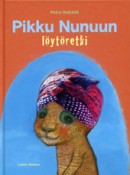 Pikku Nunuun löytöretki
[Little Nunuu’s treasure hunt]
Helsinki: Lasten keskus, 2010. 32 p., ill.
ISBN 978-951-627-829-5
€23.50, hardback
Petra Heikkilä (born 1976) is a visual artist and author. Her debut title, an illustrated children’s book entitled Mikko Kettusen pupupöksyt (‘Micky Fox’s bunny pants’, 2001), was nominated for the Finlandia Junior prize in 2001. Heikkilä’s practice of portraying children as animal characters is based on their facial expressions – particularly their luminous eyes. Typical features of all eight of her picture books published so far include a warm sense of humour, wordplay and the use of collage techniques in the illustrations. At the centre of this tale set in Africa is a kanga cloth, which can be twisted and wound in a variety of ways, and Nunuu, a little lion girl who learns about the inventive uses for kanga. The rich image textures utilise collage and photographs, as well as characters painted on Ugandan barkcloth.
Translated by Ruth Urbom
Siri Kolu: Me Rosvolat [Me and the Robbersons]
27 January 2011 | Mini reviews, Reviews
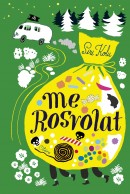 Me Rosvolat
[Me and the Robbersons]
Kuvitus [ill. by]: Tuuli Juusela
Helsinki: Otava, 2010. 222 p.
ISBN 978-951-1-24393-9
€13.80, hardback
Me Rosvolat by Siri Kolu (born 1972), winner of the Finlandia Junior prize, is a clever combination of the spirit of the Norwegian children’s classic When the robbers came to Cardamom Town by Thorbjørn Egner and the fashionable road movie genre. A ramshackle gang of robbers kidnaps ten-year-old Vilja, who is in the middle of a holiday with her family. The Robbersons like to pounce, Robin Hood-like, on petty bourgeois types who ‘think they’re just regular people, but who’ve got plenty of nice things, like a car, good eats and clothes.’ In a carnival style that appeals to children’s sense of justice – and is reminiscent of Astrid Lindgren’s Pippi Longstocking – Kolu describes the Robberson family’s innocent-seeming raids on kiosks selling old-fashioned treats and the pick ‘n’ mix sections of video rental shops. Vilja and the Robberson family’s summer-long jaunt is filled with humour, sticky situations and thoughts on family relationships.
Translated by Ruth Urbom
Laura Lähteenmäki: Aleksandra Suuri [Alexandra the Great]
1 February 2011 | Mini reviews, Reviews
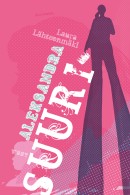 Aleksandra Suuri
[Alexandra the Great]
Helsinki: Tammi, 2010. 180 p.
ISBN 978-951-0-36522-9
€18, hardback
Laura Lähteenmäki’s novel for young people is a rare, rollicking tale of independence whose treatment of even heavy topics is guaranteed to make readers laugh, sometimes through their tears. Tim, a Dutch exchange student, shakes things up in 16-year-old Alexandra’s family when he comes to stay. She is used to being the centre of attention in her family and circle of friends, but self-confident Tim brings Alexandra’s status into question. As in her previous novels for young people, Laura Lähteenmäki presents a briskly paced drama of interpersonal relationships. Events are filtered through Alexandra’s eyes as the first-person narrator. Readers can easily get behind her point of view: Tim is truly a jerk. The portrayal of complex family relationships following a traumatic divorce makes this book worthwhile reading for adults as well, even if Lähteenmäki does resort to somewhat clichéd solutions in her portrayal of minor adult characters.
Translated by Ruth Urbom
Markus Majaluoma: Hulda kulta, luetaan iltasatu! [Hulda dear, let’s read a bedtime story!]
27 January 2011 | Mini reviews, Reviews
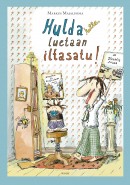 Hulda kulta, luetaan iltasatu!
[Hulda dear, let’s read a bedtime story!]
Helsinki: WSOY, 2010. 24 p., ill.
ISBN 978-951-0-36284-6
€ 23.20, hardback
Since 1996, illustrator Markus Majaluoma (born 1961) has written and illustrated 17 children’s books. His picture books have been translated into six languages. In this, the third book of its series, Jalmari reads a bedtime story chosen by his strong-willed baby daughter Hulda – one that they’ve read a hundred times before, children being famously conservative in this regard. In the story, a wasp stings a bear. Jalmari falls asleep, but as clever little Hulda knows how the story ends, there will be a surprise for the snoring dad. The stripped-down little narrative is fleshed out with plenty of details in Majaluoma’s highly original illustrations (the wasp playfully stings with its snout) often standing in humorous counterpoint to the text, an amusing bonus for the adult reading it as a bedtime story.
Translated by Ruth Urbom
Sari Peltoniemi: Kissataksi [Cat taxi]
4 February 2011 | Mini reviews, Reviews
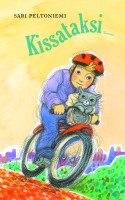 Kissataksi
[Cat taxi]
Kuvitus [ill. by]: Liisa Kallio
Helsinki: Tammi, 2010. 154 p.
ISBN 978-951-31-5243-7
€16, hardback
Children’s novels with a humane, everyday approach like that of Kissataksi are few and far between. Juho is a skinny eight-year-old boy with a perfect life: pleasant parents, a nice little brother and a dog called Rekku. But one day, he comes across seven cats and an old biddy – and find that the cats have a plan to alleviate her gloom. Juho finds himself driving a taxi for the cats, who are searching for a reliable carer for their mistress, and soon Juho is joined by Virsu, a punk girl. Kissataksi charms the reader with its genial child’s pace. Understanding of displaced people, and empathy in general, have been sadly lacking in children’s literature in recent years. The title of this book is a homage to the Japanese master animator Hayao Miyazaki’s film My Neighbour Totoro, in which a cat bus figures significantly. As in Peltoniemi’s previous novels for children and young people, there is a pinch of magic in this book.
Translated by Ruth Urbom