

Search results for "tommi+musturi/2010/05/song-without-words/2009/09/what-god-said/2011/04/matti-suurpaa-parnasso-1951–2011-parnasso-1951–2011"
A hole in the landscape
30 September 2008 | Archives online, Authors

Tomi Kontio. Photo: Heini Lehväslaiho
Jukka Koskelainen on Tomi Kontio’s new poems
Tomi Kontio (born I966) has often depicted suburban life both scabrously and romantically, a rather rare combination in Finnish literature. Poetically heightened language is not usually connected with apartment-block districts, but Kontio has the ability to zoom from the milk carton on the kitchen table to the Milky Way. It has made him one of Finland’s most read poets.
In his debut volume, Tanssisalitaivaan alla (‘Under the ballroom sky’, 1993), Kontio had a tendency towards a freewheeling, painterly imagery. In Vaaksan päässä taivaasta (‘A span from heaven’, 2006), the volume before the present one, he wrote a series of short narratives about the hard side of living on a housing estate. Kontio has also published children’s books, among other things, and was awarded the Finlandia Junior Prize for his novel Keväällä isä sai siivet (‘In the spring father grew wings’, Tammi, 2000). More…
The ruins of civilisation
31 August 2012 | Authors, Reviews

Juha Seppälä. Photo: WSOY
The eponymous central character of Juha Seppälä’s new novel Mr. Smith (WSOY, 2012) is almost an omnipotent man who moves freely in time and space, from Tsarist Russia to contemporary Los Angeles. He claims that he is a ‘sovereign individual’; sovereignty and individuality are traits that Seppälä’s protagonists have always striven towards.
On the other hand, he also says that he is a ‘necessary evil’ fulfilling the role of a protagonist in a novel. His name refers to anyone and everyone; he is, in a way, a minimalist relic of an individual.
On one level there is the suggestion that he is the alter ego of his creator: the author’s surname refers to a smith (seppä). More…
Pig-Sweet
30 September 1998 | Fiction, Prose
An extract from the novel Diva. En uppväxts egna alfabet med Docklaboratorium (en bonusberättelse ur framtiden) (‘Diva. An alphabet of your own for growing up with Doll Laboratory [a bonus story from the future]’, Söderströms, 1998)
I am Diva and everything I say is true. Close your eyes, dream about the most beautiful thing of all. Open your eyes again. See me. Girl-woman. Diva-Lucia. Thirteen, nearly fourteen. Baby Wonder. The one they thought did not exist.
Squelch
(an eternal day, love is born)
Daniel and I. In the autumn we go out to a cottage in the forest. We go walking for a whole extra day. We walk and walk, and it is an autumn day which is implacable. The lingonberries glow in the sun as if on a garish work of art by an impressionist seeing the world for a moment in a sickly way, sweat running inside boots, and squelch squelch on dry crackling ground, so it feels as if the whole forest would be shattered under your boot-clad feet. Great black boots, certainly two sizes too large so as to allow for a proper squelch. Or to allow something. A dry dry autumn, Daniel admits metres ahead of me. And that the elk-flies can’t have had time to get here from across the eastern border beyond which, as far as I know, they exist; it will take years before they manage to get here, Daniel explains. I squelch on, however much those creepy-crawlies are undeniably creeping over my body under my hot tracksuit, in my hair and scalp. Daniel knows about the forest and nature. Daniel knows about everything. And he laughs again because of those flies, and later, he laughs at night, for they don’t stop crawling then either, in the sleeping-bag which in a special way attaches me to Daniel because the zip has stuck and has to be nibbled apart by my teeth, for by then Daniel is asleep, and I have to get out and spew, for I have eaten the wrong things in the wrong order, as so often, all at once, I mean. So Daniel does not believe me. We walk on. More…
Two to tango
3 August 2012 | This 'n' that
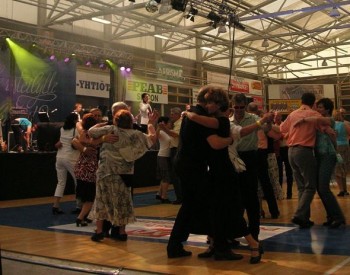
Tango: less romantic up north? Finns love it anyway. Photo: Orfeuz, Wikimedia
Picture the scene: it’s August, and the nightless days of midsummer have given way to darkening evenings. Candles are lit, and minds turn to the winter ahead.
The berries of the rowan trees are already turning bright scarlet and the purple rosebay willow herb catches the last of the sunset. From an outdoor dance floor across the meadow drift the melancholy strains of… the Finnish tango.
(The YouTube insert is from the film Tulitikkutehtaan tyttö [‘The matchbox factory girl’, 1990], by Aki Kaurismäki, featuring the actress Kati Outinen. Satumaa [‘Wonderland’ by Unto Mononen] is sung by Reijo Taipale.)
Cheesy as it is, we confess we have a liking for this most northerly cousin of the fiery Argentine original. So, it seems, does the BBC Magazine, in a recent article, Mark Bosworth goes to witness the traditional Tango Festival in Seinäjoki. Check it out. More…
Get out of my Face(book)!
23 June 2010 | Columns, Non-fiction, Tales of a journalist
 Much is made of the importance of Facebook and the other social media. But what are they, asks journalist and self-confessed internet cynic Jyrki Lehtola in his regular ‘Journalist’s Tales’ column; and, more important, is there any point to them?
This journal and this text appear only on the internet, and you can comment upon the elegant style of this text, as well as its fascinating content, at the bottom of the piece. If worst comes to worst, the apathy it arouses can even give rise to debate.
Does all that mean that I’m a part of… the social media? And if so, could someone tell me what social media mean and how I can get out of here? More…
Portraits of change
31 March 1987 | Archives online, Authors, Interviews
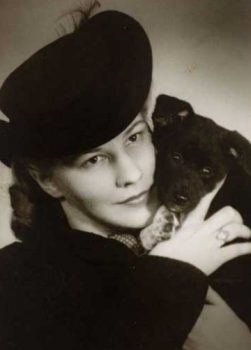
Eeva Joenpelto. Photo: Tyyne Havia / SKS Archives
Erkka Lehtola interviews Eeva Joenpelto
You can see Eeva Joenpelto’s house from a long way off: a substantial red-painted building in the southern Finnish village of Sammatti. It is the kind of house rich Finnish farmers lived in in days gone by.
The farmyard is big; behind the hedge loom the neighbouring fields and the blue mushroom woods of autumn. In the flower beds are roses and ornamental plants; the red farmhouse breathes the old Finnish countryside tradition.
But there has been no farming in the red house’s fields and meadows for a long time now. Eeva Joenpelto moved from the capital to these peaceful country surroundings just a few years ago.
All the same, the red house, the well-kept yard and forest and cornfields nearby have an important significance: for in many of her novels Eeva Joenpelto, the writer who has moved to the country, describes a huge shift in Finnish society. Many of her novels show the disintegration of the old Finnish agrarian society, and the industrial Finland, that creation of supply and demand, taking its place. More…
The trees
31 March 1998 | Archives online, Fiction, Prose
A short story from Sunnuntaina kahdelta (‘Sunday at two’, Otava, 1997)
Maisa enjoyed her trees without knowing their names, without ever counting how many of them there actually were. The trunks twisted together and then forked again, the branches wound round and stretched past each other, and the tapered leaves rustled in dark, wide fans. In the autumn, when the wind blew and the rain fell, the naked stand of trees flailed in a single damp movement, and in February the branches snapped and cracked invisibly under the snow like a promise that would be fulfilled before long.
Sometimes on summer evenings, when the boy was asleep, she listened to the birds fluttering among the shaded lower branches, to the shrews and field mice dashing between the trunks on their nocturnal journeys and the roots pushing deeper into the soil day by day. When she shut her eyes, she could see the sap pulsing under the bark, and her own arms and legs moved more lightly, her heart beat strongly, and her thoughts welled up. More…
In all honesty
18 September 2014 | Non-fiction, Tales of a journalist

Illustration: Joonas Väänänen
To puke or not to puke? Despite appearances, Jyrki Lehtola thinks there is too little truth on show on social media
I recall two brilliant articles that appeared years ago in Finland’s biggest gossip magazine.
In one of them, a vaguely famous radio host talked about his divorce and how badly he was doing since splitting from his wife. There’s nothing interesting or pioneering about this level of openness per se, but fortunately the magazine saw fit to depict the radio personality’s plight in a series of photos.
They published a photo story consisting of nine images showing him walking down the streets of Helsinki, until he suddenly recalls his divorce. More…
Ho-ho-no!
10 December 2010 | This 'n' that
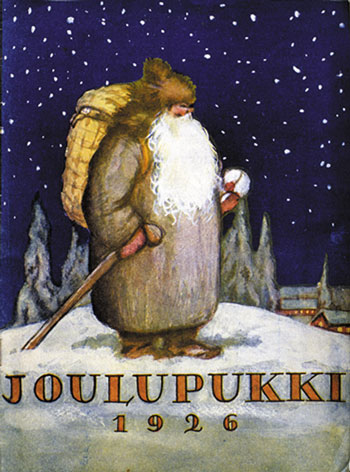
In the olden days: Father Christmas dressed in grey. A Christmas magazine illustration, 1926. Picture: Helsinki City Museum
St Nicholas, Father Christmas, Santa Claus? According to Finns, the benevolent, bearded, reindeer-driving, present-giving figure lives on Korvatunturi fell in Lapland (not at the North Pole, not anywhere else!).
In Finnish his name is Joulupukki, ‘Yule goat’ (or ‘buck’, Old English, bucca). Joulupukki developed from pagan traditions where his predecessor was a creature called Nuuttipukki, ‘Knut’s goat’, which referred to St Knut’s day, originally on 7 January.
The end of Christmas was celebrated by itinerant groups of people visiting houses playing for food and, in particular, booze. Leading them was the scary ‘Knut’s goat’ disguised in horns, a face mask and lambskins, frightening children. If he wasn’t given beer, he could steal the spigot from the beer barrel or beat people with a bunch of twigs.
This tradition was popular until the beginning of the 20th century, when the good Joulupukki replaced his old bad post-Christmas counterpart, shedding his horns and mask. However, when he came to people’s homes on Christmas Eve to bring presents, he still wore a fur coat, was heavily bearded and might still carry both twigs and gifts – so children had indeed better watch out how they behaved all year.
Naughty or nice? A new full-length Finnish film directed by Jalmari Helander entitled Rare Exports: A Christmas Tale was released internationally in early December.
In this Yuletide film the central figure of the mundane Christmas celebrations is not the red-dressed, jolly Santa we know, but ‘a sinister old codger who chews off ears and whose demon minion kidnaps innocent children. Ho ho no!’, as Jeannette Catsoulis reported in the New York Times.
‘Rare Exports is an enormously entertaining and unpredictable Yuletide romp packed with sly wit, solid scares and naked geriatrics,’ said Tom Huddleston of Time Out London.
Frank Lovece, in Film Journal International, wrote: ‘Some human and reindeer gore make this inappropriate for young children, as much as the movie’s boy-hero denouement may suggest otherwise. But for anyone who needs an inoculation of humbug to counter artificial sentiment, or who simply likes to smoke their Christmas cheer or put it in brownies, this off-kilter return to roots is a welcome gift.’
The plot involves a mysterious block of ice that has been unearthed in Lapland, sprouting a pair of horns. Children begin to disappear, reindeer are found killed. A ten-year-old boy finds out what’s happening, and he and his dad take up fighting back. ‘Wicked fun in the manner of a 21st century Grimm’s fairy-tale,’ said Chris Barsanti of filmcritic.com. ‘Exuberantly pagan images,’ wrote Jeannette Catsoulis.

Santa's place: 360° panorama from Korvatunturi, Lapland. Photo: Wikimedia/Panoramio
Well, Rare Exports was in fact filmed in Norway: Finnish fells are low and unimpressive in comparison to the higher Norwegian fells and mountains. Joulupukki’s home on Korvatunturi is particularly difficult to access, as the Russian border cuts through this formation of fells, which is also a part of a nature conservation area.
Santa’s red, fur-lined outfit is a comparatively recent invention, by the way: it became popular in the United States in an advertising campaign for Coca-Cola in 1931. By a trick of fate, though, the image was designed by one Haddon Sundblom who was of Finnish (Åland) origin.
So, what’s the truth about Joulupukki ? Could it be that an incarnation of the ancient horned shaman-like creature might still dwell in the depths of that faraway Lapland fell, and that the Coca-Cola man on whose lap your kid is sitting, listing his or her wishes, is just some commercial impostor?
The dog
30 September 1992 | Archives online, Fiction, Prose
From the collection of short stories Matka Grönlannin halki (‘A journey across Greenland’, Tammi, 1992)
The water in this town tasted of shit. Unto swallowed a couple of mouthfuls, gargled the rest and spat it into the wash-basin. The taste of garlic and old booze disappeared and only a flavour of metal remained on his palate. Unto glanced at the mirror and began to fumble for a comb. The bags under his eyes were flushed.
He pulled a clean shirt from his suitcase, and suddenly remembered how Mervi smelt in bed. There was a stirring in his groin, and unconsciously Unto sniffed at his shirt-sleeve as he buttoned his cuffs. In front of the mirror, he straightened the hem of his cardigan, combed his moustache and drew a deep breath. He felt like some meat soup. More…