

Search results for "tommi+musturi/2010/05/song-without-words/2009/09/what-god-said/2011/04/matti-suurpaa-parnasso-1951–2011-parnasso-1951–2011"
A view to a kill
31 December 1997 | Archives online, Fiction, Prose
Extracts from the novel Klassikko (‘The classic’, WSOY, 1997). Pete drives an old Toyota Corolla without a thought for the small animals that meet their death under its wheels – or anything else, for that matter. Hotakainen describes the inner life of this environmental hazard with accuracy and precision
Pete sat in his Toyota Corolla destroying the environment. He was not aware of this, but the lifestyle he represented endangered all living things. The car’s exhaust fumes spread into the surroundings, its aged engine sweated oil onto the pavement, and malodorous opinions withered the willowherbs by the roadside. Granted that Pete was an environmental hazard, one must nevertheless ask oneself: how many people does one like him provide with employment? He leaves behind him a trail of despondent girlfriends who require the services of human relations workers, popular songwriters, and social service officials; during his lifetime, he spends tens of thousands of marks in automotive shops and service stations, on spare parts and small cups of coffee; he benefits the food industry by being a carefree purchaser of TV dinners and soft drinks. Pete is the perfect consumer, an apolitical idiot who votes with his wallet, the favorite of every government, even though no one seems interested in putting him to work, least of all himself. Every government, regardless of political power struggles, encourages its people to consume. Pete needs no encouragement, he consumes unconsciously, and one might ask: is there anything that he does consciously, the Greens and left-wingers would like him to? Does Pete make smart long-range decisions? Hardly.
The Finlandia Junior Prize 2014
20 November 2014 | In the news
 Maria Turtschaninoff’s third fantasy book for young people, Maresi. Krönikor från röda klostret / Maresi. Punaisen luostarin kronikoita (‘Maresi. Chronicles of the Red Convent’, Schildts & Söderströms; Finnish translation by Marja Kyrö, publisher Tammi) was awarded the Finlandia Junior Prize, worth €30,000, on 20 November.
The winner was chosen by the scriptwriter and film director Johanna Vuoksenmaa who, in her awarding speech, said that it is ‘an exceptionally powerful fantasy book which, in addition to telling an exquisite, wise and exciting story, also provides a welcome correction to the gender division of fantasy book characters, which has been slightly skewed ever since Tolkien. Maresi reminds me that even today there are places in the world where readers are not sought for books, where knowledge is not on offer to young, thirsty minds. People’s opportunities to know and learn are limited and human rights trampled upon.’
The other five candidates were the following:
Written and illustrated by Saku Heinänen, Zaida ja lumienkeli (‘Zaida and the snow angel’, Tammi) is the story of a little girl whose school days are not always happy; Puiden tarinoita. Puuseppä (‘Stories by trees. The carpenter’, Books North) is a fairy-tale written by Iiro Küttner and illustrated by the graphic artist and cartoonist Ville Tietäväinen; Jyri Paretskoi’s first novel Shell’s Angles ja Kalajoen hiekat (‘Shell’s Angles and the Kalajoki sands’, Karisto) is a humorous story for young teenagers; Min egen lilla liten / Oma pieni pikkuruinen (‘My own tiny little thing’, Schildts & Söderströms, Teos) is a picture story about longing for closeness told by Ulf Stark and illustrated by Linda Bondestam; a picture book about a little squirrel by Mila Teräs, Olga Orava ja metsän salaisuus (‘Olga Squirrel an the forest’s secret’, Lasten Keskus) is illustrated by Karoliina Pertamo.
Ihmisten eläinkirja. Muuttuva eläinkulttuuri [The people’s book of animals. Our changing relationship with the animal kingdom]
22 April 2010 | Mini reviews, Reviews
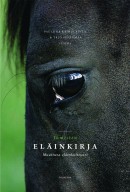 Ihmisten eläinkirja. Muuttuva eläinkulttuuri
[The people’s book of animals. Our changing relationship with the animal kingdom]
Toimittaneet [Ed. by]: Pauliina Kainulainen & Yrjö Sepänmaa
Helsinki: Gaudeamus Helsinki University Press. 235 p., ill.
ISBN 978-951-570-786-4
€ 31, paperback
This book adopts a multidisciplinary approach in its examination of the relationship between humans and animals, highlighting historical, ethical and philosophical connections. The authors include humanists, theologians, anthropologists and artists. They address issues such as animal and nature conservation, animal breeding and husbandry, attitudes towards animals in myth and religion, and depictions of animals in Finnish art. Humans’ relationship to animals can hardly be said to have been consistent: in some religions, certain animals were worshipped as gods, whereas others viewed them as symbols of evil. We treat our pets as members of the family, while livestock animals are subjected to more and more cost-effective production methods. The architect Juhani Pallasmaa introduces readers to the master architects of the animal world and their highly refined, diverse architectural solutions, from which people have learnt a great deal.
Mikko Rimminen & Kyösti Salokorpi
Beastly beatitudes
31 December 2001 | Archives online, Fiction, Prose
From Hämärä luonto. Aamunkoista Yön tuhmaan lintuun (niiden käyttäytymysestä ja elämästä yleensä) (’Natura Obscura. From the Moth of Dawn to the Naughty Bird of Night. On their behavior and life in general’, Tammi, 2001. Illustrations by Tatu Tuominen)
Anas cummea
Rubber duck
There are three species living on Earth which, it can be assumed, will survive a possible nuclear catastrophe: the cockroach, the rat and the rubber duck. Of these, the rubber duck is perhaps the most durable. Nothing affects it.
As soon as it emerges from the shell, the rubber duck secretes around its down an insulating layer of gum elastic for it cannot survive among bacteria or other non-mathematical creatures. Here begins the journey toward perfect self-sufficiency.
When young, the rubber duck looks at the world from behind its transparent membrane, protected from causes of disease, bad influences and modern poetry. With age, the rubber layer strengthens and becomes cartilaginous. Finally, the rubber duck lives alone in its own microcosmos, where there are no inter-species competition, nest-usurpers or elephant seals that mishandle their young. On the other hand, it has no room, either, for sunsets, litters of furry soft toys, or the lusty touch of lovers.
Sometimes the rubber duck finds itself in an existential panic: is there anyone, anything, outside the insulating layer? And does it itself exist? Who is speaking? Wrapped up in these thoughts, it reels around, bouncing from one bath to another, one season to the next. More…
Home and solitude
30 September 1984 | Archives online, Authors
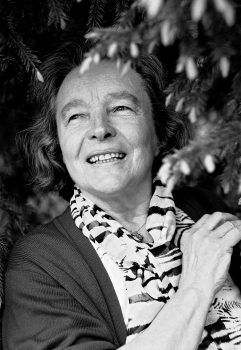
Eeva Kilpi. Photo: Veikko Somerpuro
By Eeva Kilpi’s own admission, the genre of the short story seems best suited for her themes. But she has also gained recognition as a novelist and poet, both inside and outside Finland. Among the many Finnish authors who have read and traveled widely, Kilpi assumes a somewhat unique position: the wider contemporary world with its interlocking problems can be sensed as the broader context of her writing; yet the foreground actions of her stories, with a few notable exceptions, take place in Finland, often in the backwoods of the Eastern border districts. Likewise, her main characters are unmistakably Finnish, from teenagers spouting Helsinki slang to old folks lapsing into a colorful Karelian dialect.
Eeva Kilpi was born in 1928 in Hiitola on the Karelian isthmus. Her latest novel, Elämän evakkona (‘Life’s refugees’, 1983) demonstrates again the author’s capacity for casting into the foreground gripping individual life stories while opening up in the background the epic journey of Finnish Karelians, uprooted in the last war from home and village and sent wandering around Finland in search of new livelihoods, homes and roots. Kilpi’s story is poignantly Finnish and reflects the journey she herself at the age of eleven started with her family from Hiitola. But it fits into the larger context of our own time, which produces growing numbers of evacuees and refugees with stories largely untold. More…
Blowing in the wind
26 November 2010 | Reviews
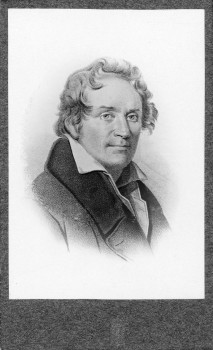
Clarinettist who travelled: Bernhard Crusell
Bernhard Crusell: Keski-Euroopan matkapäiväkirjat 1803–1822
[Bernhard Crusell: Travel Diaries from Central Europe, 1803–1822]
Suom. ja toim. [Translated into Finnish and edited by] Janne Koskinen
Helsinki: Suomalaisen kirjallisuuden seura [Finnish Literature Society], 271 p., ill.
ISBN 978-952-222-090-5
€28, hardback
Born the son of a poor bookbinder on the west coast of Finland, Bernhard Crusell (1775–1838) had talents as a clarinettist and composer that brought him considerable fame, both in his native country and further afield. Hannu Marttila reads the diaries he wrote on his travels in Europe, where his meetings with the great and the good chart the emergence of the new Romantic sensibility
‘Felix is a most beautiful child, and he is also said to be very unassuming. In his compositions one immediately recognises the signs of genius and good training. He continues to study under Zelter, and, thanks to an anticipated large inheritance, he, too, may become an independent composer. People here think he may even become another Mozart.’ More…
From life to life
30 June 1997 | Archives online, Fiction, poetry
Poems from Taivas päivystää (‘Sky on duty’, WSOY, 1996). Introduction by Tero Liukkonen
Flitting from dream to dream. Vanishings.
And you can’t even look.
What you looked with has been taken.
Then there’s more you know.
How helpless you are.
Then you know what Bottom meant
awake from his dream and trying to remember
what he’d lost. Then he did wake.
‘Man’s but a patched fool,’ he said,
‘if he’ll offer to say what methought I had.’
                                                                          Everything had gone topsy-turvy
                                                                          but she just went on feeling
                                                                                      she was hanging her head,
                                                                          she just went on feeling she was searching the lawn
                                                                                                   for a four-leaf clover,
                                                                          and the lawn had covered everything up
                                                                          and not a soul was troubling her.  More...
The last lap
30 June 2001 | Archives online, Fiction, Prose
A short story from Ilmatasku (‘Air pocket’, Otava, 2000). Introduction by Soila Lehtonen
Father arrived by taxi with his black suitcases.
He stood in the hallway, casting a glance over father’s shoes, his trouser-legs. Under his arm was a folded newspaper; it fell to the ground when father bent to undo his shoelaces.
The newspaper was written in strange letters. It felt as if the saliva would not leave his mouth however hard he swallowed. Mother jumped back and forth; mother’s mouth chattered. He scratched the wall with his nail; it was scored with pencil lines recording how much he had grown.
When father straightened up, he filled the whole room. More…
In memoriam Mirkka Rekola 1931–2014
20 February 2014 | Authors, In the news
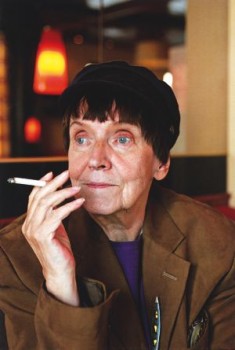
Mirkka Rekola. Photo: Elina Laukkarinen/WSOY
The poet and author Mirkka Rekola died on 5 February at the age of 82. From 1954 onwards she has written aphorisms, essays and 18 collections of poetry. Rekola was awarded many literary prizes, among them the Eino Leino prize (1979), the Finland prize (Suomi-palkinto, 1995) and the Dancing Bear poetry prize (1997). Her intellectual, linguistically brilliant poetry was not easy to translate – however, translations have appeared in Swedish, German, French, Hungarian, English and Macedonian.
The poet and translator Herbert Lomas wrote in his introduction to Rekola’s collection Valekuun reitti (‘The path of a false moon’) in 2004: ‘Mirkka Rekola was a minimalist before minimalism was invented.’ Her poems are, he said, ‘moments of crossing an edge towards an intenser awareness of the universe’s continuum, requiring us to wake up from sleep, as we do at times of heightened consciousness and love.’
At first light I put my hand
      in the hollow of a white willow –
once someone's cigarette box
had been left there –
      now a bird flew out
going seaward.
Touch of a wingquill on the back of my hand.
      It flew higher.
            In the evening
I felt its touch on my shoulder blade.
From Valekuun reitti, translated by Herbert Lomas
Panem et circenses, Part II
10 May 2012 | This 'n' that

The Guggenheim Foundation's global network of museums
Helsinki has said no thanks to a new Guggenheim art museum in the city – for the time being, at least.
On 2 May the City Council voted 8-7 against the mayor’s motion to build such a gallery in Helsinki. Politically, the move was supported by the National Coalition Party and the Swedish People’s Party, while the Greens and the left-wing parties opposed it.
What happens after the upcoming national elections – in autumn this year – is another matter. The director of the Guggenheim Foundation, Richard Armstrong, is persistent: he says he wants Helsinki. Well, if the Foundation offers a better deal in the future, the proposal may be considered again.
Three months ago we wondered – see Panem et circenses – whether ‘the people of Helsinki wish to begin to pay additional taxes for the revival, yet again, of the age-old dream of guaranteeing Finland “a place on the world map”, in a situation where economic difficulties are a matter of everyday life for increasing numbers of them? (We believe, incidentally, that Finland already has an appropriate place on the world map.) Will their opinion be asked, or heard?’ More…
Country matters
30 June 2001 | Archives online, Fiction, Prose
A short story from Peili (‘Mirror’, Tammi, 2000). Introduction by Suvi Ahola
I’m getting so old, my Master and Mistress no longer take note of when I’m on Heat. They don’t even notice when some moisture comes dripping out of my innards, as a sign of it, like they did in the good old days. Anyway, this time I really boobed, I dirtied my Mistress’s Christmas slippers with my secretions. So what could I do? – if it drips it drips. I happened to be lying on my Mistress’s feet at the time, she’d invited me there herself. ‘Spot, Spot, come and warm my feet,’ she said. Of course I went, I always have done when I’m called, it’s rather nice. Your belly gets nice and warm there, and if you’re lucky your Mistress scratches your back now and then with her knitting needle. I sleep and snore a little – it amuses my Mistress and Master. But then the warming of my belly led to this boob – a big dose of this wetness slurped onto my Mistress’s feet. It caused a sudden departure. My Mistress yelled, and my Master flung me out into the yard. I’d scarcely managed a squeak before I found myself in the snow. I shan’t forgive them, no. It’s beyond my comprehension.